Most Grow More fertilizers are NOT certified organic. The bulk of their product line, especially the popular water-soluble powders like 20-20-20, 15-15-15, and 21-7-7, are conventional synthetic fertilizers that are not OMRI-listed and are not approved for certified organic production. However, Grow More does make a separate category of products they call 'Organic Input Materials,' and a handful of those, including Fuego, Seaweed Extract, and their Citra-Grow micronutrient line, are registered on organic input approval lists. So the real answer depends entirely on which Grow More product is sitting in front of you.
Is Grow More Fertilizer Organic? How to Check and Use It

Marcus Hendrick
12 Jun 2026
What 'organic' actually means on a fertilizer label
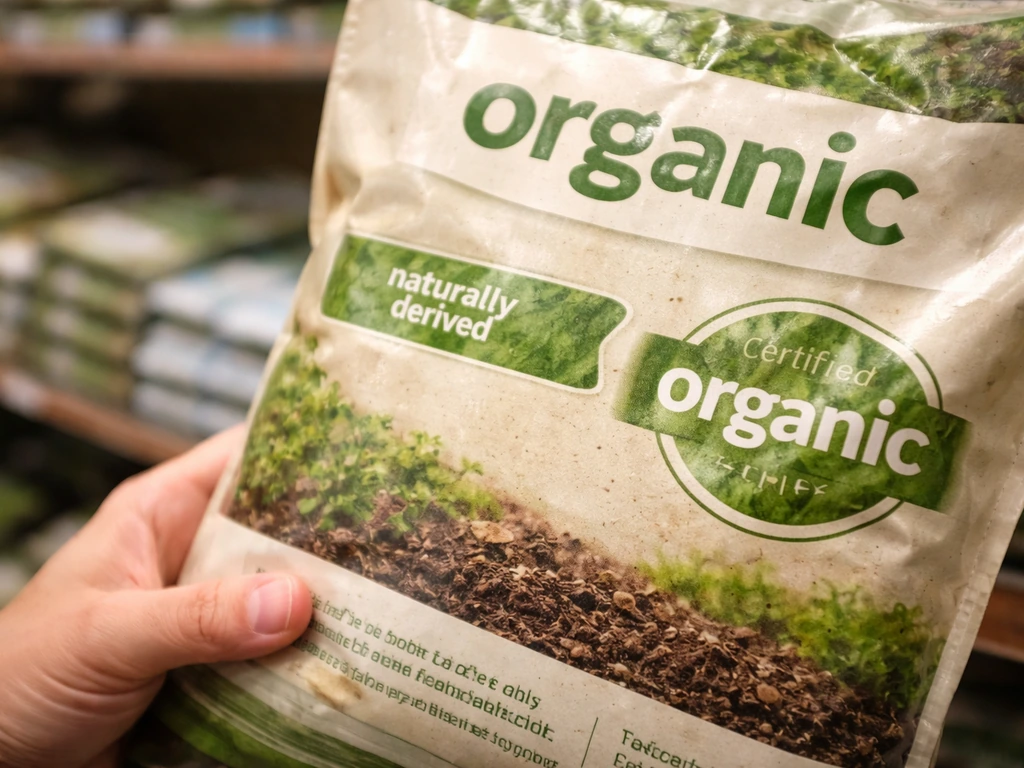
This is where a lot of gardeners get tripped up, and honestly, fertilizer companies do not always make it easy. There are at least three different things a company might mean when they use organic-adjacent language, and they are not the same thing.
- Natural or derived from: This just means the ingredient came from a plant, animal, or mineral source at some point. It says nothing about whether it is approved for use on a certified organic farm or garden. Grow More uses this language a lot, for example describing their Seaweed Extract as 'liquefied natural kelp' and their EZ WET SA adjuvant as 'derived from all natural sustainable ingredients.'
- OMRI-listed: The Organic Materials Review Institute independently reviews products to determine if they comply with organic production standards. An OMRI listing means the product has been evaluated and approved as an input for certified organic production. OMRI listing is not the same as USDA Organic certification for food, but it is a real, credible, third-party review.
- USDA Organic certified: This applies to farms, food products, and operations, not typically to individual fertilizer inputs. Confirming a fertilizer fits into a USDA Organic system means checking whether it is an approved input under the National Organic Program (NOP), not just reading the label.
When Grow More labels something a 'Poly Sulfur' with '1.0% Soluble Organic Nitrogen derived from hydrolyzed vegetable...' that source language does not automatically make the product OMRI-listed or NOP-compliant. Grow More’s micronutrient catalog includes chelation and “ligno-sulfonates” among its natural chelating approaches, but that kind of formulation information by itself does not equal organic certification for every product blank" rel="noopener noreferrer">' that source language does not automatically make the product OMRI-listed or NOP-compliant.. It is describing where the ingredient came from, not guaranteeing third-party certification. Always look past the marketing copy and check the certification itself. For independent confirmation, OMRI provides an “OMRI Listed” determination for specific products intended for certified organic production and processing blank" rel="noopener noreferrer">check the certification itself.
What is actually inside Grow More products
Grow More makes a wide range of products and they fall into pretty distinct camps. Understanding which camp your product falls into is the fastest way to know whether it works for an organic garden.
The synthetic water-soluble line
This is the most visible part of the Grow More catalog: high-analysis, fully water-soluble NPK powders like 20-20-20, 15-15-15, 30-10-10, 6-30-30, 0-50-30, and similar formulations. These are synthetic fertilizers, and many of them include EDTA-chelated micronutrients. EDTA chelation is a synthetic process that is generally not allowed in certified organic production. These products are popular because they are precise, fast-acting, and easy to mix, but they are not organic inputs by any reasonable standard.
The Organic Input Materials line
Grow More explicitly groups a separate set of products under the 'Organic Input Materials' label on their website. These include Fuego (an organic nitrogen hydrolysate, listed as 13-0-0 in powder form), Seaweed Extract (liquefied natural kelp), Humic Acid (12% humic acid from leonardite), and Nutra-Zorb Calcium. The California Department of Food and Agriculture (CDFA) Registered Organic Input Material list, updated December 2025, confirms that Grow More Fuego Powder 813 13-0-0 and Grow More Seaweed Extract appear as registered products. That is meaningful, real documentation that those specific SKUs have been evaluated.
The Citra-Grow micronutrient line
Grow More's Citra-Grow products use citric acid as a natural chelating agent instead of synthetic EDTA. The product information for this line states that 'all ingredients used in Citra-Grow are in compliance with National Organic Program standards and are allowed for use in organic crop production.' Multiple Citra-Grow entries, including Citra-Grow Magnesium 3% and Citra-Grow Iron, also appear on the CDFA organic input list. Some of those entries carry a condition: 'Synthetic Micronutrient(s) - Micronutrient deficiency must be documented by soil or tissue testing.' That is a real restriction you need to follow if you are farming under certified organic oversight.
Sea Grow 4-26-26
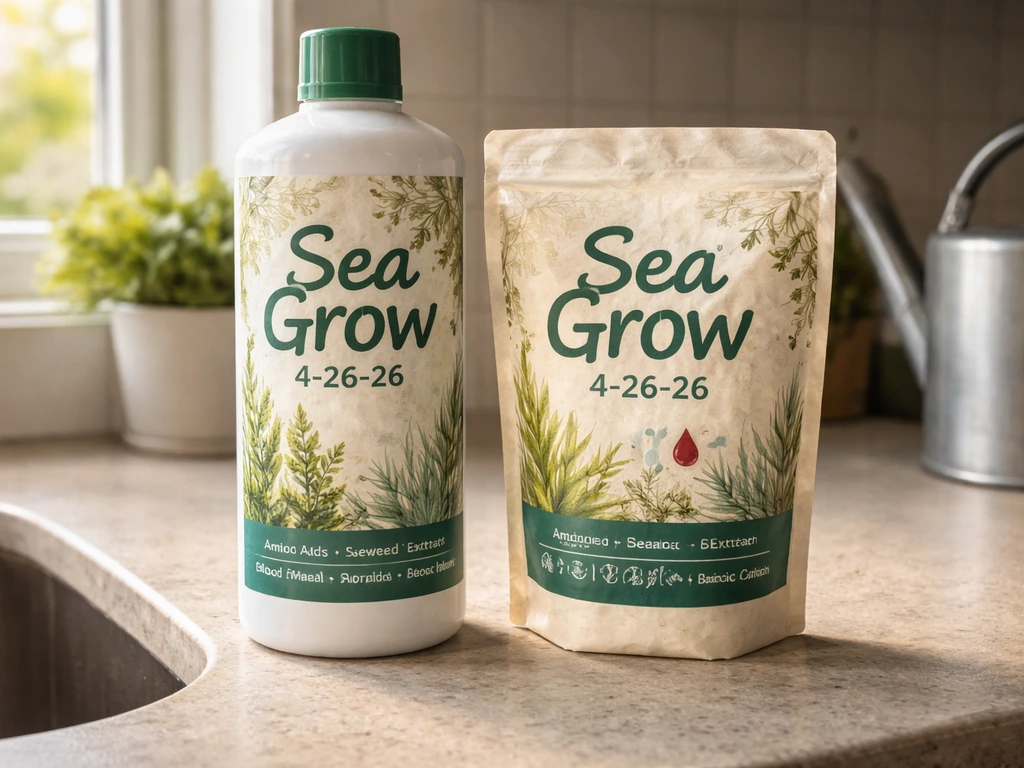
Sea Grow is a product worth calling out separately because it reads like an organic blend, listing amino acids, botanical seaweed extract, blood meal, carbohydrates, organic carbon, yucca extract, and micronutrients (including boron, copper, iron, manganese, magnesium, molybdenum, and zinc). But ingredient sourcing alone does not confirm organic certification. Before using Sea Grow in a strictly organic growing system, you would still need to verify its current OMRI or CDFA registration status by checking the actual databases, not just the label copy.
How to verify organic status yourself
Do not take anyone's word for it, including mine. Here is exactly how to check whether your specific Grow More product is genuinely approved for organic use.
- Read the guaranteed analysis panel on the label. Look at the nitrogen, phosphorus, and potassium numbers, and then look at the 'derived from' statement underneath. If you see EDTA anywhere (as in 'EDTA-chelated micronutrients'), that is a synthetic chelate and a red flag for organic compatibility.
- Look for OMRI Listed, CDFA OIM Registered, or 'Allowed for Organic Production per NOP' language directly on the label or packaging. These phrases need to be tied to a specific certifier name, not just vague claims.
- Search the OMRI Products List at omri.org. You can search by brand name or product name. If a product appears, click through to verify the exact SKU matches what you have, since slight formulation changes can affect listing status.
- Check the CDFA Registered Organic Input Materials list, which is available as a free PDF from the California Department of Food and Agriculture and is updated regularly. Even if you are not in California, this list is a useful cross-reference because the CDFA program is rigorous. The December 2025 version confirmed several Grow More products including Fuego Powder and Seaweed Extract.
- If you are operating a USDA Organic certified farm or garden, contact your certifier directly before using any new input. They have the final say on what is allowed under your certification.
Best uses in a home vegetable garden
If you have confirmed that your Grow More product is on an approved organic input list, here is how to use it well. If you want a dependable Grow More fertilizer how to use guide, start by confirming which product line you have and then match the application method to the plant’s needs. If you want to grow stuff you can use, start by choosing products that are actually approved, then apply them in a way that supports healthy soil over time. If you have one of the synthetic lines and you are not running a certified organic operation, some of this advice still applies, but be aware of the trade-offs discussed in the next section.
Soil drench vs. foliar application
Products like Sea Grow 4-26-26 are specifically designed to work as a soil drench, foliar spray, or through fertigation. For most vegetable crops, a soil drench delivers nutrients where roots can access them steadily. Foliar feeding works best as a quick correction, for example if you spot yellowing leaves that suggest iron or magnesium deficiency mid-season. Citra-Grow Iron or Citra-Grow Magnesium applied as a foliar spray can turn around a deficiency within a week when the root zone is not the limiting factor.
Timing by crop stage
| Crop Stage | Recommended Product Type | Notes |
|---|---|---|
| Seedling (first 2-3 weeks) | Diluted seaweed extract or humic acid | Use at quarter-strength max; seedlings burn easily with concentrated N |
| Vegetative growth | Balanced or high-N input (Fuego 13-0-0 or a balanced blend) | Apply every 2-3 weeks; focus on leaf and stem development |
| Pre-flowering / transition | Lower N, higher P-K product (e.g., Sea Grow 4-26-26) | Shift the ratio to support flower initiation |
| Fruiting and ripening | High K inputs, minimal N | Excess nitrogen at this stage delays ripening and reduces fruit quality |
| After harvest / soil restoration | Humic acid, seaweed extract, compost tea | Rebuild microbial life and organic matter before next planting |
Application rates and avoiding overfeeding
Always start at the lower end of the recommended rate on the label, especially with concentrated products. The Fuego 13-0-0 is a nitrogen hydrolysate, meaning the nitrogen is in a form that becomes available relatively quickly. Too much early in the season on brassicas or leafy greens means lush, soft growth that attracts aphids and is more susceptible to disease. For most home garden beds, applying half the label rate and watering in well is a better starting point than going full strength.
How organic-friendly is Grow More in real practice
For the organic-approved products, including Fuego, Seaweed Extract, Humic Acid, and the Citra-Grow line, real-world soil compatibility is generally good. Seaweed extracts are well-documented for supporting microbial communities, improving soil structure, and providing natural plant hormones (cytokinins and auxins) that boost root development. Humic acid from leonardite helps with cation exchange capacity, meaning your soil holds nutrients more efficiently and loses less to leaching. These are genuinely additive to a healthy soil system.
The synthetic fertilizer line is a different story. High-analysis water-soluble products like 20-20-20 deliver salts into the soil every time you apply them. Over multiple seasons of heavy use, salt accumulation can suppress beneficial fungi and bacteria, the same microbes that a well-maintained compost-based garden depends on. This does not mean one application ruins your soil, but repeated use without organic matter inputs to counterbalance will degrade soil biology over time.
If you are composting and using the synthetic Grow More products as a supplement rather than a primary fertility source, the impact is less dramatic. But if your entire feeding program is synthetic soluble fertilizer with no organic matter input, you are essentially working against yourself in the long run. Medina has to grow fertilizer in a way that does not keep building salts and degrading soil biology over time.
Odor is generally not a concern with the Grow More line. These are processed products, not raw manure or fish meal, so there is no strong smell. If you want to grow better cow manure in your fertility plan, pairing it with organic inputs can help support soil biology and long-term structure. Salt buildup and runoff are the more practical risks. Avoid applying water-soluble fertilizers right before heavy rain, and do not apply to dry, stressed plants or you risk tip burn and root damage.
Alternatives if you need strictly organic inputs
If you are running a certified organic garden or just want to keep your soil program as natural as possible, there are well-established alternatives that are either OMRI-listed or broadly recognized as compliant organic inputs. Biointensive growers typically build fertility with compost and targeted amendments, so it's worth comparing your fertilizer plan to the grow biointensive method approach. If you are trying to stay compliant, you also want to use organic-approved inputs rather than something that has to grow fertilizer.
| Product / Amendment | N-P-K Range | Best Use | Organic Status |
|---|---|---|---|
| Fish emulsion (e.g., Neptune's Harvest) | 2-4-1 to 5-1-1 | General vegetative feeding, seedlings | OMRI Listed (varies by brand) |
| Kelp meal or liquid kelp | 1-0.1-2 approx. | Root stimulation, micronutrients, hormones | Generally OMRI Listed |
| Blood meal | 12-0-0 approx. | Fast nitrogen boost, leafy crops | OMRI Listed (most brands) |
| Bone meal | 3-15-0 approx. | Phosphorus for root and flower development | OMRI Listed (most brands) |
| Compost (finished) | Variable, slow-release | Soil building, all stages | Inherently organic; no listing needed |
| Rock phosphate | 0-3-0 to 0-20-0 (slow) | Long-term phosphorus | OMRI Listed |
| Greensand | 0-0-3 approx. | Potassium, trace minerals | OMRI Listed |
| Worm castings | 1-0-0 approx. | Microbial inoculant, gentle feeding | Inherently organic |
You can also combine the Grow More organic-approved products (Fuego for nitrogen, Seaweed Extract for micronutrients and biology, Humic Acid for soil structure) with the above amendments to build a complete organic fertility program. This hybrid approach works well for home gardeners who want the convenience of a formulated product alongside the long-term soil benefits of traditional organic matter inputs. The key is that every product in the mix should be confirmed on the OMRI or CDFA list before you use it in a certified or committed organic system.
Other topics worth exploring alongside this question include how to use Grow More products correctly once you have confirmed your choice, how to evaluate manure-based amendments like cow manure compared to liquid concentrates, and how other fertilizers marketed as organic inputs (including products like Medina Hasta Gro and trash can compost teas) stack up in a self-sufficiency growing setup. The core lesson across all of them is the same: read the label carefully, check the actual certification database, and do not confuse 'natural' with 'certified organic.'
FAQ
How can I tell if my exact Grow More bag is organic without relying on the front-label wording?
Look for the specific SKU or product number on the container, then confirm that exact entry in the OMRI and CDFA organic input approval databases. Ingredient descriptions like “soluble organic nitrogen derived from hydrolyzed vegetable” often explain sourcing but do not equal third-party certification.
If a Grow More product ingredient list says “organic,” does that automatically mean it is OMRI-listed or compliant for certified organic?
Not necessarily. Labels can use “organic” as a description of an ingredient source, but certified organic use depends on whether the final product is listed and the ingredients are allowed under your applicable organic standard. You still need to verify the product listing for your SKU.
What’s the fastest way to avoid accidentally using a non-organic Grow More line in a certified organic garden?
Treat the Grow More product line name as a starting clue, not proof. Make a simple rule: only buy SKUs that you can immediately match to an OMRI or CDFA listing by product number, then keep a screenshot or printed record in your growing log.
Are Grow More synthetic water-soluble fertilizers allowed in an “organic garden,” like a home garden that is not certified?
They may be okay for a non-certified “natural” or “organic-style” garden, but the compatibility trade-offs matter. The article notes salt buildup and soil biology impacts over repeated use, especially if you do not support soil with compost or other organic matter inputs.
Can I use Citra-Grow micronutrients in certified organic production if the package says they are compliant, but the listing has conditions?
You can, but you must follow any conditions tied to that listing. Some micronutrient entries require documented deficiency based on soil or tissue testing, so plan testing before you apply rather than assuming a label claim covers the requirement.
Does “Sea Grow” being plant and microbe-related mean it will be compliant for certified organic use?
No. The presence of natural-seeming ingredients like botanical seaweed, amino acids, or blood meal does not confirm the product is OMRI-listed or currently registered. Verify the current approval status of the exact Sea Grow product, since listings can change over time.
If I find my product on an approval list, do I still need to check anything else before applying?
Yes. Confirm the application method your crops require, because some products are formulated for soil drench, foliar spray, or fertigation. Also check whether the label rate fits your setup, since concentrated nitrogen sources like nitrogen hydrolysates can be risky if you start too strong.
What’s a practical application strategy if I want organic-approved Grow More products but my soil is already well-fed?
Use the organic-approved products as targeted supplements rather than a full replacement for compost and bulk fertility. For example, Fuego can cover nitrogen needs, while seaweed extracts and humic acid support soil functions, but you still generally want compost to supply broader organic matter inputs.
Are there special risks with organic-approved liquids or extracts compared to dry synthetic powders?
A key difference is timing and dosage consistency. Liquid extracts and hydrolysates can hit relatively quickly, so starting at a lower label rate and applying under non-stressed conditions helps prevent nutrient imbalance or overly lush growth that invites pests and disease.
What should I do if I suspect my Grow More product was changed since I last checked the listing?
Recheck the listing for the current SKU number before the next planting season. If the manufacturer reformulates the product, the ingredient mix can change even if the product name stays similar, and the listing status may not match your earlier paperwork.
Next Article
Grow More Fertilizer: How to Use It for Higher Yields
Step-by-step fertilizer use for higher yields: soil test, choose right type, apply safe rates, growth-stage schedule, tr