Growing your own straw at home is genuinely worth doing if you have at least a quarter acre to spare, and the 'hack' is simpler than most people expect: plant a winter cereal grain like wheat, oats, or barley at high density, skip the fertilizer fuss, cut it at the right time, and dry it properly. You get free mulch, compost carbon, and animal bedding from ground that might otherwise sit idle. It is not a magic shortcut, but it is one of the most cost-effective, low-labor crops you can grow once you understand the basics.
Good to Grow Straw Hack: How to Plant and Use It at Home

Marcus Hendrick
28 May 2026
What people usually mean by 'straw hack' (and why straw isn't hay)
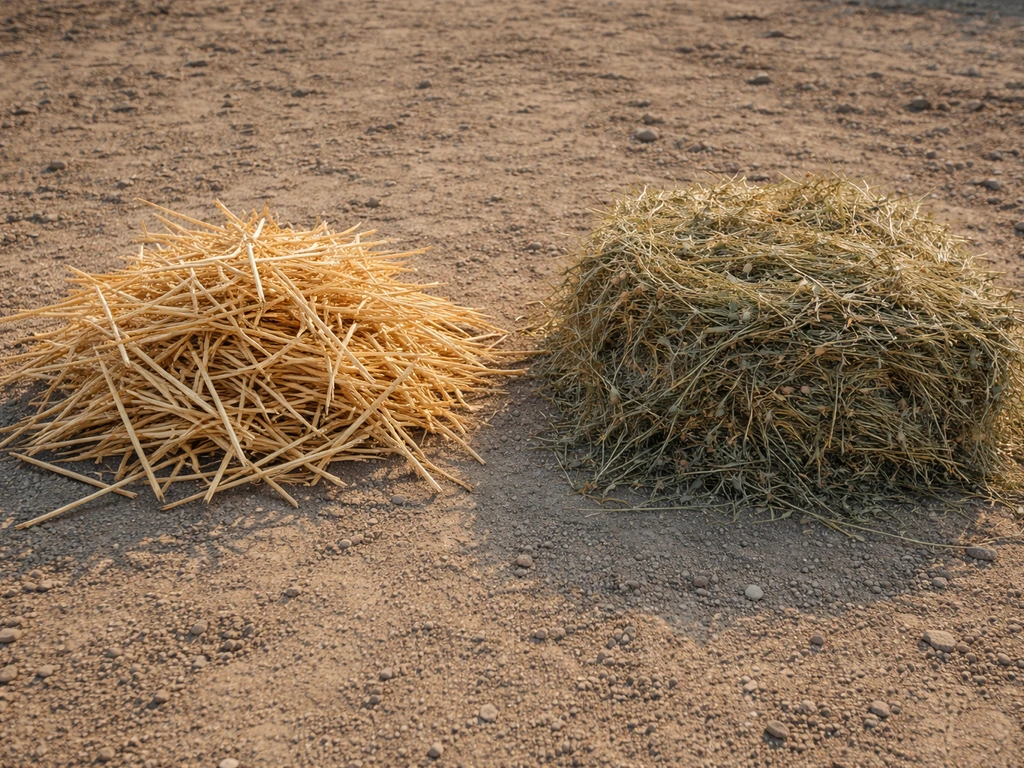
Straw is the dry hollow stalks left over after a cereal grain crop, like wheat, oats, barley, or rye, has been harvested for its seed. Once the grain and chaff are stripped off, what remains is straw: carbon-rich, low in nitrogen, and almost seed-free. Hay is completely different. Hay is a forage crop, usually grasses or legumes, that is harvested whole and fed to animals. It is full of seeds. That distinction matters enormously in the garden: Cornell Cooperative Extension and University of Maine Extension both flag this clearly, noting that blank" rel="noopener noreferrer">using hay as mulch deposits weed seeds directly into your beds, while straw does not. In strawberry production, extension explicitly warns not to use hay as mulch because it can contain weed seeds that start growing, while straw is commonly used instead blank" rel="noopener noreferrer">hay as mulch deposits weed seeds directly into your beds. If you have ever spread 'straw' mulch and watched weeds explode, chances are someone sold you hay.
The 'straw hack' search usually means one of two things: either people want a quick trick for using straw as mulch (that is the simpler use case), or they want to know whether growing cereal grain specifically for the straw is a viable homestead strategy. This guide is about the second interpretation, which is the more interesting and underexplored one. If you are just using straw as mulch, buy a bale from a feed store and you are done. But if you want a renewable, on-site source of straw for mulching, composting, and bedding without paying $8 to $15 per bale every season, growing it yourself starts to make a lot of sense.
Is it actually a good idea to grow straw at home?
Honestly, yes, for the right person and the right space. Growing straw is one of the few homestead crops that asks very little of you once it is in the ground. You plant in fall (or early spring for spring varieties), mostly ignore it through winter, and harvest in early summer. The grain you get as a side benefit can be saved for seed, fed to chickens, or ground into flour. The straw itself is the real product for most home growers.
That said, it is not for everyone. Here is the honest breakdown:
| Factor | Reality for Home Growers |
|---|---|
| Space needed | Minimum practical plot is about 1,000 sq ft; a quarter acre is comfortable for meaningful yield |
| Expected straw yield | Roughly 1 to 2 tons of dry straw per acre, or about 50 to 100 lbs per 1,000 sq ft |
| Time to harvest | 6 to 9 months for winter varieties; 3 to 4 months for spring-planted oats |
| Equipment required | Scythe or string trimmer to cut; no combine needed at small scale |
| Input cost | Seed costs $1 to $3 per lb; most grains need 3 to 6 lbs per 1,000 sq ft |
| Effort level | Low after planting; moderate at harvest time |
| Main risk | Lodging (stalks falling over), mold if baled or stored wet |
| Best fit | Homesteaders, large garden plots, anyone keeping chickens or rabbits |
If you are working a raised-bed veggie garden with 200 square feet total, skip growing your own straw and just buy it. But if you have a sunny patch of ground that is not doing much, even a 20x50 foot strip can produce enough straw to mulch most of your garden beds and still have some left for the compost pile. That is a real return for very little cash outlay.
Picking the right grain for your climate and goal
The grain species you plant determines your planting window, straw quality, and how easy the harvest will be. Here is how the main options compare:
| Grain | Best Climate | Planting Window | Straw Quality | Notes |
|---|---|---|---|---|
| Winter wheat | Zones 4-8 | Fall (Sept-Nov) | Long, stiff stalks; excellent for mulch and bedding | Most reliable for cold climates; widely available seed |
| Winter rye | Zones 3-8 | Fall (Sept-Oct) | Tall, coarse stalks; good carbon for compost | Hardiest option; outcompetes weeds well; can lodge in rich soil |
| Spring oats | Zones 3-9 | Early spring (Feb-Apr) | Softer, finer straw; great for bedding | Best for mild or short-season areas; fastest to harvest |
| Barley | Zones 4-8 | Fall or early spring | Medium stiffness; good all-purpose straw | Tolerates dry conditions well; shorter season than wheat |
For most home growers in the northern US and similar temperate climates, winter wheat is the go-to. It goes in during fall, overwinters as green growth, finishes in early summer, and gives you a tall, stiff straw that works beautifully as mulch or bedding. Winter rye is the backup if you have poor soil or a very cold climate, since it will germinate and establish in conditions that kill wheat. In warmer zones or if you missed the fall window, spring oats are your friend: they go in as soon as the ground thaws, mature in 60 to 90 days, and produce softer straw that is ideal for chicken coops or rabbit hutches.
For variety selection, do not overthink it. Ask your local farm co-op or feed store what winter wheat or oat seed they stock for your region. Hard red winter wheat varieties like 'Jagger' or 'Everest' are common in the plains states. In the Pacific Northwest, soft white wheat varieties work well. For oats, 'Paul' or 'Streaker' are popular in cold climates. The specific variety matters less than getting regionally adapted seed that is certified clean of weed contamination.
Quick-start planting plan
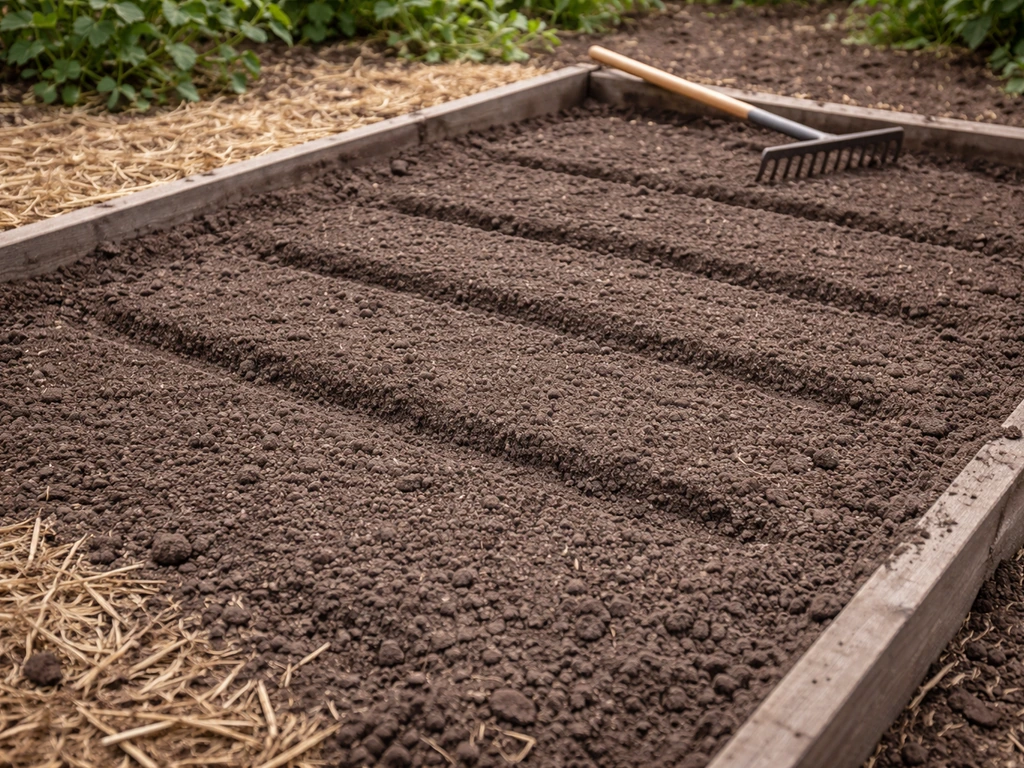
Timing
For winter wheat and rye, aim to plant 4 to 6 weeks before your average first hard frost. That gives the plant time to establish a solid root system and tiller (sprout side shoots) before going dormant. In most of zones 5 to 7, that means September through mid-October. Planting too late means weak stands that get heaved out of the ground by freeze-thaw cycles. Planting too early in warm soil can push too much leafy growth before winter and invite disease.
Soil prep
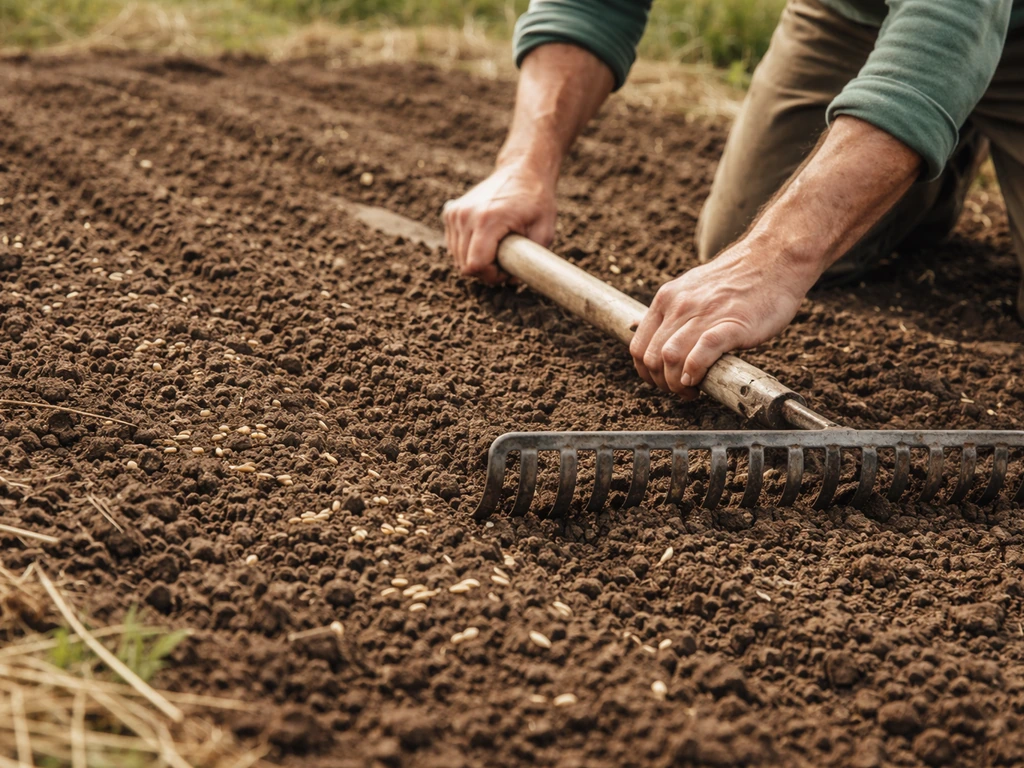
Cereal grains are not fussy, but they do need good seed-to-soil contact to germinate well. Rough till or broadfork your plot to break up the top 3 to 4 inches, knock down any large clods, and rake it level. You do not need a perfectly fine seedbed, but you do need loose enough soil that the seed makes contact and does not just sit on top of a hard crust. If your soil is very compacted or acidic (below pH 5.8), work in some lime a few weeks ahead. A soil test here is worth the $15 investment if you have never tested that ground.
Seeding rates
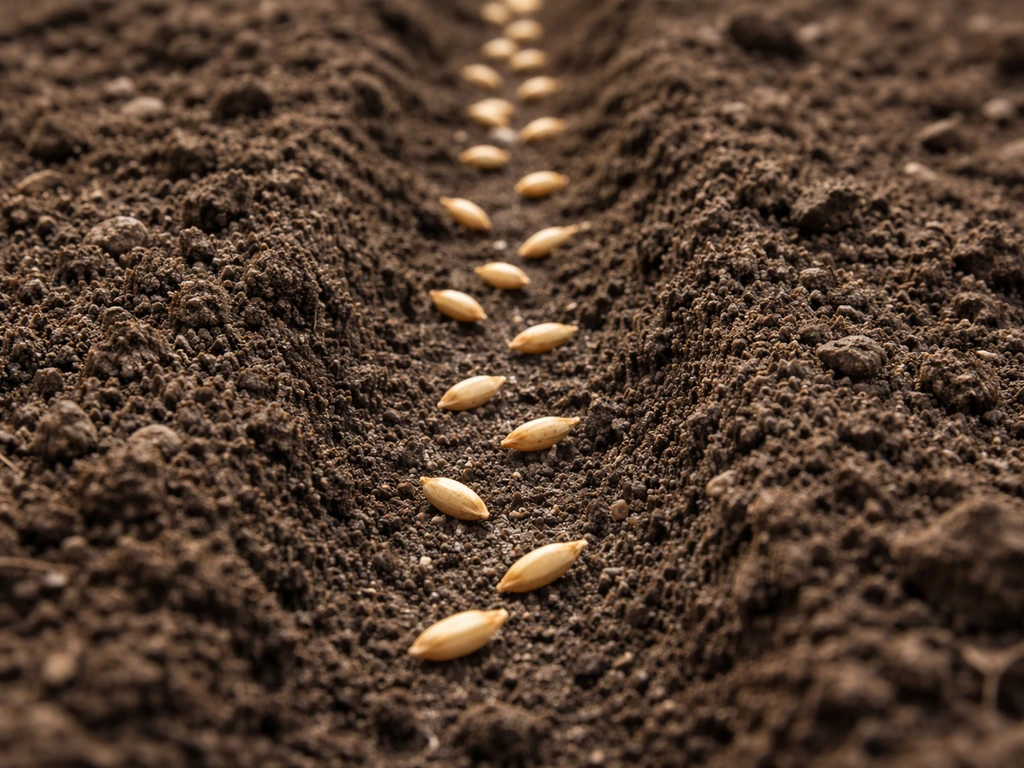
For home-scale plots, broadcast seeding is perfectly adequate. Aim for these seeding rates, then rake lightly to cover seed about half an inch to one inch deep:
- Winter wheat: 3 to 4 lbs per 1,000 sq ft (roughly 130 to 175 lbs per acre)
- Winter rye: 3 to 5 lbs per 1,000 sq ft (can go denser since rye tillers aggressively)
- Spring oats: 4 to 6 lbs per 1,000 sq ft (oats produce less per plant, so denser seeding helps)
- Barley: 3 to 4 lbs per 1,000 sq ft
The 'hack' for seeding without a drill: use a hand-crank broadcast spreader set to the smallest opening, seed in two passes at 90 degrees to each other for even coverage, then use a leaf rake to scratch seed in. Finish by walking over the area or using a lawn roller to press seed into soil. On small plots, tossing seed by hand and raking it in works fine.
Low-input care through the growing season
Watering
In most climates, fall-planted cereals rely on natural rainfall and snow to get through winter and spring. If you plant in dry fall conditions, water once or twice after seeding to help germination. After that, established cereal stands rarely need supplemental irrigation in temperate zones. Spring oats may need a deep watering at heading time (when seed heads emerge) if your spring is unusually dry. Think of straw grain as a dryland crop: it tolerates drought better than corn or tomatoes, and overwatering in fall actually increases disease risk.
Fertility
For pure straw production, you do not need heavy fertilizing. A modest nitrogen application in early spring (when the plants break dormancy and resume growth) is the single most impactful input. If you want more consistent growth, that is when you consider whether you have to grow fertilizer inputs like nitrogen to meet the crop’s needs. You can use 20 to 30 lbs of actual nitrogen per acre, or about 0.5 lbs per 1,000 sq ft. A handful of a balanced granular fertilizer or a broadcast of composted chicken manure in March works well. If you have been building soil organic matter through composting (something topics like using cow manure or compost-focused fertilizer approaches address in detail), your straw plot may not need any added fertility at all. You can also grow better cow manure by composting properly so it improves soil structure and fertility over time. It is also worth using organic options where possible, since “is grow more fertilizer organic” matters for long-term soil health. Avoid pushing too much nitrogen, because it makes stalks grow tall and weak, leading to lodging.
Weed control
Dense seeding is your primary weed tool. At the rates listed above, cereal grain canopy closes quickly and shades out most broadleaf weeds. Winter rye is especially aggressive and nearly self-weeding. The main weeds to watch for are grassy weeds that mimic the crop plant, particularly annual ryegrass and wild oat (in oat plantings). If you see clumps of a slightly different shade of green, pull them by hand early. Do not use herbicide near an area where runoff could reach vegetable beds.
Pests and disease
At home-garden scale, serious pest pressure is rare. Aphids can appear on grain heads in late spring; they usually resolve on their own once beneficial insects arrive. The most common disease issue is rust (orange or yellow powdery pustules on leaves), which reduces grain yield but does not prevent straw harvest. Septoria leaf blotch can cause tan lesions in wet springs. Neither requires treatment if your goal is just the straw. Good air circulation from proper seeding rates and not planting in low spots helps. If you plant the same spot year after year, rotate to a different location every two to three seasons to reduce disease buildup.
Harvesting, curing, and storing straw without losing it to mold
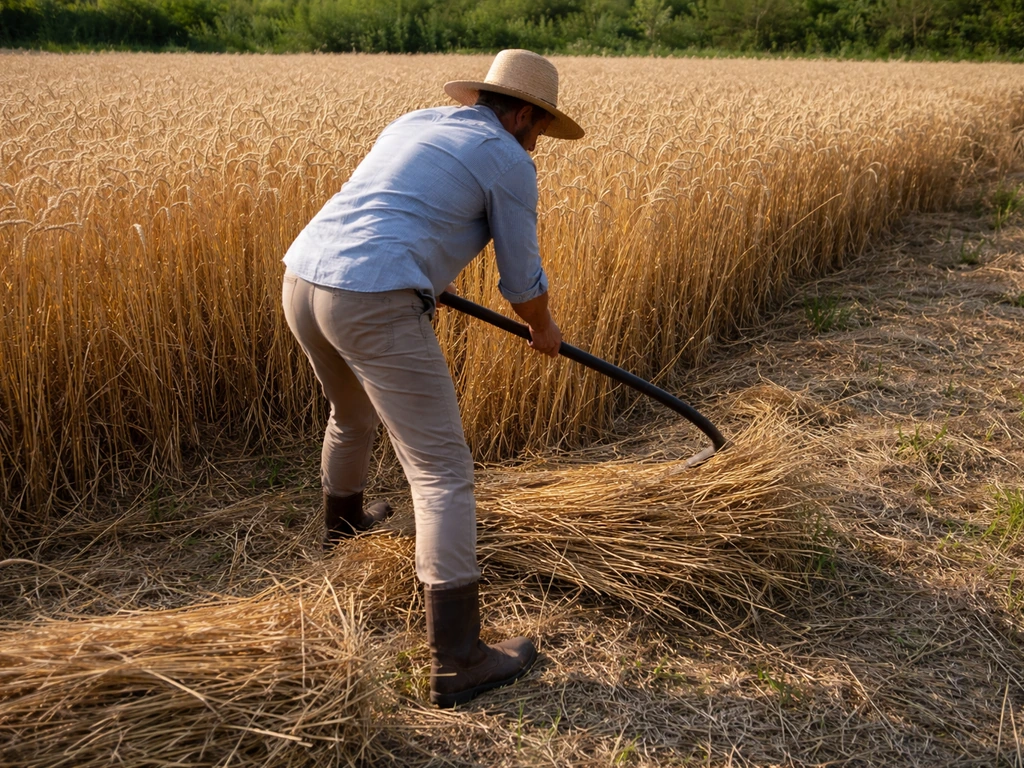
Timing the harvest is the most critical step. Cut your grain when the stalks have turned fully golden-yellow and the seed heads are dry but before the heads shatter and drop grain on the ground. For winter wheat, this is typically late June to mid-July in most of zones 5 to 7. Stick a fingernail into a kernel: if it dents, wait. If it is hard and chalky, you are ready.
At home scale, a scythe or heavy-duty string trimmer works well for cutting. Cut close to the ground to maximize stalk length. Rake cut grain into loose windrows and let it cure in the field for 5 to 7 days if weather permits. You want the moisture content of the stalks to drop below 15 percent before storage, which is roughly when a handful of straw makes a dry rustling sound rather than bending silently. This field-curing step is non-negotiable: wet straw baled or piled too soon will heat up and mold within days.
After field curing, you have a few storage options depending on your scale. For small amounts (under a few hundred pounds), stack straw loosely in a covered shed or barn with good airflow, never directly on a concrete floor (put pallets or boards down to allow air circulation underneath). For larger amounts, consider making small hand-tied bundles called sheaves and stacking them in a cone shape called a stook in the field for another week before moving to storage. If you want to make small bales without a baler, hay compression boxes can be made from scrap wood for roughly $30 to $50 in materials.
How to actually use your homegrown straw
This is where growing your own straw really pays off. Here are the main uses and how to get the most from each:
- Garden mulch: Apply 3 to 4 inches of loose straw around vegetable plants to suppress weeds, retain moisture, and keep soil temperature stable. Straw is particularly valuable around tomatoes, peppers, and strawberries where it keeps fruit off wet soil and reduces disease splash-up.
- Compost carbon layer: Straw is a high-carbon 'brown' material essential for balanced compost. Layer 3 to 4 parts straw with 1 part green (nitrogen-rich) material like kitchen scraps, fresh grass clippings, or manure. Chop or fluff the straw first so it does not mat down and block airflow.
- Animal bedding: For chickens, rabbits, or small livestock, dry cereal straw makes excellent bedding. It is absorbent, relatively low-cost, and once soiled it goes straight into the compost pile as an already-combined carbon-nitrogen mix. A small flock of 6 chickens might use 50 to 100 lbs of straw per month.
- Soil building: Chop spent straw and till it into bare beds in fall. As it breaks down over winter, it feeds soil microbes and improves tilth. This is essentially a free organic matter amendment.
- Straw bale gardening: If you produce more straw than you need for mulch and compost, whole bales can become growing containers for tomatoes, squash, or potatoes. Condition the bale with nitrogen over two weeks, then plant directly into it.
Growing straw connects naturally to building a closed-loop fertility system on a homestead. If you are also interested in the grow biointensive method, you can adapt your straw production and composting approach to support high-efficiency soil building. If you compost what you collect, you can turn that kitchen waste into useful fertilizer and reduce how much trash ends up in landfills trash can grow fertilizer. Straw feeds animals, animal manure feeds compost, compost feeds soil, and soil grows more straw. If you are exploring other inputs like biointensive growing methods or on-site composting approaches, straw fits seamlessly into those systems as the carbon backbone.
When things go wrong: common problems and fixes
Lodging (stalks falling over)
Lodging is when stalks bend over or collapse before harvest, usually from too much nitrogen, heavy rain, or wind. It is the most common straw quality problem at home scale. Fix it by reducing nitrogen inputs and choosing shorter, stiffer varieties. If lodging happens anyway, harvest immediately before the flattened stalks start to rot on the ground.
Poor stand or thin germination
Usually caused by planting too shallow, dry conditions after seeding, or seed that got crusted over by a hard rain. Scratch the surface and look for germinating seed: if you see white shoots trying to push through a sealed crust, break the crust gently with a rake. If germination simply failed, replant the thin areas immediately. In fall plantings, you have a narrow window to fix this before cold sets in.
Moldy straw in storage
Almost always caused by storing straw before it fully dried. If you find mold, remove affected material immediately and spread it in the garden to compost in place rather than letting the mold spread. Going forward, extend your field curing by 3 to 5 days and never store straw in an enclosed space without ventilation.
Low yield despite good stand
Short stalk length and low yield usually come from cutting too late (after the plant has already dropped its lower leaves and degraded the stalk), very nutrient-poor soil, or a wet spring that promoted disease. Test your soil, add a modest spring nitrogen boost, and harvest promptly when the crop hits the golden-yellow stage.
Your next steps: a simple checklist to decide if this is right for you
Use this checklist to figure out whether to plant straw this season and what to do first:
- Do you have at least 500 to 1,000 sq ft of open sunny ground that gets 6 or more hours of sun? If yes, you have enough space for a meaningful straw harvest.
- Is your soil pH between 5.8 and 7.0? If you do not know, get a $15 soil test from your county extension office this week.
- What is your planting window? If it is currently fall (September to October in zones 4 to 7), plant winter wheat or rye now. If it is late winter or early spring, order spring oat seed and plan to plant as soon as the ground thaws.
- Do you have a place to store dry straw out of rain? Even a tarp shelter or a corner of a garage works for small amounts.
- What will you use the straw for first? Decide now: mulch for vegetable beds, chicken bedding, or compost carbon. That will tell you how much you need and whether growing your own makes economic sense vs. buying a few bales.
- Order your seed. For small plots, 5 to 10 lbs of winter wheat seed costs $5 to $20 and is enough for 1,000 to 3,000 sq ft. Look for certified seed at farm co-ops, feed stores, or online grain seed suppliers.
- After your first harvest, assess the yield and quality honestly. Did you get enough usable straw to justify the space? Did it save you money compared to buying bales? Use that data to scale up or adjust your variety and process next season.
Growing your own straw is one of those homestead projects that feels almost too simple after you do it once. The first season you pull a wheelbarrow full of dry golden straw from your own ground and spread it around your tomatoes, you will wonder why you ever paid for bales. Start small, nail the harvest timing and drying process, and scale up as your confidence grows.
FAQ
Can I grow straw for mulching if I don’t want the grain harvest or seed headaches?
Yes. If you cut at the same golden-yellow stage for straw quality, you can skip threshing for grain. Just plan for the heads to be mostly dry but not shattering, so you end up with clean stalks for mulch and animal bedding.
What should I do if my straw plot is in the middle of a veggie area and I’m worried about contamination?
Keep straw used on beds from coming into contact with any hay or seed-heavy roughage. Even if you grow cereal straw correctly, avoid walking through the bed then into the straw area without clean footwear, because weed seeds can hitchhike on boots and wheelbarrows.
How do I avoid accidentally growing hay instead of straw?
Only grow cereal grains (wheat, oats, barley, rye) specifically for the straw. If you see a patch that grows as a forage-like mixed stand with lots of seed heads in the stems, that is a different crop type than cereal straw.
Is it safe to use straw mulch right around seedlings?
Use a light layer and keep it away from the stem if the seedlings are still very tender. Straw is carbon-rich and low nitrogen, so it is best as a barrier mulch, but thick layers right on top of seedlings can slow soil warming and keep the surface too cool.
How long should I wait before incorporating straw into compost, and can I use it immediately?
For direct composting, mix straw with a nitrogen source soon after cutting or baling so it does not sit dry for weeks. A common approach is to layer straw with fresh green material and aim for thorough moisture, then turn after decomposition has started.
What moisture level is “dry enough” to store, and how can I tell without lab tests?
Beyond the rustling sound, check that the straw feels cool and dry throughout, not just on the outside. If it feels warm or damp when you stack it, extend field curing and improve airflow, because mold risk rises quickly once stored.
Can I use the straw from the same plot for animal bedding and then for mulching my garden?
You can, as long as the bedding straw is kept dry and free of heavy contamination. If animals were managed with bedding that became very wet or soiled, compost it first rather than laying it thickly on beds where you want a clean mulch.
Do I need to rotate where I grow the grain each year?
At home scale, rotating is still a good idea if you can. Even a simple 2 to 3 season rotation to a different patch lowers the buildup of leaf diseases, and it also helps you prevent the same weeds from returning in the same pattern.
What’s the best way to handle a thin stand after germination failure?
Replant quickly in the thinnest areas once you notice the gaps, and loosen the surface crust if it formed. If you wait until much later in the season, you can end up with uneven canopy closure, which increases weed pressure and reduces overall straw quantity.
How do I prevent lodging if my weather turns wet and windy near harvest?
Reduce nitrogen to the modest spring level, avoid late-season extra feeding, and harvest promptly at the golden-yellow stage. If heavy rain arrives and stalks bend, prioritize earlier cutting rather than waiting for perfect head dryness.
Will straw mulch attract rodents or cause pest problems?
It can if straw is stored or applied in a way that provides shelter close to structures. Keep mulch away from direct contact with building walls, and if you store a lot of straw, elevate it on pallets and ventilate so it does not become a nesting spot.
Do I need a different planting plan for very small spaces like under a 1,000 sq ft?
You can still broadcast and rake in seed, but focus on uniform coverage because small plots show unevenness fast. Also plan your harvest and storage before planting, since small amounts spoil sooner if ventilation is poor.
Is using composted chicken manure instead of fertilizer a good idea for straw quality?
It can be, especially in early spring, but apply it conservatively. Too much nitrogen from manure can increase height and lodging, so if you go the manure route, use a lighter application and monitor for tall, floppy growth before harvest.
Next Article
Grow Biointensive Method: Step-by-Step Home Garden Guide
Step-by-step biointensive method guide for home beds: planning, soil, compost, dense planting, water, pests, and yield t