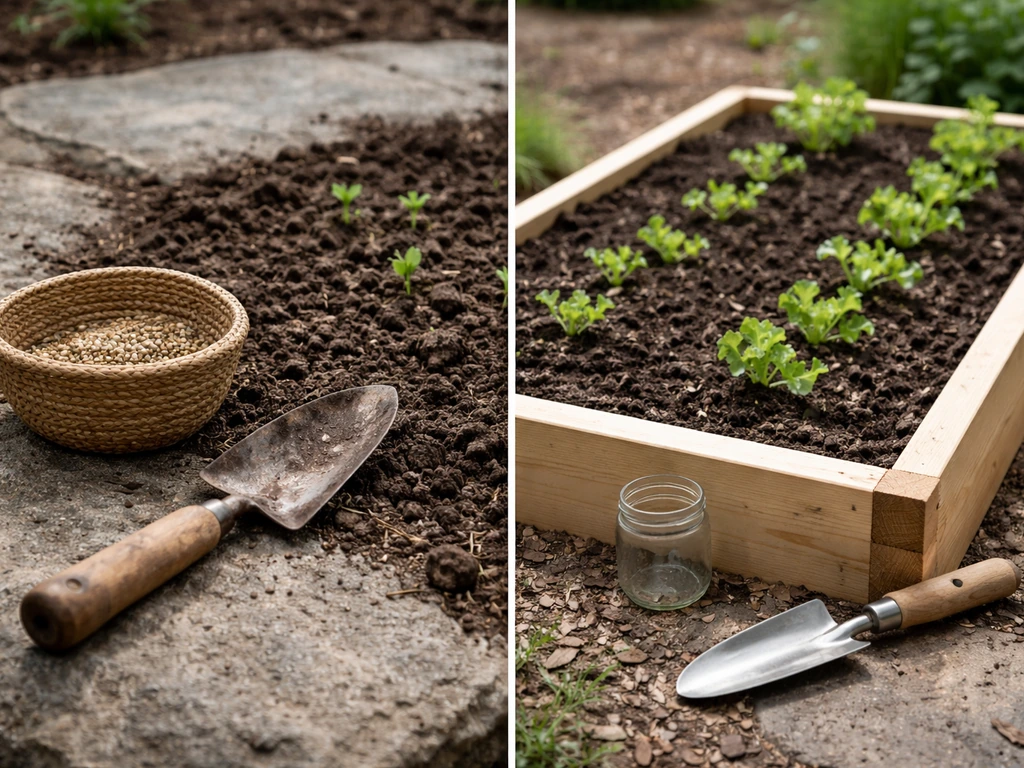
Farmers grow crops for three core reasons: to feed people and animals, to earn income, and to keep their land and livelihood stable year after year. Archaeological evidence suggests Mayan farmers also relied on practical tools and techniques suited to their local soils and growing seasons Mayan farming tools. Every crop decision a farmer makes, from which seed variety to plant to how much water to use, flows from those three motivations.
Why Do Farmers Grow Crops? Real Reasons and How to Use Them
Marcus Hendrick
31 May 2026
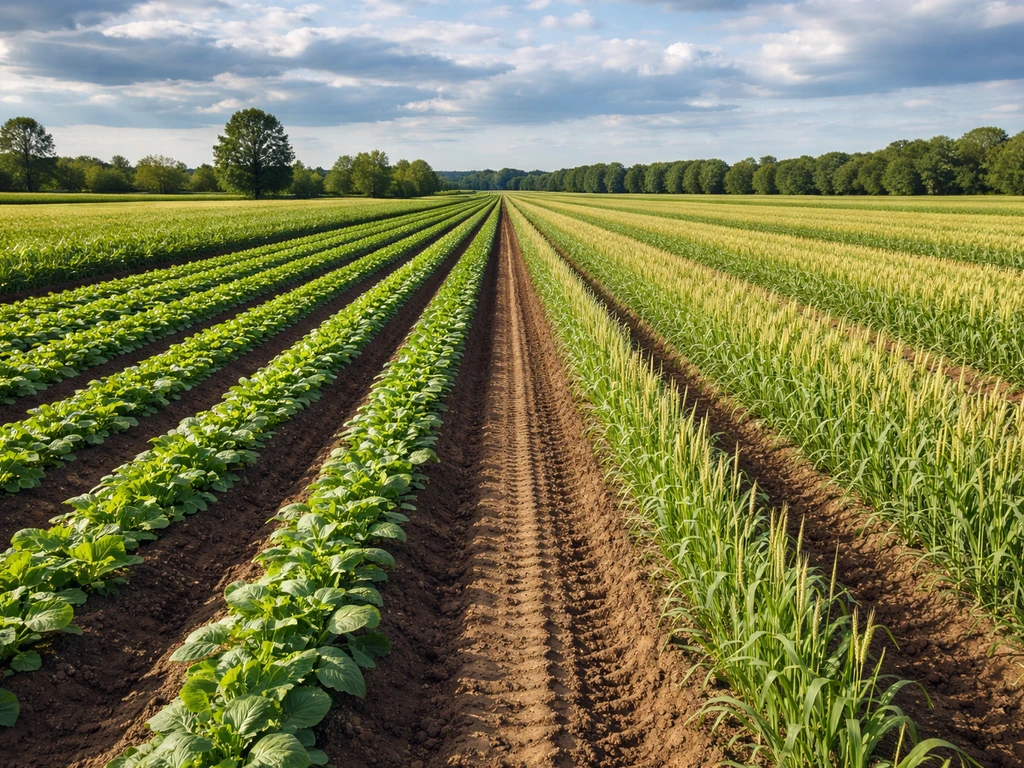
Once you understand that logic, you can apply it directly to your own backyard or homestead, even if your "farm" is a few raised beds. Choosing and maintaining farmland that can be used to grow crops requires matching soil, water, and crop choices to your long-term conditions.
The main reasons farmers grow crops
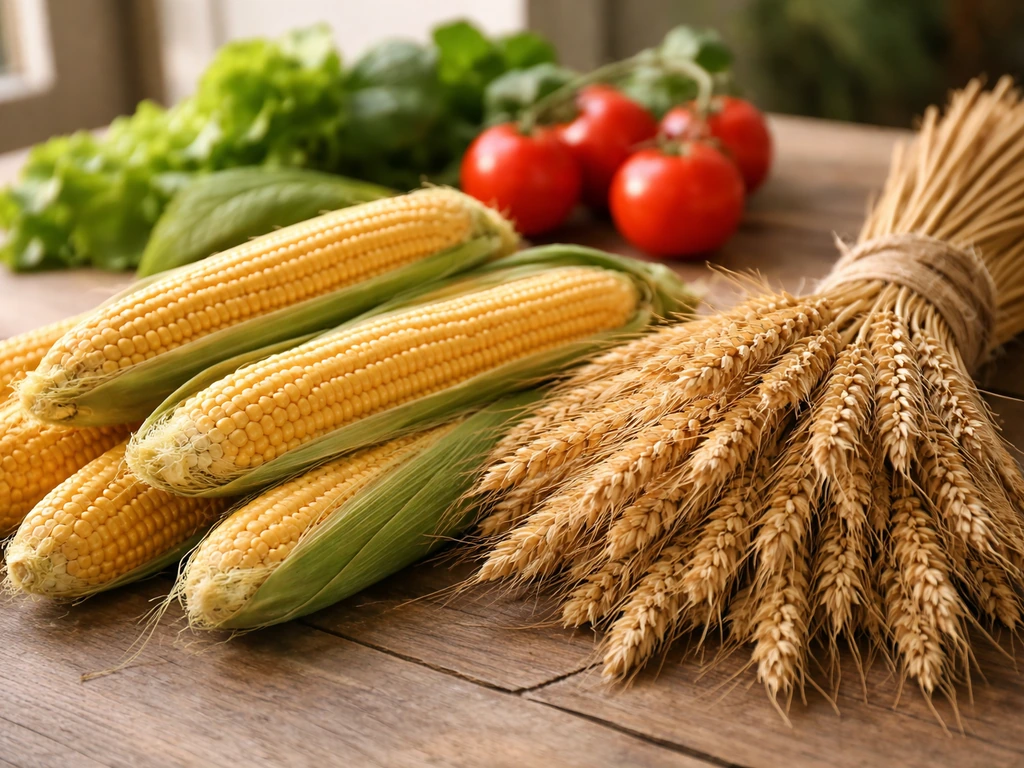
At the most basic level, growing crops is how humans feed themselves and their animals. That's been true for thousands of years, and it's still the foundation of why cropping systems exist. But modern farmers are also running a business, which means profitability and risk management layer on top of that basic survival need.
Food production is the obvious one: crops supply calories, protein, fiber, and micronutrients to local and global populations. Farmers growing grain crops like corn, wheat, and soybeans are largely feeding livestock and supplying commodity markets. Vegetable and fruit growers are more directly feeding people. Either way, the crop is the product.
Profit is the second driver. A farm is a business, and every acre planted is an investment of money, labor, and time. Farmers choose crops based on what the market will pay versus what it costs to grow them. A crop with strong demand and decent margins gets planted. One that's unprofitable gets rotated out, regardless of how easy it is to grow.
Risk management is the third reason, and it's one that home growers often underestimate. The USDA describes agricultural risk as coming from uncertain production: weather, disease, and pests can all affect both the quantity and quality of what you harvest. Smart farmers diversify what they grow, use crop insurance, and build rotations that spread their exposure. They're not just planting for the best-case season; they're planning around the bad ones.
Economic goals: income, market access, and the cost vs. yield calculation
Every crop a farmer plants goes through a basic math check before it goes in the ground. What does it cost to produce per acre or per unit, and what will it sell for? If the numbers don't work, neither does the crop. This cost-versus-yield calculation drives everything from which varieties get ordered to whether a field gets planted at all in a given season.
Market access matters just as much as production potential. A farmer who grows a beautiful crop but has no way to sell it at a fair price is in trouble. That's why you see farmers near urban centers growing high-value specialty crops for farmers markets and restaurants, while farmers in more remote areas stick to commodity crops with established buying infrastructure. The logistics of getting your product to someone willing to pay for it shapes what you grow.
Crop revenue insurance is a major tool here. The USDA's Risk Management Agency subsidizes insurance premiums so farmers can transfer some of the financial risk created by yield swings and price volatility. That safety net influences which crops farmers feel comfortable planting at scale, because crops with good insurance products carry less financial danger if the season goes sideways.
Diversification is another economic strategy. Planting multiple crops, or combining crops with livestock, means one bad season in one area doesn't wipe out the whole operation. Planting multiple crops, or combining crops with livestock, can also support healthier soils and more consistent harvests, which is a major part of how animals help farmers grow crops. The USDA categorizes on-farm diversification as a primary risk management strategy, and it's exactly the logic home growers should borrow: don't bet everything on tomatoes.
Survival needs: local food supply and food security
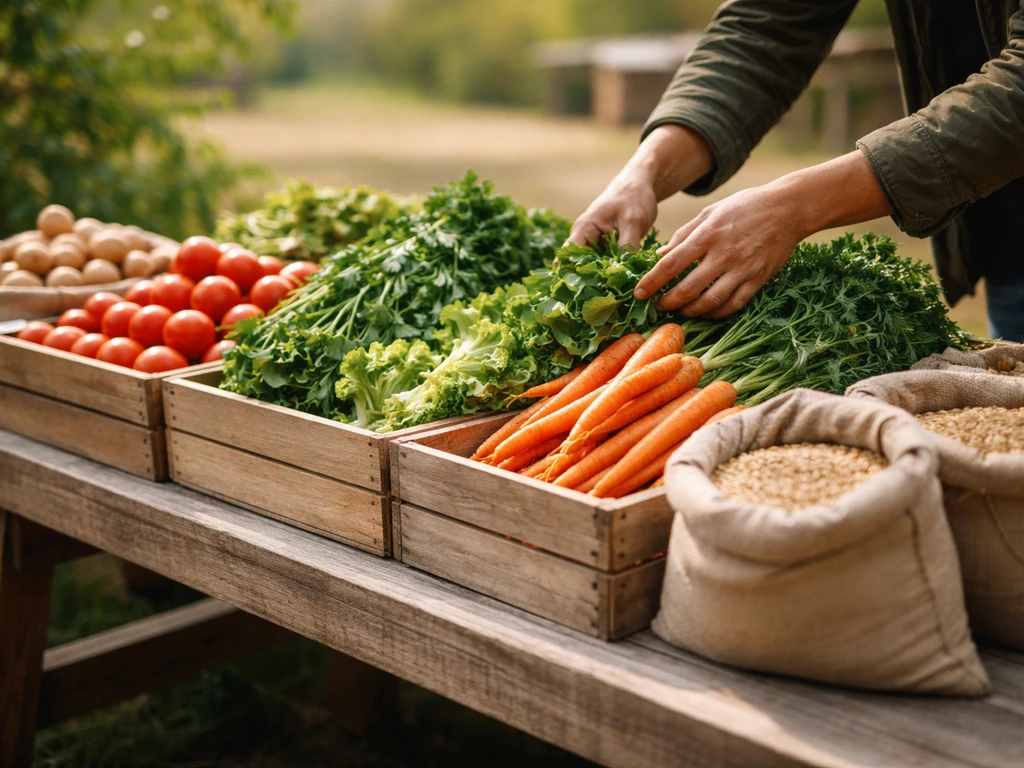
The FAO defines food security as a condition where all people at all times have access to adequate quantities of safe and nutritious food to lead a healthy and active life. Farmers are the foundation of that system. Without local crop production, communities depend entirely on supply chains that can and do break down.
The FAO also identifies a category called "transitory food insecurity," which describes households that can usually meet their basic needs under normal conditions but become vulnerable when external shocks disrupt food production or distribution. This describes most suburban and rural households today. You're fine until you're not. Local growers, including home gardeners, act as a buffer against those shocks.
That buffer role is part of why farmers take their responsibility seriously. A farmer who grows vegetables for a regional market isn't just running a business; they're part of what keeps their community fed when grocery store shelves get thin. Home growers who produce even a portion of their own food are participating in the same system at a smaller scale, and that participation has real security value.
Soil and land-use benefits: fertility, rotations, and erosion control
Experienced farmers don't just think about this year's crop; they think about what the land will be able to produce in five or ten years. Soil health is a long-term investment, and crop choices are one of the biggest levers they have to manage it.
Crop rotation is one of the most powerful tools in that toolkit. The SARE (Sustainable Agriculture Research and Education) program describes rotation as a way to enhance soil health and help maintain cleaner surface and groundwater, all while setting up subsequent crops for better performance. Rotating crops disrupts pest and disease cycles that build up when the same plant family grows in the same spot year after year.
Cover crops play a supporting role between cash crop seasons. Legume cover crops act as natural fertilizers by fixing atmospheric nitrogen into the soil, while grasses scavenge nutrients that would otherwise be lost over winter. USDA's NRCS points out that keeping soil covered year-round also protects against wind and water erosion, which becomes increasingly important as storm patterns intensify.
Erosion control isn't just an environmental concern; it's a financial one. Topsoil loss means reduced fertility, lower yields, and eventually land that won't support productive cropping at all. SARE lists erosion prevention as one of the primary benefits of thoughtful cover cropping, alongside improved soil biology, better water retention, and weed suppression. Healthy soil buffers drought and floods better than depleted soil, which is a practical advantage every growing season.
Matching crops to climate, water, and growing conditions
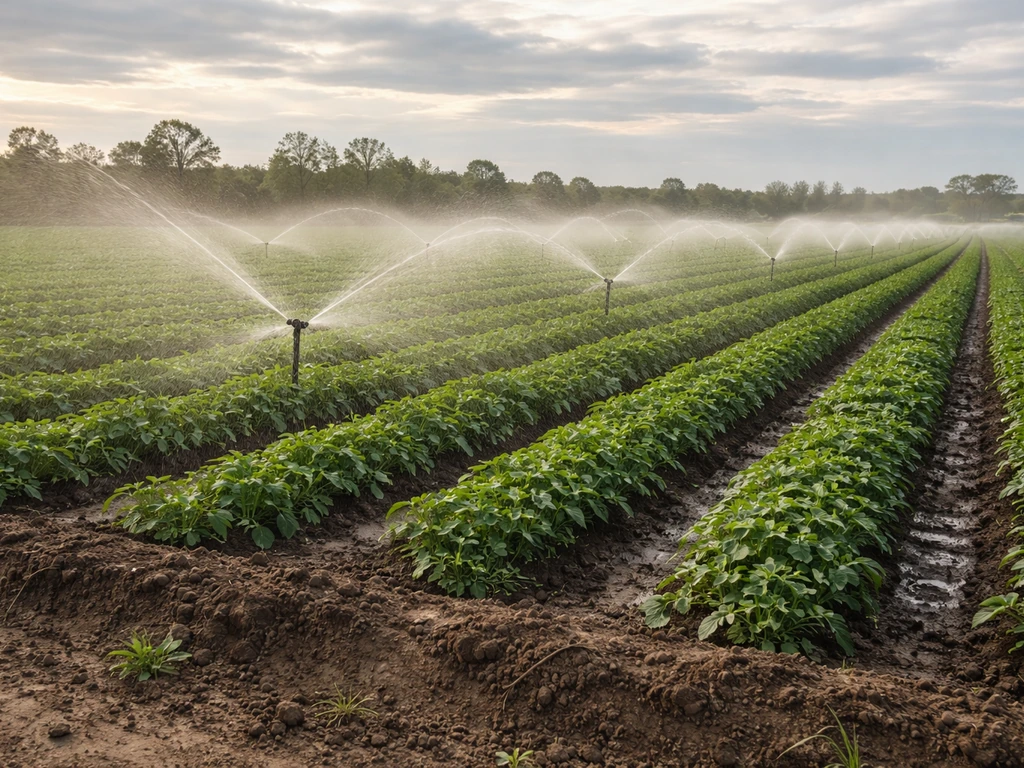
Farmers don't pick crops they love; they pick crops that match where they live. Climate, water availability, soil type, and frost dates all narrow the list of viable options before economics even enters the picture. A farmer in an arid region with limited irrigation water isn't going to try to grow crops that demand heavy, consistent rainfall. That's not pessimism; that's smart resource management.
Irrigation scheduling is a good example of this matching process. Irrigation scheduling is a great example of using land to grow food crops is an example of matching water use to local conditions and crop needs. The FAO describes deficit irrigation strategies that include selecting shorter-season crop varieties, allocating water to more drought-tolerant crops, and irrigating only during the growth stages where water stress does the most damage. University of Minnesota Extension's checkbook method for irrigation scheduling tracks daily soil water balance to time irrigation precisely, rather than watering on a calendar. The goal is to use less water without sacrificing yield by understanding exactly when each crop needs it most.
Planting date is another climate-driven decision. USDA Climate Hubs' AgroClimate Planting Date Planner factors in crop variety, county-level data, soil type, irrigation management, and even ENSO phase (El Niño or La Niña conditions) to estimate yield probability and freeze risk for specific planting windows. Farmers using tools like this aren't guessing; they're optimizing planting dates based on the actual climate and probability of a good outcome.
Integrated Pest Management, or IPM, is another way farmers match their practices to local conditions. The EPA describes IPM as an approach that relies on a combination of common-sense practices rather than a single action, pairing crop monitoring with cultural controls, biological controls, and selective chemical use only as a last resort. Rotating crops is a core component of IPM because it breaks pest cycles that build up when the same host plant keeps coming back to the same field.
What home gardeners can learn from farmer logic
The same logic farmers use scales down perfectly to a backyard garden or small homestead. You don't need 200 acres to think like a farmer. You need clear goals, honest assessment of your conditions, and a simple plan that builds on itself each season.
Start with your goals
Farmers grow what serves their purpose: income, feeding their family, or managing land health. You should do the same. Are you trying to cut your grocery bill, build food security, grow the freshest possible vegetables, or all three? Your goal shapes your crop list. If food security is the priority, focus on high-calorie, long-storing crops like potatoes, winter squash, and dried beans. If saving money is the goal, grow what's expensive at the store and easy to grow in your climate: tomatoes, peppers, lettuce, and herbs consistently offer the best return per square foot for most home growers.
Assess your conditions honestly
University of New Hampshire Extension recommends that most vegetables need full sun, defined as more than 8 hours of direct sunlight per day, and a soil pH in the 6.5 to 6.8 range. Before you plant anything, observe your space through the day and through the season. A spot that looks sunny in March may be heavily shaded by midsummer. A soil test, recommended by University of Minnesota Extension, tells you whether you need lime to adjust pH or amendments to correct nitrogen, phosphorus, or potassium deficiencies. Guessing on soil costs you in poor yields. A test costs around $15 to $20 and saves you far more.
Rotate your crops every year
Clemson Extension makes the point clearly: in a small home garden, repeatedly growing the same plants in the same spot increases disease and pest carryover significantly. Rotate by plant family, not just by crop, because crops in the same family share pests and diseases. Don't follow tomatoes with peppers; both are nightshades. West Virginia University Extension offers a multi-year rotation guide specifically designed for home vegetable gardens, and following a simple 3 or 4-year rotation dramatically reduces your dependence on pesticides while improving soil biology. This is exactly what commercial farmers do with cover crops and multi-year rotation plans, just at a scale that fits your yard.
A simple framework for planning your crop list
Use this decision sequence to narrow your crop choices the way a farmer would:
- Define your goal: nutrition, savings, food security, or abundance
- Inventory your conditions: sun hours, water source, soil type, frost dates, and available space
- Run a cost-versus-yield check: what does this crop cost to grow (seeds, amendments, water, time) versus what it saves or produces
- Choose crops that match your climate and water, not crops you wish you could grow
- Build in rotation from day one by dividing your space into beds or zones assigned to plant families
- Add a cover crop or mulch for any bed that sits empty between seasons to protect soil and cycle nutrients
The farmers who have been doing this for generations aren't working from instinct alone; they're applying a repeatable system. That system works whether you're managing 500 acres or 500 square feet. The core logic is the same: match your crops to your goals and your conditions, protect your soil, manage risk by diversifying, and build on what you learn each season. That's why farmers grow crops, and it's exactly why you should too.
Do farmers kill animals to grow plants? In most cases, crop farming focuses on growing plants, not slaughtering animals for that purpose. If you want the bigger historical picture, it also helps to look at how did humans learn to grow crops and how early farming decisions shaped what people could plant next.
FAQ
If farmers grow for income, why don’t they always plant the highest-profit crop each year?
Because profitability depends on more than the market price, planting the same crop repeatedly can raise pest, disease, and soil nutrient problems, and input costs (seed, fertilizer, labor, water) can change by season. Many farms also rotate to keep future yields stable, so the “best crop” today may reduce returns later if it breaks soil health or increases risk.
How do farmers decide between growing commodity crops versus selling through local markets?
It’s usually a tradeoff between marketing certainty and potential price. Commodity crops often have established buyers and predictable channels, but lower margins, while direct markets (farmers markets, restaurants, CSAs) can pay more per unit but require consistent quality, packaging, time to sell, and dependable delivery schedules.
What does crop insurance actually protect farmers from, and what might it not cover?
Most policies are designed to cover yield losses and sometimes revenue shortfalls tied to price changes, but coverage varies by crop, location, and specific causes of loss. Producers still plan around weather and pest risk because insurance is not a guarantee of full income, and they may pay deductibles or face limits on certain damage types.
Why is diversification recommended when one crop often looks like it would do best?
Because weather, pests, and diseases do not affect all crops equally. A crop that thrives under one set of conditions can fail under another, diversification spreads that variability. Farms also diversify within crop families carefully, since crops that are closely related can share the same problems.
How long does it take for soil health practices like cover crops and rotation to show results?
Some benefits appear quickly, like reduced erosion and improved ground cover, but yield and fertility improvements often build over multiple seasons as soil organic matter, soil biology, and water-holding capacity recover. If you stop the practice after a short trial, the gains can fade, so farmers plan changes on a multi-year timeline.
What’s the biggest mistake home gardeners make when they try to “think like farmers”?
Overemphasizing one goal, like maximizing variety or growing what’s cheapest to buy, without matching crops to sunlight, soil limits, and local climate constraints. A practical approach is to start with a short list of crops that fit your conditions, then expand after you’ve measured performance across at least one full season.
How should a beginner handle planting date decisions if they do not have access to advanced planners?
Use local frost dates as a baseline, then confirm with a simple trial in a small bed area (or stagger plantings by 1 to 2 weeks). Pay attention to soil temperature for heat-loving crops, and be ready with row cover or a low tunnel for unexpected cold snaps.
Do farmers really rotate crops by plant family, and how strict should home growers be?
Yes, plant-family rotation is usually more meaningful than rotating by common name, because pests and diseases follow botanical relationships. At home scale, follow at least a multi-year break for the same family in the same spot, for example grouping nightshades together and avoiding repeated nightshade plantings back-to-back.
If water is limited, is “deficit irrigation” always the best approach?
Not always. The best method depends on crop type, rooting depth, soil water capacity, and whether drought stress hits at sensitive growth stages. A safer decision rule is to prioritize water during the periods when stress is most damaging, and pair it with drought-tolerant varieties, mulching, and scheduling based on soil moisture rather than the calendar.
Why do farmers keep soil covered when they aren’t planting a cash crop?
Bare soil loses water faster, is more prone to erosion, and can invite weeds that compete for nutrients. Cover crops also protect soil structure and can add fertility, for example legumes contribute nitrogen, while grasses can reduce nutrient loss over winter. The exact mix and timing depend on your climate and next crop.
What should I do if my market goal conflicts with my climate goal?
Start by fixing feasibility, meaning choose crops you can grow reliably in your local conditions, then adjust your sales strategy. For example, if a high-value crop is marginal, consider growing it only in the most favorable microclimates (best sunniest beds) and focus the bulk production on crops that match your harvest window.
Can farmers grow crops without animals, and what changes in their strategy?
Yes. Livestock can be part of a diversification plan, but crop-focused farms still manage fertility and risk through rotation, cover crops, compost, and nutrient budgeting. If you do not have animals, you typically rely more heavily on plant-based fertility inputs and careful soil testing to avoid nutrient gaps.
Next Article
How Did Humans Learn to Grow Crops Then and Now
From foraging to seed saving: how humans learned to grow crops and a modern home learning plan to try today.