Yes, farmers do sometimes kill animals to grow plants, but the full picture is a lot more nuanced than a simple yes or no. The killing that happens in the context of crop production mostly targets pests like rodents, insects, and birds that directly damage crops, along with wildlife like deer and rabbits that eat or trample plants. It's separate from livestock farming, where animals are raised specifically for meat or other products.
Do Farmers Kill Animals to Grow Plants? The Real Reasons

Marcus Hendrick
5 Jun 2026
And a significant chunk of harm to animals from farming is indirect, things like habitat loss and displacement, not a farmer actively deciding to kill something. If you're growing food at home and want to understand what's actually happening, and how to handle wildlife conflicts without resorting to lethal methods wherever possible, here's the honest breakdown.
What farmers actually mean by 'killing' (it's not all the same thing)
When people ask whether farmers kill animals to grow plants, they're often conflating three very different things. It helps to separate them clearly before going any further.
- Pest control: Targeting insects, rodents, birds, or wildlife that are actively destroying crops. This is the category most directly tied to growing plants, and it's where the real conversation about plant farming and animal harm belongs.
- Livestock harvesting: Raising and slaughtering animals for meat, dairy, eggs, or fiber. This happens on many farms but is a separate enterprise from crop production. A farmer growing soybeans doesn't kill pigs to grow those soybeans.
- Indirect harm from habitat change: When land is cleared for fields, tilled, or treated with pesticides, animals lose habitat or get caught in equipment. This is real harm, but it's not the same as a farmer making a decision to kill a specific animal.
Most ethical debates about farming and animal harm actually sit in that third category, the unintended consequences of growing at scale. But for home gardeners, the most practical question is the first one: when wildlife and garden crops collide, what actually happens, and what should you do about it?
Why crop farming sometimes involves animal control
Farmers deal with animal pressure for a few concrete reasons, and understanding them helps you make better decisions in your own garden. Understanding why do farmers grow crops also helps you see how wildlife conflict fits into the broader goal of protecting yields. To understand the tools mayan farmers used, it helps to look at how they prepared soil, selected crops, and managed pests using practices that fit their local environment.
The USDA's Animal and Plant Health Inspection Service (APHIS) Wildlife Services program exists specifically to help manage wildlife damage to agriculture, natural resources, property, and human safety. This approach is how animals can help farmers to grow crops, mainly by allowing targeted animal control that reduces pest pressure while prioritizing nonlethal methods. Their guidance acknowledges both lethal and nonlethal methods, and they've even built out a formal Nonlethal Initiative because the default isn't always a kill decision.
The main reasons crop growers turn to animal control include:
- Crop protection: Rodents, deer, rabbits, birds, and insects can wipe out a planting fast. A deer family can devastate a market garden in one night. A vole population left unchecked can destroy root crops underground without you even seeing the damage until harvest.
- Disease prevention: Some animals act as vectors for plant diseases or carry pathogens that affect both crops and livestock. Rodents can spread bacterial and fungal diseases through droppings in grain storage.
- Invasive species management: Non-native animals like European starlings, feral hogs, or certain rodent species can cause outsized damage and may require active management to protect both crops and native ecosystems.
- Worker and public safety: In some cases, large predators, venomous animals, or aggressive wildlife near farm operations create genuine safety risks that require management.
The key point from USDA's Integrated Wildlife Damage Management program (Directive 2.105) is that these situations are supposed to call for a management plan, not a reflexive kill response. Lethal control is one tool in a broader toolkit, not the automatic starting point.
Which animals are actually affected, and how direct is the harm?
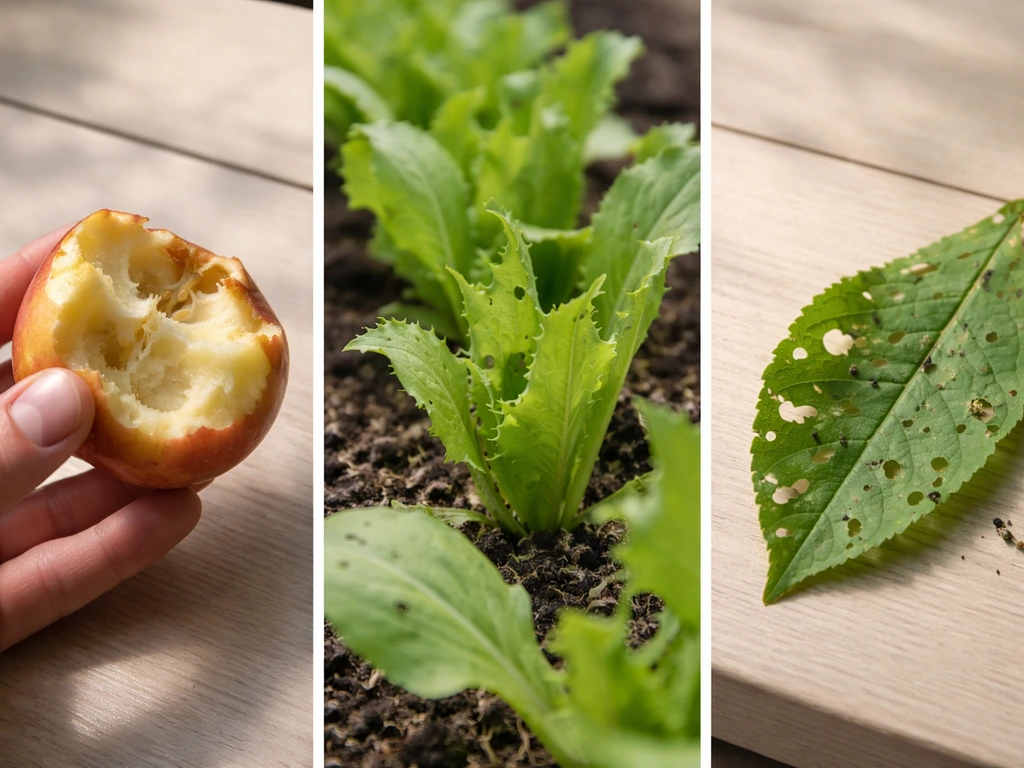
In commercial crop farming, the animals most commonly involved in damage management decisions fall into a few categories. The harm ranges from very direct (targeted trapping or shooting) to entirely unintentional (a bird flying into equipment, or a rabbit displaced when a field is tilled).
| Animal Type | Main Threat to Crops | Harm Type | How Often Lethal? |
|---|---|---|---|
| Insects (aphids, caterpillars, beetles) | Foliage, fruit, and root damage | Pesticide-based, largely indirect | Very common via insecticides |
| Rodents (voles, mice, gophers, rats) | Root crops, seeds, grain storage | Trapping or rodenticide | Frequently lethal, especially in storage |
| Deer | Broad crop and garden damage | Exclusion fencing, shooting (with permits) | Lethal used when fencing isn't enough |
| Rabbits | Seedlings and tender plants | Exclusion, trapping, shooting | Often nonlethal first, then lethal |
| Birds (starlings, crows, geese) | Fruit, grain, and seedling damage | Scare tactics, netting, sometimes lethal | Lethal permitted for some species under federal law |
| Large predators (coyotes, foxes) | Poultry and small livestock | Guardian animals, fencing, lethal removal | Lethal used as last resort or for confirmed killers |
| Soil-dwelling organisms (grubs, nematodes) | Root systems | Targeted pesticides or biologicals | Rarely framed as 'killing animals' but still mortality |
For home gardeners, the animals you're most likely to deal with are deer, rabbits, voles, gophers, birds, and insects. Predator conflict usually only becomes relevant if you're also keeping chickens or other small livestock. The good news is that almost all of these situations have solid nonlethal options you can try first.
Non-lethal approaches that actually work in home gardens
This is where most home gardeners should spend 90% of their energy. In my experience, preventing conflicts before they start is so much easier than trying to manage an established pest population mid-season. University extension services consistently frame nonlethal prevention and exclusion as first-line strategies in integrated pest management, and for good reason: they work, they're cheaper in the long run, and they don't create the legal and ethical headaches that lethal control can.
Physical exclusion (the most reliable method)
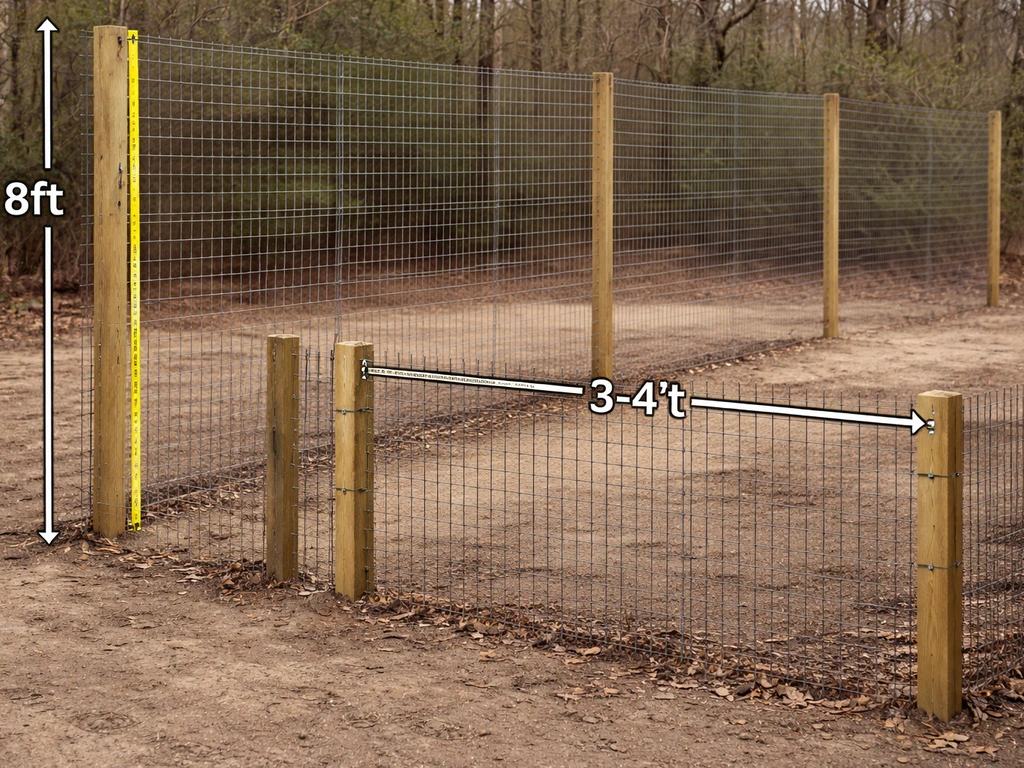
- Deer fencing: An 8-foot fence is the gold standard for deer exclusion. A double fence with two 4-foot barriers spaced 3 to 4 feet apart also works because deer won't jump where they can't see a clear landing. Electric fencing with a peanut butter bait wire is highly effective and less expensive than a full perimeter fence.
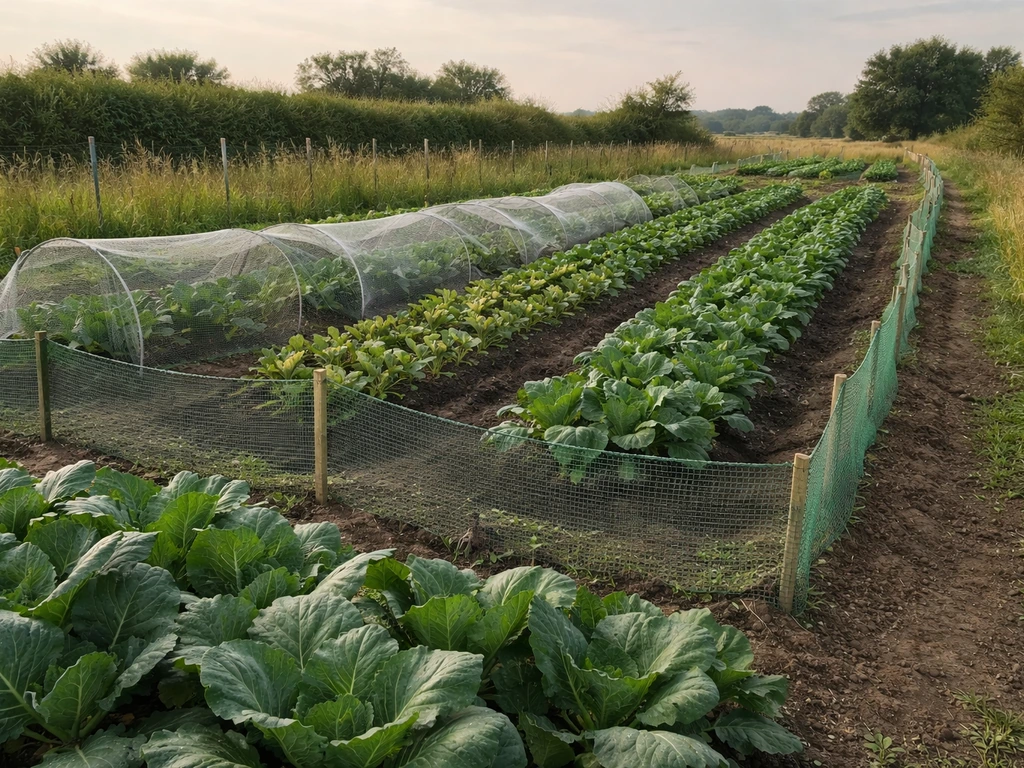
- Rabbit and rodent fencing: A 2-foot-tall chicken wire fence buried 6 to 12 inches underground deters both rabbits and burrowing rodents. Use 1-inch mesh or smaller for best results.
- Row covers: Lightweight floating row cover fabric (0.5 to 1.25 oz per square yard) physically blocks insects, birds, and small mammals from reaching plants. It's one of the most underused tools in the home garden.
- Hardware cloth cages: For protecting individual plants or transplants, a simple cylinder of 1/4-inch hardware cloth around the plant base keeps voles and rabbits off during the vulnerable early weeks.
- Bird netting: Stretched over fruit trees or berry bushes on a simple frame, bird netting is far more effective and less harmful than any deterrent spray.
Deterrence and habitat management
- Motion-activated sprinklers: These work surprisingly well for deer and some larger animals. Position them at entry points around the garden perimeter.
- Predator scent deterrents: Products using coyote urine or similar scents can reduce deer and rabbit pressure, though they need reapplication after rain.
- Remove attractants: Don't leave fallen fruit on the ground, keep compost in sealed bins, and store seed and grain in rodent-proof metal containers. University of Nevada Reno's extension guidance specifically names sanitation and rodent-proof storage as the first step in any rodent management program.
- Companion planting: Aromatic plants like lavender, rosemary, and strongly-scented herbs can reduce insect pest pressure and make the overall garden less appealing to browsing animals. This is a genuine, if modest, deterrent.
- Eliminate shelter near beds: Tall grass, brush piles, and dense ground cover adjacent to your garden give rodents and rabbits ideal hiding spots. Keeping a mowed or cleared buffer zone around your growing area reduces their comfort level significantly.
Crop-level strategies that reduce pressure
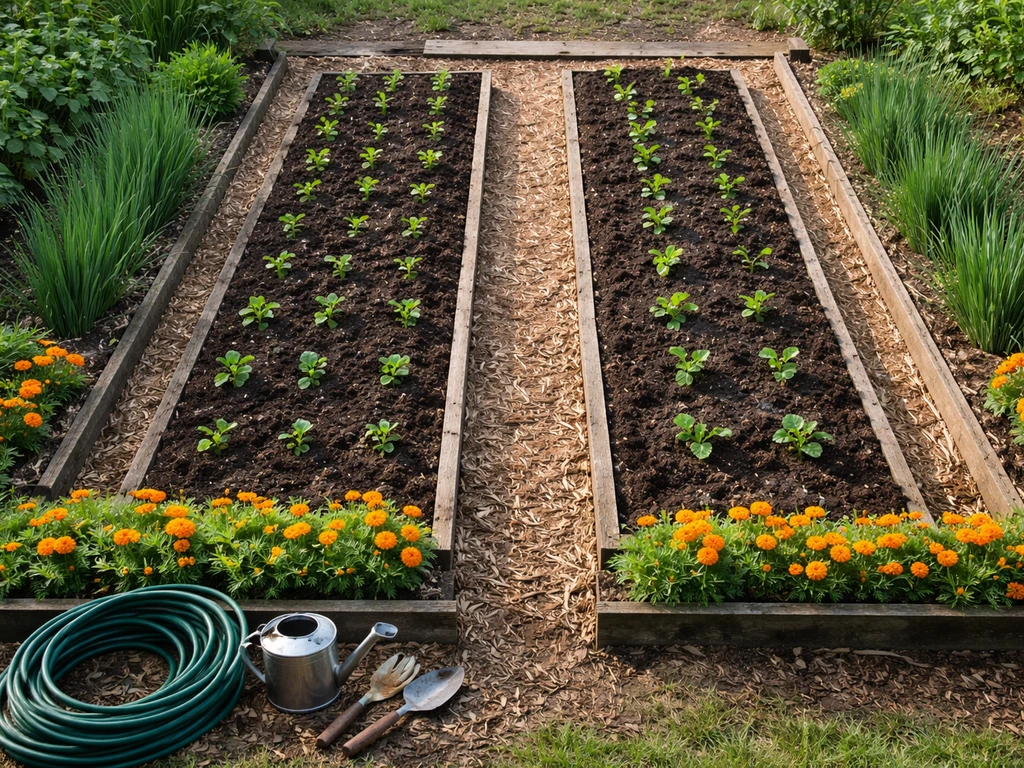
- Plant resistant or unpalatable varieties: Deer and rabbits avoid many herbs, strongly-scented flowers (like marigolds), and certain alliums. Designing your garden borders with these plants reduces pressure on more palatable crops inside.
- Crop rotation: Moving plant families around each season breaks pest cycles for soil-dwelling insects, nematodes, and even some rodents that key in on specific food sources.
- Timing plantings: Getting transplants in the ground early when they're stronger, and covering them through the most vulnerable seedling stage, dramatically reduces bird and insect damage.
When lethal control becomes part of the conversation
Sometimes, despite your best efforts, nonlethal methods aren't enough or aren't practical for a specific situation. It's worth being honest about this rather than pretending it never comes up. The framework the USDA uses for wildlife damage management (Directive 2. WS Directive 2.
105 frames wildlife damage management using an integrated approach that considers both lethal and nonlethal options and planning decisions that take nontarget species and environmental considerations into account [Directive 2. 125](https://www. aphis. usda.
gov/sites/default/files/2. 105. pdf). 125) is actually a reasonable one for home gardeners too: consider whether damage is significant, whether nonlethal methods have been tried and failed or are genuinely impractical, and whether lethal control is legal and humane for the animal involved.
Directive 2. 125 lays out that wildlife damage conflicts may require direct management and can involve lethal or nonlethal methods, including combinations, rather than treating “kill” as the default framing [consider whether damage is significant, whether nonlethal methods have been tried and failed or are genuinely impractical](https://www. aphis. usda.
gov/sites/default/files/2. 125. pdf).
A few honest decision points for home gardeners:
- Check your local laws first. Most birds in the US are protected under the Migratory Bird Treaty Act. You cannot legally trap, shoot, or kill most songbirds or raptors. Deer, rabbits, and other wildlife are regulated by state game departments, and killing them usually requires a permit or a hunting license even on your own property.
- Try at least two nonlethal methods for at least one full season before deciding they don't work. Most people give up on exclusion fencing because they installed it incorrectly or used the wrong mesh size.
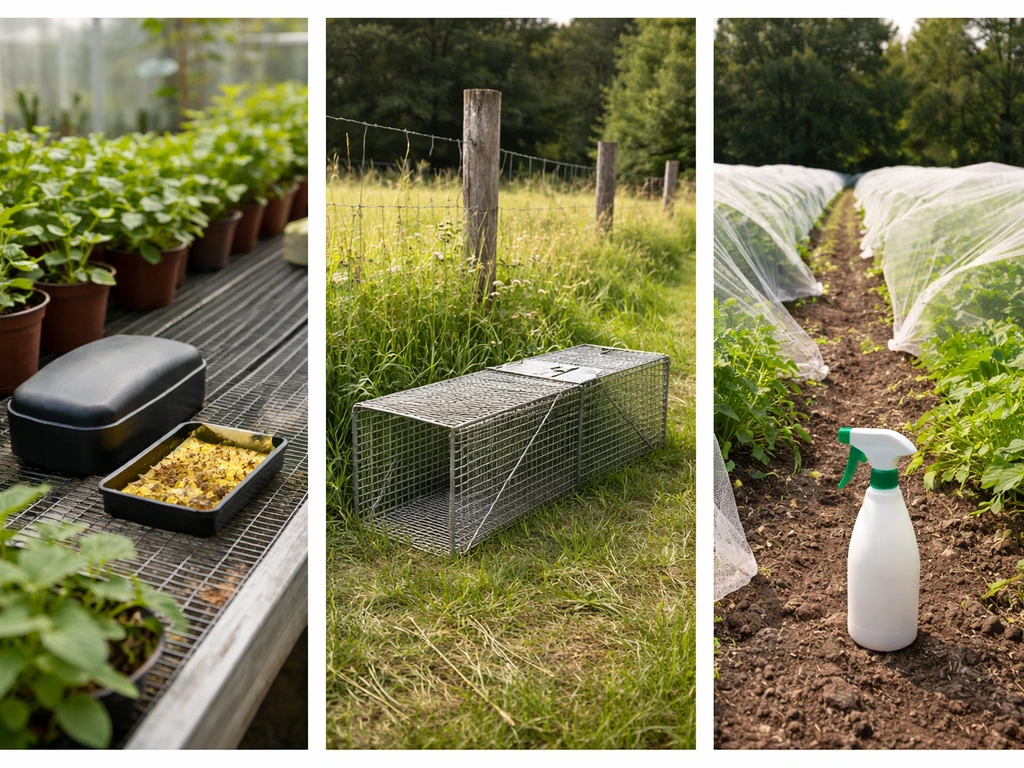
- If you use traps, check them at least once every 24 hours and be prepared to deal with whatever you catch humanely. Live trapping and relocating animals is often less effective than people think, and in many states it's actually illegal to release wildlife in a new location without a permit.
- Rodenticides are a genuine last resort. Second-generation anticoagulant rodenticides in particular cause secondary poisoning of owls, hawks, and foxes that eat poisoned rodents. If you have a rodent problem, snap traps in a tamper-resistant station are far more targeted.
- When in doubt, call your state's cooperative extension service or a licensed wildlife control operator. They can tell you what's legal in your area and what actually works for your specific pest species.
How to plan your garden to minimize animal conflicts from the start
The best time to think about wildlife conflict is before you plant, not after you've watched something eat your squash. A little upfront planning can dramatically reduce the pressure you'll face across the season. This is also one of the most practical aspects of building a self-sufficient garden: animals are going to be attracted to any productive food source, so the question is how you structure your space to work with that reality.
- Assess your local wildlife pressure before you choose your site and layout. Talk to neighbors, look for tracks and droppings, and check local extension resources for which animals are most active in your area. In deer-heavy zones, a fenced garden is essentially non-negotiable.
- Design for layered protection. Think of your garden as having zones: an outer deterrent layer (aromatic plants, motion-activated sprinklers), a physical barrier layer (fencing or row covers), and a garden-level layer (resistant varieties, sanitation). Each layer reduces pressure so no single method has to work perfectly.
- Build soil health and plant diversity to reduce insect pest pressure naturally. Healthy soil with a diverse biology supports beneficial insects, predatory beetles, and ground beetles that eat pest eggs and larvae. A monoculture of one crop in poor soil is an invitation for pest outbreaks.
- Include habitat for beneficial predators. A small patch of native wildflowers or a brush pile on the perimeter (away from the garden) can support owls, hawks, and snakes that keep rodent populations in check. This is genuinely one of the most effective long-term pest management strategies I've used.
- Keep records. Note when and where you see damage, what the damage looks like, and which methods worked or didn't. After two or three seasons you'll have a clear map of your pressure points and a toolkit that's specific to your site.
There's a broader point worth making here too. Animals are a part of any food-growing ecosystem, not enemies to be eliminated. Farmers who focus on soil health, crop diversity, and habitat management, the same principles that come up in discussions about why farmers grow cover crops or how animals help farmers grow crops, tend to face less severe wildlife pressure over time. The goal isn't a sterile zone with no wildlife. It's a managed balance where your crops are protected and the surrounding ecosystem stays functional.
Your practical checklist: what to do this week
Whether you're setting up a new garden or dealing with an existing problem, here's how to put this into action right now. Why farmers grow cover crops is also about prevention and building healthier, more resilient soil systems that reduce pest pressure over time why do farmers grow cover crops.
- Walk your growing area and identify current or past damage: look for tracks, droppings, chewed stems, tunnels, and stripped fruit. This tells you which animal you're dealing with before you buy any products.
- Eliminate attractants immediately: seal compost, remove fallen fruit, store seeds and grain in metal containers with tight lids.
- Install or audit your fencing: if you have deer pressure, make sure your fence is at least 8 feet tall or set up a double-fence. Check for gaps at ground level that rabbits and voles use.
- Put row cover over your most vulnerable crops right now, especially seedlings and transplants. A $20 roll of floating row cover protects an entire bed and handles insects, birds, and small mammals.
- Plant a deterrent border if you're in the planning stage: marigolds, lavender, catmint, or alliums around the perimeter of your beds add a real layer of defense.
- Check your local extension service website or call their office to find out which animals are protected by law in your state and what permits you'd need if nonlethal methods fail.
- If you're dealing with an active rodent problem, set snap traps in tamper-resistant stations tonight. Check them every morning and dispose of catches promptly.
- Commit to one season of testing nonlethal methods fully before escalating. Document what you try and what happens so you have real data, not guesses, to work with next year.
The honest answer to whether farmers kill animals to grow plants is yes, sometimes, but it's a lot more targeted and context-dependent than the dramatic version of that claim suggests. For home gardeners, the good news is you have more flexibility and more options than a commercial operation does. You can build a garden that's genuinely productive, minimizes harm to wildlife, and doesn't require a kill decision for most common pests.
To understand where this whole tradition began, it helps to look at how did humans learn to grow crops and why it became such a foundational shift. It takes some upfront planning, the right physical barriers, and a willingness to observe and adapt, but it's absolutely doable at any scale from a container garden to a half-acre homestead plot.
Using land to grow food crops is an example of how people and animals can overlap, which is why planning and nonlethal options matter.
FAQ
If I see a farmer killing wildlife near fields, does that mean they are doing it to make the crops grow better?
Often yes, but it is usually because the animal is causing measurable crop damage (feeding, trampling, nest damage), not as a general goal to reduce wildlife. In many places the decision follows an inspection or documented damage threshold, and routine, ongoing killing without justification is typically not the approach described in wildlife-damage programs.
Are farmers required to try nonlethal methods before lethal control?
In many managed situations, yes. The common framework is to require a management plan and to document what nonlethal options were attempted or why they cannot work for that site, like timing, fencing feasibility, or protected species restrictions. Exact legal requirements vary by location and the species involved.
What nonlethal options actually work for deer and rabbits, not just “scare them once”?
Deer and rabbits usually need either physical exclusion or multi-layer deterrence that changes over time. For rabbits, fine-mesh fencing and bottom seal gaps matter more than spraying repellents once. For deer, taller fencing, motion-activated lights or noise, and removing attractants near the perimeter (like fallen fruit and lush edges) are typically more effective than a single deterrent.
How do I know whether an animal problem is worth addressing (or just minor loss)?
Use a simple damage assessment: count active feeding sites, estimate the percentage of plants affected, and track whether damage is increasing week to week. If losses are small and localized, focusing on exclusion and crop timing often prevents escalation. If damage is severe and persistent, then you can consider more intensive measures because the “cost” of inaction is higher.
Can trapping or lethal control be illegal even if the animal is damaging my garden?
Yes. Many jurisdictions regulate when lethal methods are allowed, which species can be targeted, and whether you need a permit or must use a licensed operator. Protected species, nesting seasons, and certain control techniques can trigger additional restrictions, so checking local wildlife regulations matters before acting.
Is it humane to use lethal methods if nonlethal options fail?
Humane outcomes depend heavily on the method, timing, and correct handling. Improvised or poorly executed lethal control can cause prolonged suffering, and that risk is one reason programs emphasize specific standards and training. If you must consider lethal options, prioritize approaches designed for fast, humane outcomes and legality.
Why do some animals move into a garden even when I’m using deterrents?
Because deterrents often fail to address the attractant. Common attractants include accessible water, easy-to-dig soil, dense cover for hiding, and continuous high-value food. Reducing cover, cleaning up edible debris, and breaking up habitat edges can make deterrence less necessary.
What’s the safest first step for preventing pest issues before planting?
Start with planning for exclusion and habitat. Choose resistant varieties where available, position beds so you can install barriers early, and remove or manage weeds and groundcover that support rodents. The biggest benefit comes from preventing pest access, because once populations establish, you often end up chasing a moving problem.
Do farmers lose animals indirectly because of farming practices, and should home gardeners worry about that too?
Yes, indirect harm can include habitat changes, displacement during tilling, and wildlife being affected by land-use changes. Home gardeners can reduce indirect impacts by using less disruptive soil management when appropriate, creating small “wildlife refuge” areas away from the most valuable crops, and timing work to avoid peak nesting periods.
If I keep chickens or small livestock, does predator conflict change what I should do?
It often does. Predator deterrence typically needs to protect the animals first with secure coops, covered runs, and night-time containment, then manage surrounding attractants like unsecured feed or dense hiding cover. Predator control still generally benefits from a plan-based approach that avoids creating secondary problems, like attracting more wildlife to food sources.
Next Article
What Tools Did Mayan Farmers Use to Grow Crops
Hand tools, water control gear, and planting and harvest implements Mayan farmers used to grow maize, beans, squash.