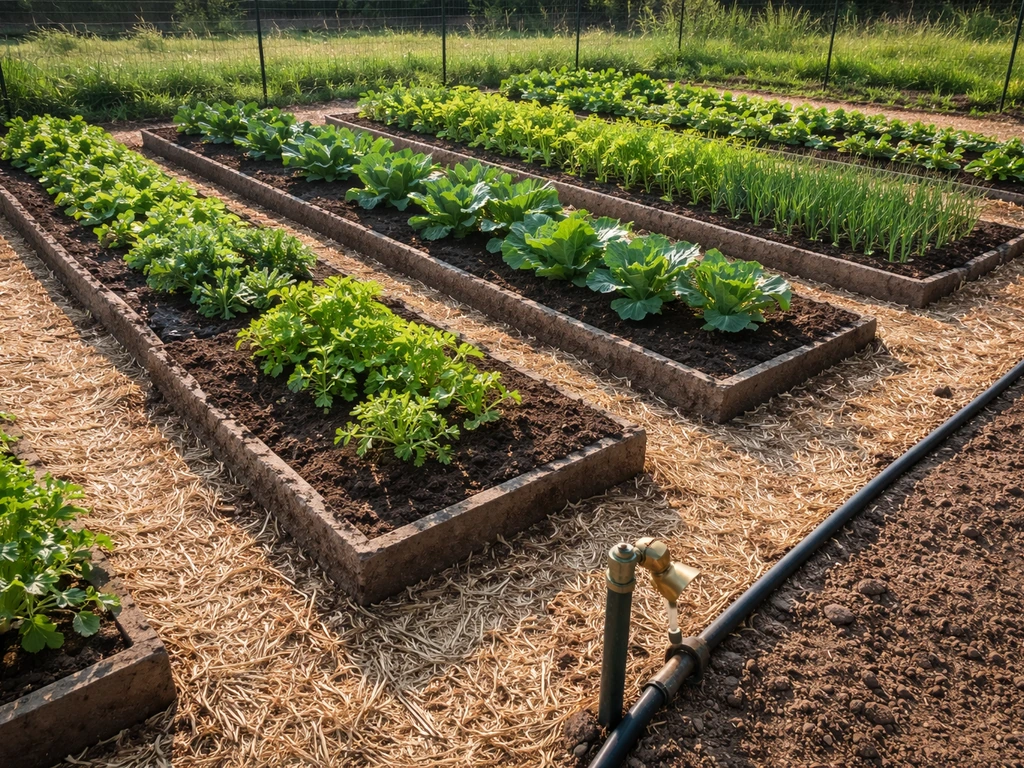
Using land to grow food crops is an example of agricultural land use, specifically a form of crop production. This includes farmland that can be used to grow crops, whether you are farming commercially or growing food at home agricultural land. Whether you're working a half-acre homestead or a few raised beds in your backyard, you're doing the same fundamental thing farmers have done for thousands of years: converting land and labor into edible output.
Using Land to Grow Food Crops Is an Example of Agriculture
Marcus Hendrick
4 May 2026
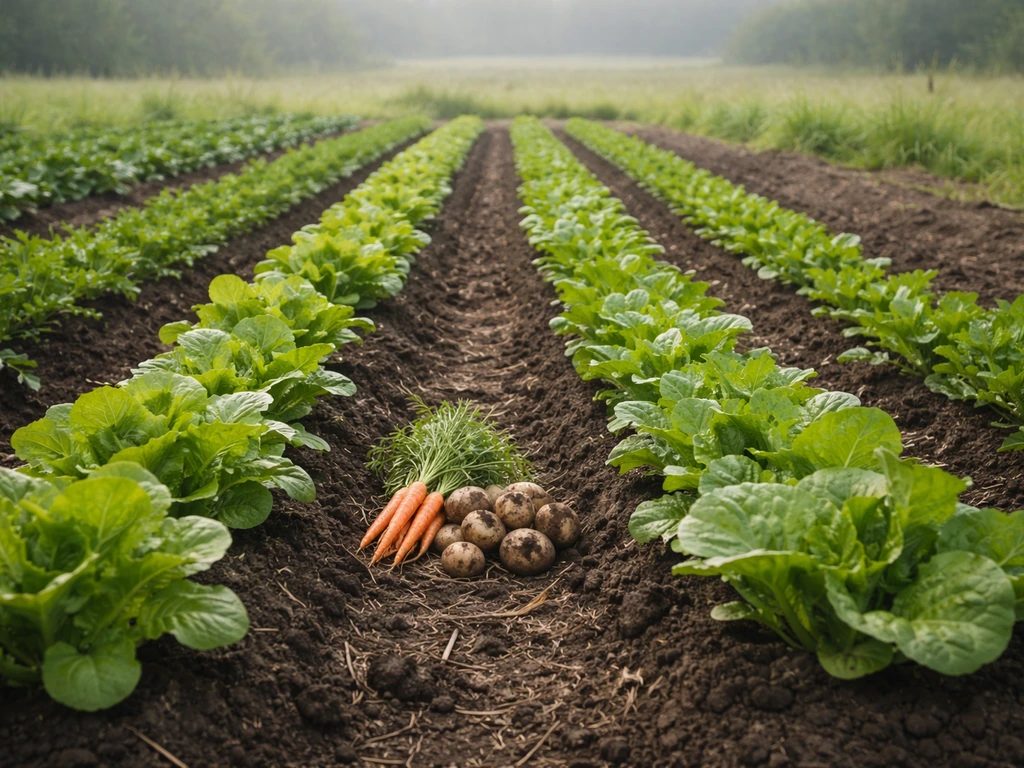
How did humans learn to grow crops? The answer comes down to experimentation, observing patterns in nature, and gradually domesticating plants over many generations farmers have done for thousands of years. That activity falls under what agronomists, regulators, and economists all call crop production, and legally, the land you're using qualifies as agricultural land the moment you start growing food on it.
What exactly does it classify as?
The formal classification is crop production, a subset of agriculture. Britannica defines a crop as "a plant or plant product that can be grown and harvested extensively for profit or subsistence.
" That last word, subsistence, matters a lot for home gardeners. You don't need to sell anything to qualify. The U. S.
regulatory definition of agricultural land (from 40 CFR 503. 11) is straightforward: [it's land on which a food crop, a feed crop, or a fiber crop is grown](https://www. law. cornell.
edu/cfr/text/40/503. 11). Your vegetable beds meet that definition on day one. The USDA places crop production under the broader umbrella of agriculture, forestry, fishing, and hunting, and the NAICS system (the industry classification used by the U.
S. Census Bureau) gives it its own subsector, code 111, covering establishments primarily engaged in growing crops. Home gardening isn't usually tracked in that commercial system, but the logic is identical.
The FAO further breaks this down by recognizing smallholder and subsistence farming as legitimate agricultural categories. Subsistence farming is defined as agricultural activity where food produced is predominantly consumed by the farming household, with little or no surplus for sale. A kitchen garden that feeds your family is, by every meaningful definition, subsistence crop production. This isn't semantics. Understanding the classification helps you think like a producer rather than a hobbyist, which changes how you plan, invest, and measure success.
Home gardening and self-sufficiency fit the definition perfectly
Kitchen gardens have been part of American self-sufficiency culture since colonial times. Wikipedia traces them as private-land food systems attached to dwellings, and academic literature on home gardens frames them as small-scale supplementary food production maintained by household members. That framing is almost identical to the FAO's description of smallholder farming: family labor, family consumption, land close to the household. The scale is different, but the classification is the same.
What makes home food growing fit the agricultural definition is the intent and the output. You're not planting for aesthetics. You're planting to harvest something edible. The moment you orient your land toward producing food crops, you're engaged in crop production, even if your "farm" is four raised beds on a suburban lot. That reframe is useful because it means you can draw on the same planning principles that serious farmers use: soil testing, crop rotation, succession planting, yield estimation, and input budgeting.
How food cropping compares to other ways of using land
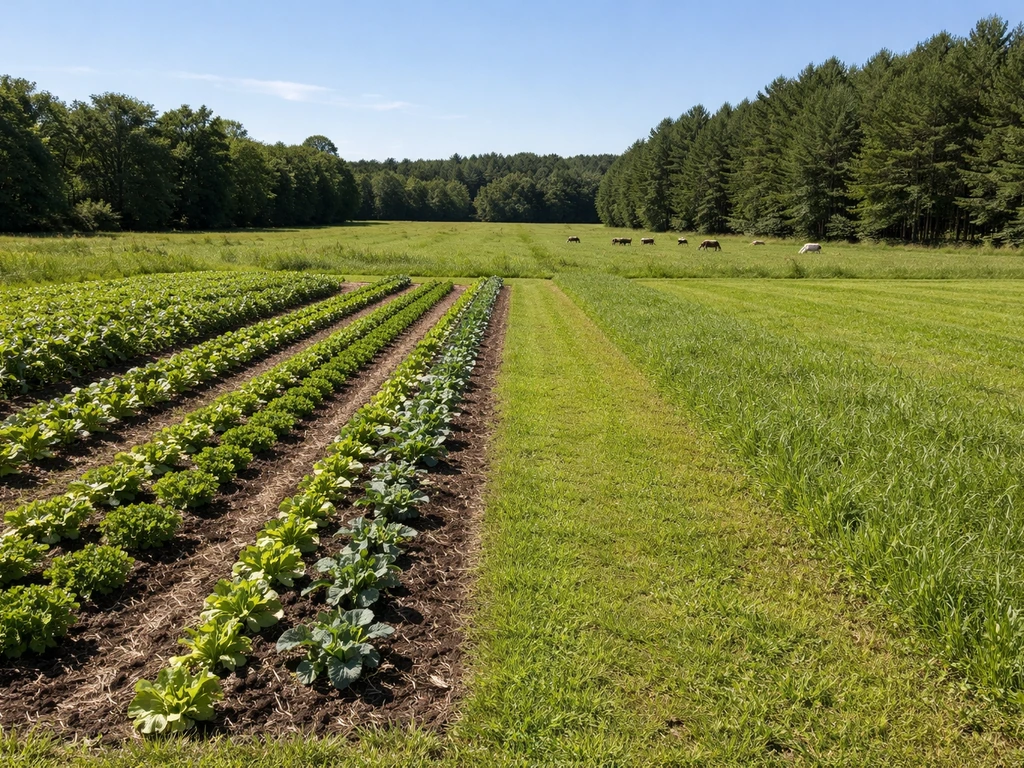
Land can be put to work in several ways, and food cropping is just one of them. Knowing the differences helps you make deliberate decisions about your own space, especially if you're mixing uses or converting something like a lawn or woodlot.
| Land Use | Primary Output | Counts as Crop Production? | Key Distinction |
|---|---|---|---|
| Food cropping (vegetables, grains, fruit) | Edible harvest for human consumption | Yes | Directly produces food; fits agricultural land definition |
| Ornamental gardening (flowers, decorative shrubs) | Aesthetic value | No | Britannica specifically contrasts crops (harvested for profit/subsistence) with plants grown for appearance only |
| Grazing / pasture | Forage for livestock | Partially (feed crop) | Counts as agricultural land; feed crop for animals rather than direct food crop for humans |
| Forestry / timber production | Wood, pulp, fiber | No (unless agroforestry) | USDA distinguishes conventional timber forestry from agroforestry, which can integrate food crops under canopy |
| Fallow / idle land | Soil restoration, no active output | No | Land is resting; no crop being grown or harvested |
The practical takeaway: if you have a mix of lawn, flower beds, and trees on your property, only the portions where you're actively growing edible plants classify as food-crop land use. Ornamental beds don't count, and neither does your lawn unless you convert it. Fallow periods, like leaving soil bare over winter, are a temporary pause in crop production, not a different land use category. Adding a cover crop during that pause, something like winter rye or crimson clover, actually keeps the land in agricultural use and improves soil for the following season.
What counts as a food-crop system at home
Food-crop systems come in a range of formats, and all of them qualify as crop production as long as the end goal is edible output. Here's what that looks like across different scales and setups.
- Vegetable beds (in-ground): The most common setup. Works for nearly every vegetable and requires minimal upfront cost. Soil quality is the main variable.
- Raised beds: Slightly higher startup cost but excellent control over soil mix, drainage, and pest pressure. A 4x4 foot bed can be divided into 16 one-foot squares for intensive planting.
- Conventional rows: Better for crops that need space to sprawl, like squash, corn, or potatoes. Clemson Extension estimates roughly 100 square feet per crop per person for row-style growing.
- Container gardens: Viable for herbs, tomatoes, peppers, and greens on patios or balconies. Not technically land-based, but the same crop-production logic applies.
- Grain plots: Small patches of wheat, corn, or dry beans. Requires more space but dramatically expands food-crop diversity at the homestead scale.
- Orchards and fruit systems: Perennial food crops (apple, pear, berry bushes, grape vines) that produce for decades. Higher upfront time investment; lower annual labor once established.
- Agroforestry plots: Growing food crops under or alongside trees. The USDA recognizes this as a distinct agricultural system, not conventional forestry.
If you're growing it to eat it or preserve it, it's a food crop. Virginia Cooperative Extension's vegetable gardening handbook and University of Maine's planting charts both treat the full range of vegetables, from beans and peas to brassicas and root crops, as legitimate food-crop inclusions in home plots. The same logic extends to herbs grown for culinary use, edible flowers, and small grain patches.
Practical first steps: assess your land, pick crops, and plan a layout
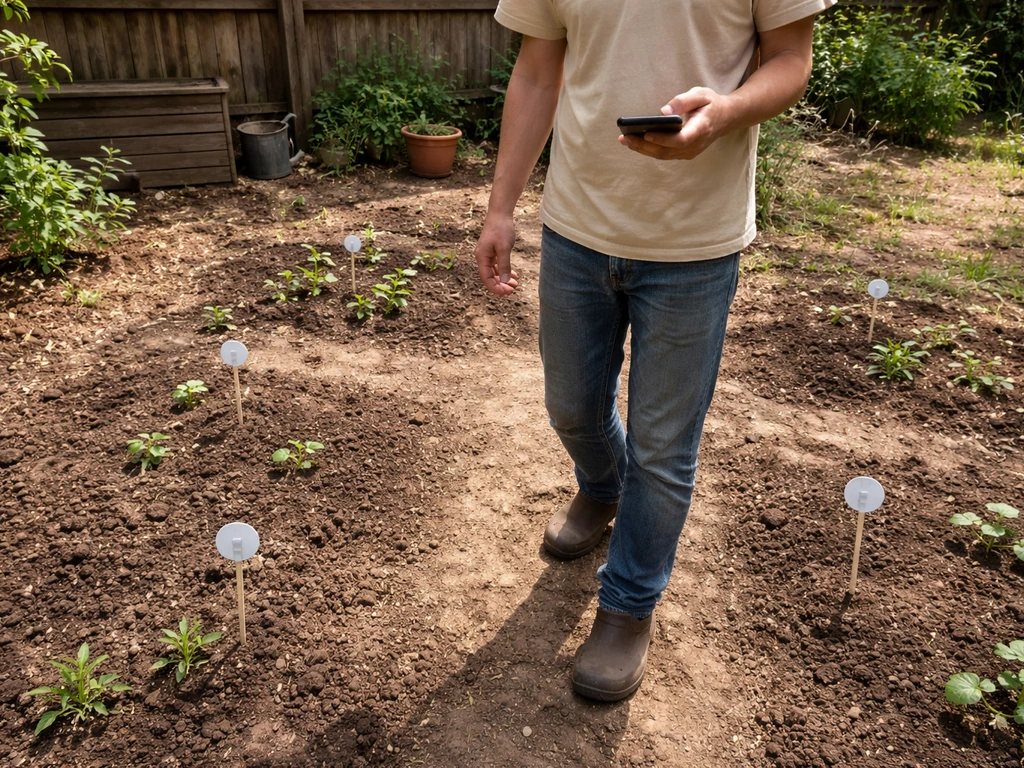
Before you plant anything, spend an hour walking your space and answering three questions: How much sun does each area get? What's the soil like? How much time do you realistically have each week? Those three factors determine almost everything else.
Step 1: Assess your site
Clemson Extension is direct about this: avoid areas shaded by trees or shrubs because reduced light significantly cuts vegetable yields. Most food crops need 6 to 8 hours of direct sun daily. Note where that sunlight falls in your yard at different times of day. Also look at water access, since dragging hoses 200 feet every day gets old fast, and drainage, since standing water after rain is a sign of compaction or clay that will need addressing.
Step 2: Pick crops that match your conditions and what you actually eat
Iowa State Extension emphasizes that location, size, and timing choices directly affect success. Start with crops you already eat regularly. There's no point growing kohlrabi if your family won't touch it. For beginners, high-yield, low-fuss crops like bush beans, zucchini, tomatoes, and salad greens give you fast feedback and real food on the table. University of Maryland Extension reports snap beans yield 5 to 10 lbs per 10-foot row, which is a solid return for a couple of dollars in seeds and minimal space.
Step 3: Plan your layout with rotation in mind
Don't just fill the space randomly. Penn State Extension recommends planning rotation by plant family, meaning you don't grow tomatoes (and their nightshade relatives) in the same spot two years in a row. University of Maryland Extension suggests mapping your garden by season: cool-season crops like lettuce and peas in spring, warm-season crops like beans and peppers in summer, then either cool-season fall crops or a cover crop to close out the year. Succession planting, staggering plantings of the same crop every two to three weeks, is something University of Delaware Extension specifically recommends for keeping harvests continuous rather than getting everything at once.
Planning your budget: soil, inputs, and what to expect from your land
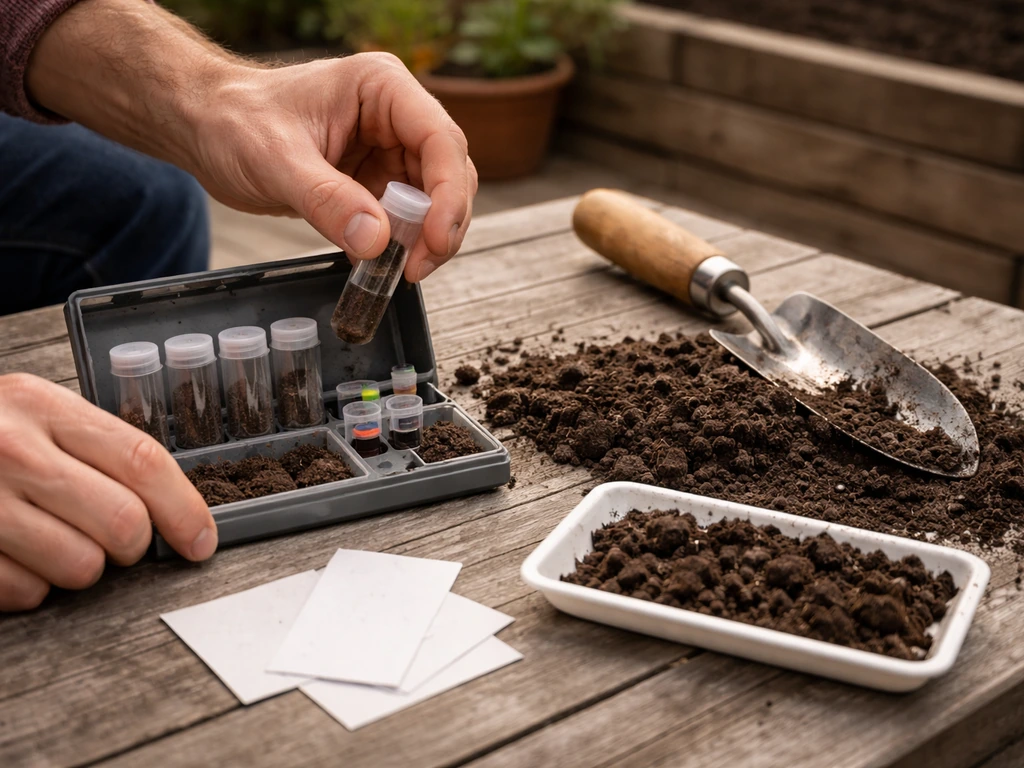
Soil is where most first-time food growers under-invest, and it's the single factor with the highest return. UGA Cooperative Extension states that most vegetables grow best in slightly acidic soil with a pH around 6. 0 to 6. 5.
If you don't know your soil's pH, you're guessing. A basic soil test costs between $10 and $20 through your state's cooperative extension service and tells you pH, nutrient levels, and what amendments you need. NDSU Extension recommends sampling to a depth of 6 inches for vegetable gardens. If your pH is below 5.
5, UF/IFAS advises applying lime based on the test lab's specific recommendations. Clemson HGIC suggests retesting every year when you're actively amending, since lime and fertilizer both shift pH over time.
For new beds, OSU Extension recommends applying a 3 to 4 inch layer of compost across the entire surface before working it in. That's a meaningful volume. For a 4x8 foot raised bed, you're looking at roughly 10 to 13 cubic feet of compost, which is about half a cubic yard. Know that number before you buy so you're not making three trips to the garden center.
On the yield side, set realistic expectations early. Clemson Extension's small-scale gardening guidance is honest: only plant what you can manage. A well-maintained 100 square foot bed can supply one person with a meaningful portion of their summer vegetables, but it won't replace a grocery store. The value comes from compounding: each season you improve your soil, refine your crop selection, and get better at succession planting. Year three looks very different from year one.
Quick budget snapshot for a starter food garden
| Item | Approximate Cost | Notes |
|---|---|---|
| Soil test | $10–$20 | Through your state cooperative extension service; do this first |
| Compost (for one 4x8 raised bed) | $20–$40 | 3–4 inch layer; buy by the cubic yard if doing multiple beds |
| Seeds (starter selection, 5–8 crops) | $15–$30 | Prioritize crops you eat; open-pollinated varieties let you save seed |
| Lime or sulfur (if needed) | $5–$15 | Only buy after soil test confirms the need and quantity |
| Basic tools (trowel, hoe, watering can) | $30–$60 | One-time cost; quality tools last decades |
| Total first-season startup | $80–$165 | Costs drop significantly in subsequent years |
These numbers assume you're starting from scratch with no tools and need to amend soil. If you already have a hoe and a watering can, your real out-of-pocket cost for a productive first garden can be well under $100. In ancient Mesoamerica, Mayan farmers used tools such as hoes, planting sticks, and water-management features to support crop growth. The payoff isn't just financial.
Understanding that you're engaged in actual crop production, not just gardening as a hobby, shifts your mindset. You start tracking what works, improving your soil deliberately, and thinking about what your land can realistically produce. That's the same thinking that drives every successful food grower, from the smallholder farmer the FAO describes to the backyard gardener planning their spring plot.
If you're curious about how animals fit into a food-production setup alongside your crops, or why farmers rotate through cover crops between growing seasons, those are natural next steps for expanding what your land can do. If you're wondering why farmers grow cover crops, it's mainly to protect the soil and improve it for the next season.
In many crop systems, farmers may manage animal life as part of growing plants, but the broader question is how animal agriculture relates to crop production rather than whether farmers kill animals. Animals like pollinators, livestock, and pest-eating species can improve soil health, reduce pests, and increase yields, which is one reason farmers include them in their crop-growing systems how animals help farmers to grow crops.
The core concept remains the same: land used to produce edible crops is agricultural land, engaged in crop production, and every square foot you dedicate to that purpose is working directly toward your food security.
FAQ
If I grow food crops only occasionally, does my land still count as agricultural land?
Usually yes, as long as the purpose is edible output and you are actively cultivating a food, feed, or fiber crop (even if that activity is seasonal). If you plant once for a short period and then return to purely ornamental or turf use, you may lose the “actively in crop production” status for some regulatory or tax contexts, so it helps to check your local rules.
Do herbs and edible flowers count, or do they need to be “major” vegetables?
They count when they are grown for culinary or other edible purposes, not for decoration. A bed of basil, dill, or nasturtiums intended for eating is typically treated like crop production because the output is edible, even if it is small scale.
What about starting seeds indoors, or growing seedlings in a greenhouse before transplanting?
Seedlings are usually considered part of the crop production process, but the “agricultural land” label often applies to the land where the crop is grown to harvest. If you have separate plots (indoor/gutter greenhouse space versus garden beds), the outdoor beds are the easiest parts to classify as food-crop land use.
If I’m not selling anything, is it still crop production or just gardening?
It still qualifies as crop production because subsistence crop production is defined by who consumes the output (primarily the grower’s household), not by whether money changes hands. A key distinction is intent and harvest purpose, not income.
How do I classify land when I mix crops with ornamental plants in the same bed?
Focus on what proportion and purpose of the space is edible. If a bed contains mostly ornamentals with only a small edible patch, some jurisdictions may treat only the productive portion as food-crop land use. A practical approach is to separate plant groupings (for example, crop rows versus ornamentals) so you can clearly identify what is being grown for harvest.
Does leaving soil bare for a few months break the “agricultural use” classification?
It is generally treated as a temporary pause rather than a different land category, but it depends on local definitions. If you want to keep continuous agricultural use in practice (and protect soil), using a cover crop during the bare period is a common strategy.
Do permaculture plantings or perennial food systems count as crop production?
Yes, perennial edibles such as fruit trees, berry bushes, asparagus, and perennial herbs are still food crops because they produce harvestable edible output. The planning differs from annuals (pruning schedules, spacing, long-term soil amendments), but the classification remains crop production.
Are pollinators and pest-control habitats considered part of crop production or separate land use?
They can be part of the crop production system when they are integrated to support edible yields (for example, flowering strips to support pollinators, habitat for beneficial insects, or hedgerows used for pest management). If the area is solely ornamental with no crop-support intent, it may not be counted as food-crop land use.
When I rotate crops, does the land stay classified as agricultural even if I switch crop families or add different species?
Typically yes, crop rotation does not change the underlying land use if the new plantings still target edible harvest. What changes is management and planning (spacing, nutrients, timing), so keep records of what was planted where to demonstrate continuous crop production intent.
Can I claim agricultural use if I’m improving soil but haven’t harvested yet?
In many cases, preparation and planting with the clear goal of harvest supports the “agricultural use” intent, but harvesting timing can affect how some definitions are applied. If you are converting land to crop production, focus on having a real planting plan, inputs used for crop establishment, and evidence that edible crops will be grown for harvest.
Next Article
Farmland That Can Be Used to Grow Crops: How to Start
Checklist and step-by-step guide to assess and improve cropland for home farming, soil, water, crops, costs, and risk