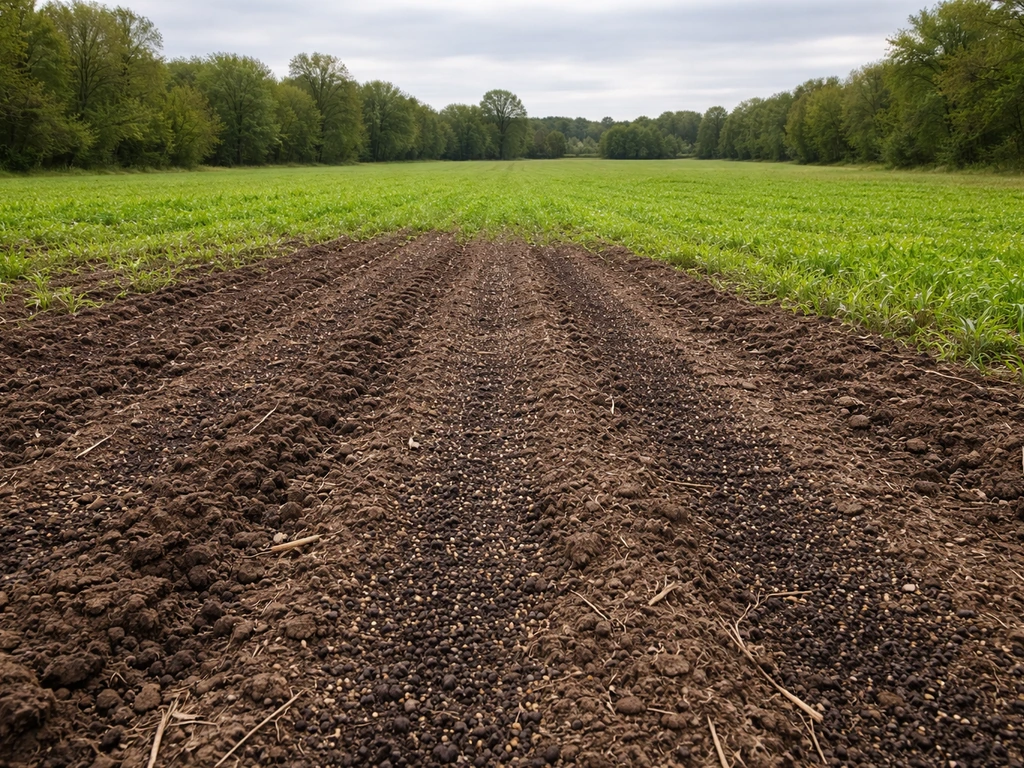
Throw and Grow food plot seed (specifically Evolved Harvest's Throw & Gro No-Till Forage) does work, but only when you give it two things it absolutely needs: good seed-to-soil contact and reliable moisture after seeding. Skip either of those and you'll be staring at bare ground wondering what went wrong. When the conditions are right, it earns its 4.4-out-of-5 rating at Tractor Supply and can have deer grazing your plot within weeks of opening the bag.
Throw and Grow Food Plot Reviews: What You Get and If It Works

Marcus Hendrick
29 May 2026
What's Actually in the Bag
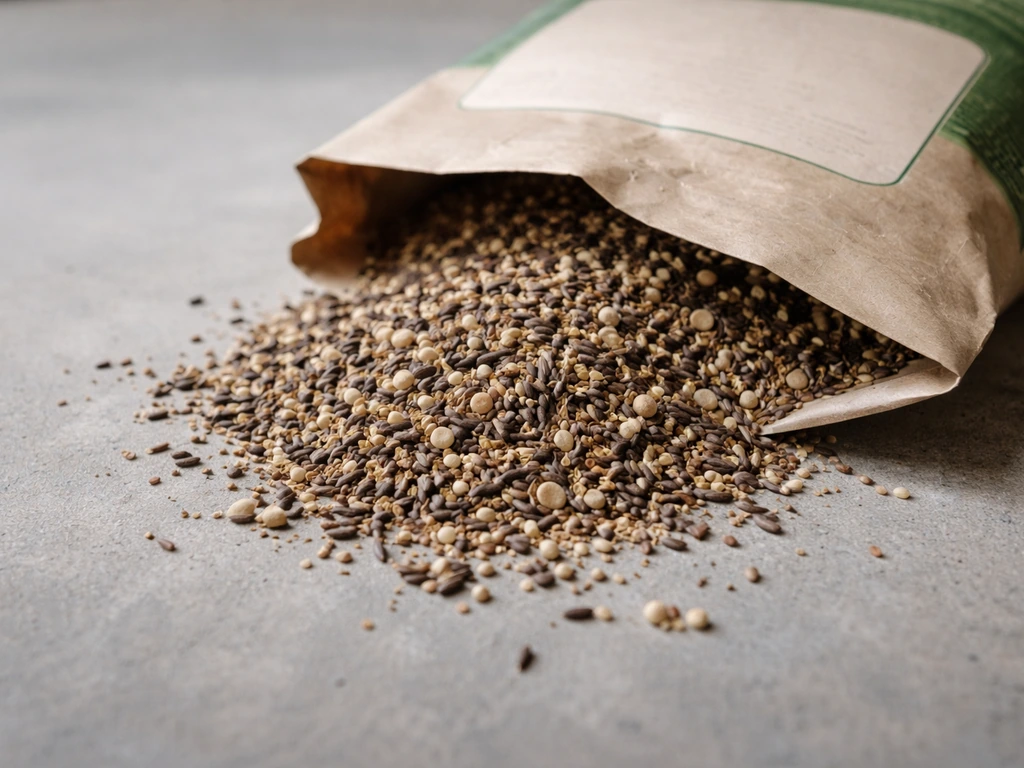
The Evolved Harvest Throw & Gro No-Till Forage comes in a 5 lb bag designed to cover 1/4 acre (about 11,000 square feet) at a broadcast rate of 20 lbs per acre. That math checks out: one bag per quarter-acre, four bags for a full acre. But what matters more than the math is what's actually inside, because the seed label tells you a lot about what to expect.
The dominant ingredient by a wide margin is Maximus tetraploid annual ryegrass at 91.12% of the mix. Tetraploid ryegrass is a beefed-up, high-sugar variety with larger leaf cells than standard diploid types, which means more tonnage and higher palatability for deer and other grazers. After that you get 4.73% Barsica rape (a fast-growing forage brassica that deer hammer in cold weather), and 1.45% CW 9092 Super 10 berseem clover. The rest is inert coating, inert matter, a small allowance for other crop seed, and a 0.20% weed seed fraction that's normal for commercially packaged blends.
So in practical terms, you're mostly buying a high-quality annual ryegrass with small bonus contributions from brassica and clover. The ryegrass is the workhorse. It germinates fast, establishes quickly in cool weather, and will provide the bulk of your forage. The rape kicks in later in the season when temperatures drop, and the berseem clover adds nitrogen fixation and some variety for deer. This is not a complex perennial food plot system. It's an annual cool-season mix built for speed and simplicity.
Does It Actually Work? Real Expectations and Timeline
Based on real buyer feedback and the seed biology involved, yes, it works when deployed correctly. One Tractor Supply reviewer reported that after throwing it out three months before hunting season, deer were grazing the plot two weeks before the opener. Another noted it grows quickly and covers well, specifically mentioning that it does reasonably in areas that don't get a lot of sunlight. With 58 reviews averaging 4.4 out of 5, this isn't a product with a niche fanbase. Most people who try it and follow the basic instructions get results.
Here's a realistic timeline for a fall planting. Annual ryegrass germinates in 7 to 14 days under decent conditions (moist soil, soil temps between 50 and 65°F). You'll see green fuzz within two weeks. By 3 to 4 weeks the stand is visibly established. By 6 to 8 weeks you have a lush plot that deer are finding and using. The brassica component takes a bit longer to become attractive to deer because it needs a frost to convert its starches to sugars, so expect deer to key into the rape component heavily from late October through December in most regions. The clover fraction is minimal in this mix and shouldn't be your primary expectation.
Where it underperforms: if you throw seed on dry ground and then hit a dry spell, germination stalls and often fails entirely. If you broadcast onto thick grass, leaf litter, or thatch without clearing, the seed never contacts soil and just sits there until something eats it or it rots. Those two failure modes account for the bulk of the negative experiences people report with any no-till food plot seed, not just this one.
How to Install a Throw and Grow Food Plot (Step by Step)
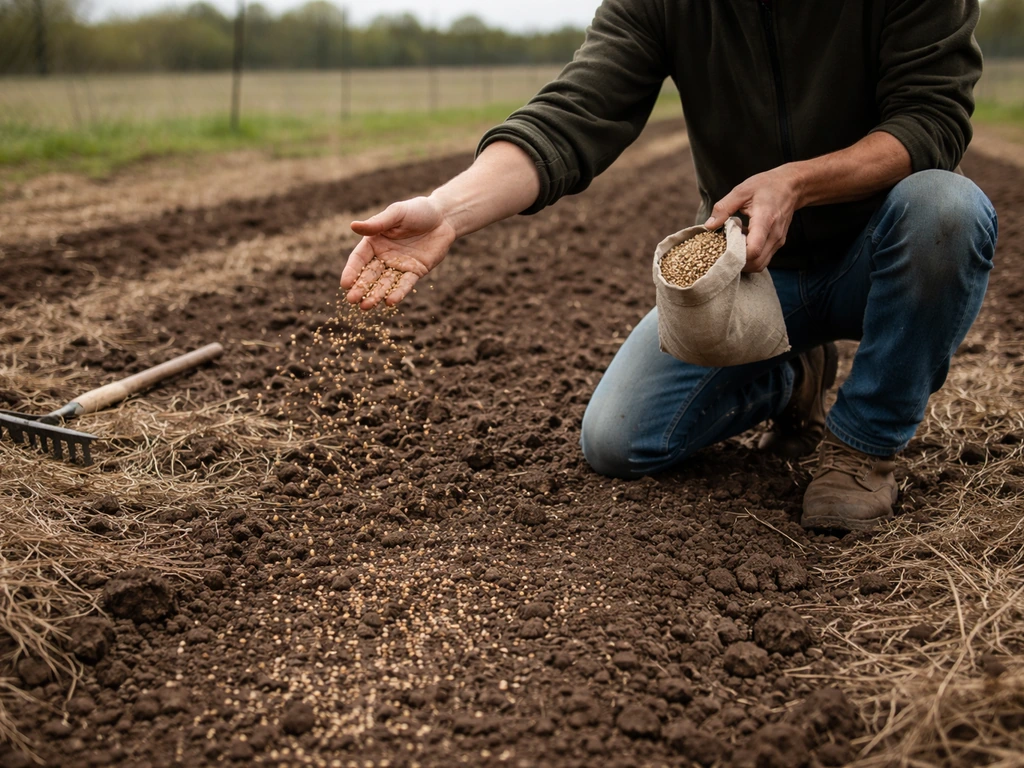
The no-till pitch is real, but 'no-till' doesn't mean 'no prep.' Here's how to actually do this right. If you want a full walkthrough, follow the step-by-step guidance below and tailor it to your site conditions ' Here's how to actually do this right..
- Test your soil first. The product guidance specifies a recommended pH of 6.0 to 7.5. Outside that range, nutrients lock up and germination struggles. A basic soil test from your county extension office costs under $20 and tells you exactly what lime or fertilizer you need.
- Address pH and fertility before seeding. If you skip a soil test, the guidance recommends up to 2,000 lbs of lime per acre and up to 300 lbs per acre of 13-13-13 fertilizer (or equivalent). Apply lime at least a few weeks ahead if possible since it takes time to change pH.
- Clear the ground of competition. Mow the area short, rake off leaf litter and debris, and if you have heavy weed or grass pressure, spray with a non-residual herbicide (like glyphosate) and wait the labeled interval before seeding. The seed must touch bare or nearly bare soil.
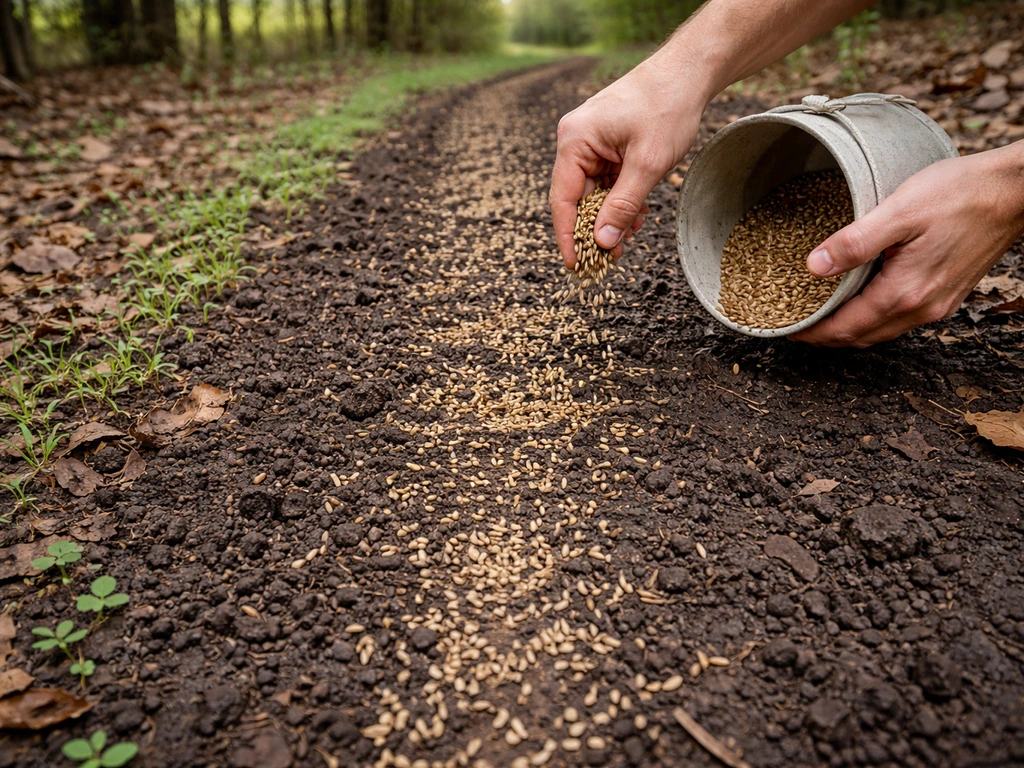
- Broadcast seed at 20 lbs per acre (one 5 lb bag per quarter-acre). You can use a hand-crank broadcaster, a handheld spreader, or literally throw it by hand on small plots. Aim for even coverage.
- Create seed-to-soil contact. This is the single most critical step. Roll a lawn roller over the seeded area, drag the area with a section of chain-link fencing tied behind an ATV, or use a cultipacker. If you have heavy equipment, run over it lightly. The goal is to press seeds against mineral soil.
- Keep seeds shallow. These are tiny seeds. The maximum planting depth is 3/16 of an inch. Do not bury them. Rolling presses them into the surface without covering them deeply.
- Seed into moisture. The soil should be moist at planting. Ideally, seed right before a rain event. If you're in a dry period, wait for rain rather than gambling on a dry broadcast.
- Fertilize the follow-up. When the stand reaches about 3 inches tall, apply up to 40 lbs of ammonium nitrate per acre (or equivalent nitrogen source) to push growth. Do this only when the ground is moist to reduce fertilizer burn risk.
Site Prep, Soil Needs, and Managing Weeds
The product is marketed for areas that are hard to reach with a tractor or disk, and that's a legitimate use case: woodland openings, strip plots along field edges, old logging roads, and tight corners. But 'hard to reach' doesn't mean 'neglected.' The site still needs to be prepared, just with lighter tools.
Weed and grass competition is the number one silent killer of no-till plots. Annual ryegrass is competitive once established, but young seedlings (especially berseem clover) can be smothered by existing vegetation if you don't give them a clean start. At minimum, mow short and rake. Better yet, spray and wait. If you're working a new site with thick sod, a single glyphosate application two to three weeks before seeding clears the competition without disturbing soil structure, which actually helps no-till plantings by leaving residue mulch that moderates soil temperature.
For soil fertility, the ryegrass in this mix is a heavy nitrogen feeder. A pH below 6.0 means your applied nitrogen and phosphorus won't be fully available to the plant. Lime is cheap relative to seed, so if your soil is acidic, add lime first. In higher-pH soils (above 7.5), iron and manganese deficiencies can show up. The 6.0 to 7.5 window stated in the product guidance is not arbitrary: it's where all three species in the mix perform at their best.
Where It Thrives and Where It Struggles
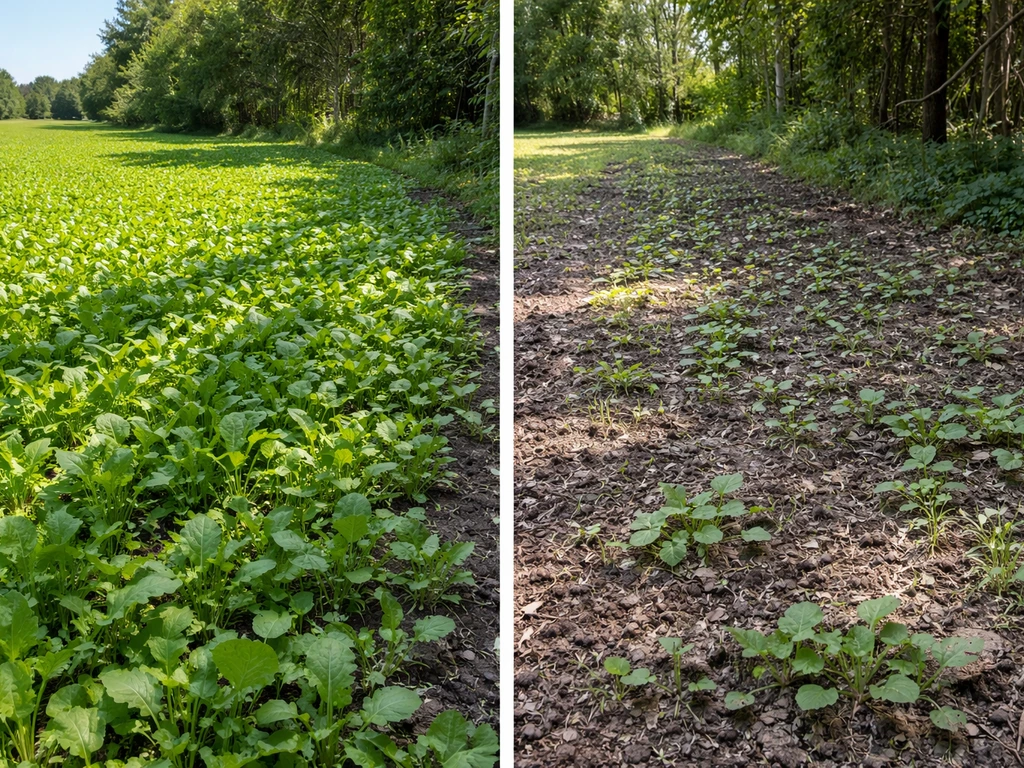
Knowing where this system performs well (and where it doesn't) saves you money and frustration. Here's an honest breakdown.
| Condition | Performance | Notes |
|---|---|---|
| Full sun (6+ hours) | Excellent | Ryegrass and brassica thrive with full light; fastest establishment |
| Partial shade (3-5 hours) | Good | Reviewers confirm decent results in lower-light areas; ryegrass tolerates shade better than most forage crops |
| Deep shade (<3 hours) | Poor | All components need some light; skip it for dense canopy sites |
| Well-drained loam or sandy loam | Excellent | Ideal soil type; good contact and drainage without waterlogging |
| Clay-heavy soil | Fair | Can work but compaction limits germination; benefits most from a light disk or roller pass |
| Sandy, droughty soil | Poor without irrigation | Ryegrass needs consistent moisture; sandy soils dry out fast and kill germination |
| Moist, humid climates (Southeast, Midwest) | Excellent | Conditions align well with cool-season ryegrass timing |
| Arid/semi-arid regions | Risky | High failure rate without irrigation or perfectly timed fall rains |
| High weed pressure sites | Poor without prep | Must spray or mow first; weed competition crushes young seedlings |
| Frost-free areas (deep South, Zone 9+) | Limited | Annual ryegrass goes dormant in heat; fall-winter window is narrow and brassica benefits diminish without frost |
Timing also matters enormously. This is a cool-season mix. The sweet spot for planting is late summer to early fall in most of the country: late August through October depending on your region. Planting too early in warm soil slows ryegrass germination and increases weed competition. Planting too late means the stand doesn't have time to establish before hard freezes. In the upper Midwest and Northeast, aim for late August to mid-September. In the mid-South, late September through October. Coastal or deep South growers get a longer window into November.
Pros, Cons, and Cost vs. Other Methods
Let's be direct about what you're buying and what you're giving up compared to other food plot approaches.
What Throw and Grow does well
- Low barrier to entry: no tractor, no disk, no drill required
- Fast establishment: deer-ready plots within 4 to 8 weeks under good conditions
- Accessible plot sizes: the 1/4-acre coverage per bag suits small woodland openings and strip plots that can't justify equipment rental
- Tetraploid ryegrass is genuinely high-quality forage, not cheap filler
- Decent shade tolerance compared to most food plot seeds
- Available at Tractor Supply and similar retailers, so you can get it same-day
Where it falls short
- The mix is 91% ryegrass, so species diversity is very limited
- It's annual, not perennial: you replant every year, which adds up in cost
- No-till success is heavily moisture-dependent with no backup if conditions turn dry
- Brassica and clover fractions are small enough that they may not establish as visible stands in every plot
- Weed prep still required, just done with lighter tools
Cost comparison

| Method | Approx. Cost Per Acre (Seed Only) | Equipment Needed | Time to Establishment | Annual Replanting |
|---|---|---|---|---|
| Throw & Gro (Evolved Harvest) | $60-$80 (4 bags) | None required | 4-8 weeks | Yes (annual mix) |
| Conventional drill seeding (ryegrass/clover mix) | $30-$50 seed + equipment rental or ownership | Drill or tractor | 3-6 weeks | Depends on mix |
| Disked + hand-broadcast annual mix | $20-$40 seed + disk rental | Disk, tractor or ATV | 4-7 weeks | Yes |
| Perennial clover plot (initial year) | $40-$70 seed + lime/fertilizer | Disk or cultipacker ideal | 6-10 weeks | No (3-5 year stand) |
| Brassica-only broadcast mix | $20-$40 seed | Minimal | 6-10 weeks | Yes |
The honest cost-benefit verdict: Throw & Gro costs more per acre than buying bulk seed separately, but you're paying for convenience and speed. If you have hard-to-reach plots and no equipment, the premium makes sense. If you have a tractor and disk and you're seeding an acre or more, you'll save money mixing your own ryegrass and clover at bulk seed prices. For quarter-acre to half-acre plots where equipment isn't practical, Throw & Gro is genuinely competitive.
Troubleshooting + a Practical Checklist to Get Results Fast
If your plot isn't coming in the way you expected, run through these common failure points before you write off the product. If you're still deciding on the best approach, see the guide on the best throw and grow food plot for deer to match timing and site prep to your conditions. Most problems trace back to one or two fixable mistakes.
Common problems and fixes
- Seed not germinating after 2+ weeks: Check moisture first. If the ground has been dry, you need rain or irrigation before germination will proceed. Also check if seed has any soil contact at all; if it's sitting on leaf litter or thatch, it won't sprout.
- Patchy, thin stand: Usually a sign of uneven broadcast or poor contact in some areas. Re-broadcast the bare spots, drag with fencing, and wait for moisture.
- Stand came up thin overall: Either seeded too lightly (check your rate against the 20 lbs/acre spec), soil pH was off, or weed competition suppressed early seedlings. Pull a few weeds by hand in bare areas to check if seedlings are present but suppressed.
- Deer not using the plot yet: Ryegrass is most attractive to deer once it's 3 to 6 inches tall and lush. Give it time. Brassica becomes most attractive after the first frost converts starch to sugar.
- Plot looks yellow or pale: Nitrogen deficiency is common in ryegrass. Apply the follow-up 40 lbs ammonium nitrate per acre when plants are 3 inches tall and ground is moist.
- Plot washed out or flooded: Annual ryegrass tolerates brief wet conditions but not prolonged waterlogging. If your site puddles for days, drainage is the core problem and this product isn't going to overcome it.
Pre-planting checklist
- Soil test done (or lime and 13-13-13 applied at default rates)
- pH confirmed between 6.0 and 7.5 (or lime applied to adjust)
- Site mowed, raked, or sprayed to remove weed and grass competition
- Seeding timed for cool-season window in your region (late August through October for most areas)
- Seeded right before rain or into moist soil
- Broadcast rate confirmed at 20 lbs per acre (one 5 lb bag per 1/4 acre)
- Seed rolled, dragged with fencing, or packed to ensure soil contact
- Planting depth kept to no more than 3/16 inch (pressed in, not buried)
- Follow-up fertilizer (ammonium nitrate) ready to apply when stand reaches 3 inches
If this is your first food plot or you're working a small woodland opening without equipment, Throw & Gro is a genuinely solid starting point. It won't replace a well-managed perennial clover plot for long-term yield, but for fast, low-equipment cool-season forage that gets deer on your land in weeks, it delivers on the promise when you give it moist soil and a clean seedbed.
If you're deciding between this and other no-till seed mixes, the mix composition (mostly ryegrass with small brassica and clover fractions) is what should drive your choice based on what your plot needs most. Throw and grow food plot tips can help you compare this no-till mix with other options for your exact site conditions.
If you want the best food plots to grow big bucks, compare mix goals like browse versus foraging and pick a planting timeline that matches your region.
FAQ
Is Throw and Grow a true no-till system, or do I still need to prep anything?
Not really. The blend is an annual cool-season mix, so it will die back after the season rather than provide multi-year carryover. If you see success one fall, you still need to re-seed next year for consistent forage, unless you have other perennials already established in the site.
How long can I delay after throwing the seed if rain does not come right away?
Wait for conditions, not the calendar alone. If your soil is dry or you cannot irrigate, seed can sit dormant and then fail once temperatures cool. A practical rule is to plant only when you expect rain or can provide consistent moisture for at least the first 10 to 14 days, since ryegrass germination depends on that early window.
Will it work if my woodland opening already has thick grass or leaf litter?
Yes, but don’t expect it to perform like broadcast seed on bare soil. Thick existing grass, thatch, or leaf litter blocks seed-to-soil contact, which is the main thing this product needs. If you cannot fully clear, at minimum mow short and rake to reduce the barrier, then seed so the broadcast material lands on mineral soil.
When should I expect deer to start using the brassica and clover parts of the mix?
It can, but you should think of it as a temperature-triggered forage rather than an instant attraction plan. The brassica portion often becomes more palatable after frost, so early-season deer activity may be light compared with ryegrass-driven plots. If your goal is early fall grazing, prioritize what the ryegrass does well and treat the brassica as a late-season bonus.
What are the common coverage mistakes that lead to thin plots?
Overseeding rate matters more than most people think. The mix is designed around a specific broadcast rate for full coverage, and under-seeding creates thin stands that deer may browse before plants can knit together. If you are unsure, measure square footage carefully (especially in irregular woodland openings) and don’t guess by bag-feel.
Should I fertilize this mix, and what pH range should I target?
Yes, and the “right” fertilizer choice depends on soil tests. Ryegrass is a nitrogen feeder, but if pH is too low (below about 6.0), added nutrients may not become available. Lime first when pH is acidic, then follow up with nitrogen and phosphorus as needed after testing.
Is it better to mow/rake or spray, and how close can I spray before seeding?
You can use a sprayer, but do it strategically. The advantage of spraying is clearing competition before seeding without disturbing soil structure, which helps no-till plantings. The common mistake is spraying too close to seeding (insufficient kill time) or ignoring herbicide label directions and timing.
Can I seed close to hunting season, and will deer ruin it?
Yes, deer can graze quickly once green growth establishes, but that doesn’t mean the stand is guaranteed. If pressure is extremely heavy right away, seedlings can be set back before they establish enough root mass. If you anticipate intense early pressure, plan for a clean seedbed and prioritize moisture and stand density so the plot can withstand browse.
Does soil type change how fast Throw and Grow establishes?
Assume different soils behave differently. Sandy or fast-draining ground may need more consistent moisture than clay, and exposed spots can dry out quickly even during mild weather. If your site dries fast, you may need to adjust timing or use irrigation, because the product’s success is strongly tied to early moisture and seed-to-soil contact.
What should I troubleshoot first if nothing shows up after seeding?
Check your soil pH before you spend the season guessing. Also look for two root causes before blaming the seed: dry seedbed and poor contact from broadcast onto thatch or grass. If the plot is green fuzz but then stalls, competition and moisture timing are usually the culprits.
Next Article
Best Throw and Grow Food Plot for Deer: Quick Guide
Step-by-step throw-and-grow deer food plot with deer seed mixes, timing, seeding rates, and quick establishment tips.