The best food plot crops for attracting and growing big bucks are perennial clovers (ladino, red, and chicory blends), cool-season brassicas (turnips, rape, and kale), winter wheat or rye, and warm-season cowpeas. No single crop wins year-round, but a smart rotation of these across two or more plots will keep deer coming back from August through January, which is exactly when and where you want them during archery and rifle season.
Best Food Plots to Grow Big Bucks: A Practical Guide

Marcus Hendrick
12 May 2026
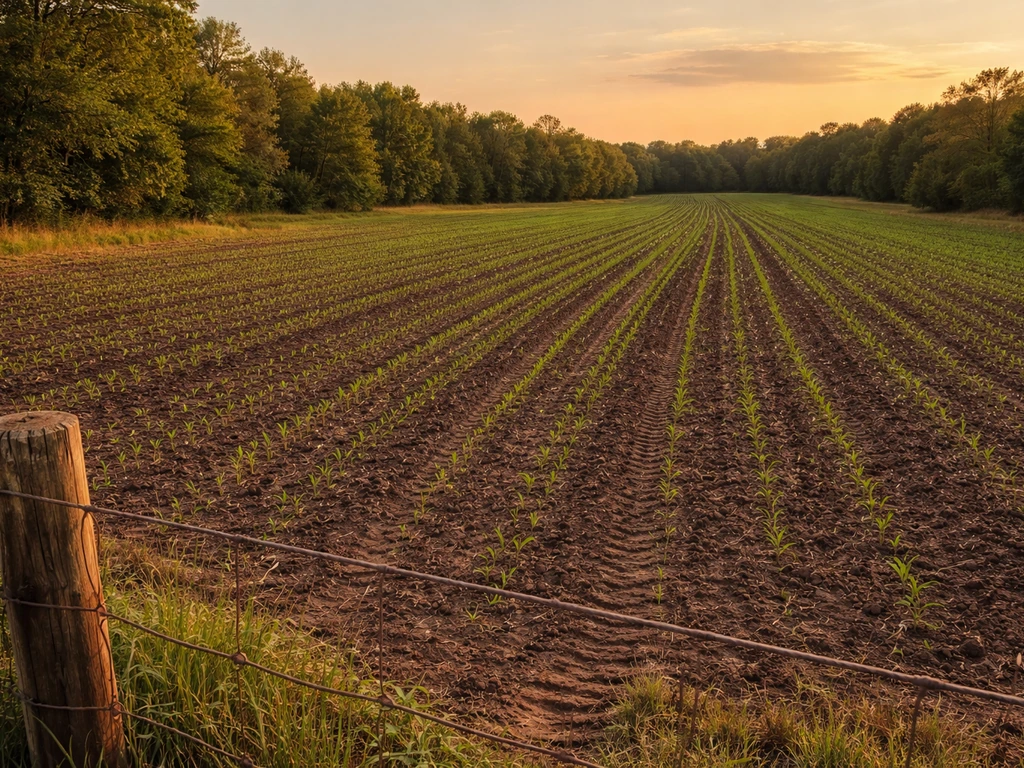
Before you order a single bag of seed, though, understand that the plot itself is only as good as your soil prep and your timing. I've seen hunters spend $300 on premium seed blends and get a patchy, weed-choked mess because they skipped a soil test or planted two weeks too early. This guide walks through every step, from picking the right site to building a year-round layout that funnels deer past your stand.
How to Choose Food Plot Sites for Your Region and Deer Pressure
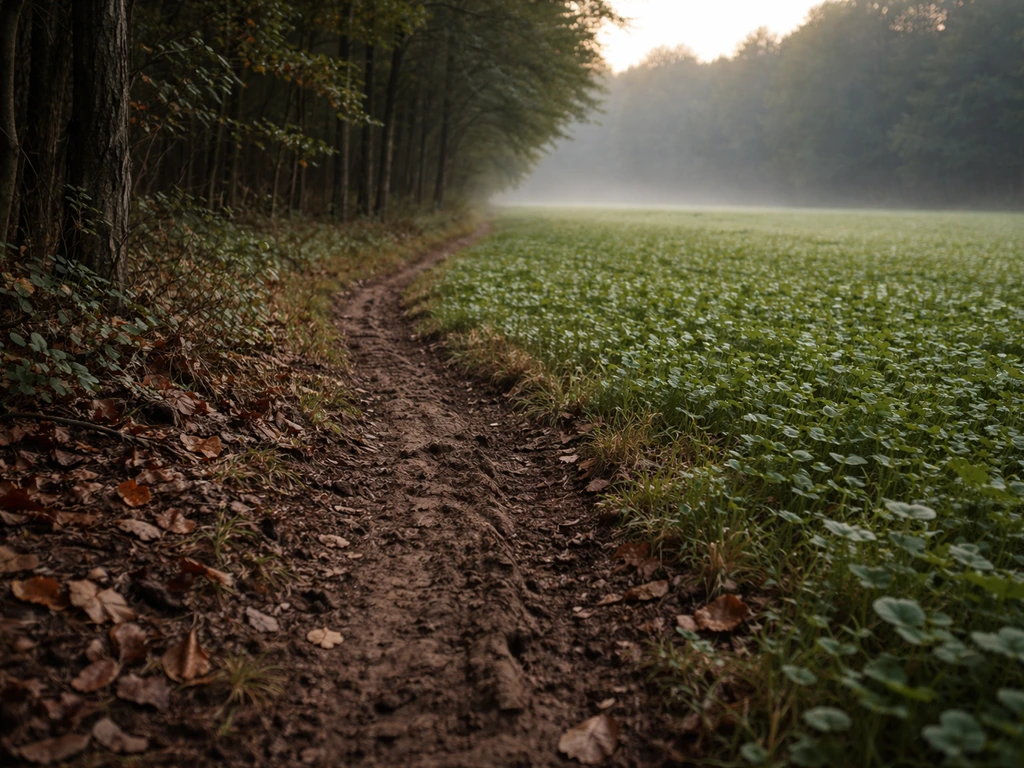
Start by thinking about what deer in your area actually need versus what they already have. In the heavily agricultural Midwest, a clover plot in the timber is more valuable than another corn or soybean field. In the Southeast or Mid-Atlantic, where natural browse is dense, a cleared opening with high-protein forage can be a genuine magnet. Your plots should fill a nutritional or seasonal gap, not duplicate what's already everywhere.
Site selection matters more than most hunters realize. You want areas that get at least four to six hours of direct sunlight per day since most plot forages are sun-hungry. Avoid locations where water pools after rain because waterlogged soil kills clover and brassicas fast. South- and east-facing slopes warm up faster in spring, which helps early establishment. Small plots of half an acre to two acres tucked inside or at the edge of timber are often far more effective for hunting than large open fields, because deer feel secure approaching them. Ohio State Extension research confirms that small, isolated food plots have limited impact on overall nutrition but excel as hunting attractants when paired with dense nearby cover.
Consider deer pressure honestly. If you're hunting public land or a property that gets a lot of human traffic, you need plots positioned deep enough that deer will actually use them during daylight. On lower-pressure private land, plots closer to field edges can work well. Either way, Texas A&M wildlife research shows deer enter food plots from edges first, moving inward as they feel comfortable, so a narrow, finger-shaped plot surrounded by cover will see more action than a wide-open rectangle.
If you're in the northern half of the country, winters are long and brassicas provide critical late-season food when everything else is gone. If you're in the South, warm-season plots like cowpeas pull double duty as summer nutrition and velvet-antler builders. Know your climate zone and plant accordingly rather than copying a plan designed for a different region.
Site Prep: Soil Testing, pH, Fertility, and Weed Control
This is the step most people skip or rush, and it's the most common reason plots fail. Send a soil sample to your county Extension office before you do anything else. The test costs $10 to $20 and tells you your pH, phosphorus, and potassium levels. Without it, you're guessing at fertility inputs and you'll likely undershoot or overshoot both. Virginia Tech Extension and Penn State Extension are both clear on this: P and K needs must come from a soil test, not a formula guess.
Soil pH is the single most important number on that report. Most food plot forages need a pH between 6.0 and 7.0. Legumes like clover and alfalfa are especially sensitive: at low pH, the rhizobia bacteria that help legumes fix nitrogen can't function properly, which means your clover will be yellow, stunted, and short-lived. blank" rel="noopener noreferrer">Virginia Tech and Ohio State Extension both flag low pH as the primary reason legume stands fail. If your pH is below 6.0, apply lime at the rate your soil test recommends and wait at least four to six weeks before planting if you can. Lime doesn't work overnight.
For a typical food plot starting from scratch, Missouri Department of Conservation suggests targeting roughly 30 lb of nitrogen, 90 lb of phosphorus, and 90 lb of potassium per acre as a baseline fertility approach. Your actual numbers will differ based on your soil test results. Apply fertilizer according to those results, incorporate it before or during tillage, and you're set.
Weed control before planting is non-negotiable on any site with existing vegetation. Purdue Extension recommends using a non-selective herbicide like glyphosate to kill competing plants before establishment. Alabama Extension's practical guidance is to apply about 1.5 to 2 quarts per acre of a 41% glyphosate product as a foliar spray, then wait at least two weeks before tilling so you can see if any spots were missed and respray them. Mississippi Department of Wildlife, Fisheries, and Parks adds a critical detail: foliar herbicides only work when weeds are actively growing and green. Spraying dormant or stressed plants is wasted product and wasted time.
Alabama Extension also recommends timing your site prep for August and September on cool-season plots, giving you a clean seedbed ready for fall planting in September or October. If you prep too late, you rush the establishment window and deer often won't use a newly planted plot heavily until it's mature anyway.
Seed and Forage Choices for Attracting Big Bucks
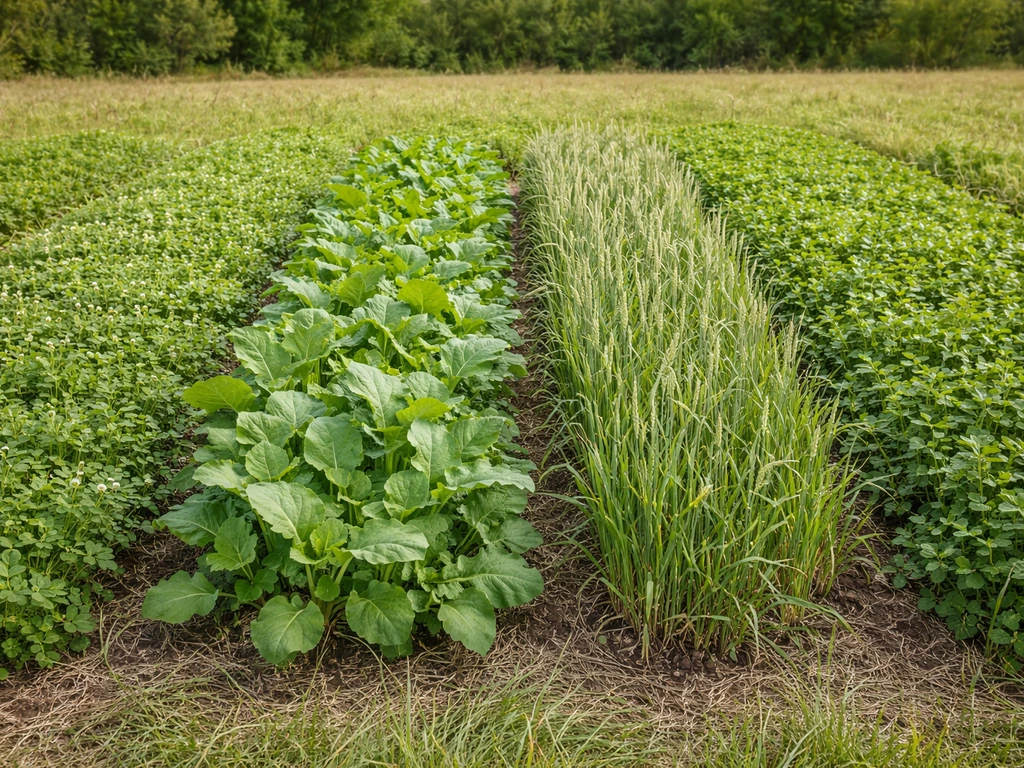
There is no single magic seed. What you plant should match your season, your climate, and what you want deer doing during a specific hunting window. Here's how the major categories break down.
Perennial Clovers and Chicory
Ladino (white) clover, red clover, and chicory are the workhorses of a long-term food plot program. Managed properly, clover stands can persist three to five years with regular mowing, occasional herbicide applications for weed control, and annual fertilizing, according to Alabama Extension. They're high in protein (20% or more in some cases), which directly supports antler growth during spring and summer. Plant these in fall or early spring at roughly 5 lb per acre in a mix. Always inoculate legume seed with the correct rhizobia strain before planting; Mississippi State Extension is specific that you need the right inoculant for each legume species, not a generic one.
Cool-Season Brassicas
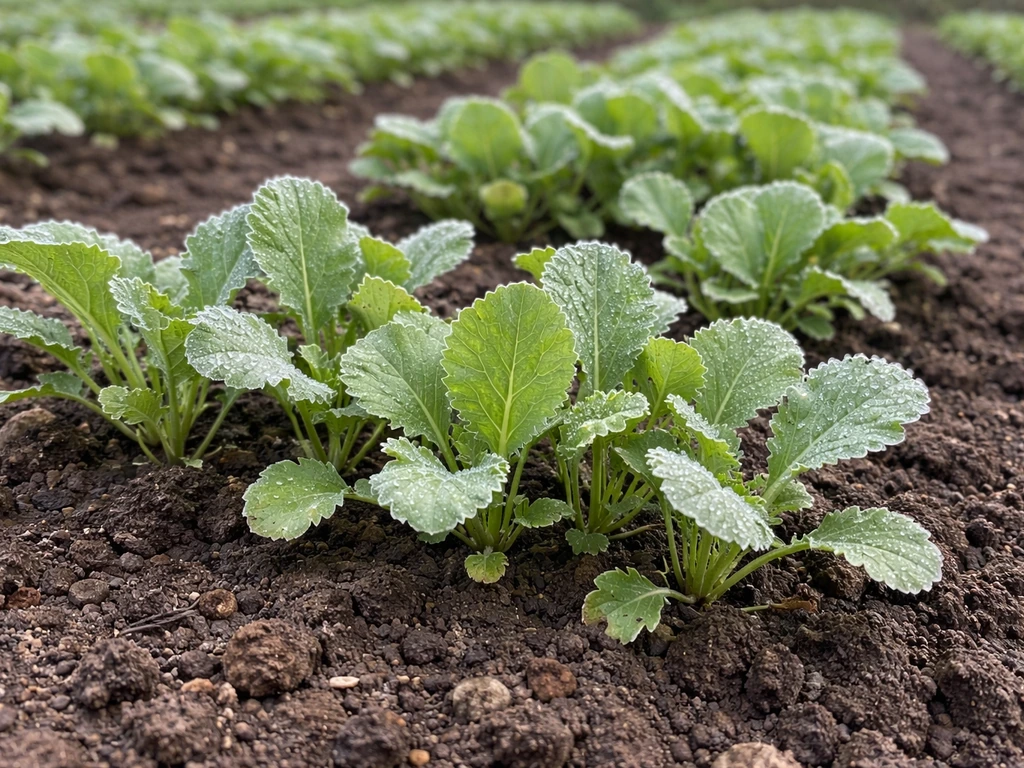
Turnips, rape, kale, and canola are planted in September in the Southeast and late summer across the Midwest. Brassicas take four to eight weeks after a frost to convert starches to sugars, which is why deer often ignore them early and then hammer them in November and December. This makes them ideal for late-season hunting plots. Mississippi State's deer plot guide lists September as the main planting window for brassicas in the Southeast, with similar late-August to mid-September timing in northern states.
Winter Wheat and Cereal Rye
These are fast-establishing, highly attractive forages that deer use heavily in early to mid season. Missouri Department of Conservation suggests seeding wheat at about 30 lb per acre, often mixed with 5 lb per acre of inoculated clover or alfalfa to get both a quick draw and a longer-term perennial established at the same time.
Mississippi Department of Wildlife, Fisheries, and Parks also provides cool-season food plot seeding-rate guidance for wheat, citing 25, 30 lb per acre, and recommends using clover mixes to extend forage from October through June seeding wheat at about 30 lb per acre. Rye is more cold-hardy and can be planted later in fall if you're pressed for time.
Both germinate quickly and provide green browse within three to four weeks of planting.
Warm-Season Cowpeas
For summer nutrition plots, cowpeas are hard to beat. Mississippi State's Southeast planting guide lists an April 15 through June 15 planting window. The Mississippi State University Extension Service Southeast cowpea planting guide (M1591) lists the April 15 through June 15 window and cowpea planting rates in a table of planting rates (lb per acre) blank" rel="noopener noreferrer">Mississippi State's Southeast planting guide lists an April 15 through June 15 planting window. Cowpeas are high in protein, tolerate heat and drought better than most forages, and deer will browse them aggressively through summer and into early fall. Inoculate cowpea seed before planting just like you would any legume.
| Crop | Season | Primary Benefit | Planting Window | Notes |
|---|---|---|---|---|
| Ladino/Red Clover | Spring through fall | High protein, multi-year stand | Fall or early spring | Inoculate; mow to control weeds |
| Chicory | Spring through fall | Deep-rooted, drought tolerant, high protein | September | Blends well with clover |
| Turnips/Rape/Kale | Late season | Sugar-rich after frost, heavy browse | Late Aug to September | Ignore by deer until after frost |
| Winter Wheat | Early to mid season | Fast green browse, quick establishment | Sept to October | Mix with clover for dual benefit |
| Cereal Rye | Early to late season | Cold-hardy, late-planting flexibility | Sept to November | Most winter-hardy option |
| Cowpeas | Summer | High protein for velvet antler growth | April 15 to June 15 | Inoculate; drought tolerant |
Planting Timing, Seeding Rates, and Establishment Strategy
Timing is where a lot of plots fail. Plant too early in hot, dry conditions and your seed sits dormant or rots. Plant too late and there's not enough growing season to establish before deer pressure (or winter) hits hard. The general rule: cool-season crops go in when daytime soil temperatures are dropping toward 50 to 60 degrees Fahrenheit, which in most of the country means late August through October depending on latitude.
Seeding depth and seed-to-soil contact are the two mechanical factors that determine germination success. Small seeds like clover and chicory should barely be covered, no more than a quarter inch deep. Larger seeds like wheat, rye, and cowpeas tolerate deeper placement, around half an inch to one inch. The reason depth matters: small seeds carry limited energy reserves, so if they're planted too deep they exhaust themselves before reaching sunlight. Research on no-till seeding equipment confirms that proper opener penetration and firm seed-to-soil contact are the primary variables driving emergence, regardless of whether you're drilling or broadcasting.
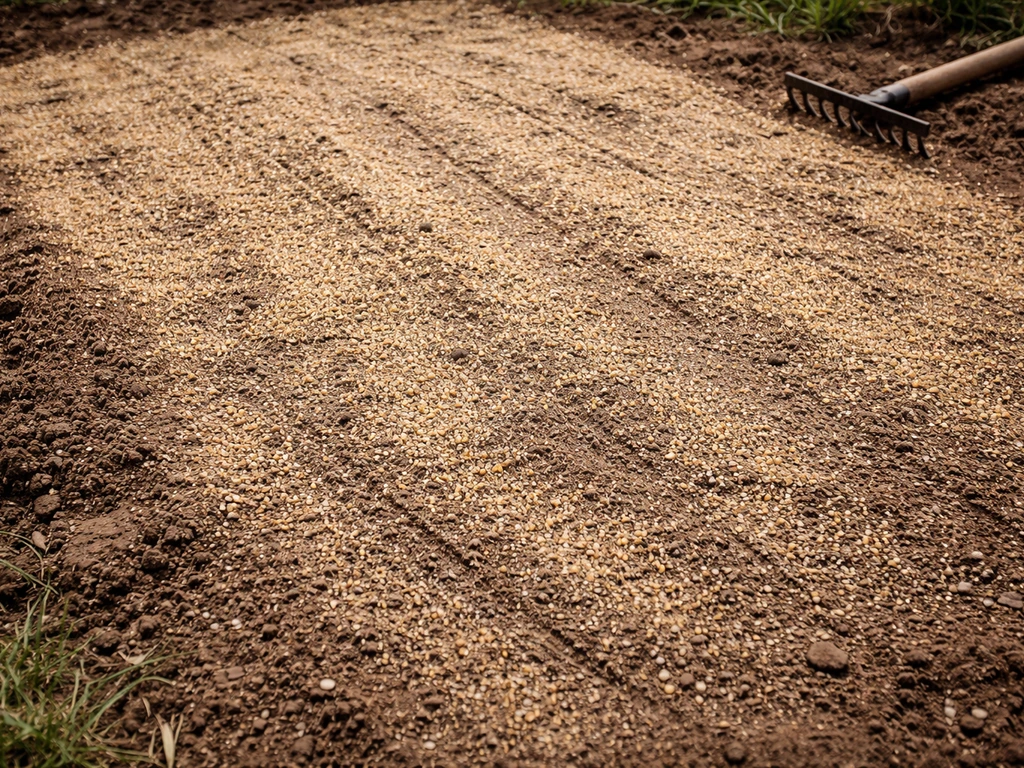
If you have access to a no-till drill, use it. NDSU demonstration trials show no-till drills consistently produce more uniform stands compared to conventional tillage in certain conditions, and they also reduce weed pressure by limiting soil disturbance. That said, in poorly drained soils with heavy crop residue, UNL CropWatch notes that no-till can delay soil warming and slow germination. Read your site and adjust. If you're broadcasting seed by hand (a throw-and-grow approach), you absolutely must follow up with a drag, blank" rel="noopener noreferrer">cultipacker, or even a drive-over with an ATV to press seed into soil contact. Broadcasting on loose, fluffy soil without any firming step is how most hand-seeded plots fail.
One reliable establishment method for food plots is the wheat-plus-legume combination from Missouri DOC: seed wheat at 30 lb per acre and add 5 lb per acre of inoculated ladino clover, red clover, or alfalfa. The wheat establishes fast and draws deer immediately. The legume gets shaded in during fall, overwinters, and takes over as a multi-year perennial stand in spring. You get early-season attraction and long-term value from a single planting.
Maintenance for High Yield: Mowing, Irrigation, and Replanting
A food plot is a crop, and crops need management. The biggest in-season mistake is letting weeds overtake a clover or brassica plot because you planted it and walked away. Alabama Extension and Missouri Extension both name mowing as the primary cultural tool for managing weeds in perennial plots. Mowing clover to about six to eight inches when broadleaf weeds are getting taller than the clover keeps the plot producing and prevents weeds from shading out your forage. Do it once or twice through summer and you'll extend a clover stand's life significantly.
Missouri Extension adds that mowing before applying a herbicide can improve chemical control effectiveness, especially for broadleaf weeds in clover plots mid-summer. Let the weeds regrow to a few inches of fresh growth after mowing, then spray a grass-selective herbicide (like clethodim or fluazifop) to clean up grassy weeds without harming your broadleaf clover. This one-two approach of mow then spray is genuinely one of the most effective weed management strategies for food plot maintenance.
Irrigation is worth mentioning honestly: most hunters don't have it and don't need it for dryland grain crops like wheat and rye. But in a severe drought year, brassicas planted in late summer can fail to germinate without timely rain. If you have a small plot near a water source and the infrastructure to run a line, supplemental water during establishment in August and September can be the difference between a full stand and a failed one. For most people, though, timing your planting with a forecasted rain event is the practical irrigation strategy.
Replanting decisions should be based on stand density. If your clover covers less than about 40% of the plot by spring, it's time to either overseed or start over. Overseeding into an existing stand works well if the old stand is just thin, not dead. Kill it out entirely with glyphosate and start fresh if it's overrun with weeds or the stand is mostly gone. Virginia Tech Extension notes that where poor pH or fertility caused an earlier legume stand to decline, you need to address the soil conditions before reseeding or the new stand will fail the same way.
Build a Year-Round Rotation and Layout That Funnels Deer to Stand Sites
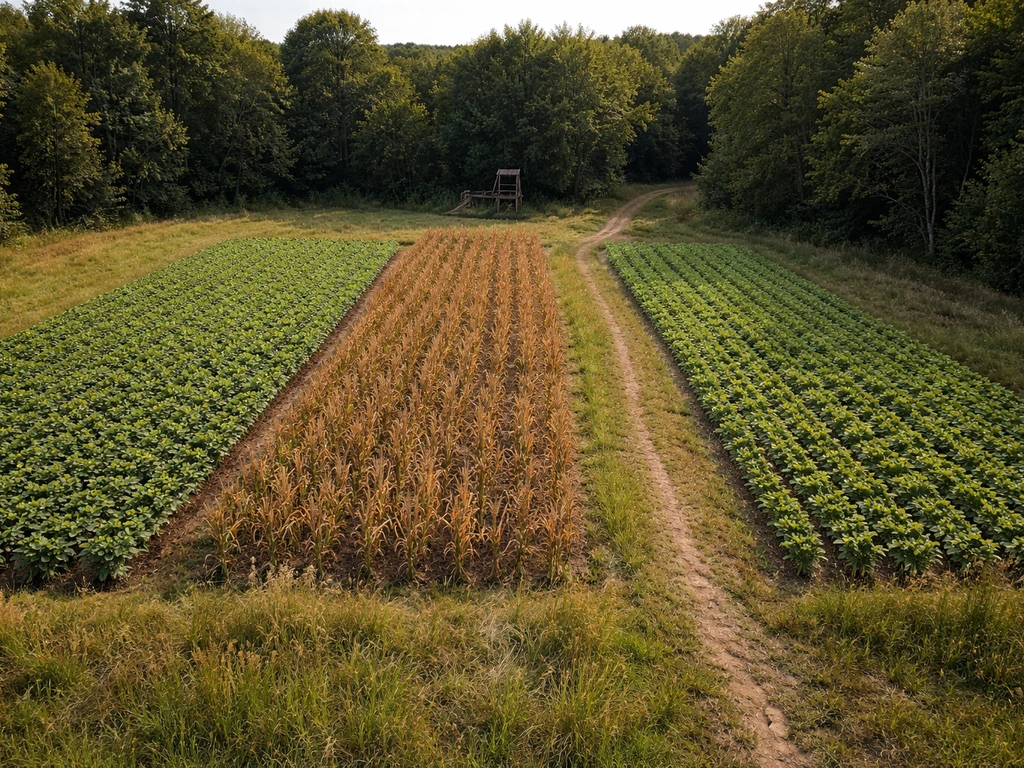
A single plot is a start, but two or three strategically placed plots with different crop timing is what turns a property into a deer magnet. The goal is to always have something attractive growing somewhere, so deer develop consistent travel patterns through your property. Those patterns are what you hunt.
A simple three-plot rotation that works across most of the country looks like this: Plot one is a perennial clover and chicory blend that provides spring and summer nutrition. Plot two is a fall brassica plot, turnips and rape planted in September, that peaks in November and December after frosts convert the starches to sugar. Plot three is a winter wheat or rye plot that provides quick green browse from October through late fall and can be overseeded with clover for spring. Deer rotate between them based on season, and your stand sites are positioned on the approach routes to the plots they're using during your hunting season.
Layout matters as much as crop selection. Position your hunting-season plots, especially brassicas and late wheat, downwind of your stand sites and with approach routes that deer can use comfortably from bedding cover. Texas A&M wildlife research confirms deer feed along edges first, so a narrow plot with long edge-to-interior ratios and adjacent dense cover will outperform a wide-open square. Ohio State Extension specifically recommends planting low shrubs or dense cover strips near plot openings to help hold deer in the area during daylight.
Missouri DOC also makes a practical point worth repeating: food plots don't belong in natural communities like glades, savannas, or native prairies where you'd be destroying existing habitat value. And if your plot borders timber, consider a buffer strip of perennial grass or native shrubs between the two. That transition zone gives deer a sense of security as they move from cover to the open plot, which increases daytime use dramatically.
Mississippi State Extension rounds this out with a point about connecting food plots to your broader habitat management plan rather than planting them in isolation. A food plot surrounded by high-quality bedding cover, water, and travel corridors is exponentially more valuable than the same plot in a sterile landscape.
Cost, ROI, and Common Mistakes to Avoid
Let's talk money. A basic one-acre food plot from scratch will cost you roughly $100 to $300 in seed, $50 to $150 in lime and fertilizer, and whatever equipment access costs you. If you're renting a tractor or no-till drill, add $100 to $200 per day. Over the life of a three-to-five-year clover stand, your annual per-acre cost drops significantly because you're just maintaining rather than re-establishing. The highest-ROI inputs are, in order: soil test (cheapest thing you can do), lime (often the biggest yield driver on acidic soils), correct seed inoculant for legumes, and then seed quality.
Fancy premium seed blends from hunting catalogs often cost three to five times more than buying individual components from a farm supply store and mixing them yourself. A 30 lb bag of winter wheat and a 5 lb bag of inoculated ladino clover, both available at your local co-op, will outperform most throw-and-grow blends at a fraction of the price if your soil is right.
Speaking of throw-and-grow approaches, they work best when soil prep is already done and seed-to-soil contact is properly addressed. A throw-and-grow approach like this can be a simple way to get a deer-attracting food plot going quickly throw-and-grow approaches. Throw-and-grow food plots can work, but they depend heavily on soil prep and getting good seed-to-soil contact Speaking of throw-and-grow approaches, they work. A quick broadcast onto untilled, compacted ground with no firming step almost always underperforms a drilled planting.
Here are the most common food plot mistakes I see, and how to avoid every one of them:
- Skipping the soil test: You will either under-lime (clover dies, brassicas struggle) or over-fertilize (waste money, sometimes burn seedlings). Ten dollars on a soil test saves $100 in guesswork.
- Planting the wrong crop for the season or region: Brassicas in June don't work in most climates. Warm-season cowpeas in August don't establish properly. Match the crop to the correct planting window for your latitude.
- Poor weed control before planting: Weeds established before your plot germination will win. Spray glyphosate, wait two weeks, spray missed spots, then plant.
- No seed-to-soil contact after broadcasting: Broadcast seed that isn't pressed into soil contact will have patchy germination at best. Use a cultipacker, a drag, or drive over it with loaded equipment.
- Letting the plot go unmanaged after establishment: Weeds overtake clover within one season without mowing. Brassicas need a weed-free start to produce dense canopy. Maintenance is not optional.
- Planting only one plot for one season: One small plot rarely changes deer behavior on a property. Two or three plots with staggered timing creates the year-round pattern that puts deer in front of your stand when it counts.
- Ignoring plot placement relative to stand sites: A great food plot that deer only use at night has zero hunting value. Put your late-season brassica plots where evening thermals carry your scent away from deer approach routes.
Your Next Steps Starting Today
If you're reading this in late spring or summer, your timing is actually ideal to get ahead of fall planting. Here's the sequence to follow right now:
- Walk your property this week and identify two or three candidate plot sites based on sunlight, drainage, and proximity to bedding cover. Size each one at half an acre to two acres.
- Pull soil samples from each site and send them to your state Extension lab. Most results come back in one to two weeks.
- Order lime based on your results and get it applied as soon as possible; it needs weeks to work before planting.
- In late July or August, spray existing vegetation on each site with 1.5 to 2 quarts per acre of 41% glyphosate, then wait two weeks to see what you missed and respray.
- By September, till or no-till drill your seed at the correct rates: 30 lb per acre wheat with 5 lb per acre inoculated clover for a fall plot, or brassicas at the rate on your seed bag (typically 4 to 6 lb per acre for rape and turnips).
- Set your stands on approach routes to your late-season brassica plot before October, when early scouting pressure is lowest.
- Plan to mow your clover plot once or twice the following summer to manage weeds and keep the stand productive for years two and three.
The fundamentals here are the same whether you're running a quarter-acre backyard plot or a 20-acre multi-field program. Good soil, right crop, right timing, and a smart layout will outperform any expensive seed blend on poorly prepped ground every single time. Start simple, build in a second plot once your first one is dialed in, and trust the process. Start simple, build in a second plot once your first one is dialed in, and trust the process best throw and grow food plots.
FAQ
How many food plots do I actually need to grow big bucks, or can I focus on one crop in one spot?
One plot can attract deer, but three small plots with staggered timing (spring/summer clover, fall brassica, late-fall/early-winter wheat or rye) build consistent travel routes. If you only have room for one, choose the crop that matches your most important hunting window, and position it so deer must pass it while moving from bedding to feeding areas.
What’s a practical way to decide whether I should overseed or completely replant a failing stand?
Use stand density plus cause of failure. If legumes cover at least about 40% in spring, overseeding thin areas is usually worth it. If the stand crashed due to low pH, poor fertility, or persistent weeds, replant only after correcting those drivers, otherwise the new seed will decline the same way.
Can I plant food plots without tillage, and what should I watch out for?
No-till can work well when residue is not thick and the soil warms on schedule, it tends to produce more uniform emergence. In heavy residue or poorly drained soils, no-till can slow germination, so be ready to adjust timing or choose a faster-establishing option in those conditions.
What’s the biggest mistake with broadcast seed, especially the throw-and-grow approach?
The most common failure is poor seed-to-soil contact. If you broadcast onto fluffy or uncompacted ground, you usually need a follow-up firming step, like dragging, cultipacking, or ATV traffic, so seeds can wick moisture and germinate evenly.
How do I prevent weeds from taking over before my clover or brassicas get established?
Plan weed control as part of the establishment, not a reaction later. Kill existing vegetation before planting using a non-selective approach, then be prepared for early follow-up if new weeds germinate. Mow-based suppression works best once weeds are actively taller than the forage so you can reduce shading and regain control.
Do I need to inoculate every time, or is it only necessary for the first planting?
Inoculation is critical when you plant legumes, because you want the correct rhizobia for that specific species. Even if you planted legumes before, don’t assume native bacteria are enough, especially if prior stands failed or were stressed by low pH or poor fertility.
If my soil test shows low pH, how long should I wait after liming before planting?
Wait at least four to six weeks after applying lime when possible, because pH adjustment is not instant. Also avoid rushing seed into untreated low-pH areas, since legumes can yellow and stunt quickly when rhizobia function is impaired.
What if my site gets standing water after rain, should I still plant?
If water pools, assume clover and brassicas will struggle, waterlogged soil reduces root health and can wipe stands. Fix drainage if you can, or pick a different site, higher ground, or a crop with better tolerance for wetter conditions rather than trying to force the original location.
How close should food plots be to bedding cover and travel corridors?
Closer is not always better, the key is daylight use. On higher-pressure properties, place plots deep enough that deer can approach at times you care about. On low-pressure land, edge-adjacent plots can work, but still connect the plot to bedding and travel so deer naturally use it consistently.
Do deer feed in the middle of plots or mostly at the edges?
Deer enter from edges first and move inward only after they feel secure. That’s why plot shape and edge-to-interior ratio matter, a narrow or finger-shaped plot bordered by dense cover can outperform a wide-open block even with the same total acreage.
How can I choose between a winter wheat plot and rye for late-season browse?
Rye is typically more cold-hardy, which helps when winters are longer or you need resilience. Wheat usually establishes quickly, so it can deliver earlier green-up. Your decision should match your local frost timing and how much establishment time you realistically have after late-season plantings.
When is supplemental watering actually worth it for food plots?
Supplemental irrigation is most valuable during germination, especially in late-summer brassica plantings in dry years. If you lack infrastructure, timing planting with a realistic rain window is usually the best option, since most established dryland forages can handle normal rainfall variability.
What should I do if my soil is already fertile, can I skip lime or fertilizer?
Don’t skip lime if pH is low, legumes are sensitive even when nutrients seem adequate. For fertilizer, follow the soil test, avoid guessing, and recognize that over-application can waste money and sometimes worsen weed pressure by creating a more competitive environment for invasive plants.
How do I avoid planting into the wrong habitat, or harming existing cover?
Don’t place plots in high-value natural plant communities like savannas, glades, or native prairies where habitat loss outweighs deer benefit. If your plot borders timber, add a transition buffer such as perennial grass or native shrubs to increase deer comfort moving between bedding and forage.
Next Article
Best Throw and Grow Food Plots: Mix, Setup, and Timing Guide
Best throw and grow food plot mixes with setup, timing, seeding steps, maintenance, and troubleshooting for fast harvest