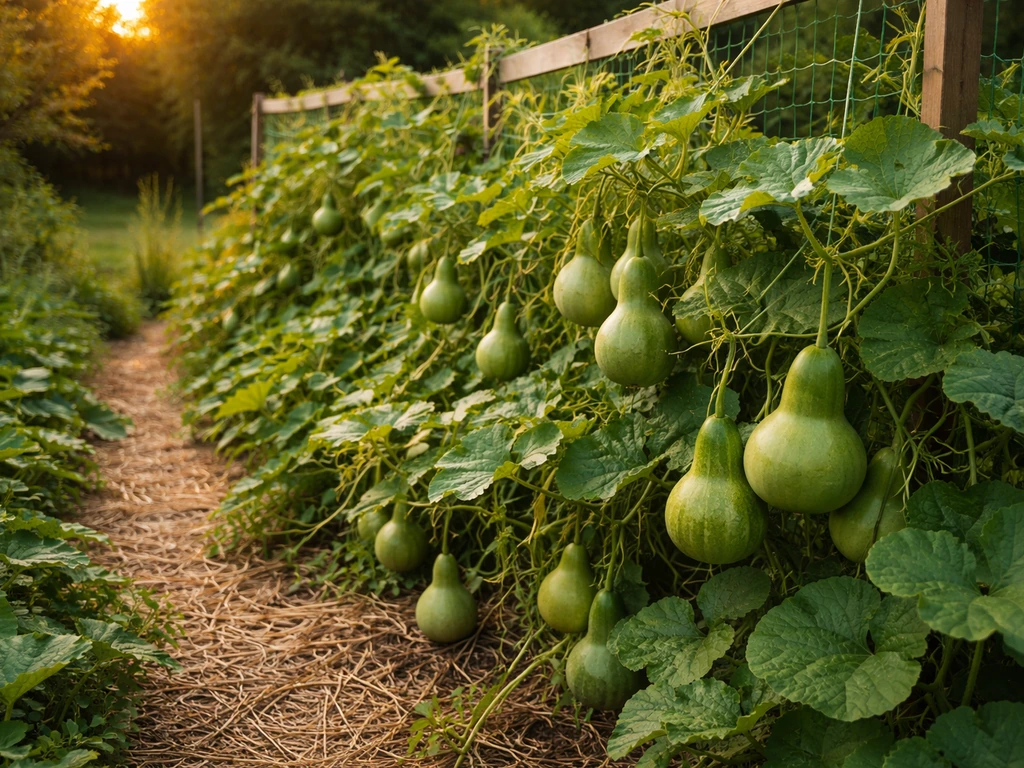
Farmers use greenhouses to control growing conditions that nature won't reliably provide: stable temperatures, protection from frost, reduced pest pressure, and a longer season. That control translates directly into higher yields, more consistent harvests, and crops that would otherwise be impossible to grow in a given climate or time of year. Whether you're a commercial grower or a home gardener trying to stretch your season by a few extra weeks, the logic is the same: a greenhouse lets you decide when and how plants grow instead of leaving it entirely up to the weather.
Why Farmers Use Greenhouses to Grow Plants and Crops
Marcus Hendrick
18 May 2026
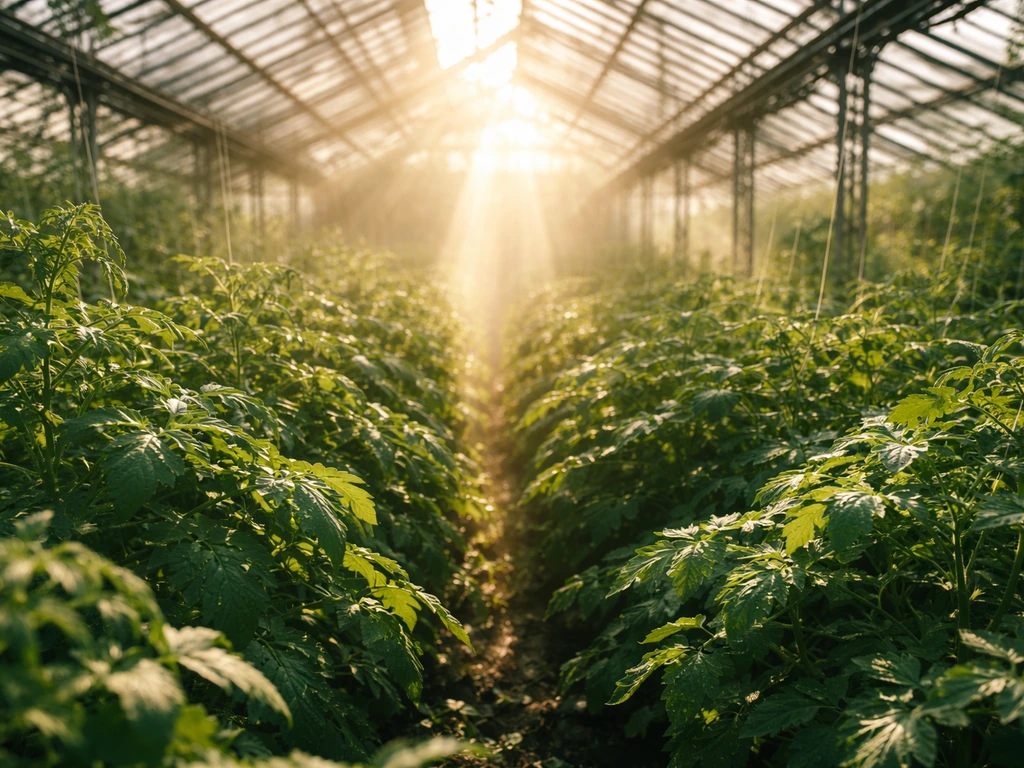
The core reasons farmers grow plants in greenhouses
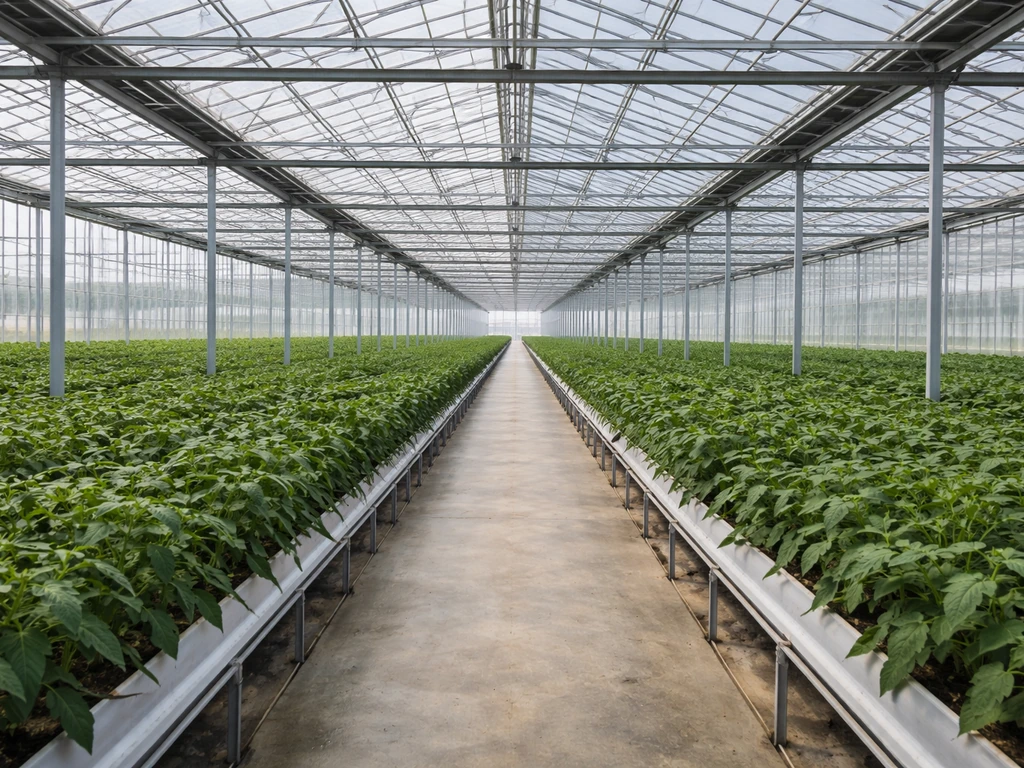
At the most basic level, greenhouses exist to solve problems that outdoor growing can't. Unpredictable frosts kill transplants. Heavy rain causes fungal outbreaks. Aphid populations explode overnight. Greenhouses address all of these at once by creating a controlled envelope around your crops. Cornell's Controlled Environment Agriculture program defines this approach as combining horticultural and engineering techniques to optimize crop production, quality, and efficiency simultaneously. That's a formal way of saying: you build a structure that lets you manage the variables that kill crops or cut yields.
For commercial farmers, the business case is straightforward. A reliable, predictable harvest commands better prices and allows forward contracts with buyers. For home growers focused on food security and self-sufficiency, a greenhouse means you're not entirely dependent on a short outdoor window. A similar logic helps explain why people grew victory gardens during WWII, since gardeners tried to reduce dependence on unreliable supply by extending what they could grow at home. You can start earlier, finish later, and grow crops that your local climate would otherwise rule out entirely.
- Extend the growing season by weeks or months in either direction
- Protect crops from frost, cold snaps, and extreme heat events
- Reduce losses from insects, diseases, and weeds through physical barriers
- Achieve higher and more consistent yields compared to outdoor production
- Improve crop quality, flavor, and marketable appearance
- Enable year-round production in climates where outdoor growing is seasonal
Climate control and season extension
This is the biggest reason most growers build a greenhouse. Season extension alone can add significant growing time: Penn State Extension research shows that high tunnels (which are essentially unheated greenhouses) can push the start of production up to eight weeks earlier than field planting and extend the season up to six weeks past the first outdoor frost. Cornell researchers working with unheated high tunnels documented season extensions of up to ten weeks. Even simpler season-extension structures, according to Utah State University Extension, can add roughly a month to your growing season.
For cold-sensitive crops like tomatoes and peppers, this timing shift is enormous. USU Extension notes that these crops can go into high tunnels three to four weeks earlier than the earliest safe outdoor planting date. In practical terms, along the Wasatch Front in Utah, that means transplanting in March instead of waiting until May. You're harvesting ripe tomatoes while your neighbors are still hardening off seedlings.
A full heated greenhouse takes this further. You control the thermostat, so you're not just extending the season at the edges, you're potentially eliminating seasonality altogether for certain crops. The University of Alaska Fairbanks Extension frames it well: a greenhouse lets you combine optimal temperature, light, and humidity with proper watering and fertilization to produce top-quality plants of your chosen crops. The operative word is "combine." Outdoor growing rarely gives you all those variables at once.
Temperature and humidity are tightly linked inside a greenhouse, and this is something a lot of first-time growers underestimate. Warm air holds more moisture than cool air, so as your greenhouse heats up during the day and cools at night, moisture condenses on plant surfaces right at the dew point. That condensation is exactly what many fungal diseases need to get started. Managing this means ventilation isn't optional, it's central to keeping the whole system healthy.
Pest, disease, and weed management benefits
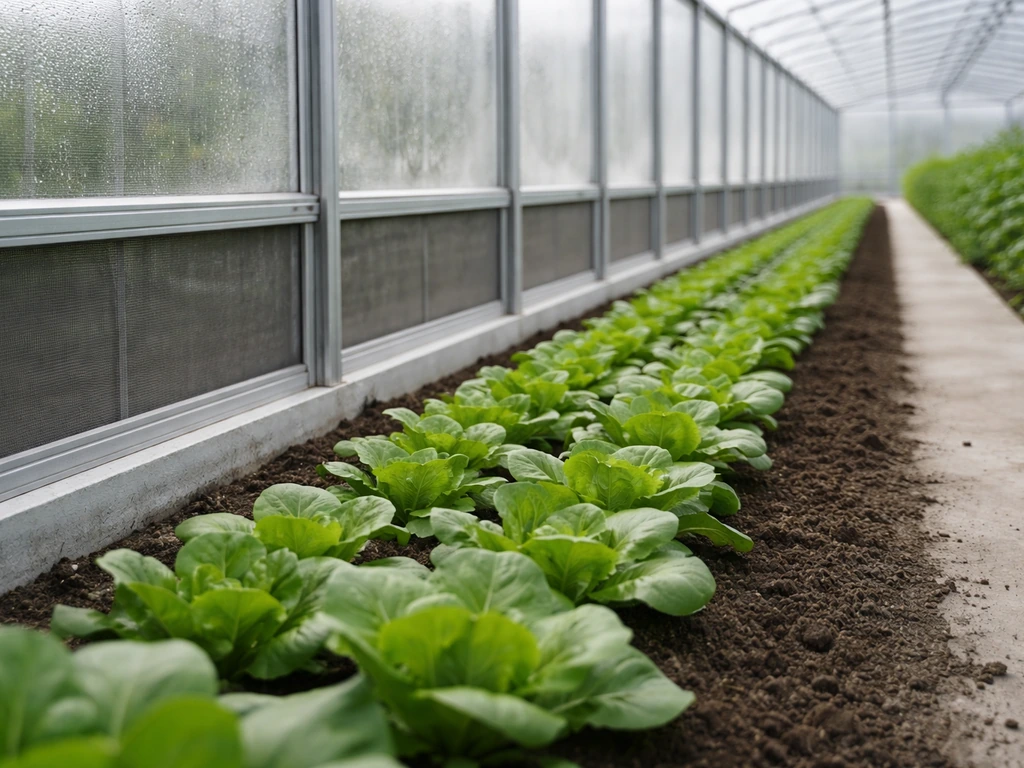
One of the underappreciated advantages of a greenhouse is physical exclusion. A solid structure with screened vents is a genuine barrier against flying pests. Research comparing screening materials found exclusion efficacy of up to roughly 94% against silverleaf whitefly and up to 95% against thrips depending on the screen type and setup. Ontario's Ministry of Agriculture reports that growers who installed greenhouse screening saw reduced pest levels, lower pesticide use, and improved effectiveness of biological controls like beneficial insects. The pests most commonly excluded include thrips, aphids, and whiteflies, the same ones that devastate unprotected crops outdoors.
Disease management inside a greenhouse is more nuanced, it's not automatic protection. You actually have to manage it actively, because the enclosed environment can create conditions that favor pathogens just as easily as it can prevent them. Botrytis (gray mold), one of the most damaging greenhouse diseases, thrives at relative humidity above 93% in the plant canopy, combined with leaf wetness lasting eight to twelve continuous hours, and cool temperatures around 55 to 65 degrees F. If your greenhouse gets poorly ventilated on a cool night, you've just created ideal Botrytis conditions. NC State Extension emphasizes that adequate air circulation can greatly reduce gray mold development even when humidity is high, so fans and proper venting matter as much as any spray.
Trickle irrigation is one practical tool that helps on the disease front. Penn State Extension notes it can reduce fungal disease pressure by keeping water off foliage entirely, delivering moisture directly to root zones instead. Combined with good air movement and regular ventilation, this significantly lowers the risk of the leaf wetness periods that trigger most fungal outbreaks.
Weeds are simpler. Inside a greenhouse growing on benches or in containers with clean growing media, weed pressure drops to near zero. Ground-level beds inside a greenhouse still require weeding, but the controlled environment and the absence of wind-blown seeds means far fewer weed problems than any outdoor bed.
Higher yields, consistency, and quality improvements
When you optimize growing conditions, yields follow. Greenhouse tomato systems are a good example of what's possible at the high end: Oregon State University notes that claims of 30 or more pounds of marketable fruit per plant per year are achievable, but only with very high inputs and optimal cultural practices. That's not a guarantee, but it illustrates the ceiling a controlled environment makes possible compared to outdoor production.
Beyond raw yield, consistency is what makes greenhouses genuinely valuable. Outdoor crops are at the mercy of weather events, a late frost, a heat wave during fruit set, or a wet spell at harvest. Inside a greenhouse, you can schedule harvests with real precision. Penn State Extension describes commercial tomato systems doing exactly this: planning a first early-spring crop, then scheduling a second crop to mature after field-grown tomatoes are gone from the market. That kind of harvest timing is only possible when you control the environment.
Quality improvements show up in measurable ways too. University of Arizona researchers studying greenhouse tomatoes tracked quality attributes including lycopene content and total soluble solids (Brix, a measure of sweetness) under different production and postharvest conditions. NC State Extension's greenhouse strawberry trials measured Brix scores, with top cultivars averaging over 7.0 Brix in controlled conditions. These aren't just abstract quality claims, they're the kind of flavor differences that are obvious at the table.
Crop planning: which plants benefit most and when
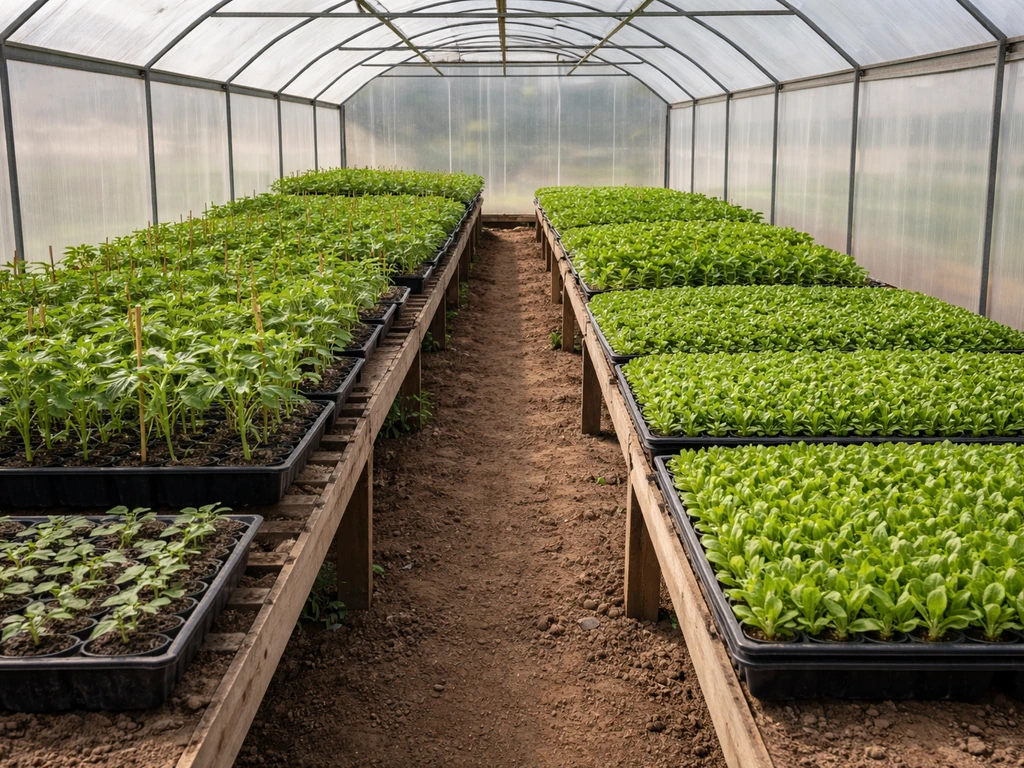
Not every crop makes equal use of a greenhouse. The biggest winners are crops that are frost-sensitive, high-value, or have long production windows. Tomatoes and peppers top most lists because they need warmth to produce well and their outdoor windows are short in most climates. Starting commercial tomato transplants in a greenhouse 42 to 56 days before field planting, as Penn State Extension describes, is standard practice precisely because of how long these crops take to establish.
Leafy greens like spinach and lettuce benefit from greenhouses in a different way, they tolerate cold but benefit from frost protection and the ability to grow through winter when outdoor production stops entirely. If you are wondering why do people grow gourds, the same idea applies: a greenhouse can help with timing and protecting vines from cold and damp conditions. UNH Extension research on high tunnels specifically includes winter spinach as a viable crop. Strawberries in greenhouse production showed strong yield results and measurable quality improvements in NC State trials. Cucumbers and herbs also perform well in the warm, humid conditions a greenhouse can provide.
| Crop | Key greenhouse benefit | Best season to use greenhouse |
|---|---|---|
| Tomatoes | Frost protection, extended season, higher yields | Early spring start, fall extension |
| Peppers | Warmth for fruit set, 3–4 weeks earlier transplanting | Spring through early fall |
| Cucumbers | Warmth, pest exclusion, consistent moisture | Spring and summer |
| Lettuce/Spinach | Frost protection, winter production | Fall through early spring |
| Strawberries | Season extension, improved Brix/quality | Winter and early spring |
| Herbs (basil, etc.) | Heat and frost protection | Year-round with heat |
Grains and field crops generally don't make economic sense in a greenhouse at any scale, the cost per square foot of greenhouse space simply doesn't work for low-value crops that grow fine outdoors. While gourds can grow outdoors, many farmers grow gourds in protected greenhouse or high tunnel conditions to start earlier and avoid weather and pest pressure grapes that grow fine outdoors. Greenhouses are most justified for high-value food crops where quality and timing carry a real premium, or for starting transplants that will eventually move to outdoor beds.
Costs, trade-offs, and practical next steps for home gardeners
Here's where it gets real. A full heated greenhouse is not a cheap investment, and the ongoing energy costs are significant. MSU Extension reports that 88% of greenhouse energy use goes toward heating and 11% toward water heating. Nationally, heating accounts for 65 to 85% of annual energy costs for year-round commercial greenhouses. That's not a small line item, and it's why greenhouse operations in high-energy-cost places like Alaska often run seasonally rather than year-round.
Construction costs vary enormously by structure type. Oklahoma State Extension notes that a full greenhouse can run up to $20 per square foot to build, while high tunnel materials can cost as low as $0.50 per square foot. High tunnels rely on manual ventilation rather than active climate control, and USU Extension is clear that they're not technically greenhouses, but for most home gardeners focused on season extension, that distinction matters less than the cost difference.
Before spending anything, USU Extension's practical advice is worth taking seriously: define your crop production goals, your budget, and the specific climate challenges you're trying to solve. That order matters. If your main goal is getting tomatoes two months earlier, an unheated high tunnel or even row covers might solve your problem at a fraction of the cost of a heated greenhouse. If you want year-round greens through a northern winter, you'll need active heat and likely supplemental lighting, and that's a different budget conversation entirely.
For home gardeners just starting out, the practical path forward usually looks like this: start with the lowest-cost option that solves your actual problem. Row covers and cold frames add a few weeks with almost no investment. A basic unheated high tunnel adds up to ten weeks of season for a few hundred dollars in materials at small scale. A small heated hobby greenhouse, which UGA Extension notes can be heated with space heaters and electric fans for air distribution, opens up year-round growing, but you'll want to run the energy numbers for your climate before committing.
- Identify your specific problem: is it frost, pests, short seasons, or all three?
- Match the structure to the problem: row covers and cold frames for light frost protection, high tunnels for significant season extension, heated greenhouses for year-round or cold-climate growing
- Pick your crops first: focus on high-value, frost-sensitive crops like tomatoes, peppers, cucumbers, and strawberries where greenhouse time pays off
- Run your energy and construction costs against expected yields before building anything heated
- Start small and expand — a single high tunnel will teach you more about your specific microclimate than any amount of planning
The reason farmers have used greenhouses for centuries, and the reason they're becoming increasingly common for home growers focused on food security, is simple: they work. The first farmers grew whatever crops would thrive in the new fields they were cultivating, like early cereals and legumes what did the first farmers grow. They give you control over the variables that determine whether a crop succeeds or fails. In that same spirit, understanding why did chengi grow vegetables comes down to using a greenhouse to control timing and protect crops from the elements greenhouses. In Egypt, farmers can use protected growing spaces to keep crops going through the dry season when conditions outdoors are less predictable. That control comes with real costs and management responsibilities, but for crops that matter, the ones you're counting on for your table, that trade-off is usually worth making. If you are wondering why farmers grow many fruits and vegetables in greenhouse, one key reason is that the controlled environment helps with frost protection, pest pressure, and season extension compared to outdoor beds.
FAQ
Do farmers use greenhouses year-round, or mainly for certain seasons?
Many do only during the coldest or most weather-risk months, especially where heating is expensive. Even in regions that can support winter growing, some operations choose seasonal production to limit fuel costs and simplify labor.
What’s the difference between a greenhouse and a high tunnel for plant growth?
A greenhouse is typically designed for climate control (often includes heat, engineered ventilation, and sometimes shading). A high tunnel is usually unheated and focuses on trapping solar warmth and protecting from wind, rain, and frost, so the temperature swings can still be large.
Can a greenhouse reduce pests without using pesticides?
It can help, but exclusion and biological control work best as part of a system. Screen quality, door discipline (keeping entrances closed), and sanitation for benches, tools, and plant material determine whether pests stay low.
Why do fungal diseases still happen in greenhouses if the environment is controlled?
Because control can still create pathogen-friendly conditions. If humidity stays very high and foliage remains wet for long periods, diseases like Botrytis can increase, so ventilation, airflow, and watering practices are critical.
Is it safe to water plants at night inside a greenhouse?
Often it’s risky because cooler nighttime air holds less moisture, increasing condensation on leaves. Many growers water earlier in the day to let foliage dry before temperatures drop.
Do greenhouses automatically increase yields and quality, or does it require special know-how?
They increase the potential, not the guarantee. Getting consistent results usually requires matching irrigation and nutrition to plant stage, choosing cultivars suited to greenhouse conditions, and managing microclimates like airflow at canopy level.
What crops are most likely to fail or underperform in a greenhouse?
Low-value, high-volume crops with long outdoor windows often struggle economically. Also, crops that need very specific chilling or pollination conditions may require extra equipment or careful management to perform as expected.
Do greenhouses help with pollination, or do farmers need to manage that separately?
Pollination is often a separate task. Many greenhouse systems rely on commercial bumblebees or other managed pollinators, and growers may need to coordinate planting schedules and flowering timing to ensure pollinators are present when plants flower.
How do growers prevent overheating in warm weather inside greenhouses?
Temperature management goes beyond heating. Shading, roof or side venting, active fan placement, and sometimes evaporative cooling help prevent heat stress, which can cause poor fruit set or tip-burn issues in some crops.
Are benches and container setups better than ground beds inside a greenhouse?
They often reduce disease and weed pressure because you can control media cleanliness and airflow. Ground-level beds can work, but they generally require more sanitation and pest monitoring since they connect more directly to soil-borne issues and water movement.
What’s the biggest first mistake home gardeners make with a small greenhouse?
Underestimating ventilation. A common failure mode is running the greenhouse too closed during warm-up and cool-down cycles, leading to condensation and disease, so installing fans or ensuring reliable air exchange early is usually the priority.
How should I decide between row covers, a high tunnel, and a heated greenhouse?
Start with your goal and your climate risk. If the problem is just early frost or a short shoulder season, covers or an unheated high tunnel may be enough. If you need winter production or consistent temperatures, you’ll likely need active heating and potentially supplemental light, then you must budget for energy and controls.
Citations
FAO’s climate-smart agriculture material describes agro-ecosystem benefits from managing landscapes that include regulating services such as pest and disease outbreak regulation (among others).
https://www.fao.org/4/i3325e/i3325e.pdf
Cornell defines controlled environment agriculture (CEA) as horticultural + engineering techniques that optimize crop production, crop quality, and production efficiency, and notes that consistency is achieved only with supplemental lighting.
https://cea.cals.cornell.edu/about-cea/
Penn State Extension notes that trickle irrigation can conserve water and reduce disease pressure because it avoids wetting crops, which reduces fungal diseases.
https://extension.psu.edu/greenhouse-production/
UNH Extension’s greenhouse production & economics resources emphasize indoor production as a way to manage/offset costs associated with buying/heating/maintaining greenhouses (framed within economics).
https://extension.unh.edu/resource-tags/greenhouse-production-economics
University of Alaska Fairbanks Extension explains that if greenhouses aren’t properly vented, excess humidity condenses on leaf surfaces and can enhance disease problems; it also describes reducing greenhouse humidity by removing moist air and replacing it with cooler, drier outside air.
https://www.uaf.edu/ces/publications/database/gardening/controlling-greenhouse-environment.php
UAF Extension notes that warm air holds more water vapor than colder air, and as temperature drops to the dew point moisture condenses into liquid water (a key mechanism linking temperature/humidity to disease risk).
https://www.uaf.edu/ces/publications/database/gardening/controlling-greenhouse-environment.php
UAF Extension frames the greenhouse as an opportunity to combine optimal temperature, light, and humidity conditions with proper watering, fertilization, and management to produce top-quality plants of selected crops.
https://www.uaf.edu/ces/publications/database/gardening/controlling-greenhouse-environment.php
USU Extension’s season-extension guidance (PDF) states that garden-season extension via greenhouse-like structures can “add approximately a month to the growing season” (in the context of how season-extension coverings perform).
https://extension.usu.edu/yardandgarden/research/extending-the-garden-season.pdf
Penn State Extension reports that high tunnels (unheated greenhouse-type structures) can increase the production season by as much as eight weeks prior to field production season and can extend up to six weeks after the first outdoor frost event.
https://extension.psu.edu/high-tunnel-production/
Cornell Chronicle reports researchers using unheated high tunnels to extend growing and selling seasons by as much as 10 weeks.
https://news.cornell.edu/stories/2006/09/cu-researchers-seek-extend-growing-season-high-tunnels
UNH Extension’s high tunnel production page includes winter/spring production guidance and references research on evaluating high tunnel performance for crops like peppers and winter spinach (showing season-extension usage in practice).
https://extension.unh.edu/agriculture-gardens/fruit-vegetable-crops/high-tunnel-production
UAF Extension directly links ventilation/moisture removal to disease prevention by describing humidity control through air exchange (reducing the moist air around plants).
https://www.uaf.edu/ces/publications/database/gardening/controlling-greenhouse-environment.php
Penn State Extension states Botrytis infection is encouraged by high relative humidity (greater than 93% in the canopy), free moisture/leaf wetness (8–12 continuous hours), and cool temperatures (55–65°F).
https://extension.psu.edu/managing-botrytis-or-gray-mold-in-the-greenhouse
NC State Extension advises managing Botrytis by avoiding prolonged leaf wetness and avoiding periods of high humidity longer than 3 hours per day, and notes that adequate air circulation can greatly reduce gray mold development even when humidity is high.
https://content.ces.ncsu.edu/botrytis-blight-of-greenhouse-ornamentals
University of Kentucky Extension notes greenhouse/high tunnel environments tend to be warm and humid and can create ideal conditions for disease development; it lists infection/spread favoring factors including high relative humidity (≥90%), free moisture/leaf wetness, and/or warm temperatures.
https://www.ca.uky.edu/ppfs-gh-1
A 2000s study (indexed in PubMed) found screening efficacy against silverleaf whitefly and thrips varied with material and approach velocity, with exclusion efficacy reported across ranges up to roughly ~94% (whitefly) and up to ~95% (thrips) depending on setup.
https://pubmed.ncbi.nlm.gov/10902333/
Ontario’s guidance on insect exclusion says that in Ontario, growers who installed screens report reduced pest levels and pesticide use, plus improved effectiveness of pest control measures (especially biological control).
https://www.ontario.ca/page/screening-greenhouses-insect-exclusion
Ontario’s screening guidance lists major greenhouse pest targets such as thrips, aphids, and whiteflies (and also some less common pests like tarnished plant bug and European corn borer).
https://www.ontario.ca/page/screening-greenhouses-insect-exclusion
Penn State Extension emphasizes that greenhouse production frequently uses benches/irrigation setups and that trickle irrigation reduces fungal disease by avoiding wetting crops.
https://extension.psu.edu/greenhouse-production/
USU Extension states that transplanting cold-sensitive crops like tomato and pepper in high tunnels can be done 3–4 weeks earlier than the earliest field planting date.
https://extension.usu.edu/vegetableguide/production/high-tunnels
Penn State Extension reports first-to-market advantages from high tunnels due to earlier and longer production windows (as much as eight weeks prior to field and up to six weeks after first outdoor frost).
https://extension.psu.edu/high-tunnel-production/
Oregon State University’s greenhouse tomato guidance states claims like “30 or more lb marketable fruit per plant per year” are only possible with very high inputs in optimal cultural practices; it also notes economics of supplemental lighting can be marginal in Oregon.
https://www.oregonstate.edu/oregon-vegetables/tomato-greenhouse
University of Arizona’s research topic describes year-round greenhouse tomato work measuring quality attributes including lycopene and total soluble solids (Brix) under differing production/postharvest environmental conditions.
https://experts.arizona.edu/en/publications/changes-in-selected-quality-attributes-of-greenhouse-tomato-fruit/
NC State Extension reports a 2022–2023 greenhouse strawberry cultivar performance trial (Wilson, NC) where weekly harvests were used to assess yields and where top cultivars averaged over 7.0 Brix.
https://content.ces.ncsu.edu/greenhouse-strawberry-production-report-of-cultivar-performance-2022-2023
The same NC State Extension report states yield assessments collected both marketable and non-marketable fruit during weekly harvesting to evaluate cultivar performance in the greenhouse season.
https://content.ces.ncsu.edu/greenhouse-strawberry-production-report-of-cultivar-performance-2022-2023
Penn State Extension states that high tunnels can support a first early-spring crop followed by a late-summer crop scheduled to mature after field-grown tomatoes are no longer available (illustrating harvest-timing programming).
https://extension.psu.edu/high-tunnel-production/
UAF Extension emphasizes that greenhouses let growers combine optimal temperature, light, and humidity with watering/fertilization/management to produce top-quality plants for the selected crops (crop-specific).
https://www.uaf.edu/ces/publications/database/gardening/controlling-greenhouse-environment.php
Penn State Extension states commercial tomato systems start plants as transplants in the greenhouse 42–56 days prior to field planting.
https://extension.psu.edu/tomato-production/
Oregon State University’s greenhouse tomato guidance notes supplemental lighting can increase yield under adverse sunlight conditions when other factors (CO2, etc.) are optimal, but also highlights the installation/operation/maintenance cost trade-off.
https://horticulture.oregonstate.edu/oregon-vegetables/tomato-greenhouse
USU Extension’s high tunnel crop guidance uses tomatoes/peppers as examples of cold-sensitive crops; it also frames the benefit as earlier transplanting and early production.
https://extension.usu.edu/vegetableguide/production/high-tunnels
USU Extension notes tomatoes can be planted in tunnels in late winter to early spring (example: March along the Wasatch Front) to provide a much earlier harvest than field planting.
https://extension.usu.edu/yardandgarden/research/extending-the-garden-season
Oklahoma State University Extension states that unlike greenhouses that can cost up to $20/sq ft, high tunnel material costs can run as low as $0.50/sq ft (materials), and that funding programs (e.g., NRCS) can encourage season extension.
https://extension.okstate.edu/fact-sheets/high-tunnels.html
UGA Cooperative Extension’s “Hobby Greenhouses” explains that heating equipment options include forced-air, hot-water/steam, electric heaters, and that small greenhouses can be heated using ordinary space heaters with electric fans for distribution.
https://extension.uga.edu/publications/detail.html?number=B910
MSU Extension reports that energy bills are typically the second-largest operational expense after labor, and that a Michigan State University study found 88% of energy used in greenhouses is for heating and 11% is for water heating.
https://www.canr.msu.edu/news/how-do-i-use-less-energy-to-heat-my-greenhouse
UAF Extension states that nationally, heating constitutes 65–85% of annual energy cost for a year-round commercial greenhouse (citing Runkle and Both, 2011).
https://www.uaf.edu/ces/publications/database/gardening/controlling-greenhouse-environment.php
UMN Extension’s winter greenhouse enterprise analysis (2015/2018 comparisons) reports operators decreased labor inputs by 30% and discusses that construction costs decreased while average variable costs remained much the same.
https://extension.umn.edu/community-research/winter-greenhouse-enterprise-analysis
UAF Extension notes that greenhouse operations in Alaska are often seasonal because of high energy costs for heating and electricity.
https://www.uaf.edu/ces/publications/database/gardening/controlling-greenhouse-environment.php
No additional greenhouse budgeting “sizing” guidance could be captured from the provided web results without an accessible relevant page for this specific point.
https://www.greenhouse-production-economics (unavailable in results)
USU Extension’s season-extension guidance explicitly recommends defining crop production goals, budget, and local climate challenges before spending on season-extension structures.
https://extension.psu.edu/yard-and-garden/research/extending-the-garden-season (available)
UAF Extension frames greenhouses as controlled environments requiring management of ventilation/humidity/temperature to avoid disease-enhancing conditions.
https://www.uaf.edu/ces/publications/database/gardening/controlling-greenhouse-environment.php
USU Extension distinguishes high tunnels from heated greenhouses, stating high tunnels rely on manual ventilation for temperature control and are not greenhouses (most are not heated).
https://extension.usu.edu/vegetableguide/production/high-tunnels
Penn State Extension shows high tunnels can add up to 8 weeks before field and up to 6 weeks after first outdoor frost, making them a common lower-cost season-extension alternative when full greenhouse control isn’t needed.
https://extension.psu.edu/high-tunnel-production/
USU Extension (season-extension overview) groups cold frames, high tunnels, and low tunnels as similar to greenhouses but typically not actively controlled to maintain growing conditions (implying lower-cost, less-controlled trade-offs).
https://www.usu.edu/yard-and-garden/research/extending-the-garden-season
OSU Extension states small high tunnels can work for backyard scales, and that small-scale growers may also consider cold frames or unheated greenhouses (decision framing among low-cost alternatives).
https://extension.okstate.edu/fact-sheets/high-tunnels.html
Next Article
Why Do Farmers Grow Gourds? Practical Reasons for Growers
Why farmers grow gourds: reliable warm-season yields, edible and hard-shell uses, low hassle, and resilience for homeste