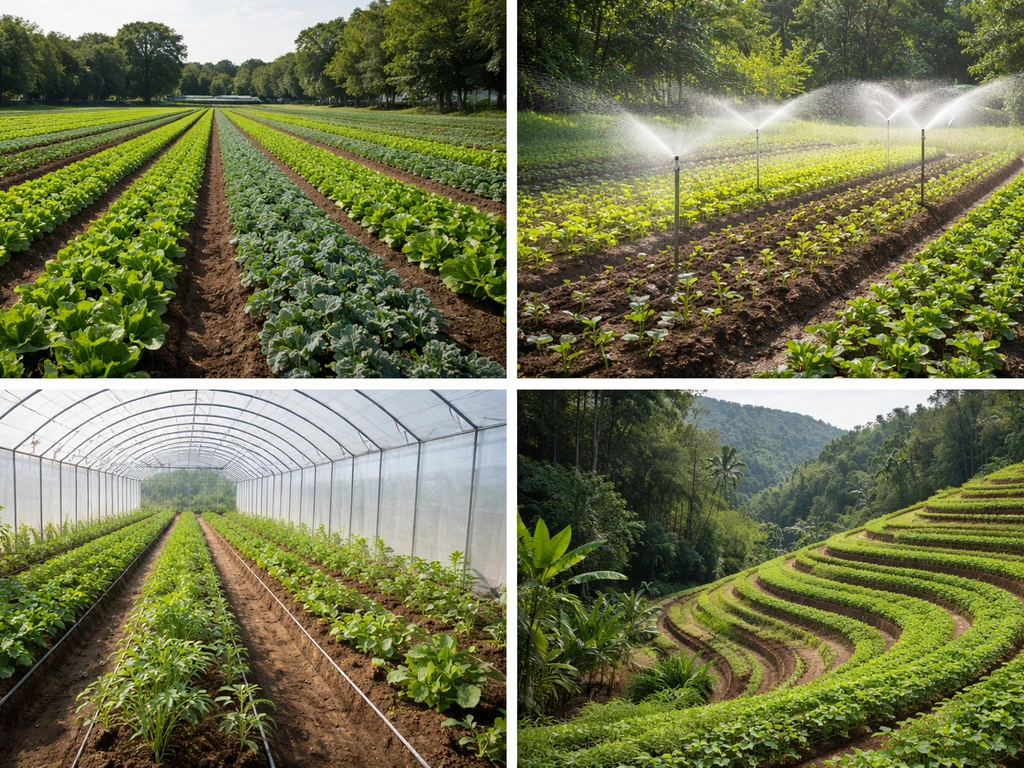
Most of the grain you eat was grown by a relatively small number of large commercial farms, mostly in the Midwest, Great Plains, and Pacific Northwest, then handed off through a chain of elevators, traders, and mills before it ever touched a grocery shelf. But you have more options than that chain suggests: regional grain farmers, co-ops, farmers markets, and your own backyard plot are all real alternatives, depending on how far you want to go.
Who Grow Grain for Us: Local Options and How to Start

Marcus Hendrick
28 May 2026
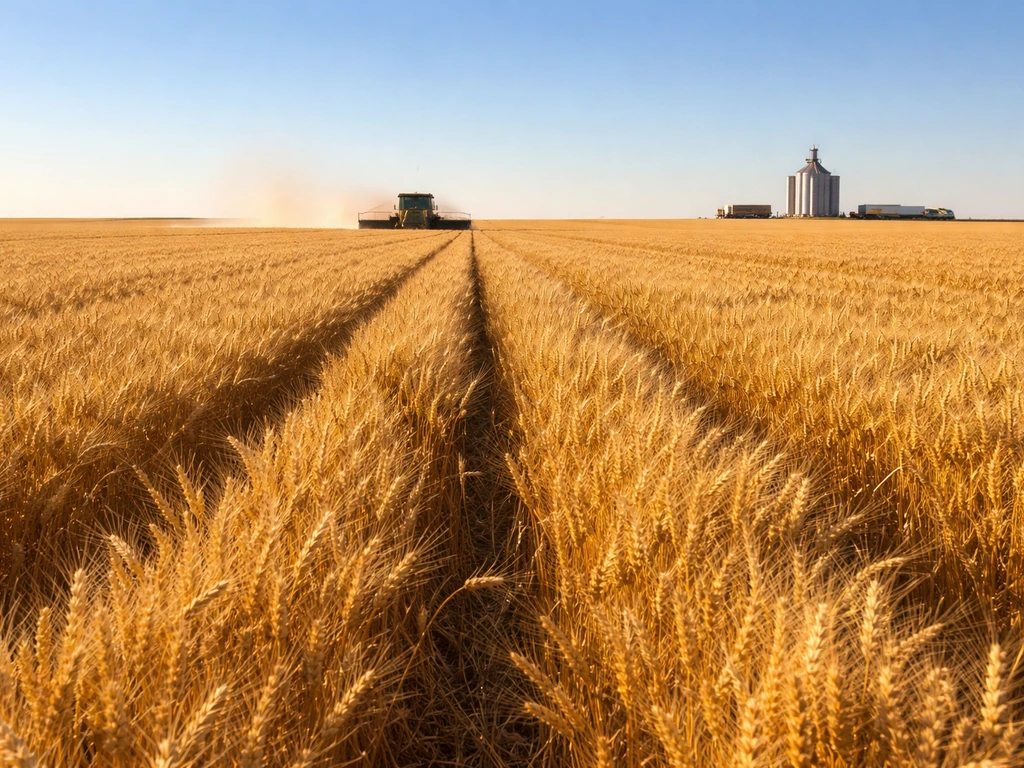
Where grain comes from in the modern food system
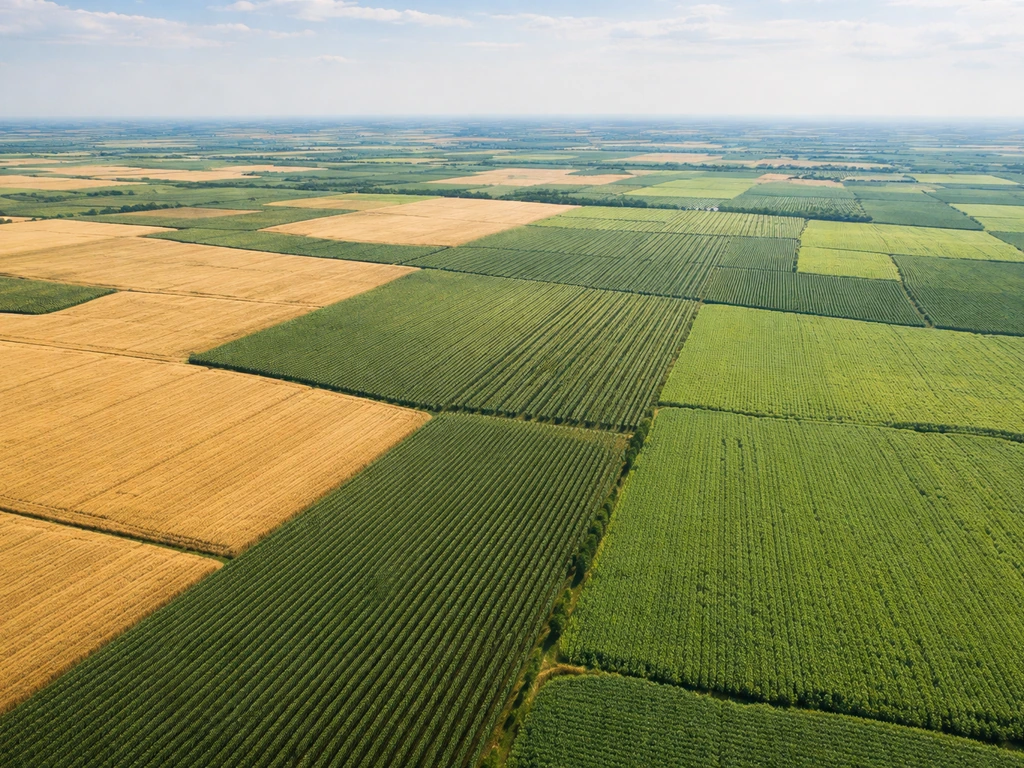
Roughly 90% of U.S. wheat, corn, and soybeans are grown in a tight geographic band. Hard red winter wheat dominates Kansas, Oklahoma, and parts of Texas and Colorado. Corn and soybeans carpet Iowa, Illinois, Indiana, and Nebraska. Hard red spring wheat comes largely from North Dakota, Montana, and Minnesota. Soft white wheat fills the Pacific Northwest. Rice is almost entirely Louisiana, Arkansas, Missouri, Mississippi, and California. That concentration is the result of climate, soil type, equipment scale, and decades of market incentives, not luck.
Beyond those commodity crops, smaller grain categories have their own geography. Oats come mostly from the Northern Plains and Upper Midwest. Rye and barley show up in Wisconsin, Michigan, and the Northeast at smaller scales. Heritage grains like emmer, einkorn, spelt, and heritage corn are scattered across small specialty farms in nearly every region. Those are the farms most relevant to home food security enthusiasts, because they're the ones who will actually sell to you directly.
Who actually grows grain: farms and farm types
There are really four categories of grain growers, and they behave very differently in terms of who they sell to and how you can reach them.
| Farm Type | Typical Scale | Who They Sell To | Can You Buy Directly? |
|---|---|---|---|
| Large commercial row-crop farms | 500–10,000+ acres | Grain elevators, commodity traders, export brokers | Rarely, and not in small quantities |
| Farmer-owned cooperatives | Variable (pooled grain) | Co-op mills, processors, ethanol plants | Sometimes, through co-op membership or retail arm |
| Specialty and organic grain farms | 50–500 acres | Natural food distributors, mills, direct buyers | Often yes, by the bag or pallet |
| Small/mid-scale family farms | 10–200 acres | Local mills, farmers markets, direct customers | Yes, often willing to negotiate |
Large commercial farms are the backbone of the food system but they are not set up to sell you a 50-pound bag of wheat berries. Their grain goes into a bin, gets sold forward or on a marketing contract (an agreement made before harvest under a futures-based pricing formula), then moves into the elevator and commodity system. You'll never meet these farmers at a market. Cooperatives are closer to accessible: many co-ops have a retail storefront or at least a mill partner that sells consumer-facing products. Specialty and organic farms are often the sweet spot for people interested in food security because they already sell in smaller volumes to specific buyers. Small family farms, especially those transitioning to direct marketing, are frequently looking for reliable local customers.
How grain is bought, shipped, and sold before it reaches you
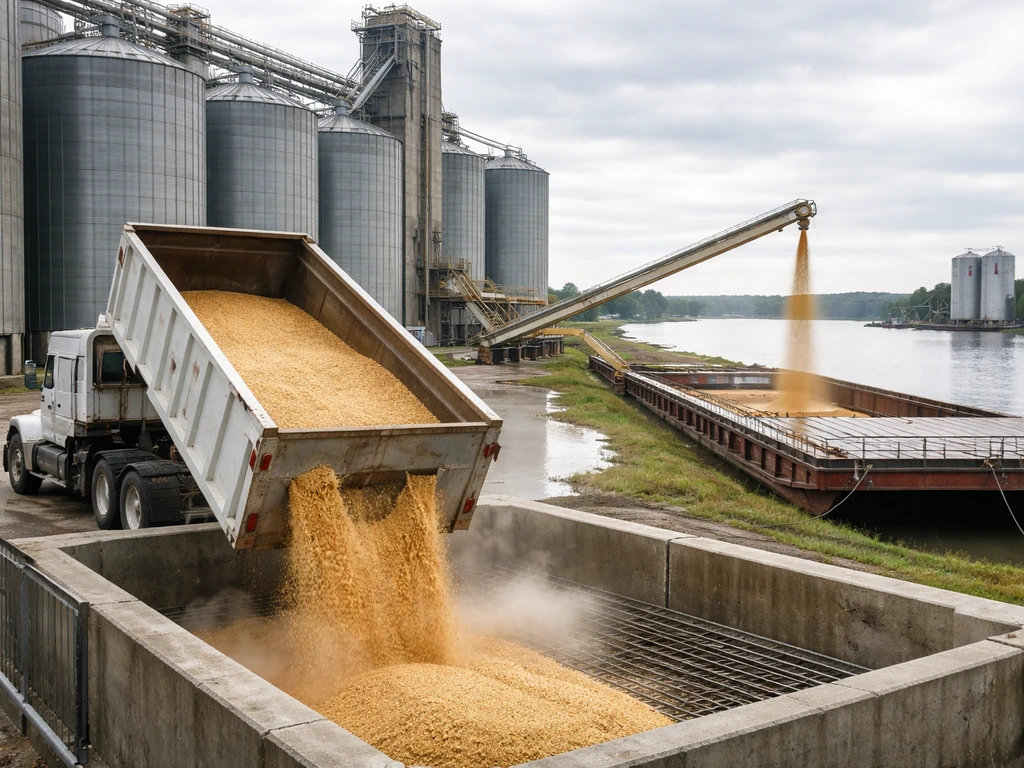
Once grain leaves a field, it moves through a pretty predictable sequence. First stop is usually a country elevator, a large storage and drying facility that buys grain from local farms, blends it, and either stores it or ships it by truck or rail to terminal elevators near ports or processing hubs. Terminal elevators aggregate grain from wide regions and sell to processors, exporters, or mills. Mills grind it into flour, cornmeal, or animal feed and sell to food manufacturers or package it for retail. By the time a bag of flour lands on a grocery shelf, it may have passed through four or five hands.
Pricing along that chain is tied to futures markets, specifically the Chicago Board of Trade for corn, wheat, and soybeans. The local cash price at any elevator is roughly: futures price plus or minus basis. Basis is the difference between the futures price and the local cash price at a specific elevator, and it reflects local supply, demand, and transportation costs. K-State's AgManager Interactive Crop Basis Tool and UW-Extension resources let you look up historical basis by location for corn, wheat, soybeans, and sorghum across much of the central U.S., which gives you a realistic sense of what grain is actually worth at the farm gate near you.
Local options: find and support grain growers near you
Finding a local or regional grain grower takes more effort than finding a vegetable farmer, but it's very doable. The USDA Agricultural Marketing Service also maintains Local Food Directory Listings with a Farmers Market Directory where you can search for markets and operations by ZIP code and product availability, positioned as a gateway to local retail and wholesale outlets Farmers Market Directory search by ZIP code and product availability. Here's where to start.
- USDA AMS Local Food Directory: search by ZIP code and product type at the USDA Agricultural Marketing Service site. It includes the national Farmers Market Directory, which lets you filter markets by what they carry, including grains and grain products.
- Farmers markets: not every farmers market vendor sells raw grain, but many sell fresh-milled flour, cornmeal, or whole grain berries. Ask vendors where they source; some will connect you directly with the farm.
- Grain elevators: country elevators often know every grain farmer within 30 miles. Call your local elevator and ask if any farmers sell direct or in small quantities. This is an underused tactic that works.
- Extension offices: your county's land-grant university extension office (UW-Extension, NDSU Extension, OSU Extension, K-State, and others) often maintains lists of local farms and grain producers. Extension agents are genuinely helpful and frequently know who is willing to sell direct.
- Local food co-ops and natural food stores: many source regional flour and grain from farms within a few hundred miles. Ask the buyer who their suppliers are; most are happy to tell you.
- Online farm directories: platforms like LocalHarvest and state department of agriculture farm directories list farms by product type and location.
Once you find a farm, there are several ways to support them beyond just buying a bag at a market. Buying in bulk (25- to 50-pound bags, or even a pallet) gives the farmer a reliable outlet and usually saves you money. Some farms offer a grain CSA or buying club, similar to a vegetable share. Others will sell contracted acreage: you pay upfront for a portion of the harvest, which the farmer then processes and delivers to you. This model is common for heritage grains where market access is limited. Even if you're just buying 50 pounds of wheat berries twice a year, that relationship matters to a small grain farmer.
How to grow your own grain (small homestead approach)
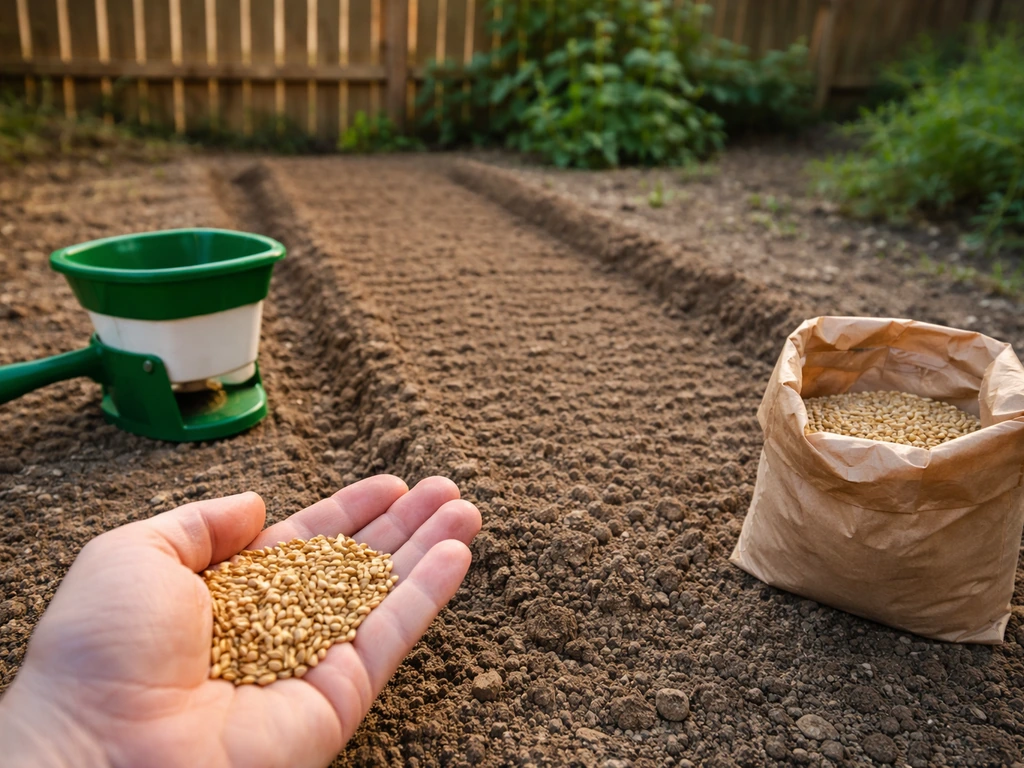
Growing grain at home is realistic on surprisingly small plots. If your goal is to grow crops for food self-sufficiency, the same principles apply as you scale from a small grain plot to other crops Growing grain at home is realistic on surprisingly small plots.. It won't replace a grocery store, but it's genuinely achievable and deeply satisfying. The most practical grains for home gardeners and small homesteads are wheat (hard red winter is the most forgiving), oats, barley, rye, amaranth, and corn (open-pollinated varieties like Bloody Butcher or Hopi Blue). If you are thinking about feeding your household while you grow, also consider the related guide how to grow crops don't starve together for planning beyond just the first harvest. If you want a broader approach that goes beyond home plots, consider how commercial growers who grow crops typically market and sell to consumers how you grow your own grain. Millet and sorghum are excellent in warm, dry climates. If your site suits it, rice is possible in containers or a small paddy area, though that's a bigger project.
Choosing your grain and variety
Match the grain to your climate before anything else. Hard red winter wheat is planted in fall, overwinters, and is harvested in late spring or early summer in most of the U.S. (zones 4-8). Hard red spring wheat is planted in spring in colder zones (3-6) and harvested in late summer. Rye is the most cold-tolerant small grain and will grow in poor soil. Oats prefer cooler, moist climates and struggle in hot, dry summers. Amaranth is one of the best options for hot climates and small spaces because it's a pseudocereal (a broad-leafed plant rather than a grass) that produces large seed heads and tolerates drought. Heritage varieties from sources like Sustainable Seed Company, Baker Creek, or Restoration Seeds tend to be better adapted to diverse conditions and are worth the extra cost.
Soil prep, planting, and care
Small grains don't need perfect soil, but they respond well to pH around 6.0-7.0 and reasonable drainage. Work in compost before planting, aim for firm seed-to-soil contact, and plant at the depth recommended for the variety (usually half an inch to one inch for wheat, oats, and rye). Broadcasting seed by hand works fine for small plots; scratch it in with a rake or drag a board over it. A rough rule: 1 pound of seed covers about 1,000 square feet broadcast (denser for row planting). Small grains need relatively little ongoing care. Keep weeds down the first few weeks while plants establish; once they canopy, they shade out most competition. Amaranth and corn need more attention to thinning and spacing.
Harvest, drying, and storage
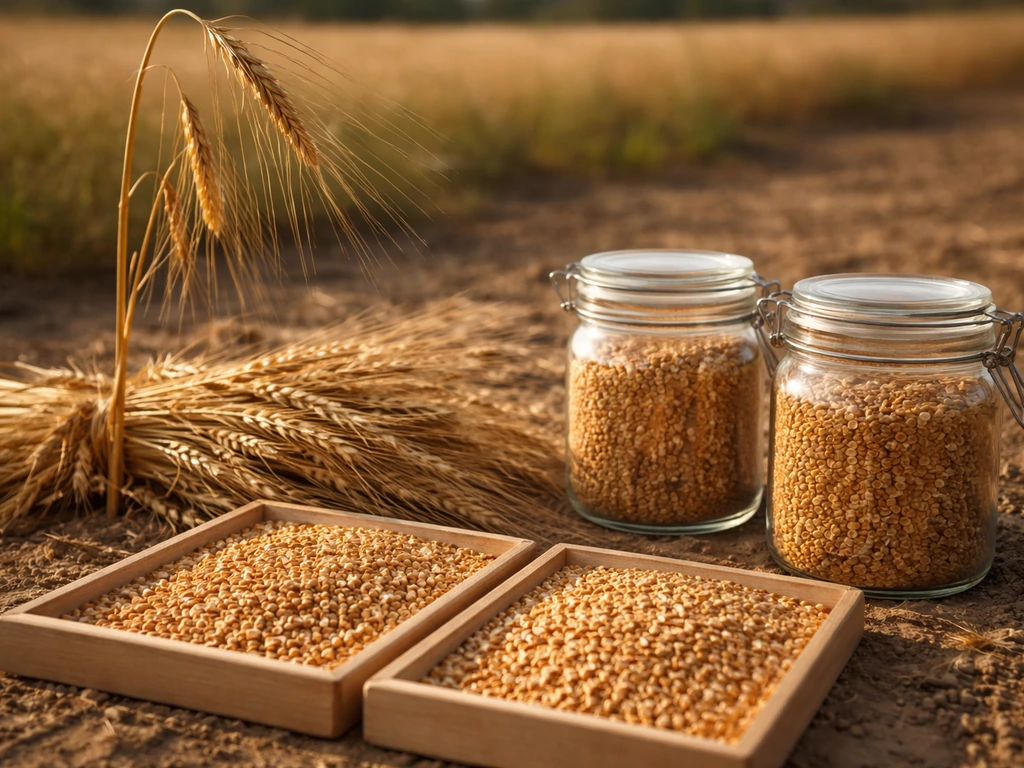
Harvest timing matters more than almost anything else. Small grains are ready when the stalks have turned golden, the seed heads droop, and the kernels are firm and dry enough to dent with a fingernail. For a home-scale plot, cut stalks with a sickle or scythe, bundle them, and let them dry in shocks in the field for a week or two before threshing. Threshing by hand means beating bundles against the inside of a barrel or tub, then winnowing by pouring grain from one container to another in a breeze to separate chaff.
Moisture at storage is the critical number. Utah State University Extension and NDSU Extension are both clear on this: grain stored above 14% moisture will develop mold and spoilage quickly. For long-term storage (more than 9 months), NDSU recommends getting wheat down to 13% or below. For home storage, a simple moisture meter (under $30) is worth buying. If your grain is too wet, spread it on tarps in a dry, ventilated space for a few more days before sealing it up. Store in food-grade buckets or sealed containers in a cool, dark location. Warm-to-cold temperature transitions can cause moisture migration inside storage containers, so keep storage conditions as stable as possible.
Cost, yield, and trade-offs vs buying grain
Here's the honest math. A 100-square-foot plot of wheat yields roughly 1 to 2 pounds of cleaned grain under good home conditions. Scaling up to a quarter-acre (about 10,890 square feet), you can realistically target 100 to 200 pounds of cleaned wheat in a good year, maybe 300 pounds if you have ideal soil and conditions. At a retail price of $1 to $2 per pound for whole wheat berries, that's $100 to $600 worth of grain from a quarter-acre. Your input costs: seed ($5-$15 for a quarter-acre), compost or fertilizer ($20-$50), and time. If you're buying equipment (a grain mill, scythe, buckets), add that one-time cost. On pure dollar value per hour spent, growing grain doesn't beat buying in bulk from a local farm. But it does give you variety control, seed saving capability, and a skill that doesn't disappear when supply chains get weird.
| Factor | Growing Your Own (1/4 acre) | Buying Local/Regional Bulk | Buying Retail |
|---|---|---|---|
| Cost per pound | $0.30–$1.50 (depends on inputs and yield) | $0.80–$2.00 | $1.50–$4.00+ |
| Control over variety | Complete | Limited to what farm grows | Very limited |
| Effort required | High (planting, harvesting, threshing) | Low (find farm, place order) | Minimal |
| Food security value | High (seed saving, skill building) | Medium (relationship with farmer) | Low |
| Realistic quantity | 100–300 lbs/year on 1/4 acre | Unlimited if farm has supply | Unlimited |
| Startup costs | Modest ($50–$200 for tools) | None | None |
For most home gardeners, the best approach is a combination: grow a small grain plot (even 200 square feet of wheat or a row of amaranth) to build the skill and save seed, while sourcing the bulk of your grain needs from a local or regional farm. UW-Extension's Crop Enterprise Budget Tool and similar extension calculators can help you build a more precise cost estimate once you know your local land, seed, and input costs. MyFarmCalc also has a free grain drydown and harvest tool that's useful for estimating moisture shrink and drying costs if you're scaling up.
Questions to ask and a simple action plan today
This week, you can take three concrete steps. First, figure out what you actually want: are you trying to source better grain for your family right now, build food security through local relationships, learn to grow your own, or some mix of all three? The answer shapes where you spend your energy. Second, do a quick local search to see what's actually available near you. Third, pick one small grain to experiment with this season, even if it's just a 4x8 raised bed of wheat or a corner of the garden with amaranth. The learning curve is short and the cost is low.
- Search the USDA AMS Local Food Directory by your ZIP code for farmers markets and farm operations selling grain or grain products nearby.
- Call or visit your county extension office and ask for a list of local grain producers or anyone selling direct. Extension agents are free, knowledgeable, and often personally connected to local farms.
- Call your nearest grain elevator and ask if any local farms sell wheat berries, cornmeal, or whole grain direct to the public. This one call often surfaces farms that aren't listed anywhere online.
- Ask at any local food co-op who supplies their bulk grains and whether you can buy direct or in larger quantities.
- Decide on one grain to grow this season based on your climate: hard red winter wheat (fall planting, zones 4-8), rye (fall, zones 3-8), oats (spring, zones 3-6), amaranth (spring after frost, most zones), or open-pollinated corn (spring, most zones).
- Order a small quantity of seed (half a pound to one pound covers a meaningful test plot) from a heritage seed supplier and prep a bed with compost and good drainage.
- Buy a moisture meter if you plan to harvest and store any grain at home. It's the single most useful tool for storage safety.
- Ask any farmer you contact: What varieties do you grow? Do you sell in bulk? Do you offer a buying club or CSA share? What's your harvest window and lead time for orders?
Growing your own grain connects naturally to other aspects of food self-sufficiency: understanding which crops to plant together to maximize your plot, learning how to set up a productive growing space, and knowing how to calculate realistic yields before you commit land and time. Even if you only ever grow a small patch, you'll understand the grain supply chain in a way that makes you a much more informed buyer and a more resilient household. Start small, pay attention, and adjust from there.
FAQ
Who actually grows most of the grain Americans eat, and can I buy from them directly?
If you mean “who grow grain for us” at the farm-to-store level, the most direct options to pursue are specialty grain farms, organic farms, and farmer-co-ops with a retail or mill partner. Commodity farms usually sell through elevators and marketing contracts, so you will rarely be able to buy from them directly in small quantities.
When I contact a grain grower, how do I tell whether the grain is for eating or for planting?
Ask whether the farm sells in cleaned, ready-to-cook form or in seed-for-planting form. “Grain” listings online can mean either, and the storage requirements differ (food-grade storage for eating, moisture and labeling for seed).
What should I check before I order grain from a local grower?
For a first purchase, look for a farm that offers consistent pack sizes (like 1 to 5 pound bags) and a clear harvest window. If they cannot tell you roughly when it was harvested and how it was dried, treat that as a red flag because storage issues are often tied to moisture and handling.
Can I buy grain from a grower and turn it into flour at home, or do I need a specific form?
Yes, but plan for “variety and processing match.” Whole wheat berries require different milling and storage habits than cracked wheat, and some growers will only sell certain kernels because they have cleaning and milling capability. Confirm whether they can provide the exact product you want (berries, flour, meal) or whether you will need to mill at home.
What are common pricing traps when purchasing grain in bulk?
If you buy bulk, verify the basis for the price is consistent with what you are getting (cleaned weight versus rough seed weight). Many issues come from weight differences after cleaning, and that can make a “cheap” per-pound offer cost more than expected.
How do I choose a crop based on timing, not just climate?
Start by matching your use to the crop schedule. If you want spring harvest, focus on spring grains, if you want overwinter skills and earlier harvests, focus on fall-planted types. Also confirm your local climate can support reliable maturity, because yield loss often comes from timing rather than fertilizer.
Do I really need to measure moisture at home, or can I just dry until it feels dry?
For home plots, you will get much better results if you plan for storage before you plan for planting. A moisture meter is helpful, and you should also know the target moisture range you are aiming for, since spoilage risk climbs quickly when grain is stored too wet.
What should I do if there is no farmers market selling grain near me?
If you cannot find a farm selling direct-to-consumer grain, use the co-op route. Many co-ops sell consumer packages through storefronts or partner mills even when they do not market directly as “grower-to-bag.” You can also ask the co-op which nearby farms supply the grain they stock.
Is a grain CSA or contracted acreage worth it for food security, compared with buying from a farm now and then?
If you want food security, prioritize repeatable sources over one-time purchases. A grain CSA or contract acreage can reduce the “availability gap,” while a small home plot can cover seed savings and variety control. The most resilient approach is usually a blend of both.
Can I save seed from home-grown grain, and what’s different for corn versus wheat or oats?
Yes, but choose varieties that match your goal. Open-pollinated corn can support seed saving if you manage isolation, while many purchased commercial hybrids are not ideal for reliable seed saving. For grain self-sufficiency, also consider whether you have a realistic threshing plan that fits your expected harvest volume.
What mistake do beginners make when judging whether growing grain is worth the effort?
Watch for “soft” advice that ignores yield reality. Even small plots can work for skill-building, but the dollar-per-hour math tends to favor buying bulk grain. If you are doing it for resilience and learning, treat yields as secondary and budget time for drying, cleaning, and storage.
Next Article
How Do Farmers Grow Food Around the World: Methods and Tips
Learn how farmers grow food worldwide: soil, water, crops, pests, harvest, and how to scale it for home gardens.