Farmers who use genetic engineering to grow pesticide-resistant crops are planting varieties that have been modified at the DNA level to either tolerate specific herbicides or produce their own insect-killing proteins, so they can control weeds and pests with fewer or more targeted chemical applications. For home gardeners trying to make sense of seed choices, pesticide decisions, and food safety concerns, the core thing to understand is this: these crops shift how pesticides are used, not whether they are used. That distinction matters a lot when you're deciding how to manage your own garden this season.
Farmers Who Use Genetic Engineering for Pesticide-Resistant Crops

Marcus Hendrick
11 Jun 2026

What pesticide-resistant GMO crops actually are
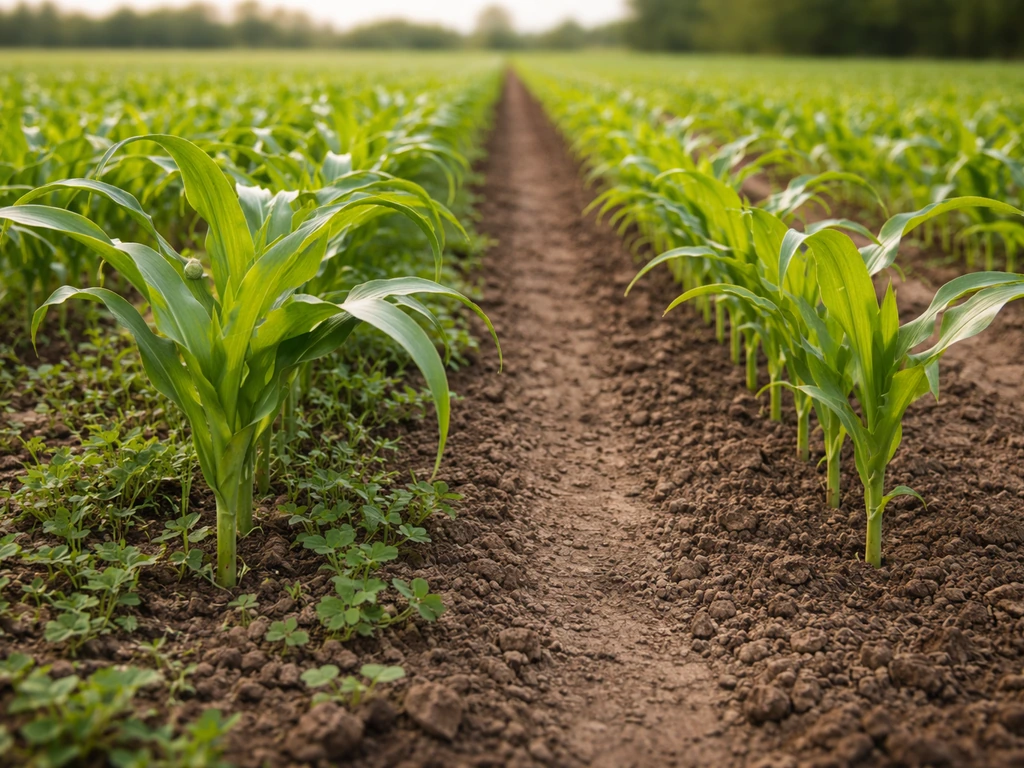
There are two main types of genetically engineered (GE) traits related to pesticides, and they work very differently. The first is herbicide tolerance: the crop is engineered to survive exposure to a specific herbicide that would normally kill it. Glyphosate-tolerant crops (widely sold under the Roundup Ready name) are the most common example. The farmer sprays glyphosate across the field, it kills weeds, and the crop shrugs it off.
The second type is insect resistance: the crop is engineered to produce proteins from the soil bacterium Bacillus thuringiensis (Bt) inside its own tissues. Insects that feed on the plant ingest the Bt protein and die. Corn, cotton, and soybeans are the biggest commercial examples, and many varieties stack both traits together.
The term 'pesticide-resistant crops' technically covers both categories, even though the mechanisms are opposite. Herbicide-tolerant crops resist the chemical so you can spray more freely. Bt crops produce a pesticide internally so you spray less externally. When most people use the phrase, they often mean herbicide-tolerant varieties, but Bt crops (sometimes called plant-incorporated protectants, or PIPs) are equally important to understand, especially because the EPA regulates Bt proteins as pesticides even when they're expressed inside the plant.
Who grows them and why they bother
Commercial adoption of GE crops in the US has been massive. As of the mid-2020s, well over 90 percent of US corn, soybeans, and cotton are genetically engineered varieties. Large-scale grain and row-crop farmers are the primary users, and their motivations are straightforward: labor savings, simplified weed management, and reduced scouting time for insect pressure. For a farmer managing thousands of acres, being able to spray one herbicide across an entire field instead of mixing multiple products and timing applications carefully is a real operational win.
Smaller specialty-crop and vegetable farmers use GE varieties far less, partly because fewer engineered options exist for those crops and partly because markets for organic and non-GMO produce often pay premiums that make conventional GMO use economically unattractive. If you're curious about why farmers grow GMO crops in more depth, that's a whole conversation on its own, but the short version is: it's mostly about operational efficiency at scale, not magic yield increases. If you still want the deeper details, the rest of this article explains why farmers grow GMO crops, especially how scale and pest-management decisions drive those choices.
How pesticide use actually changes on these farms
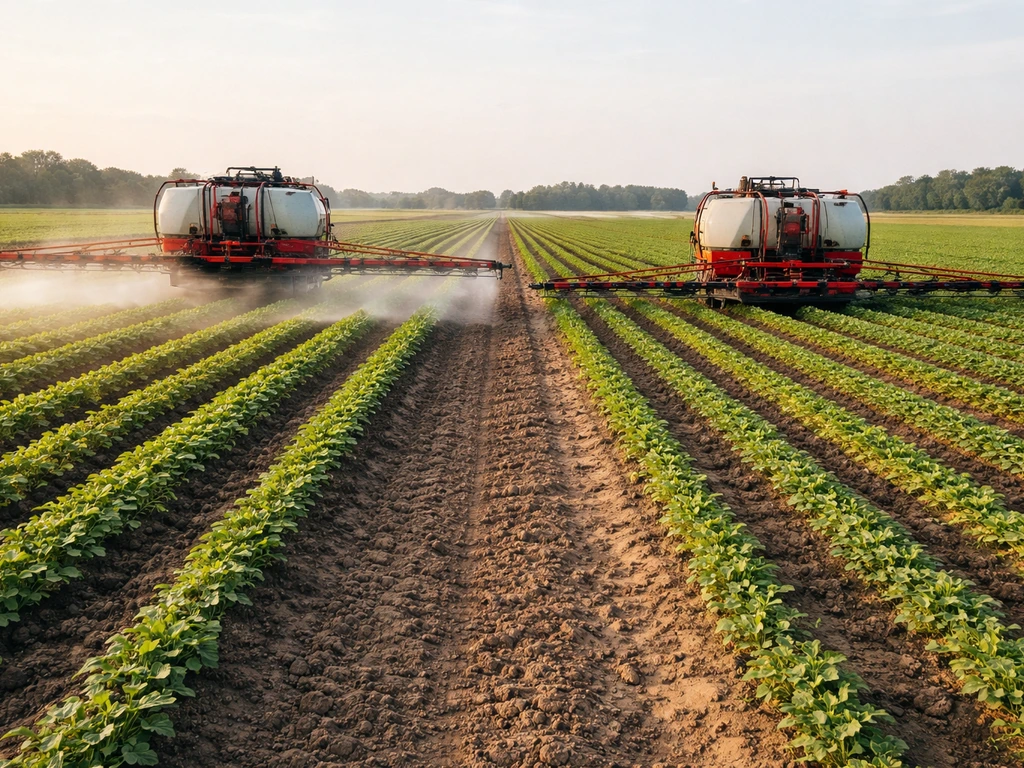
Bt crops have generally reduced the volume of insecticide sprayed on crops like corn and cotton, which is a real environmental and economic benefit. When the plant itself handles caterpillar and beetle larvae, you don't need to apply foliar insecticides as often. Herbicide-tolerant crops are a different story. They simplified weed management early on, but over time they also encouraged heavy, repeated use of glyphosate, which accelerated the evolution of glyphosate-resistant weeds.
Today, farmers dealing with herbicide-resistant pigweed, waterhemp, or Palmer amaranth often have to layer in older, harsher herbicides alongside glyphosate, meaning total herbicide use has in some cases increased compared to pre-GE baselines. That situation can make farmers rely more on pesticides to keep resistant weeds under control, even when they started with a simpler approach farmers dealing with herbicide-resistant pigweed, waterhemp, or Palmer amaranth.
The lesson here is that GE traits change the profile of pesticide use, not the fundamental need for pest management. Resistance evolves. Weed and insect populations adapt. A tool that works beautifully in year one can become unreliable in year fifteen if it isn't managed carefully, and that's the core challenge these farmers are navigating right now.
The real risks and what farmers do to manage them
The biggest practical risk with Bt crops is insect resistance, and the EPA takes this seriously enough to require formal insect resistance management (IRM) plans as part of the registration process for Bt PIPs. The core strategy is the refuge system: a percentage of the field is planted with non-Bt varieties so that susceptible insects keep surviving and reproducing. When those susceptible insects mate with any rare resistant individuals, the resistance alleles get diluted in the population. It's population genetics applied to farming, and it works as long as farmers actually maintain the refuges.
The EPA's IRM framework for Bt crops includes several interlocking components. Understanding pest biology comes first. Then setting the right protein dose, designing refuges properly, monitoring cross-resistance between different Bt proteins, conducting field monitoring, taking remedial action if resistance is detected, educating growers, and integrating the whole system into a broader IPM approach. That last point is worth emphasizing: even on commercial GE farms, integrated pest management is the standard, not a replacement for it.
| Risk or Tradeoff | What It Means in Practice | Who It Affects Most |
|---|---|---|
| Herbicide-resistant weeds | Repeated glyphosate use selects for resistant weed populations; farmers must add more herbicide modes of action | Large grain and row-crop farmers |
| Insect resistance to Bt proteins | Pests evolve resistance if refuges aren't maintained; specific Bt traits become less effective | Corn and cotton farmers using stacked Bt traits |
| Biodiversity concerns | Herbicide-tolerant crops allow broad-spectrum spraying that can reduce field biodiversity | Farmers in areas with conservation obligations |
| Health and regulatory questions | GE crops go through EPA, FDA, and USDA review; most health concerns center on herbicide residues, not the GE trait itself | Consumers and food-safety-focused growers |
| Non-GMO market access | Planting GE varieties can disqualify crops from non-GMO or organic premiums | Small farms and market gardeners |
From a food safety standpoint, regulatory agencies in the US and most other developed countries have concluded that approved GE crops are safe to eat. The more active debate is around herbicide residues, particularly glyphosate, on herbicide-tolerant crops, and around the long-term ecological effects of widespread resistant-weed evolution. These are legitimate concerns worth understanding, but they're separate from the question of whether Bt proteins in corn are dangerous on a plate.
What this means for you as a home gardener
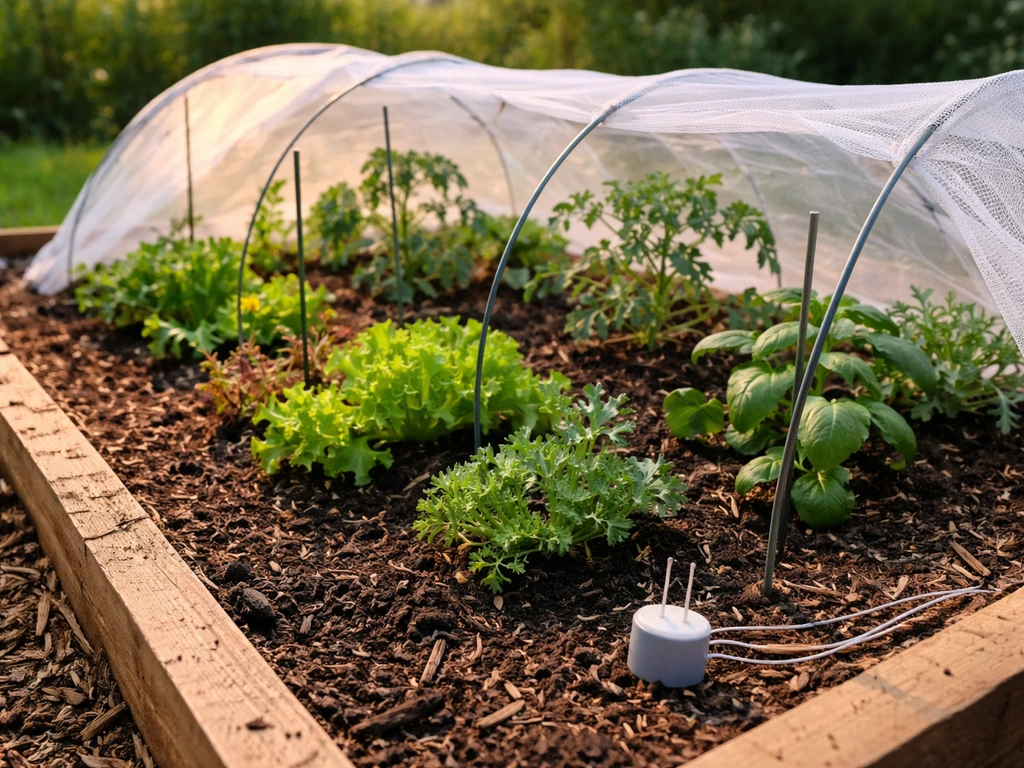
Here's the honest truth: if you're growing vegetables, herbs, or small-scale grains for home use or a homestead, GE pesticide-resistant varieties are largely irrelevant to your situation right now. With very few exceptions, GE seeds are not sold in packets at garden centers or seed catalogs targeted at home growers. The commercial GE crop market operates through seed company licensing agreements with large-scale farmers. You're not going to accidentally buy Roundup Ready tomatoes at the hardware store.
What does matter for you is understanding the underlying principle: relying on any single pest-control mechanism, whether it's an engineered trait or a favorite spray-on pesticide, leads to resistance and eventually failure. The lesson from commercial GE farming applies directly to your garden. Rotate your control strategies. Don't use the same insecticide mode of action every time. Diversify. That's exactly what integrated pest management is, and it works at any scale.
If you're growing corn and want to avoid the earworm and corn borer pressure that Bt crops are designed to handle, you have non-GE options that work well at garden scale. Bt spray (the live bacterium applied to plant surfaces) is approved for organic use and works on the same pests without any genetic modification of the plant. Timing your corn planting to avoid peak pest pressure, using physical barriers at the silk tip, and selecting naturally resistant or early-maturing varieties are all effective strategies that cost very little.
A practical IPM plan for your self-sufficient garden
Integrated pest management is the framework that commercial GE farmers and organic farmers both use, just with different tool sets. For a home garden or homestead, here's how to build a working IPM plan that keeps pest pressure low without engineered traits or heavy pesticide use.
Start with prevention
- Rotate crops by family every season: brassicas, nightshades, cucurbits, and legumes each in a different bed than last year. This breaks pest and disease cycles that build up in the soil.
- Use transplants instead of direct seeding when possible for crops like tomatoes and peppers. Getting past the seedling stage faster reduces exposure to soil pests and cutworms.
- Choose varieties with documented resistance to common local diseases: powdery mildew-resistant squash, late blight-resistant tomatoes, and so on. This is conventional plant breeding, not genetic engineering, and it's widely available.
- Keep beds clean. Removing crop debris at season's end eliminates overwintering habitat for aphids, whiteflies, and fungal spores.
Physical barriers and monitoring
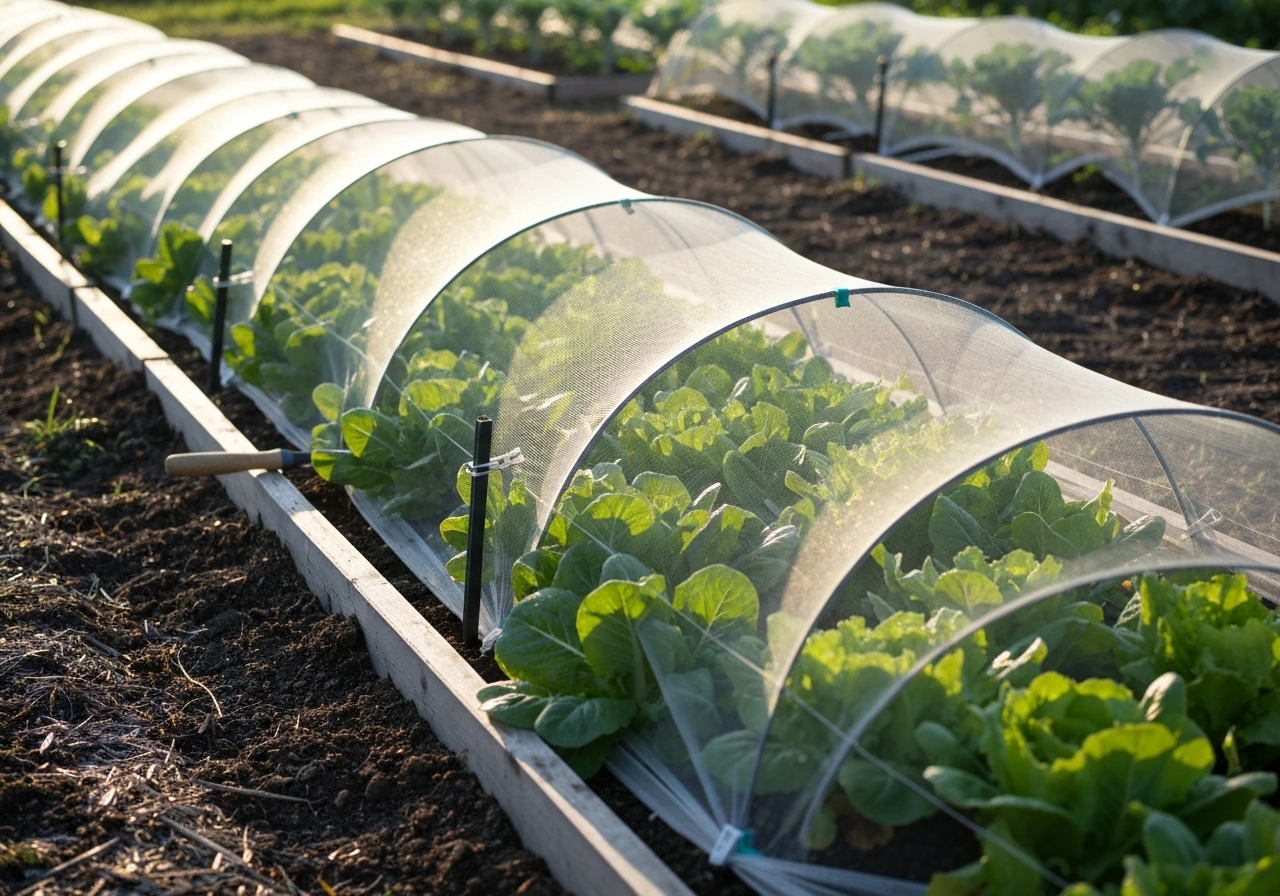
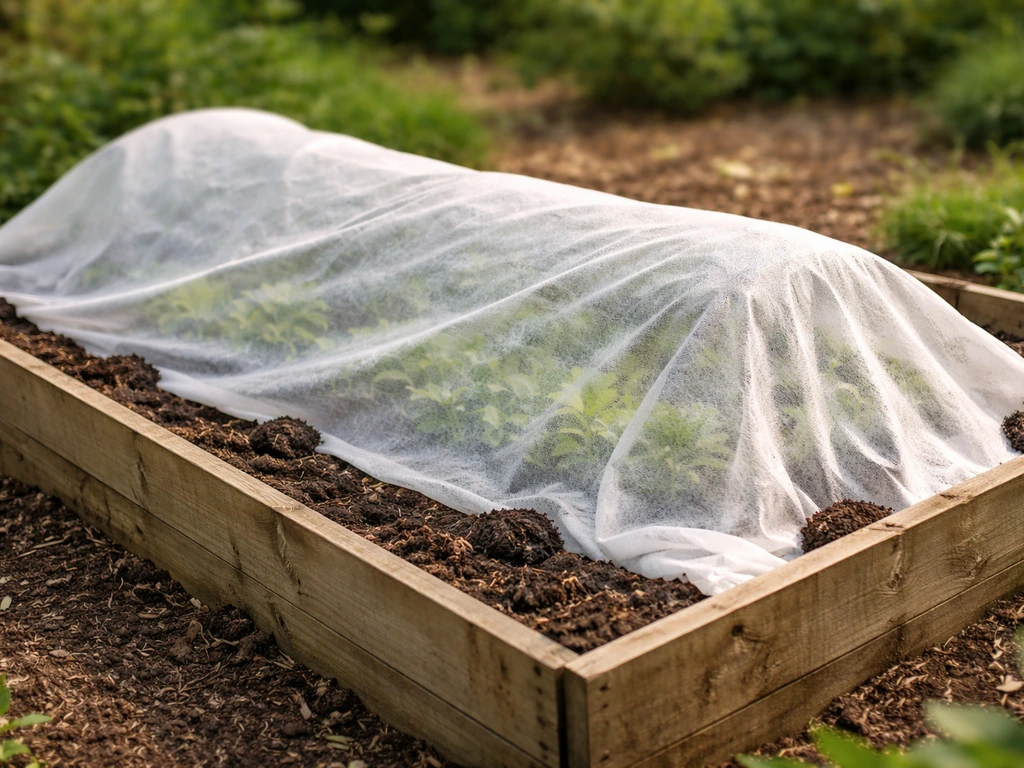
- Row cover (lightweight floating fabric) is one of the highest-return investments in a home garden. It physically excludes cabbage moths, cucumber beetles, squash vine borers, and aphids. Cost is roughly $15 to $30 for a 25-foot row, and it lasts multiple seasons.
- Yellow sticky traps give you early warning of whitefly and aphid population buildups before they reach damaging levels. Check them weekly.
- Hand-pick large pests like tomato hornworms, squash bugs, and Colorado potato beetles in the morning when they're slow. On a garden scale, this is faster than it sounds.
- Install copper tape or diatomaceous earth barriers around slug-prone beds, especially in wet climates.
Companion planting that actually helps
Companion planting works best when you're using it to attract beneficial insects or confuse pests with scent masking, not as a magic shield. Planting dill, fennel, or yarrow near brassicas brings in parasitic wasps that attack aphids and caterpillars. Interplanting basil with tomatoes has some evidence for repelling thrips. Nasturtiums work well as a trap crop for aphids: let aphids colonize them, then remove the nasturtium plants and the aphid population with them before they migrate to your vegetables.
Low-toxicity sprays when you need them
- Bt spray (Bacillus thuringiensis, applied as a liquid or dust to plant surfaces): effective against caterpillars and some beetle larvae, breaks down quickly in sunlight, and is approved for organic use. Reapply after rain.
- Insecticidal soap: kills soft-bodied insects like aphids and mites on contact. Apply directly to pests, not as a preventive spray. Cheap and easy to make from pure castile soap diluted in water.
- Neem oil: disrupts insect hormones and acts as a fungicide. Most useful as a preventive for fungal issues and early-stage pest pressure. Apply in the evening to avoid burning foliage.
- Diatomaceous earth: physical desiccant that damages soft-bodied insects. Effective in dry conditions, loses effectiveness when wet. Best used as a soil surface treatment.
Cost, effort, and where to start this season
You don't need to overhaul your whole garden at once. If you're starting from scratch with pest management, pick the two or three crops that have given you the most trouble and build your IPM plan around those first. Row cover for brassicas and squash, crop rotation on a simple four-bed plan, and a bottle of Bt spray for caterpillar pressure will handle the majority of what most home gardeners face. That setup costs under $50 and eliminates the need for most synthetic pesticide applications.
For a homestead or larger operation where you're growing corn, beans, and squash together (the classic Three Sisters system), your pest calendar matters. Corn earworm pressure peaks in mid-summer in most zones. Squash vine borers are active from late June through July in zone 5 to 7. Knowing your timing means you can apply row cover and Bt spray proactively rather than reactively, which is far more effective.
The bigger picture here is worth holding onto. Understanding how commercial farmers use genetic engineering to manage pests and pesticides is genuinely useful context, even if you never plant a GE seed yourself. The same forces, resistance evolution, monoculture pressure, and the need for diverse management strategies, apply to your 20 raised beds just as much as to a 2,000-acre corn operation.
Growing organically or with minimal inputs isn't just a philosophy; it's a practical strategy that sidesteps a lot of the resistance problems that come with over-reliance on any single tool.
If you're weighing whether to go the organic route or conventional in your own garden, that's a worthwhile comparison to dig into, along with understanding what organic farmers are actually allowed to use for pest control, since some of the assumptions people have about organic pest management are wrong in both directions. Organic farms that grow organic crops are not allowed to use many synthetic pesticides.
Start this season by mapping your pest pressure from last year: which crops got hit hardest, at what point in the season, and by what pest. That one exercise will tell you where to focus your energy and money. Build your barriers and beneficials first, reach for sprays second, and rotate everything you can. That's the same logic behind the EPA's IRM framework for Bt crops, scaled down to your backyard and put in your hands.
FAQ
Do farmers using pesticide-resistant GE crops actually use fewer pesticides overall?
Yes, but it typically depends on the trait type and the specific pest. Bt corn usually means fewer foliar insecticide applications for targeted caterpillars, while herbicide-tolerant crops often reduce early-season herbicide complexity but can increase total herbicide burden once resistance weeds become established. In either case, farmers still manage pests continuously, they just change which tools dominate.
What happens if a farmer does not maintain the refuge requirement for Bt crops?
Refuges are not just a recommendation, they are a core part of the resistance-prevention strategy for Bt traits. If a farmer plants little or no non-Bt acreage (or all non-Bt is planted in an adjacent block that no longer functions as a refuge), the susceptible insects drop, resistance alleles rise faster, and the Bt trait can lose effectiveness sooner.
How do stacked traits (Bt plus herbicide tolerance) change pesticide planning?
Stacked traits (for example, Bt plus herbicide tolerance) change management decisions, you may see both less need for certain insect sprays and a different weed-control program. However, stacked traits can also create “stacked resistance” problems over time, so farmers still rotate herbicide modes of action and adjust insect-control tactics rather than relying on the engineered trait as a single-season solution.
Is resistance only a problem for Bt crops, or also for herbicide-tolerant crops?
GE crops do not eliminate resistance risk, they shift it. For herbicide-tolerant systems, the main pressure selects for herbicide-resistant weeds, so rotating herbicide mechanisms and using non-chemical tactics (cultivation where appropriate, mowing, crop competition, cover crops) becomes more important over time. For Bt systems, resistance is driven by insect survival, so refuge compliance and monitoring matter.
If I do not use GE seeds, can resistance still become an issue in my garden?
For home gardeners, the most realistic “mode of failure” is copying the exact same control method repeatedly (same product, same timing, same pest-control approach). Even without GE seeds, you can still select for resistant pests or lose control because pest life cycles and patchy infestations reward consistent, repeated methods. Building IPM around changing tactics is usually more important than the crop’s genetic status.
Is Bt spray for my garden basically the same as Bt in genetically engineered crops?
Bt spray and Bt seed products target insect pests differently in how they are applied, but the general concept is similar: Bt proteins act in the insect’s gut. Bt spray requires coverage and correct timing, while Bt seeds express proteins continuously in plant tissues during feeding stages. Both can fail if applied at the wrong time, and both benefit from IPM practices like scouting and avoiding unnecessary repeated applications.
Will switching from conventional crops to herbicide-tolerant GE always lower herbicide use?
Sometimes, but it is not automatic. If an earlier herbicide program was already using multiple weed-control modes, switching to herbicide-tolerant crops may reduce the number of steps at first, but later resistance weeds can force the farmer to add older or broader herbicides, tank mixes, or additional non-chemical tactics. Net herbicide volume can rise or fall depending on how resistance is managed.
Do GE pesticide-resistant crops ever become a problem because of how the grain or produce is sold?
Market access can be a practical constraint even when a crop performs agronomically. Some buyers require identity preservation, non-GMO status, or limits on certain traits, which can restrict what a farmer plants and how seed is handled across fields. That can matter for specialty farmers and for operations that sell into specific channels.
Could using GE pesticide-resistant crops harm beneficial insects or change which pests show up?
Yes, because non-target effects can be complex and depend on local ecology, pest community, and management intensity. Even when a trait reduces certain insect sprays, other pests can still shift into dominance, and beneficial insect populations may be affected by the broader spray program (or the lack of one). That is one reason IPM monitoring (not just “trait use”) remains important.
What is the simplest way to turn this into an actionable IPM decision for a backyard grower?
If you can, start by identifying the likely pest type and feeding stage (for example, caterpillars at the right time for Bt spray, or early weed seedlings for preplanned weed strategies). Then choose one control lever you will apply reliably, and pair it with prevention (row cover, rotation, sanitation, resistant varieties) rather than layering many reactive sprays after damage occurs.
Next Article
Farmers Who Grow Organic Vegetables: Do They Have to Use Pesticides?
Organic growers can use approved pesticides under strict rules. Learn organic IPM prevention, monitoring, and weekly act