For most home and homestead corn growers targeting a yield of 100–150 bushels per acre, plan on applying roughly 100–160 pounds of actual nitrogen per acre total, split between a pre-plant or starter application and a sidedress application around the V6 growth stage (when corn has six fully emerged leaves). If you're working in a smaller garden, that translates to about 2.3–3.7 pounds of actual nitrogen per 1,000 square feet. Adjust that number down based on what your soil test tells you about residual nitrate, organic matter, and any nitrogen credits from legumes or manure you've already applied.
How Much Nitrogen to Grow Corn: Rates, Timing, and How-To

Marcus Hendrick
8 Jun 2026
How much nitrogen corn actually needs at each growth stage
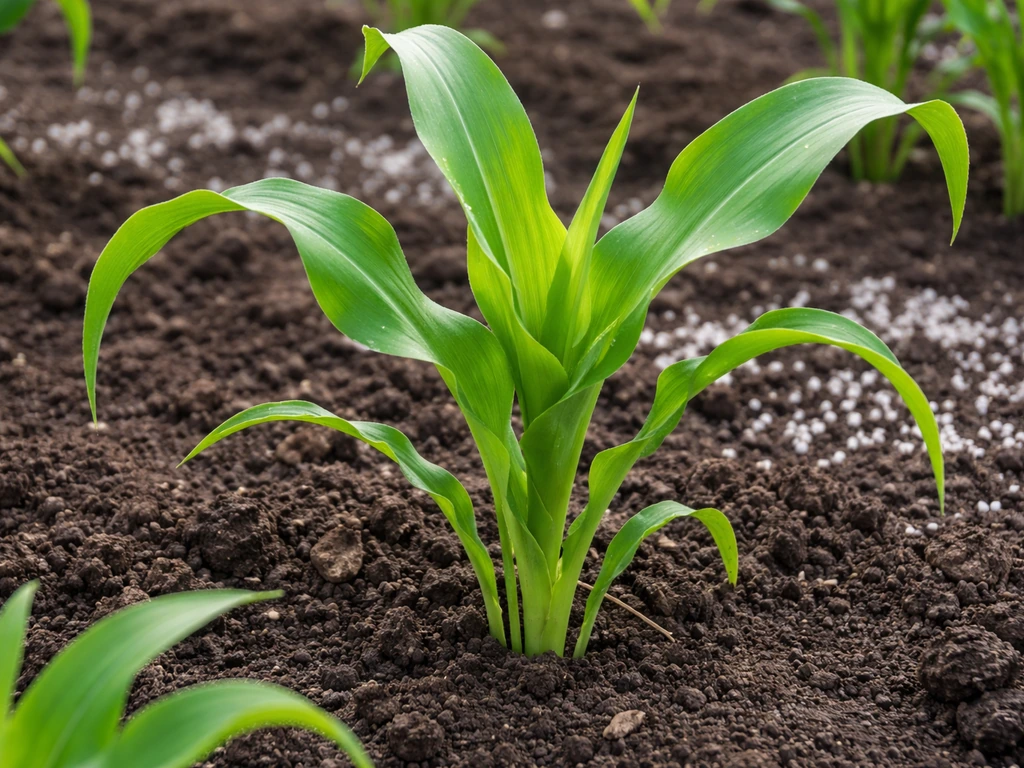
Corn is a heavy nitrogen feeder, but it doesn't need everything at once. Only about 5% of the crop's total nitrogen requirement is accumulated by the V6 stage. The real demand kicks in hard between V6 and tasseling (R1), when the plant pulls in roughly 55% of its total nitrogen needs. Another 35% comes during grain fill, from tasseling through black layer (R6), and during that stage the plant is pulling in approximately 1–2 pounds of nitrogen per acre per day, depending on yield level. That pattern is why split applications outperform a single pre-plant dump, you're matching supply to demand.
Total nitrogen need scales with expected yield. The Penn State Extension yield-based table makes this easy to work with:
| Expected Yield (bu/ac) | Total N Needed (lb/ac) | Approx. lb N per 1,000 sq ft |
|---|---|---|
| 100 bu/ac | 100 lb N/ac | 2.3 lb N |
| 125 bu/ac | 130 lb N/ac | 3.0 lb N |
| 150 bu/ac | 160 lb N/ac | 3.7 lb N |
| 175 bu/ac | 190 lb N/ac | 4.4 lb N |
| 200 bu/ac | 220 lb N/ac | 5.0 lb N |
Mississippi State Extension uses a simpler coefficient of about 1.3 lb N per bushel of yield goal, while UMass Extension starts at 1.1 lb N per bushel and then subtracts credits. For home garden planning, using 1.0–1.2 lb N per bushel of expected yield is a solid starting point before you apply any credits or adjustments. These are total nitrogen requirements, not just what you add as fertilizer. Soil credits can reduce that number significantly.
Start with a soil test, here's how to read the results

Before you buy a single bag of fertilizer, get a soil test. For corn specifically, you want a standard soil test that includes pH, phosphorus, potassium, organic matter percentage, and ideally a nitrate-nitrogen (NO3-N) reading. Some labs include nitrate automatically; others charge extra, it's worth the few extra dollars.
When you get your results back, here's how to read them for nitrogen decisions. Organic matter is your first big credit. Nebraska CropWatch research shows that organic matter meaningfully reduces how much fertilizer nitrogen you need, a 200 bu/ac irrigated scenario requires about 197 lb N/ac with no organic matter credit, dropping to 169 lb N/ac at 1% OM, 141 lb N/ac at 2% OM, and 113 lb N/ac at 3% OM. Most extension services estimate that each 1% of organic matter releases about 20–30 lb N/ac per season through natural soil mineralization.
The soil nitrate-N reading tells you how much available nitrogen is already sitting in your soil profile. Nebraska Extension's EC117 framework uses a direct equation that subtracts residual soil nitrate-N (measured in lb N/ac) from your total requirement. If your test shows 30 lb N/ac of residual nitrate and you need 130 lb total, your fertilizer need drops to 100 lb N/ac. For small garden plots, ask your lab to report nitrate-N in pounds per acre or in ppm, a conversion factor of roughly 2 lb/ac per ppm per inch of soil sampled helps you translate.
One more test worth knowing about: the Pre-Sidedress Nitrate Test, or PSNT. You take this soil sample when corn is about 10–12 inches tall (roughly V4–V6 stage, about 10 days before you plan to sidedress). Penn State and UMass Extension both recommend this test specifically for dialing in your sidedress rate, it captures how much nitrogen has mineralized since spring planting and prevents you from over-applying. If PSNT nitrate-N levels come back above about 25 ppm, the research suggests your sidedress rate can be reduced or skipped entirely.
Simple rules of thumb if you skip the math
If you're a beginner or just want a quick starting number without running calculations, here's a practical shorthand that works well for most home gardens growing corn in average soil with no unusual history:
- Target 1.0–1.2 lb of actual nitrogen per expected bushel of corn yield
- For a typical backyard or homestead plot, budget 2.5–4 lb of actual nitrogen per 1,000 square feet per season
- Split that roughly 30% at or before planting and 70% as a sidedress around V5–V6
- If you grew beans, peas, or clover in that spot last year, cut your total rate by 30–50 lb N/ac (about 0.7–1.1 lb per 1,000 sq ft)
- If you added compost or manure last fall, cut the rate by another 20–40%
- Never apply more than 70 lb N/ac as starter fertilizer placed near the seed
How to convert nitrogen needs into actual fertilizer amounts
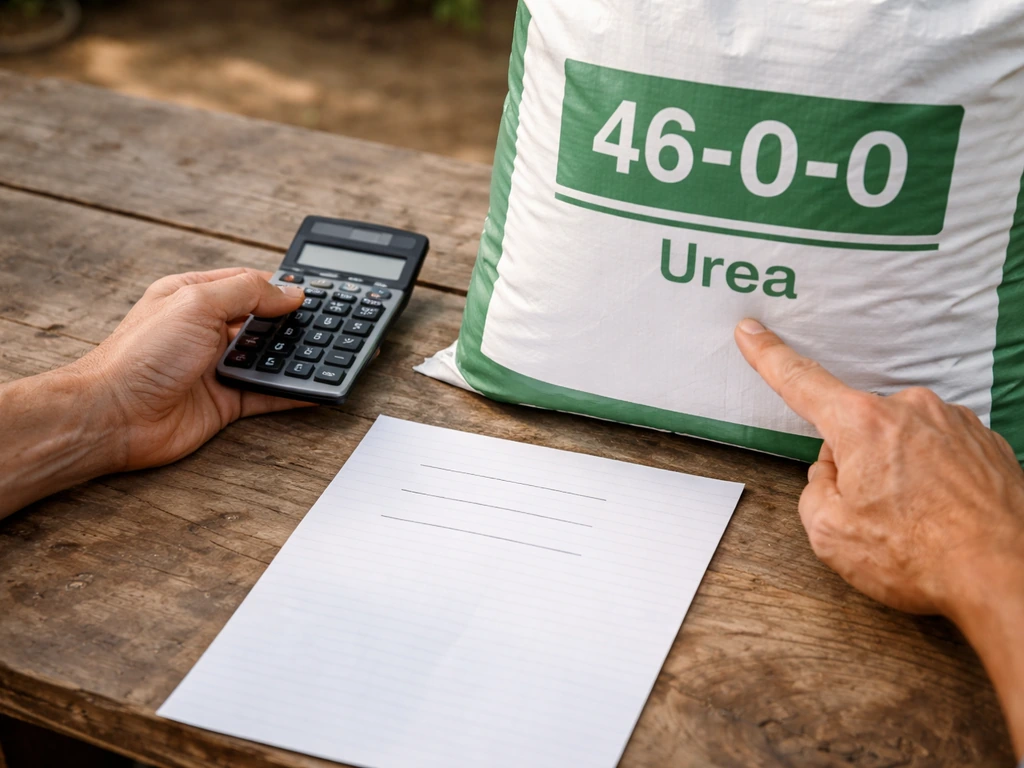
Once you know how many pounds of actual nitrogen you need, the math to convert that into fertilizer product is straightforward: divide the pounds of N you need by the nitrogen percentage on the fertilizer label (expressed as a decimal). So if you need 100 lb N/ac and you're using urea (46-0-0), you'd calculate 100 ÷ 0.46 = 217 lb of urea per acre. Scale down using the same formula, per 1,000 square feet, divide the per-acre amount by 43.56 (since there are 43,560 sq ft per acre).
Here's a quick reference for common fertilizer sources, showing how much product you'd need to deliver 1 pound of actual nitrogen:
| Fertilizer Source | N% | Product needed per lb N | Product per 1,000 sq ft (for 3 lb N target) |
|---|---|---|---|
| Urea (46-0-0) | 46% | 2.2 lb product | ~6.5 lb urea |
| Ammonium nitrate (34-0-0) | 34% | 2.9 lb product | ~8.8 lb AN |
| Blood meal (12-0-0) | 12% | 8.3 lb product | ~25 lb blood meal |
| Feather meal (~12% N) | 12% | 8.3 lb product | ~25 lb feather meal |
| Fish meal (~10% N) | 10% | 10 lb product | ~30 lb fish meal |
| Soybean meal (~6–7% N) | 6.5% | 15.4 lb product | ~46 lb soybean meal |
| Composted manure (~1.5–3.5% N) | 2.5% | 40 lb product | ~120 lb compost |
| Fish emulsion (~5% N) | 5% | 20 lb product (liquid) | ~60 lb liquid |
For row-based calculations (common when you're planting sweet corn or field corn in rows), measure your total row length and multiply: if you have 200 linear feet of corn rows at 30-inch spacing, that's roughly 500 square feet, or about 11.5% of 1,000 square feet. Scale your product amount accordingly. A small garden with 4 rows at 50 feet each (200 linear feet, 30-inch spacing) covers about 500 sq ft, so you'd use roughly half the 1,000 sq ft amounts listed above.
Nitrogen sources compared: synthetic, manure, and organic meals
The right nitrogen source for your corn depends on your setup, your soil, and how quickly you need results. Here's an honest comparison of what's actually available to home growers:
| Source | Typical N% | Release Speed | Best Use | Considerations |
|---|---|---|---|---|
| Urea (46-0-0) | 46% | Fast (days) | Pre-plant or sidedress | Volatilization risk if not incorporated; avoid seed contact |
| Ammonium nitrate (34-0-0) | 34% | Fast | Sidedress | Very soluble, some states restrict sale; leaching risk |
| Blood meal (12-0-0) | 12% | Medium-fast (weeks) | Pre-plant or early sidedress | Can burn if over-applied; relatively expensive per lb N |
| Feather meal (~12% N) | 12% | Slow-medium (weeks to months) | Pre-plant | Good slow-release option for organic growers |
| Fish meal (~10% N) | 10% | Medium | Pre-plant mix-in | Odor; good for raised beds and containers |
| Soybean meal (~6–7% N) | 6–7% | Slow (weeks to months) | Pre-plant | Economical for organic; widely available as feed |
| Composted manure (~1.5–3.5% N) | 1.5–3.5% | Slow (months) | Fall pre-plant or spring incorporation | Large volumes needed; adds organic matter |
| Fish emulsion (~5% N) | 5% | Fast (liquid) | In-season foliar or drench | Low concentration; works well for containers |
My recommendation for most home growers: use a combination approach. Work in compost or composted manure before planting to build soil biology and provide slow-release N, then use a faster source (urea, blank" rel="noopener noreferrer">blood meal, or fish meal) as a sidedress application around V5–V6 when the plant's demand ramps up hard. For trees, the right amount of bone meal depends on the species, age, and how you’re applying it (top-dress versus soil mix). This matches crop timing better than trying to do it all with one product.
When and how to apply nitrogen to corn
Pre-plant and starter applications
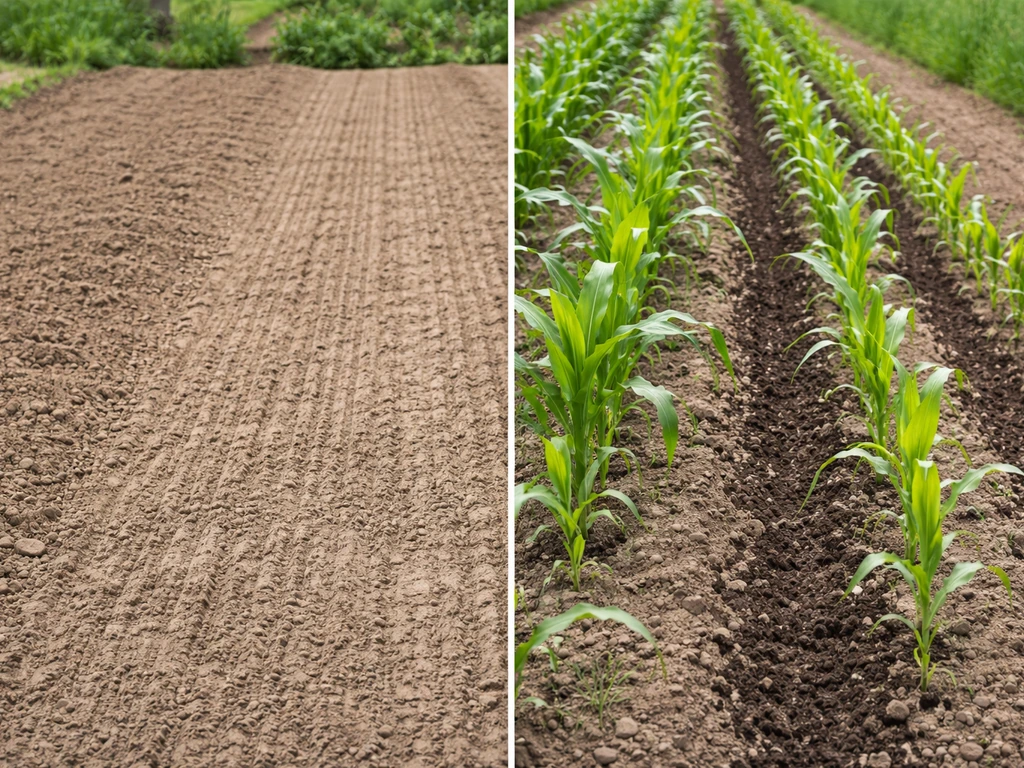
Pre-plant nitrogen (broadcast and worked into the soil a week or two before planting) gives the crop something to draw on early. For home gardens, this is where compost, manure, soybean meal, or a modest rate of synthetic fertilizer works best. If you're placing a starter fertilizer in or near the seed row, keep the nitrogen rate below 70 lb N/ac (about 1.6 lb per 1,000 sq ft) and never place it closer than 2 inches from the seed. Urea placed in-furrow with corn seed can cause serious seed toxicity and dramatically reduce germination, even at low rates. Use a safer starter like a low-N balanced blend if you want in-furrow application.
Sidedress application: the most important N timing for corn
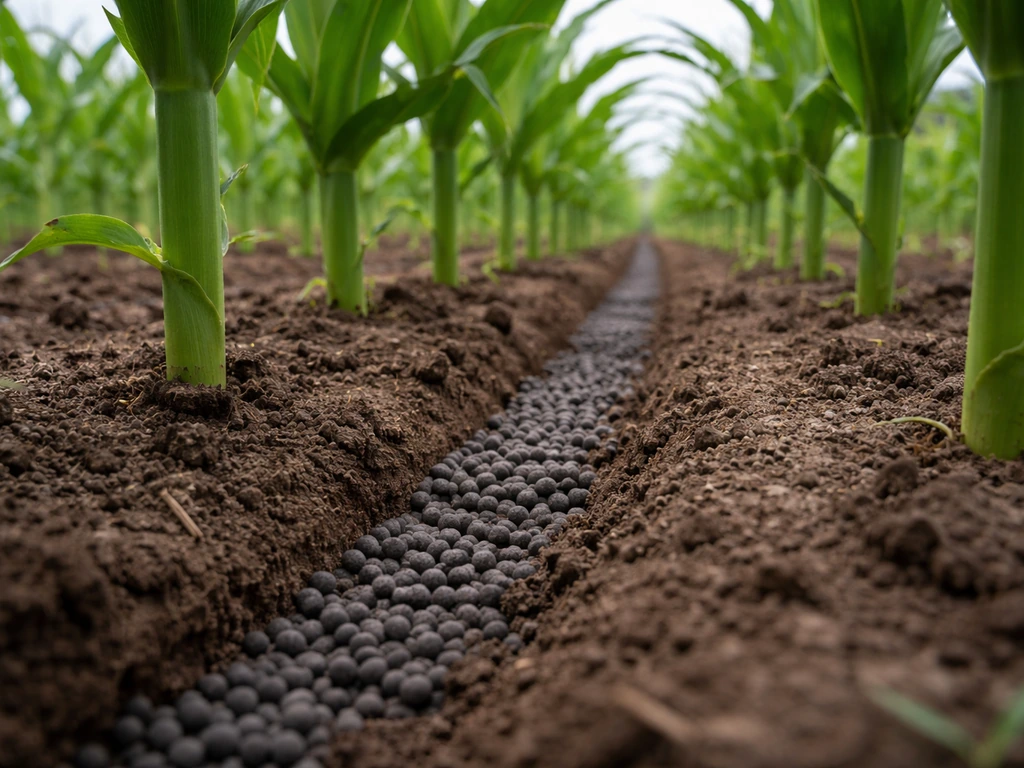
Sidedressing is when you apply the bulk of your nitrogen, around V5 to V6, and it's genuinely the most impactful nitrogen management decision you'll make for corn. UMN Extension also notes that soil sampling for nitrogen decisions is commonly done around the V6 growth stage, before sidedressing, to better align sidedress timing with crop nitrogen uptake around V6 sidedress timing.
Here is a practical video-style walkthrough of how corn grows so you can understand why timing nitrogen around V5 to V6 matters. The plant hasn't used much N yet, so losses from early applications haven't accumulated, and you're feeding directly into the window when the crop will pull in more than half its total nitrogen over the next several weeks.
For home growers, sidedress by banding nitrogen 4–6 inches to the side of the plant row and a few inches deep, or by broadcasting it between rows and watering it in.
If you're using urea, all you need is about 0.25 inches of rainfall (or irrigation) after application to move it into the soil and prevent ammonia volatilization losses. Don't let urea sit on the soil surface in warm, humid conditions for more than a day or two without incorporation, you can lose a meaningful percentage of your nitrogen to the air. Broadcasting and then immediately watering in or tilling lightly is the practical fix for most home growers.
Split applications for larger plots
If you're growing a larger homestead plot or dealing with sandy soils prone to leaching, split your total nitrogen into three applications: about 20–30% pre-plant, 50–60% at V5–V6 sidedress, and the remaining 10–20% at or just before tasseling (V10–VT) if the crop is showing any stress or if yield goals are high. A well-managed corn plan today also points to how this computer will grow your food in the future by optimizing inputs like nitrogen over time. This minimizes nitrogen sitting in the soil where it can leach during heavy spring rains before roots are established. On heavier clay soils in a normal rain year, two splits (pre-plant plus sidedress) is usually sufficient.
Adjusting for nitrogen credits and special situations
Legume credits
If you grew soybeans, dry beans, peas, clover, or another legume in your corn plot last year, that's a significant nitrogen credit. Most extension guidelines credit legume-corn rotations at 40–80 lb N/ac depending on the legume and how well it was incorporated. South Dakota State University's updated 2023 corn nitrogen guidelines subtract legume credits directly from the yield-based N requirement. For home gardens, a conservative rule: if the previous crop was beans or peas, reduce your total nitrogen application by 30–50 lb N/ac (0.7–1.1 lb per 1,000 sq ft). If you had a thick clover cover crop that was tilled in, credit closer to 80 lb N/ac.
Manure and compost credits
Manure nitrogen credit depends heavily on manure type, application timing, and whether it was incorporated. Nebraska Extension research shows typical availability factors of about 40% of total N in year one, 20% in year two, and 10% in year three.
So if you applied 2,000 lb of composted cow manure per 1,000 sq ft last fall (a common heavy rate for home gardens), and that manure tests at roughly 1% available N, you're starting with about 20 lb of N from the manure, but only 40% may be plant-available in year one, so credit about 8 lb. Poultry manure and uncomposted feedlot manure have higher availability rates.
When in doubt, use a manure analysis from your local lab, most will test for N, P, and K in manure for a reasonable cost.
Container and raised bed adjustments
Containers and raised beds change the math. First, drainage is faster, so leaching risk is higher, split into more frequent smaller applications rather than one or two large ones. Second, if your beds are heavily amended with compost (many home raised beds have 30–50% compost by volume), your available nitrogen from organic matter mineralization can be substantially higher than in-ground soil. Start with the lower end of your nitrogen rate, watch the plants, and use liquid sources like fish emulsion or diluted urea solution for quick in-season corrections. Corn in containers also benefits from slightly more frequent irrigation, which helps distribute nitrogen evenly through the root zone.
No-till and first-year garden plots
No-till systems can have a slight nitrogen tie-up in early spring as residue decomposes, some guidelines add a 10–20 lb N/ac debit for no-till corn. Conversely, a brand-new garden plot broken out of sod or perennial grass may have high organic matter that releases significant nitrogen in year one. Soil testing is especially important in these situations.
Troubleshooting nitrogen problems in your corn
Signs your corn is nitrogen-deficient
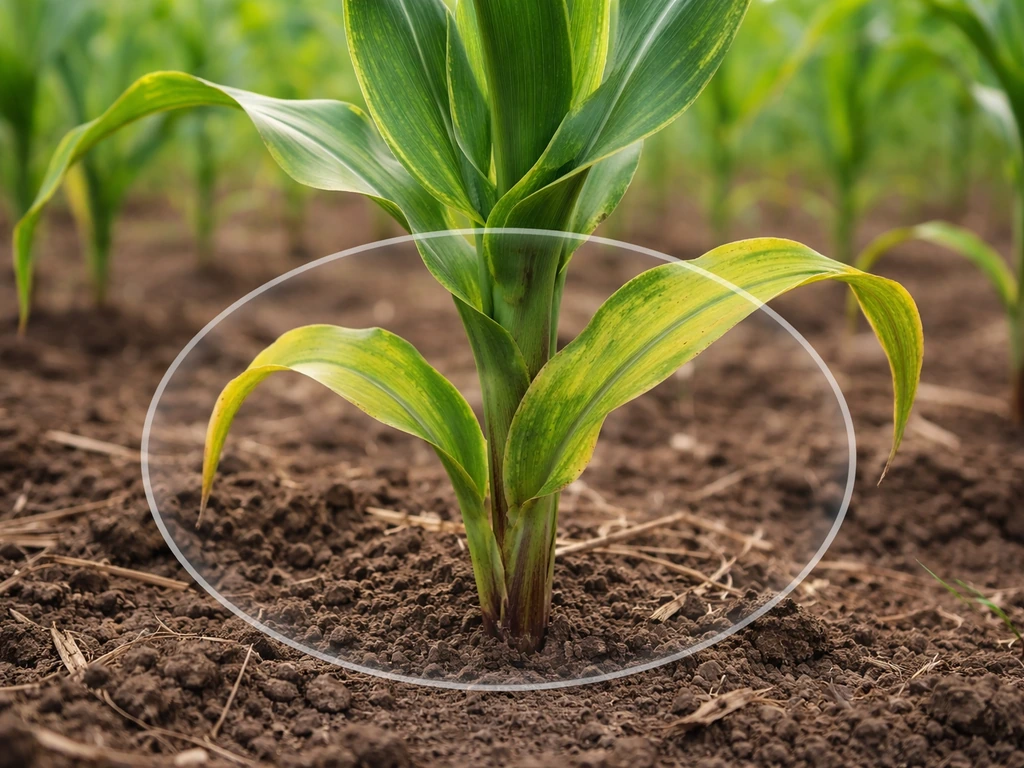
Nitrogen deficiency has a very specific look. Rice is a grow food crop, and understanding how nitrogen timing works helps you plan better nutrition for rice as well. It starts on the older, lower leaves first (not the new growth at the top), because corn remobilizes nitrogen from older tissue to feed younger growth when supply is short.
The classic symptom is a pale yellowish-green color starting at the leaf tip and moving toward the midrib in a V-shaped pattern. Penn State describes this as an inverted "V" of yellowing. In severe cases the affected tissue turns brown, giving the appearance of "firing" from the tips and margins of lower leaves. If you're seeing this pattern starting at the bottom of the plant and working up, your corn almost certainly wants more nitrogen.
What to do: if corn is at V5 or earlier, sidedress immediately with your planned nitrogen source. If it's past V8–V10, broadcast a small rate of a fast-acting source like blood meal, urea, or ammonium nitrate between rows and water it in. You can still recover yield if you catch it before tasseling, but the window closes fast. After tasseling, nitrogen applications have limited effect on grain yield.
Signs you've applied too much nitrogen
Excess nitrogen shows up as abnormally dark, almost blue-green foliage across the whole plant, not just lower leaves. Overfed corn can also produce lush, heavy vegetative growth that delays silking and puts the plant at higher risk for lodging (falling over in wind or rain). In bad cases, excess N near the seed can reduce germination directly. If you've over-applied, there's no way to pull nitrogen back out of the soil, but you can avoid making it worse. Hold off on any further applications, water consistently to dilute soil concentration, and let the season play out. Track your rates for next year and adjust down.
Environmental considerations worth knowing
Excess nitrogen that the corn doesn't use doesn't just disappear, it leaches into groundwater or runs off into nearby waterways. For home and homestead growers, this matters practically too: wasted fertilizer is wasted money. Avoid applying nitrogen to saturated or frozen soil, don't apply more than the plant can use at each timing, and use slow-release organic sources when possible in high-rainfall situations. If you're near a stream, ditch, or well, be especially thoughtful about rates and timing.
Matching nitrogen to crop demand, rather than just loading up the soil, is both better for yields and better for the land. For rice farming, the amount of technology used to grow it can be seen in irrigation, transplanting or seeding equipment, and precision water and nutrient management technology used to grow rice.
FAQ
If the article says apply 100–160 lb N per acre, how do I know whether my situation needs the low end or the high end?
Use your soil organic matter and the previous crop as the first gate. If your soil has low organic matter and you are not getting any meaningful rotation or manure credit, you are more likely near the high end. If your organic matter is higher and you have legume or composted manure credits, your effective fertilizer need can be much lower, even if your yield goal stays the same.
Do I count composted manure and other organics as “actual nitrogen,” or do I only use synthetic fertilizer?
You should count everything in terms of actual nitrogen that becomes plant-available during the season, then apply a realistic availability factor (many home guidelines use lower year one availability than total N listed on paperwork). If you are not using a manure analysis, be conservative with credits and plan to sidedress, since organic N releases over time and not all of it is usable when corn demand spikes.
Can I apply all my nitrogen at once before planting if I water well?
For corn, a single pre-plant application is usually less reliable because the crop’s peak nitrogen demand occurs after V6 through tasseling, and early-applied nitrogen can be lost before roots and uptake capacity catch up. Split applications reduce the chance that you pay for nitrogen that either leaches, volatilizes, or remains unused when the plant needs it most.
How soon after sidedressing do I need water or rain, especially if I’m not using urea?
For urea, you want irrigation or rainfall soon after application to prevent surface losses, but timely watering still matters with most nitrogen sources because you are trying to move N into the root zone. If you sidedress and cannot irrigate or get rain within a short window, consider switching to a more soluble form for fast uptake or reduce the rate and come back with a smaller additional application.
What if my corn is already past V6 and I forgot to sidedress, can I still fix it?
Yes, but the recovery window narrows quickly. If you are earlier than tasseling, you can apply a smaller amount of a fast-acting nitrogen source between rows (then water it in) to help the plant bridge demand. If you are near or past tasseling, nitrogen usually provides limited yield benefit, so focus on avoiding further over-application.
How do I convert my soil test nitrate result to the “lb N per acre” fertilizer need, when my lab reports ppm instead?
Ask your lab for the depth and conversion details they used, then use the approximate rule of thumb given in the article only as a starting point. The key decision is consistency, if your lab measured at a specific sampling depth, your ppm-to-lb/ac estimate changes with depth, so do not mix conversions from different depths.
If my soil test shows very high nitrate, should I skip nitrogen entirely or still apply a little?
High residual nitrate can justify reducing or skipping sidedress, but it does not always mean zero. Corn can still need nitrogen during rapid growth, and some nitrate may not remain available as the season progresses. A practical approach is to use PSNT if you can, and otherwise start with a lower pre-plant and rely on a reduced sidedress unless you see no deficiency symptoms and the crop looks well fed.
What nitrogen rate should I use for sweet corn vs field corn, since yields and maturity differ?
Treat nitrogen similarly in “actual N delivered” terms, but adjust for your expected bushels and your target harvest timing. Sweet corn often has shorter growing windows and different yield assumptions, so the safest method is to base total nitrogen on your yield goal and keep the same timing principle, sidedress around V5 to V6 so the plant has nitrogen when it accelerates uptake.
Is there a safer way to apply starter fertilizer when I want early growth without risking seed injury?
Yes, keep starter nitrogen low and avoid putting it too close to the seed. If you want in-furrow placement, use a low-N balanced formulation and follow the “distance and rate” limits from the article. If you cannot control placement accurately with a hand planter, consider banding starter slightly to the side or relying on early sidedress instead.
For containers and raised beds, why does the article suggest more frequent smaller applications?
Because drainage and the compost-driven mineralization curve can make nitrogen availability swing more quickly in a limited root volume. Frequent smaller doses help maintain a steadier supply and reduce the risk of both deficiency (nutrient washed out) and excess (rapid mineralization from heavy compost) during hot periods.
How do I tell if I have nitrogen deficiency vs other common issues like potassium deficiency or root problems?
Nitrogen deficiency on corn typically starts on older lower leaves and shows a yellowish-green, inverted V pattern that progresses upward. If yellowing is uniform but leaves are otherwise healthy, or if you see other signs like burn, lodging, or overall poor vigor, check soil P and K, root health, and compaction, because correcting the wrong limiting nutrient can waste time and money.
What should I do if my corn looks too dark green or overly vegetative after fertilizing?
Stop further nitrogen applications and shift to management actions that reduce stress and concentration, keep irrigation consistent, and avoid additional nitrogen-rich amendments. Track the rate you used and reduce next season, because you cannot meaningfully “remove” excess nitrogen once it is in the soil, but you can prevent worsening and reduce lodging risk.
How can I reduce the environmental risk if I’m near a well, stream, or ditch?
Tighten your timing and reduce how much nitrogen sits in the soil ahead of uptake. Avoid applying on saturated or frozen ground, use split applications rather than loading early, and consider PSNT to dial in sidedress. If you have sensitive water proximity, it is especially important to prevent over-application because leached nitrogen can travel beyond the root zone.
Next Article
Is Rice Grow Food? How to Start Growing Rice at Home
Is rice grown food? Learn how to start growing rice at home, including setup, timing, water needs, and realistic harvest