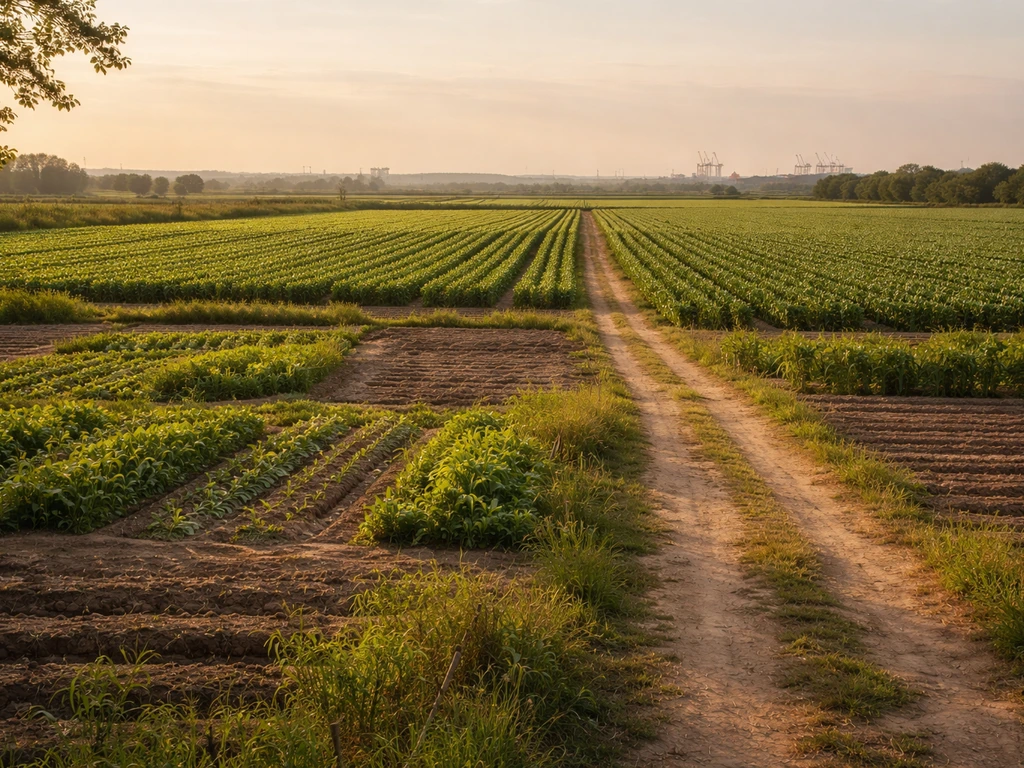
Livestock producers choose their breed by working through a short list of practical filters: what they need the animal to produce, what their land and climate can support, what they can afford to feed and house, and how much experience they bring to the table. Get those four things aligned and the breed choice almost makes itself. Skip any one of them and you end up with the wrong animal for your situation, no matter how good the breed looks on paper.
How Do Livestock Producers Choose the Breed They Grow

Marcus Hendrick
2 Jun 2026

Start with your goal and production system

Before you research a single breed, get brutally honest about what you want the animal to do. University of Maryland Extension frames this well for poultry: are you after eggs, meat, insect control, breed preservation, or show birds? Those goals point to completely different animals. The same logic applies to every species. A dairy goat optimized for high butterfat milk is a terrible choice if you really just want to clear brush and eat some meat in the fall. A heritage beef breed built for slow forage finishing is the wrong fit if your cash flow depends on turning animals over quickly.
For homesteaders and small-scale producers, the most common goals are: eggs, meat (chicken, pork, beef, lamb, or goat), milk or dairy products, fiber, or some combination of those. Dual-purpose breeds exist in almost every species and are often the smartest starting point when you are new, because they spread your risk. A dual-purpose chicken that lays 200 eggs a year and also finishes decently as a meat bird gives you options. A specialized layer that hits 300+ eggs annually but wastes away as meat leaves you with one revenue stream and no flexibility.
Write your goal as a specific target before you ever look at breed profiles. Something like: 'I want to produce enough eggs for my household of four plus sell one or two dozen a week at the farmers market.' Or: 'I want one or two beef animals per year, finished entirely on pasture with minimal grain purchase.' That target becomes your filter for everything that follows.
Match breeds to your climate and local stressors
Climate is not a soft consideration. It is one of the hardest constraints in the list. Heat stress, cold stress, parasite pressure, and humidity all hit different breeds differently, and choosing a breed that is not built for your conditions is one of the most common and expensive mistakes beginners make.
For cattle in hot climates, Brahman genetics are commonly used to improve heat tolerance, but research published on PubMed Central found that thermoregulation benefits only reliably appear when animals are at least 4/8 Brahman, and the advantage peaks around 6/8 Brahman under severe heat stress on pasture. That matters if you are in the Gulf Coast or deep South and thinking about crossing Brahman into a British breed. Texas A&M AgriLife Extension connects heat stress recognition directly to breed and shelter decisions, and University of Minnesota Extension emphasizes that hydration management goes hand in hand with breed selection in hot conditions.
For sheep, parasite pressure is a climate-driven stressor that can genuinely determine whether a breed works in your area. SARE-funded research found that hair sheep breeds like Katahdin show greater resistance to gastrointestinal nematodes than wooled breeds, due to both innate and acquired immune responses. West Virginia University research confirmed that breed differences in parasite susceptibility are real and that local climate influences how those differences show up. If you are in the humid Southeast where barber pole worm is a constant fight, a hair sheep breed is not just a preference. It might be the difference between a manageable flock and a veterinary nightmare.
Talk to your local cooperative extension office and find out what your specific stressors are: heat index, dominant parasites, disease history in the county, winter severity. Then look for breeds that are documented to perform well under those conditions in your region, not just breeds that perform well nationally.
Feed, land, and housing fit (what you can realistically provide)
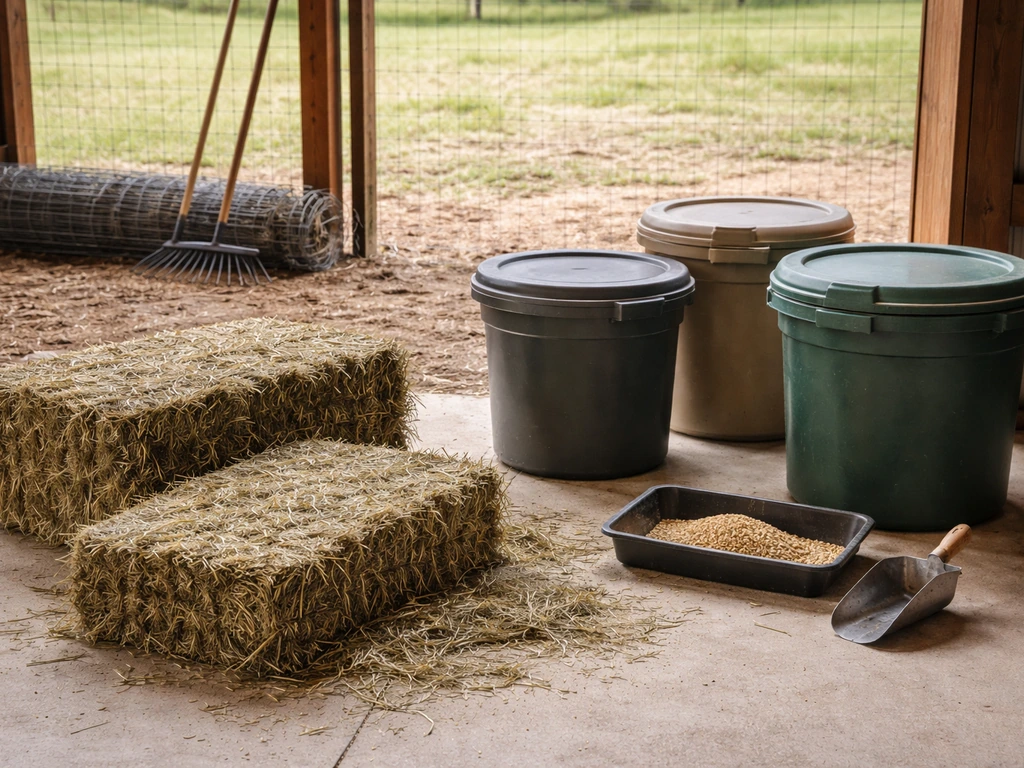
This is where most homestead livestock plans fall apart. People pick a breed based on what it can do at its best, not what it will actually do on their land with their forage and their budget. Be ruthless here.
Feed and forage reality
University of Georgia Extension is direct about this: your forage production system should drive your breed choice, not the other way around. If your crops do not grow at all, people often describe the problem as crop failure or poor growing conditions. Marginal forage with a high-performing breed means poor calf crops and disappointed expectations.
University of Minnesota Extension found that body weight explains a large portion of feed intake differences within breeds but a smaller portion between breeds, which means frame size and breed type genuinely affect how much your land needs to produce to support the animal. Oregon State University Extension draws a clear line between forage-finished and grain-finished systems, and points out that grain finishing requires you to purchase and store expensive feedstuffs and set aside enough land for forage-based alternatives.
If you cannot do that, pick a breed that finishes well on grass and hay.
UGA Extension's forage efficiency research found measurable differences between breeds including Beefmaster, Limousin, Simmental, Hereford, and Angus on roughage-based systems. If your budget is tight and you are relying heavily on your own pasture and hay, selecting for forage efficiency is not optional. It is a financial decision.
Housing space and ventilation minimums
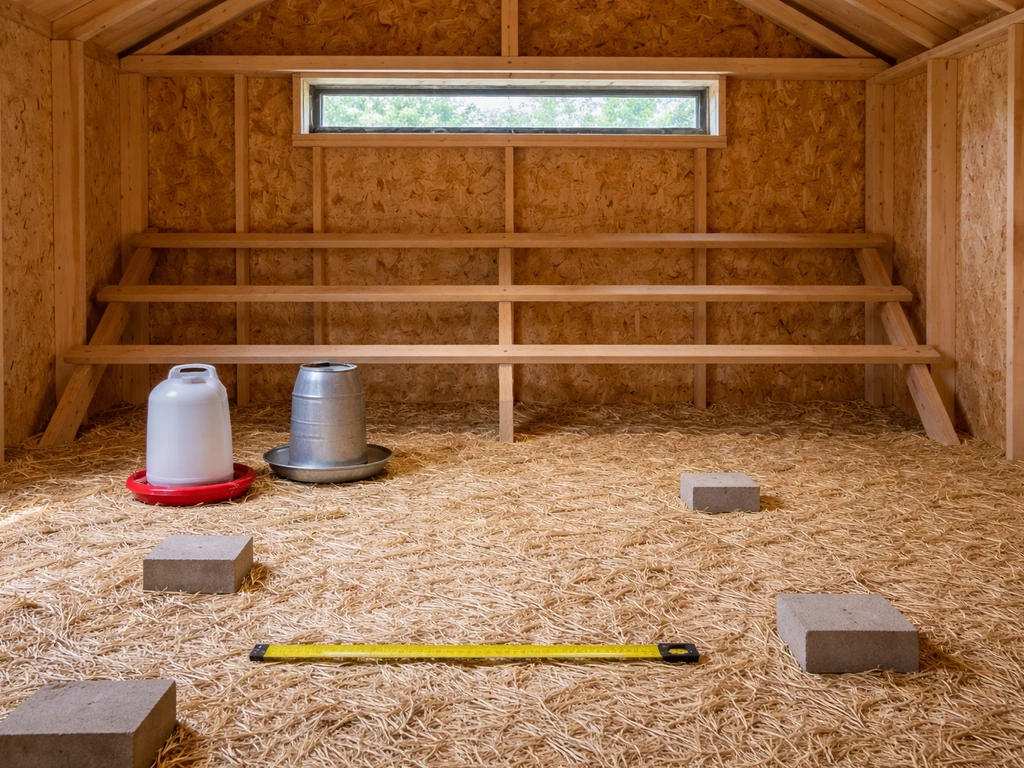
Every species has real space minimums, and violating them causes health problems that no breed can overcome. Here are the numbers you need:
| Species | Minimum enclosed space | Notes |
|---|---|---|
| Chickens (with outdoor run) | 3 sq ft per bird | OSU Extension; ventilation removes ammonia and moisture |
| Chickens (no outdoor access) | 8–10 sq ft per bird | OSU Extension; inadequate space causes stress and disease |
| Dairy goats | 20–25 sq ft per goat | Purdue Extension; open windows in summer for ventilation |
| Sheep | Enough to move and lie down comfortably | Penn State Extension; ventilation without drafts on newborns |
OSU Extension warns specifically that insufficient ventilation in shelters causes ammonia and condensation buildup, which leads to pneumonia in sheep and goats. That is a management failure that hits beginners hard because it is invisible until animals start getting sick. Before you pick a breed, figure out what you can actually build or already have, and then check whether it meets the minimums for the species you are considering.
Health, disease resistance, and biosecurity readiness
Disease resistance is a breed trait worth taking seriously, but biosecurity is the management practice that protects every animal regardless of genetics. You need both.
When evaluating breeds, ask what diseases and parasites they are known to resist or be susceptible to in your region. Katahdin sheep's parasite resistance is a well-documented example. For cattle, Johne's disease is a significant concern. Utah State University Extension describes it as something managed through a herd health program, and Cornell's testing guidance notes that testing is typically not recommended before 18 months of age. Understanding the disease profile of the breed and species you choose lets you set up a proactive testing and management schedule rather than reacting to problems.
For dairy animals, mastitis is a major driver of culling decisions. University of Minnesota Extension notes that about half of mastitis infections happen during the dry period, making dry-cow management a critical control point. Penn State Extension adds that dry-cow treatment typically only covers the first 30 days, after which animals rely on a natural keratin plug. Selecting breeds or lines with better udder conformation and lower mastitis incidence is a real genetic decision you can make using producer records and sire summaries.
Biosecurity when bringing in new animals is non-negotiable. Poultry extension guidance recommends a minimum two-week quarantine for new birds before introduction. Penn State Extension pushes that to three to four weeks and adds that adult birds should not join an established flock unless they pass quarantine or test clean. For cattle, Illinois Extension recommends quarantining new animals until health risks and pending test results are resolved per veterinarian guidance.
NDSU emphasizes that new breeding stock quarantine should keep animals separated with no shared feed or water, and that disease testing is not 100% accurate regardless of the protocol you follow. University of Maine Extension provides a downloadable quarantine checklist that is worth printing and using every time you bring animals home.
Choose for performance and temperament (including beginner manageability)
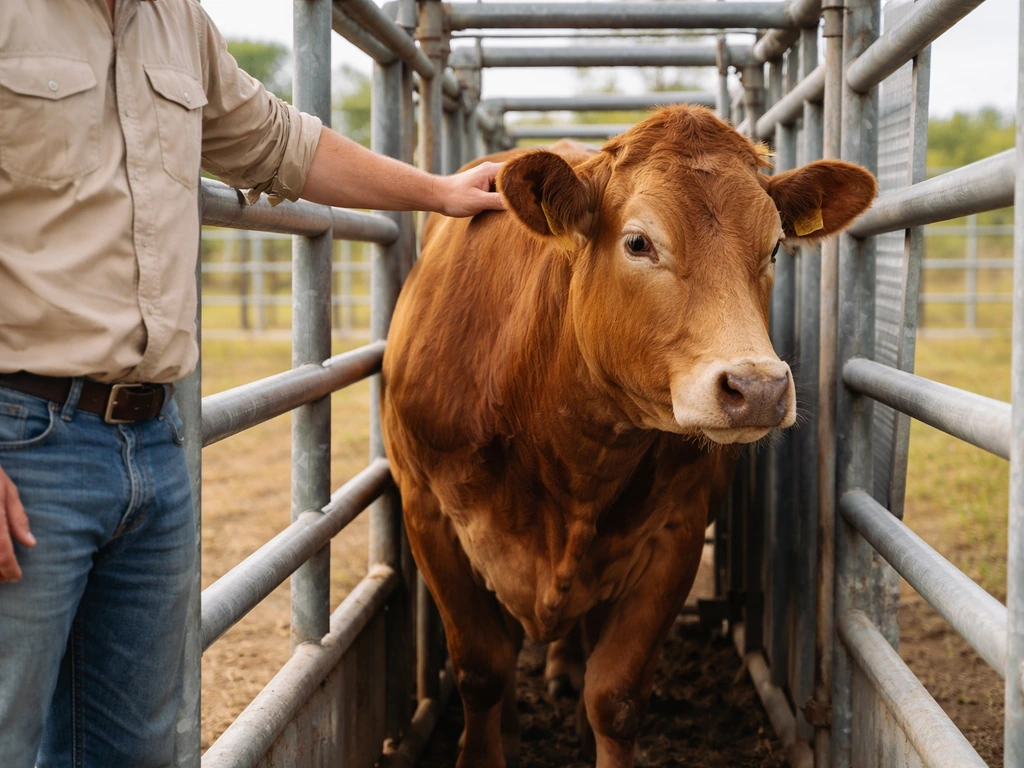
Performance traits are measurable, and you should use numbers whenever possible rather than relying on general reputation. For beef cattle, Penn State Extension identifies birth weight, weaning weight, yearling weight, and meat yield or quality as core selection traits, with Expected Progeny Differences (EPDs) as the tool for comparing genetic merit across animals. For dairy, Wisconsin Extension emphasizes milk yield and milk components (fat and protein percentage) alongside functional type traits like feet, legs, and udder structure. Those functional traits matter more than raw yield numbers on a homestead because an animal that breaks down or goes lame is a problem regardless of how much it produces.
Temperament is a legitimate production trait for small operations. An animal that is difficult to handle wastes your time, increases your stress, and creates safety risks. University of Minnesota Extension notes temperament differences across dairy cattle breeds as a real selection consideration. For beginners especially, choosing a breed known for calm, manageable disposition reduces the learning curve dramatically. Ask producers and extension advisors which breeds in your species handle well for beginners in your area.
For poultry, the performance gap between production types is dramatic. Specialized laying breeds can produce 300 or more eggs per year. The Red Jungle Fowl, used as a baseline reference in poultry extension literature, lays only about 10 to 12 eggs during a breeding season. Dual-purpose breeds fall somewhere in the middle. Know where you are targeting on that spectrum before you buy.
Crossbreeding vs purebreds and building a breeding plan
This is a question every homestead livestock producer faces eventually: do you buy purebreds and stay purebred, or do you crossbreed? The honest answer is that crossbreeding has real, documented advantages for small operations, but it requires a plan to be sustainable.
University of Minnesota Extension's crossbreeding research found that crossbred cows can show increased fertility, longevity, and health compared to straightbred animals. That research frames breed selection around productive life and low health problems, not just peak production. Penn State Extension confirms that in beef cattle, crossbreeding combines breed strengths and captures heterosis, the boost in performance that offspring get from having genetically different parents. Wisconsin Extension adds a caution on the flip side: increased inbreeding reduces milk production and increases calf mortality, so if you are breeding your own replacements, you need to track and manage relatedness actively.
For most small homestead operations, a practical breeding plan looks like this: start with one or two purebred females of a breed that fits your climate, goals, and management style. Breed to a complementary breed's sire (either through a purchased sire, artificial insemination, or a neighbor's sire) to capture heterosis in your first-cross offspring. Track performance on those crossbred animals. If the cross works, decide whether to continue producing F1 crosses or rotate among two or three breeds in a structured rotational cross. If it does not work, you have not locked yourself into a dead end.
For poultry and rabbits, purebred heritage breeds are often the right call on a homestead because they self-replace naturally, they are adapted to lower-input systems, and you can maintain your own flock or herd without purchasing new stock constantly. If you need to avoid buying feed or breeding stock, choosing a breed program that can self-replace by growing its own replacements helps you stay resilient. Just be aware that a purely purebred program requires attention to genetic diversity over time, especially in small flocks.
Budgeting, sourcing, and a practical trial-start checklist

Cost determines what is sustainable, just as it shapes what commercial farmers grow. In some farming programs, farmers can also receive payments for taking land out of production, so it helps to understand how much they get paid not to grow crops how much farmers get paid not to grow crops. Before you commit to a breed and scale, build a simple enterprise budget.
Ohio State University Extension provides an enterprise budgeting framework for meat chickens that covers equipment, feed, bedding, and amortizing facility cost across the years you plan to use it. Penn State Extension does the same for small poultry flocks, breaking out variable costs (feed, bedding, repairs, labor) and showing how fixed costs per bird change depending on how close to capacity you operate. University of Missouri Extension provides a mobile poultry meat budget with cost tables and a break-even approach.
Use any of these as a template and plug in your local prices.
South Dakota State University Extension uses a yardage cost concept for larger animals, breaking out non-feed operating costs like interest, bedding, and veterinary care into a per-head-per-day number. That framework works for any species. Add feed cost per day, multiply by days on feed, add acquisition cost and processing or sale cost, and compare to your expected revenue. If the numbers do not work on paper, they will not work in the barn.
Questions to ask breeders and suppliers
- What disease testing has been done on this animal or herd, and can I see the results?
- What is the animal's production history: growth records, weaning weights, litter sizes, or egg/milk records?
- What is this animal's temperament like to handle?
- What do you feed them and at what cost per head per day?
- Have animals from this herd been raised in a climate similar to mine?
- What health problems have you dealt with in this herd in the last two years?
- Is this animal vaccinated, and against what? What is the vaccination schedule?
- Can I buy two or three trial animals before committing to a larger purchase?
How to start small and validate your choice
The smartest move any first-time livestock producer can make is to start with the smallest number of animals that gives you real data. Two or three beef calves, a half-dozen laying hens, or a pair of meat goats is enough to test whether your housing, feed system, water system, and management routine actually work before you scale up. Track your costs weekly, not monthly. Record every feed purchase, every veterinary expense, every death or health event. At the end of one production cycle, compare your actual cost per unit of output to your budget. That comparison tells you whether the breed and system fit your situation or whether something needs to change.
Quarantine every new animal, every time. Use a written checklist. University of Maine Extension's quarantine checklist is a solid starting point. Keep new arrivals physically separated with no shared feed, water, or airspace for at least two to four weeks depending on the species. For foot-rot prevention in sheep and goats, Penn State Extension recommends practices such as keeping hooves trimmed to reduce stress on soft tissue and describes a 28-day protocol to eliminate foot rot 28-day protocol to eliminate foot rot in sheep and goats. Have a veterinarian relationship established before you need it urgently. Ask your vet which diseases to test for in incoming animals based on your county's current disease picture.
Common mistakes to avoid
- Choosing a breed based on national reputation without checking local performance data or talking to producers in your climate.
- Buying more animals than your current forage and housing can support, then trying to fix the feed problem later.
- Skipping quarantine because the seller seemed trustworthy. Disease testing is not 100% reliable and sellers can unknowingly sell sick animals.
- Picking a high-output production breed when your management system and experience level call for a hardier, lower-maintenance breed.
- Ignoring temperament until you are trying to move a difficult animal alone.
- Failing to budget for veterinary care, bedding, and processing costs, only counting feed and purchase price.
- Starting with too many animals to manage well, then burning out before you get useful data on whether the breed works for you.
The breed question is really a systems question. The right breed for your neighbor may be completely wrong for you if your goals, land, climate, or experience level differ. Work through the filters in order, build the budget before you buy, start small, track everything, and scale what works. That is how experienced producers do it, and it is the same process that translates directly from the garden to the pasture. Those same economic and land pressure factors that shaped commercial farming also pushed many farmers toward specific cash crops instead of feeding only at the household level what forced farmers to grow commercial crops.
FAQ
How do I choose a breed if I do not know my farm’s forage quality yet?
Start with forage testing, even a basic panel for crude protein, digestible energy (or equivalents), and fiber level. Then match breed frame size and finish strategy to that test result, not to best-case assumptions. If you cannot test right away, choose a breed that performs acceptably on your likely worst hay quality, and plan a feed-stabilization buffer (extra hay or a modest amount of grain) for the first cycle.
Is “dual-purpose” always the best option for beginners?
Not automatically. Dual-purpose can reduce risk, but it can also mask a mismatch if your forage supports dairy-like production or fast finishing poorly. A good beginner choice is a dual-purpose breed that is also documented for your local stressors (heat, parasite pressure, winter severity) and that tolerates your housing and handling level.
What climate factor matters most, heat, cold, or parasites?
It depends on your species and location, but parasites often drive ongoing, repeated costs (deworming, losses, slower growth). Cold stress matters most when shelter ventilation and bedding quality are inadequate, because wet, humid conditions can cause respiratory problems. A practical approach is to list the top three likely stressors in your county (from extension and local outbreaks) and eliminate breeds that are known to struggle under those exact conditions.
How do I use EPDs or performance numbers without getting misled?
Compare traits that match your production path. For example, if you will pasture-finish, prioritize traits tied to growth and efficiency under forage conditions rather than only pure “meat yield” numbers from intensive systems. Also check which environment the records came from, because rankings can shift when feed type, season length, and management differ from your farm.
Should I buy a breed that is popular locally even if it is not the absolute best on paper?
Often yes, but with a caveat. Local popularity usually reflects disease history, climate fit, and management realities. Still confirm the breed’s documented strengths for your specific goals (milk components, egg targets, finishing pace) and verify you can source replacements, feed inputs, and veterinary support for that breed in your area.
How do I decide between straightbreeding and crossbreeding if I want to breed my own replacements?
If you plan to keep offspring as replacements, you need a replacement-genetics plan that manages relatedness. Crossbreeding can improve fertility and health in the first cross, but you may end up maintaining multiple lines or using rotational systems. If you want a simple one-line approach, consider a breed program that emphasizes self-sufficiency, then rotate sires periodically and track inbreeding closely.
What is a realistic quarantine plan, and how strict is “no shared airspace”?
Aim for physical separation plus separate feeding and watering equipment. “No shared airspace” means avoiding direct airflow between quarantine pens, especially for respiratory pathogens in poultry and small ruminants. In practice, that means different barns or clearly separated ventilation zones, plus dedicated boots and tools, and a consistent daily workflow that visits quarantine last.
Do I need disease testing if I buy from a seller with good health records?
Yes, but you can tailor what you test for to your county’s disease pressure and the species. Health records help, but test results are not perfect and timing matters (some diseases incubate or show later). Ask your veterinarian to build a test panel based on your incoming animals’ age, origin, and your local outbreak history, then align timing with quarantine duration.
How do I evaluate whether housing is actually sufficient before choosing a breed?
Write down the minimum housing elements you can support, then match breed needs to them. For sheep and goats, ventilation and moisture control matter as much as space. A quick decision aid is to list your shelter’s airflow approach (fans or natural vents), bedding type, and how you prevent wet floors during storms, then eliminate breeds that require tighter humidity control than your setup can maintain.
How do I estimate the true cost per unit when pricing varies by season?
Budget with seasonal feed prices, not average annual prices, and include the “worst month” for feed and bedding. Also model facility amortization (time-based) separately from per-cycle costs, because equipment and repairs behave differently than feed. After your first cycle, recalculate your cost per unit using actual weekly expenses, then update your breed choice criteria for the next round.
If my first small trial works, when should I scale up?
Scale only after you can hit stable performance targets for at least one full cycle under your worst-season conditions (heat wave or cold snap, parasite season if applicable). Before adding numbers, verify that your water system capacity, bedding supply, and labor time per animal stay within your budget. If costs creep as stocking increases, you may need to select a breed with lower maintenance needs or adjust stocking density.
What mistakes most often cause the “wrong breed” outcome?
The most common are choosing for peak performance in a different system, ignoring climate-driven stressors, underestimating feed input needs based on your forage, and skipping quarantine and biosecurity. Another frequent issue is not accounting for temperament and handling needs, which can turn normal management into a safety hazard and slow your ability to treat problems early.
Next Article
What Forced Farmers to Grow Commercial Crops
Policies, market control, infrastructure, and disasters pushed farmers from subsistence to cash crop production, often f