Farmers grow what pencils out. That sounds simple, but it means every planting decision runs through a mental (or literal) spreadsheet: what will it cost me to grow this crop, what will I get paid for it, and is the margin worth tying up my land, labor, and equipment for a whole season? Cost doesn't just push farmers toward cheap crops to produce, it shapes the entire mix of what gets planted across a region, a farm, and even a backyard. Understanding that logic helps home growers make smarter planting decisions too.
How Does Cost Determine What Farmers Grow? A Guide

Marcus Hendrick
25 Apr 2026
Big picture: how cost becomes a planting decision
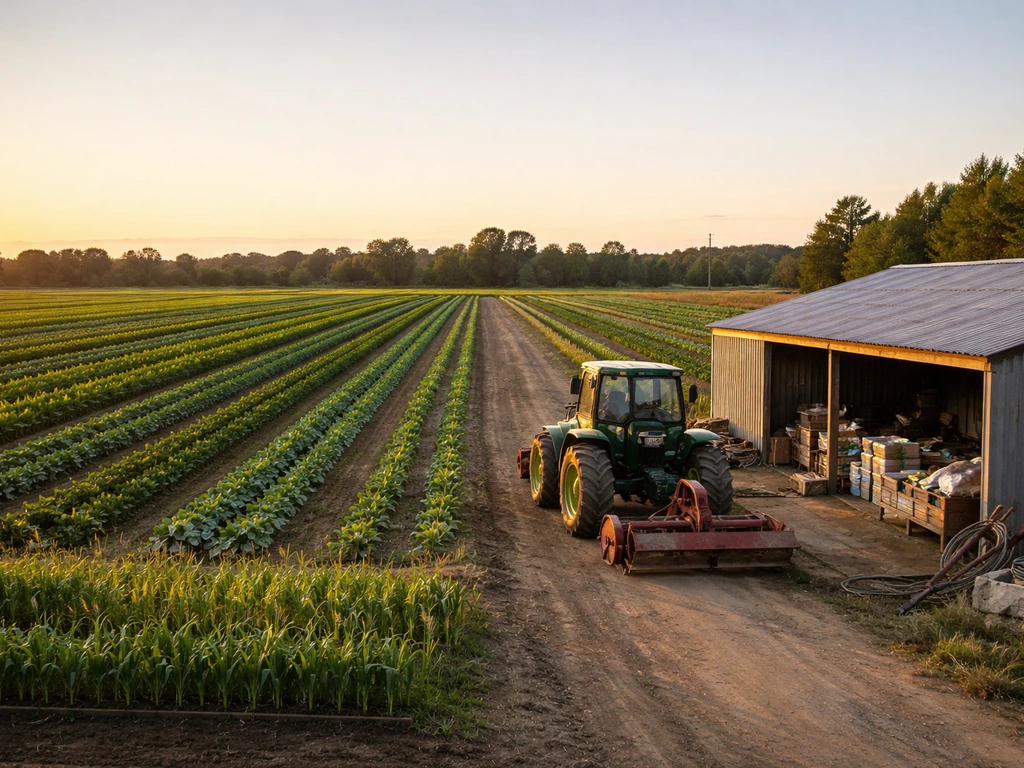
At the farm level, every crop competes for the same limited bucket of resources: land, water, labor hours, equipment time, and cash for inputs. A farmer deciding between corn and soybeans, or between wheat and sunflowers, isn't just asking what pays more per bushel. They're asking what nets more after subtracting everything it takes to get that bushel to market. When expected revenue falls below expected costs, both operating costs like seed and fertilizer, and ownership costs like equipment depreciation, planting that crop becomes a losing bet. USDA's Risk Management Agency makes exactly this point: in very low price environments, expected revenue can fall below total costs, which changes the planting math entirely.
This cost-first thinking also explains why crop mixes shift from year to year and region to region. A drought year raises effective irrigation costs, tilting growers toward drought-tolerant crops. A diesel price spike raises tillage and transport costs, favoring low-input crops. A glut in the corn market compresses margins and pushes growers to look at alternatives. Cost is always the filter, and it works the same way whether you're farming 2,000 acres or a 4x10 raised bed.
For home growers, the parallel question is: which crops give me the most food value, the most calories, or the most savings on my grocery bill per dollar and hour I put in? That framing is exactly the same economic logic farmers use, just scaled down. The rest of this article walks through both. Groups that did not grow their own crops depended more on buying food than on production decisions.
Production costs that shape crop choice: seed, inputs, labor, and equipment
Enterprise budgets, the tool farmers and extension economists use to evaluate a crop, break production costs into two categories: variable costs and fixed/ownership costs. An example University of Nebraska crop budgeting PDF illustrates how producers track detailed cost-per-acre line items, such as seed and spray fertilizer and herbicide, in enterprise budgets to estimate returns [enterprise budgets, the tool farmers and extension economists use to evaluate a crop](https://cms. unl. edu/ianr/agecon/center-for-ag-profitability/sites/unl.
edu. ianr. agecon. center-for-ag-profitability/files/media/file/022%20Corn%2C%20Dryland%2C%20No%20Till%2C%20Continuous%2C%20Eastern%20Nebraska%20%28SmartStax%20RIB%20Complete%29.
pdf). Variable costs change with how much you plant and include seed, fertilizer, lime, pesticides, fuel, and labor. Fixed costs include machinery depreciation, repairs, maintenance, and interest on operating capital. Penn State Extension's enterprise budget framework covers all of these explicitly, and South Dakota State University's crop budget spreadsheets walk producers through entering seeding rate, seed cost per unit, fertilizer rates for nitrogen, phosphorus, potassium, and sulfur, plus per-unit costs for insecticides, herbicides, and fungicides.
That level of detail matters because small differences in input costs across crops add up fast over hundreds of acres.
Seed cost alone can swing a crop's economics significantly. A high-yield hybrid seed corn variety costs more per bag than open-pollinated alternatives, but if it yields 20 more bushels per acre, the math may still favor it. The same logic applies in a home garden: a packet of hybrid tomato seed costs more than a heirloom variety, but if the hybrid produces twice the fruit in the same space with less disease pressure, it's often the better investment.
Labor deserves special attention because it's the most underestimated cost in both commercial and home growing. On a farm, labor hours for planting, scouting, spraying, harvesting, and hauling are budgeted at an hourly or seasonal rate. Some crops, like hand-harvested vegetables, are extraordinarily labor intensive compared to mechanically harvested grains. That labor cost is a big reason why large-scale farmers rarely grow crops like strawberries or asparagus unless they have access to affordable seasonal labor or direct-market prices that justify the extra work. At home, your own time is the equivalent cost. A crop that needs daily attention, hand-picking, or elaborate pest management may not be worth it if you have a busy schedule.
- Seed and transplants: varies widely by crop type, variety, and quantity; hybrid seeds cost more but often deliver higher yields
- Fertilizer and amendments: nitrogen, phosphorus, potassium, and micronutrients; soil tests help avoid buying what you don't need
- Pest and disease control: insecticides, herbicides, fungicides; organic alternatives exist but often cost more per application
- Irrigation: water, pumping energy, and equipment; crops with high water needs in dry climates carry a hidden cost multiplier
- Fuel and machinery: tillage, planting, spraying, harvesting; more passes per season mean higher costs
- Labor: every hour you or a hired worker spends on a crop is a real cost, whether or not it shows up in a ledger
- Crop insurance: a real line item in enterprise budgets; protects against yield loss but adds to the per-unit cost of production
Market and risk costs: prices, demand, contracts, and volatility
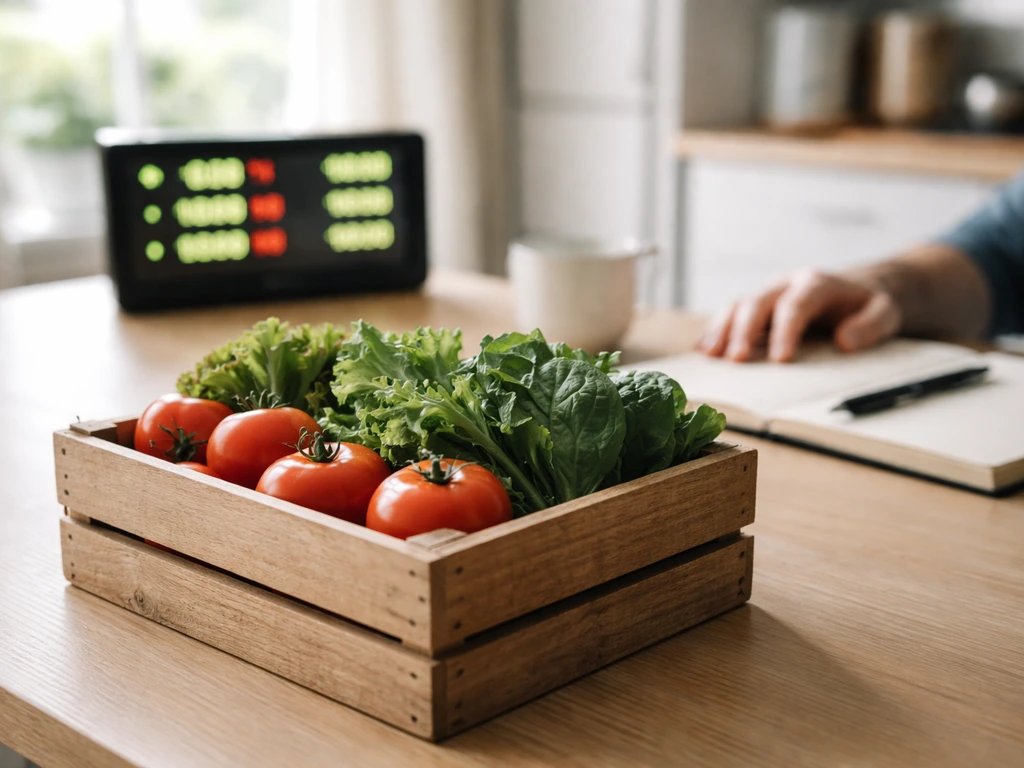
Even if you can grow a crop cheaply, it only makes sense if you can sell it, or use it, for more than it cost you. This is where market costs and price risk enter the picture. Commodity prices fluctuate constantly, and a price that looked profitable at planting can collapse by harvest. USDA Economic Research Service data shows that almost all contract crop production, 96 percent, is covered by marketing contracts, which tells you how seriously commercial farmers take the risk of selling into an uncertain spot market. Forward contracts, futures contracts, and options on futures are all tools farmers use to lock in a price or set a price floor before the crop is in the ground.
For home growers, the equivalent of a marketing contract is simply growing what you know you'll eat or preserve. If you grow 50 pounds of tomatoes and you know your family will can 40 of them and eat the rest, your 'price' is the grocery store cost of canned tomatoes plus fresh tomatoes, and your demand is guaranteed. That's actually a better risk position than a farmer selling into a volatile commodity market. When you grow for direct consumption, you eliminate price risk almost entirely.
Storage, transport, and marketing costs are real and often overlooked. A farmer growing corn 200 miles from the nearest elevator faces higher transport costs than one 20 miles away, and that difference directly affects the net return per bushel. In a home garden, storage costs translate to: do you have a root cellar, freezer space, or canning supplies to store what you grow? A crop that produces a huge harvest all at once, like summer squash, is only valuable if you can store or use it. If half of it rots, your effective yield (and return) drops dramatically.
Opportunity cost is another hidden market cost. Every acre planted to corn is an acre not planted to soybeans or wheat. Every bed you fill with pumpkins is a bed not growing salad greens. Farmers think about this constantly, and so should home growers. Programs that pay farmers to leave land idle can reduce production to support prices, and the payment level varies by program rules and location. The question isn't just 'can I grow this?' but 'is this the best use of this space given everything else I could plant here?'
Land and climate constraints as cost multipliers
Poor land quality and tough climate conditions don't just reduce yield, they increase the effective cost of every pound you produce. A farmer growing wheat on thin, sandy soil needs more fertilizer to hit the same yield as a farmer on deep loam. Oregon State University Extension's soil test interpretation guidance makes this point directly: nutrient application recommendations are based on the probability of getting an economic yield response. If your soil is already well-supplied with phosphorus, adding more won't pay. If it's deficient, you pay the cost of amendment or you pay the cost of reduced yield. Either way, soil quality is a cost factor.
Irrigation is one of the biggest land-and-climate cost multipliers. In an arid region, a crop that needs consistent moisture, like potatoes or lettuce, requires significant irrigation infrastructure and water costs. Oregon State University Extension's irrigation scheduling guidance defines the concept of maximum allowable depletion: the fraction of plant-available water that can be removed before the crop begins to stress. Getting this wrong, in either direction, costs yield or wastes water and pumping energy. Soil texture, effective rooting depth, and local evapotranspiration rates all factor in, which is why the same crop can cost very different amounts to produce in different climates.
Season length is another climate-driven cost constraint. Short growing seasons push farmers toward fast-maturing varieties and may require expensive season extension tools like frost cloth, row covers, or heated greenhouses. A crop that needs 120 frost-free days won't pencil out in zone 4 without those investments. What works economically in zone 9 may be a money pit in zone 5. As a home grower, this means your regional climate isn't just a gardening challenge, it's a direct input into your cost-per-pound calculation. Crops that fit your climate naturally are almost always cheaper to grow than ones you have to fight for.
| Constraint | How it raises costs | Home grower implication |
|---|---|---|
| Poor soil | More fertilizer, amendments, and tillage needed | Invest in soil tests; amend only what's deficient |
| Low rainfall / dry climate | Irrigation infrastructure, water, and energy costs | Prioritize drought-tolerant crops; use mulch to cut watering frequency |
| Short season | Need for early starts, row covers, or greenhouses | Choose varieties rated for your zone; start seeds indoors to extend season |
| Heavy clay or waterlogged soil | Drainage costs, compaction risk, limited crop options | Raised beds with amended mix can bypass soil limitations entirely |
| Frost risk | Potential total crop loss; insurance or replanting costs | Time plantings around last frost date; use season extension where ROI justifies it |
Crop economics for home growers: simple cost–benefit math
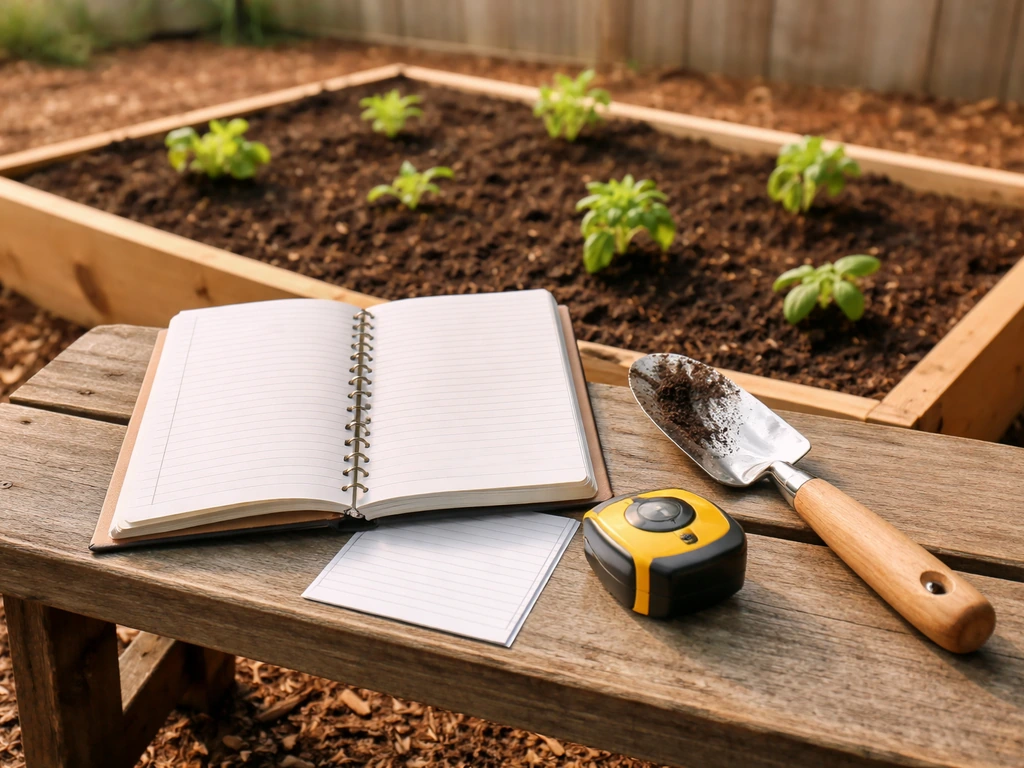
You don't need a USDA enterprise budget to make smart planting decisions at home. You need three numbers for each crop: what it costs to grow, how much it produces, and what that production is worth to you. With those three numbers you can calculate cost per pound, value per square foot, and breakeven, the same tools commercial farmers use, just simpler.
Start with a realistic yield estimate. UMass Amherst Extension puts the production potential of a well-managed 4x10 foot raised bed (40 square feet) at around 300 pounds of vegetables and soft fruits over a 4-6 month growing season. That's an impressive 7.5 pounds per square foot per season. Not every crop hits that number, root vegetables and squash take up more space per pound than lettuce or spinach, but it gives you a useful benchmark. If a crop consistently yields well below that benchmark in your space, it's worth asking whether something else would serve you better.
Penn State Extension describes breakeven analysis as a core farm management tool: you calculate the price or yield at which your costs are exactly covered, then ask whether your realistic yield and expected value exceed that threshold. The same approach works at home. If a 4x4 bed of potatoes costs you $15 in seed potatoes, amendments, and water, and produces 30 pounds, your breakeven is $0.50 per pound. If potatoes cost $0.80 per pound at your grocery store, you're ahead. If they cost $0.40 on sale, you're behind, and maybe that bed is better used for something like cherry tomatoes or kale, which retail for $3-5 per pound and are far more expensive to replace with purchased alternatives.
Here's a quick framework for running this math on any crop before you plant it:
- Add up all input costs: seed or transplants, soil amendments, pest control, water, and any containers or infrastructure you're buying specifically for this crop
- Estimate realistic yield per square foot or per plant based on your climate, soil, and experience (be conservative — beginners should cut published yields by 30-40%)
- Calculate cost per pound: total input cost divided by expected yield in pounds
- Look up the grocery store price of that crop (organic if you're growing organically, conventional otherwise) — this is your 'market value' per pound
- Subtract cost per pound from market value per pound: positive number means you're saving money; negative means you're paying a premium to grow your own
- Factor in labor hours: if a crop requires 20 hours of work to produce $15 worth of food, the effective return on your time is $0.75/hour — probably not worth it unless you enjoy the work
| Crop | Approx. cost per sq ft | Approx. yield per sq ft | Grocery value per lb | Net return per sq ft |
|---|---|---|---|---|
| Cherry tomatoes | $0.75 | 3–5 lbs | $3.00–$4.00/lb | Strong positive |
| Salad greens (cut-and-come-again) | $0.40 | 1–2 lbs per cut, multiple cuts | $4.00–$6.00/lb | Strong positive |
| Zucchini / summer squash | $0.50 | 4–8 lbs | $1.50–$2.00/lb | Moderate positive |
| Potatoes | $0.60 | 2–4 lbs | $0.60–$1.00/lb | Marginal |
| Dry beans | $0.40 | 0.25–0.5 lbs dry | $2.00–$3.00/lb | Marginal to moderate |
| Corn (sweet) | $0.80 | 1–2 ears per sq ft | $0.50–$1.00/ear | Low to marginal |
Notice that the highest-value home crops are usually the ones that are expensive to buy fresh, store poorly, and can be harvested continuously, salad greens, herbs, cherry tomatoes, and fresh peppers. These are exactly the crops where growing your own produces the biggest financial return. Staple crops like corn, potatoes, and dry beans are cheap to buy in bulk, which makes them harder to justify on a cost-per-pound basis in a small garden, though they still make sense if food security and caloric self-sufficiency are the goal.
Practical decision workflow: choose your crops by cost per usable yield
Here's the step-by-step process I use when planning what to plant, whether I'm working with a few containers on a deck or a larger homestead bed system. It's built on the same partial budget logic that SARE describes for farm-level crop switching decisions: you're comparing only the relevant changes in costs and returns for each option, not rebuilding your entire budget from scratch every time.
- List your available space by type: containers (note sizes — a single tomato needs at least a 20-inch pot per Penn State Extension, peppers and eggplant do well in 14-inch pots), raised beds, and in-ground beds. Each has different cost structures and yield potential.
- Identify which crops fit your climate and season length without expensive intervention. SARE's alternative crop selection guidance puts climate and soil fit first for good reason — a crop that's fighting your conditions costs more to grow and yields less.
- Run the cost-per-pound estimate for your top candidates using the framework above. Be honest about your realistic yield — first-year growers should assume 50-60% of published potential.
- Compare crops by value density: dollars saved per square foot per season. High-value, space-efficient crops like lettuce, spinach, cherry tomatoes, basil, and kale almost always beat low-value bulk crops in small spaces.
- Build in a risk hedge by diversifying. Don't plant everything as one crop — split your space between two or three reliable performers and one experimental crop. If one fails (pest pressure, drought, disease), the others carry the season. This is exactly how commercial farmers use diversification to manage the market and production risks described earlier in this piece.
- Track your actual results at the end of the season: total harvest weight, total money spent, and hours worked. This turns next year's planning into a data-driven decision instead of a guess. One season of real numbers is worth more than any published yield table.
A few honest trade-offs to keep in mind: crops grown for caloric security (potatoes, sweet corn, beans, grains) rarely beat store prices per pound in a small garden, but they build real food security that no grocery store price comparison captures. If your goal is self-sufficiency rather than just savings, the math changes, the 'return' includes resilience, not just dollars. That's worth factoring in deliberately, not discovering after planting 40 square feet of dry beans and wondering why it wasn't cost-effective.
The same forces that push commercial farmers toward certain crops, production costs, market prices, land quality, risk tolerance, and opportunity cost, apply at every scale. In other words, economic pressure is what forced farmers to grow commercial crops instead of what was easiest to raise forces that push commercial farmers toward certain crops. When crops cannot grow, it's often called crop failure or crop loss, and the same cost logic helps explain why it matters for growers.
Understanding them gives you the same decision-making clarity that good farmers use every spring. Start with your costs, be realistic about your yields, grow what earns or saves the most in your specific conditions, and diversify enough to handle a bad year. If you shift from crops to animals, the same cost-and-risk thinking shows up in how livestock producers choose the breed they grow, starting with feed and performance trade-offs.
That's the whole framework, and it works whether you're managing 2,000 acres or two raised beds.
FAQ
How do farmers handle the difference between “cash costs now” and “real costs across the whole season”?
They typically track variable inputs like seed and fertilizer as cash outflows, then also include fixed ownership costs (depreciation, repairs, interest on operating capital). For home growers, the equivalent is to add a separate allowance for tools, soil amendments, irrigation equipment, and utilities, not just what you paid at the garden store.
What cost should you use if prices for fertilizer, fuel, or seed change during the year?
Use expected forward prices or a conservative estimate for the year you’ll plant, not the lowest price you can find right now. A practical method is to run two numbers, a “current-price” plan and a “high-price” plan, then choose crops that still pencil out in the higher-cost scenario.
How should “labor cost” be counted if you’re doing everything yourself at home?
Count your time using an opportunity rate, like what you earn per hour or what you would do instead. Then compare crops with different labor profiles, for example salad greens harvested often versus a one-time harvest crop, because the schedule matters as much as the total hours.
If a crop has higher yield, does that always mean it will be cheaper per pound?
Not always, because higher yield crops can require more expensive inputs (seed, fertility, pest control) or storage and cleanup. Use cost per pound based on your realistic output, then double-check breakeven against what you would actually pay for substitutes, not generic “market price.”
What’s the best way to estimate yield before planting if past results were poor?
Start with a yield range (optimistic and conservative) based on your soil, sunlight, and how well you’ve managed watering and pests. If your historical yield is consistently below the range, adjust downward and re-run breakeven, because small yield misses can erase any cost advantage.
How do transportation and storage costs change what farmers (or home growers) should grow?
At the farm scale, distance to a buyer or elevator can be a major cost driver, so identical crops can have different net returns by location. For home growing, it’s about the fraction you can actually preserve or eat, so plan for storage capacity (freezer space, canning time, root cellar conditions) before planting big flush crops.
How do farmers decide between switching crops versus sticking with the same one when prices move?
They use partial comparisons, changing only the costs and returns that differ between options, because rebuilding a full budget each time is inefficient. If you’re at home, do the same by comparing incremental differences, like whether the new crop changes soil prep, trellising, irrigation needs, or pest management intensity.
What should I do if my crop cost looks favorable but my risk is high (drought, pests, frost)?
Raise your cost estimate to include contingency, like row cover, extra seedlings, or irrigation upgrades, then rerun breakeven. Diversify across crops and timing so a single failure doesn’t wipe out your expected value, especially for short season or frost sensitive crops.
Does crop failure mean the same thing as “low yield,” and should I model it differently?
Yes, they’re different. Low yield reduces output, crop failure can reduce output to near zero, which changes the expected value. If you’ve had past losses, incorporate a probability of failure or use a worst-case yield in your breakeven calculation.
How do opportunity costs work in a small garden when you can’t plant everything at once?
Treat space and time as limited inputs. If one bed is “busy” for weeks, that slot can’t be used for a succession crop, so the comparison should include what you give up in that same footprint and calendar window, not just what the current crop earns.
What’s a practical rule for choosing between expensive fresh crops and cheaper staples in a home garden?
Choose expensive, perishable items first if you can harvest continuously and store or use them quickly, because that’s where grocery replacement cost is highest. For staples, only expect major savings if you can produce enough volume at low input cost, otherwise the main benefit may be self-reliance rather than cheaper calories.
How can I estimate irrigation-related costs correctly, especially if water or power is expensive?
Factor both water quantity needs and pumping or energy costs, then consider timing using soil type and evapotranspiration. If you can’t irrigate on schedule, switch to crops that tolerate dry spells or design for moisture retention, because repeated stress can increase total costs by reducing yield and raising pest pressure.
Next Article
Which Group Did Not Grow Its Own Crops? Verified Answer
Identifies the group that didn’t grow its own crops, explains why, and shows how to verify the exact source context.