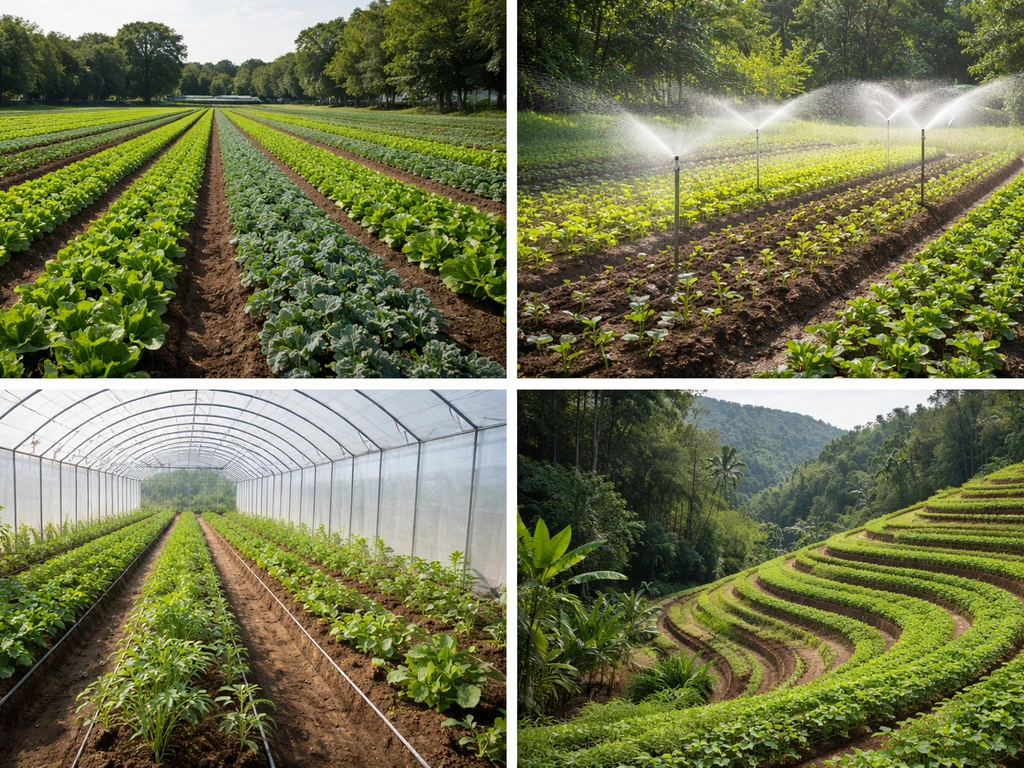
Yes, farmers really do get paid not to grow crops, and it's still happening in 2026. The most common U. S. program, the USDA's Conservation Reserve Program (CRP), pays eligible farmers annual rental rates that typically range from around $50 to over $300 per acre depending on your location, soil quality, and the specific conservation practice you agree to implement.
How Much Do Farmers Get Paid Not to Grow Crops Now?

Marcus Hendrick
20 Apr 2026
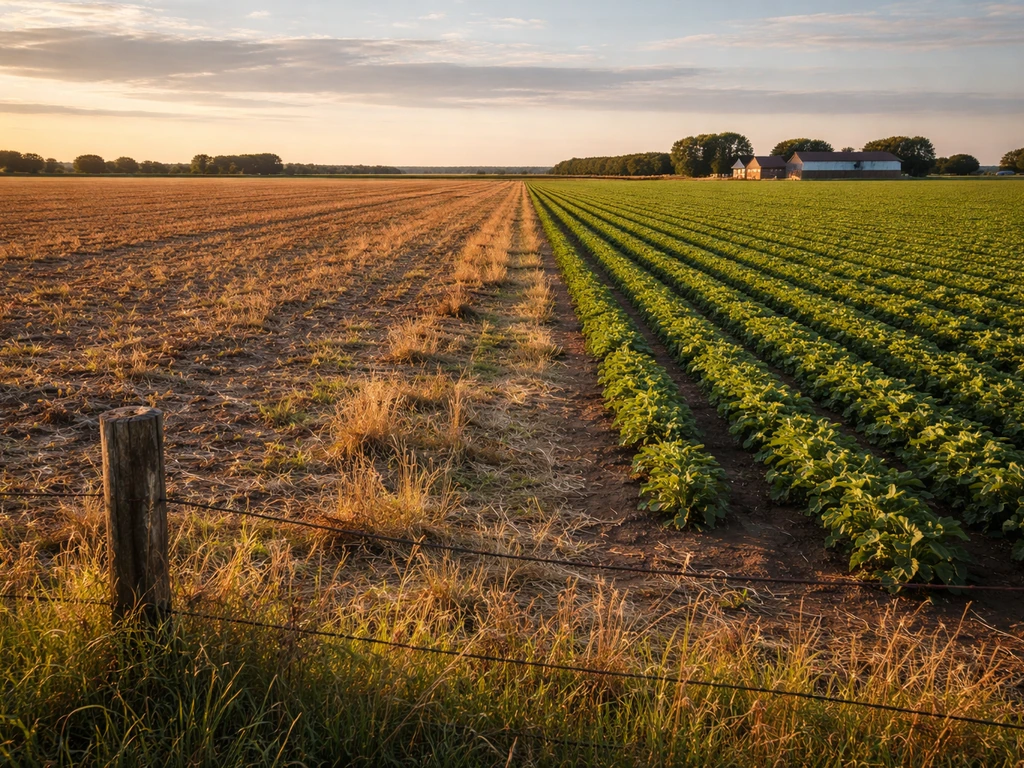
CRP is a voluntary program administered by USDA’s Farm Service Agency (FSA) that pays producers/landowners to convert highly erodible and other environmentally sensitive acreage to long-term vegetative cover CRP (Conservation Reserve Program).
That's a wide range, and pinning down the exact figure for your area requires checking current FSA (Farm Service Agency) payment rates directly, which I'll show you how to do. But let's start with the why, because understanding the reason these programs exist helps you understand who qualifies and how the money actually flows.
Why governments pay farmers to stop growing
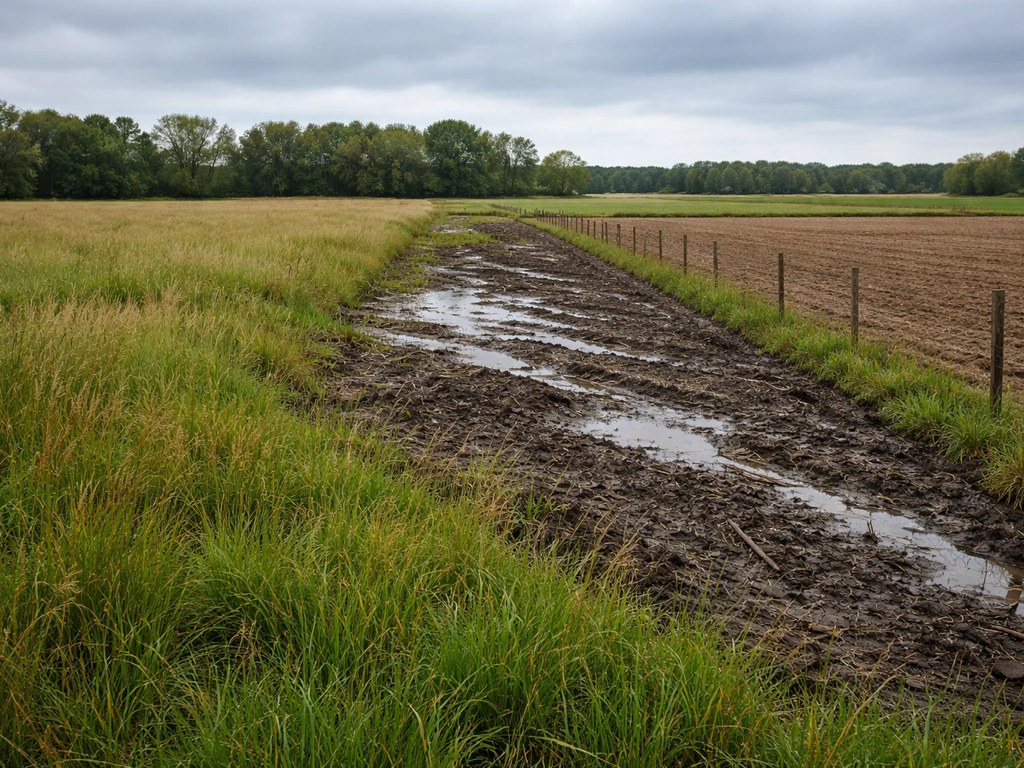
The short answer is: supply management, conservation, and disaster relief. But these are actually three distinct reasons that drive different programs, and mixing them up leads to a lot of confusion when people search this topic.
The oldest reason is commodity price support. For most of the 20th century, the U. S. government ran explicit acreage reduction programs that paid farmers to leave land idle in order to keep crop supplies tight and prices higher.
For most of the 20th century, the U. S. government ran explicit acreage reduction programs that paid farmers to leave land idle in order to keep crop supplies tight and prices higher, essentially paying farmers who did not grow their own crops. What forced farmers to grow commercial crops was a mix of commodity price support, acreage reduction rules, and later shifts toward conservation and supply management policies.
This kind of land-idling is often called an acreage set-aside or a crop set-aside. In agriculture, “fallow” is the practice of leaving land unplanted for a season or longer, which is one way crops may not be grown. If you grew corn, wheat, or cotton, you'd agree to not plant a percentage of your base acres, and in return you'd get a payment. These supply-management set-asides peaked in the 1980s and were largely phased out through the 1990s farm bills.
The second and now dominant reason in the U.S. is environmental conservation. Programs like CRP pay farmers to convert environmentally sensitive cropland into long-term vegetative cover (grasses, wildflowers, trees) for 10 to 15 years at a time. The government's goal here isn't primarily about controlling crop supply, it's about reducing erosion, improving water quality, protecting wildlife habitat, and sequestering carbon. The farm gets annual rental income. The public gets a conservation outcome.
The third reason is disaster relief. When flooding, drought, or another natural disaster prevents planting entirely, programs like the USDA's Supplemental Disaster Relief Program (SDRP) and the Non-Insured Crop Disaster Assistance Program (NAP) step in to compensate farmers for what they couldn't plant. This isn't really a 'don't grow crops' payment in the traditional sense, it's compensation for an involuntary situation, but it's worth knowing it exists.
Outside the U.S., the European Union uses its Common Agricultural Policy (CAP) to pursue similar outcomes. EU farmers can receive support through eco-schemes that include payments tied to setting aside non-productive land features, essentially rewarding farmers for idling portions of their acreage for environmental purposes. The logic is the same: public money in exchange for a public benefit.
Are farmers still paid today, and who actually pays?
Yes, these programs are still active in 2026. The CRP is the primary vehicle in the U.S., and enrollment continues to open through general sign-up periods and continuous sign-up for certain high-priority practices. Funding flows from the federal government through the USDA Farm Service Agency, with no state co-payment required on the rental side (though some states do layer on additional conservation incentive programs).
It's worth being clear about who controls what. The federal government sets program rules, payment rate caps, eligible practices, and total enrollment caps (CRP has a national acreage cap, which fluctuates with each Farm Bill). State FSA offices then determine the specific county rental rates and work with farmers on local implementation. So the money is federal, but the local rate is set at the county level based on soil productivity data and average rental values in your area.
Some states run complementary programs. California, Minnesota, and several Great Plains states have state-level conservation programs that can stack with or supplement federal payments. If you're in one of those states, it's worth asking your local FSA office specifically about state-level options.
The main programs paying farmers not to plant
Here's a practical breakdown of the key programs you'll encounter when researching this topic:
| Program | Who Runs It | What It Pays For | Payment Type | Contract Length |
|---|---|---|---|---|
| Conservation Reserve Program (CRP) | USDA FSA (federal) | Idling environmentally sensitive cropland, establishing vegetative cover | Annual per-acre rental + cost-share for cover establishment | 10–15 years |
| Conservation Reserve Enhancement Program (CREP) | USDA FSA + state partners | Targeted conservation near water bodies, wetlands | Annual per-acre rental + additional state incentives | 10–15 years |
| Supplemental Disaster Relief Program (SDRP) | USDA RMA (federal) | Prevented planting due to natural disaster | One-time per-acre payment based on crop and coverage level | Single crop year |
| Non-Insured Crop Disaster Assistance (NAP) | USDA FSA (federal) | Crop losses for uninsured crops due to natural causes | Indemnity payment based on expected yield and price | Annual enrollment |
| EU CAP Eco-Schemes | European Commission / member states | Non-productive land features, biodiversity set-asides | Annual per-hectare payment | Annual (reviewed periodically) |
For most U.S. farmers asking this question, CRP is the program. CREP is CRP's geographically targeted cousin, often offering higher payments in priority watersheds. The disaster programs are separate and only triggered when planting is genuinely prevented, not a voluntary choice.
How much farmers actually get paid: payment formulas and real ranges
Under CRP, payments are calculated per acre per year, and your county's maximum rental rate (called the County Average Rental Rate or CARR) is the ceiling. The USDA sets these rates using NASS (National Agricultural Statistics Service) data on actual farmland rental prices in each county. Your offered payment is then compared against that cap, and you can't be paid above it.
In practice, payment rates in 2025-2026 look roughly like this across different U.S. regions:
| Region / State Example | Typical CRP Rate Range (per acre/year) | Notes |
|---|---|---|
| Iowa / Illinois (high-productivity corn belt) | $180–$320+ | Some of the highest rates in the country due to high land values |
| Kansas / Nebraska (plains wheat/corn) | $80–$180 | Rates vary significantly by soil class |
| Mississippi Delta (cotton/soy country) | $70–$150 | Wetland practices can push rates higher |
| Montana / Wyoming (dryland grain) | $30–$90 | Lower land values, more marginal acreage |
| Appalachia / Southeast | $50–$120 | Varies widely by county and practice |
On top of the annual rental payment, CRP also offers cost-share assistance to help establish the required cover. This can cover up to 50% of the cost of seeding native grasses, wildflowers, or tree plantings, and in some cases that upfront cost-share can be worth several hundred dollars per acre depending on what practice you're implementing. So the total financial benefit in year one can be meaningfully higher than just the rental rate alone.
Payment is not determined by what you used to grow. Cost is a major factor behind planting decisions, because payments and required terms can make certain crops less or more profitable to grow Payment is not determined by what you used to grow.. It's based on the soil type and productivity of the land being enrolled, not the crop history. A field that grew soybeans and a field that grew wheat in the same county, with the same soil class, would get the same rental rate. That said, more productive soils generally command higher county rental rates, so indirectly your land's productivity does influence the number.
For prevented planting under the disaster programs, the payment structure is different. NAP prevented-planting calculations follow a stepwise framework that multiplies the producer’s share by an approved yield and applies a prevented planting factor, then uses a final payment price to determine the payment amount [For prevented planting under the disaster programs, the payment structure is different. ](https://www. fsa.
usda. gov/Internet/FSAFile/1-napr02_a07. pdf). SDRP and similar programs use a formula tied to the crop you intended to grow, your actual production history, and your crop insurance coverage level.
A corn farmer with a 75% coverage level who couldn't plant due to flooding might receive a payment equal to a percentage of their expected revenue, not a flat per-acre figure. These payments can range from a few dollars per acre to over $200 per acre for high-value crops in bad disaster years.
Eligibility and how to sign up
Who can enroll in CRP
CRP isn't open to just anyone with land. Here are the core eligibility requirements you need to know:
- You must own or operate the land you're enrolling (landowners and tenants with written permission can both apply)
- The land must have been cropland for at least 4 of the 6 crop years preceding enrollment (or meet certain other criteria for highly erodible or wetland acres)
- Land must meet an Environmental Benefits Index (EBI) score threshold during competitive sign-up periods, meaning the government prioritizes the most environmentally valuable parcels
- You must be a U.S. citizen or legal resident, and meet adjusted gross income (AGI) limits (currently $900,000 AGI limit for non-farm income)
- You cannot enroll land that is already enrolled in certain other conservation programs simultaneously
How the application process works
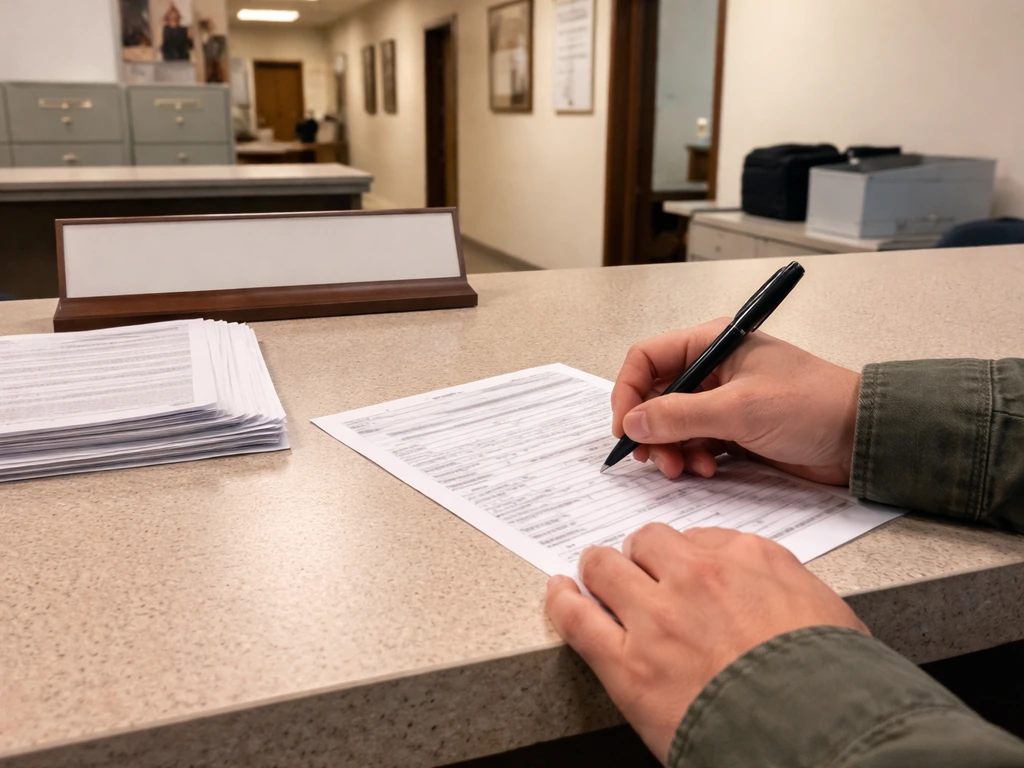
- Contact your local USDA Service Center (FSA office) to confirm enrollment periods. CRP has two types: general sign-up (competitive, happens periodically) and continuous sign-up (open year-round for priority practices like filter strips, riparian buffers, and wetland restoration).
- Work with your FSA agent to determine which conservation practices your land qualifies for. The practice you choose affects your EBI score and your payment rate.
- Submit an offer during the sign-up period. For general sign-up, FSA ranks all offers nationally by EBI score and accepts the highest-scoring parcels up to the enrollment cap.
- If accepted, sign a 10 or 15-year contract. You then have a set timeframe to establish the required vegetative cover, with cost-share support available.
- Receive annual rental payments (typically paid in October each year) for the life of the contract.
One thing that trips people up: if you're a tenant farmer (not the landowner), you need explicit written consent from the landowner to enroll, and the landowner typically receives the rental payment directly. Tenants and landowners often split the benefit through their lease arrangements, but that's a private negotiation, not something FSA manages.
How to find the current payment rate for your specific location
The fastest way to get a real number for your land is to go directly to the USDA FSA's online tools or your local FSA office. Here's exactly how to do it:
- Go to fsa.usda.gov and search for 'CRP payment rates' or navigate to the CRP program page. USDA publishes county maximum rental rates publicly, usually updated annually.
- Use the FSA's 'Service Center Locator' tool (also on fsa.usda.gov) to find your local FSA office. Call or visit, because local agents know which sign-up periods are active and which continuous practices are currently being accepted.
- Ask specifically for the Maximum Payment Rate for your county and the soil type or land classification of your specific parcel. Rates differ by soil productivity class even within the same county.
- Request a list of current eligible conservation practices (CP codes) and the associated payment rates. Some practices, like CP21 filter strips or CP22 riparian buffers, sometimes carry bonus payment adders above the base rental rate.
- If you're in the EU, contact your national or regional agricultural payment agency (in the UK post-Brexit this is the Rural Payments Agency; in other EU member states it's the national CAP paying agency) for eco-scheme rates in your area.
Don't rely on rates you find quoted in articles from 2020 or 2022, including ballpark figures in any article like this one. Rates change with every Farm Bill reauthorization and with annual NASS rental data updates. The only authoritative current number is what FSA publishes for your specific county and the current enrollment period.
What home gardeners and self-sufficient growers can actually take from this
If you're a home gardener or homesteader reading this, you're probably not enrolling 40 acres in CRP. But the concepts behind these programs are genuinely useful for thinking about your own growing operation, and understanding how economics shapes what gets grown (and what doesn't) is part of being a more informed food grower.
The logic of a set-aside, letting land rest, cover crops, deliberate fallow periods, is actually excellent garden practice. Farmers in conservation programs often establish native grasses or cover plants precisely because resting land improves its long-term productivity. At the home garden scale, intentionally fallowing a bed, planting a nitrogen-fixing cover crop, or rotating out of production for a season is free and beneficial. You don't need a government contract to apply the same soil-care principles.
For larger homesteads (even 1 to 5 acres), it's worth knowing that some CRP practices have minimum acreage requirements as low as a fraction of an acre for certain buffer or wetland practices, and that USDA does work with small and beginning farmers through outreach programs. If you have genuinely marginal, wet, or erodible land that you're struggling to farm productively, a conservation contract might actually be worth exploring, not as an alternative to growing your own food, but as a way to manage land that isn't suitable for annual crops anyway.
It's also worth connecting this to a broader reality about food growing: what gets grown commercially is deeply shaped by economics and policy, not just by what grows well where. Understanding why farmers make certain planting decisions, including the incentive to leave land idle, gives home growers useful context. Similarly, when people wonder how livestock producers choose the breed they grow, economics and available programs can shape those decisions too. If you're thinking through which crops make sense to grow for self-sufficiency versus which to source from farmers markets or stores, the economics of commercial growing (including why some crops dominate certain regions) are part of that picture.
The practical takeaway is this: if you have land, even a modest homestead, it's worth periodically asking whether every square foot is being used in the way that best serves your long-term food security. Sometimes the most productive thing you can do with a patch of ground is rest it, build its organic matter, and come back to it stronger next season. That's not a government program. It's just good growing.
FAQ
Can a farmer pick any price for leaving land idle, or is the payment fixed?
In CRP, you cannot choose your own arbitrary “not-growing” rate. Your payment is capped by the county’s rental rate ceiling (CARR) for the practice you enroll, so two farmers in the same county can receive different amounts if their soil productivity category and the conservation practice differ.
Is the “get paid not to grow” option only for one year, or does it require long contracts?
CRP is a contract, not a one-season leave-it-alone option. Typical enrollments are long-term (often 10 to 15 years), and if you break terms or stop maintaining the required cover, you can face repayment of funds and contract termination.
What if my land is already fallow or only marginal cropland, can I still enroll in CRP?
CRP is usually aimed at land that is cropland (or cropland transitioning) and meets environmental criteria like erosion risk, water quality concerns, or habitat value. If your land is already set aside or not eligible as cropland, you may not be able to enroll even if it is not currently planted.
If I rent the land I farm, can I still get the CRP payments?
If you are a tenant, the landowner generally receives the CRP rental payment because it is tied to enrolling the land itself. Your share, if any, comes from your private lease agreement, not from FSA, so tenants should confirm the payment split in writing before enrolling.
Why do prevented-planting disaster payments vary so much between farmers?
You can’t rely on crop prices or prior crop income to estimate disaster-program payments. SDRP and related prevented planting payments are calculated using what you planned to plant, your production history, and your crop insurance coverage level, so two farmers with different insurance coverage can receive different amounts for the same disaster.
Can CRP cost-share be combined with other conservation programs or farm subsidies?
Stacking is possible but not unlimited. You generally need to ensure you are not double-counting benefits for the same costs or violating program restrictions. The safest approach is to ask your local FSA office how your state programs and other assistance interact for your specific practice and year.
If I enroll in CRP, can I still do some farming like grazing or harvesting?
No, CRP enrollment usually requires the agreed conservation cover and management to be established and maintained. You may still have limited activities allowed under the contract (for example, certain maintenance actions), but you cannot treat it as “idle with no obligations” without risking penalties.
Does CRP payment depend on what crops I grow now or what I grew before?
Many people assume the payment depends on what the field used to grow, but for CRP the rental rate is driven primarily by the soil’s productivity and the county rental data for the enrolled practice. Past crop history matters mainly for eligibility and certain other program details, not for the per-acre rental rate itself.
If my farm qualifies, am I guaranteed to be accepted into CRP?
CRP is competitive for many enrollments, not guaranteed for everyone who applies. Even if your land seems eligible, you may need to submit during the open signup period and meet ranking criteria for your practice and location.
What’s the best way to estimate my total “year-one” benefit beyond the annual CRP rental?
If you are trying to estimate what you would earn for a specific parcel, the quickest reality check is to pull the current county payment rate and the practice term requirements from your local FSA. Then add cost-share expectations for establishment, because year-one total benefit often depends on seeding and establishment support, not just the annual rental.
Next Article
How Do Farmers Grow Food Around the World: Methods and Tips
Learn how farmers grow food worldwide: soil, water, crops, pests, harvest, and how to scale it for home gardens.