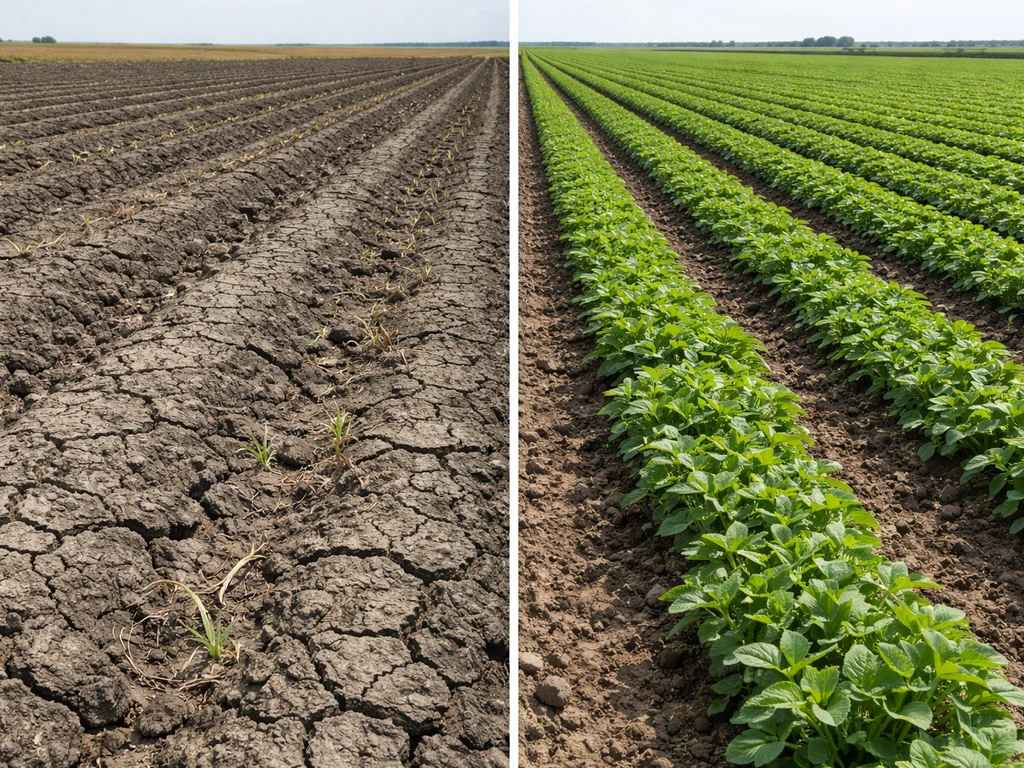
Farmers were forced into growing commercial crops by a combination of government taxes payable only in cash, debt and credit systems that locked them into contracts, land reforms that stripped away subsistence plots, and infrastructure changes that made commodity markets the only practical outlet for their labor. None of these forces worked alone. They stacked on top of each other, and smallholders caught in the middle had almost no way out.
What Forced Farmers to Grow Commercial Crops

Marcus Hendrick
17 May 2026
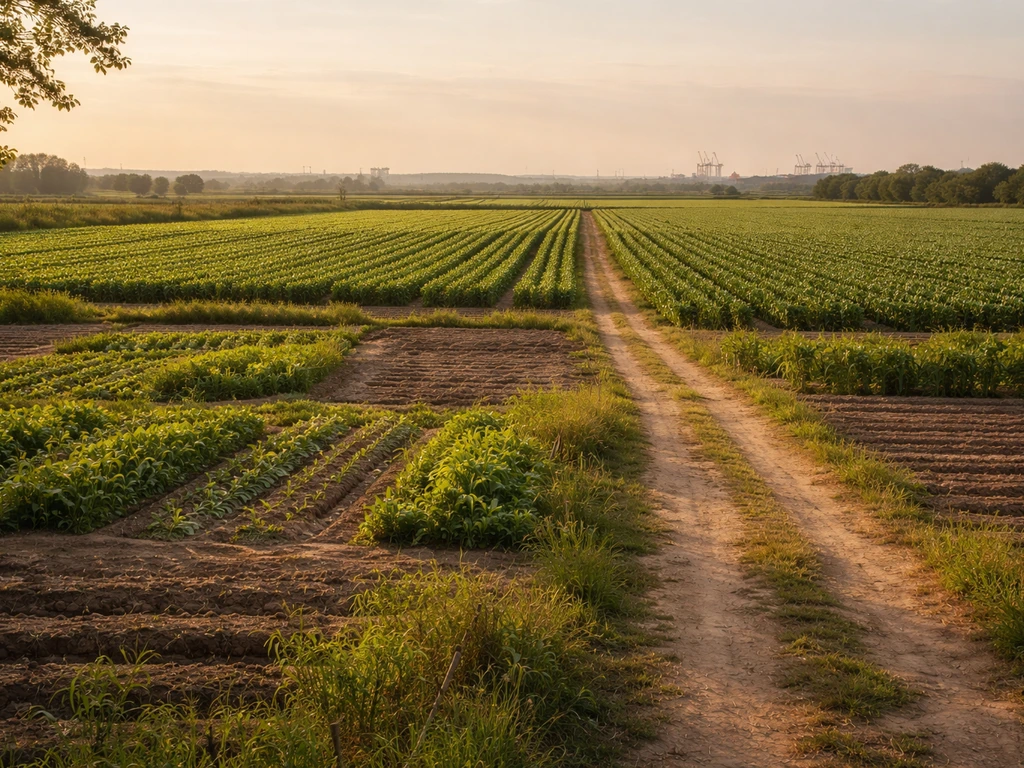
The forces that pushed farmers into cash crops
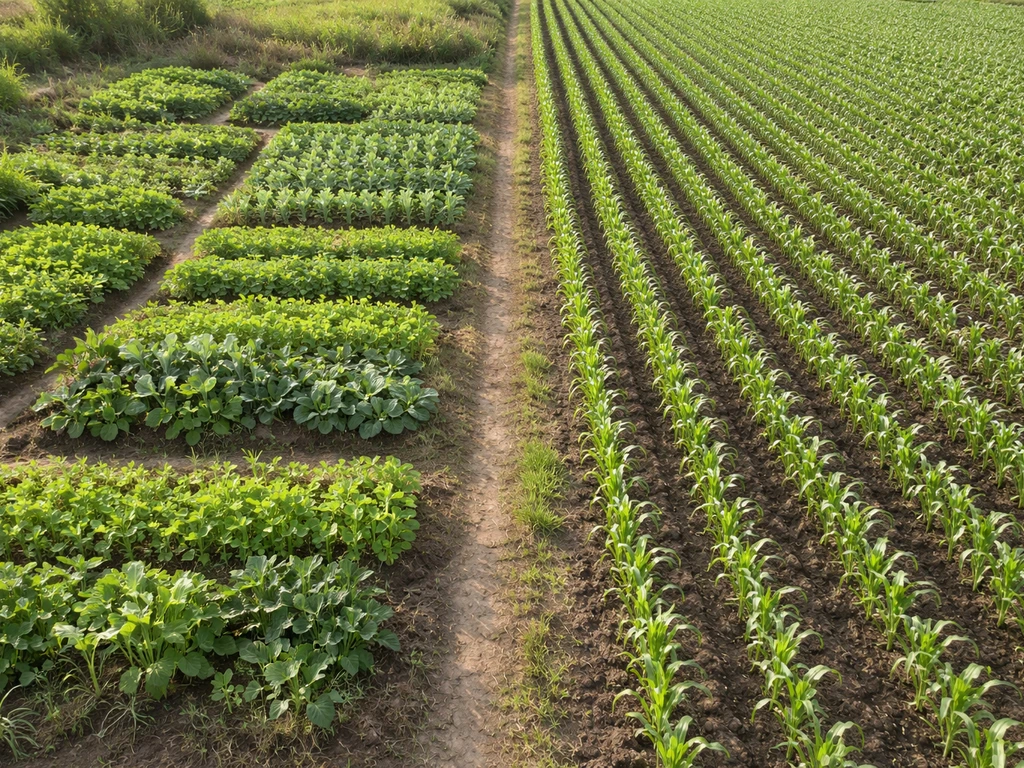
Subsistence farming, growing food primarily to feed yourself and your family, was the default for most of human history. The shift to commercial or cash crops was rarely a free choice. In most documented cases, farmers moved to cash crops because staying with food crops became legally dangerous, financially impossible, or physically unsustainable. The pressure came from five overlapping directions: government policy, economic and debt structures, transportation and market access, land and tenancy arrangements, and environmental shocks. Understanding each one matters, especially if you are trying to build a resilient food garden today and avoid recreating the same traps at a smaller scale.
Government policies: taxes, mandates, and forced cultivation
The most direct tool governments used to force cash-crop adoption was taxation in cash, not in kind. When you can pay your taxes in grain or labor, you can survive as a subsistence farmer. The moment taxes must be paid in colonial currency or state-issued money, you need cash, and cash means growing something someone else will buy.
The Dutch East Indies provides one of the clearest examples. Under the Cultivation System (Cultuurstelsel), implemented from the early 1830s through 1870, Indonesian villagers were required to devote roughly one-fifth of their rice fields to export crops like sugar, coffee, and indigo, or alternatively to provide 66 days of compulsory labor per year in government fields if they held no land. This was not a market incentive. It was a legal mandate backed by colonial authority. Refusing was not a viable option.
Portuguese colonial Mozambique operated similarly. Between 1926 and 1961, the Portuguese government granted concessions to private companies and then forced smallholder farmers living within those concession zones to cultivate cotton for cash payment. Forced labor, forced crop cultivation, high taxes, low wages, and confiscation of the most productive land were all documented practices. The forced cultivation pressures in the Zambezi region specifically developed between 1935 and 1960. These were not suggestions. They were backed by legal penalties, violence, and displacement.
Beyond outright mandates, governments also used minimum acreage rules (requiring farmers to plant a set area with a specific crop), price controls that made food crops artificially unprofitable while export crops received guaranteed prices, and labor conscription systems that pulled workers away from subsistence plots at critical growing times. Any one of these policies could destabilize a family's food security. Together, they were overwhelming.
Economic pressure: debt, credit, and corporate contracts
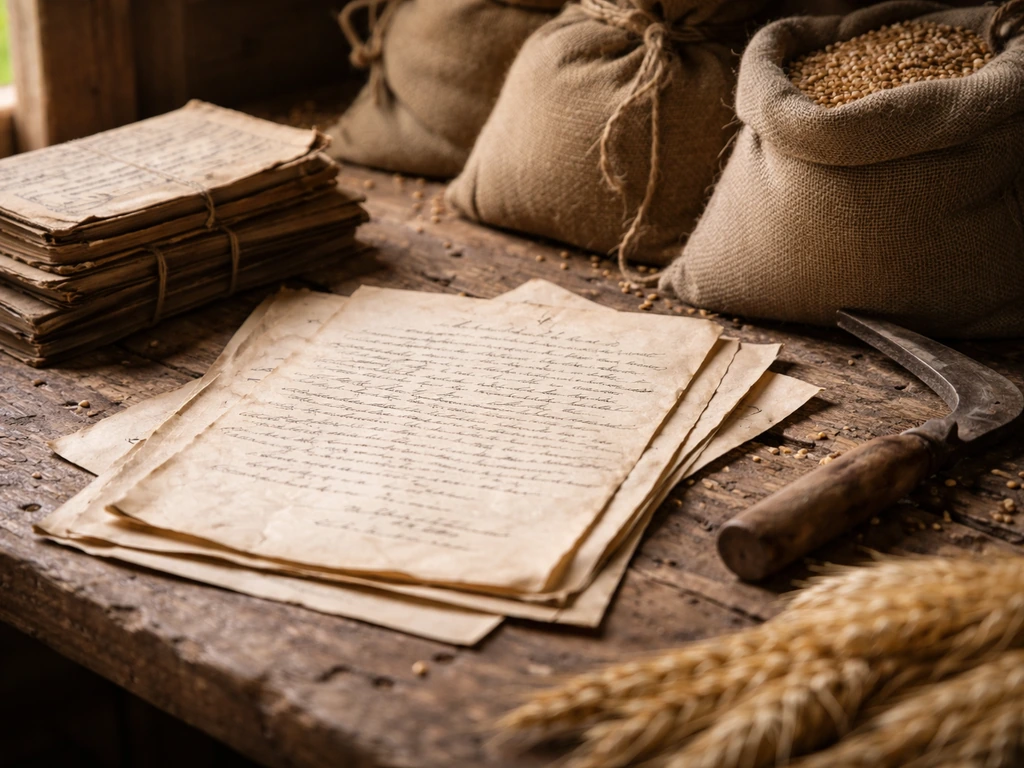
Even when there was no explicit government mandate, economic structures did the same work. Credit was the key tool. A merchant, plantation company, or colonial bank would offer seeds, tools, or emergency food on credit, with repayment required in a specific crop at a price the lender controlled. Once a farmer took that loan, they were locked in. Paying back in subsistence food was not an option because the lender did not want food. They wanted cotton, tobacco, rubber, or coffee.
Debt cycles were self-reinforcing. A bad harvest meant the farmer could not fully repay, so the debt rolled over to the next season with interest. To pay down the debt, the farmer planted more cash crop, leaving less land and labor for food. This made them more vulnerable to the next price drop or drought, which extended the debt further. Contract farming systems formalized this relationship: seed companies or processors would supply inputs and agree to buy the harvest, but the contract specified the crop, the variety, and often the exact cultivation methods. Deviation meant voiding the contract and losing the input investment.
Monopoly procurement made this worse. In many regions, a single buyer controlled the market for a given commodity. Farmers had no price negotiating power. Growing an alternative crop was not economically viable because there was no competing buyer for it. The math of costs, as it still does today, determined what farmers actually planted, and when the cost structure is built around a single commodity crop and the infrastructure to support it, diversifying out becomes nearly impossible without outside support.
Infrastructure and markets: railroads, ports, and price volatility
Transportation infrastructure was a double-edged force. When railroads and ports reached a farming region, they opened access to distant markets that had never existed before. In theory, this was an opportunity. In practice, it tied local farmers directly to global commodity prices they had no ability to influence or predict.
Before a railroad arrived, a farmer's market was local. If local food prices were low, so was competition. The moment rail connected a region to an export terminal, prices were set by supply and demand in London, Amsterdam, or New York. A glut of coffee in Brazil could collapse the price a Kenyan farmer received the following season, even if the Kenyan farmer had a perfect crop. Farmers who had restructured their land and labor around that export crop had no quick way to pivot back to subsistence when prices crashed.
The same infrastructure also made imported food cheaper than local alternatives. When subsidized grain from industrial agricultural regions could be shipped in cheaply, it undercut local food prices. This made food crops even less profitable for smallholders, pushing them further toward the only crop category that still made economic sense: the export commodity the railroad was built to carry.
Land and tenancy: enclosure, eviction, and sharecropping
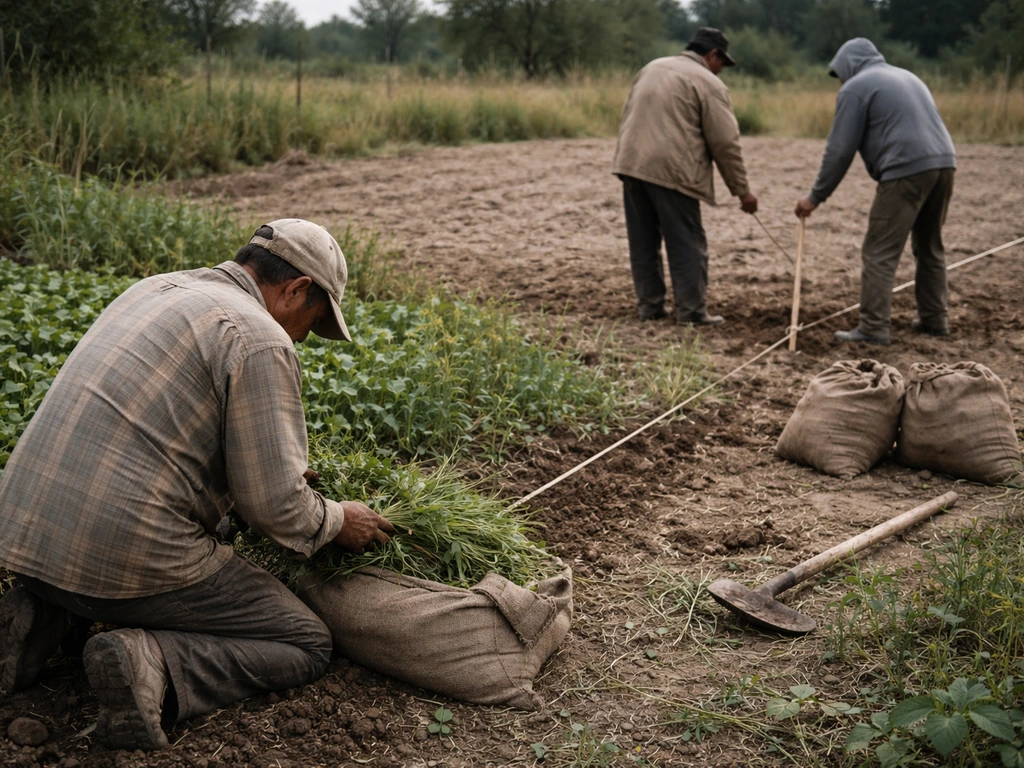
You cannot grow subsistence food without land to grow it on. Enclosure movements, colonial land seizures, and landlord consolidation stripped smallholders of the land base they needed to feed themselves. Historically, many farmers were pushed into cash crops instead of growing their own food, including groups denied the ability to maintain subsistence plots which group did not grow its own crops. Once a family lost access to their plot, the only way to survive was to work for wages or to tenant-farm land under conditions set by a landlord.
Tenancy agreements frequently required rent in cash or in a specific crop. Sharecropping arrangements in the American South after the Civil War, for example, often required tenant farmers to grow cotton because it was the crop the landlord and the credit system were built around. Growing food crops for personal consumption reduced the acreage producing the cash crop that paid the rent, which risked eviction. Farmers were rationally choosing cash crops not because they preferred them but because the alternative was losing their housing and their land access entirely.
Colonial confiscation of the most productive land, as documented in Mozambique, followed the same logic from the top down. If the best land is under the control of a concession company and the only way to access it is to grow the company's preferred crop, the farmer has no real choice. The subsistence option was not just economically unattractive. It was structurally unavailable.
Risk shocks: drought, pests, famine, and why cash became critical
Environmental disasters accelerated the shift to cash crops in a different way. Drought, crop failure, pest outbreaks, and famine created emergency cash needs that subsistence farming could not meet. This kind of crop failure is often described as crops not growing due to drought, pests, or other environmental shocks. When a family's food crop failed, they needed to buy food, and buying food required cash. If a cash crop offered a more reliable income stream, or if it was simply what was available through credit and contract systems, desperate farmers would plant it even at the cost of their food security.
This created a paradox that played out in region after region. Famine drove farmers toward cash crops to generate emergency income. Growing more cash crop reduced the land available for food. Reduced food production increased the family's vulnerability to the next food shock. And commodity price volatility meant that the cash income itself was unreliable, so the family ended up more exposed to both food shortage and financial collapse than they were as subsistence farmers.
In regions where forced cultivation was already in place, natural disasters compounded the problem severely. Forced to grow cotton or sugar on productive land, farmers had little reserve food stock when drought hit. The forced cultivation systems in Mozambique's Zambezi region that operated between 1935 and 1960 operated in exactly this kind of environment, where colonial crop mandates left families with minimal food buffer against climate variability.
What this means for home gardeners today
The historical pattern is clear, and it translates directly to home gardening decisions right now. The farmers who ended up most vulnerable were the ones who had no food security fallback, who depended on a single crop or a single buyer, and whose production systems required purchased inputs they could not supply themselves. You can build in the opposite of every one of those vulnerabilities.
Diversify what you grow, even in a small space
Growing a mix of crops rather than going all-in on one thing is the most direct protection against the cash-crop trap. In a home garden, this means not planting your entire raised bed with tomatoes just because tomatoes are what you can sell at the farmers market this season. Split your space between staple calories (beans, potatoes, squash), high-value supplemental crops, and perennials that require little annual input. A 400-square-foot garden can reasonably produce a meaningful share of a family's vegetable needs across multiple crop types, which gives you resilience that a single-crop operation simply does not have.
Build seed and soil independence
One of the most powerful lessons from the debt-and-contract model is that control over inputs is control over your farming decision-making. If you are buying new seed every year from a single supplier and using bagged fertilizer from a single store, you have replicated a version of the input dependency that trapped commercial smallholders. Growing open-pollinated varieties and saving seed breaks that cycle. Building soil fertility through compost, cover crops, and organic matter reduces purchased input dependence. Neither of these is complicated, but both take a season or two to set up properly.
Keep a food reserve, not just a harvest
The environmental shock section above shows what happens when there is no food buffer. At home, this means treating preservation and storage as part of your growing plan, not an afterthought. Crops that store well, like dried beans, winter squash, root vegetables, and canned or fermented produce, are your version of a food reserve. Aim to grow enough of at least two or three storable staples that you could sustain your household for two to four weeks if supply chains became unreliable. That is not a survivalist fantasy. It is exactly the kind of resilience that historically protected subsistence farmers from being forced into desperate decisions.
Be careful about growing for sale
Growing food to sell is not inherently a problem. But it is worth being honest about the risk structure before you commit significant garden space to it. If you are growing for a single buyer (a restaurant, a CSA box, a market stall), and that outlet disappears, what happens to your garden plan and your food supply? The farmers who fared best historically were the ones who had multiple outlets, multiple crops, and enough food production for their own household before they thought about surplus. Structure your home garden the same way: food security first, then surplus for sale or trade.
A practical starting framework
| Risk factor | Historical commercial version | Home garden equivalent | Protective action |
|---|---|---|---|
| Single-crop dependency | All land in cotton or coffee | Entire garden in tomatoes or zucchini | Grow at least 4 to 6 crop types each season |
| Input dependency | Seed and fertilizer from company on credit | Annual seed purchases from one supplier | Save open-pollinated seed, build compost system |
| Single buyer risk | Monopoly processor or export company | One restaurant or farmers market stall | Multiple outlets or grow primarily for household use |
| No food reserve | Subsistence land converted to cash crop | No storage crops, only fresh produce | Grow dried beans, squash, root veg for storage |
| Price volatility exposure | Global commodity price swings | Farmers market surplus price collapses | Grow primarily for consumption, not speculation |
The historical forces that trapped commercial farmers were largely imposed from outside, by governments, landlords, corporations, and creditors. Home gardeners today are in a much better position because the choice of what to grow is genuinely yours. But the underlying logic of crop choice risk is the same. If you want the livestock side of this decision, see how livestock producers choose the breed they grow as a related way to think about crop and input choice risk. The more your food supply depends on a single crop, a single input source, or a single market relationship, the more vulnerable you are to disruption. Diversify what you grow, own your inputs where possible, and keep food security as the first priority. That is how you avoid the trap that caught generations of smallholders before you.
FAQ
Was it ever “voluntary” for farmers to switch to commercial crops, or was it always forced?
In many cases the switch was not literally compulsory by law, but it was still coerced by constraints (cash-only taxes, credit terms, loss of land, and single-buyer markets). Even when farmers chose cash crops for survival, the choice was made inside a narrow set of options created by power over prices, inputs, and land access.
How did cash-only taxes specifically push farmers toward cash crops rather than food crops?
Cash-only tax rules created a specific shortfall that could not be paid with homegrown food. Farmers then needed a repeatable way to earn cash at the right time of year, which is why they often adopted the crop that lenders and authorities were already prepared to buy or finance.
Why did debt make farmers stick to the same commercial crop even after a bad harvest?
When loans were repaid in a designated commodity at a lender-controlled price, a failed harvest meant farmers still owed the repayment terms. Rolling the debt forward reduced their buffer and pushed them to plant the contract crop again to meet repayment obligations, even when yields or prices were unfavorable.
What is the difference between contract farming and pure market choice for farmers?
With contract farming, the buyer typically specifies not just the crop but also inputs, varieties, and sometimes cultivation practices. That reduces a farmer’s ability to switch crops or adjust methods after price changes or pest outbreaks, because deviation can trigger loss of inputs and sometimes the contract itself.
How did monopoly procurement eliminate farmers’ negotiating power?
If one buyer is the only practical outlet, farmers cannot credibly threaten to sell elsewhere, so purchase terms become non-negotiable. In that setup, growing a different crop often fails commercially because there is no competing buyer to establish a market price.
Did transportation infrastructure always benefit farmers economically?
It could increase potential profits in good-price periods, but it also made local production sensitive to distant commodity swings. That meant farmers could be worse off when global oversupply caused price drops, because their costs and land commitments tied to the cash crop could not be adjusted quickly.
How did imported food undercut local farmers’ ability to keep growing subsistence crops?
Cheaper imports often lowered local food prices, making it harder for smallholders to justify land use for food crops. When combined with rents and loan repayment requirements, the result was that food production became a lower-return use of land compared to the export crop that still generated cash.
Why were land reforms and land seizures so central to the shift away from subsistence?
Without secure access to plots, farmers could not maintain a food base, even if they wanted to. Once productive land was controlled by landlords or concession companies, subsistence production became structurally unavailable, forcing wage work, tenancy, or cultivation of the designated crop.
What happens when rent or tenancy terms require payment in cash or a specific crop?
If rent is due in cash, farmers must convert part of their output into cash, which often means planting the crop most compatible with loans and procurement systems. If rent is due in a specific commodity, farmers can face eviction risk if they allocate too little acreage to that crop, even if household food needs are urgent.
How did environmental shocks create a “trap” that made cash cropping more likely?
Crop failure created immediate cash needs to buy food, and the only affordable or accessible income path was often the cash crop promoted through credit and contracts. This pushed families into planting commercial crops even when their food security was already impaired, leaving them with less reserve against the next shock.
Why did forced cultivation systems become especially damaging when drought or pests hit?
When families had to devote productive land to mandated cash crops, they often had little reserve production capacity and fewer storable staples. That means a shock that wipes out the food crop base becomes a household food crisis, not just a dip in income.
What are common modern “cash-crop trap” mistakes people make in small farms or home gardens?
The main mistakes are overcommitting to one saleable crop, relying on a single buyer or supply chain for seed and inputs, and postponing food security until after “market season.” If that one market disappears or prices change, you have fewer options to cover household needs.
If I want to grow food to sell, how can I avoid becoming dependent on one outlet?
Use multiple channels (for example, sell part of the surplus through different local buyers while trading some and keeping a portion for home use). Also ensure you can meet your household staples first, so a temporary loss of an outlet does not force you into emergency sales or purchases.
What does “food security fallback” look like in practice for resilience planning?
Plan for at least two or three storable staples and preserve enough to cover a short supply interruption (for example, beans, squash, and root crops). The key is having an internal supply you can rely on without depending on a single growing window or a single crop success.
Why does saving seed and using open-pollinated varieties reduce the risk described in the debt and credit model?
It lowers dependence on one yearly input supplier and reduces the leverage suppliers have over what you plant next season. When farmers can regenerate seed on-farm and build soil fertility with non-purchased or lower-purchased inputs, they are less exposed to input-price spikes and contract constraints.
Next Article
What Is It Called When Crops Don’t Grow and How to Fix It
Crop failure causes, what to call it, and quick troubleshooting for poor germination, stunted growth, and failed establi