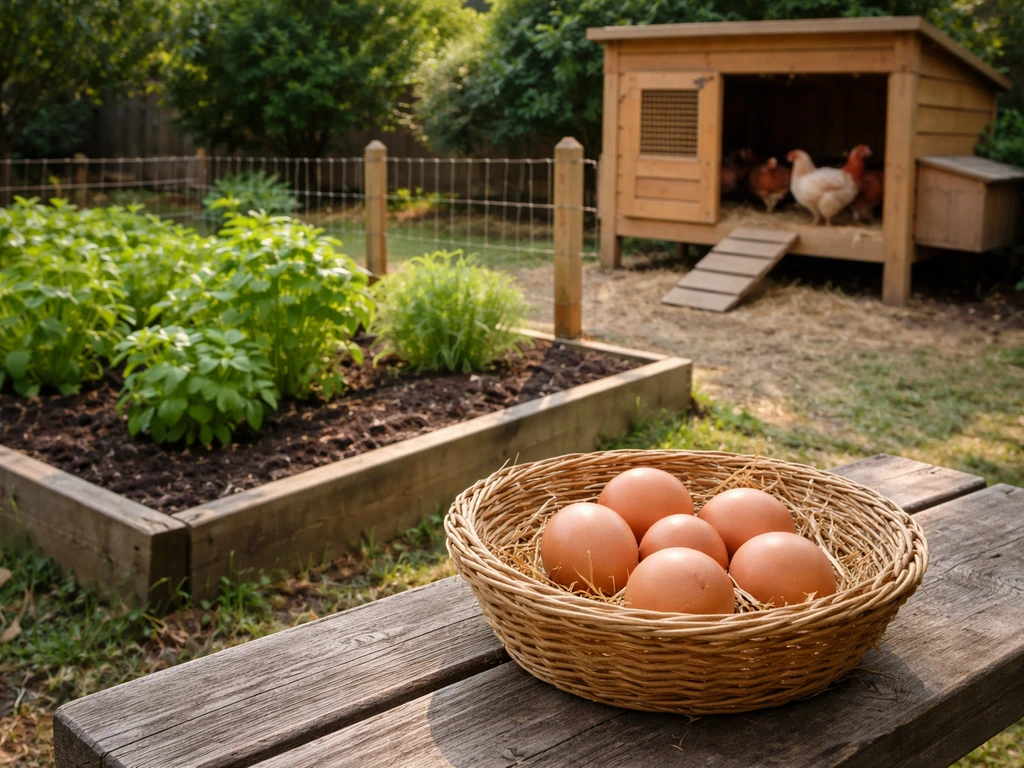
KFC does not raise its own chickens. The company buys chicken from a network of third-party suppliers and contract growers who do the actual farming. KFC (owned by Yum! Brands) sets the welfare standards, audits compliance, and controls the spec, but the birds live on farms owned and operated by independent producers, not by KFC itself.
Does KFC Grow Their Chicken? How It’s Raised and Sourced

Marcus Hendrick
30 May 2026
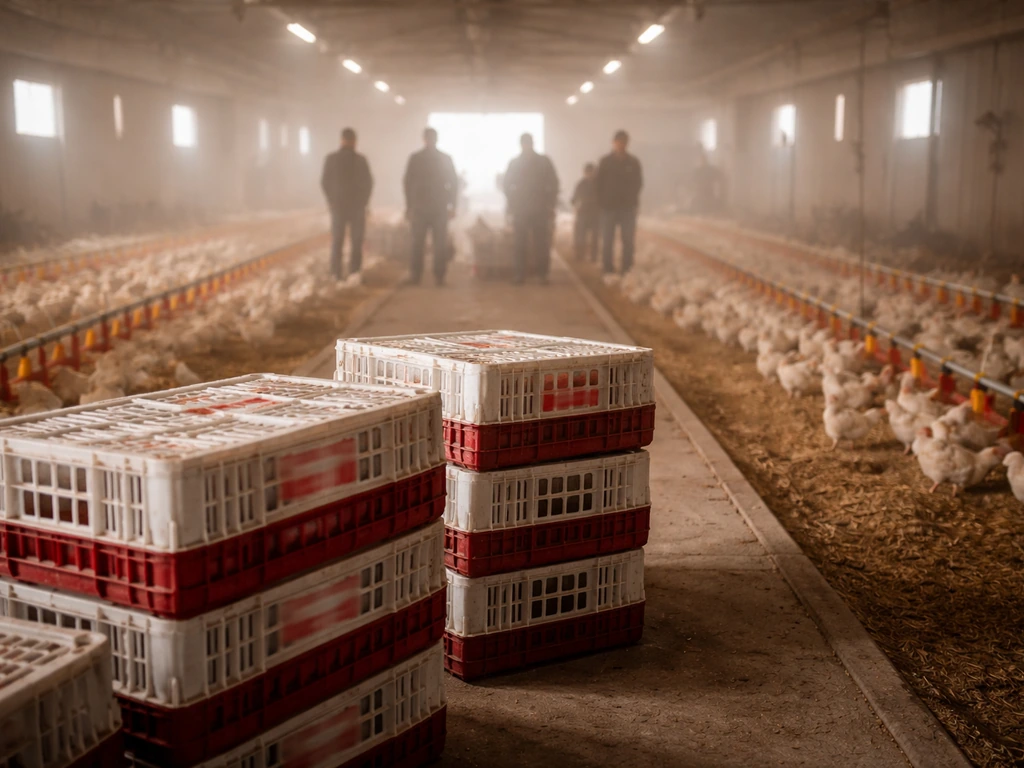
How KFC's chicken supply chain actually works
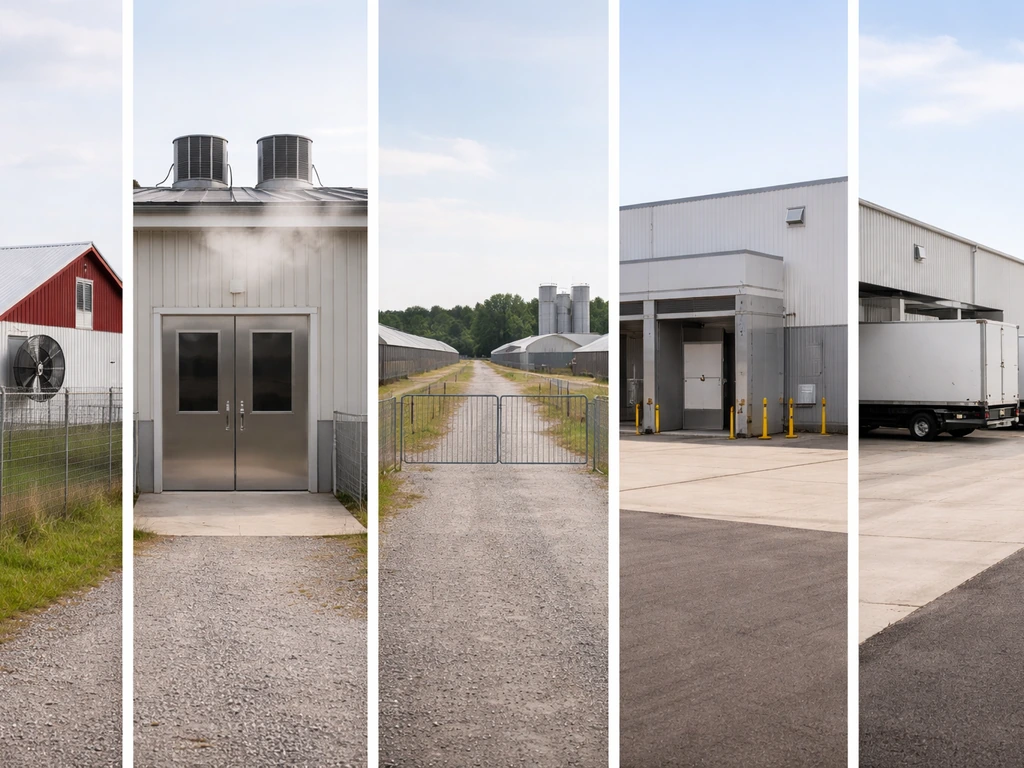
The chain starts well before a chicken reaches a KFC kitchen. Breeder flocks produce fertile eggs, which go to hatcheries. Day-old chicks then move to grow-out farms where they're raised to market weight. These grow-out farms are where the chicks are raised to market weight, which is essentially the egg-to-chicken grow process. After that, birds go to a processing plant for slaughter, portioning, and packaging before being shipped to distribution centers and finally to individual restaurants. KFC steps in at the supplier level: it contracts with large poultry processors and integrated producers who manage some or all of those steps upstream. KFC's own role is essentially as the customer and standard-setter, not the farmer.
On the sourcing side, KFC states that in the U.S., Canada, Australia, India, and Thailand, 100% of its chicken is locally sourced. In Canada, KFC has formally partnered with Chicken Farmers of Canada under the 'Raised by a Canadian Farmer' program, which ties the branding directly to domestic farm origin. In the UK, KFC specifies that its chicken must comply with EU animal welfare standards regardless of country of origin, and that all core suppliers are contractually required to trace products all the way back through the supply chain to raw material origins, a traceability requirement baked into KFC's Western Europe Sourcing Code of Practice.
Who actually raises the birds
This is where the contract farming model comes in, and it's worth understanding because it's how most commercial chicken in the U.S. and UK gets produced. Large integrated poultry companies (think processors like Tyson) supply day-old chicks, feed, medication, and technical support to independent contract growers. The growers provide the land, the housing (chicken barns), the labor, and the utilities. Ownership of the birds stays with the integrator throughout the grow-out period. The grower is paid based on how efficiently they convert the company's feed into bird weight.
KFC sources from these integrated systems. It doesn't own the farms, employ the growers, or manage the day-to-day raising of birds. What it does own is the welfare and sourcing standard those farms must hit. In the UK, KFC has committed to Better Chicken Commitment-aligned standards and uses independent welfare audits plus recognized farm assurance schemes like Red Tractor, which requires chicks to come from Red Tractor-assured breeder farms and hatcheries.
Yum! 's Global Animal Welfare Policy sets the baseline globally, describing requirements like large barns, well-maintained dry litter, and science-based welfare measurement across all its brands. Yum! 's Global Animal Welfare Policy is described by KFC as science-based and used with a global poultry platform to measure and manage welfare across its brands [science-based welfare measurement](https://global.
kfc. com/chicken-welfare/).
What 'growing' a broiler chicken actually involves
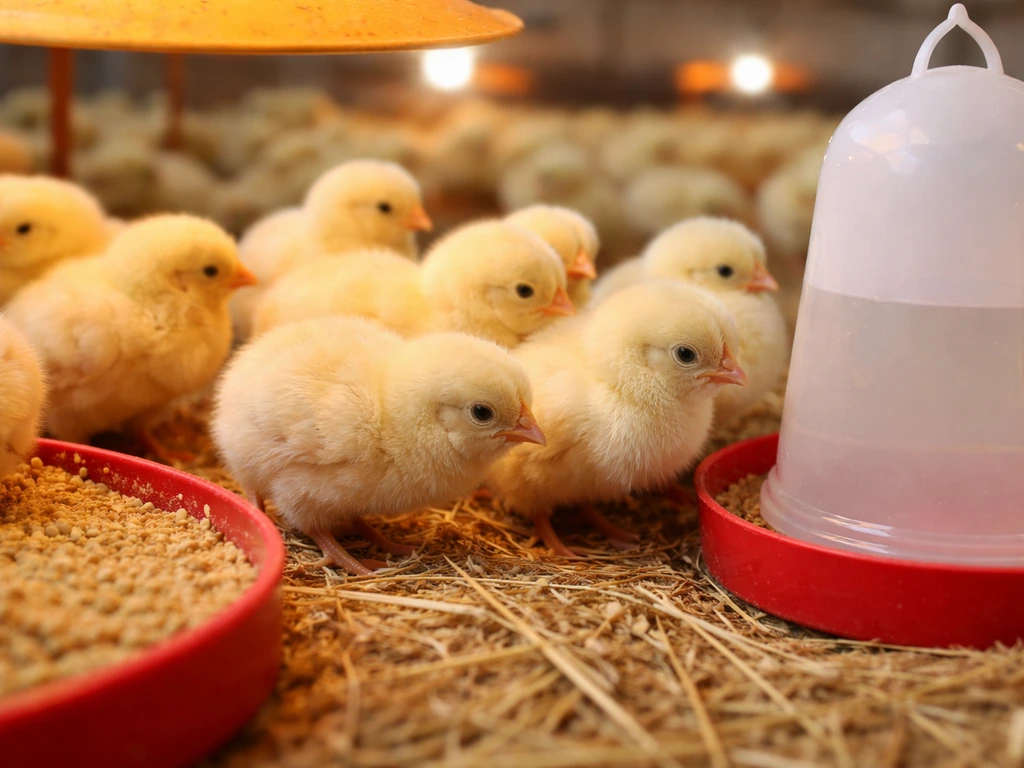
Whether it's a contract farm supplying KFC or a backyard grower, the biological process of raising a meat chicken is the same. That said, if you are thinking about “can we grow egg in plant,” it helps to separate egg production from meat-chicken grow-out growing meat chickens. What changes is the scale, the automation, and the regulatory oversight. Here's the core process at the industrial level:
- Brooding (week 1-2): Day-old chicks need supplemental heat — barn temperatures typically start at 30 to 33°C and are gradually stepped down to around 24 to 26°C over the first three to four weeks. Without this, newly hatched birds can't maintain their own body temperature and mortality spikes.
- Housing and stocking density: Birds are raised in large enclosed barns with controlled ventilation, lighting, and litter management. KFC UK specifies a maximum stocking density of 30 kg per square metre for its British-sourced chicken — more space than the standard industry requirement.
- Feed and water: The integrator supplies a precisely formulated feed ration calibrated to target market weight. All birds must have continuous access to feeders and drinkers. The National Chicken Council notes that stocking density decisions must account for every bird being able to reach feed and water.
- Health and biosecurity: Veterinary oversight, vaccination programs, and antibiotic stewardship are all part of standard commercial grow-out. Yum!'s Global Antimicrobial Stewardship Policy describes commitments to removing antibiotics important to human medicine from the U.S. poultry supply chain.
- Timeline: Commercial broilers typically reach market weight in six to seven weeks. The whole cycle from chick placement to processing is short and tightly controlled for feed conversion efficiency.
- Processing: Birds are transported to a processing facility for slaughter, chilling, portioning, and quality checks before entering the distribution system.
What KFC actually discloses, and how to check it
KFC and Yum! publish several public documents worth reading if you want to verify their claims rather than just take them at face value. The Yum! Brands Global Animal Welfare Policy describes baseline housing and welfare requirements.
The Yum! Global Antimicrobial Stewardship Policy outlines antibiotic commitments. KFC and Yum! describe antibiotic stewardship in their Global Antimicrobial Stewardship Policy and note that, in the U.
S. , brands including KFC had public commitments tied to removing antibiotics important to human medicine from their poultry supply chain [Global Antimicrobial Stewardship Policy outlines antibiotic commitments. ](https://www. yum.
com/wps/wcm/connect/yumbrands/2db663b1-31c9-4637-96d7-7fbc72cb9d94/Good-Antimicrobial-Stewardship-Policy-oct-25. pdf? CVID=pHAWeG1&MOD=AJPERES). KFC UK publishes progress reports tied to the Better Chicken Commitment and describes its auditing approach in partnership with NGOs.
Its Western Europe Sourcing Code of Practice is publicly available and sets out traceability requirements including unique supplier codes and batch identifiers.
What you won't find is a list of individual farms or growers, that level of detail isn't public. But the standards documents give you enough to ask informed questions: Is the chicken third-party audited? Does the supplier hold a recognized farm assurance certification (like Red Tractor in the UK)? What's the stated maximum stocking density? Are antibiotics important to human medicine excluded from the supply chain? KFC has made specific, measurable commitments on all of these, which is more than many fast food companies publish.
KFC vs. home-grown: a quick comparison
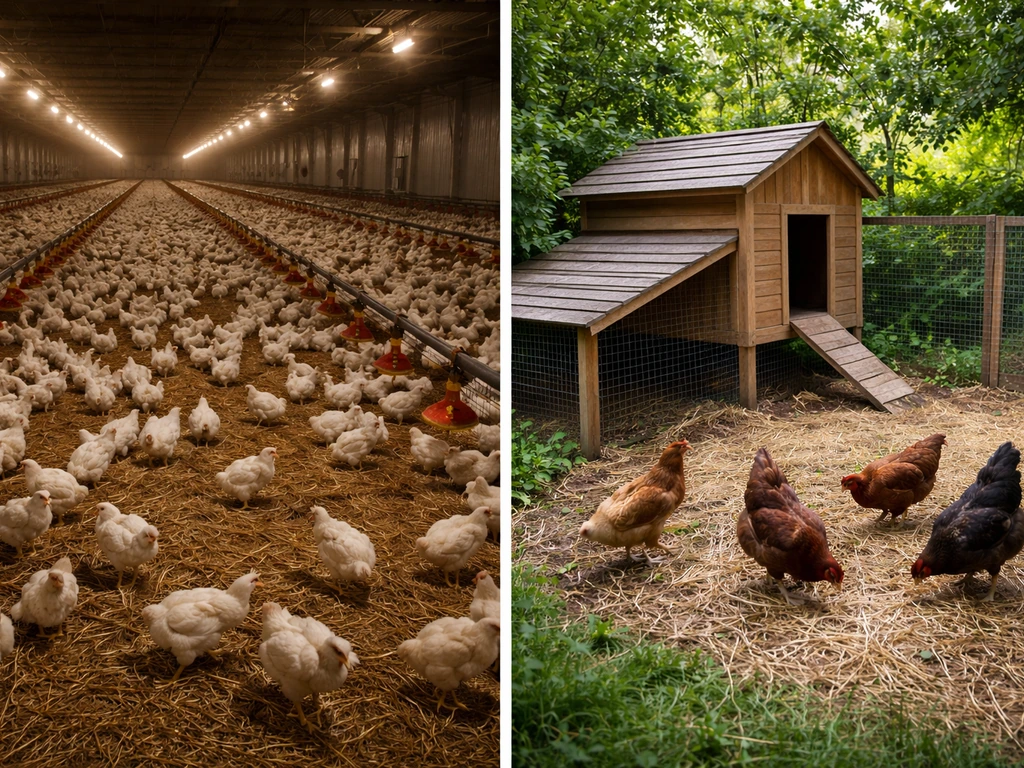
| Factor | KFC Supply Chain | Backyard/Homestead |
|---|---|---|
| Who raises the birds | Independent contract growers under corporate standards | You |
| Flock size | Tens of thousands per barn | 10 to 50 birds typical for beginners |
| Time to market weight | 6 to 7 weeks (commercial breeds) | 8 to 12 weeks (Cornish Cross) or longer for heritage breeds |
| Feed source | Integrator-supplied formulated rations | Commercial meat bird feed you buy and store |
| Housing requirement | Large climate-controlled barns | Small coop or tractor with dry litter management |
| Welfare oversight | Third-party audits, corporate policy | Your own judgment and local regulations |
| Processing | Licensed commercial facility | DIY at home or mobile processor (check local laws) |
| Cost per bird | Highly optimized at scale | Higher per-bird cost, offset by control over feed and welfare |
Want to raise your own meat chickens? Here's where to start
The industrial process sounds complex, but at the backyard level it strips down quickly. The biology is the same, you're just working with smaller numbers and simpler equipment. If you're interested in raising chickens for meat as part of a more self-sufficient setup (the same reason you might be reading about whether your food comes from a contract farm in the first place), here's a practical checklist to get started.
Backyard meat chicken checklist
- Check local regulations first: Many municipalities allow backyard chickens but have restrictions on numbers, slaughter, or roosters. Know the rules before you order chicks.
- Choose the right breed: Cornish Cross is the standard meat breed — fast-growing, efficient, and ready to harvest in 8 to 10 weeks. Heritage breeds take 16 to 20+ weeks but offer more flavor and are hardier. Pick based on your timeline and goals.
- Source chicks from a reputable hatchery: Look for hatcheries that vaccinate for Marek's disease and ship with a health certificate. Order in spring or early summer for easiest brooding conditions.
- Set up a brooder before chicks arrive: A cardboard or plywood box with a heat lamp works fine for small batches. Start the brooder at around 32°C (90°F) at chick level and drop it by about 3°C (5°F) each week. Dry litter (pine shavings work well) is non-negotiable — wet litter causes respiratory disease and ammonia buildup fast.
- Get feed dialed in: Use a starter crumble (20 to 22% protein) for the first three weeks, then switch to a grower/finisher feed. Meat birds eat a lot — budget roughly 4 to 5 kg of feed per kg of live weight gain.
- Water access at all times: Nipple drinkers or bell waterers keep litter dry and reduce disease risk. Check them twice daily.
- Plan your housing move: At 3 to 4 weeks, birds go from brooder to a grow-out coop or chicken tractor. Allow at least 0.1 square metres per bird (more is better). Good airflow without drafts is the key balance.
- Biosecurity basics: Keep your flock isolated from wild birds and other poultry. Wash hands before and after handling birds. Don't share equipment between flocks without cleaning.
- Think through harvest before you start: Processing at home is legal in most rural areas but requires the right tools (a kill cone, scalder, and plucker or the patience to hand-pluck). Many areas have mobile or small-scale USDA-inspected processors — find one before your birds are ready, not after.
- Keep records: Note arrival date, feed consumed, any deaths, and harvest weight. This tells you your actual feed conversion ratio and helps you improve each batch.
Realistic expectations for first-timers
A batch of 10 to 25 Cornish Cross chicks is a manageable first run. Expect to harvest birds at around 2 to 2.5 kg live weight at 8 weeks, yielding roughly a 1.5 kg dressed carcass. Your cost per bird will be higher than store-bought, feed, chick cost, and processing add up. But you control the feed quality, the stocking density, and the welfare conditions, which is exactly what most people raising their own birds care about. The first batch will have a learning curve. The second will be much smoother.
This also connects to a broader question worth thinking about: is chicken a food you can produce at home, like a vegetable or a grain? You might also wonder whether tofu is a food you can grow at home, but it depends heavily on the crops and processing involved is chicken a food you can produce at home.
Peanuts are also a food crop people can grow at home if the soil and climate are right peanut is grow food. Yes, with real constraints. It needs more infrastructure than growing tomatoes, and the harvest step is a genuine barrier for some people. But it's absolutely achievable on a small homestead or even a suburban backyard where regulations permit.
Understanding how industrial producers like KFC's supply chain farmers do it at scale actually helps you understand the core principles, heat management, feed quality, dry litter, biosecurity, that matter just as much at 20 birds as at 20,000. That same idea of proper growing practices, ventilation, and feed management is what makes or breaks chicken raised for meat.
FAQ
Does KFC own the farms where the chickens are raised?
No. KFC does not own the farms. The birds are raised on independent farms operated by suppliers or contract growers, while KFC (and Yum!) sets the welfare and sourcing requirements and audits compliance at the supplier level.
Who actually provides the chicks and feed in the contract farming system KFC relies on?
In many contract farming arrangements, an integrator (often a large processor) supplies the day-old chicks and provides feed plus technical guidance. The grower typically supplies the land, barns, labor, and utilities, and gets paid based on performance like feed conversion.
If KFC does not raise chickens, can I still trace my KFC chicken back to a farm?
Sometimes, depending on country and the specific brand or labeling program, traceability can be limited to supplier batches rather than named farms. KFC does require traceability through its supply chain, but it does not generally publish a public list of individual farm names.
Does “locally sourced” mean the chickens are raised in the same country where KFC sells them?
It usually means the supply chain originates within that country, but the exact meaning can vary (for example, whether hatcheries, feed ingredients, and processors are also within the country). If you need certainty, look for the specific program wording used for your region and country.
Does KFC require antibiotics or allow antibiotic use in their chicken supply?
KFC’s supplier expectations include antimicrobial stewardship commitments, and those policies typically address when antibiotics can be used and how they are managed. However, the details of antibiotic restrictions can vary by jurisdiction, so the best check is the policy language that applies to your region.
Are welfare standards the same in every country KFC operates in?
KFC aims for global baseline welfare rules, but local implementation can differ due to regulations and supply structure. The company typically uses audits and recognized assurance schemes, so the exact certification or measurement approach may vary.
What does “independent welfare audits” usually involve?
They commonly evaluate factors like housing conditions, litter management, bird health indicators, and stocking density. Audits also typically verify that suppliers are meeting contractual welfare specs, not just that they have written policies.
Does KFC use the same supply model for every chicken item on the menu?
The core chicken supply model is similar, but product specifications can differ. For example, cut types, processing requirements, and sourcing rules may vary between products, so ingredient and processing details may come from different processors within KFC’s approved network.
Why can’t KFC just list every chicken farm it uses?
Most large food suppliers protect proprietary supplier relationships and manage a large number of growers and contract farms that can change over time. As a result, public disclosure usually focuses on standards, auditing, and traceability systems rather than a comprehensive farm-by-farm roster.
If I want to compare welfare or sourcing claims, what should I look for beyond whether KFC “grows” chicken?
Look for concrete requirements such as maximum stocking density limits, third-party assurance participation, traceability controls (like batch and supplier codes), and antimicrobial stewardship details. These are usually more informative than broad claims about sourcing or origin alone.
Next Article
Can We Grow Egg in Plants? Learn How to Get Eggs
Eggs arent grown on plants. Learn how to raise egg-laying hens, plan setup, space, feed, and when eggs arrive.