The best grains to grow for chickens are corn, wheat, sunflowers, oats, and millet. These five hit the sweet spot of good nutrition, reliable backyard yields, and easy feeding without a lot of processing. Corn gives you the most energy per acre, wheat is the closest thing to a complete grain feed, sunflowers add healthy fats and are dead simple to grow, oats work great in cooler climates, and millet is your best bet if you have a short season or limited space. If you only grow one thing, grow corn or wheat. If you have room for two, add sunflowers.
Best Grains to Grow for Chickens: What to Plant and When

Marcus Hendrick
26 Apr 2026
What "best" actually means for your chickens and your yard
Not all grains are created equal when it comes to chickens. The word "best" has to account for two separate things: nutritional usability and practical growing performance at small scale. A grain might grow well in your yard but give your chickens very little usable energy. Or it might be nutritionally excellent but too finicky to grow in your climate without commercial equipment.
On the nutrition side, poultry digest cereal grains differently depending on what's in them. Grains high in non-starch polysaccharides (NSPs), which are types of fiber that chickens can't break down, reduce how much energy and protein chickens actually absorb. Barley, for example, contains beta-glucans that act as an antinutritional factor in poultry diets, meaning chickens can't digest barley's carbohydrates as efficiently as corn. Rye is even more problematic: despite having a nutrient profile similar to wheat and corn on paper, it performs very poorly in poultry diets and has a well-documented history of depressing digestion and feed efficiency. Neither barley nor rye belongs at the top of your list for chickens specifically.
On the growing side, "best" depends on your climate zone, how much land you're working with, and whether you want to hand-harvest or can manage a more systematic approach. A grain that needs 120 frost-free days isn't useful if you're in zone 4 with a short season. I'd also factor in whether you need to dry and store the grain or if you can feed it fresh, since that affects how much infrastructure you need. Your goal and your local conditions together define what "best" means for your specific setup.
The top grains to grow for chickens (with honest pros and cons)
Corn
Corn is the workhorse of homegrown chicken feed. It's high in energy (starch), easy to harvest by hand, and dries right on the stalk if you leave it long enough. Chickens love it. An open-pollinated dent corn like Reid's Yellow Dent or Bloody Butcher can yield 100 to 200 pounds of dry grain from a 1,000-square-foot plot in a good season, depending on your soil and water. The main downsides: corn needs warm temperatures (at least 60 days above 50°F soil temp to germinate reliably), it takes 90 to 120 days to mature, and it has relatively low protein, around 8 to 9 percent. It's an energy grain, not a complete feed on its own.
Wheat
Wheat is probably the most nutritionally balanced grain you can grow for chickens. It runs about 12 to 15 percent protein, digests well, and can be fed whole without any grinding or processing. Winter wheat is especially practical for small homesteads because you plant it in fall, it overwinters, and you harvest in early summer before the heat of gardening season fully kicks in. Spring wheat works too if you're in a colder zone. Expect around 30 to 50 pounds of grain per 100 square feet of decent ground. Wheat does need well-drained soil and struggles in waterlogged conditions, but it's forgiving about fertility compared to corn.
Sunflowers
Sunflowers are the easiest grain-type crop you can grow for chickens, and they pull serious weight nutritionally. Black oil sunflower seeds are about 26 percent fat and 17 percent protein, making them an excellent supplement for feather condition and cold-weather energy. One large sunflower head can hold 1,000 or more seeds. They grow in almost any well-drained soil, tolerate drought better than any grain on this list, and you can let the birds eat directly from the hanging heads if you want zero processing hassle. The only catch is they're more of a supplement than a staple, since feeding too much fat-dense feed throws off the overall diet balance.
Oats
Oats are a great choice for cooler climates and early spring or fall planting windows. They do well in zones 3 through 7, tolerate wet soils better than wheat, and mature faster than corn. Hulled oats run about 11 to 12 percent protein, and chickens handle them well whole or sprouted. The downside is that oats have hulls, which add bulk and reduce the energy density compared to corn or wheat. They're best fed as part of a mix rather than the sole grain. Oats also lodge (fall over) easily in wind and rain if grown too densely, so don't plant them as thick as you would wheat.
Millet
Millet is underused by home growers and it shouldn't be. Pearl millet and proso millet both mature in 60 to 75 days, making them ideal for short growing seasons or a second planting after a spring crop comes out. They're drought tolerant, grow in poor soils, and the small seeds are easy for chickens to eat whole. Protein runs around 10 to 12 percent. Millet is also great for allowing chickens to forage directly in the planted area once it's dry and standing. The yield per square foot is lower than corn, but the speed and flexibility make it worth including in any grain rotation.
| Grain | Protein % | Key Strength | Main Limitation | Best Climate |
|---|---|---|---|---|
| Corn | 8-9% | Highest energy, great yields | Needs long warm season | Zones 4-10 |
| Wheat (winter) | 12-15% | Balanced nutrition, stores well | Needs well-drained soil | Zones 4-9 |
| Sunflowers | 17% + high fat | Easy to grow, rich in fat and protein | Supplement only, not a staple | Zones 4-10 |
| Oats | 11-12% | Cool-season, tolerates wet soil | Lower energy, prone to lodging | Zones 3-7 |
| Millet | 10-12% | Fast-maturing, drought tolerant | Lower yield per sq ft | Zones 4-10 |
When to plant, how to prep your soil, and how to sow
Soil prep basics
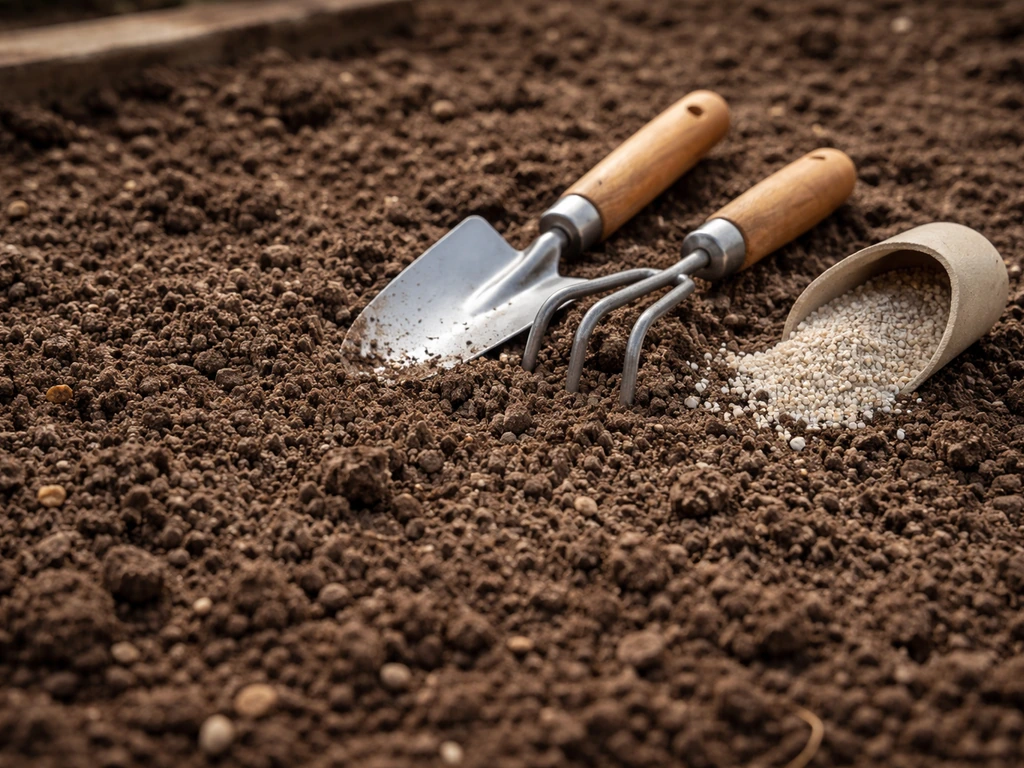
All five grains listed above grow best in loose, well-drained soil with a pH between 6.0 and 7.0. You don't need perfect soil, but you do need soil that isn't compacted or waterlogged. Before planting, loosen the top 4 to 6 inches with a broadfork or tiller, pull any obvious weeds, and work in a light layer of compost if your soil is poor. Grains are not heavy feeders compared to vegetables, but they do respond to nitrogen. If your soil hasn't been amended in a few years, broadcast a balanced organic fertilizer (something like 5-5-5) at the recommended rate and rake it in before seeding.
Planting timing and seeding methods
- Corn: Direct sow after last frost when soil reaches 60°F, typically late April to late May depending on zone. Plant seeds 1 inch deep, 6 to 12 inches apart in rows 24 to 36 inches apart. Block planting (rather than single rows) improves pollination.
- Winter wheat: Sow in fall, 4 to 6 weeks before your first hard frost (usually September to October). Broadcast or drill seed at roughly 1 pound per 100 square feet, rake lightly to cover to about 1 to 1.5 inch depth. Harvest the following June or July.
- Spring wheat: Plant as soon as soil can be worked in spring, usually 6 weeks before last frost. Same seeding rate as winter wheat.
- Sunflowers: Direct sow after last frost, 1 inch deep, 6 inches apart (thin to 12 to 18 inches). Or start indoors 2 to 3 weeks early and transplant. For a seed crop, closer spacing reduces head size but increases total seed yield per square foot.
- Oats: Sow in early spring (or fall in mild climates), broadcasting at about 2 ounces per 10 square feet. Rake in lightly. They germinate in cool soil (40°F minimum) and tolerate light frost at the seedling stage.
- Millet: Sow after last frost when soil is warm (65°F minimum). Broadcast at a light rate and rake in to 0.5 inch depth. Millet seeds are tiny and will fail if planted too deep.
Broadcasting (scattering seed by hand and raking it in) works fine for all the small-seeded grains: wheat, oats, and millet. Corn and sunflowers are large enough to place individually, which is worth the extra time since each seed represents a plant. Keep the seedbed moist until germination, then back off on watering as the plants establish. Most cereal grains are surprisingly drought tolerant once they're past the seedling stage.
How to harvest, dry, and store your grain
Knowing when to harvest
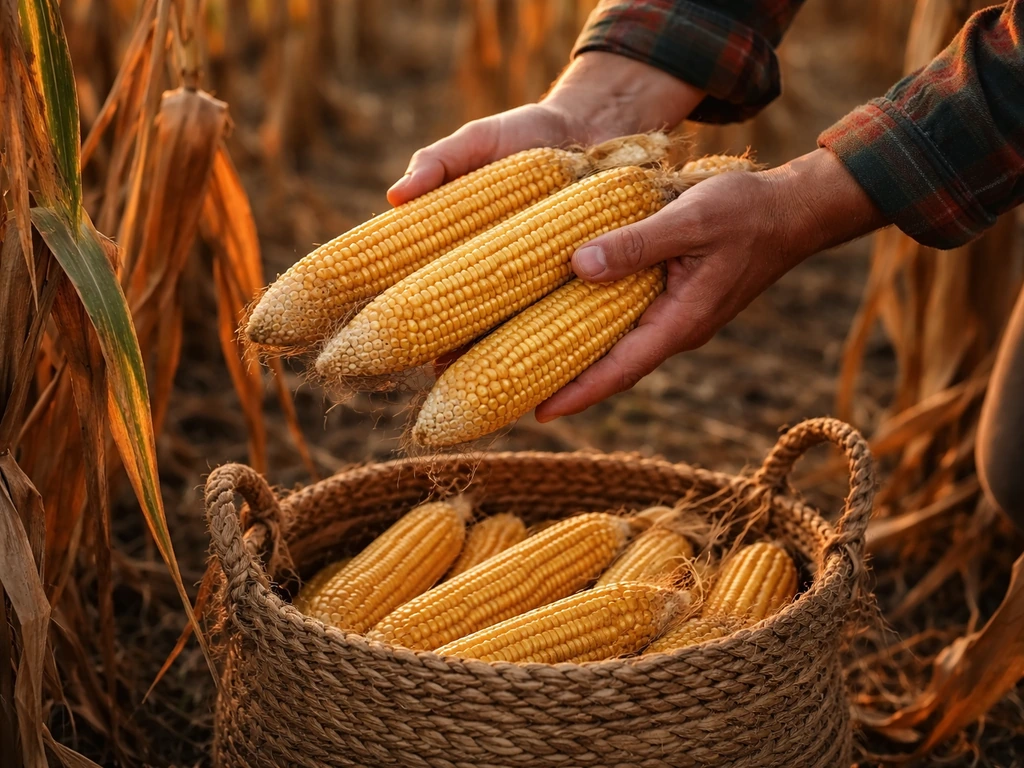
The timing cue for all these grains is similar: you want the plant to be past peak green and the seeds to have hardened and dried down on the stalk as much as possible before you cut. For wheat and oats, the stalks will turn golden and the seed heads will feel firm and dry. For corn, let the husks go papery and the kernels dent (hence the term dent corn). Sunflowers are ready when the back of the head turns yellow to brown and the seeds feel firm. Millet heads should be fully bronze or tan with seeds that don't crush easily between your fingers.
Drying after harvest
Unless you get a long dry fall, you'll almost certainly need to finish-dry your grain after harvest. The target moisture content for safe storage is below 13 percent for wheat, oats, and millet, and below 14 percent for corn. University of Minnesota Extension provides [aeration and storage guidance alongside moisture-content tables](https://extension. umn.
edu/corn-harvest/managing-stored-grain-aeration) to help prevent storage losses in corn and other grains. You can test this roughly by biting a kernel: if it's hard and doesn't dent from your tooth, it's close to dry enough. Spread harvested grain in a single layer on screens or tarps in a warm, dry space with good airflow. Turn it daily for a week or two.
Corn on the cob can be hung in mesh bags or a well-ventilated crib. Sunflower heads can hang whole until fully dry, then you rub the seeds off by hand. Don't rush this step. Grain stored too wet will mold within weeks.
Storage
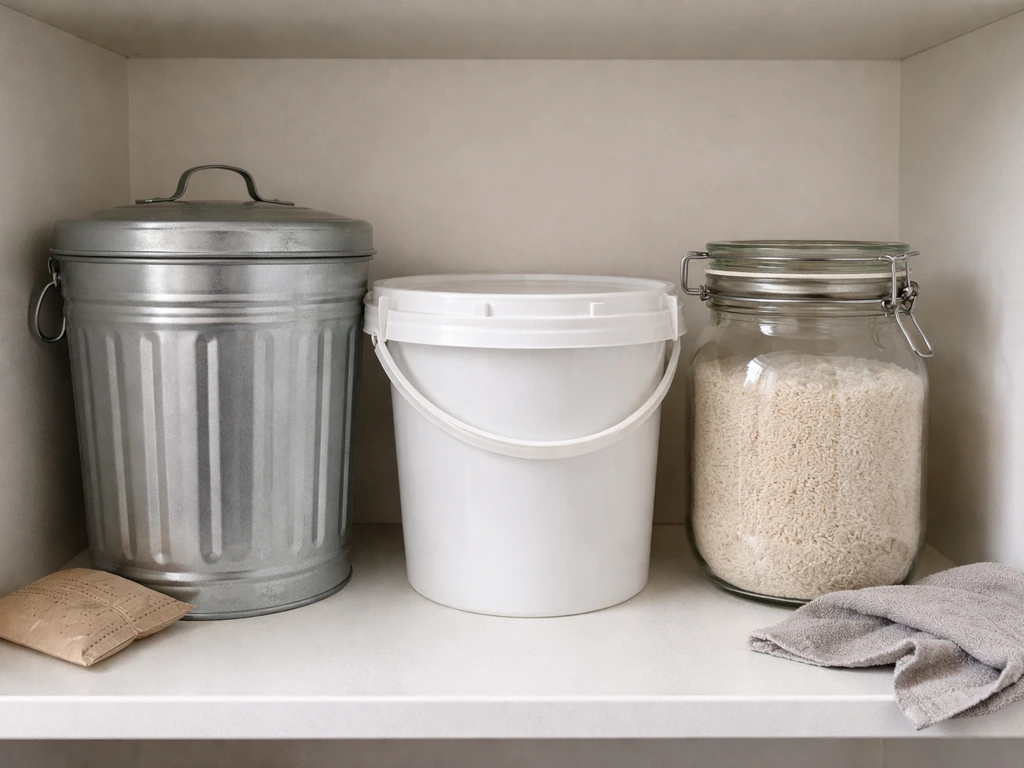
Once dry, store grain in airtight containers: metal garbage cans, food-grade plastic buckets with tight lids, or glass jars for smaller quantities. The enemies of stored grain are moisture, heat, oxygen, and rodents. Keep containers off the ground in a cool, dark location. Properly dried grain stored in metal containers will stay usable for 12 to 24 months easily. Add a few dried bay leaves to each container as a natural insect deterrent. Check your stores every month or two, especially in your first year, and look for any signs of mold, clumping, or pest activity.
How to actually feed your grain to chickens (fresh vs dried and whole)
You have more options here than most people realize, and the simplest method is usually the best one. Whole, dry grain is the most practical way to feed most grains: just scatter it on the ground or put it in a feeder. Chickens handle whole wheat, whole corn, millet, and whole sunflower seeds without any processing. Oats can be fed whole too, though the hull makes them slightly less digestible than other grains.
Sprouting is worth trying and genuinely increases the nutritional value of the grain. Rinse seeds, soak overnight, then spread in a tray and rinse twice daily for 3 to 5 days until you get 0.5 to 1 inch sprouts. Sprouted grain is more digestible, higher in vitamins, and chickens tend to eat it enthusiastically. It's a great winter option when fresh greens are scarce. The downside is it requires daily attention and the sprouted grain needs to be fed fresh within a day or two.
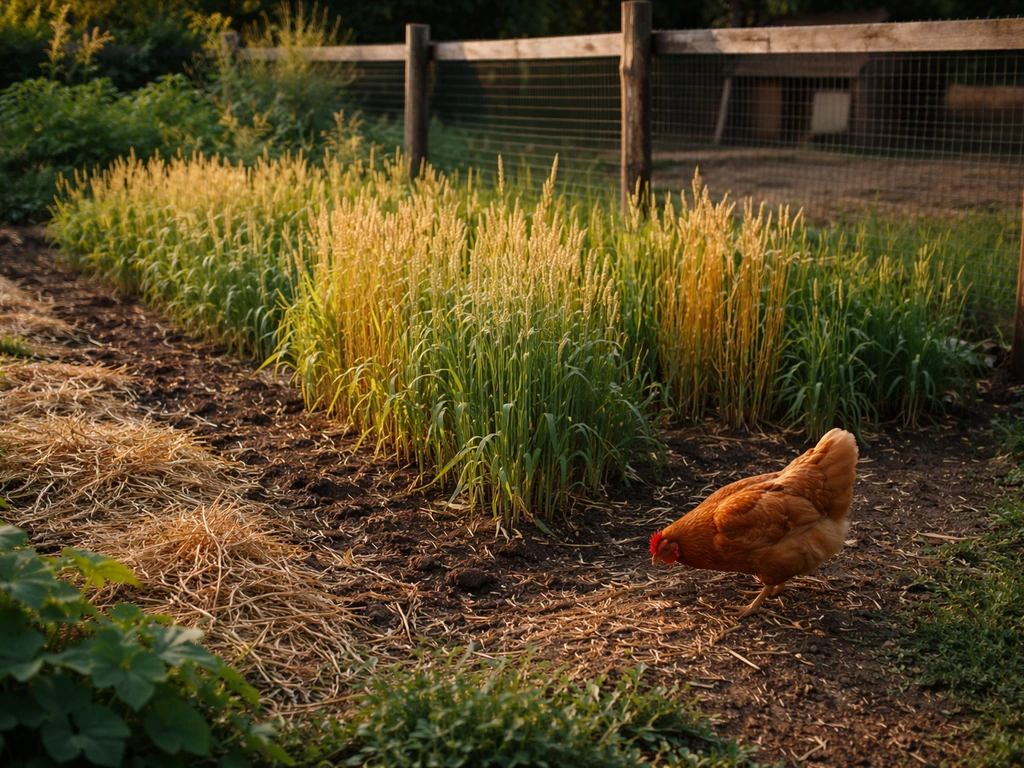
You can also let chickens forage directly in a grain planting. Once millet or wheat heads have dried down, you can let birds into that area to scratch and peck. This is the lowest-effort "harvest" method and gives the birds enrichment and exercise at the same time. Just be ready for the grain patch to get torn up quickly, and don't do this before the grain is dry or you'll end up with a muddy mess.
If you're interested in what else you can grow specifically for foraging, the topic of what to grow for chickens more broadly covers good companion plants and greens to pair with your grain crops. If you want more specific ideas, see what to grow for chickens for extra companion plants and forage options. If you want a bigger menu of options beyond grains, check out what to grow for chicken feed for more crops and foraging ideas.
One important note: homegrown grain supplements commercial feed, it doesn't replace it unless you've built a fully balanced ration with protein, calcium, and other nutrients accounted for. For most backyard chicken keepers, using homegrown grain as 20 to 50 percent of the diet while keeping commercial layer pellets available covers your bases without risking nutritional deficiencies.
Common mistakes and how to fix them
Poor germination
The most common cause of poor germination is planting into cold or waterlogged soil. Millet especially hates cold and wet conditions and will rot in the ground before it sprouts. Check soil temperature with a cheap thermometer before you plant warm-season grains. If you're getting patchy germination on wheat or oats, the seed was probably buried too deep or the seedbed was too crusted on top. Rake the surface before sowing and aim for light, even coverage.
Weed competition
Weeds are the biggest challenge with broadcast-sown grains. The grain and the weeds germinate at the same time, and if you're broadcasting into a weedy bed, the weeds often win. Prep your bed thoroughly before planting, let a flush of weeds germinate, hoe them off shallowly (don't till deep or you'll bring up more weed seeds), then broadcast your grain. Once your grain is 4 to 6 inches tall, it will start to shade out competition. Avoid over-fertilizing with nitrogen early because it encourages weedy growth as much as grain growth.
Spoilage in storage
Mold is almost always a moisture problem. If you're finding clumped or musty grain in storage, it wasn't dry enough before you put it in the container. The fix is to dry it more aggressively next time, and to spread any borderline grain out again immediately if you notice moisture in storage. Don't feed moldy grain to chickens. Some molds produce mycotoxins that cause serious health issues. When in doubt, compost it and dry your next batch more carefully.
Growing barley or rye instead of better options
If you've been growing barley or rye because they seemed like obvious grain choices, it's worth reconsidering. Barley's beta-glucans limit how well chickens digest its carbohydrates, reducing the energy they actually get from it. Rye has an even worse track record in poultry diets, with documented negative effects on digestion and nutrient absorption. Neither is a disaster in small amounts, but if you're intentionally growing grain for chickens, your space and effort is better directed toward wheat, corn, or oats.
Your quick-start plan and cost/yield checklist
Here's how to think about your first season growing grain for chickens. Pick one or two grains based on your climate and available space, start small (a 100 to 300 square foot plot), and treat it as a learning year. You'll quickly figure out what your soil and conditions support, and you can scale up in year two.
- Choose your grain: Corn or winter wheat if you want the most useful single crop. Add sunflowers as a second crop with almost no extra effort.
- Size your plot: A 200-square-foot plot of wheat can yield 60 to 100 pounds of dry grain. At roughly 0.25 pounds per chicken per day supplemental grain, that's a meaningful contribution to a flock of 4 to 6 birds.
- Source your seed: Look for open-pollinated (non-hybrid) varieties so you can save seed year to year. Corn: Reid's Yellow Dent or Bloody Butcher. Wheat: any regionally adapted hard red winter wheat from a local feed store or seed company. Sunflowers: Black Oil Sunflower is the standard. Oats and millet: check local farm supply stores or online grain seed suppliers.
- Estimate your cost: Grain seed runs $2 to $5 per pound depending on variety, and a small plot needs very little seed. Your real investment is time and soil prep, not seed cost.
- Plant at the right time: Use your last frost date as your anchor. Corn and millet go in after last frost. Winter wheat goes in 4 to 6 weeks before first fall frost. Oats go in as early as soil can be worked in spring.
- Plan your drying setup before harvest: Have screens, containers, and storage space ready before the grain comes in. This is the step most first-timers skip and then scramble on.
- Feed as a supplement, not a replacement: Start by replacing 20 to 30 percent of commercial feed with your homegrown grain and observe your birds' condition and egg production.
Growing grain for chickens is genuinely achievable at backyard scale, and once you've done it once, the process clicks into place quickly. It's also one of the more satisfying parts of moving toward a self-sufficient food system: you grow it, they eat it, and you see the direct connection between your garden and your flock. That loop is exactly what you are aiming for: what you feed will grow into better performance and more homegrown food over time.
If you want to build on this, pairing grain crops with a selection of greens and forage plants rounds out what your chickens get from the garden even further. You can also add the best greens to grow for chickens to boost variety and help fill out their diet between grain feedings.
FAQ
Can I replace my store-bought chicken feed with homegrown grains?
If you grow grains but your chickens are on layer pellets, use the grain as an add-on not the base. A practical approach is to limit homegrown grain to about 20 to 50 percent of total daily calories, keep pellets available free-choice, and watch body condition and egg output for 2 to 3 weeks to confirm the balance is working.
How should I handle and store sprouted grain, so it does not spoil?
Yes, but plan differently. For sprouted grain, feed immediately after the final rinse because it spoils quickly, and remove leftovers within hours (not days). Only sprout what you can use the same day, and keep your sprouts clean to reduce spoilage risks.
Do I need to grind homegrown grain for chickens to digest it well?
Whole dried corn, wheat, millet, and sunflower seeds are usually fine without grinding. However, if birds leave grain behind or droop in appetite, chop or crack it and add moisture (for example, mix with slightly damp forage) to improve palatability and reduce sorting behavior.
What harvest maturity signs should I rely on if I do not have a moisture meter?
If you plan to harvest by hand and feed whole, choose open-pollinated varieties and leave plenty of time for full dry-down on the stalk. For corn, you need kernels to dent and husks to turn papery, and for small grains you want seed heads to feel firm and dry, not just “past green.”
What should I do if I suspect my grain is not quite dry enough before storage?
Your storage target is based on safe drying, but the biggest practical difference is workflow. Borderline-wet grain should be re-dried by spreading in a thin layer with airflow, then cooled before sealing. If you seal while warm or humid, condensation can form and create mold even if it seemed “close enough.”
How do I prevent pests from stealing my grain before I harvest it?
During the growing season, pigeons, rodents, and insects are usually a bigger threat than the plants themselves. After dry-down, keep birds out of the patch until harvest, harvest promptly, and store grain in sealed metal or tight-lidded containers placed off the ground.
Can I let chickens forage in the grain patch, and how do I avoid turning it into a mud lot?
Yes, but avoid turning chickens onto the patch while it is still wet. Let grain dry down fully, then allow short access windows (for example, a morning) and monitor for muddy ruts and heavy scratching. This keeps them from damaging the ground so much that future sowing becomes difficult.
How much land do I need for the “best grains to grow for chickens” to make a real difference?
Plot size depends on your feeding goal, but starting with 100 to 300 square feet per grain is realistic for a learning year. Use that to compare yields and drying time, then scale. Growing grain successfully is not just yield, it is also harvest effort and storage reliability.
What is the most common fertilizer mistake when growing these grains for chickens?
Typically, less fertilizer is better early. Apply nitrogen only at normal recommended rates, because excess nitrogen encourages lush weed growth that competes with young seedlings. If you see weeds taking over, fix bed prep and seed timing before adding more fertility.
I already planted barley or rye, can I still use them as my main homegrown grain?
Avoid barley and rye if your goal is primarily feed production. They can grow and birds may eat them, but digestion and feed efficiency are usually worse than wheat, corn, or oats. If you already have them planted, treat them as experimental or small-percentage additions, not your main homegrown grain plan.
What are the fastest checks to fix poor germination in my grain bed?
If germination is patchy, look first at soil conditions and seeding depth. Cold or waterlogged soil can cause rot, and crusted or overly deep seeding can prevent emergence. Rake to loosen the surface before sowing, keep coverage light, and warm up planting dates for warm-season grains.
Next Article
What You Feed Will Grow: Practical Garden Inputs to Boost Plants
Turn the proverb into action: feed soil, water, light, and nutrients well while starving weeds, pests, and disease.