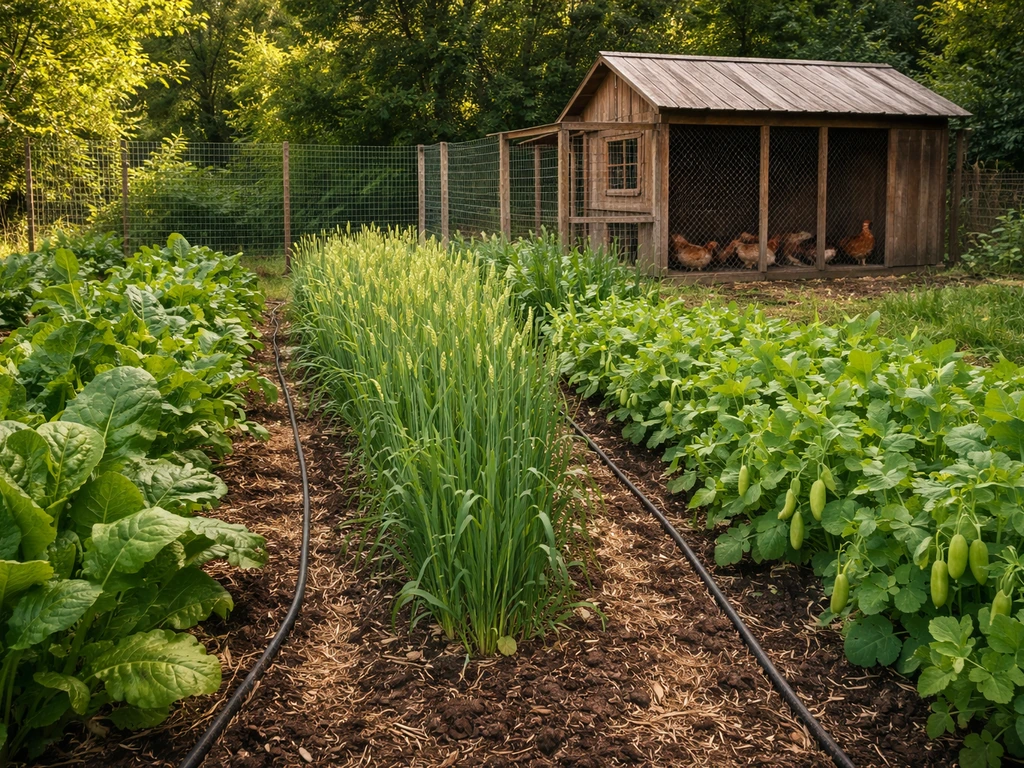
The short answer: grow leafy greens, legumes, sunflowers, corn, squash, and herbs. Those six categories will cover most of what your flock needs from a garden-grown supplement, and you can start with just a few square feet. But the longer answer depends on whether you want fresh forage to keep your birds entertained and healthy, or whether you're trying to seriously offset the feed bill. Both goals are achievable. You just plant a little differently.
What to Grow for Chickens: Best Crops and How to Plant

Marcus Hendrick
18 Apr 2026
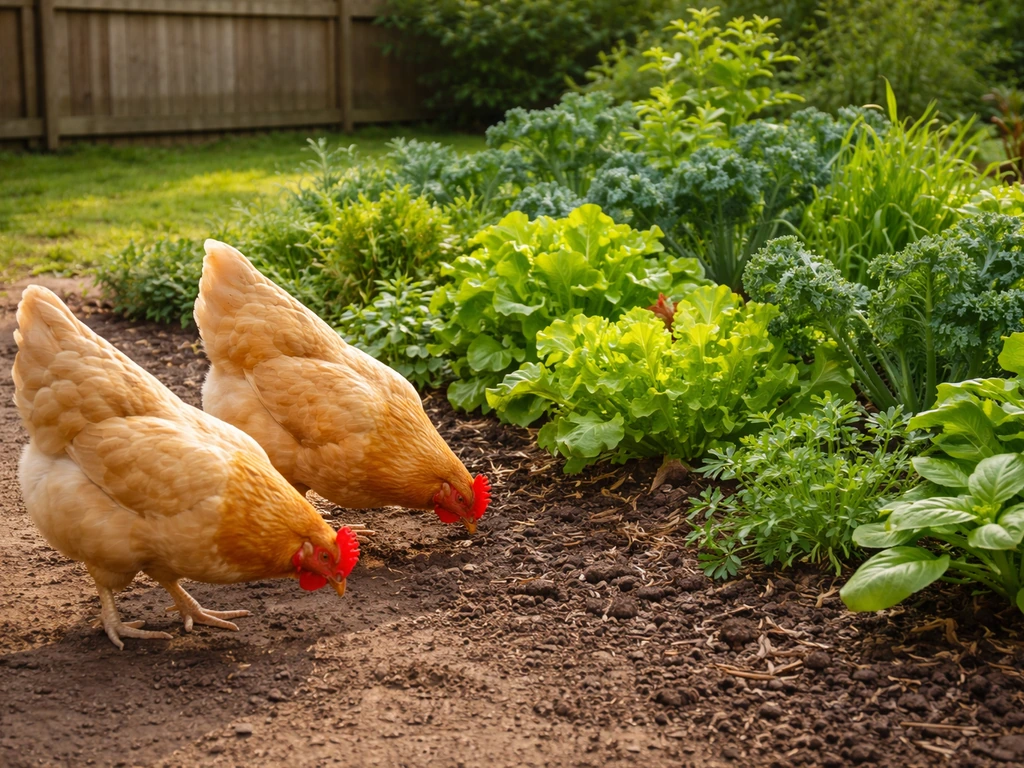
Best edible crops to grow for chicken feed
Most backyard chicken keepers fall into the same trap: they grow a little lettuce, toss in some kitchen scraps, and call it a day. That's fine, but you can do a lot better with just a bit of planning. Think of what what to grow for chicken feed really means in practice: plants that give you a high yield per square foot, hold up to repeated harvest, and actually get eaten. Here's a ranked breakdown by category.
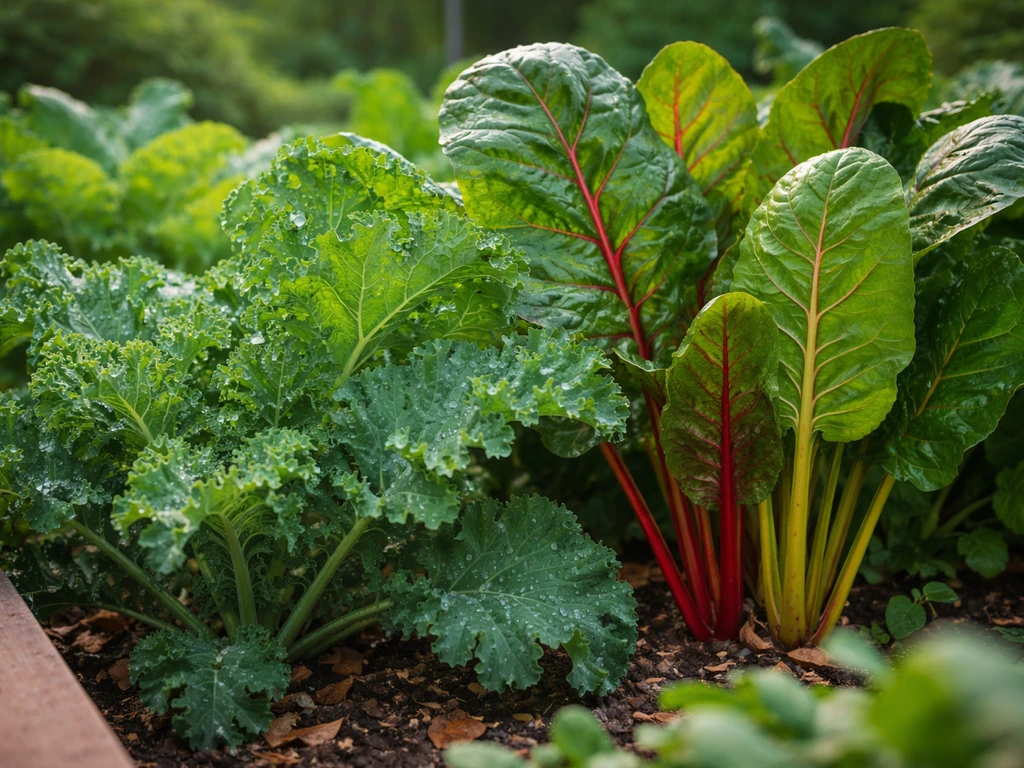
Leafy greens (highest value for daily forage)
Kale, Swiss chard, collards, and spinach are the workhorses. Kale in particular is nearly indestructible once established, regrows fast after cutting, and produces from late winter through early summer in most climates. Hang a bunch upside down in the run and they'll strip it clean. Chickens eating fresh greens show noticeably better yolk color and egg shell quality. Chickweed, lamb's quarters, and purslane also count here, and if you already have them as volunteers in your garden, let them go in the run. These wild greens tend to be nutritionally dense and chickens go after them eagerly.
Legumes and seedlings (protein punch)
Field peas, crimson clover, and cowpeas are your best options for home-grown protein. Crimson clover is especially useful because it fixes nitrogen in the soil while feeding the flock, and a variety like AU-Robin does well in warm-season regions. Peas can be seeded at about 1/2 inch deep and work beautifully in a pea-oat mix for a quick forage patch. Research from University of Wisconsin Extension confirms that mixing peas with oats improves overall forage quality by boosting protein while reducing fiber, making it a smart two-for-one planting. Alfalfa is also excellent but requires soil pH in the 6.6 to 7.2 range and more setup time. Harvest legumes at mid-bloom for the best fiber-to-nutrition ratio, since fiber can spike to 50 percent or higher once plants go to seed and become much less digestible.
Grains and seeds (calorie and energy crops)
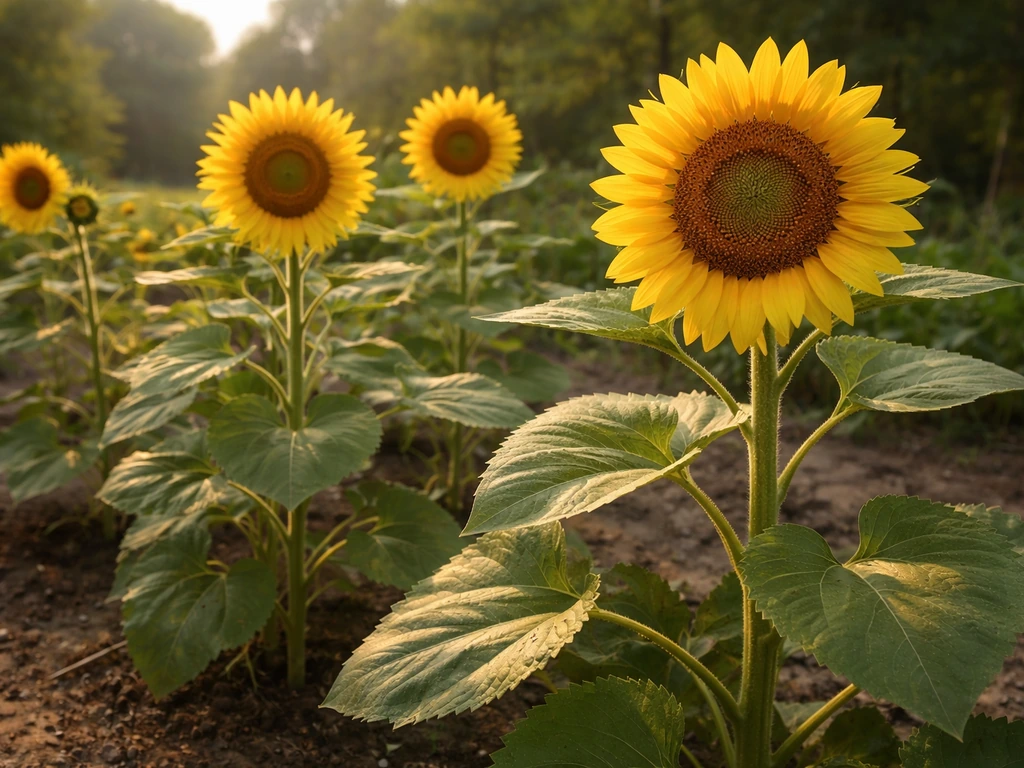
Sunflowers are the easiest grain-style crop for a small plot. Let them dry on the stalk, cut the heads, and either hang them in the run for self-serve eating or store them for winter. Corn is productive but space-hungry. If you have the room, a short row of dent corn grown to maturity, dried on the cob, and rationed through winter is a real cost-saver. Wheat, oats, and barley are all worth growing if you have even a 10x10 bed. Sprouting any of these grains before feeding is a popular option: chickens eat the entire sprout, seed, and roots when you toss them in the run, and the sprouting process boosts nutrient availability.
Roots and tubers (winter feed)
Fodder beets, mangels, turnips, and pumpkins are the unsung heroes of chicken gardening. They store well through fall and winter, they're calorie-dense, and chickens love them. Cut a turnip or pumpkin in half and set it in the run. They'll work at it for hours. Forage turnips planted in late summer (following UMN Extension guidance on cover crop windows) can give you a quick late-season forage crop right when other plants are winding down.
Herbs (health and enrichment)
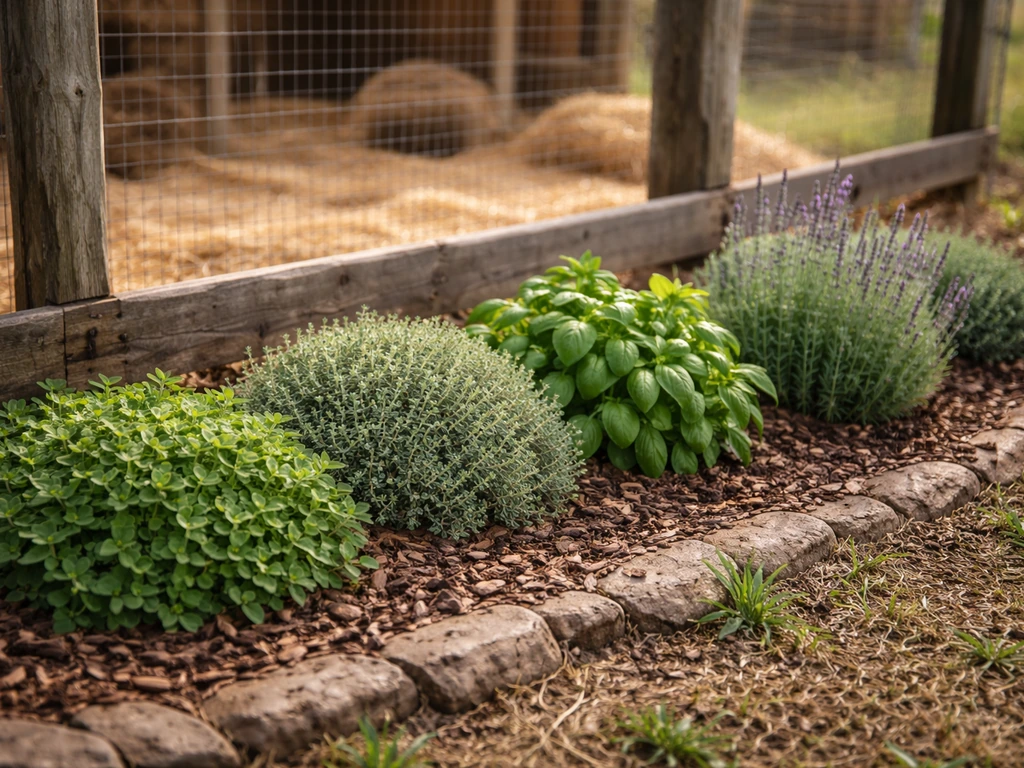
Oregano, thyme, basil, mint, and lavender all have documented antimicrobial and anti-inflammatory properties that support poultry health. Tuck these around the coop perimeter or in containers near the run. They're mostly used as enrichment and minor health supplements rather than calorie sources, but they're easy to grow, require almost no space, and most chickens eat them readily.
Garden vs coop-yard growing options
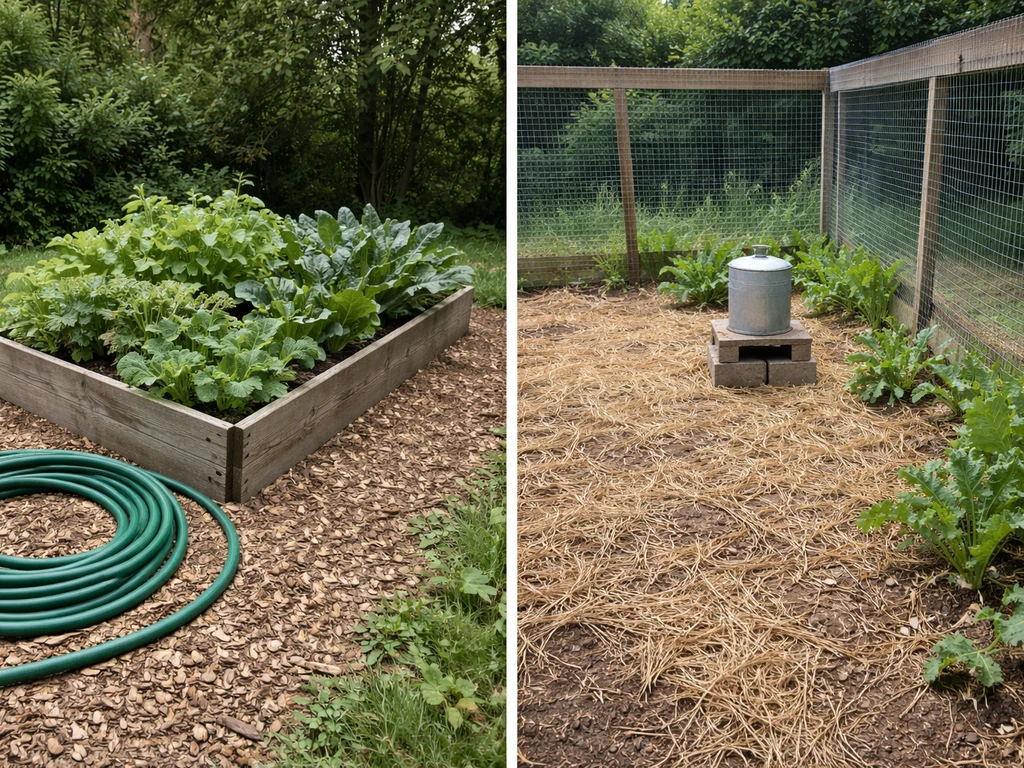
You have two main setups: growing forage in a dedicated garden bed and harvesting it to bring to the coop, or planting directly inside or around the chicken run so birds can self-serve. Both work, but they suit different situations.
| Approach | Best For | Key Advantage | Key Drawback |
|---|---|---|---|
| Dedicated garden bed | Any flock size; limited run space | Plants survive and regrow; you control quantity | Requires harvesting and hauling to coop |
| Coop-yard planting strip | Small flocks; runs with divided sections | Zero labor after planting; birds self-serve | Birds can overgraze and kill plants fast |
| Rotational forage strips | Medium to large flocks; more yard space | Sustainable regrowth; mimics pasture rotation | Needs planning and fencing to section off strips |
| Containers near the run | Urban keepers; very small spaces | Flexible, moveable, no soil prep needed | Limited yield; needs more frequent watering |
If your run is large enough, the rotational strip approach is by far the most productive long-term. Divide the run-adjacent yard into two or three sections, let birds access one at a time, and rotate every two to three weeks. The sections rest and regrow while the birds graze the active strip. This mirrors the same principle behind strip grazing in pasture management: after a strip is grazed, the first paddock is already recovering and ready to cycle back into rotation.
How to choose what to grow (climate, space, seasons, coop needs)
Before you order seeds, answer four questions: What's your climate zone? How much space do you have? What seasons are you trying to cover? And what's the main goal, fresh forage, supplementing store feed, or replacing a meaningful chunk of it?
Climate drives everything. In zones 7 and warmer, you can grow kale, chard, and clover almost year-round. In zones 4 to 6, you're looking at a hard frost window that limits outdoor forage from November through March, which means you need to either grow cold-hardy crops in a cold frame or plan a dried and stored grain supply for winter. Winter cereal rye is one of the most reliable cold-hardy forage crops and can be seeded in early fall right up until the first hard freeze.
Space matters more than people expect. A single laying hen eats roughly a quarter pound of feed per day. If you want home-grown plants to contribute even 10 to 20 percent of that, you need consistent, high-yield plantings. A 4x8 bed of kale won't cut it for a flock of ten. Plan on at least one dedicated 100-square-foot bed per five birds if greens are your main forage crop, and more if you want grains in the mix.
Season sequencing is the real skill here. Think about what you can grow to feed your chickens at each point in the year: cool-season greens in spring and fall, heat-loving corn and sunflowers in summer, stored roots and dried grains through winter. Layer your planting calendar to avoid gaps.
And be honest about your goal. Pastured poultry typically get only 5 to 20 percent of their diet from forage, depending on quality and bird age. Even a well-managed forage garden is a supplement, not a replacement for complete feed. As University of Maryland Extension and UGA Extension both emphasize, formulating nutritionally complete poultry feed from scratch is genuinely complex, and scratch or home-grown treats should stay around 10 percent of the birds' daily diet. University of Nebraska, Lincoln Extension likewise advises that scratch-cracked corn and oats should be used only as treats, not as complete nutrition about 10 percent of the birds' daily diet. Your garden fills the gap; it doesn't close it entirely unless you're at homestead scale with serious grain acreage.
Planting, soil, and care for high-yield chicken forage
Most chicken forage crops aren't fussy, but a few basics make a big difference in yield. Start with a soil test if you haven't done one recently. Legumes especially need the right pH to thrive: alfalfa wants 6.6 to 7.2, while most clovers and field peas do fine in the 6.0 to 7.0 range. If you're skipping a soil test, at minimum work in a couple inches of compost and make sure the bed drains well. Waterlogged soil produces stunted plants and invites root rot.
For a pea-grain forage mix, seed field peas at about 50 pounds per acre (or scale that down to roughly one ounce per 10-foot row) and mix in oats or barley at a 2:3 ratio by weight. Seed depth should be about a half inch. This combo germinates fast, establishes a dense stand that outcompetes weeds, and gives you a harvest with higher protein and lower fiber than grain alone.
For greens, direct-seed or transplant kale and chard in spring and again in late summer for a fall crop. Space kale plants 18 inches apart for maximum leaf production. If you're growing sunflowers for seed, 12-inch spacing in a block planting gives you more heads per square foot than a single row.
Maintenance is mostly watering and cutting back to encourage regrowth. Kale and chard get more productive the more you harvest them, as long as you leave the growing crown intact. Legumes will give you one main harvest and then decline, so succession planting every three to four weeks keeps the supply steady.
Harvesting, storage, and feeding methods (fresh vs dried)
Fresh is always first choice when available. Chickens prefer it, the nutritional value is highest, and it takes no extra work beyond cutting and tossing into the run. The timing of harvest matters more than most people realize: greens and legumes harvested at mid-bloom or just before have significantly lower fiber content than plants harvested later. A chicken eating young, leafy kale gets a very different nutritional profile than one eating tough, mature stems. This is the same principle that makes the quality of what you feed directly shape what you get in return, whether in egg yolk color, shell strength, or bird vitality. What you feed will grow applies just as much to your flock as it does to your soil.
For storage, your main options are drying, freezing, and fermenting. Dried corn, sunflower heads, and grain can be stored in a cool, dry place in sealed buckets for six to twelve months. Roots like turnips and fodder beets store well in a root cellar or cool garage through winter. Leafy greens can be dried or frozen, though fresh is far better and chickens often won't touch dried greens enthusiastically.
Sprouting is worth doing if you have grain to spare. It boosts nutritional availability and chickens love fresh sprouts. Keep your sprouting setup very clean: mold can develop quickly in warm, damp conditions, and moldy sprouts should never be fed to chickens. Rinse sprouts twice daily, keep the container in good airflow, and watch for any off smells or visible fuzz. The sprouting process itself is simple, but safe sanitation and clean seed sourcing are non-negotiable.
Safe feeding also means knowing what not to grow. Crotalaria species, sometimes mistaken for clovers or used as tropical cover crops, contain pyrrolizidine alkaloids that are toxic to poultry. Young seedlings of some plants carry higher toxin concentrations than mature plants, and the entire plant can be dangerous in certain species. When in doubt about a volunteer or unfamiliar plant in or near the run, don't let the birds eat it until you've confirmed it's safe.
Companion planting and rotating beds to keep forage productive
The garden beds you grow chicken forage in will exhaust themselves fast if you don't manage them with rotation and soil-building in mind. The most practical approach is to treat companion planting and bed rotation as one continuous strategy.
Start by including legumes in every planting rotation. Clovers, field peas, and cowpeas fix atmospheric nitrogen through their root symbiosis with Rhizobium bacteria, which then becomes available to whatever you plant next. A bed that grew a crimson clover forage crop this spring is already feeding the kale or chard you plant in the same spot this fall. That nitrogen cycle is free fertility, and it's one of the most useful tools in a chicken-garden system.
For companion planting within the beds, sunflowers and corn tolerate growing alongside nitrogen-fixing legumes and benefit from the improved soil. Squash as a living mulch under taller plants keeps moisture in, reduces weeds, and the squash itself feeds the birds in fall. Herbs like oregano and thyme can be grown in border rows or containers to avoid crowding out the higher-yield crops.
Rotate beds on a two to three year cycle: legume forage (clover, peas) in year one, leafy greens (kale, chard, spinach) in year two using the nitrogen left behind, and root crops (turnips, beets) in year three. This prevents pest and disease buildup, keeps soil fertility cycling naturally, and gives each bed a different job each season. If you're working with limited space, even rotating two beds keeps the system healthier than planting the same crop in the same spot repeatedly.
For the coop-yard rotation specifically, fence off sections and let them rest for at least three weeks between grazing sessions. Overgrazing kills the root systems of even hardy forage plants within days. A rested section with good regrowth is far more productive over a whole season than a stripped section that never recovers.
Simple planning: quantity, budgeting, and getting started today
Here's a grounded starting point for a small flock of six to eight birds. This won't replace commercial feed, but it can realistically cover 15 to 25 percent of their diet through the growing season and reduce your feed bill noticeably.
- One 4x8 bed of kale and chard: plant 8 to 10 plants now, harvest outer leaves every two weeks, expect continuous production for four to six months
- One 4x8 bed of pea-oat mix: seed 2 ounces of field peas plus 1.5 ounces of oats, harvest at mid-bloom in about 60 to 70 days
- 6 to 8 sunflower plants along a fence row: plant in May, harvest dried heads in September and October, store for winter
- A half-dozen squash or pumpkin plants: harvest in fall, store whole in a cool spot, feed halved through winter
- One container or border row of mixed herbs: oregano, thyme, mint; low maintenance, harvest as needed
Seed costs for this setup run roughly 15 to 30 dollars total. At current laying-hen feed prices of around 25 to 35 dollars per 50-pound bag, even a modest 15 percent reduction in feed consumption over a six-month season saves you the cost of your seeds and then some. The math gets better every year as you save seed from sunflowers and squash.
For your first week, here's what to actually do: take stock of your space and draw a simple sketch of beds and run areas, order or buy seeds for kale, field peas, and sunflowers (those are your highest-value starting crops), prep one bed with compost, and get kale or chard in the ground this week if you're past your last frost. If you're still pre-frost, start kale indoors now. Plan where your rotation strips will go if you have any yard adjoining the run, and fence off at least one section to rest while the birds use another.
If you want to go deeper on specific crops, it helps to look at the best greens to grow for chickens as a dedicated topic alongside the best grains to grow for chickens, because the two categories require pretty different growing setups and harvest timing. Together they give you a complete forage plan across both the protein and the calorie sides of your flock's diet.
The main thing is to just start somewhere. A single bed of kale planted today will be feeding your birds in six weeks. From there you learn what they eat fastest, what grows easiest in your soil, and what's worth expanding next season. Every experienced chicken keeper I know started with something simple and built from there. You don't need a perfect system on day one. You need seeds in the ground.
FAQ
What should I plant first if I only have a small garden and want quick results?
Start with one “anchor” crop that matches your season. If you are still in cool weather, begin with kale or chard plus a small patch of field peas (or another legume) for protein. Add sunflowers once nights reliably warm up. This avoids the common mistake of planting heat-lovers too early and ending up with weak forage at the worst time.
How do I prevent chickens from ignoring what I grow or turning it into wasted scraps?
To keep birds from wasting greens, cut and offer a small amount at a consistent time, then adjust based on what they finish. Large, woody stems get ignored faster than tender regrowth. If you are growing kale or chard, harvest frequently so the plants stay in the “young leaf” stage.
Do legumes work for everyone, or do I need special soil for them?
Not necessarily. Alfalfa can be great, but many legumes will not perform well in very acidic or very alkaline soil. Do a soil test before committing, or you may end up with poor stands and low forage quality. If you cannot test, stick to legumes that tolerate your likely range and focus on compost plus good drainage.
Can I still what to grow for chickens in winter, or should I switch to stored foods?
Yes, but plan for a limited winter window. In colder zones, you can extend forage with a cold frame, row cover, or by planting frost-tolerant crops in late fall. Another practical option is to concentrate on dried or stored roots and dried grains for the coldest months rather than expecting the garden to fully replace feed.
How long should I rest the grazing areas in the coop-yard rotation?
Rotational grazing is mainly about recovery time. If birds are stripping plants faster than they can regrow, yields drop and weeds take over. As a rule of thumb, rest any run section until the forage rebounds, and avoid cycling birds back in immediately after a heavy strip.
Is sprouting grain for chickens always safe, and what are the biggest mistakes to avoid?
Yes, but you need control and safety. Canned, fermented, or sprouted feed should be handled differently than fresh garden forage. For sprouts, the biggest risk is mold, so use clean seed, rinse twice daily, and discard any batch with off smells, fuzz, or visible contamination.
What should I do if plants show up as volunteers in the run or garden beds?
The biggest issue is toxin plants from volunteers or cover crops. If you are not 100 percent sure a plant is safe for poultry, do not let the flock eat it. Also avoid relying on “it looks like clover” rules, since some look-alikes can be dangerous even as young seedlings.
How much of my flock’s diet should come from herbs versus high-yield forage crops?
Keep enrichment herbs separate from calorie plans. Oregano, thyme, basil, mint, and lavender are best used as border plantings and cuttings for behavior and minor support, not as your main feed replacement. If you try to meet diet needs primarily with herbs, you will likely fall short of calories and protein.
How do I know the right spacing so my forage patch stays productive?
Planting density matters. Kale and chard need enough spacing for leaf production, while legumes benefit from a dense stand that shades soil and outcompetes weeds. If you crowd plants, you get smaller leaves, more disease pressure, and less regrowth after cutting.
Can a home garden realistically replace commercial chicken feed?
Even good forage systems still usually supplement rather than replace. A practical decision aid is to treat garden forage as a way to reduce feed and improve freshness, aiming for a partial contribution to daily intake, not a full ration. If your goal is true feed replacement, you would need substantially more land and grain acreage than most backyard setups.
Next Article
What to Grow for Chicken Feed: Best Crops and Plan
Best crops to grow for chicken feed with a step-by-step plan, planting schedule, soil tips, yields, storage, and safety.