The best crops to grow for chicken feed are sunflowers, corn, winter squash, kale, amaranth, black-eyed peas, and fodder grains like wheat, oats, and barley. Those seven categories will cover most of what your flock needs: energy from grains and seeds, protein from legumes and amaranth, and vitamins from greens. Everything else is a bonus. If you only have a small garden and a handful of hens, start with sunflowers and kale and build from there.
What to Grow for Chicken Feed: Best Crops and Plan

Marcus Hendrick
17 Apr 2026
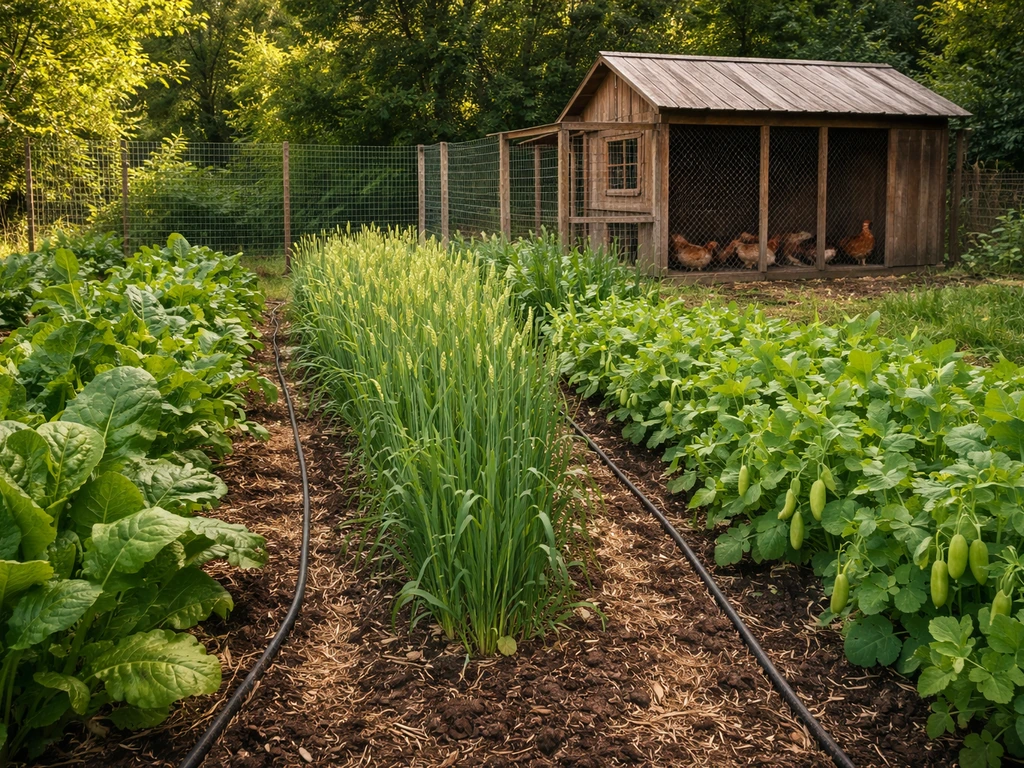
Start with your feed goal and constraints
Before you plant anything, be honest about what you're trying to accomplish. Are you trying to completely replace commercial feed, or just supplement it and cut your feed bill? For most backyard keepers, a 30 to 50 percent supplement is realistic. Full replacement is possible but requires serious land and planning, and it's worth understanding what you can grow to feed your chickens before committing to that goal.
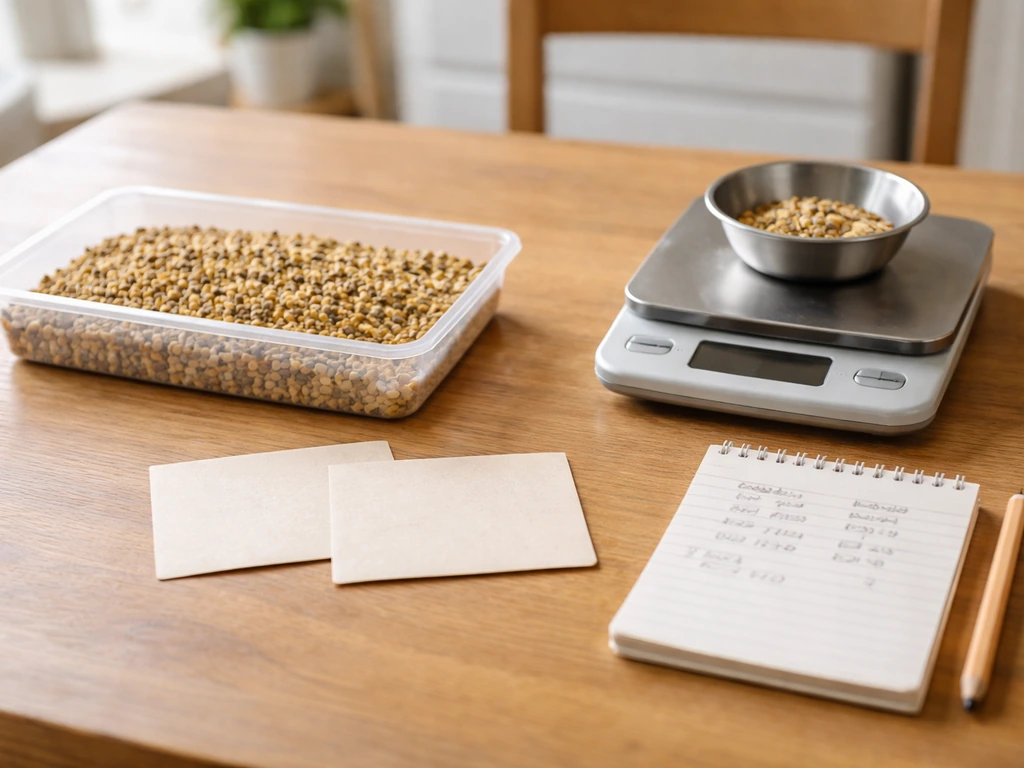
Here's the math that drives everything: a laying hen eats roughly 1/4 to 1/3 pound of feed per day, depending on her size, the season, and how productive she is. That's about 90 to 120 pounds of feed per bird per year. A flock of six hens will eat somewhere around 540 to 720 pounds annually. That number tells you how much garden space is worth fighting for.
Then look at your constraints honestly. How much space do you have: a few raised beds, a quarter-acre plot, or more? What's your climate and frost-free growing window? A gardener in zone 9 can grow fodder crops nearly year-round, while someone in zone 4 has maybe 120 frost-free days to work with. Container growing can supplement a flock's greens but won't realistically produce bulk grains or legumes in meaningful quantities. Know which category you're in before choosing crops.
The best feed crops for chickens: greens, grains, and protein
Think of chicken feed in three buckets: energy crops (grains and starchy seeds), protein crops (legumes and high-protein plants), and fresh greens (forage and vitamin-rich leaves). A balanced homegrown diet needs all three. The best grains to grow for chickens include corn, wheat, oats, barley, and sunflowers. These are your calorie base. They dry and store well, and chickens go crazy for all of them.
Greens and forage
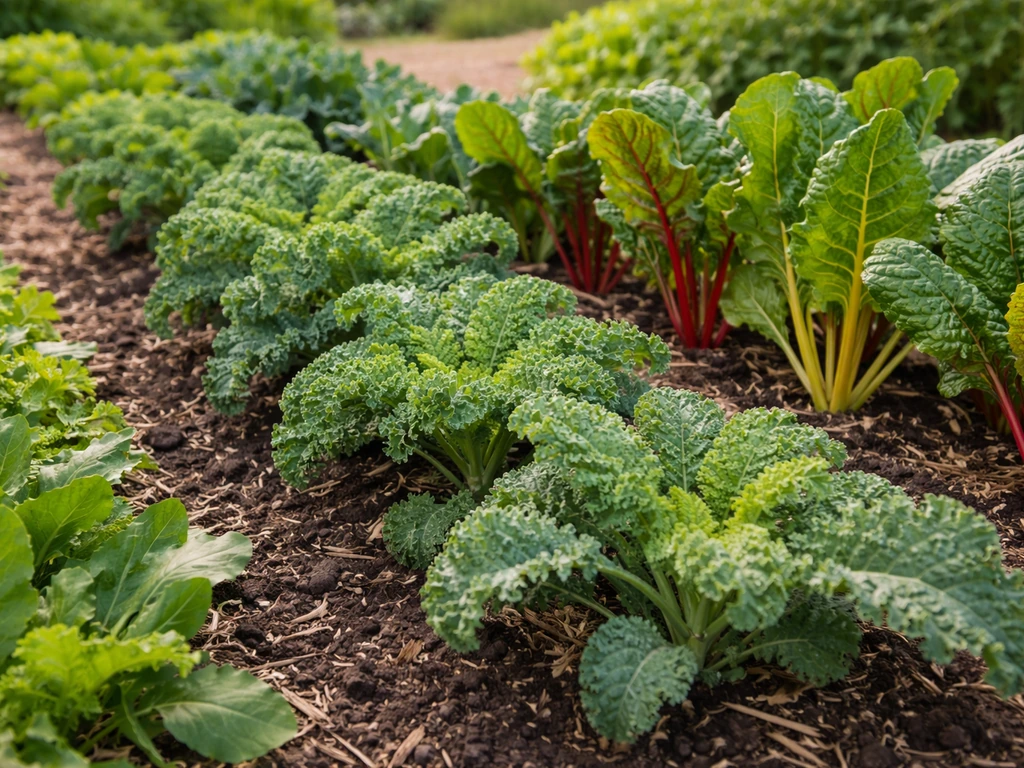
Kale, Swiss chard, and brassicas like turnip and rape are the easiest greens to produce in volume. Kale especially is a workhorse: it tolerates cold, grows fast, and you can harvest outer leaves repeatedly for weeks. Chickens will eat it fresh or you can hang whole stalks in the coop. The best greens to grow for chickens also include alfalfa and red clover, both of which double as soil-improving legumes.
Alfalfa is particularly impressive for yield: well-managed stands can push 7 to 8 tons of dry hay equivalent per acre, though even a modest 200-square-foot patch will give you armloads of cuttings per season. Red clover yields a bit less (4 to 5 tons per acre) but establishes quickly and normally lasts two to three years without replanting, making it extremely low-maintenance.
Grains and energy crops
Corn is the most calorie-dense grain you can grow at home. It's easy to harvest and store on the cob, and your hens will shell it themselves if you let them peck at dried ears. Sunflowers are almost as energy-rich and also deliver protein and fat, which is great for winter condition. Wheat, oats, and barley can be grown in smaller spaces and are excellent as fodder: you can sprout them in trays for fresh greens during winter when nothing's producing outside, or dry the mature heads and feed whole.
Protein crops
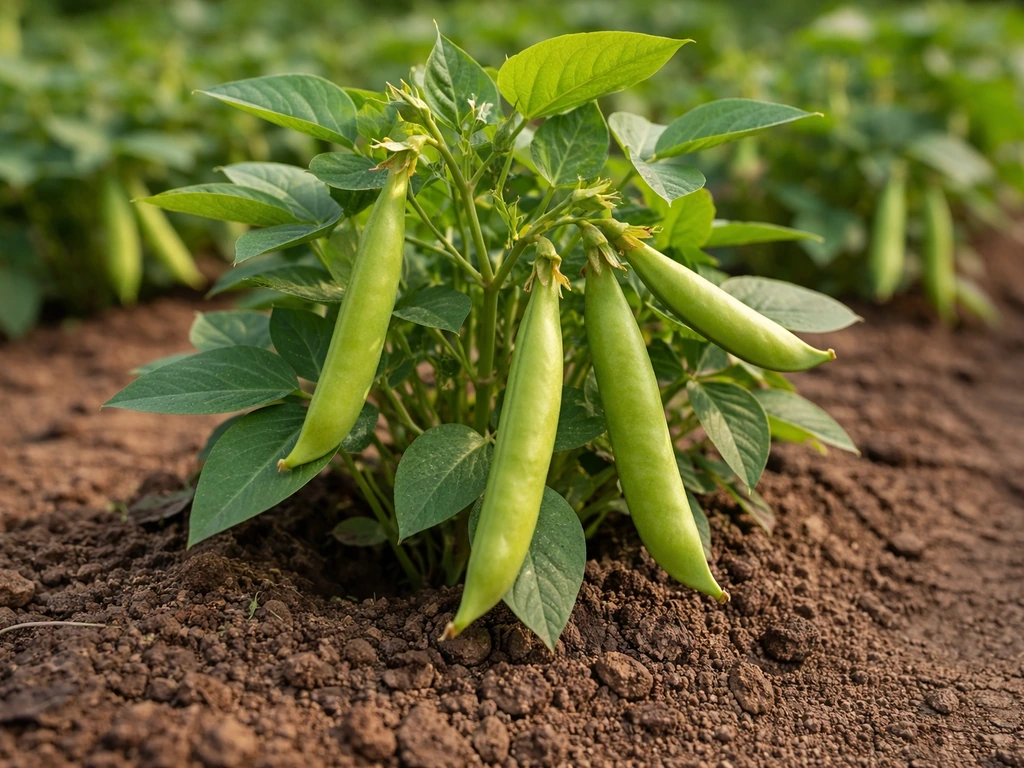
Legumes are your protein engine. Black-eyed peas (cowpeas), field peas, and soybeans are the top picks. Cowpeas are especially forgiving in hot climates and grow fast. Amaranth deserves special mention here too: it's technically a grain but has unusually high protein content, it self-seeds readily once established, and the leaves are edible by both you and your chickens while the plants are young. It's one of the few crops that hits two categories at once.
How to grow each crop: soil, water, and timing
Most feed crops are not fussy, which is part of why they're worth growing. But getting yields high enough to matter does require paying attention to a few basics. This is also core to understanding what to grow for chickens in your specific situation, because climate and soil type will shape your shortlist more than anything else.
| Crop | Soil needs | Water needs | When to plant | Days to harvest |
|---|---|---|---|---|
| Corn | Rich, well-drained; pH 6.0–6.8 | Consistent moisture; 1 inch/week | After last frost; soil 60°F+ | 70–100 days to dry grain |
| Sunflowers | Tolerates poor soil; pH 6.0–7.5 | Drought-tolerant once established | After last frost | 70–100 days to seed maturity |
| Kale | Moderately fertile; pH 6.0–7.0 | Regular; 1–1.5 inches/week | 4–6 weeks before last frost or late summer | 50–70 days; cut-and-come-again |
| Alfalfa | Deep, well-drained; pH 6.8–7.5 | Deep watering; drought-tolerant after establishment | Spring or late summer | 60–90 days first cut; 28–35 days regrowth |
| Red clover | Most soils; pH 6.0–7.0 | Moderate; tolerates some dry periods | Early spring or late summer | 60–90 days first cut; stand lasts 2–3 years |
| Wheat/Oats/Barley | Average fertility; pH 6.0–7.0 | Low once established | Fall (winter varieties) or early spring | 90–120 days to grain maturity |
| Cowpeas/Field Peas | Poor to average soil fine; fixes nitrogen | Moderate; drought-tolerant | After last frost; warm soil | 60–90 days to dry seed |
| Amaranth | Tolerates poor, dry soil | Low; very drought-tolerant | After last frost | 90–120 days to seed harvest; leaves in 30–45 days |
For soil preparation, the practical approach is to incorporate compost before planting at a rate of about 2 to 3 inches worked into the top 8 inches of soil. Legumes (clover, alfalfa, peas) fix their own nitrogen, so they actually improve your soil for whatever you plant next. Grains and corn are heavier feeders and benefit from a balanced fertilizer or a prior legume cover crop. If you're working with raised beds, a 50/50 mix of compost and garden soil is a solid starting point.
Timing is especially important for grains. Winter wheat and oats are planted in fall, overwinter as seedlings, and are harvested in early summer before the summer heat sets in. That's a game-changer for northern gardeners because it uses the growing season's shoulder months instead of competing with your summer vegetable garden. Brassica forage crops like turnip, rape, and kale can also extend your greens production deep into fall and early winter.
Harvesting, drying, storing, and feeding safely
Fresh greens are straightforward: cut, feed directly, and don't overthink it. Kale, chard, and clover can go straight from garden to coop. Hang leafy stalks inside the run so birds can peck at them throughout the day. What goes wrong is leaving cut greens to wilt in a pile; wet, warm plant material molds fast. Only cut what they'll eat in a day.
Grains and seeds require drying before storage or they'll mold and potentially develop mycotoxins. This is not a minor concern. Storage mold fungi can result in poor-quality feed and the development of mycotoxins that are genuinely dangerous to poultry.
Corn should be left on the cob until the kernels are hard and the husks are papery, ideally after a few weeks of field drying after the plant reaches full maturity (roughly 55 to 60 days after silking for full dry-grain stage). Sunflower heads should be cut when the back of the head turns yellow-brown and the seeds feel firm, then hung in a dry, airy space for two to three weeks.
Wheat and oat heads are ready when the straw turns golden and the seeds snap clean rather than bending.
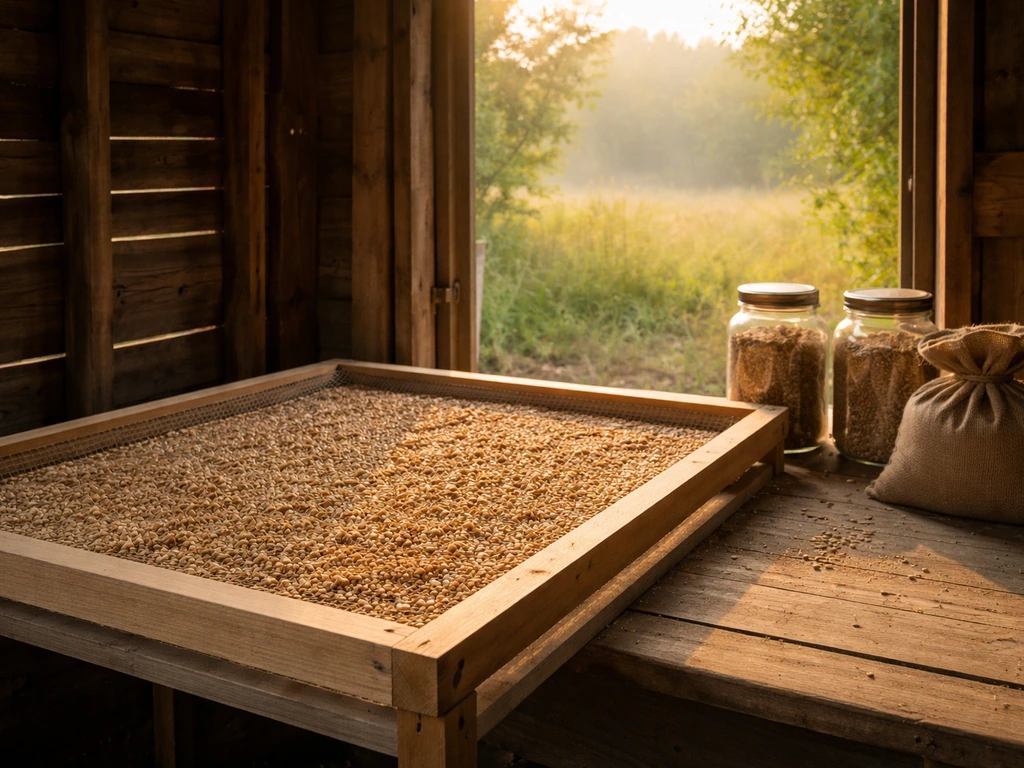
For storage, the key factors are low moisture (grain should be below 13 to 14 percent moisture), cool temperatures, and airflow. Mesh bags, slatted crates, or perforated bins work better than sealed plastic containers for air circulation. Never store grain that feels damp or clumps together. If you see dust or white powdery growth in stored grain, do not feed it. Mold presence indicates possible mycotoxin contamination, and the risk to your birds isn't worth it. Discard and start fresh.
A note on safety with fresh forage: what you feed will grow applies here in a cautionary sense too. Plants grown in nitrogen-heavy soil, including chickweed and some brassicas, can accumulate nitrates at levels that are problematic for livestock. Avoid feeding large amounts of lush, rapidly growing brassica or chickweed from heavily fertilized beds, especially when the plants are young and growing very fast. Moderate amounts of mature forage brassicas are fine, and they're excellent for late-season feeding.
Building a yearly planting schedule and rotation
The goal of a planting schedule is to have something available for your flock in every season, and to keep your soil healthy at the same time. A simple two-zone rotation works well for most homesteaders: one zone dedicated to annual grains and legumes that rotate yearly, and a second zone with perennial or biennial forage like alfalfa and red clover that stays productive for two to three years without replanting.
- Fall (zones 5–8): Plant winter wheat or oats as a grain crop that will mature the following spring/early summer. Sow red clover or alfalfa in late summer for a perennial forage stand.
- Early spring: Direct-sow oats, barley, or field peas as soon as soil is workable. Start kale transplants indoors 4–6 weeks before last frost.
- After last frost: Plant corn, sunflowers, cowpeas, and amaranth directly. These are your warm-season grain, seed, and protein crops.
- Midsummer: Begin cutting alfalfa and clover for fresh greens or drying. Succession-sow a second planting of kale or Swiss chard for fall harvest.
- Late summer/early fall: Harvest and dry corn, sunflowers, and cowpeas. Plant forage brassicas (turnip, rape, kale) for fall and early winter grazing.
- Winter: Feed stored dried grains and seeds. Sprout wheat or barley in trays indoors for fresh fodder. Assess soil and plan next year's rotation.
Rotation matters for two reasons: pest and disease pressure, and soil fertility. Follow corn or sunflowers with legumes (cowpeas or clover) to replenish nitrogen. Follow legumes with grain crops that will benefit from the nitrogen fix. Never grow the same family of crops in the same bed two years running if you can help it.
Yield and cost-benefit: how much to grow for your flock
Let's get real about numbers. A six-hen flock eating 1/4 pound each per day goes through about 540 pounds of feed per year. If you want to supplement 30 percent of that with homegrown crops, you need to produce about 160 pounds of combined grains, dried seeds, and dried forage. NDSU’s worked example “Estimating Sunflower Yield” shows how those assumptions can lead to an estimated yield (for example, 1,623 lb/acre). That's achievable on a well-managed 1,000 to 1,500 square feet (roughly a quarter of a standard city lot's backyard).
Here's a rough yield guide to help you plan. An open-pollinated corn variety will produce roughly 50 to 100 pounds of dry grain per 100 square feet in a good season. Sunflowers will yield about 10 to 20 pounds of seed per 100 square feet. A 100-square-foot block of wheat or oats will produce around 5 to 10 pounds of grain, which sounds modest but is very cost-effective given the low seed cost. Cowpeas and field peas yield about 10 to 20 pounds of dry seed per 100 square feet. Fresh greens like kale are much harder to reduce to dry weight, but a 50-square-foot kale patch can produce several pounds of fresh leaves per week through the season.
On cost: a 50-pound bag of layer feed typically runs $20 to $35 depending on region and year. Seed for a 500-square-foot grain and legume plot might cost $10 to $20, plus your time and water. If you're producing 100 to 150 pounds of homegrown grain and dried forage, you're realistically offsetting 1 to 2 bags of commercial feed per year, saving $20 to $70. That doesn't sound dramatic, but it compounds if you save seed, improves your soil over time, and builds resilience if feed prices spike. The honest answer is that growing chicken feed is most valuable as a supplement and a buffer, not as a pure cost-cutting exercise for small flocks.
Common mistakes and how to fix them
The biggest mistake I see is harvesting grain too early and storing it damp. Moisture is the enemy of stored feed. Corn especially looks done before it actually is. Let it fully field-dry before bringing it inside, and if in doubt, give it another two weeks. A kernel that dents easily with a fingernail has too much moisture for safe storage.
- Planting too many varieties at once: Start with two or three crops you can manage well rather than ten you can't keep up with. Master sunflowers and kale in year one, add cowpeas and wheat in year two.
- Ignoring soil fertility for grain crops: Corn and sunflowers are heavy feeders. Without enough fertility, yields will disappoint. Add compost before planting and rotate with legumes every other year.
- Feeding unlimited access to legume forage: Fresh clover and alfalfa are excellent but should be introduced gradually and not be the only thing offered. Rapid dietary shifts cause digestive upset in chickens.
- Storing feed in sealed, airtight containers without drying first: This is how you create mold. Grain needs airflow. Use mesh or slatted containers until you're confident the moisture content is low.
- Underestimating time to dry maturity in short-season climates: In zone 4 or 5, dry corn may not fully mature before a hard frost. Choose shorter-season varieties (75- to 85-day dry corn rather than 100-day), and start them early using black plastic mulch to warm the soil.
- Planting brassicas in over-fertilized beds and feeding heavily: Heavy nitrogen in the soil encourages nitrate accumulation, especially in rapidly growing plants. Don't overdo the nitrogen amendments in beds where you're growing forage brassicas or chickweed.
One more thing worth repeating: mold is never a 'probably fine' situation with chicken feed. If stored grain smells musty, looks dusty, or clumps together, toss it. The cost of a batch of spoiled grain is nothing compared to the cost of sick birds and a vet visit. Build good drying and storage habits from the start and you won't have to deal with it.
Growing feed for your flock is a genuinely rewarding project, and even a modest effort makes a difference. Start with what you have space and time for, track your yields honestly, and add crops as you gain confidence. Your chickens will eat better, your soil will improve, and you'll have a buffer against the unpredictability of feed costs and availability.
FAQ
How much of my chicken feed should I plan to grow at home for a realistic first year?
Plan on 10 to 30 percent as your starting target unless you already have a lot of space and a way to dry and store grain safely. Use your daily feed estimate (about 1/4 to 1/3 lb per hen) to set a simple annual goal, then scale up one crop category at a time, usually greens first because they are the easiest to produce and use immediately.
Can I replace store-bought layer feed completely with homegrown crops?
Complete replacement is possible but difficult because homegrown grains and greens rarely match the exact balance of amino acids, minerals, and vitamins in commercial layer rations. If you try full replacement, you will still need to supply missing micronutrients, most importantly calcium and often supplemental protein quality, and you should monitor egg production and shell quality closely.
What’s the simplest crop combo for someone with only a few hens and limited garden space?
Start with kale (or another reliable brassica for leafy production) plus a small patch of sunflower for seed. Add a fodder grain tray (oats or wheat sprouting) only if you want winter greens, because tray sprouting is great for freshness but it is not efficient for bulk feed.
Which crops are safest to grow and feed when the weather is hot or dry?
Cowpeas (black-eyed peas) are one of the better hot-weather options because they are forgiving and grow fast. For greens, choose cold-hardy brassicas for shoulder seasons, then use mature cuts rather than lush fast growth in heavily fertilized areas.
How do I avoid accidentally feeding too many nitrates from my garden?
The risk is highest with lush, rapidly growing plants from nitrogen-heavy beds. To reduce risk, avoid feeding large amounts of very young tender brassica growth and chickweed, and feed more mature forage brassicas in moderate amounts. Also, do not “over-fertilize” your feed plots with the idea that more growth equals better feed.
Do I need to dry everything before storage, or can I store wetter crops?
You need to dry grains and dried seeds before storage, and moisture is the main danger. Grain should be below about 13 to 14 percent moisture, which you can approximate by ensuring it does not feel damp and does not clump. If kernels dent easily or you see condensation, it is not ready, keep drying.
What storage method is best for preventing mold and pests?
Use cool, dry conditions plus airflow. Mesh bags, slatted crates, or perforated bins are better than sealed plastic for grains that might have slightly uneven moisture. Keep grain off the floor, label batches by harvest date, and inspect routinely for dust, clumping, or any white powdery growth.
How can I tell whether my stored grain is unsafe without guessing?
Do not rely on “smells fine” as the only test. If grain smells musty, looks dusty, clumps together, or shows any visible white powdery growth, discard it. Even if only part of a batch looks off, assume contamination risk and do not mix safe grain with suspect grain.
Can I feed chickens fresh sprouted grains in winter, even if I do not have much land?
Yes, sprouting grains in trays is a good winter option because you can convert small amounts of seed into fresh forage quickly. The key is to keep trays clean and dry between batches and feed sprouts promptly rather than letting them sit warm and wet for long periods.
How should I schedule planting so there is always something available?
Use season-based overlap. Plant fall fodder grains (like oats or winter wheat) for early summer harvest, then follow with summer crops like corn or sunflower, and keep a brassica greens schedule running for continuous leafy harvest into fall. If you add legumes like clover or alfalfa, treat them as long-term soil builders rather than short-term emergency feed.
What rotation rules matter most for pests, diseases, and soil fertility?
The most important pattern is legumes followed by grains. After a legume crop (or clover/alfa), plant corn or other heavier feeders to take advantage of nitrogen gains, then follow grains with another rotation step rather than repeating the same family in the same bed. If you can, avoid keeping the same crop family on the same plot year after year.
How do I measure whether my yields are actually helping my feed bill?
Track yields in the same unit you use for feed planning. Convert your homegrown output into approximate dry pounds (for grains and dried forage) and compare against your flock’s annual consumption. If you are not hitting your target supplement percentage, adjust by shrinking the least efficient crops and adding the ones that match your climate window.
What’s the biggest mistake people make with homegrown feed crops?
Harvesting grains too early and storing them damp is the top problem. Corn can look mature on the plant while still having too much kernel moisture, so if in doubt, wait longer for true field drying, then dry and store with strict airflow and moisture control.
Next Article
How Do Farmers Grow Food Around the World: Methods and Tips
Learn how farmers grow food worldwide: soil, water, crops, pests, harvest, and how to scale it for home gardens.