Beans and garlic can absolutely grow in the same garden space, and several extension programs list them as accepted companion pairs. The catch is timing: garlic goes in the ground in fall and gets harvested by midsummer, while beans are a warm-season crop planted after your last frost. That means they share the same bed for only a portion of the season, and how you manage that overlap determines whether both crops do well or compete. Get the layout right and you get two harvests from one bed, better pest confusion from the garlic's scent, and no meaningful yield loss on either side.
Do Beans and Garlic Grow Well Together? Companion Tips
Marcus Hendrick
4 Jun 2026
Bush beans vs pole beans: which works better next to garlic
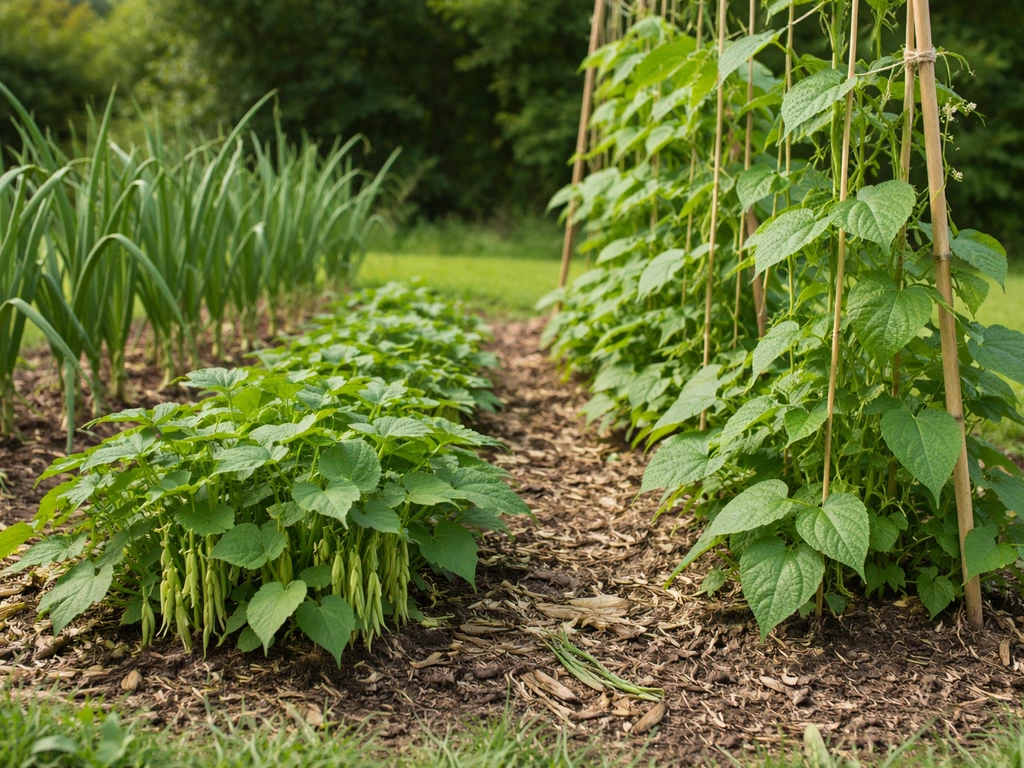
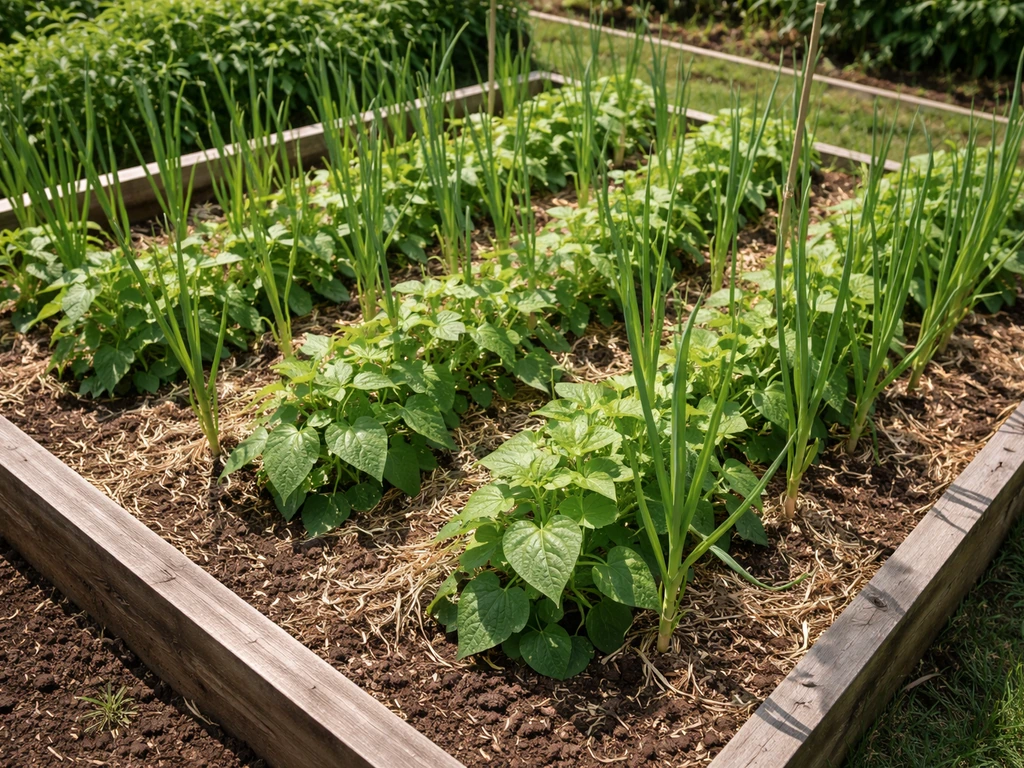
The type of bean you choose matters more than most people expect when pairing with garlic. Bush snap beans grow to about 2 feet tall, produce in a concentrated burst, and need no trellis. They're compact, upright, and easy to fit in rows alongside garlic without shading it out. If your garlic is still in the ground and you want to start your beans nearby, bush varieties are the more forgiving choice because they stay low and don't compete for vertical space.
Pole beans are vining plants that need a trellis, fence, or support of some kind. They're more productive per square foot over a longer season because they keep flowering and setting pods rather than producing everything at once. But that height, easily 5 to 6 feet or more, means you need to think about sun. If your garlic rows run north to south and you put pole beans on the northern side, the vines won't cast shade over the garlic. Put them on the south side and your garlic suffers. Bush beans sidestep this problem almost entirely.
For most home gardeners sharing a single raised bed or garden plot, bush beans are the practical pick when interplanting with garlic. Use pole beans if you're planting them in their own rows or on a fence line with garlic as a border, rather than mixed directly into the same rows.
When to plant and how to arrange the bed
The timing sequence is what makes this pairing work. Garlic is planted in fall, typically about three weeks before the ground freezes hard, so the cloves develop roots before winter. That puts fall planting somewhere in October in most of the northern US. The garlic overwinters, starts growing in early spring, and is ready to harvest by late June or July when the lower leaves start browning and the tops begin to fall over.
Beans go in after your last frost date once the soil hits at least 60°F. Plant too early and the seeds rot in cold soil rather than germinate. For most of the country that means mid-May through early July depending on your zone. The sweet spot is that your beans are just starting out as your garlic is finishing up. From late spring through early summer, both crops share the bed. After garlic harvest in June or July, your beans take over the whole space.
Spacing and row layout
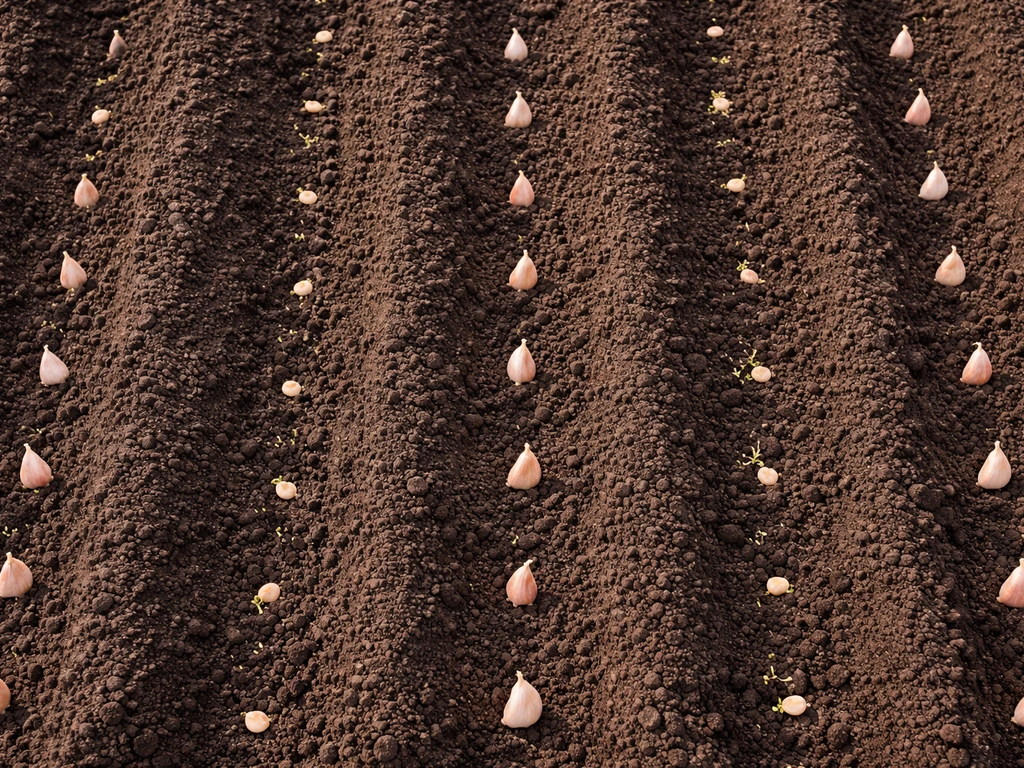
Garlic cloves go in pointed-side up, with the base of the clove about 2 to 3 inches below the soil surface. Space cloves 6 inches apart within the row, and space rows 12 to 24 inches apart. For a bed where you're also planning beans, lean toward the wider row spacing (18 to 24 inches) so you have room to work beans in without crowding the garlic.
When it's time to plant beans, sow them between the garlic rows rather than in them. If you've spaced your garlic rows 18 to 24 inches apart, you have a real lane to work with. Sow bean seeds 1 to 2 inches deep, and thin seedlings so each plant has about 4 inches of space on each side once they emerge. That gives the garlic room to keep bulbing without root competition pressing in from both directions.
- Plant garlic cloves in fall, 6 inches apart in rows, base of clove 2 to 3 inches deep
- Space garlic rows 18 to 24 inches apart to leave room for bean rows between them
- Plant beans after last frost date when soil is at least 60°F, sowing between garlic rows
- Thin bean seedlings to 4 inches of clearance on each side once they're up
- For pole beans, position the trellis on the north side of the bed so the vines don't shade garlic
Soil, sun, water, and feeding for both crops
The good news here is that beans and garlic want almost identical soil conditions. Both do best in slightly acidic to neutral soil with a pH between 6.0 and 7.0. Beans are comfortable up to pH 7, and garlic performs well anywhere from 6.0 to 7.0. If you've amended your bed for one, you've essentially set it up for the other. Aim for well-drained, moisture-retentive soil. Garlic especially hates sitting in waterlogged ground, and beans aren't far behind on that front.
Both crops need full sun, at least 6 to 8 hours a day. If you’re wondering whether beans and broccoli grow well together, the same basics apply: give them enough space, consistent moisture, and full sun. There's no compromise on this. Partial shade leads to small garlic bulbs and poor bean yields, so pick a spot that gets real sun rather than filtered light through nearby trees.
For feeding, garlic has moderate to high nitrogen needs. If you want to grow carrots too, start by matching that crop's soil and spacing needs so carrots grow best with consistent moisture and loose, well-drained soil For feeding, garlic has moderate to high nitrogen needs. Work compost into the bed in fall before planting garlic cloves, and that usually covers most of the nitrogen requirement without any additional spring feeding.
Beans fix their own nitrogen through root bacteria called rhizobia, so they don't need extra nitrogen fertilizer. Beans fix their own nitrogen through root bacteria called rhizobia, so they don't need extra nitrogen fertilizer.
In fact, heavy nitrogen feeding pushes beans toward leafy growth at the expense of pods. A balanced bed with good compost incorporated at the start handles both crops without you needing to fertilize separately through the season.
Watering should stay consistent. Neither crop does well with boom-and-bust watering. Keep the soil evenly moist but not soggy. Mulching between rows helps hold moisture, moderates soil temperature for the garlic as it bulbs up in late spring, and reduces disease splash-back onto foliage. Lay 2 to 3 inches of straw or shredded leaves between rows once the garlic is established in spring.
What companion benefits are real (and what to be skeptical about)
Several extension programs, including West Virginia University Extension and Wisconsin's Sauk County extension, list garlic and beans as accepted companion pairs. The logic is that garlic's strong sulfur compounds can confuse or repel insects that navigate by scent, potentially reducing pressure from pests like aphids and bean beetles on nearby plants. There is some scientific support for this: research on intercropping common beans with garlic has found measurable reductions in certain pest infestations compared to control plots without garlic.
That said, the University of Minnesota Extension is direct about the limits here: there is little controlled research supporting many companion planting claims, and results can be inconsistent. Garlic proximity is not a pesticide. It won't eliminate pest pressure on its own, and the benefit you see will vary by your climate, local pest populations, planting density, and how the season plays out. Think of it as one layer of a broader pest management approach, not a standalone fix.
One practical benefit that often gets overlooked: growing two different crops in the same space naturally breaks up the uniform monoculture that makes it easy for pests to find and colonize a single host plant. A similar companion question comes up with cool-season crops like beets and lettuce, which can share space effectively if you manage light and watering do beets and lettuce grow well together. That diversity effect is real, even if it's harder to quantify than a specific pest-repellent claim.
Beans also fix atmospheric nitrogen into the soil through root nodules, which benefits the soil biology and the crops that follow. This doesn't directly feed the garlic growing alongside them in the same season, but when you rotate the bed the following year, the residual nitrogen credit in the soil is real and useful. That's a genuine, long-term companion benefit even if it doesn't show up immediately in your garlic harvest.
Troubleshooting common problems with fixes
Beans not germinating
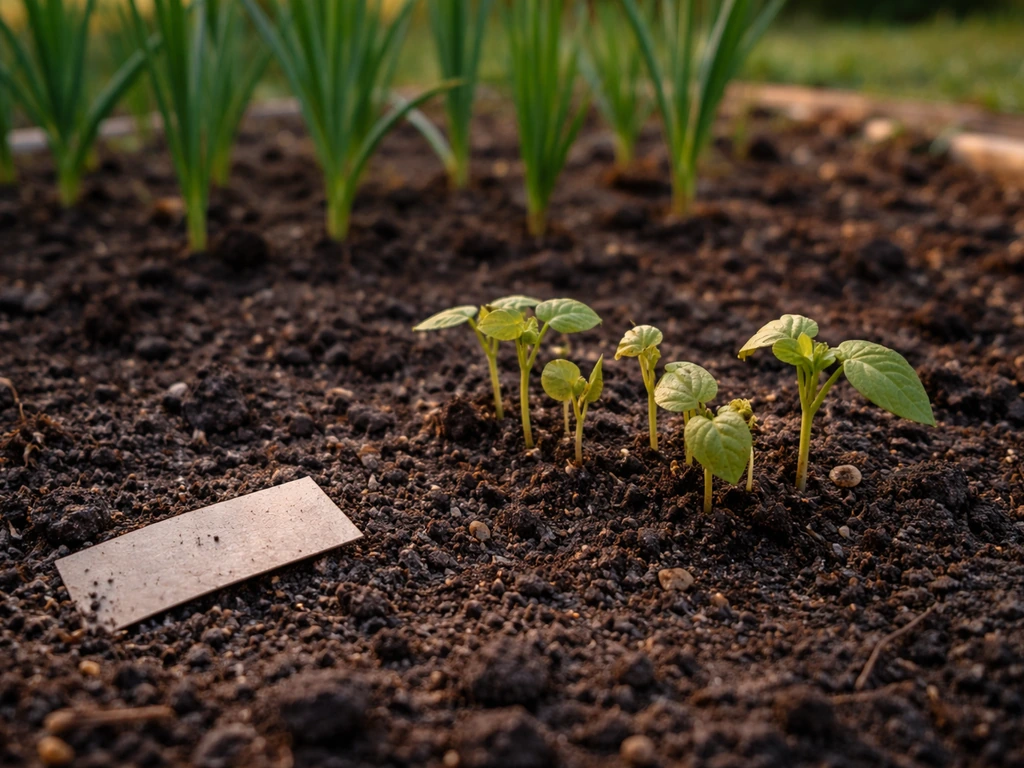
Almost always a soil temperature issue. If you planted before the soil hit 60°F, the seeds are sitting in cold, damp ground and rotting rather than sprouting. The fix is to wait. Use a cheap soil thermometer 2 inches down before you plant, and hold off until that number clears 60°F consistently. If you already planted too early and nothing came up after two weeks, replant with fresh seed once conditions warm up.
Small or undersized garlic bulbs
Small bulbs usually trace back to one of three things: overcrowding, insufficient cold exposure during winter, or harvesting too late or too early. If you planted cloves too close together (under 4 to 5 inches apart) or your bean planting encroached on the garlic root zone before the bulbs had time to size up, competition stress can limit bulb development. Start larger cloves to begin with, since bigger seed stock produces bigger bulbs. If you're in a mild climate where garlic doesn't get a reliable stretch of cold between 32°F and 50°F for about 30 days, bulbing may simply be incomplete regardless of spacing.
Stunted bean plants near garlic
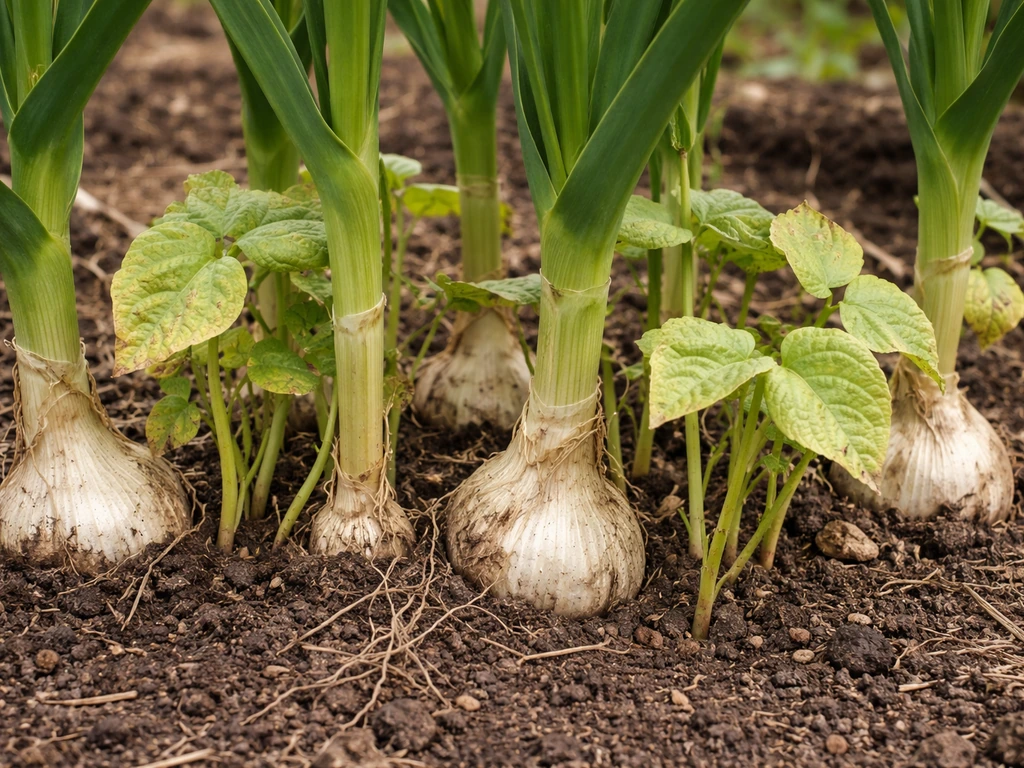
If your beans look pale, slow-growing, or stressed right next to established garlic, crowding is the most likely culprit. Garlic develops an extensive root zone, and if bean roots can't establish without competition, early growth suffers. Give them more physical separation: at least 6 to 8 inches between the garlic row edge and where beans are sown. Thinning beans more aggressively (to 4 inches of clearance on each side) also helps once they're up.
Disease problems in the bed
The biggest disease risk when growing garlic is white rot, a soil fungus that can devastate alliums and persist in the soil for years. It causes yellowing, wilting, and white fungal growth at the base of the bulb. The main prevention tool is rotation: don't plant garlic or any allium in the same bed two years in a row.
Beans are vulnerable to their own diseases including bacterial blight and powdery mildew, which spread faster in crowded, humid canopies with poor airflow. Keep rows wide enough that air moves through, avoid watering overhead in the evening, and use disease-free seed. Keeping the two crops in the same bed doesn't increase disease risk significantly as long as you maintain spacing and rotate the following year.
Same bed, alternating rows, or perimeter planting: which layout to use
There are three practical ways to combine beans and garlic, and the right one depends on your bed size and goals.
| Layout | Best for | Pros | Watch out for |
|---|---|---|---|
| Same bed, interplanted rows | Raised beds, small plots | Efficient use of space, both crops in one managed area | Crowding if rows are too close; pole bean shading if not oriented correctly |
| Alternating row blocks | In-ground rows or larger plots | Clear separation, easier to manage each crop, good airflow | Needs more overall space; may reduce companion scent effect |
| Perimeter planting (garlic around the bean bed) | Any bed size | Garlic acts as a scent border; minimal root competition with bean rows | Garlic still needs its own harvest timing managed; less efficient on very small plots |
For most home gardeners with a standard raised bed (4 by 8 feet or similar), interplanted rows with 18 to 24 inch row spacing is the most practical approach. For larger in-ground plots, alternating blocks of garlic and bush beans works well and gives you cleaner harvest access. Perimeter planting is a good option if you want the potential pest-confusion benefit without complicating your main planting layout.
Planning for crop rotation year to year
This is where the long game matters. Garlic is an allium; beans are a legume. Neither should return to the exact same bed position for at least two to three years if you can help it. Garlic disease pathogens like white rot build up in soil when alliums are grown in the same place repeatedly.
WSU Extension recommends avoiding replanting garlic or other alliums in the same place repeatedly to help reduce pathogen carryover [avoid replanting garlic or other alliums in the same place repeatedly](https://wpcdn. web. wsu. edu/wp-extension/uploads/sites/2128/2022/08/FS162E-Growing-Garlic-in-Home-Gardens.
pdf). Bean diseases and root rot issues also increase with continuous planting. The ideal rotation is to move garlic to a bed where brassicas or root vegetables grew last year, and follow your bean bed with a heavy-feeding crop like tomatoes or corn that can use the residual nitrogen the beans left behind. Tracking what you planted where each year, even in a simple notebook, pays off in healthier plants and better yields over time.
Experimenting and noting your own results each season is genuinely how you dial in what works in your specific garden conditions.
If you're building out a full companion planting system across multiple beds, it's worth thinking about how other pairings fit into the rotation too. Beans also grow well next to several other root vegetables and greens, so you can plan around what you want to harvest do beets and turnips grow well together. Beans pair well with several other crops beyond garlic, and some of those options might work better in beds where garlic doesn't fit the rotation that year.
FAQ
Can I plant pole beans with garlic instead of bush beans, and if so how do I prevent shade problems?
Yes, but only if you control the vine position. Train pole beans on a trellis or fence so the vines grow upward and do not spill across garlic rows. Place the trellis on the north side of the garlic so afternoon sun reaches the garlic bulbs, or give pole beans their own border strip where they cannot intrude into the garlic root zone.
Should I mulch immediately when I plant beans, or wait until garlic is established in spring?
For beans, wait until seedlings are up and growing, then mulch lightly between rows. Heavy mulch right at bean sowing can keep the soil too cool for warm-season germination. Once garlic has active growth in spring, 2 to 3 inches of straw between rows helps stabilize moisture and suppress splash-back, but keep mulch off the immediate base of seedlings and cloves.
How much space should I leave between the garlic row and the area where I sow beans?
A good practical buffer is at least 6 to 8 inches from the garlic row edge to where bean seeds are planted. Then thin beans so each plant has about 4 inches on each side after emergence. If you want fewer problems with stunted garlic bulbs, err wider on bean clearance early rather than trying to fix crowding later.
Do beans and garlic compete for water during the overlap period, and how should I adjust irrigation?
They share similar preferences for even moisture, but the overlap can still create dry spots. Water when the top inch of soil begins to dry, and focus the moisture on the root lanes between rows rather than soaking foliage. Avoid frequent light sprinkling, it encourages shallow roots and disease pressure, especially for beans in humid conditions.
Is there a risk that beans will be too nitrogen-rich for garlic, since beans fix nitrogen?
Usually not. Beans fix atmospheric nitrogen into their own root nodules, and most of the nitrogen benefit shows up more clearly for the next crop after rotation. If anything, the more common issue is over-fertilizing the bed with extra nitrogen, which pushes beans toward leaves and reduces pod set. Skip high-nitrogen fertilizers and rely on compost worked in before planting.
What should I do if my beans germinate poorly after planting next to garlic?
First, check soil temperature. If it was under about 60°F at planting depth, seeds may rot in cold, damp ground. Use a soil thermometer 2 inches down before sowing, and if nothing emerges after roughly two weeks once it warms, replant with fresh seed. Also verify you are not planting too deep, 1 to 2 inches is usually the sweet spot.
Will harvesting garlic early help or hurt beans that are growing in the same bed?
Harvesting garlic when leaves brown and tops fall naturally reduces competition for space and moisture, so it generally helps beans take over the bed. The main caveat is physical disturbance: avoid yanking or digging too aggressively near bean roots, and harvest on a dry day so you do not compact wet soil.
Can white rot or other garlic diseases spread to beans when they are grown side by side?
White rot is specific to alliums, it does not directly infect beans. However, poor airflow and overhead watering can still increase bean foliar diseases. Keep rows wide enough for air movement, water at the soil level, and rotate the garlic bed in following years to reduce white rot buildup.
How long should I rotate the bed before planting garlic there again?
Plan on at least two to three years away from alliums in the same spot. Garlic and other alliums repeatedly in the same location increase the odds of soil-borne issues like white rot. Keeping notes of what grew where each season helps you follow the rotation schedule reliably.
Is this pairing also good for containers, or is it only for raised beds and in-ground rows?
It can work in large containers, but space limits are the challenge. Garlic needs enough room for bulbs, and bush beans need clearance so they do not crowd roots. If you try it, use one larger container for garlic and a separate section or container for beans, or grow bush beans only where they do not reach into the garlic planting area.
Next Article
Carrots Grow Best With: Companion Plants, Soil, and Care
Carrots grow best with the right companions, loose fertile soil, steady moisture, and careful thinning for fewer weeds.