Yes, farmers can grow enough food for everyone alive today. The math actually works. The world already produces more than 3,000 kilocalories per person per day [according to FAO data from 2023](https://www. fao.
Can Farmers Grow Enough Food for Everyone? Real Limits and Steps
Marcus Hendrick
21 May 2026
org/statistics/highlights-archive/highlights-detail/food-balance-sheets-2010-2023/en), which is well above the roughly 2,000 to 2,500 kcal most adults need to stay healthy and active. The problem is not that farmers can't grow enough. The problem is that the food isn't getting to the right people, enormous quantities are wasted, and the farming systems doing the growing are under serious pressure from degraded soils, water scarcity, and rising input costs.
So the honest answer is: capacity exists, but the system is fragile and unequal, and fixing it requires action at every level, including what you do in your own backyard.
What the numbers actually look like

Here is the basic math. A moderately active adult needs somewhere between 2,000 and 2,500 kcal per day. Children and elderly individuals need less, while hard laborers may need 3,000 or more. As a rough planning figure, 2,200 kcal per person per day is a solid global average to use.
Multiply that by 8. 1 billion people and you get a daily global requirement of about 17. 8 trillion kcal, or roughly 6. 5 quadrillion kcal per year.
That sounds enormous, but the FAO tracks this routinely through Dietary Energy Supply (DES) figures and food balance sheets, and the global supply already exceeds that number. We crossed 3,000 kcal per capita per day in 2023. That is a 36 percent surplus over a 2,200 kcal baseline.
Where it breaks down is in distribution and access. Around 733 million people faced hunger in 2023, roughly one in eleven people on Earth, even while that global surplus existed. FAO defines undernourishment as habitual consumption below minimum dietary energy requirements, and hundreds of millions fall below that line not because food wasn't grown, but because they couldn't afford it, access it, or because it spoiled before it reached them. That distinction matters enormously if you are trying to think clearly about this problem.
Where the food actually comes from: land, water, and crops
About 1. 4 billion hectares of land are under crop production globally, with another 3. 4 billion hectares used for permanent pasture. The calorie backbone of the world's diet is three crops: wheat, rice, and maize.
Farmers around the world grow that mix of staple crops using different methods suited to their local climate, soils, and water. Together they supply more than half of all human calories. Add soybeans, potatoes, cassava, and sorghum and you have covered the staple base for most of the planet. These crops succeed in specific climate bands.
Wheat thrives in temperate zones with cold winters and dry summers. Rice needs flooded paddies and high heat. Maize is flexible but still needs 90 to 120 frost-free days and reliable moisture. When climate conditions shift outside those bands, yields fall hard.
Water is the tightest constraint after land. Agriculture uses roughly 70 percent of all freshwater withdrawals globally. In many grain-growing regions, that water is coming from ancient aquifers that are not recharging fast enough. The Ogallala Aquifer under the American Great Plains is a well-known example, but similar depletion is happening in India, China, and North Africa. Rain-fed farming, which covers about 60 percent of global cropland, is increasingly unreliable as precipitation patterns shift. So while the land base is adequate on paper, the water to run it at full capacity is not guaranteed going forward.
What is actually holding farmers back right now
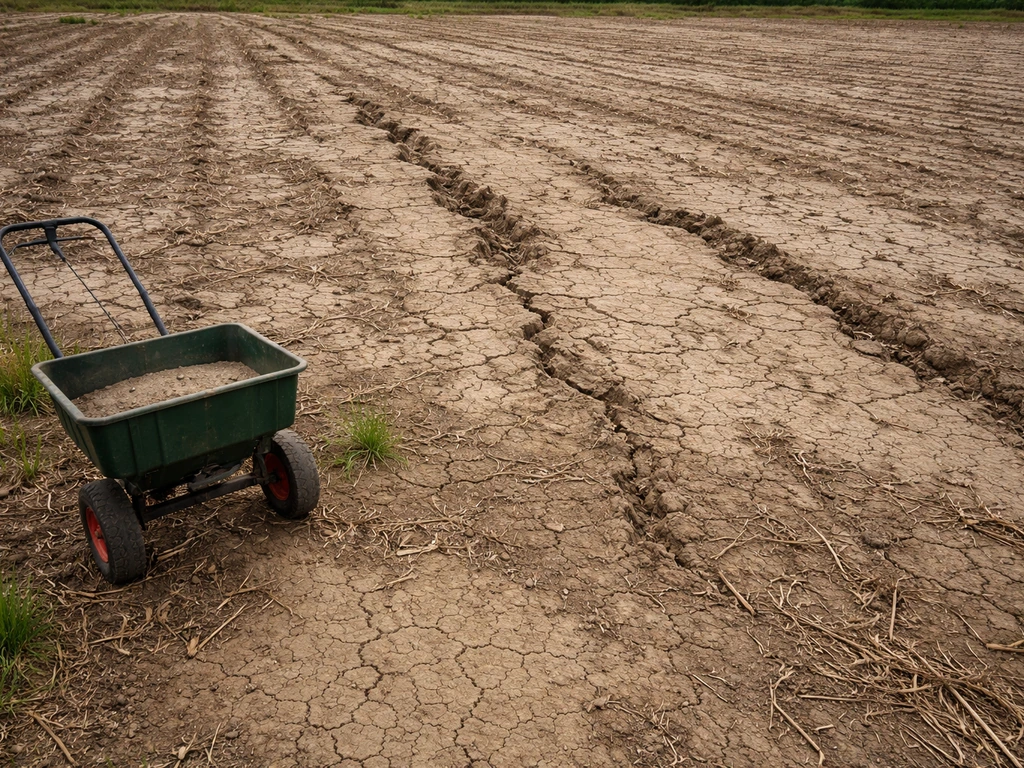
Soil degradation is the most underreported crisis in global food production. About one-third of the world's agricultural soils are degraded to some degree through erosion, compaction, salinization, or loss of organic matter. Healthy topsoil takes centuries to build and can be lost in a single season of poor management. When soil organic matter drops, you need more synthetic fertilizer to hit the same yields, which drives up costs and creates a dependency cycle that small farmers especially struggle to sustain.
Input costs are a real chokepoint. Nitrogen fertilizer prices spiked dramatically in 2021 through 2023, tied closely to natural gas prices since that is what the Haber-Bosch process runs on. A smallholder farmer in sub-Saharan Africa or South Asia cannot absorb a tripling of fertilizer prices the way a large US corn operation with futures contracts can. When input costs spike, small farmers plant less, apply less fertilizer, and yields drop, sometimes by 30 to 50 percent compared to potential.
Pests and disease consistently take 20 to 40 percent of potential yield globally even after pesticide applications. Wheat stem rust, maize lethal necrosis, banana fusarium wilt, and rice blast are not rare edge cases. They are ongoing battles in every major growing region. Climate shifts are expanding the range of many pests into areas where farmers have no experience managing them. Labor is another squeeze, especially in regions where rural-to-urban migration has thinned the agricultural workforce. And policy barriers like subsidies that favor certain commodities, lack of rural credit, and infrastructure gaps in storage and roads compound everything else.
What actually works to raise yields sustainably
The good news is that proven, scalable practices exist. The gap between average farm yields and what the same land could produce with better management is called the yield gap, and it is enormous in many regions. In sub-Saharan Africa, average maize yields are around 2 tonnes per hectare while the potential under good management is 6 to 8 tonnes per hectare. Closing even half that gap would feed tens of millions more people without clearing a single extra acre.
Soil first, always
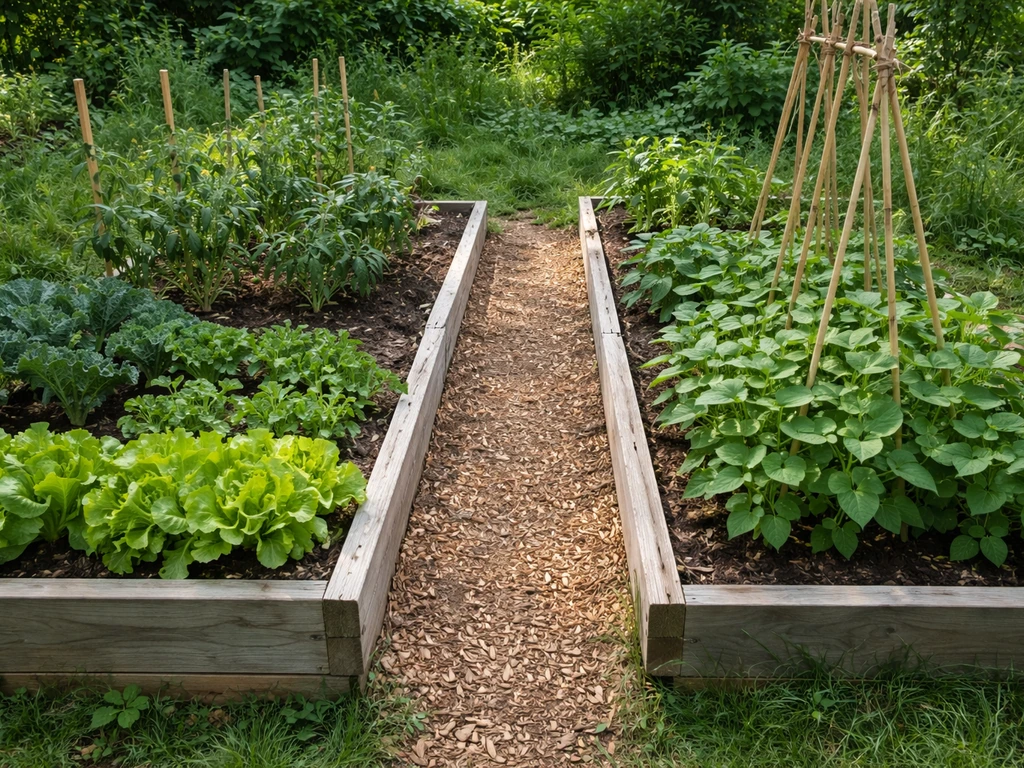
Adding organic matter consistently through compost, cover crops, and reduced tillage improves both water retention and nutrient availability. A 1 percent increase in soil organic matter allows an acre of soil to hold an additional 20,000 gallons of water. That translates directly into yield stability during dry spells. Legume cover crops like crimson clover or winter vetch fix 80 to 200 lbs of nitrogen per acre per year, reducing or replacing synthetic fertilizer inputs. These are not cutting-edge ideas. They are standard practice on well-managed farms and something any home gardener can apply at the raised-bed scale starting this season.
Match the variety to where you are
Planting a variety bred for Kansas in a drought-prone region of East Africa is a waste of seed money and labor. Local and regionally adapted varieties consistently outperform imported genetics in stress conditions. Open-pollinated heirloom varieties also allow farmers to save seed, cutting input costs year over year. For high-production systems, newer drought-tolerant and disease-resistant hybrids from programs like CIMMYT have demonstrated 10 to 30 percent yield advantages under stress conditions. The key is matching the variety to the actual conditions on the ground, not what a sales rep or generic guidance suggests.
Rotation and companion planting
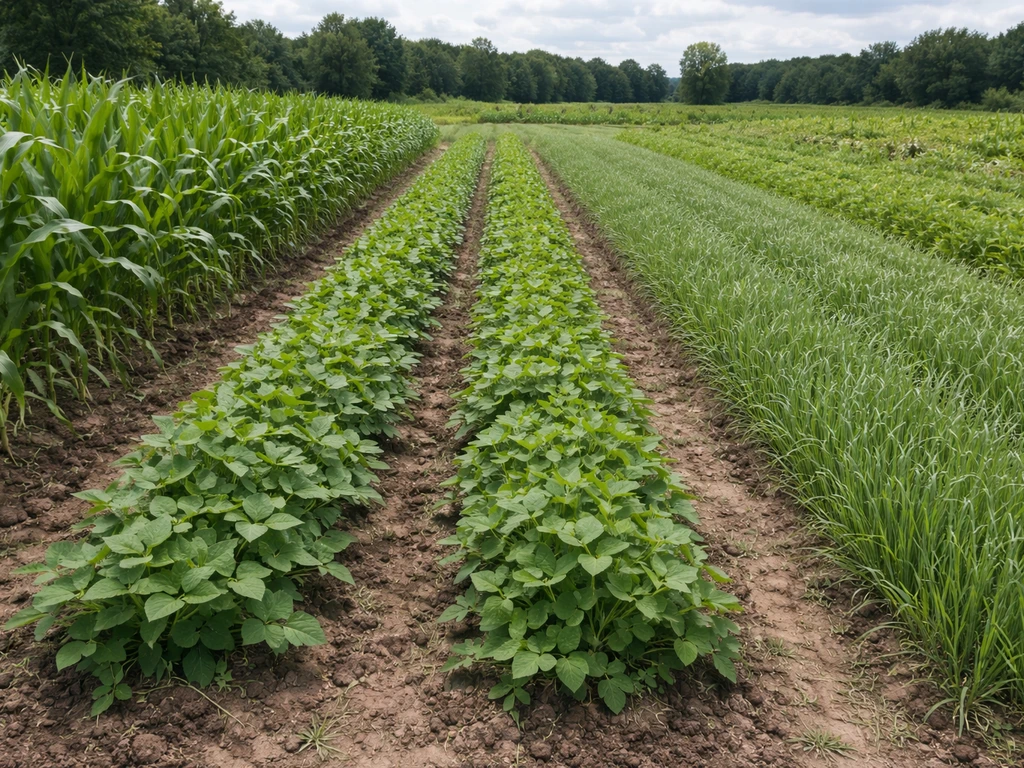
A simple corn-soybean-small grain rotation reduces pest pressure, breaks disease cycles, and improves soil nitrogen without additional fertilizer cost. Adding a cover crop phase makes it even stronger. In smaller systems, interplanting crops with different root depths, growth habits, and nutrient demands maximizes production per square foot and reduces pest habitat. The Three Sisters system (corn, beans, squash) is a historic example of companion planting that is still genuinely effective and practical at home garden scale.
Water efficiency
Drip irrigation typically uses 30 to 50 percent less water than flood irrigation while delivering water directly to the root zone where it is needed. Mulching around plants reduces soil evaporation by up to 70 percent. Timing irrigation to early morning reduces evaporative losses. These practices are not expensive at small scale and they translate directly to better yields with less water stress on the crop.
Post-harvest handling
In many developing countries, 20 to 30 percent of grain and vegetable harvests are lost to poor storage, fungal contamination, or spoilage before they reach consumers. Hermetic storage bags, simple grain cribs with good airflow, and cool dry storage for root vegetables can cut those losses in half without any advanced technology. This is an underused lever for effectively increasing food supply without growing a single additional acre.
The bigger system: waste, distribution, and what people eat
Roughly one-third of all food produced globally is lost or wasted, according to FAO estimates. That is about 1.3 billion tonnes per year. If global food waste were a country, it would be the third-largest greenhouse gas emitter on earth. Eliminating just half of that waste would be equivalent to adding the output of hundreds of millions of additional acres of farmland without touching a seed or a plow.
Distribution infrastructure is the second big lever. In countries where roads are poor, cold chains are absent, and market access is limited, farmers routinely grow food that spoils or sells at a loss because they cannot get it to buyers efficiently. Fixing rural road networks, building regional grain storage, and investing in cooperative marketing structures are unglamorous but high-impact interventions that move the needle faster than many new crop technologies.
Dietary demand patterns also matter. Producing one calorie of beef requires roughly 6 to 8 calories of grain feed. As global incomes rise and meat consumption increases, the effective calorie demand on cropland rises with it. A global shift even partway toward more plant-forward diets would meaningfully reduce the land, water, and input pressure on the farming system. This does not mean everyone must become vegetarian. It means that small shifts in demand aggregated across billions of people create enormous changes in what farmers need to produce.
For readers also interested in the US-specific picture or the global supply-demand trajectory over the next few decades, those are genuinely different angles on this same question and worth exploring alongside what is covered here. The US has its own limits and bottlenecks, so the answer depends on whether domestic production and imports together can reliably cover national demand does the us grow enough food to feed itself.
What you can realistically grow yourself
Here is the honest reality check most self-sufficiency content glosses over. A well-managed intensive kitchen garden of about 400 square feet (roughly 37 square meters) can produce a meaningful but not complete share of one adult's vegetable and herb needs for a season. High-yield crops like tomatoes (20 to 30 lbs per plant), zucchini (10 to 15 lbs per plant), pole beans, and leafy greens give you the most food per square foot. Root crops like carrots, beets, and potatoes store well and add real caloric density to a home garden. But vegetables alone won't feed you. They are relatively low in calories.
For caloric self-sufficiency, you need grains and legumes. Wheat grown at home yields about 0. 5 lbs of grain per square foot of growing space under good conditions, meaning you need roughly 1,000 square feet of dedicated grain bed to produce about 50 lbs of flour, which covers maybe two months of bread for one person. Dried beans yield about 0.
1 to 0. 2 lbs per square foot. Sweet potatoes and potatoes are among the most calorie-dense crops you can grow in a home garden, yielding 1 to 2 lbs per square foot in good soil. If you have 1,000 to 2,000 square feet of growing space and prioritize calorie-dense crops alongside vegetables, you can realistically cover 20 to 40 percent of one adult's annual caloric needs.
| Crop | Yield per sq ft | Calories per lb | Caloric yield per sq ft |
|---|---|---|---|
| Potatoes | 1.5 lbs | 350 kcal | 525 kcal |
| Sweet potatoes | 1.5 lbs | 390 kcal | 585 kcal |
| Dried beans | 0.15 lbs | 1,500 kcal | 225 kcal |
| Wheat (grain) | 0.5 lbs | 1,500 kcal | 750 kcal |
| Tomatoes | 2.5 lbs | 80 kcal | 200 kcal |
| Zucchini | 2 lbs | 65 kcal | 130 kcal |
| Leafy greens | 0.5 lbs | 100 kcal | 50 kcal |
The table above shows why most home gardens feel satisfying but don't replace grocery store trips. Vegetables are nutritionally important but calorically thin. If your goal is genuine self-sufficiency, prioritize potatoes, sweet potatoes, dried beans, and a small grain plot. If your goal is food security margin-building, supplement your diet with high-nutrition vegetables and herbs that are expensive or lower quality at the store. Both are valid, and both reduce your dependence on a supply chain that, as recent years have shown, can develop gaps without much warning.
Practical next steps you can take today
- Calculate how much growing space you actually have. Measure it. Even 200 square feet of well-managed raised beds produces meaningful quantities of fresh food from May through October in most climates.
- Pick two or three calorie-dense crops to prioritize this season alongside your usual vegetables. Potatoes, sweet potatoes, and dried bush beans are the easiest starting points for most gardeners.
- Start building your soil now regardless of what you plant. Add compost, plant a cover crop in empty beds, and stop tilling deeper than necessary. Soil improvement compounds over years and is the highest-return investment in growing food.
- Reduce waste from what you already grow. Learn to ferment, pickle, dehydrate, or root-cellar the surplus from high-yield crops rather than composting excess. This is where a lot of home growers lose ground.
- Track your yields. Write down what you planted, when, and how much you harvested. After two or three seasons you will have real data on what works in your specific conditions, which is far more useful than any general guide.
- Support local farming infrastructure where you can: farmers markets, CSA subscriptions, local grain co-ops. The closer food is produced to where it is consumed, the less vulnerable it is to the distribution and storage failures that drive hunger even when global supply is technically adequate.
The bottom line is that feeding everyone on earth is physically possible with the land and technology that exist right now. Farmers can do it. The yield potential is there. What is needed is better soil management, smarter water use, less waste, and fairer distribution. At the home scale, every bed you plant, every pound you store, and every pound you stop throwing away is a small vote for a more resilient food system. Start with what you can control, learn what works in your specific conditions, and scale up from there.
FAQ
If the world already has a calorie surplus, why do hunger and undernourishment still happen?
Because surplus at the global level does not guarantee supply where people are living, or at the price they can afford. Shortfalls often show up due to income gaps, conflict or local disruptions, poor market access, spoilage in transit, and foods being available but not in the forms people need (for example, lack of protein or micronutrient-rich staples).
Does “farmers can grow enough food” assume current diets will stay the same?
Not necessarily. The conclusion relies on calories, but diet composition changes the pressure on cropland. Higher meat and dairy demand increases the amount of feed grains needed, so even if total calorie production is high, the mix required for healthier or different diets can still stress parts of the system.
What is the main reason yields are lower than they could be, and where are the biggest gaps?
Yield gaps usually come from a bundle of constraints acting together, not one missing input. Common big contributors include degraded soils, unreliable rainfall or irrigation access, pests and diseases, and limited ability to buy or apply fertilizer and improved seed at the right time.
Why does fertilizer price matter so much, even when farmers have good land?
Because many crops need timely nitrogen to reach yield potential, and substituting other nutrients usually cannot fully compensate. When fertilizer becomes unaffordable, farmers may cut application rates, apply late, or reduce area planted, all of which can lower yields well beyond the fertilizer savings.
Can crop rotation and cover crops really replace expensive inputs, or is it unrealistic for small farms?
They can reduce reliance, but results depend on labor availability, rainfall, and how quickly the practice establishes. Legume cover crops and composting often work best when farms can consistently manage biomass and incorporate it (or terminate it) at the right time, and when farmers have enough land to allocate a portion to the rotation.
How do farmers deal with water scarcity if they cannot afford drip irrigation?
If drip is too costly, lower-cost steps can still help, such as mulching to reduce evaporation, planting drought-tolerant varieties, using smaller irrigation scheduling (watering earlier in the day and targeting root zones), and improving soil structure with compost or reduced tillage to increase water holding capacity.
What can be done when pests and diseases reduce yield even with pesticides?
Overreliance on chemicals can fail when resistance builds or when infestations arrive earlier than expected. Integrated approaches help more, such as rotating crop types, using resistant varieties, planting at times that avoid peak pest pressure, and improving field sanitation and storage hygiene to reduce carryover.
If a lot of food is wasted, what is the practical difference between “waste” and “loss”?
Loss usually happens earlier, often during harvest, storage, or transport when food spoils or is contaminated. Waste typically refers to edible food being discarded later, such as at retail or by consumers. The solutions differ, for example, hermetic storage targets loss, while portion planning and date labeling can target waste.
What storage methods are “good enough” without advanced technology?
Hermetic bags for grains and simple, dry, well-ventilated cribs for certain staples can cut spoilage and pest damage. The key details are dryness, cleanliness, sealing (for hermetic systems), and consistent monitoring so moisture does not creep back in after storage.
How much food can a home garden realistically provide for self-sufficiency?
For most people, a garden can meaningfully cover a portion of vegetables, but it will not usually replace all calories. To approach calorie self-sufficiency, you generally need a dedicated space for calorie-dense staples like potatoes, sweet potatoes, dried beans, and a smaller grain plot, and you should plan based on storage and season length, not just fresh harvest.
Why do home gardens often feel productive but still require grocery store staples?
Fresh vegetables are nutrient-rich but relatively low in calories per square foot, and they also have limited storage life unless you preserve them. If you do not grow or store enough caloric staples, you will naturally run out before the next harvest.
What is the biggest mistake people make when trying to grow “more food per acre” at home or on small farms?
They chase generic high-yield varieties or techniques without matching them to local climate, soil, and rainfall patterns. The better decision is to prioritize crops and varieties that fit your conditions and to start with soil improvement and management practices that stabilize yields over time.
How can improvements scale from small plots to feeding large populations?
Scaling usually requires systems change: spread proven practices across many farms, reduce post-harvest losses with storage and logistics, and ensure farmers have access to workable credit, seed, and advisory support. Without distribution and affordability improvements, production gains may not translate into better nutrition outcomes.
Next Article
Why the World Needs to Grow More Food and What You Can Do
Why more food is needed and how to grow more at home with crop planning, soil, water, and yield roadmaps.