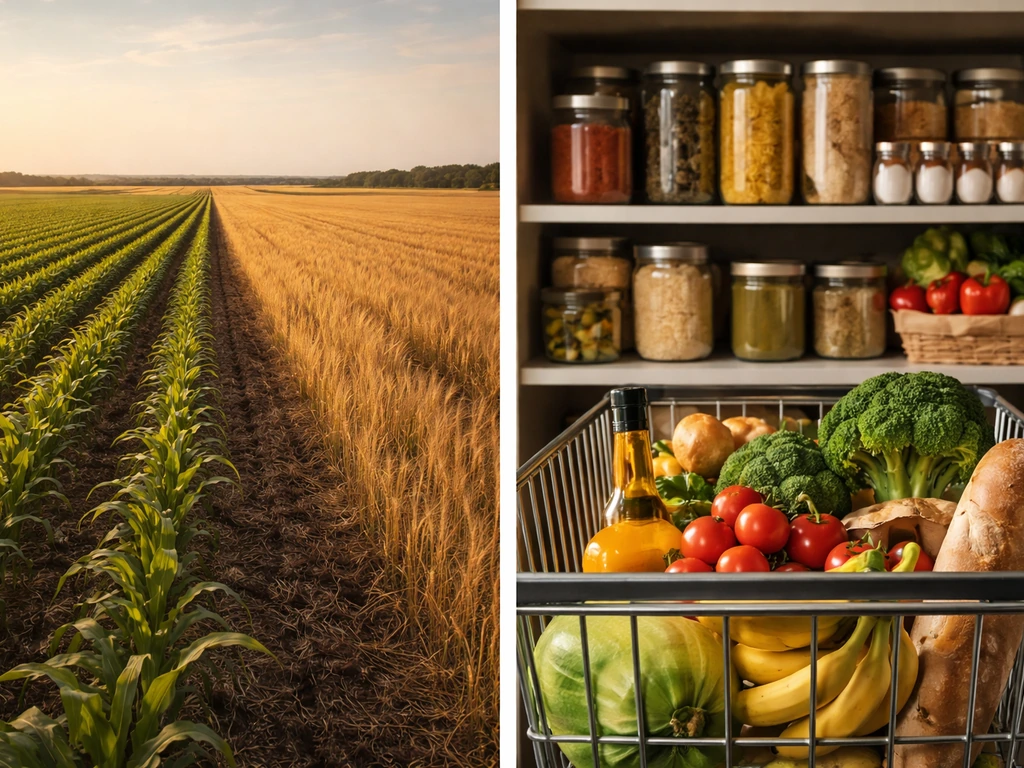
Yes, the world produces enough calories to feed every person alive today. In 2023, global food supply crossed 3,000 kilocalories per person per day, which is well above the average adult requirement of roughly 2,000 to 2,500 kcal. The problem has never really been production. It's access, affordability, waste, and distribution. blank" rel="noopener noreferrer">About 673 million people, or 8.2% of the global population, still go hungry, not because farmers can't grow enough, but because of a long chain of failures between the field and the plate. Understanding that gap is useful, but what's more useful for most readers here is knowing what you can actually do about it at a household level.
Do We Grow Enough Food to Feed the World? How to Think and Act
Marcus Hendrick
1 May 2026
What 'enough to feed the world' actually means
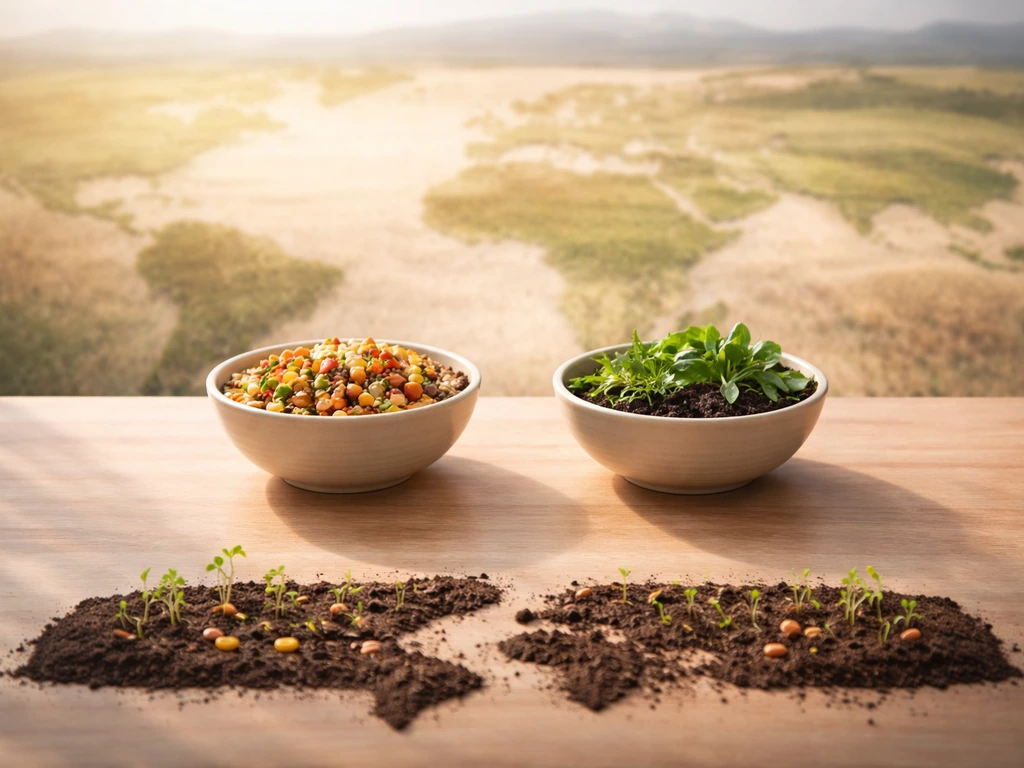
When food security researchers talk about whether the world produces enough, they're measuring two different things. The first is dietary energy supply (DES), which is the total calories available per person per day after accounting for production, imports, and exports. That number now sits above 3,000 kcal globally. The second is actual access, measured by things like the Food Insecurity Experience Scale (FIES), which captures whether real people are skipping meals or going without food. These two numbers can tell very different stories.
The World Food Summit defined food security in 1996 as having physical and economic access to sufficient, safe, nutritious food at all times. That definition has four dimensions: availability (is food produced?), access (can people get it?), utilization (is it nutritious and safe?), and stability (is that access consistent?). Global production mostly solves the first dimension. The other three are where things fall apart. Elevated inflation, in particular, keeps crushing purchasing power for low-income populations, which the FAO's latest State of Food and Agriculture report flags as one of the biggest current drivers of hunger.
How global food production works and what limits it
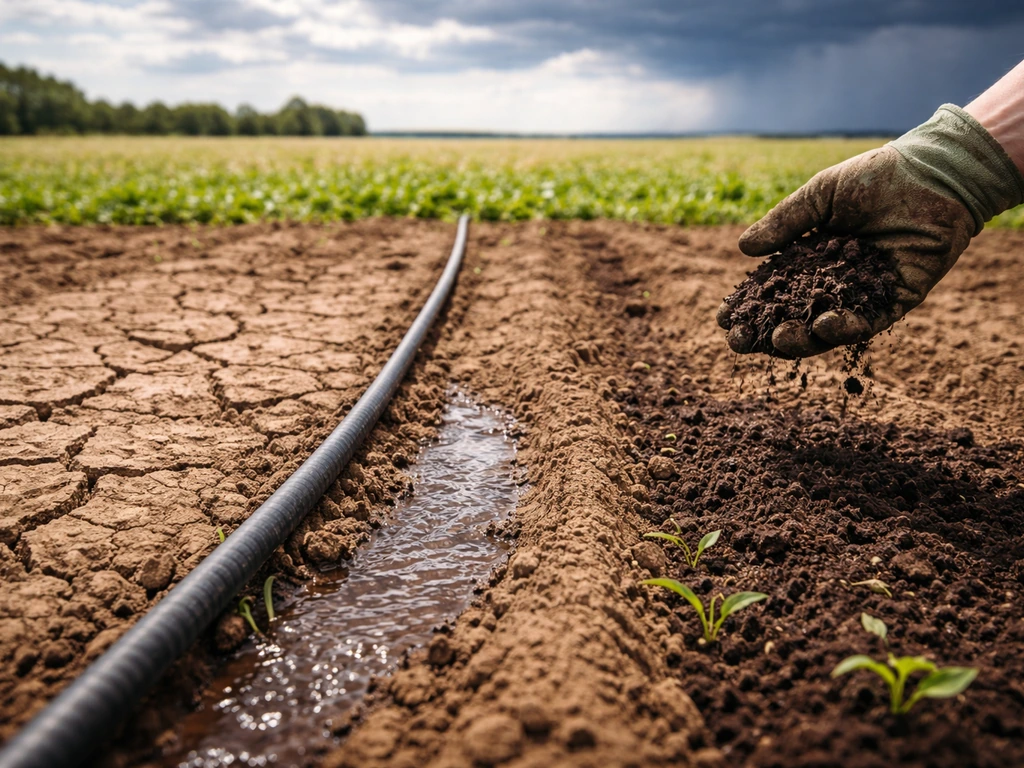
Agriculture is a system built on four inputs: land, water, nutrients, and stable climate. When any of those tighten, the whole system strains. Right now, all four are under pressure at once.
Land
About a third of the world's agricultural land is moderately to highly degraded from erosion, salinization, compaction, acidification, or chemical pollution. FAO estimates soil erosion alone can cut crop yields by up to 50%. That's not a future threat. It's already baked into current yield figures. Expanding into new arable land is possible in some regions, but the best land is largely in use, and clearing forests to farm creates its own cascade of problems.
Water
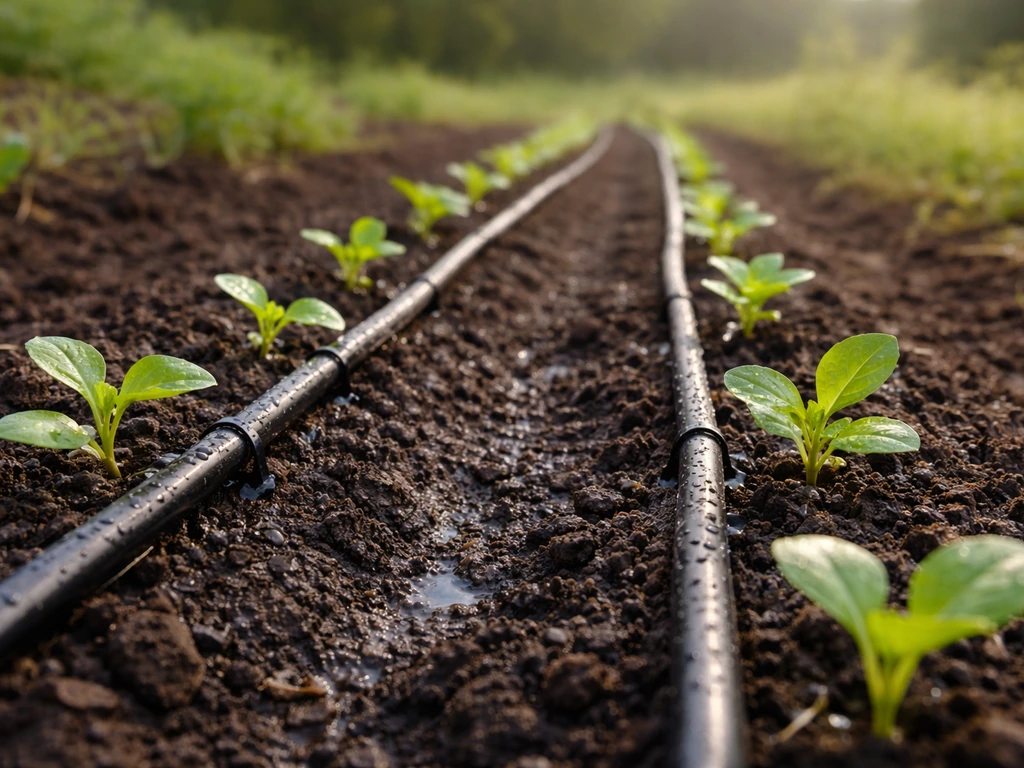
Agriculture accounts for roughly 70% of global freshwater withdrawals. Irrigated farmland covers only about 20% of cultivated area, yet it produces around 40% of global food supply, which tells you how water-intensive high-yield farming really is. In water-scarce regions, especially Northern Africa and parts of Asia, withdrawals already push close to or past sustainable limits. More food means more water, and in many places there isn't more water to spare.
Fertilizer
Modern crop yields depend heavily on synthetic fertilizers, particularly nitrogen, phosphorus, and potassium. Fertilizer prices hit all-time highs in 2022, driven by post-COVID supply chain disruptions, high energy prices (nitrogen fertilizer is energy-intensive to produce), and the Russia-Ukraine war disrupting key production and export corridors. When fertilizer gets expensive or unavailable, smaller farmers in developing countries reduce application and yields drop.
Climate
The IPCC's AR6 report is clear that climate change is already reducing food security and will continue to do so. Combined temperature and precipitation effects could cut agricultural yields by up to 32% by 2100 under high-emission scenarios. Heat and drought are the primary culprits, hitting staple crops like wheat, maize, and rice hardest in already-vulnerable tropical and subtropical regions. Even a 1.5°C warming scenario brings significant disruption to growing seasons that billions of people depend on.
FAO projections suggest meeting global food demand in 2050 for a population of around 10 billion is technically possible within realistic rates of land and water use, but it requires a 70% increase in food production compared to 2009 baselines. That's a massive agricultural transformation that has to happen against a backdrop of degrading land, tightening water supplies, and a destabilizing climate.
Why hunger still exists when production looks sufficient
This is the part that frustrates people the most, and honestly, it should. If the world produces over 3,000 kcal per person per day and the average adult needs 2,000 to 2,500, how are 673 million people still hungry? If you want to ask a similar question for the United States, a good starting point is whether the US grows enough food to feed itself does the us grow enough food to feed itself. The answer is that calories are not evenly distributed, and having food available doesn't mean people can afford or access it.
- Poverty: In 2024, the WFP reported 295 million people across 53 countries experiencing acute hunger. Most live in regions where food prices have outpaced incomes. Elevated global inflation has especially hammered low-income households who spend 50 to 70% of their income on food.
- Distribution failures: Food is produced in concentrated regions and has to travel enormous distances. Supply chains through conflict zones, regions with poor road infrastructure, or areas without cold storage break down constantly.
- Political instability: Wars and governance failures don't just displace people, they destroy farms, block aid, and disrupt markets. Many of the most acutely hungry places are also conflict zones.
- Nutrient mismatch: Even when enough calories exist, people may lack access to protein, micronutrients, or dietary variety. Calorie sufficiency on global balance sheets can mask micronutrient deficiency in reality.
- Seasonal shocks: Subsistence farmers often run out of stored food before the next harvest. A single bad season, a flood, or a drought creates a hunger gap that can't be absorbed without reserves or income.
The biggest efficiency wins: cutting loss and waste
If you're looking for the single most impactful lever in global food security, it's reducing the food that never gets eaten. The numbers here are staggering. FAO estimates 13.2% of all food is lost after harvest and before it reaches retail stores, covering on-farm losses, storage, processing, and transportation. An additional 19% is wasted at retail, food service, and household levels. Households alone account for about 631 million tonnes of food waste equivalent per year.
FAO modeled what halving food loss and waste would mean by 2030: a 4% reduction in agricultural greenhouse gas emissions and 153 million fewer undernourished people. That's one intervention. No new land, no new technology, no new seeds. Just stopping the waste of food that already exists. For context, that's more people than the entire population of Russia moving out of food insecurity.
The loss happens differently at different stages. In low-income countries, most loss is post-harvest due to inadequate storage, poor transportation, and lack of refrigeration. In high-income countries, the waste happens later, at retail and in households, because food is cheap enough to discard. Better cold chain infrastructure, improved storage technology, and consumer behavior change each target different parts of this problem. For home growers, the lesson is immediate: grow what you can store and eat, and build your garden around a preservation strategy.
What you can realistically grow at home
Home food production won't solve global hunger, but it can meaningfully reduce your household's dependence on supply chains, cut your food bill, and give you a real buffer against price shocks or disruptions. The key is being honest about yields and planning around what you can actually produce in your space and climate.
Realistic yield expectations by crop
| Crop | Yield per 10-ft row | Notes |
|---|---|---|
| Tomatoes | 15–45 lb | 10–15+ lb per plant; higher end requires good soil, consistent watering |
| Carrots | ~10 lb | Texas A&M estimates ~1 lb per foot of row; great calorie-to-space ratio |
| Beets | 10–20 lb | Varies by source (UMD: 2–5 lb, Maine Extension: ~10 lb); depends on spacing |
| Lettuce (head) | 8–12 heads per 10 ft | Not calorie-dense but fast-maturing; great for nutrition diversity |
| Green beans | 8–12 lb | Bush beans reliable; pole beans produce more per square foot over time |
| Zucchini/squash | 20–40 lb per plant | One of the highest-yield crops per plant; prolific and easy to grow |
| Potatoes | 10–20 lb per 10 ft row | High in calories; excellent for food security focus |
If your primary goal is calorie production, focus on calorie-dense crops: potatoes, winter squash, dried beans, and sweet corn. If you want year-round nutrition, add fast greens like spinach, lettuce, and Swiss chard that you can harvest repeatedly across cool seasons. Tomatoes are time-intensive but highly versatile for canning and preserving, which extends their value well past the growing season.
Space requirements for meaningful coverage
A serious home garden covering a meaningful portion of vegetable and calorie needs requires roughly 200 to 400 square feet per person at minimum, and closer to 1,000 to 4,000 square feet if you want to grow a substantial share of your annual calories. Container and small raised-bed gardens (under 100 sq ft) are great for supplemental fresh food and reducing grocery spending on produce, but they won't replace staples. Be clear-eyed about what your setup can deliver so you plan around it rather than being disappointed.
Calculate your household needs and garden capacity
Here's how to actually figure out what you need and whether your space can deliver it.
- Estimate your household's daily calorie needs. A reasonable average is 2,000 kcal per adult per day, or about 730,000 kcal per person per year. A family of four needs roughly 2.9 million kcal annually from all food sources.
- Decide what percentage of your diet you want to grow. Realistically, a well-managed home garden can cover 20 to 40% of a household's vegetables and a smaller share of total calories. Set a target: maybe 25% of vegetables in year one, scaling up from there.
- Count your growing area in square feet. Measure every bed, container cluster, and usable patch. Then multiply usable space by your climate's growing season length (number of frost-free weeks divided by 52 gives you a seasonal factor).
- Match crops to your space and season. Use extension service planting charts for your region. For example, Texas A&M suggests 5 to 10 feet of row per person for carrots for fresh use. USU Extension recommends 2 to 3 tomato plants per person for fresh eating, plus extra for canning.
- Plan for succession planting. A single bed can produce two or three crops per season if you plant early-season cool crops (spinach, lettuce, peas), follow with warm-season crops (tomatoes, beans, squash), and then a fall cool crop (kale, root vegetables). This triples your effective yield per square foot.
- Build a preservation plan alongside your planting plan. Decide what you'll can, freeze, ferment, or dry before you plant. This determines how many plants you actually need beyond fresh eating.
- Track your yields in a simple log. Write down what you planted, when you harvested, and how much you got. After one season you'll have real data to refine your plan instead of relying on generic estimates.
Scale up from containers to homestead: your action plan
Whether you're starting with a balcony or working toward a half-acre homestead operation, the path is the same: start simple, measure what you produce, and expand into what works for your soil, climate, and time. Here's how to build that progression deliberately.
Stage 1: Container and small raised bed (under 100 sq ft)
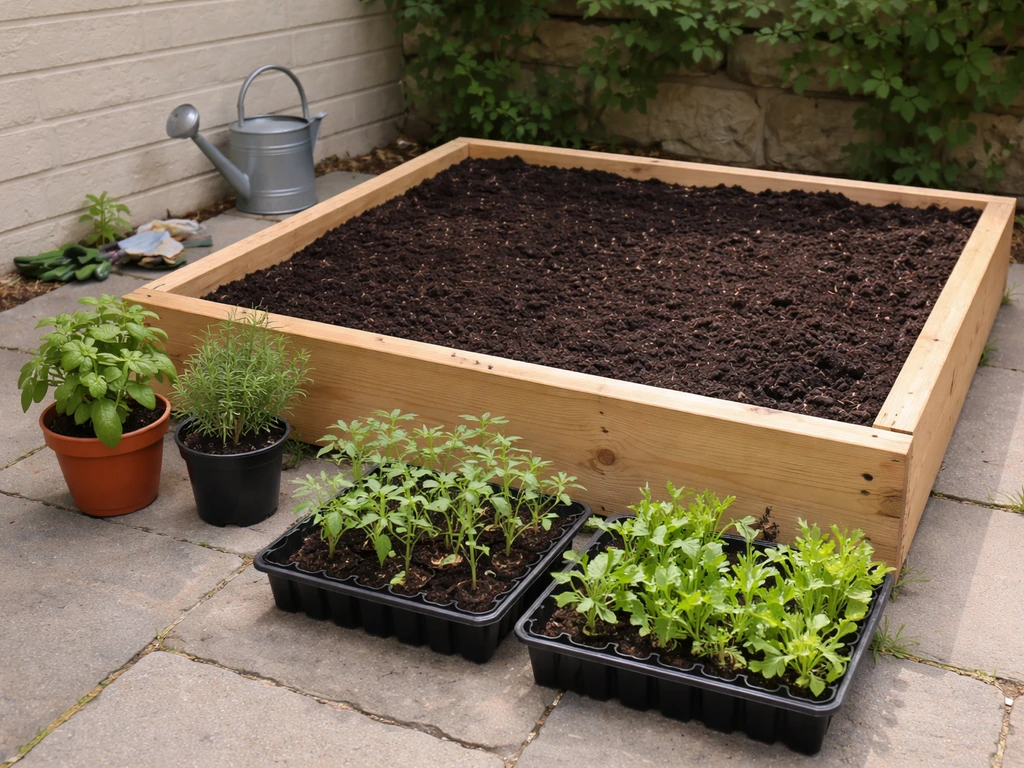
Start with high-yield, high-value crops that would cost you the most at the grocery store. Tomatoes, salad greens, herbs, and cherry peppers give you the best return on a small footprint. A single determinate tomato plant in a 5-gallon container can produce 5 to 10 lb of fruit in a season. Greens like lettuce and spinach grow fast and give you cut-and-come-again harvests over weeks. The goal at this stage isn't food security, it's learning: soil, watering rhythm, pest management, and harvest timing.
Stage 2: Dedicated garden beds (100 to 500 sq ft)
At this scale you can start making a real dent in your grocery spending and build seasonal variety. Focus on crops with multiple harvests (zucchini, beans, chard, kale), high calorie density (potatoes, winter squash), and easy storage (dried beans, garlic, onions, root vegetables). This is the stage to invest in your soil: compost, cover crops, and organic matter make more difference than any seed variety. Aim for at least 2 to 3 inches of compost worked into beds every year.
Stage 3: Large garden or small homestead (500 to 4,000+ sq ft)
At this scale, food security becomes a realistic outcome. A well-managed 2,000 square foot garden, succession planted across three seasons, can supply a significant share of a small family's vegetable and some calorie needs. Add a root cellar or dedicated cold storage and you can carry harvest through winter. This is where grain crops, large bean plantings, and perennial crops like asparagus, fruit trees, and berry bushes start making sense. These take years to establish but pay back for decades.
What to grow first, no matter your scale
- Tomatoes: high yield, high versatility, excellent for canning and preserving
- Zucchini or summer squash: almost impossible to fail with; produces abundantly with minimal effort
- Salad greens (lettuce, spinach, arugula): fast, nutritious, and expensive at the store
- Potatoes: calorie-dense and surprisingly easy to grow in containers or beds; store well
- Bush green beans: reliable producers that can be frozen or pressure-canned easily
- Kale or Swiss chard: cold-hardy, cut-and-come-again, nutritionally dense all season
The global food system has real structural problems, from soil degradation and water scarcity to distribution failures and climate risk. Understanding those problems (as explored in related topics like why the world needs to grow more food and whether farmers can grow enough for everyone) gives important context. Related questions like whether farmers can grow enough for everyone help frame what is realistic at the global level versus what changes you can make at home. But the most empowering thing about that knowledge is what it points to at the household level: the supply chain is fragile, waste is enormous, and local production, even at small scale, genuinely matters. Start where you are, measure what you produce, and build from there.
FAQ
If the world produces enough calories overall, why do hunger and food insecurity still persist in some places?
Because average calories available worldwide do not guarantee distribution, affordability, or reliable access. Conflicts, local price spikes, weak infrastructure, and seasonal disruptions can leave specific communities with low purchasing power even when global supply is adequate.
How can “dietary energy supply” be above 3,000 kcal, yet many people still report skipping meals?
DES is a modeled supply indicator, not a direct measure of what individuals can eat. People can face shortages at the household level due to high prices, lost income, long travel times to markets, or food that is available but not safe or nutritious.
Does “enough food to feed the world” mean there will be enough specific nutrients, like protein, iron, or vitamin A?
Not automatically. Calorie sufficiency does not ensure balanced diets. A system can have adequate energy but still fall short on micronutrients if diets rely on a narrow set of staples or if affordability limits access to animal-source foods, legumes, fruits, and vegetables.
Is it fair to say the main solution is reducing food waste, even if global hunger is concentrated in lower-income regions?
Reducing waste helps, but it targets different stages differently. In lower-income settings, interventions that reduce post-harvest loss (storage, transport, cooling) can help more directly, while in higher-income settings waste prevention and portion changes reduce discard later in the chain.
What’s the biggest practical mistake people make when trying to use home gardening to improve food security?
Assuming yield claims that ignore their local conditions and time constraints. Start with a realistic harvest plan (what you can grow, preserve, and actually eat) rather than aiming for “replacement” of staples that your space cannot reliably produce.
What if I live somewhere with short growing seasons or limited sunlight, can I still grow meaningful food at home?
Yes, but you need to match crops to your season and use succession planting and preservation. Fast greens and container-friendly calorie sources (like potatoes where feasible) can extend output, and freezing or drying can turn peak harvest into year-round availability.
Which home-preservation method should I prioritize if my main goal is reducing dependency on stores?
Prioritize methods that match your most abundant harvest. For many households that means drying and pantry storage for beans, garlic, onions, and root crops, plus basic refrigeration-free approaches like canning for tomatoes if you can do it safely and consistently.
How do I estimate whether my garden can cover any “calorie” portion, not just vegetables?
Use a simple accounting step: list the calories you eat per week from staples, estimate expected yields for your chosen calorie-dense crops, then subtract losses from pests, under-harvest, and spoilage. This shows how much volume you actually need and prevents overestimating what a small garden can deliver.
If water is limited where I live, is home gardening still worth it?
It can be, especially with water-efficient designs. Focus on drought-tolerant crops, improve soil organic matter to hold moisture, use mulching, and consider drip irrigation. Containers can also reduce water waste compared with open beds if managed carefully.
Does organic gardening automatically prevent soil degradation or increase resilience?
Not automatically. Organic practices can help soil structure and long-term fertility, but the outcome depends on what you do (compost quality, erosion control, crop rotation, and avoiding bare soil). The key is building soil health with consistent additions and cover where possible.
Next Article
Does the US Grow Enough Food to Feed Itself? Calories, Crops, and Reality
Does the US grow enough food to feed itself? Calories vs self-sufficiency, plus home garden steps.