Quick answer: how much wheat per person
If you want to grow enough wheat to cover one person's bread eating for a full year, plan on harvesting roughly 200 to 250 pounds of whole wheat grain (about 90 to 115 kg). That covers the average American's wheat flour consumption, which runs somewhere around blank" rel="noopener noreferrer">130 to 145 pounds of flour per year. USDA ERS estimates that U.S. per-capita blank" rel="noopener noreferrer">wheat flour consumption was about 135 pounds per person in 2014, staying roughly stable versus 2013. If you're milling whole wheat flour, 200 pounds of grain gets you 200 pounds of flour (100% extraction). If you're milling white flour, you'll need closer to 200 to 210 pounds of grain to yield that same 145 pounds of flour, since white flour extraction rates typically run 70 to 75%. Either way, 200 to 250 pounds of harvested grain is a solid, realistic target with a small buffer built in. From there, everything comes down to your plot size and what kind of yield you can realistically get.
Two assumptions are baked into that number. First, I'm assuming the person is using wheat primarily for baking bread and similar flour-based foods, not for pasta, livestock feed, or other heavy uses. Second, I'm using a realistic home-garden yield of around 25 to 60 pounds of grain per 1,000 square feet (depending on your soil, climate, and variety), rather than the commercial farm average, which is much higher per acre but less relevant to someone growing on a quarter-acre or less. Keep those assumptions in mind as you run your own numbers below.
From grain to flour: what the milling yield actually means
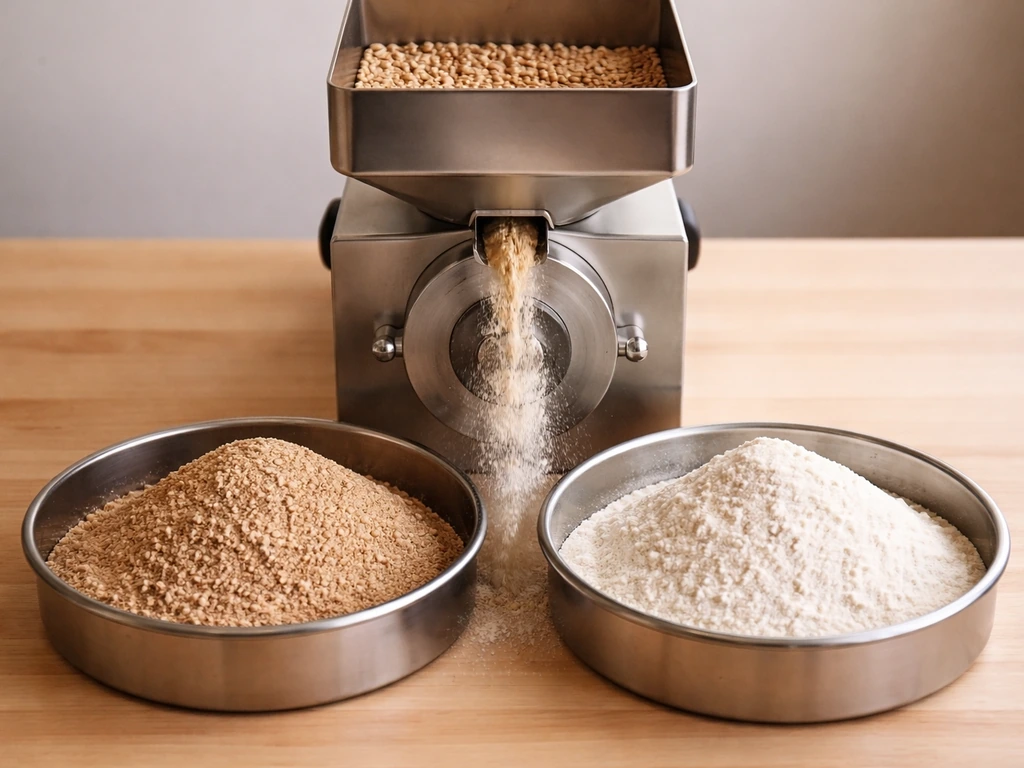
Before you can figure out how much wheat to plant, you need to understand what you lose (or don't lose) in the milling process. Milling yield, also called extraction rate, is simply the percentage of the grain kernel that ends up as flour. Whole wheat flour has a 100% extraction rate because you're keeping everything: the bran, the germ, and the endosperm. One pound of whole wheat grain goes in, one pound of whole wheat flour comes out. It really is that simple.
White flour is different. When you mill for white flour, you're sifting out the bran and most of the germ to get a finer, lighter flour. The typical extraction rate for white flour in the U.S. is 70 to 75%. That means for every pound of wheat grain you put in, you get roughly 0.70 to 0.75 pounds of white flour. The rest is bran and germ, which you can use for other things (bran for muffins, wheat germ for nutrition boosts), but it doesn't count toward your flour supply.
| Flour Type | Extraction Rate | Flour from 1 lb grain | Grain needed for 1 lb flour |
|---|
| Whole wheat flour | 100% | 1.0 lb | 1.0 lb |
| White flour (typical) | 70–75% | 0.70–0.75 lb | 1.33–1.43 lb |
The practical upshot: if you want to mill white flour at home, you need about a third more grain than if you're milling whole wheat. For most home growers, whole wheat flour is the more efficient and nutritionally richer choice, and a countertop grain mill like a Nutrimill or Komo handles it beautifully. But if white flour is important to you, just factor in that extra 30% when you calculate how much to grow.
From flour to bread: how much wheat does a loaf actually require
A standard homemade sandwich loaf of bread uses roughly 3 cups of flour, which weighs about 360 to 390 grams (around 13 to 14 ounces, or just under a pound). Let's call it 13 ounces of flour per loaf to keep the math clean. If you bake one loaf a week, that's 52 loaves a year, which comes to about 42 pounds of flour annually just for sandwich bread.
Most households bake more than just sandwich bread, though. Add pizza dough, pancakes, muffins, pasta, and holiday baking, and a single person's household flour use climbs quickly toward that 130 to 145 pound annual figure mentioned earlier. If you're baking all your own bread and cooking from scratch regularly, use 130 to 150 pounds of flour as your planning target for one adult. If you're only supplementing store-bought and want a partial supply, scale down proportionally. For just bread: one loaf a week runs about 42 to 45 pounds of flour per year. The next step is figuring out how wheat grows into grain, including what it needs during each stage of the season how does bread grow. For full flour self-sufficiency: plan for 130 to 150 pounds per person per year.
Step-by-step: calculate exactly how much you need to grow

Here's the method I use whenever I'm planning a wheat plot. Go through these steps in order and you'll land on a plot size and a planting weight that's specific to your situation.
- Decide your annual flour target. Use 130 to 150 lb for full self-sufficiency per person, or 42 to 45 lb if you're only baking bread. Multiply by the number of people you're feeding.
- Choose your flour type. Whole wheat: your grain target equals your flour target (1:1). White flour: multiply your flour target by 1.4 to account for the 70–75% extraction rate (e.g., 150 lb flour × 1.4 = 210 lb grain needed).
- Estimate your expected yield per square foot. In a well-prepared home garden bed, a realistic yield is 0.5 to 1.0 oz of grain per square foot (roughly 27 to 60 lb per 1,000 sq ft). Start conservatively at 0.5 oz per sq ft for your first year.
- Calculate the plot size you need. Divide your grain target by your expected yield per square foot. Example: 200 lb grain needed ÷ 0.03125 lb per sq ft (0.5 oz) = 6,400 sq ft, or about 0.15 acres. At a more optimistic 1.0 oz per sq ft, that same 200 lb target only needs about 3,200 sq ft.
- Add a buffer. Multiply your plot size by 1.25 to 1.5 to account for bad weather, pest pressure, or uneven germination. This is the real plot size to aim for.
- Convert plot size to seed weight for planting. Wheat is typically seeded at about 90 to 120 lb per acre (roughly 2 to 3 lb per 1,000 sq ft) depending on variety and planting method. Use that to figure out how much seed to buy or save.
Let's run a full example. One adult wants enough whole wheat flour for all their baking: target is 140 lb of flour, which equals 140 lb of grain (whole wheat, 100% extraction). To scale this up for a household instead of one adult, use the same approach for how much wheat to grow for a family of 4 as your comparison point. Using a conservative yield of 0.5 oz per sq ft, they need 140 lb ÷ 0.03125 lb/sq ft = 4,480 sq ft. Adding a 25% buffer bumps that to 5,600 sq ft, or just under an eighth of an acre. At 2.5 lb of seed per 1,000 sq ft, they'd need about 14 lb of seed wheat to plant. That's a completely manageable scale for a serious home gardener or small homesteader.
The numbers above are a starting point, not a guarantee. In my experience, first-year wheat growers almost always underestimate how much the real-world yield can swing. Here are the main variables that will push your actual harvest up or down.
Soil quality and fertility
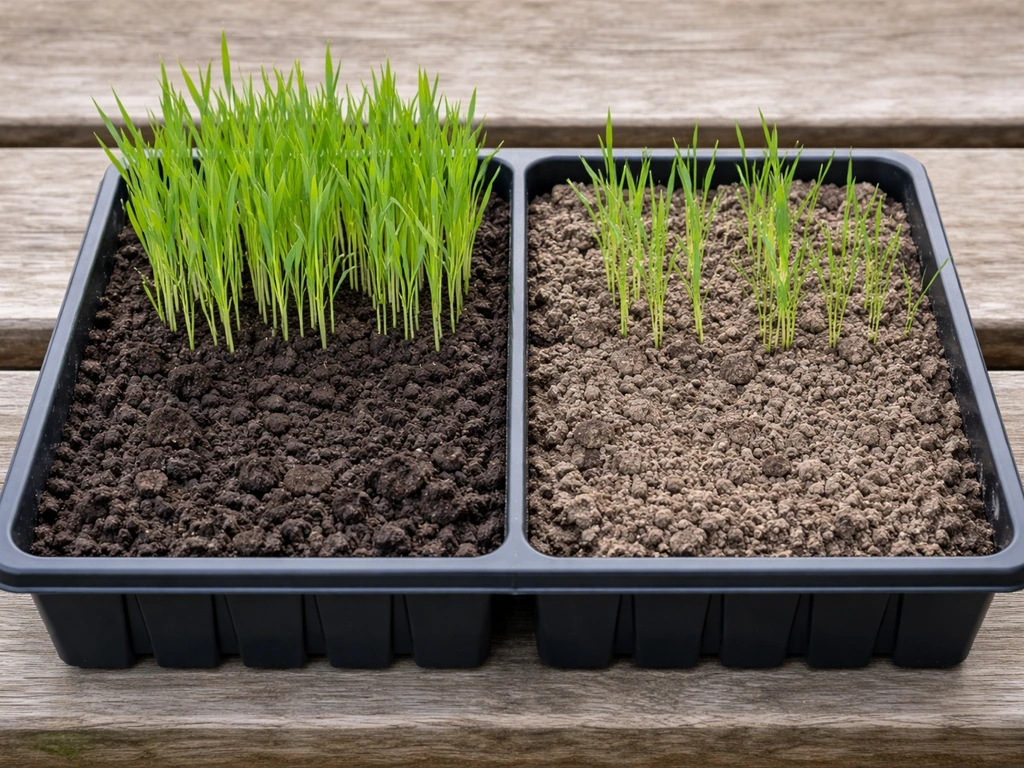
Wheat is a heavy nitrogen user. Thin, compacted, or nitrogen-depleted soil can cut your yield in half compared to well-amended beds. If you're starting with garden soil that hasn't been enriched, add compost heavily the season before planting and consider a legume cover crop the year prior to build natural nitrogen. Clay-heavy soils can also cause waterlogging in wet springs, which is one of the fastest ways to lose a wheat stand.
Weather and your climate zone
A dry, warm spring leads to excellent grain fill. A wet, cool spring invites fungal diseases like rust and fusarium head blight, both of which can slash yields dramatically. Drought during grain fill in summer can shrink kernel size and reduce your total weight by 20 to 40%. This is exactly why the 25 to 50% buffer I recommended above isn't optional, it's essential. In zones with highly variable spring weather (much of the Midwest and Northeast), I'd lean toward the 50% buffer rather than 25%.
Planting density and germination rate
Not every seed germinates. A good germination rate for fresh seed wheat is 85 to 95%, but older or improperly stored seed can drop to 60 to 70%. That directly affects your plant population, which affects yield per square foot. When I'm planting from saved seed, I always do a quick germination test in a damp paper towel before committing to a full plot. Planting density also matters: too thin and you get low yield and weed pressure; too dense and the plants compete for nutrients and become susceptible to lodging (falling over), which makes harvesting a nightmare.
Variety selection
Winter wheat and spring wheat have very different growing schedules and yield potentials. In most of the U.S., winter wheat (planted in fall, harvested the following summer) is higher-yielding and better suited to most climates. Spring wheat is the better choice in very cold climates where winter kill is a real risk (think northern Minnesota or high-altitude regions). The variety also affects bread quality significantly, which is a whole separate topic worth digging into if you care about the final loaf. Hard red wheat varieties like 'Hard Red Winter' or 'Turkey Red' have high gluten content and make excellent bread flour, which is what most home bakers are after.
Practical next steps: plot size, variety, and getting started
Now that you have a calculation method and an understanding of what affects yield, here's how to actually move forward. These are the steps I'd take if I were starting a wheat plot from scratch today.
- Run your numbers first. Use the step-by-step method above to figure out your grain target, your estimated plot size, and how much seed you need to buy. Write it down. Guessing at planting time leads to either wasted effort or a shortfall.
- Start smaller than you think you need to. A 500 to 1,000 sq ft test plot in your first year will teach you more than any article can. Treat it as a learning season, not a production season, and scale up once you know how wheat performs in your specific soil and microclimate.
- Choose a variety matched to your region. Contact your local cooperative extension office or a regional seed supplier and ask what winter or spring wheat performs best in your county. Regional performance data is far more useful than general recommendations.
- Prepare your soil before you plant, not after. Wheat needs a firm, level seedbed. Till or broad-fork to about 6 inches, incorporate compost at 2 to 3 inches, and rake smooth. Lumpy or fluffy seedbeds lead to poor germination.
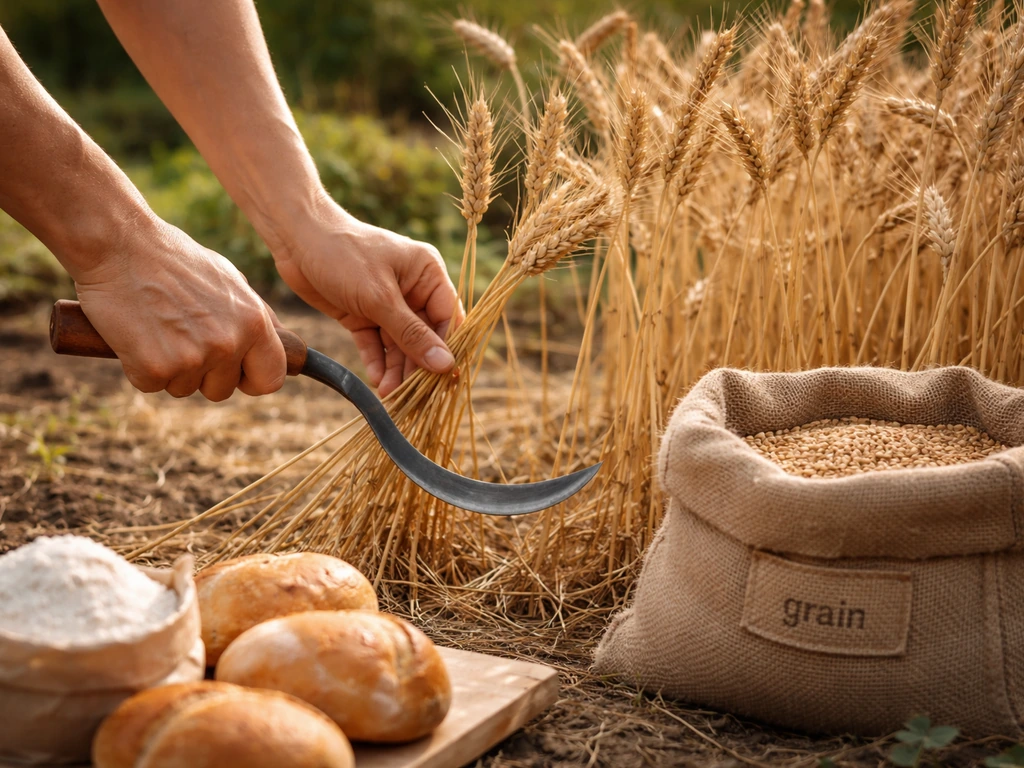
- Plan your harvest and threshing method before you grow. This is the step most first-timers skip. Small plots can be harvested by hand with a scythe or grain cradle and threshed by beating the heads against a tarp. Larger plots need a combine or access to custom harvesting. Know your plan before your wheat is ready, because grain left standing too long after ripening is grain lost to weather and birds.
- Save some grain as seed for next year. Once you've grown a variety that works in your garden, save 10 to 15% of your harvest as seed wheat for the following season. Properly dried and stored in a cool, dry place, wheat seed stays viable for 3 to 5 years.
If you're growing wheat as part of a broader self-sufficiency plan, the grain-to-flour calculation above connects directly to how you plan the rest of your garden. Wheat is a staple crop that rewards planning and punishes guesswork, but the math is genuinely not complicated. Once you've grown one season, you'll have real yield data from your own plot, which makes every future calculation much more accurate. Understanding what wheat needs to grow well in terms of soil, water, and light will also help you get closer to that upper end of the yield range from your very first season. If you focus on what will feed wheat, you can better predict and protect your yields from season to season will feed wheat grow. If you're trying to improve your odds, the next step is to learn what wheat needs to grow well, including the basics of soil, water, and light what does wheat need to grow.