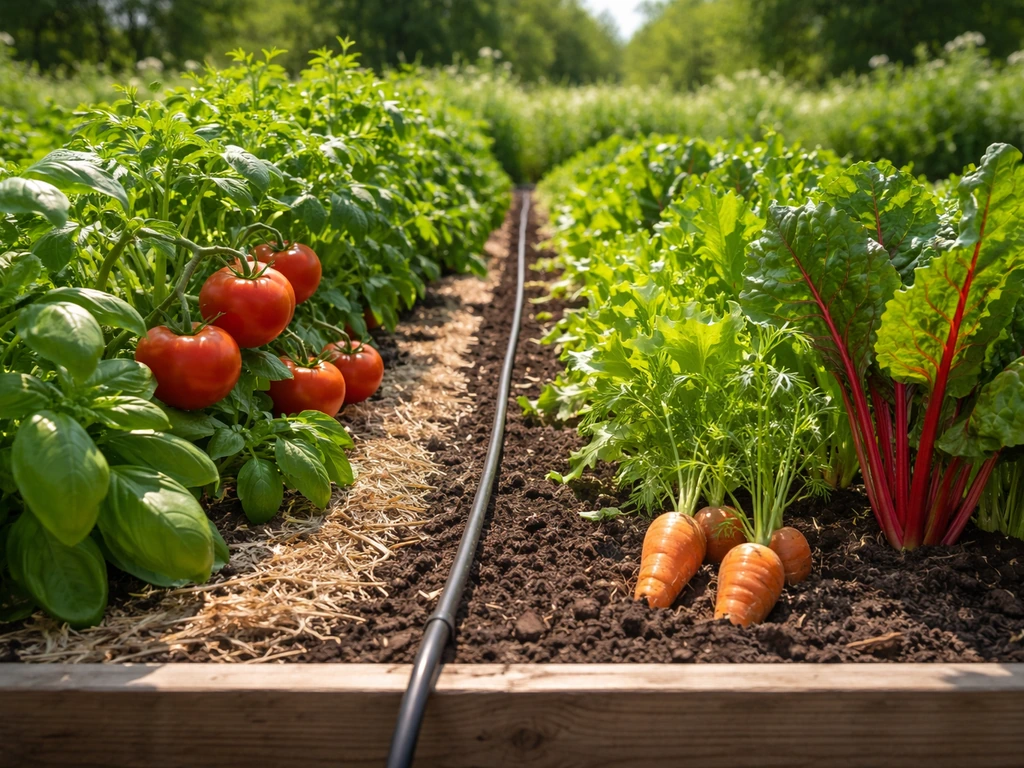
We grow crops wherever the right combination of sunlight, soil, water, and temperature come together, and that place can be a backyard bed, a rooftop container, a low tunnel in a side yard, or even a basement grow rack. The key is matching what a specific crop needs to what your specific site actually offers, rather than just planting where it's convenient and hoping for the best.
Where Do We Grow Crops? Choose the Best Garden Site
Marcus Hendrick
14 May 2026
What every crop actually needs to grow
Before you pick a spot, it helps to understand the four non-negotiables every food crop depends on: climate, sunlight, soil, and water. Get all four roughly right and almost anything will grow. Get one badly wrong and it doesn't matter how good the rest is.
Climate and temperature
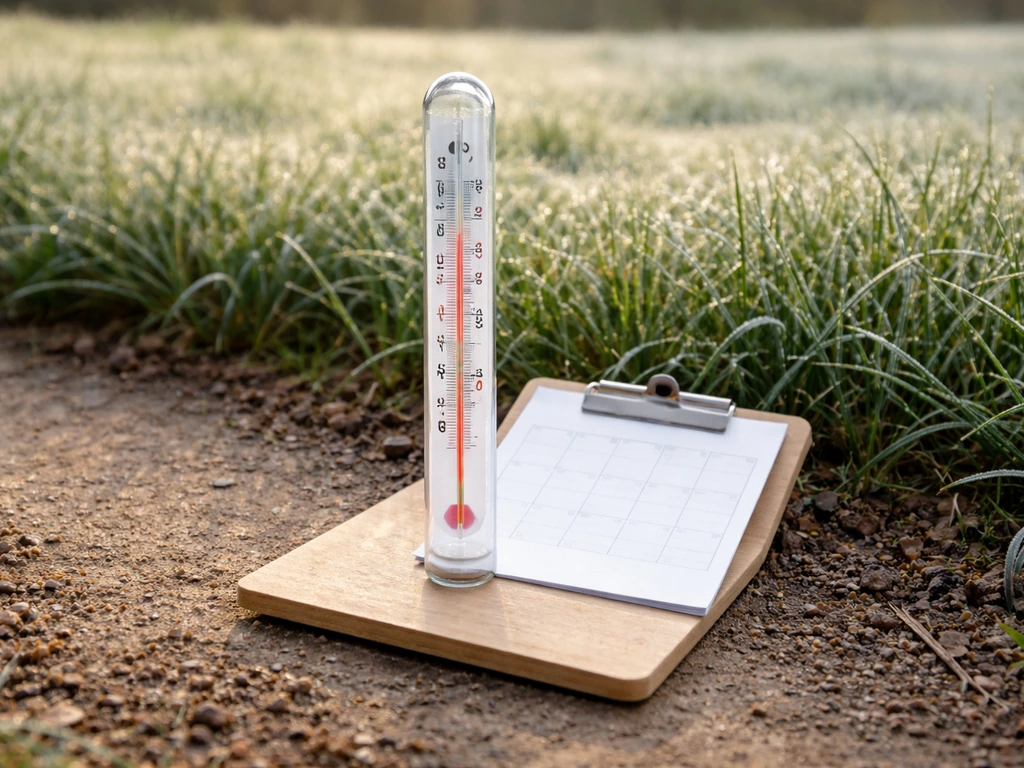
Your USDA hardiness zone and local frost dates are the starting point for any planting decision. A zone lookup gives you three numbers that matter most: last spring frost date, first fall frost date, and total frost-free season length in days. A garden in zone 5 might have 140 frost-free days; one in zone 9 might have 280. Those numbers directly control which crops you can finish in a season and which ones you can't.
Cool-season crops like spinach, kale, carrots, and peas thrive in soil temperatures of roughly 45–65°F and can handle light frost. Warm-season crops like tomatoes, peppers, squash, and corn need soil temperatures above 60°F to germinate and air temperatures consistently above 50°F at night, they'll stall or die if you plant them too early.
Sunlight
No vegetable will grow in full dense shade, that's not a preference, it's a hard limit. Most fruiting crops (tomatoes, peppers, squash, cucumbers) want a full day of direct sun, which in practice means at least 8 hours. Root vegetables like carrots and beets can get by with a bit less. Leafy greens like lettuce and spinach are the most forgiving, managing well with 4–6 hours of direct sun daily. If your only available space gets 4 hours, plan for salad greens and herbs, not tomatoes.
Soil
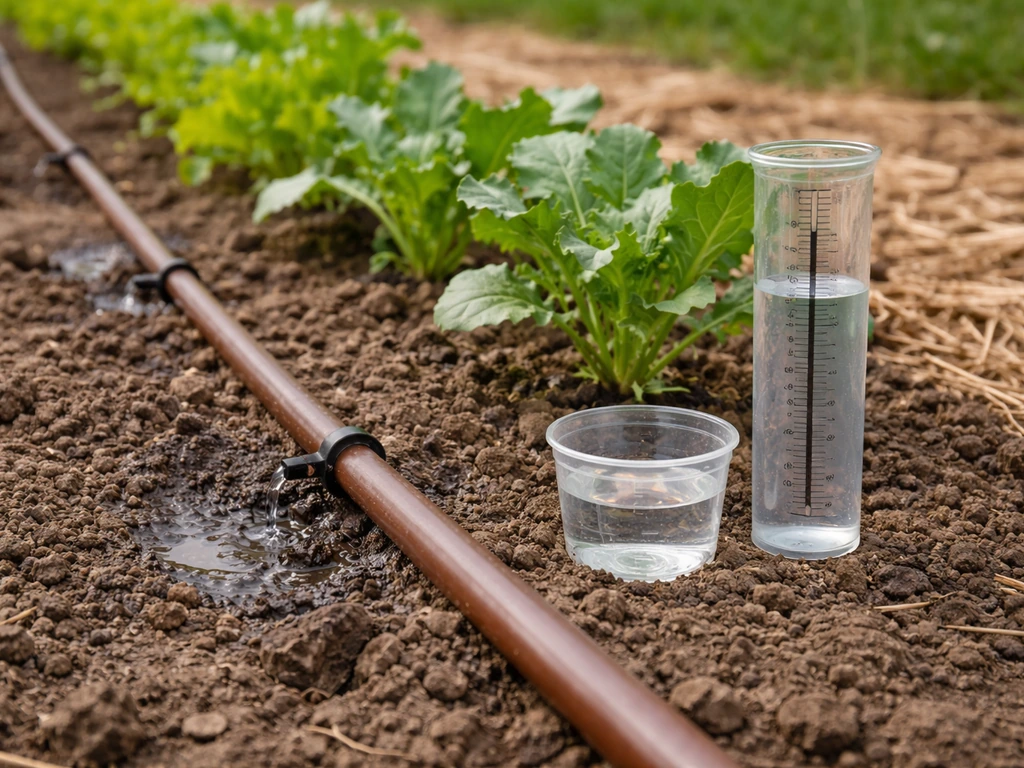
Soil does three jobs: it anchors roots, holds moisture, and delivers nutrients. For most vegetables, the target soil pH is 6.2–6.8. Outside that range, nutrients become chemically locked up and plants show deficiency symptoms even when fertilizer is present. Soil texture matters too, compacted or heavy clay soils restrict root growth and drain poorly, while pure sand drains so fast that nutrients wash away. Most vegetables want loose, fertile, well-draining soil with plenty of organic matter mixed in.
Water
Vegetable crops generally need about 1 to 1.5 inches of water per week. Rainfall counts toward that total, but you'll usually need to supplement it, especially during hot stretches. The practical trigger: stick your finger 2 inches into the soil, if it's dry at that depth, it's time to water. Drainage matters just as much as supply. If water pools on your site for more than a few hours after rain, plant roots will suffocate. Good location scouting includes watching what happens to the soil after a hard rain, not just during a dry week.
Sizing up your site before you plant anything
A proper site assessment takes about a week and costs nothing. It's the difference between picking a spot that works and spending a whole season wondering why things didn't grow. Here's how to do it practically.
Sun mapping
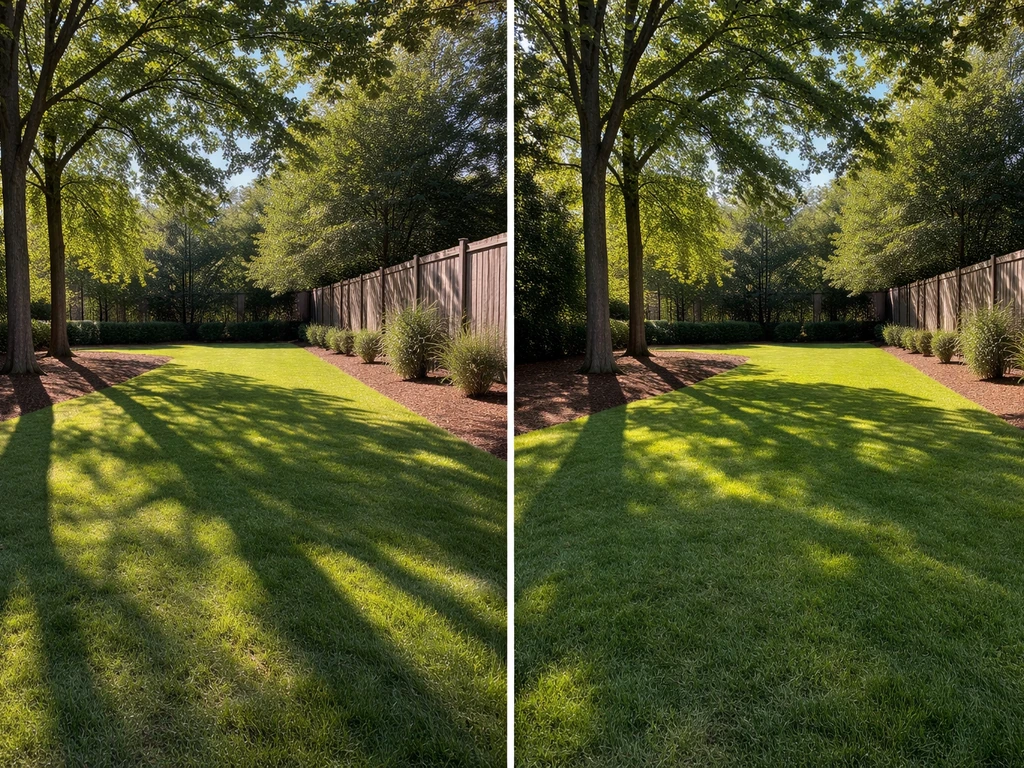
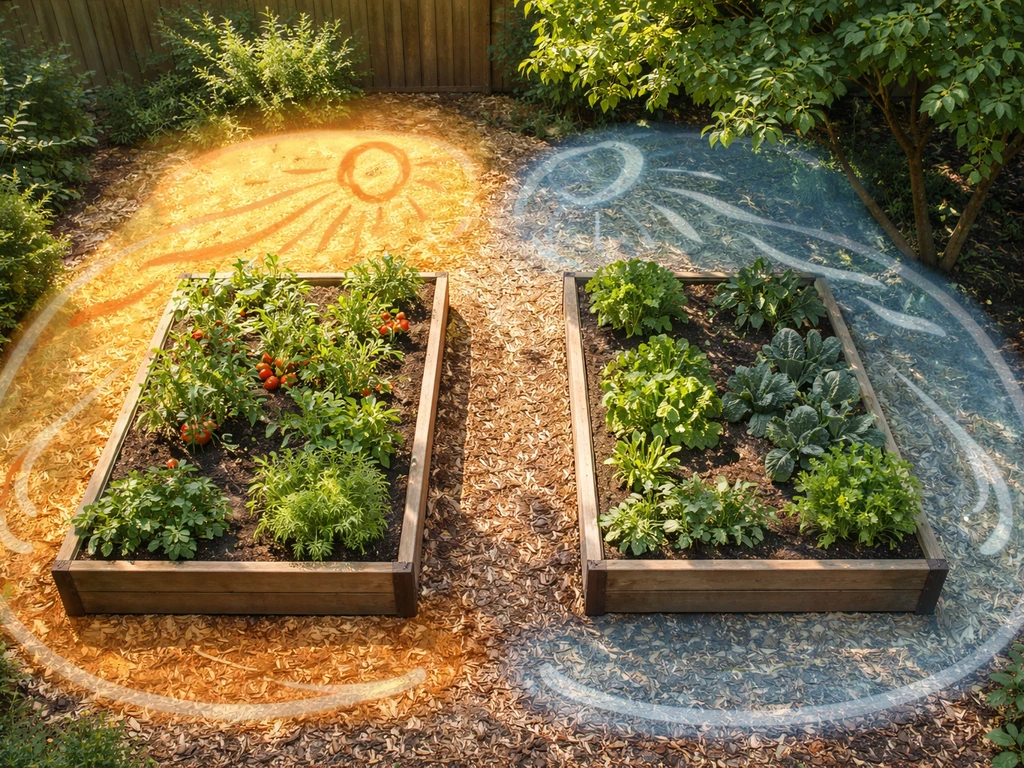
Walk your property at three points during a clear day: mid-morning (around 9 a.m.), midday, and mid-afternoon (around 3 p.m.). Note which areas are in full sun, partial shade, or full shade at each time. Do this for a few days in a row to account for cloud variation. Draw a rough sketch of your yard and mark the shade patterns. That sketch becomes your planting map. Remember that the sun angle changes with the season, a spot that gets 8 hours in July may only get 5 hours in April and September, which matters for cool-season crops.
Also note what's casting shade. Trees and tall buildings on the south or west side of your yard will block the most light during peak growing hours. The University of Maryland Extension specifically flags south-side shade sources as the most damaging to vegetable gardens because they cut off the highest-intensity afternoon sun.
Reading your microclimates
Microclimates are small pockets on your property where temperature, wind, or moisture behave differently from the surrounding area. A south-facing patio wall absorbs heat all day and radiates it back at night, that spot can be 5–10°F warmer than the open lawn, which means earlier spring planting and later fall harvests. A low-lying corner of the yard, on the other hand, is a classic cold air pocket: cold air is denser than warm air and drains downhill, pooling in depressions.
If you've noticed frost hitting a low corner of your yard while the raised patio stays frost-free, you've already spotted a microclimate. [UC ANR's microclimate evaluation checklist specifically looks at morning sun exposure, wind exposure, and cold air drainage patterns, those are the three to watch. ](https://ucanr. edu/sites/default/files/2010-08/47782.
pdf)
- South-facing walls and slopes: warmer, good for heat-loving crops and season extension
- North-facing slopes and shaded areas: cooler, better for crops that bolt in heat (lettuce, cilantro, spinach)
- Low-lying spots and valley-like depressions: frost risk, poor drainage, avoid for tender crops
- Exposed, windy areas: accelerates moisture loss from soil and leaves, needs windbreaks for sensitive crops
- Covered patios or overhangs: reduced rainfall, may need supplemental irrigation but offer frost buffer
Matching crops to what your site actually offers
Once you know your frost dates, sun hours, and microclimate quirks, you can start matching crops to locations rather than just guessing. The cool-season vs. warm-season divide is the most useful framework here.
| Crop Type | Examples | Min. Sun Needed | Soil Temp to Plant | Frost Tolerance |
|---|---|---|---|---|
| Cool-season vegetables | Lettuce, spinach, kale, peas, carrots, beets | 4–6 hours | 45–50°F | Tolerates light frost |
| Warm-season vegetables | Tomatoes, peppers, cucumbers, squash, beans | 8+ hours | 60–65°F | No frost tolerance |
| Root vegetables | Carrots, beets, turnips, radishes | 4–6 hours | 45–55°F | Tolerates light frost |
| Grains (home scale) | Corn, wheat, sunflowers | 8+ hours | 55–65°F | Minimal to none |
| Perennial crops | Asparagus, herbs, berry canes | 6–8 hours | Varies | Varies by species |
To figure out whether a specific crop fits your season, find the 'days to maturity' on the seed packet, then count back from your average first fall frost date. If you want to grow a tomato variety that takes 75 days to maturity and your first frost arrives around October 1, you need transplants in the ground by mid-July at the latest, and realistically by mid-May to get full production. Many growers start with cereal grains like wheat, oats, barley, or corn when matching crops to climate and sunlight grow a tomato. This calculation, not just the frost date alone, is what tells you whether a crop fits your window.
Choosing your bed type: in-ground, raised, containers, or greenhouse
Where you grow is partly about location and partly about the physical growing system you use. Each setup has real trade-offs, and the right choice depends on your soil, space, and how much you want to invest upfront.
| Bed Type | Best For | Key Advantage | Main Limitation |
|---|---|---|---|
| In-ground beds | Yards with decent native soil, larger plots | Lowest cost, unlimited root depth | Stuck with native soil quality and drainage |
| Raised beds | Poor native soil, drainage problems, small yards | Control over soil mix, better drainage, easier access | Higher upfront cost, can dry out faster |
| Containers | Balconies, patios, renters, small spaces | Maximum flexibility and portability | Frequent watering needed, limited root space |
| Low tunnels / cold frames | Season extension for any bed type | Extends frost-free season by weeks | Requires ventilation management, not a year-round solution |
| Greenhouse / indoor grow | Year-round growing, cold climates, seedling starts | Full climate control | High cost, requires artificial lighting for winter |
In-ground beds
In-ground planting is the simplest and cheapest setup if your native soil is workable. The downside is that you're working with whatever the site gave you, clay, sand, rocky subsoil, or uneven drainage. Tilling organic matter into native soil improves rooting depth and structure over time, but it's not an overnight fix. If your soil is compacted, that compaction limits root development and water infiltration even before fertility becomes an issue.
Raised beds
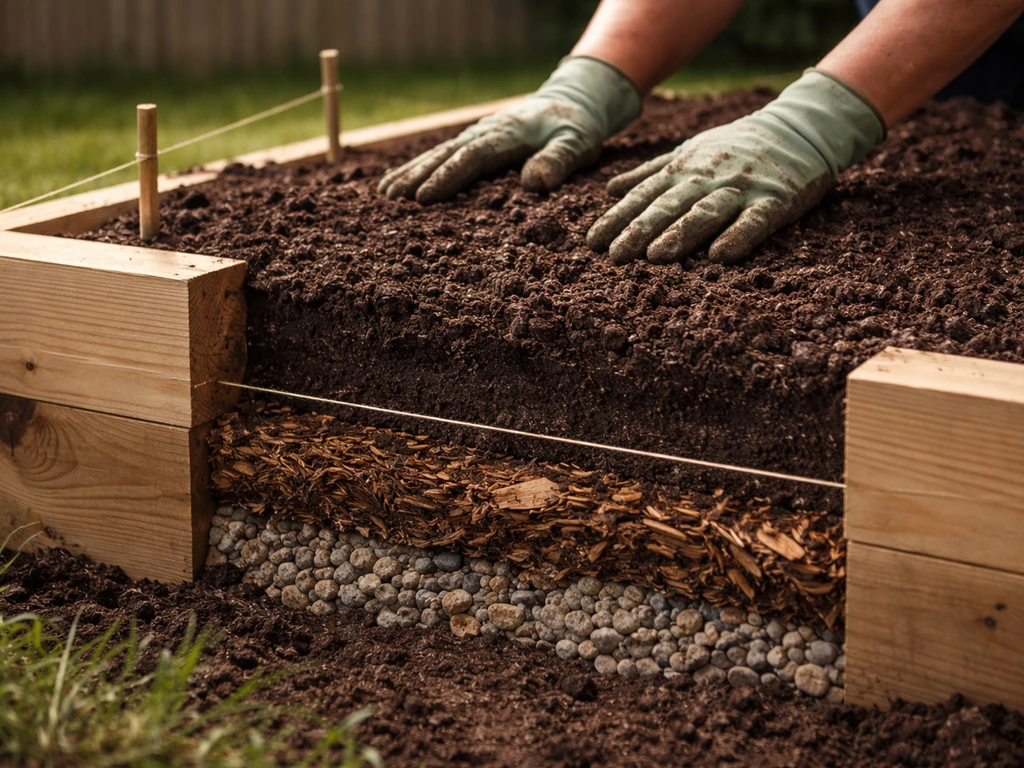
Raised beds solve three problems at once: poor native soil, bad drainage, and physical access. You fill them with a mix you control, which means you can hit the right pH and organic matter levels from the start. University of Maryland Extension recommends targeting organic matter content of roughly 25–50% by volume in raised bed soil mixes. University of Minnesota Extension notes that raised beds also make crop rotation more manageable since each bed can be tracked independently. One thing to watch: avoid using weed-barrier fabric as a liner across the whole base of a raised bed, because it restricts root depth and can trap water. Use hardware cloth for gopher protection instead if you need a barrier.
Containers
Containers are the right answer for balconies, patios, and rental situations where you can't modify the ground. Oregon State University Extension recommends containers that hold at least 2–5 gallons of soil and are at least 12 inches deep for most vegetables. Smaller containers dry out too fast and restrict root development.
The biggest management challenge with containers is watering frequency, they dry out much faster than in-ground beds, especially in summer heat, and you'll likely need to water every day or two during hot spells. Container gardening needs adequate soil amendment or structure, and reservoir capacity and rooting conditions influence how much water the containers require, since containers tend to dry out faster [reservoir capacity and rooting conditions affect how much water containers need](https://www. pubs. ext.
vt. edu/426/426-020/426-020. html).
Fixing soil and drainage when the site isn't perfect
Most home garden sites aren't perfect, and that's fine. Almost every soil problem has a practical fix, the key is diagnosing correctly before you start amending, because adding the wrong thing wastes time and money.
Getting your pH right
Get a soil test before you add anything. Many county extension offices offer low-cost tests, and mail-in options are widely available. If your pH is too high (alkaline), elemental sulfur lowers it gradually. If it's too low (acidic), ground limestone raises it. Dolomitic lime also supplies magnesium, which is useful if your test shows that deficiency. The critical detail: lime and sulfur are not water-soluble, so they have to be mechanically tilled into the soil to a depth of 6–8 inches to actually change pH at the root zone. Sprinkling them on the surface and watering does almost nothing.
Improving soil structure and drainage
Adding compost and organic matter improves drainage in clay soils and water retention in sandy soils, it's genuinely the closest thing to a universal soil fix. Utah State University Extension notes that organic matter incorporation also increases effective rooting depth. That said, Oregon State University Extension is honest that organic matter alone cannot fix severe drainage problems. If water sits on your site for 12+ hours after rain, you likely have a high water table or compacted hardpan underneath, and raised beds built above that layer are a better solution than trying to amend your way out of it.
Dealing with compaction
Compacted soil is one of the most common undiagnosed problems in home gardens. It reduces the spaces that roots and water need to move through. If your soil forms a hard crust after rain, puddles slowly, or you can barely push a screwdriver 4 inches into it, compaction is likely. Breaking it up with a broadfork or tiller, then incorporating organic matter, is the standard fix. After that, avoid walking on your growing beds, set up permanent paths so foot traffic stays off the planting zones.
Planning for water, heat, and a longer season
Irrigation basics
Vegetables need consistent moisture, roughly 1 to 1.5 inches per week, and inconsistent watering causes more problems (blossom end rot, bolting, splitting) than almost anything else. Drip irrigation is the most efficient setup for in-ground and raised beds because it delivers water directly to the root zone and keeps foliage dry, reducing disease pressure. For containers, a simple timer on a drip line or watering wand saves a lot of daily effort. Whatever system you use, check soil moisture 2 inches down as your trigger, not a fixed schedule, since weather changes how fast soil dries.
Season extension: low tunnels, row covers, and cold frames
Season extension tools let you start earlier in spring and keep harvesting later in fall, effectively adding weeks or even months to your growing season without building a full greenhouse. Low tunnels are the most practical option for most home gardeners: they're inexpensive hoops covered with row cover fabric or clear plastic. West Virginia University Extension notes that many standard row covers protect down to about 24–28°F. Heavier row cover fabrics can push that to around 20°F according to University of Minnesota Extension research. USDA NRCS guidance on low tunnel construction recommends building them on level grade where possible, which also improves drainage under the cover.
For heat-loving crops in marginal climates, clear plastic mulch laid on the soil surface a week or two before transplanting warms the soil significantly, often enough to get a jump on the season. Colorado State University Extension notes that these covering methods also protect tender crops from cold wind, which is a secondary but real benefit in exposed sites.
Wind protection
Wind desiccates leaves, rocks stems, and accelerates soil moisture loss. If your site is exposed, a simple windbreak, a fence, a dense row of tall annuals like sunflowers, or even stacked hay bales on the windward side, makes a measurable difference. Windbreaks work best when placed on the side of the prevailing wind, not surrounding the garden on all sides (which can trap frost and reduce airflow enough to encourage fungal disease).
Your crop-location checklist and next steps
Use this checklist to evaluate any spot on your property before committing to it. Run through it for each candidate location and compare. The spot that checks the most boxes wins, and where it falls short, decide whether you can fix it (raised bed, row cover, drip irrigation) or whether you should adjust which crops you're planning to grow there.
- Look up your USDA hardiness zone and note your last spring frost date, first fall frost date, and total frost-free days.
- Map sun hours at your candidate spots over several days — full sun (8+ hours), partial sun (4–6 hours), or shade (under 4 hours).
- Identify microclimates: note warm pockets near walls, cold low spots, and exposed windy areas.
- Do a basic drainage check: dig a hole about 12 inches deep, fill it with water, and see how long it takes to drain. More than a few hours means drainage work is needed.
- Get a soil test and check your pH. Target 6.2–6.8 for most vegetables. Plan lime or sulfur amendments if you're outside that range.
- Match your crops to your site conditions: fruiting crops need 8+ hours of sun; leafy greens and roots can use 4–6 hours. Use your frost-free days and days-to-maturity numbers to confirm each crop fits your season.
- Choose your bed type: in-ground if soil is workable, raised beds if drainage or soil quality is poor, containers if you have no ground access.
- Plan your water source. Know where your hose bib or irrigation line is relative to the garden, and decide whether you need drip, overhead, or hand watering.
- Identify one or two season extension tools (row cover, low tunnel, cold frame) for the crops that push your frost window.
- Start small: one or two well-sited beds managed well will outperform five poorly sited ones every time. Expand once you know what works on your specific property.
The honest reality is that growing food at home is an iterative process. With a bit of planning and the right season extension tools, you can grow crops even if conditions are challenging can you grow crops in the end. Your first site assessment will be imperfect, you'll discover in July that one corner gets afternoon shade you didn't notice in April, or that one bed drains better than another after a heavy rain.
That information is genuinely valuable, and it feeds directly into better decisions next season. The farmers and growers who consistently get good yields aren't the ones who picked a perfect site on the first try, they're the ones who paid attention, kept notes, and adjusted. Many people also rely on farmers who grow crops for us, using similar principles to match plants to their local conditions.
These are people who grow crops in the field and rely on the right conditions to get good yields farmers and growers. You can do the same thing, even on a single raised bed on a balcony.
FAQ
Can I grow crops in the same spot every year, or should I rotate where I grow them?
Plan on rotating plant families, even if you are only using one bed. Reusing the exact same spot for crops in the same family increases pest and disease buildup over time. If you have limited space, rotate within your bed (for example, move nightshades to a different section next season) and keep at least a small history note of what grew where.
What if my sunlight is close but not quite enough, can I “make up” for it with fertilizers or better soil?
Usually no. If your site misses the basic light requirement for a crop, extra fertility will not compensate for low energy. Instead, choose crops that match the hours you actually get, or improve light access by trimming nearby growth, changing the planting layout toward the brightest edge, and using reflective mulches on lighter-colored ground to bounce light back to plants.
How do I decide between starting seeds in place versus using transplants for my chosen spot?
Use transplants when your site warms up slowly or your warm-season crop needs consistent growth time before fall. Transplants also help when your soil temperature is borderline, because you can start indoors and then place plants once the site reaches the germination temperature range. For cool-season crops, direct-sowing often works better when the soil is already in the right temperature band.
Do microclimates only matter for temperature, or should I also plan around wind and moisture differences?
They matter a lot for wind and moisture, not just temperature. A low corner may collect cold air, but it can also stay wetter, which increases fungal risk. A patio wall may be warmer, but it can be wind-protected and dry out differently, so you may need a different watering trigger or irrigation setting for those zones.
How can I tell if drainage is truly poor, not just “a little slow,” before I plant?
Do a simple observation test after rain or a deep watering: check how long it takes for the surface to dry and whether soil remains saturated below the top layer. If water sits or the soil stays cool and muddy for many hours, root-zone oxygen becomes limiting. In that case, raised beds above the problem layer will outperform amendments alone.
What’s the biggest mistake people make when growing crops in containers, and how do I prevent it?
Underestimating how fast containers dry and how sensitive containers are to temperature swings. Use larger volume containers (generally 2 to 5 gallons and deeper for most vegetables) and plan for near-daily checks during heat. Grouping containers together can reduce exposure and help moderate drying compared with spacing them widely in full sun.
If I get blossom end rot or bolting, does that mean my soil is “bad” or that I chose the wrong spot?
Blossom end rot is commonly tied to inconsistent moisture and calcium uptake, not just overall soil quality. Bolting often happens when plants experience stress, frequently heat or irregular watering. Recheck your watering consistency at the spot you chose (soil moisture 2 inches down as your trigger) and consider shade cloth or wind protection only after you fix the moisture pattern.
How can I confirm my “where do we grow crops” decision for a specific area of the yard before committing to a full planting?
Run a mini trial. Plant one representative crop that matches the site’s expected conditions (for example, a leafy green for partial shade, or a tomato in the warmest microclimate) and keep notes on germination, vigor, and soil dryness. One season of data from that exact location is more reliable than assumptions based on general rules.
Should I place my garden on the south or west side by default?
Not always. South exposure often gets strong afternoon sun in the Northern Hemisphere, which can speed warming and growth but can also increase heat and drying stress. West exposure can be hotter and more drying in the afternoon, which matters for irrigation demand and bolting risk. Evaluate actual sun hours at each time of day, then choose the side that matches the crops’ heat and light needs.
Next Article
Crops Grow Well When They Are Planted in Right Conditions
Learn how to match soil, light, temperature, water, and nutrients so crops thrive and you can troubleshoot problems fast