Feed your chicks a high-protein starter (22–24% crude protein) from day one, switch to a grower feed around week 4–6, then move to a finisher (17–20% protein) in the final weeks before processing. Keep feed available around the clock, never let water run out, and match the feed stage to the bird's age. That single discipline, done consistently, will get your broilers to a 4–6 lb carcass in 6–8 weeks without any shortcuts or mystery additives.
What to Feed Chickens to Grow Faster: Step-by-Step Guide

Marcus Hendrick
6 May 2026
What 'faster growth' actually looks like in a backyard flock
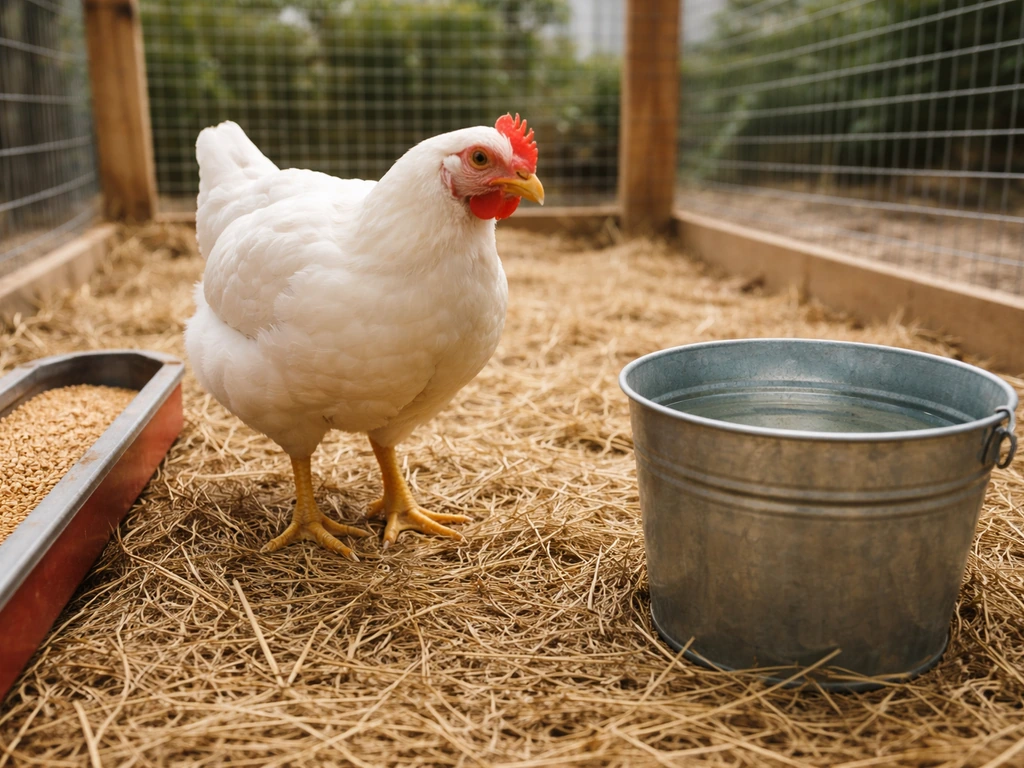
Let's set realistic expectations before we dive in. A Cornish Cross broiler (the standard backyard meat bird) can hit a 4–6 lb live weight in as little as 6–8 weeks when fed properly. At 7–9 weeks you're typically looking at a 3–5 lb live bird, which dresses out to a 2.5–4 lb carcass. That's genuinely fast growth, and it's achievable on standard bagged feed without anything exotic.
Heritage breeds grow slower, full stop. A Freedom Ranger or a dual-purpose bird like a Barred Rock will take 12–16 weeks to reach a comparable weight. Nutrition matters for those birds too, but the ceiling is set by genetics. If your goal is the fastest possible table bird, Cornish Cross is the breed to raise. Everything else in this guide accelerates what the bird is already capable of, it doesn't override biology.
One honest tradeoff worth knowing: very high-energy broiler feed programs (the kind that push maximum growth) are associated with leg problems and breast blisters, especially in roasters kept past 8 weeks. Fast growth puts real mechanical stress on young bodies. The sweet spot for healthy, fast growth is hitting the protein and energy targets at each stage without overfeeding energy relative to the bird's age, and making sure the birds have enough space to move and stay clean.
The right feed at each growth stage
Chickens have different nutritional needs depending on how old they are. Feeding a single bag from hatch to harvest is one of the most common mistakes beginners make, and it's one of the easiest to fix. Here's how to break it down by stage.
Starter feed: weeks 1 through 4 (or up to 6)
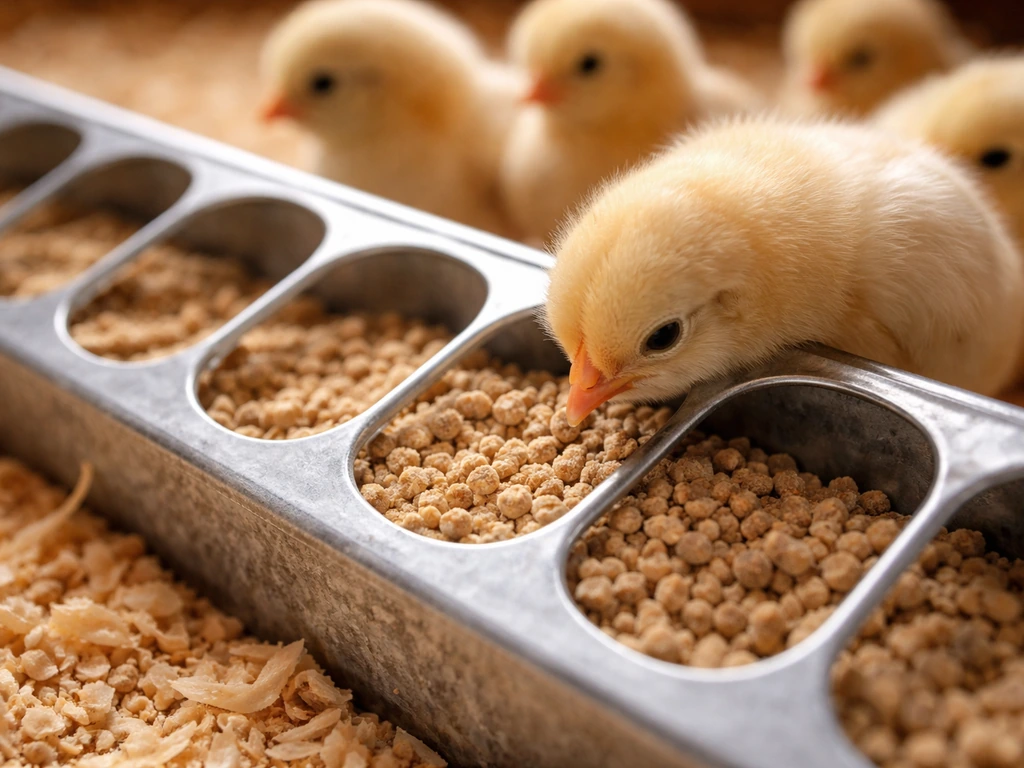
Starter feed is the highest-protein feed in the program, and that protein is doing serious work. Chick muscle, organ, and immune system development all happen fast in these first weeks. You want 22–24% crude protein in a starter, and commercial broiler specs (like Aviagen Ross) actually target around 23% with roughly 2975 kcal/kg of metabolizable energy. Mississippi State Extension and UGA Extension both land in the same range: 22% is a practical floor for starter. Feed the starter until chicks are around 6 weeks old if you're raising broilers for meat. For backyard purposes, most bagged chick starters are close to this range, so read the tag and don't buy a layer-based chick feed by mistake.
Feed form matters more than most beginners realize. Crumbles or mini-pellets outperform mash for young chicks because they pick them up more easily and waste less. That said, extended use of crumble-form feed past about 15 days can actually depress feed intake compared to switching to small pellets, so transitioning to pellets in the grower phase is worth doing.
Grower feed: weeks 4 through 8 (roughly)
As chicks move into the grower phase, protein needs drop slightly while energy density increases. A grower feed runs about 20% crude protein, which matches the taper seen in commercial specs: Aviagen targets 21.5% protein and 3050 kcal/kg for the grower phase. The bird is building bulk now, not just laying down the structural foundation. The higher energy supports fat and muscle deposition. Switch to pellets by this stage, and keep pellet diameter under 4mm for best live performance.
Finisher feed: from ~week 6 to processing
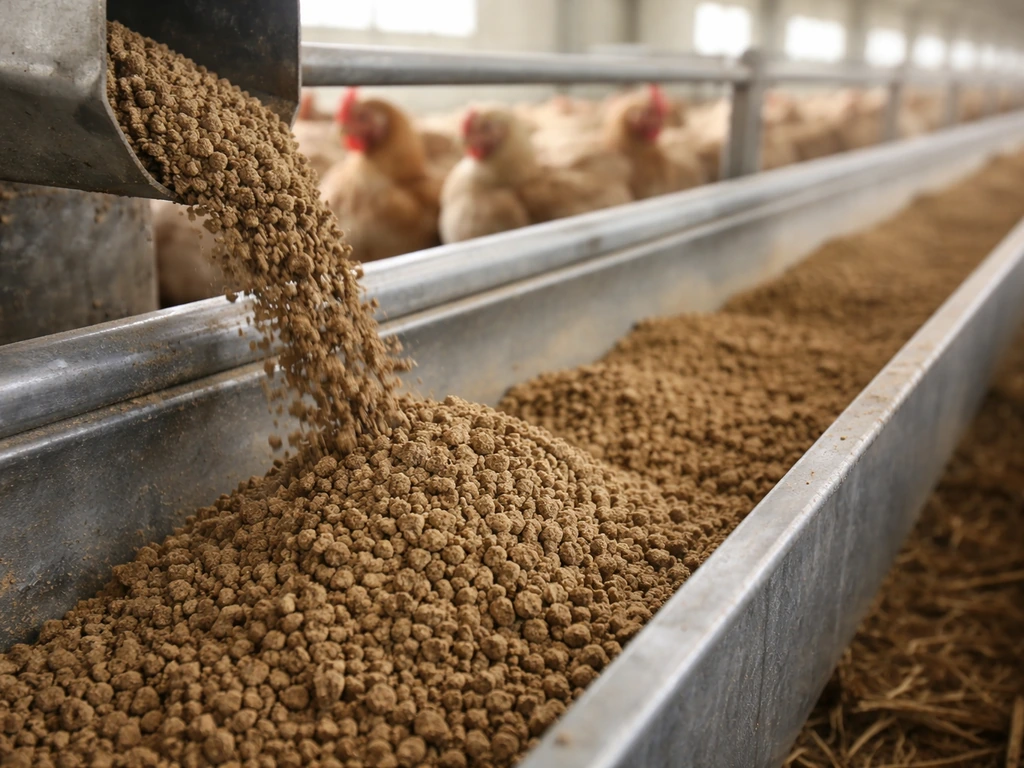
Finisher feed drops protein further, to around 17–20% crude protein, and bumps energy again. Commercial broiler programs break the finisher into multiple sub-phases (Finisher 1 at 19.5%, Finisher 2 at 18%, Finisher 3 at 17%), but for a backyard flock a single finisher bag at 17–18% protein from about week 6 to processing is practical and effective. Mississippi State Extension puts the switch point clearly: once broilers hit 6–8 weeks, move to finisher. Some backyard keepers skip a dedicated grower and just run starter through week 6, then finisher to processing, and that works fine.
| Stage | Age (approx.) | Crude Protein Target | Energy Target | Feed Form |
|---|---|---|---|---|
| Starter | Day 1 to week 4–6 | 22–24% | ~2975 kcal/kg | Crumble or mini-pellet |
| Grower | Week 4–6 to week 8 | 20–21.5% | ~3050 kcal/kg | Small pellet |
| Finisher | Week 6–8 to processing | 17–20% | 3100–3150 kcal/kg | Pellet |
The nutrition numbers that actually drive growth
Crude protein percentage is the headline number, but what's doing the real work is the amino acid profile, particularly lysine and methionine. Lysine drives muscle protein synthesis. Methionine (combined with cystine) is critical for feather development and overall metabolic function. Commercial specs target digestible lysine at 1.32% in the starter phase, dropping to 0.96% by the final finisher phase. Methionine plus cystine runs from 1.00% in starter down to 0.77% in late finisher. Most quality commercial bagged feeds are already formulated to hit these targets, which is exactly why following the manufacturer's feeding recommendations is worth taking seriously.
Calcium and phosphorus matter too, though mostly as things to avoid getting wrong rather than optimize. Starter feed calcium runs around 0.95%, dropping through the grower and finisher phases to as low as 0.55% at the end. The critical warning: layer feed calcium can exceed 4%, and feeding that to young growing broilers causes leg abnormalities, kidney damage, and can be fatal. This is not a minor concern. Never feed layer pellets to meat birds or chicks. Keep the feeds separate if you have a mixed flock.
Supplements worth adding (and when to add them)
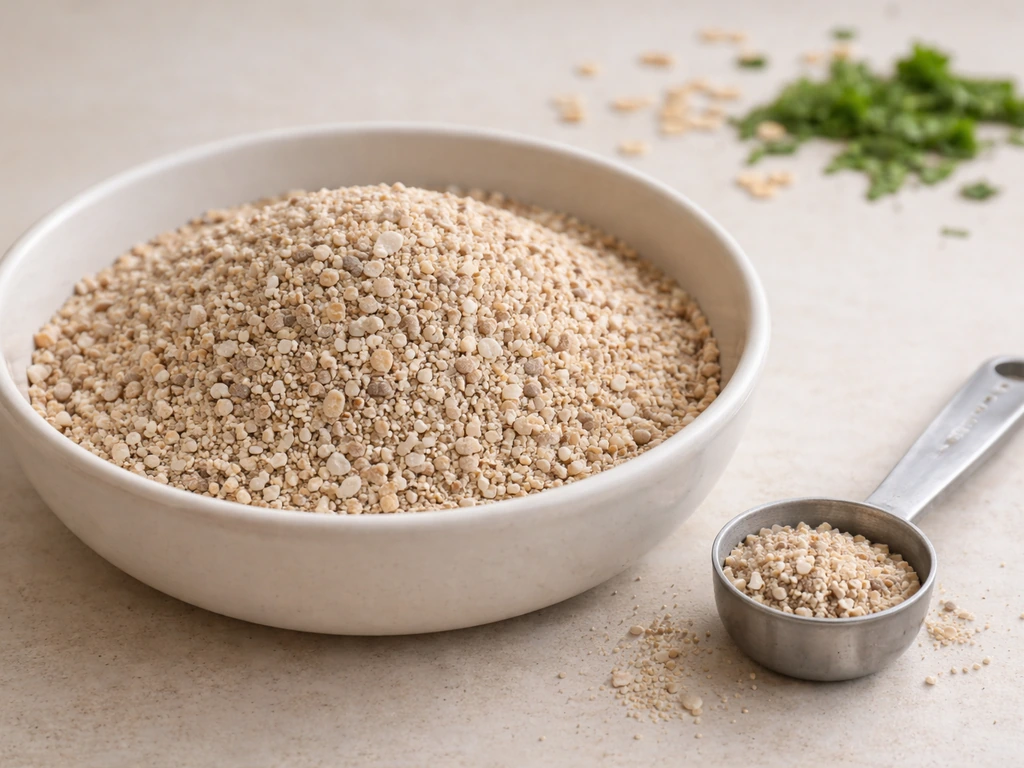
A quality commercial starter, grower, and finisher is a complete feed. It already contains the vitamins, minerals, protein, and energy the bird needs. Supplementing on top of that is not automatically going to speed things up, and done badly it can dilute the balanced ration and slow growth. That said, a few supplements make genuine sense for a backyard flock.
- Grit: If your birds are getting any whole grains, scratch, forage, or table scraps, they need insoluble grit to grind that material down in the gizzard. Chick-sized grit for young birds, standard poultry grit for older ones. Without it, digestion suffers and growth slows. If birds are eating only commercial pelleted feed, grit is less critical, but it doesn't hurt to offer it.
- Greens and forage: Fresh greens add B vitamins, some minerals, and enrichment. Pasture can supplement the diet but should never replace a balanced ration. UNH Extension is direct on this: pasture supplements, it doesn't substitute. Overloading on forage at the expense of formulated feed is one of the most reliable ways to slow growth.
- Sprouted grains: If you're growing your own feed inputs (common on homesteads), sprouted grains are a viable supplement. Research from NDSU suggests nutritive value isn't substantially reduced in sprouted grain. Offer them as a supplement alongside formulated feed, not as a replacement.
- Calcium (oyster shell): Relevant for layers starting around 18–20 weeks, not for meat birds. Do not offer calcium supplements to growing broilers.
- Probiotics and fermented feed: Fermented feed can improve gut health and feed conversion. Some backyard keepers ferment their commercial feed in water for 24–72 hours and report better feed efficiency and less waste. It's low-cost and low-risk if the base feed is sound.
What commercial 'growth chemicals' actually are (and why you don't need them)
When people search for 'what chemical is used to make chickens grow faster,' they're usually thinking of something added to the feed or water to accelerate growth beyond what good feeding alone achieves. Here's the honest reality of what happens in large-scale commercial production, and why none of it applies to your backyard flock.
Hormones and steroids are not used in US commercial chicken production. The National Chicken Council confirms this, and it has been prohibited by the FDA for decades. So the idea that commercial chickens are being pumped with growth hormones is a myth, at least in the US. The fast growth of commercial broilers comes from genetics and nutrition, not from hormones.
Antibiotics are a different story. Historically, low-dose antibiotics were added to feed specifically to promote growth and improve feed efficiency. That practice has been effectively ended in the US. The FDA eliminated the use of medically important antibiotics for production purposes like growth promotion, and any remaining therapeutic antibiotic use in feed or water now requires a blank" rel="noopener noreferrer">licensed veterinarian's oversight under the Veterinary Feed Directive framework. The EU went further and blank" rel="noopener noreferrer">completed a full ban on antibiotics as growth promoters in animal feed. These changes happened because routine antibiotic use in animals contributes to antimicrobial resistance in humans.
What commercial flocks do still use: ionophores and non-antibiotic coccidiostats, which are FDA-approved medications to prevent coccidiosis (a parasitic gut disease that kills chicks and devastates growth). Many commercial starter feeds for backyard use also contain a coccidiostat like amprolium. This is not a growth chemical, it's disease prevention, and it's a reasonable thing to use in your flock, especially in the first 6 weeks when coccidiosis risk is highest. If you're raising organic birds, amprolium-free medicated feeds are not allowed, so a clean brooder and good management become even more important.
Bottom line: there is no safe, legal, backyard-appropriate 'growth chemical' that meaningfully accelerates healthy chicken growth beyond what proper feed, timing, and management already achieve. Chasing that shortcut risks harming your birds, violating regulations, and producing meat you wouldn't want to eat. The actual levers are breed choice, feed quality, feed stage matching, and consistent management.
Feeding schedule, amounts, and factors that affect growth
How much to feed and when
For broilers, feed free choice (ad libitum) through most of the grow-out period. That means feed is always available, day and night. Restricting feed in the starter and grower phases is one of the fastest ways to slow growth. Chicks have small crops and need to eat frequently. Keep feeders full, check them at least twice a day, and make sure every bird can access a feeder at the same time. Crowded, competitive feeding situations mean smaller birds get pushed out and fall behind.
One exception: in the final 1–2 weeks, if temperatures exceed 85–90°F, pulling feed during the hottest part of the day reduces heat stress and actually protects growth (and welfare). Heat stress suppresses feed intake anyway, so forced restriction during peak heat is better than birds ignoring the feeder and panting.
Water is not optional
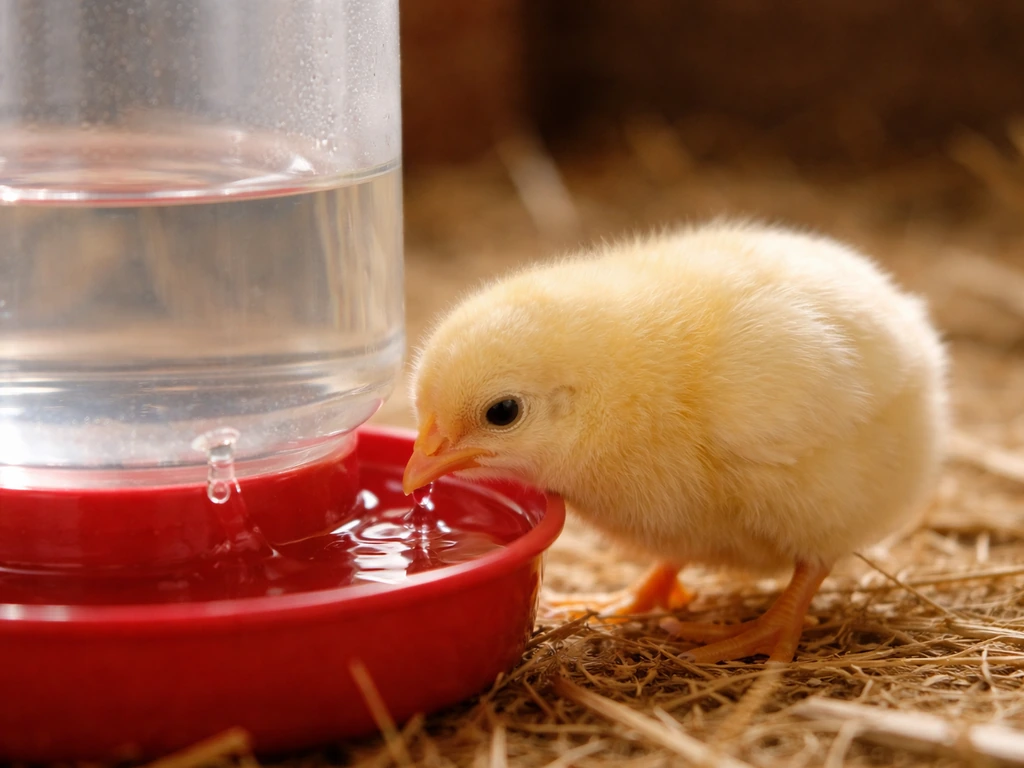
Water access is as important as feed access, and it's the most overlooked growth factor. A chicken's body is roughly 65–70% water. Even a few hours without clean, cool water in warm weather will visibly slow growth, reduce feed intake, and stress the flock. Clean waterers daily, check them morning and evening, and in hot weather add a second waterer so there's no competition. This one change, consistent clean water access, produces measurable results.
Transitioning between feed stages
Switching feeds abruptly can cause digestive upset and a temporary dip in growth. Transition over 3–5 days by mixing the old and new feed, starting at about 75/25 old-to-new and working toward 100% new feed by day five. This is especially important going from starter to grower if you notice any loose droppings or reduced activity.
What to avoid and how to troubleshoot slow growth
If your birds are growing slower than expected, run through this checklist before changing anything else.
- Wrong feed for the stage: The most common cause of slow growth. Feeding layer pellets to meat birds or chicks is genuinely dangerous, not just inefficient. High calcium (over 4% in layer feed) causes leg abnormalities and kidney damage in growing birds. Check the feed tag.
- Protein too low: If you're using a general 'all-flock' feed at 16% protein for the starter phase, growth will be noticeably slower. Broiler chicks need 22–24% in the first six weeks.
- Overcrowding: Stress suppresses growth. Birds that can't access feeders or that are in competition for space eat less and convert feed less efficiently. Standard guidance is about 1 square foot per broiler in the brooder, scaling up as they grow.
- Coccidiosis or other illness: A bird fighting a parasitic gut infection is not growing. Signs include bloody droppings, lethargy, birds hunching up and not eating. If you see this, address coccidiosis immediately, it spreads fast and kills young birds.
- Too much scratch or low-quality supplemental feed: Scratch grains are high-energy but low in protein. Feeding large amounts of scratch dilutes the overall protein intake and slows growth. If you're offering scratch, cap it at 10% of the diet and always provide grit alongside it.
- Irregular feeding or empty feeders: Broilers that run out of feed for even a few hours in the first three weeks never quite catch up. Check feeders morning and night.
- Heat stress: Birds that are panting and crowding water aren't eating, and aren't growing. Ensure adequate ventilation, shade, and water in warm weather.
A practical plan for your first (or next) batch
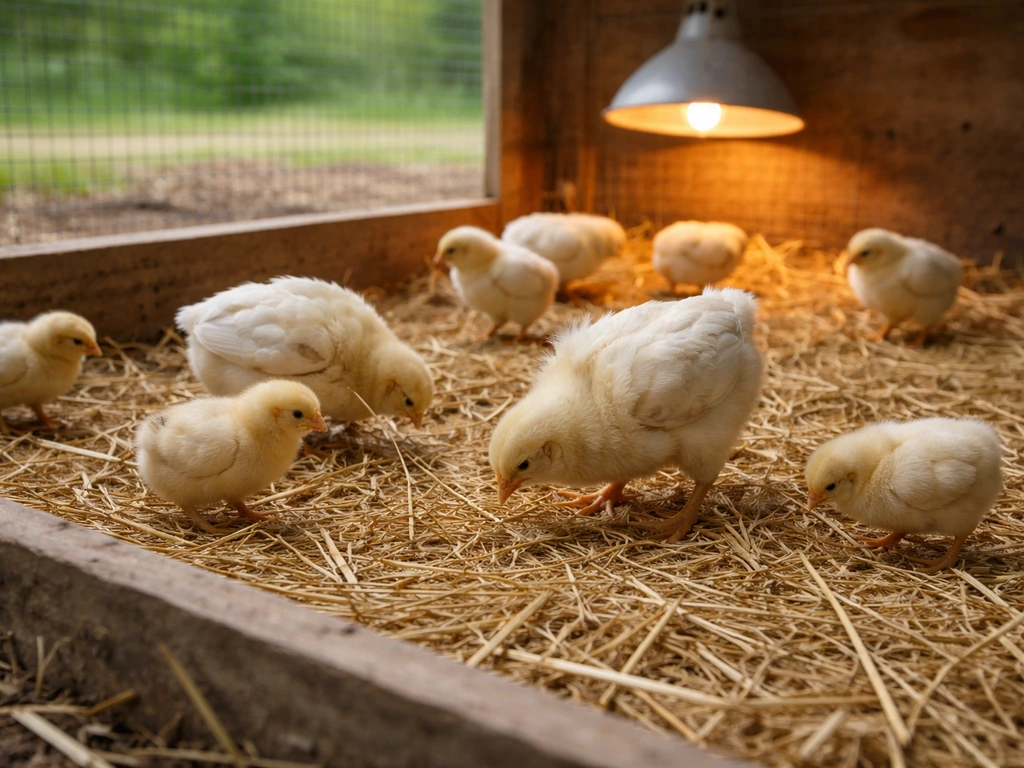
If you're starting from scratch, here's how to put this all together. If you are still figuring out the basics, see what do you need to grow chickens so you have the right setup before the chicks arrive. Get Cornish Cross chicks if fast growth to table is the goal. Source a medicated (amprolium) chick starter at 22–24% protein. Set up a clean brooder with consistent warmth (around 95°F the first week, dropping 5°F per week), and run feeders and waterers before the chicks arrive. Feed the starter free choice from day one through week 4–6, then transition to a grower or move directly to a finisher feed. Process at 6–8 weeks for a 4–6 lb live bird. If you want a staggered supply, start new batches about a month apart, which keeps a consistent processing schedule going through the season.
If you're also growing your own grains or thinking about what to plant to reduce feed costs, crops like oats, corn, and sunflowers can all contribute to a home-grown supplement mix. If you want to cut costs, you can also plan what to grow to feed pigs by matching crops and forages to pig nutrient needs. Just remember: home-grown grains work as supplements to a balanced commercial ration, not replacements, unless you have the feed formulation knowledge to build a complete diet from scratch. If you are wondering whether grain-and-grow oatmeal or Gerber grain and grow oatmeal is safe for chicks, it helps to match any added grains to a complete starter or grower ration and confirm it is not a layer-style feed is gerber grain and grow oatmeal safe. If you are growing oats, make sure any oat feed still fits the chick, grower, and finisher stages rather than replacing a complete feed outright grower feed. For most homesteaders, that's a future-state goal rather than a day-one project.
Monitor your flock weekly. Weigh a few birds at random (a simple kitchen scale works fine for chicks). If you're not hitting rough benchmarks (around 1 lb at 2 weeks, 2–3 lb at 4 weeks for Cornish Cross), go back to the checklist above before changing the feed. Most slow-growth problems are management issues, not feed quality issues, and they're fixable once you know where to look. In an old chicken run, plan your layout for fresh soil, good drainage, and rotating plantings so you avoid buildup of pests and disease.
FAQ
Can I feed chickens corn or oats to grow faster instead of using starter and grower feed?
You can use grains like oats or corn only as small supplements, not as full replacements for starter or grower. Without the correct amino acids, minerals, and energy balance, growth usually slows and deficiencies can show up as poor feathering, weak legs, or uneven flock size. If you add grains, keep doing a complete feed as the base and limit additions so they do not push the ration away from the target protein and mineral profile.
What if I accidentally buy a layer feed for chicks, can I mix it with starter to make it safer?
Do not rely on mixing to make layer feed safe for growing birds. Even when diluted, layer feed calcium can stay too high for young meat birds and can trigger leg problems or other serious health issues. The safest option is to keep layer feed strictly for laying hens and use chick-appropriate complete feed for chicks and broilers.
How much should I increase feed when I move from starter to grower or finisher?
Keep feed available free choice, so you typically do not set a daily “amount” by hand. What matters is confirming feeders are staying full and every bird can access them, then watch body weight trends weekly. If birds start leaving feed consistently, check for water shortage, crowding, or temperature stress, since low intake is a common reason growth stalls.
Are pellets or mash actually different for growth, and when should I switch forms?
Pellets or crumbles usually perform better than mash for young chicks because they are easier to pick up and tend to reduce feed wastage. If you use crumble early, switching to pellets in the grower phase can help maintain intake. If you only have mash, try using smaller particle size and manage feeding space to minimize sorting and waste.
Do I need to change feed immediately at week 4, week 6, or can I follow bag labels instead?
You can use bag labels as a guide, but age-based targets work better for performance. A common practical approach is starter through about week 4 to 6 for broilers, then shift to grower or finisher based on the bird’s current weight and condition, not just the calendar date. If your birds are behind expected weights, confirm access to feeders and water and consider delaying the switch rather than abruptly changing everything.
How can I tell if slow growth is from feed timing versus temperature or disease?
Compare growth with your benchmarks and check behavior and intake. If birds are eating less, panting, or clustering, heat or cold stress is likely interfering with intake. If you see diarrhea, lethargy, or uneven droppings, coccidiosis or gut issues may be the limiting factor rather than protein percentage. Also ensure the birds can all reach feeders at the same time, since competition can make the flock look like it is not responding to feed stage changes.
Is it okay to use a non-medicated feed, and what should I do about coccidiosis risk?
Non-medicated feed can be fine, but it requires stricter brooder hygiene and management because coccidiosis risk is highest in the early weeks. Use clean bedding, keep brooder areas dry, and avoid overcrowding. If you choose medicated feed, follow the product’s guidance and dosing, and do not switch to a non-medicated program mid-batch without a plan for sanitation and exposure control.
Why do my birds get leg issues if feed is “high quality,” and can I fix it without changing the feed stage?
Leg problems often come from excess energy relative to age, rapid growth pressure, or insufficient space and clean traction. You can improve odds without changing brands by reducing crowding, ensuring dry bedding, and confirming you are not using an energy-dense program too long. If birds are unusually heavy for their age, re-evaluate whether you transitioned to the correct protein and energy stage at the right time.
How do I transition feeds to avoid loose droppings, and what if my birds are already sensitive?
Transition over 3 to 5 days by mixing old and new feed, starting around 75/25 then moving toward 100% new feed by day five. If you notice loose droppings or reduced activity, slow the transition by extending each step (for example, 4 to 7 days total) and double-check water cleanliness. Keep the transition smooth, since abrupt changes can cause a temporary intake and growth dip.
What should I do if some birds are consistently smaller than the rest?
Uneven size often indicates access issues, not just genetics. Ensure feeders and waterers are reachable by all birds, adjust brooder layout to reduce competition, and monitor that the smallest birds are actually eating. If gaps persist after correcting space and intake, consider weighing more frequently to detect whether the delay is early, then reassess whether the flock is on the correct feed stage and not experiencing heat stress.
Does adding supplements like vitamins, probiotics, or “growth boosters” help my broilers?
In most cases, a complete commercial feed already meets vitamin and mineral needs, and extra supplements do not guarantee faster growth. The risk is diluting the balanced ration or creating an imbalance if you add the wrong product or dosage. If you do supplement, keep it limited and only choose products intended for poultry, then follow label directions rather than trying to “stack” multiple additives.
Can I process sooner than 6 weeks if my birds hit target weight early?
Yes, you can process when birds reach your target live weight and look healthy, rather than relying strictly on week count. Before scheduling processing early, confirm consistent growth over the last few weigh-ins and check body condition and leg health. Also ensure they have been on the appropriate finisher stage long enough for gut and overall development, especially if you skipped a grower phase.
How do I know whether my water is limiting growth instead of the feed?
If water is even briefly unavailable or dirty, birds usually reduce intake quickly. Look for panting, reduced feeder visits, or birds clustering away from feeders on hot days. Fixes include cleaning waterers daily, providing a second waterer in warm weather, and checking both morning and evening so the drinker stays functional and uncontaminated.
Next Article
What to Grow in an Old Chicken Run: Fast Crops and Soil Reset
Best crops for an old chicken run plus soil reset steps, planting plans, and a quick checklist for safe, fast harvests.