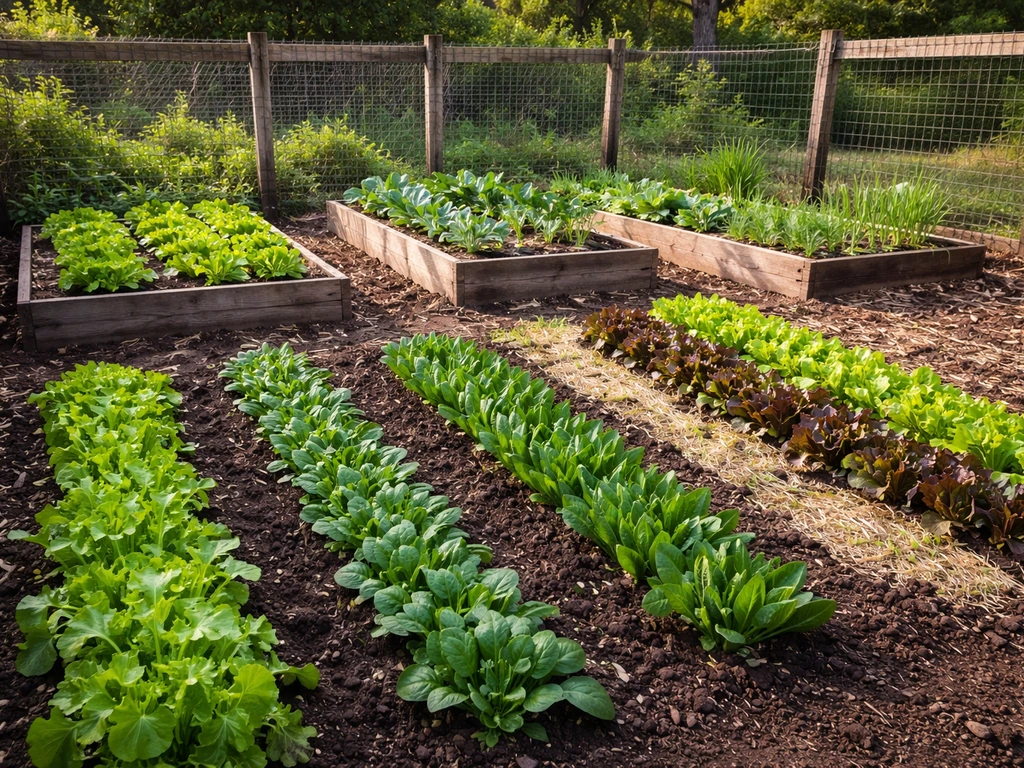
An old chicken run is one of the best garden beds you'll ever have. The soil is pre-loaded with nitrogen, organic matter, and microbial life from years of manure, feathers, and scratching. With a soil test, some basic amendments, and a few weeks of prep, you can turn that space into a high-yield vegetable garden. The best first crops are leafy greens (kale, chard, lettuce), heavy-feeding vegetables (tomatoes, cucumbers, squash, peppers), and herbs like basil and parsley. If the soil test shows very high phosphorus or salt levels, you start with cover crops first to reset the balance. Either way, the run is not wasted space, it's a head start.
What to Grow in an Old Chicken Run: Fast Crops and Soil Reset

Marcus Hendrick
5 May 2026
Best crops for a former chicken run
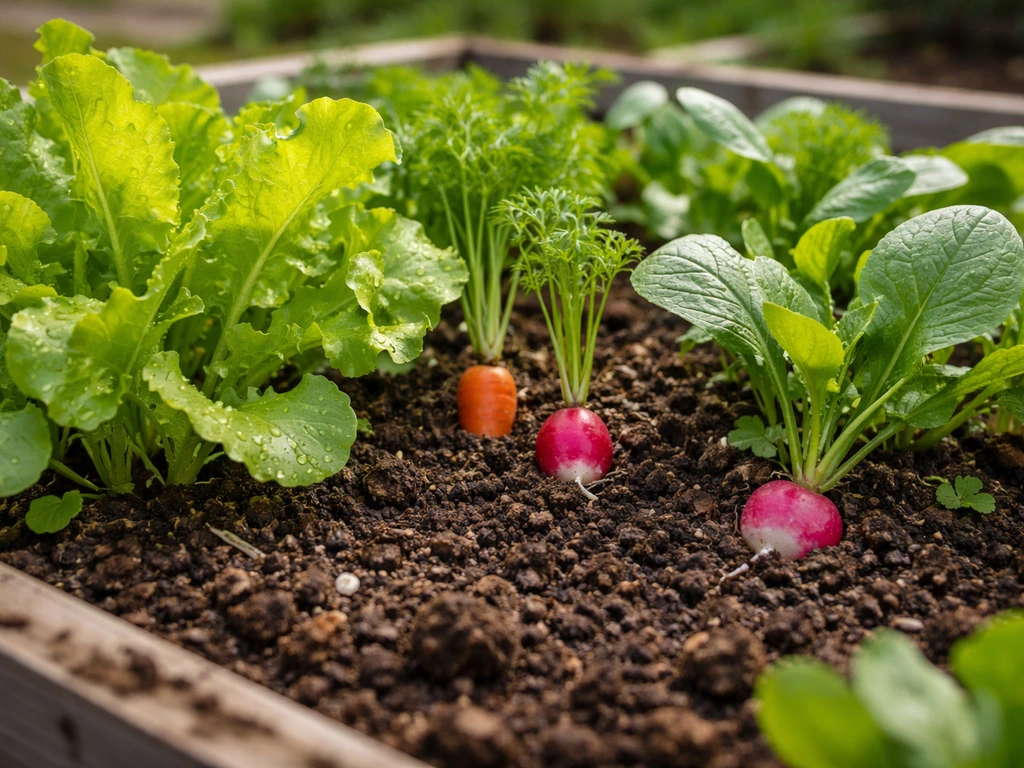
Chicken manure is high in nitrogen, phosphorus, and potassium. That makes the soil rich but potentially unbalanced, especially if birds lived there for years. The crops that benefit most are heavy feeders that can absorb excess nutrients without being overwhelmed by them. Tomatoes, peppers, cucumbers, zucchini, and winter squash all thrive in nitrogen-rich ground. Kale, chard, and brassicas (broccoli, cabbage, Brussels sprouts) are strong performers too. Herbs like basil, parsley, and dill grow fast in fertile soil.
Root vegetables like carrots, beets, and radishes are fine after the first season, but in very high-nitrogen soil they tend to put on more leaf than root. If you test and find nitrogen is extremely elevated, hold off on root crops and leafy salad greens for raw eating in the first year, not because the soil is ruined, but because of the pathogen safety window explained in the next section. Fruiting crops like tomatoes, peppers, and trellised cucumbers are actually the safest first-year choices under the 90-day rule, and they're also among the most productive plants you can grow.
If the space was very heavily used and you're not ready to plant food crops yet, a quick-establishing cover crop like buckwheat is an excellent bridge. Buckwheat matures in 70 to 90 days, breaks down fast, and actively suppresses weeds while improving soil structure. It buys you time to let the soil stabilize before you put in vegetables.
Getting the soil right after chickens
Before you plant anything edible, get a soil test. This is not optional, it's the most useful thing you can do. A basic garden lab panel should include pH, nitrate-N, phosphorus (Olsen P if your soil pH is at or above 7.4, Bray P1 if it's below), potassium, organic matter, and soluble salts (measured as electrical conductivity, or EC). If the run is near an old painted structure or galvanized wire, add a heavy-metals test for copper, zinc, lead, and arsenic. Cornell's Soil Health Program and most state extension labs offer these. Results usually come back within a week or two.
Here's what you're looking for and what to do about it. Soluble salts are the first thing to check if birds were kept in a confined space for years. An EC above 2 mmhos/cm starts to affect sensitive plants. Above 4, moderately tolerant crops show stress. If you're above 4, water the bed deeply and repeatedly before planting, and consider growing a salt-tolerant cover crop first. Phosphorus is almost always elevated in old runs and can build to excessive levels. High P doesn't burn plants, but it can lock out zinc and iron, and heavy repeated compost applications can make it worse. If P tests excessive, skip adding any phosphorus fertilizer and hold off on compost until levels come down. Potassium above roughly 125 ppm is sufficient, no potassium fertilizer needed. Below 50 ppm, you'll want to add it.
pH is critical. Chicken manure is slightly alkaline, and years of it can push pH above 7.5. Most vegetables prefer 6.0 to 7.0. If you need to bring pH down, elemental sulfur works slowly (plan for several months). If you need to raise it, lime works, but apply it in fall for spring planting since it takes time to react. Gypsum is sometimes suggested for high-salt soils, but Iowa State Extension notes it actually adds to the salt load, so if EC is already elevated, skip gypsum.
Handling the manure safely
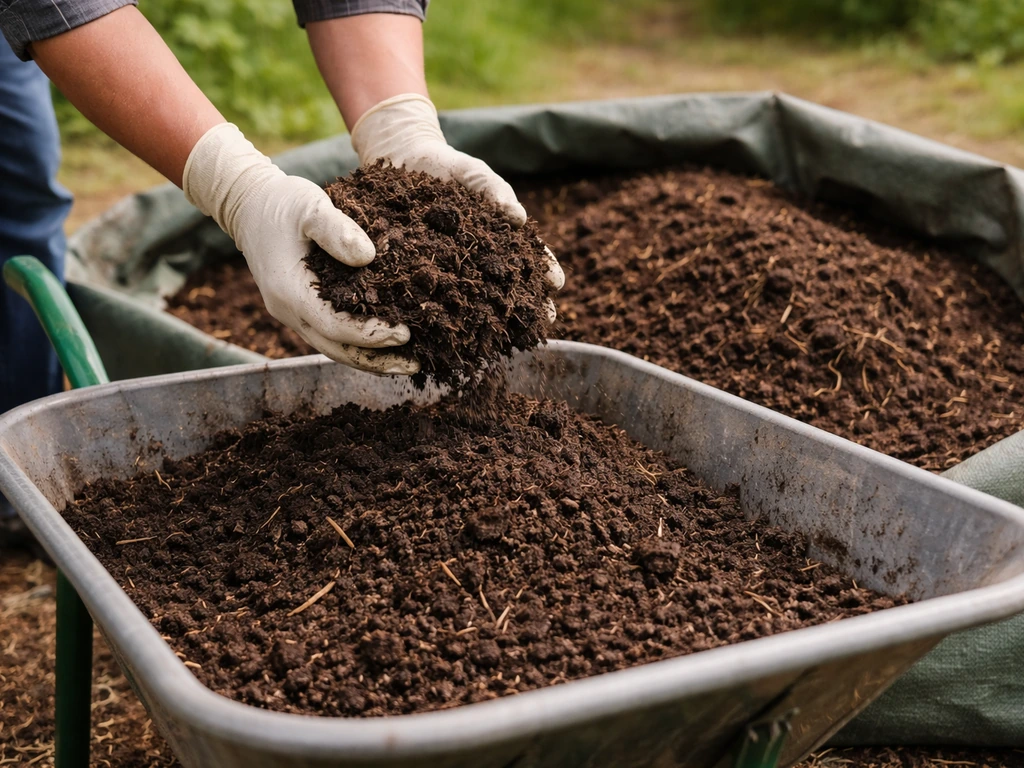
Fresh or undercomposted chicken manure carries real pathogen risk, mainly E. coli and Salmonella. The standard guidance from UNR Extension is clear: composted or aged manure should be applied no later than 90 days before harvesting crops that don't touch the ground (trellised tomatoes, cucumbers, peppers) and no later than 120 days before harvesting ground-contact crops like lettuce, carrots, and strawberries. Because grain and grow oatmeal is a feed supplement and not treated manure, it should not be used as a fertilizer in a chicken-run garden bed is gerber grain and grow oatmeal safe. If you hot-compost the litter before adding it, those pathogens are killed at 140 to 160°F maintained for 7 to 10 days. Turn the pile when temperature drops below 110°F to keep the heat going. Most pathogens in the soil itself die within about 30 days under normal conditions, but safe practice means working within those harvest windows.
If the run has a thick layer of compacted litter (straw, wood shavings, manure mix), scrape most of it off and hot-compost it separately. Use the finished compost later as a top-dressing once you've confirmed it's fully broken down. Don't till it into the bed raw if you're planning to plant within a season, the C:N ratio and salt load from fresh litter can cause more problems than it solves.
Laying out the beds inside the run
Most chicken runs already have a fence and an established footprint, which makes layout easier. The basic rule for raised or in-ground beds is to keep them narrow enough to reach the center without stepping in. Four feet wide is the standard for adults (you can reach two feet from each side). If you can only access from one side, say, if the run fence is on one edge, keep beds 1.5 to 2 feet wide. Pathways between beds should be at least 3 feet wide so you can move a wheelbarrow through without straining.
Drainage matters more in a former run than in a typical garden because the soil is often compacted from years of chicken traffic and may have a hard layer several inches down. Before you build beds, probe the soil with a rod or screwdriver. If you hit resistance at 4 inches or deeper, that's a compaction layer worth loosening with a broadfork or fork before you set up beds. You don't need to deep-till the whole area, just break up that dense layer so water can move through.
For the paths, use wood chips or straw as mulch. Wood chips are excellent for pathways but avoid tilling them into the soil, OSU Extension warns that fine wood chips mixed into soil can tie up nitrogen as they decompose. On the surface as a walkway cover, they're fine and suppress weeds well. If the run has a soil floor that gets muddy, put down landscape fabric under the chips to keep paths clean and reduce weed pressure.
If the existing run fencing is still in good shape, use it. Chicken wire or welded wire fence works as trellis support for cucumbers, pole beans, and indeterminate tomatoes, those crops need at least 48 inches of vertical support for tomatoes. You're essentially reusing infrastructure you already paid for.
Crop-by-crop growing plans
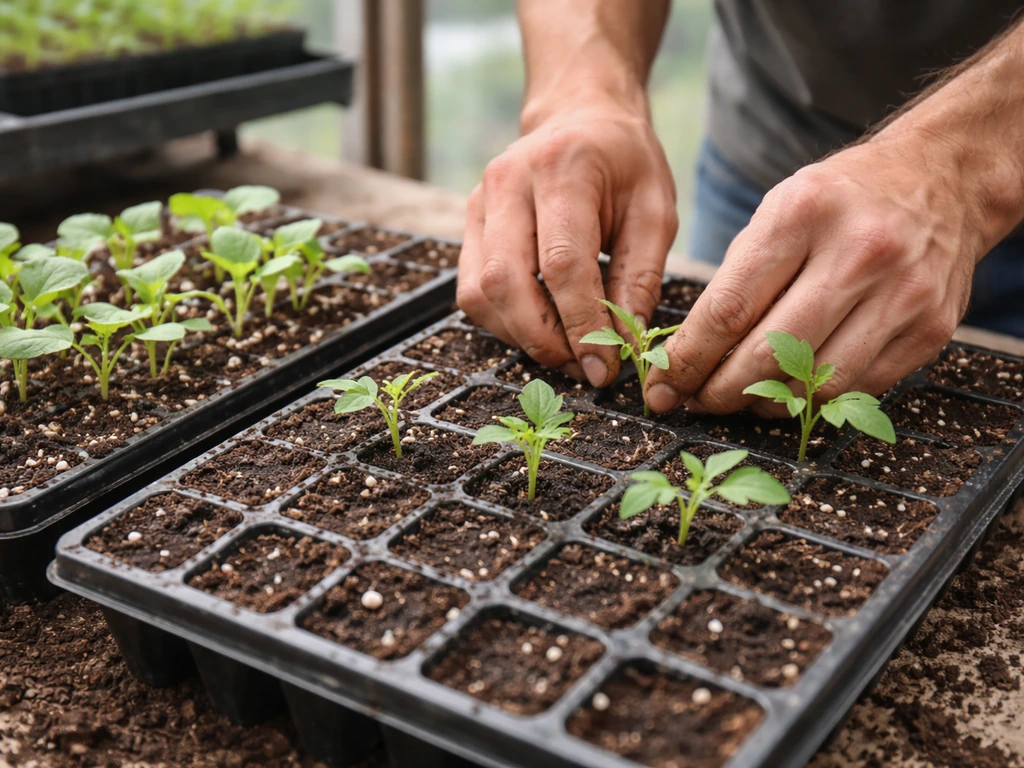
Below are practical starter plans for the crops that perform best in former run conditions. These assume you've done your soil test, confirmed EC and pH are in a workable range, and the 90/120-day pathogen safety window has been met.
| Crop | Spacing | Start method | Days to harvest | Notes |
|---|---|---|---|---|
| Tomatoes (indeterminate) | 18–24 in apart | Transplant after last frost | 60–80 days from transplant | Trellis at 48 in+; benefits from high-N soil |
| Cucumbers | 12 in apart | Direct sow or transplant | 50–65 days | Trellis on existing fence; reduces disease |
| Zucchini/Summer squash | 24–36 in apart | Direct sow after frost | 50–60 days | Very heavy feeder; thrives in rich soil |
| Kale | 12–18 in apart | Transplant 4 weeks before last frost | 55–75 days | Set out early spring or fall; tolerates rich N |
| Swiss chard | 6–9 in apart | Direct sow or transplant | 50–60 days | Cut-and-come-again; great second-year crop |
| Peppers | 12–18 in apart | Transplant after last frost | 70–90 days from transplant | Rows 15 in apart; loves warm fertile soil |
| Basil | 8–12 in apart | Transplant after frost | 30–40 days to first harvest | Loves heat and nitrogen; pair with tomatoes |
| Buckwheat (cover crop) | Broadcast at 2–3 lbs/1000 sq ft | Direct sow | 70–90 days to maturity | Terminate 2–3 weeks before vegetable planting |
A few extra notes on timing: kale and lettuce can be started from seed 4 to 6 weeks indoors and set out 3 to 4 weeks before your last frost date. That means for most gardeners, you're starting seeds in late winter and transplanting in early spring. Tomatoes and peppers go out after last frost only. If you're converting the run in spring, you have time to plant cold-season crops (kale, chard, brassicas) first, then follow with warm-season crops (tomatoes, cucumbers, squash) once the weather settles.
Pests, weeds, and disease to expect
Old runs come with a weed seed bank. Chickens scratch the soil and disturb weed seeds constantly, which means germination pressure in year one can be high, especially with fast-germinating annuals like pigweed, lamb's quarters, and chickweed. The best defense is not to leave bare soil. As soon as beds are prepped, plant or mulch. A 2 to 3 inch layer of straw or wood chip mulch between plants dramatically cuts down on weed germination and saves you hours of hand-weeding.
Pest pressure depends on what was happening in the run before. Chickens eat a lot of insects, so the soil may actually have lower grub and slug populations than a typical garden. What you might find more of is flies attracted to decomposing litter and residual manure, keep the area clean as you prep. Fungal disease risk is elevated in soil with high organic matter and nitrogen if drainage is poor, so good bed drainage and air circulation around plants (don't crowd them) are your main tools.
Crop rotation matters more in a former run because the soil has already had years of a single-species animal system. Starting rotation from year one gives you a clean baseline. The rule of thumb from UMN Extension is to avoid planting the same plant family in the same bed for 3 to 4 years. Keep a simple map: where you grew tomatoes (nightshades) this year, plant brassicas or legumes next year.
Season planning and keeping the system going
The first year is about assessment and establishing your rotation. Use it to observe: where does water pool after rain? Which beds dry out fastest? Which corner gets shade from that fence post or tree? That knowledge shapes what you plant where in year two.
At the end of the season, don't leave beds bare. Either plant a fall cover crop (winter rye is a common choice, but terminate it before it matures, Penn State Extension warns that incorporating mature rye can cause nitrogen deficiency in the next crop) or mulch heavily with straw. Oats are another option for rotating and improving the soil, but you should confirm the timing and conditions for will feed oats grow in your area. Cover crops should be terminated about 2 to 3 weeks before you want to plant vegetables, with blank" rel="noopener noreferrer">UMN Extension noting you should wait at least 7 to 14 days after termination for residue to break down before planting.
Compost is your ongoing soil management tool. Once phosphorus levels come down to the optimum range (check your soil test each year), you can start adding finished compost as a 1 to 2 inch top-dressing each season. Avoid heavy compost additions if P is already excessive, UMN Extension flags that repeated heavy compost applications in raised beds can build phosphorus and soluble salts to damaging levels. A soil test every 1 to 2 years keeps you from overshooting.
A simple 4-bed rotation works well in most converted runs. Year 1: fruiting crops (tomatoes, peppers, cucumbers). Year 2: brassicas (kale, broccoli, cabbage). Year 3: legumes (beans, peas) plus herbs. Year 4: root vegetables (carrots, beets, radishes). Then repeat. This keeps disease pressure low and naturally balances soil nutrients over time.
What you can realistically expect: yield, cost, and effort
A typical backyard chicken run is somewhere between 50 and 200 square feet. That's enough space to produce a meaningful amount of food. A 4 x 8 bed planted with indeterminate tomatoes can yield 20 to 30 lbs of fruit over a season. Zucchini in a similar bed can produce 10 to 15 lbs per plant. Kale and chard are essentially continuous producers from spring to frost if you're cutting outer leaves regularly. For a 100 square foot run converted to beds, a conservative estimate is 50 to 100 lbs of mixed vegetables per season, depending on crop selection and your climate.
Startup costs are low compared to building a raised bed from scratch. The fencing is already there. The soil is already fertile. Your main investments are a soil test (usually $20 to $40 through a state extension lab), any amendments the test recommends, seeds or transplants, and mulch for pathways. Total first-year cost for a 100 square foot space is typically $50 to $100 if you're starting from scratch on seeds. That number drops significantly if you're saving seeds or starting your own transplants.
Effort-wise, the heaviest lift is in the first 2 to 4 weeks: soil testing, removing or composting litter, breaking up compaction, and setting up beds. After that, maintenance is regular, watering, weeding, harvesting, but the per-hour return on a well-set-up bed in rich chicken-run soil is high. The soil fertility head start means you're likely to spend less time troubleshooting nutrient deficiencies than you would in a newly built raised bed filled with purchased mix.
Your next steps: a quick decision checklist
Before you order seeds or move a single shovel of soil, run through these steps in order. Skipping the soil test is the only real mistake you can make here, everything else is adjustable.
- Get a soil test first. Order a panel that includes pH, nitrate-N, phosphorus, potassium, organic matter, and soluble salts (EC). Add heavy metals if the run had old painted structures or galvanized hardware nearby. Contact your state extension service or a private lab.
- Check your sun. Count how many hours of direct sun the run gets in midsummer. Six or more hours means full-sun crops (tomatoes, cucumbers, squash, peppers). Three to five hours means partial-shade tolerant crops (kale, chard, lettuce, herbs like parsley).
- Assess the litter. Is there a thick layer of compacted manure and bedding? If yes, scrape it off and hot-compost it separately. Don't incorporate it raw into beds you're planting this season.
- Fix drainage issues before building beds. Use a fork or broadfork to break up any hard compaction layer deeper than 4 inches. Slope or grade beds so water drains away rather than pooling.
- Decide: plant now or reset first? If EC or pH is out of range, or if you want ground-contact crops (lettuce, carrots) within the 120-day window, consider a buckwheat cover crop first to buy yourself a season of soil stabilization.
- Plan your layout. Set beds at 4 feet wide max (2 feet if single-side access). Keep pathways at least 3 feet wide. Use the existing fence as trellis infrastructure for climbing crops.
- Choose crops based on soil test results and sun. High nitrogen with good sun: start with tomatoes, cucumbers, zucchini. First-year caution with raw salad greens if manure was recent and uncomposted.
- Map your rotation from day one. Write down what family you're planting where this year so you have a baseline for the next 3 to 4 year cycle.
If you're also raising or planning to raise chickens elsewhere on your property, there's a natural loop here: the vegetable garden produces scraps the chickens eat, and the chickens produce manure that feeds the garden. Getting familiar with what chickens actually need nutritionally helps close that loop more efficiently, knowing what to feed chickens and what to grow to supplement their diet are both worth thinking through once the garden side is established. If you're planning to raise them, you can also review what you need to grow chickens so the feed and setup match your goals what chickens actually need nutritionally. If you also want to feed pigs with home-grown crops, the best approach is to choose pig-friendly plants and plan your planting schedule around their nutritional needs. If you want to increase flock performance, focus on a balanced ration and appropriate treats while you avoid overfeeding what to feed chickens.
FAQ
Can I grow lettuce or carrots in an old chicken run in the first season?
If you have not met the 90-day (no ground contact crops) or 120-day (ground-contact crops) window, stick to fruiting vegetables on trellises, and keep harvests off the soil. For lettuce, carrots, strawberries, and other ground-contact crops, either delay planting or grow in a separate, clean container bed.
Are cucumbers and other salt-sensitive crops safe in an old chicken run?
Yes, but control them like you would any heavy feeder that is also salt-sensitive. In beds with EC near the high end, start with trellised cucumbers, space them for airflow, and mulch heavily to reduce soil splash. If your EC is high, it is usually safer to improve the bed first with deep watering and a cover crop rather than trying to “push through” with more feeding.
What if my plants grow lots of leaves but produce poorly in the first year?
Avoid adding extra nitrogen early, especially if your soil test already shows high nitrate-N. If plants look lush but slow to fruit or form roots, that pattern often means the balance is off. Use your test to decide, in many cases you skip nitrogen and prioritize potassium and balanced compost only after phosphorus and soluble salts are in range.
Can I use leftover chicken litter as fertilizer if I compost it a little?
Most of the risk comes from fresh litter, not from normal, long-established soil biology. If you are using only finished, fully decomposed compost, you are much closer to safe practice. Still, do not incorporate raw or only partially composted litter into a bed you will harvest soon, because incomplete composting can leave pathogen or salt pockets.
I want to plant soon, but my soil test results will take time. What should I do first?
If you run out of time to fully prep before planting, prioritize two things: plant quickly with mulch to reduce weed germination, and do not add phosphorus or heavy compost until you have results. You can often start with cold-season transplants (kale, chard, brassicas) while you finalize amendments for warm-season crops.
My soil test shows high pH above 7.5. Should I change what to grow?
If pH is high, you can still grow vegetables, but manage your expectations and choices. Nutrient lockout increases at higher pH, so leafy greens can disappoint if iron and zinc are limited. Elemental sulfur usually needs months, so for immediate results you may choose more forgiving crops and adjust fertility after the pH correction plan starts.
How do I know if high soluble salts are causing problems, and what’s the fix?
Use the EC number to set expectations. When EC is elevated, most failures look like leaf burn, stunted growth, or wilting after sunny days. Deep watering before planting helps, but the real fix is to lower salts with time plus salt-aware cropping, cover crops, and reducing manure or compost inputs that add soluble minerals.
Should I test EC by planting a small area first?
Don’t rely on “looking good” as a sign salts are fine. Some plants tolerate EC better than others, so symptoms may only show on sensitive crops. The safest approach is to match plant tolerance to your EC reading, then confirm with a small test area before planting the entire run.
Do I need to deep-till an old chicken run to fix compaction?
In a former run, you can often loosen only the compaction layer and avoid full-depth tilling. If your rod shows hard resistance around 4 inches, break that zone with a broadfork or targeted fork pass, then place beds and mulch. Deep tilling can spread salts and compacted material upward, which can worsen drainage.
What spacing and watering changes help prevent disease in a fertile chicken-run bed?
Plan for airflow and water access. In nitrogen-rich conditions, crowded plants are more likely to develop fungal issues if leaves stay wet. Use trellises, wider spacing for cucurbits, and avoid overhead irrigation where possible. Drip irrigation usually reduces splash and foliar disease.
Why do my carrots and beets make big leaves but small roots in an old chicken run?
Yes, but treat it as a crop choice problem, not just a soil problem. If you have very high nitrogen, postpone root vegetables that want to focus on storage development, and choose heavy-feeding fruiting crops or brassicas that handle the balance better. Once nitrogen normalizes over time and through rotation, roots often perform well.
Can I use wood chips as mulch and also mix them into the soil?
Wood chips can work great for walkways, but avoid mixing them into soil right before planting because the chips can temporarily tie up nitrogen as they break down. If you want chips near plants, keep them as a surface mulch, not incorporated material.
How should I design my bed layout if I want to trellis tomatoes and cucumbers using existing fencing?
If your fence supports are solid, use them for trellised crops, especially indeterminate tomatoes and cucumbers. You still need a plan for bed width so you can reach the center without stepping in, typically 1.5 to 2 feet with one-sided access. Also check for shade and wind, a corner with less sun may be better for leafy greens than tomatoes.
What’s the easiest way to use cover crops during the transition year?
You can, but keep it practical. Sow cover crops after cleanup and weed management, then terminate based on timing that matches your next crop window. If you rely on residue-heavy covers like rye, terminate before maturity and allow enough time for breakdown so nitrogen does not get pulled from vegetables.
Does rotation matter if I’m just growing a mix of vegetables in one year?
For rotation, prioritize plant families rather than just crop names. A bed that grew tomatoes (nightshades) should move to brassicas or legumes next, not another nightshade. Keep a simple map so you do not accidentally repeat the same family within 3 to 4 years.
How do I decide which part of the old run gets which crops?
Yes. Your first year is also about learning your bed’s water patterns. If one area stays wet, it is often better for brassicas and leafy greens once drainage is improved, while the driest area can handle fruiting crops. Adjust your year two planting based on pooling, drying speed, and the microclimate created by fences and posts.
Next Article
Will Feed Oats Grow? How to Test and Grow Them Successfully
Test and grow feed oats: check sprouting viability, plant timing, soil, seeding, watering, pests, and harvest or cover r