Yes, the United States produces more than enough calories to feed its entire population, and then some. But that headline number hides a messier reality: the US is a massive net food exporter in grains, soybeans, and corn, yet it imports nearly 60% of its fresh fruit and about 35% of its fresh vegetables. So 'enough food' depends entirely on what you mean by 'enough' and which foods you're talking about.
Does the US Grow Enough Food to Feed Itself? Calories, Crops, and Reality
Marcus Hendrick
23 Apr 2026
Big-picture answer: calories and food categories
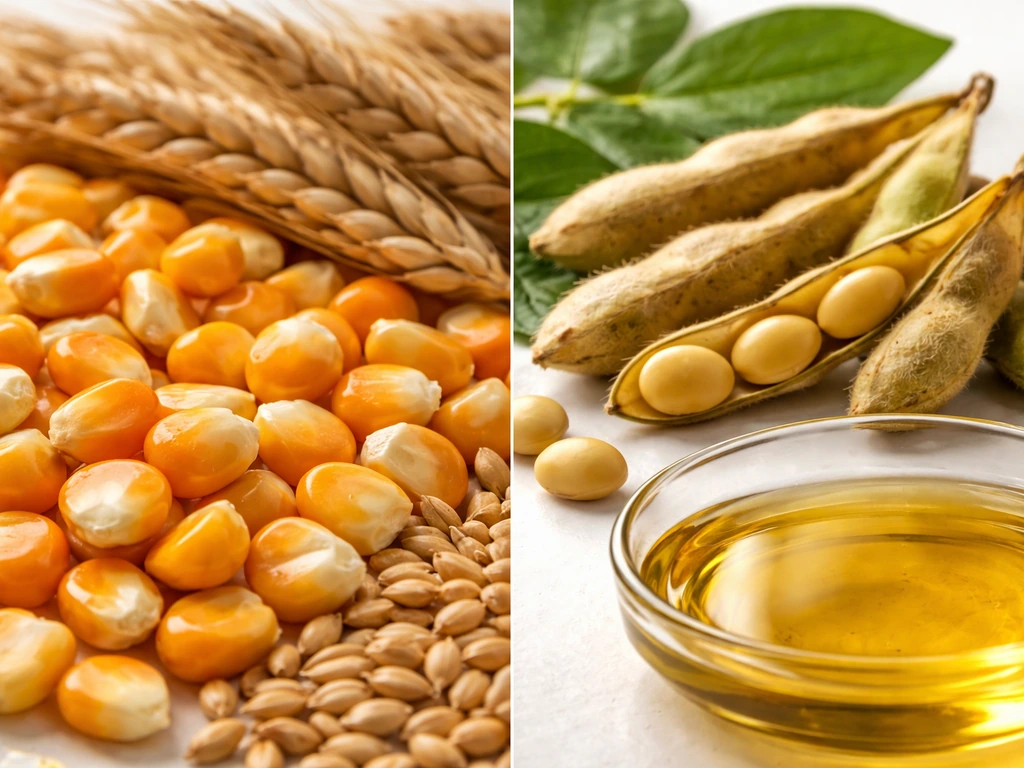
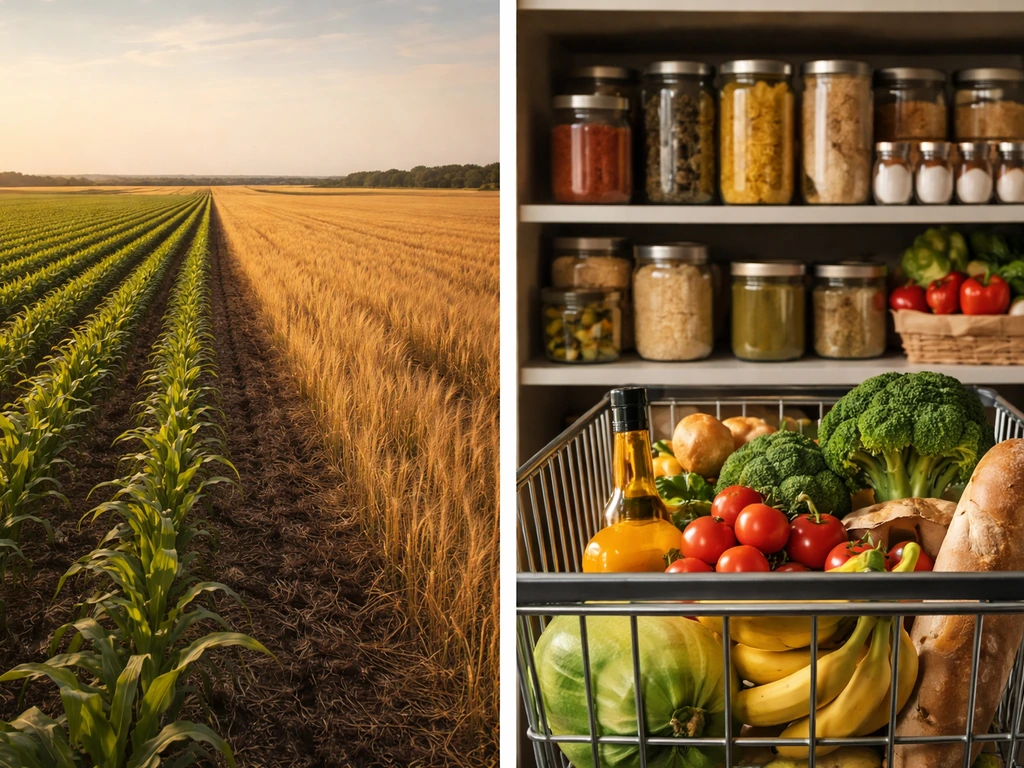
On a pure calorie basis, the US is more than self-sufficient. American farmers grow enormous quantities of corn, wheat, soybeans, and other row crops, producing far more than the domestic population consumes. The USDA's Food Availability Data System tracks this using a supply balance: production plus beginning stocks plus imports, minus exports, ending stocks, and nonfood uses, divided by population. That math consistently shows a domestic calorie surplus.
The picture fractures when you break it down by food category. Grains and oilseeds: the US is a dominant global exporter. Meat and dairy: largely self-sufficient, though feed inputs are a bigger conversation (more on that below). Fresh fruits: heavily import-dependent, with imports accounting for 59% of fresh fruit availability as of 2023, up from 50% in 2007. Fresh vegetables: imports now cover roughly 35% of availability, up from 20% in 2007. So while no one in America goes without calories because of a domestic shortage of corn or wheat, the fresh produce aisle tells a very different story. So while no one in America goes without calories because of a domestic shortage of corn or wheat, the fresh produce aisle tells a very different story can farmers grow enough food for everyone. This is one reason many people ask why the world needs to grow more food, especially when access to fresh produce is uneven why does the world need to grow more food.
| Food Category | US Production Status | Import Dependence |
|---|---|---|
| Grains (corn, wheat) | Major net exporter | Very low |
| Soybeans/oilseeds | Major net exporter | Very low |
| Meat and dairy | Largely self-sufficient | Low to moderate |
| Fresh fruit | Significant deficit | ~59% of availability |
| Fresh vegetables | Partial deficit | ~35% of availability |
| Processed/packaged foods | Mostly domestic | Low, but ingredient-dependent |
Why 'self-feeding' isn't the same as 'food-secure'
Here's the distinction that trips most people up. A country can be a net food exporter and still have millions of people who can't reliably access enough food. In 2024, 13.7% of US households were food insecure at some point during the year, about 18.3 million households. Of those, 5.4% experienced very low food security, meaning their eating patterns were actually disrupted because of lack of resources. That's not a supply problem. The food exists. It's a distribution and income problem.
The USDA defines food security as having access at all times to enough food for an active, healthy life. By that definition, 86.3% of US households were food secure throughout 2024. But food security at the national level (we produce enough) and food security at the household level (every family can reliably access it) are two completely separate things. Understanding that gap is important if you're thinking about your own food resilience, because national surpluses don't automatically protect you when supply chains break down, prices spike, or a local disaster cuts access.
How imports and exports shape the math
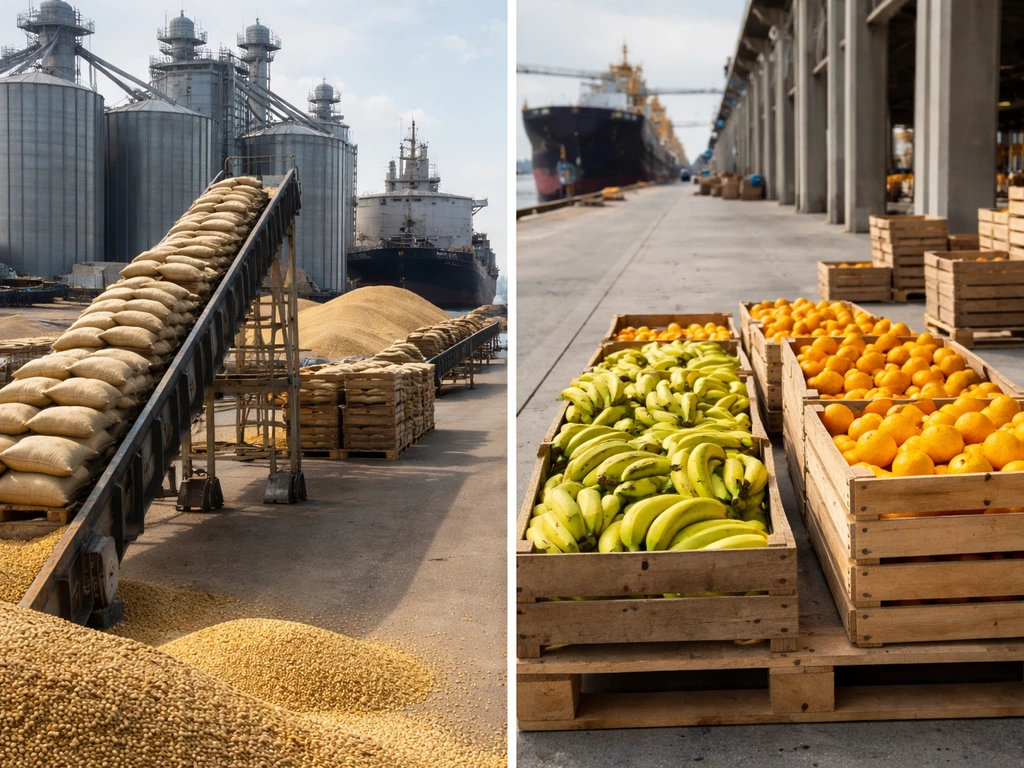
The US agricultural trade system is enormous, and it runs in both directions simultaneously. America exports massive volumes of corn, soybeans, and wheat while importing tropical fruits, off-season vegetables, coffee, and cocoa. Across all food and beverages, imports represented about 16% of US consumption during 2013 to 2022, and that share has been growing. For higher-value products like fresh fruits and specialty vegetables, import dependence is much higher and has been climbing steadily.
This matters for self-sufficiency calculations because the US doesn't just export a small surplus. It exports a significant share of its major crop harvests. Much of the corn, wheat, and soy grown in the Midwest is destined for foreign markets, which means the 'gross production' number overstates what's actually available for domestic consumption. The USDA's trade data (tracked through FATUS and USDA/FAS) shows these export flows clearly. If US exports were sharply curtailed or imports of fresh produce cut off, the food system would need to rebalance significantly, and that rebalancing would take years, not weeks.
The role of livestock feed and crop conversion
This is where the calorie math gets really interesting. A huge portion of what US farmers grow never reaches a human mouth directly. Corn is the clearest example: the majority of the US corn crop goes to animal feed and residual use, not food for people. The USDA's Feed Grains Database tracks this in detail, separating 'food, seed, and industrial uses' from 'feed and residual' and exports.
Soybeans follow a similar path. More than 80% of soybeans are processed into soybean meal and oil through crushing, and the meal primarily goes to livestock feed. So when you see a field of corn or soybeans, most of what's growing there is indirectly producing beef, pork, chicken, and eggs, not bread or tofu. Converting grain calories to animal calories is inefficient: it typically takes several pounds of grain to produce one pound of meat. This means the US food system uses an enormous land and crop base to support its current protein consumption patterns. If Americans ate less meat and more grain directly, the US would have a dramatically larger calorie surplus available for human consumption.
What this means for home growers: can you close the gap?
The macro picture gives you important context, but here's what actually matters for your backyard or homestead: the weakest links in the US food system at the household level are fresh produce, supply chain disruptions, and price volatility. And those happen to be exactly what a home garden addresses most effectively.
You're not going to grow your own wheat or soybeans at home in any meaningful quantity without serious acreage. But you can grow a substantial share of your family's vegetables, herbs, and some fruits. Let's put some real numbers on it. A well-managed 400 to 600 square foot garden can produce meaningful quantities of vegetables for a family of four through a growing season. Extension benchmarks give you something to plan with: pole beans can yield around 12 pounds per 10-foot row, tomatoes can produce 8 or more pounds per plant under good conditions. Potatoes, winter squash, and dried beans punch above their weight in calorie density and storage life, making them the best targets for anyone serious about food self-sufficiency.
The honest trade-off is this: fresh produce is where you get the most return from home growing, but staple calories (grains, fats, proteins) require significantly more land than most suburban gardeners have. A single person needs roughly 4,000 to 5,000 square feet of productive growing space to grow most of their own calories from vegetables and grains combined. That's achievable on a larger suburban lot or small homestead, but it's a stretch for a typical backyard. The practical play for most people is to grow as much fresh produce as possible, store what you can, and build a pantry of purchased staples (rice, dried beans, oats, canned goods) as your calorie backstop.
Best crops for home food security
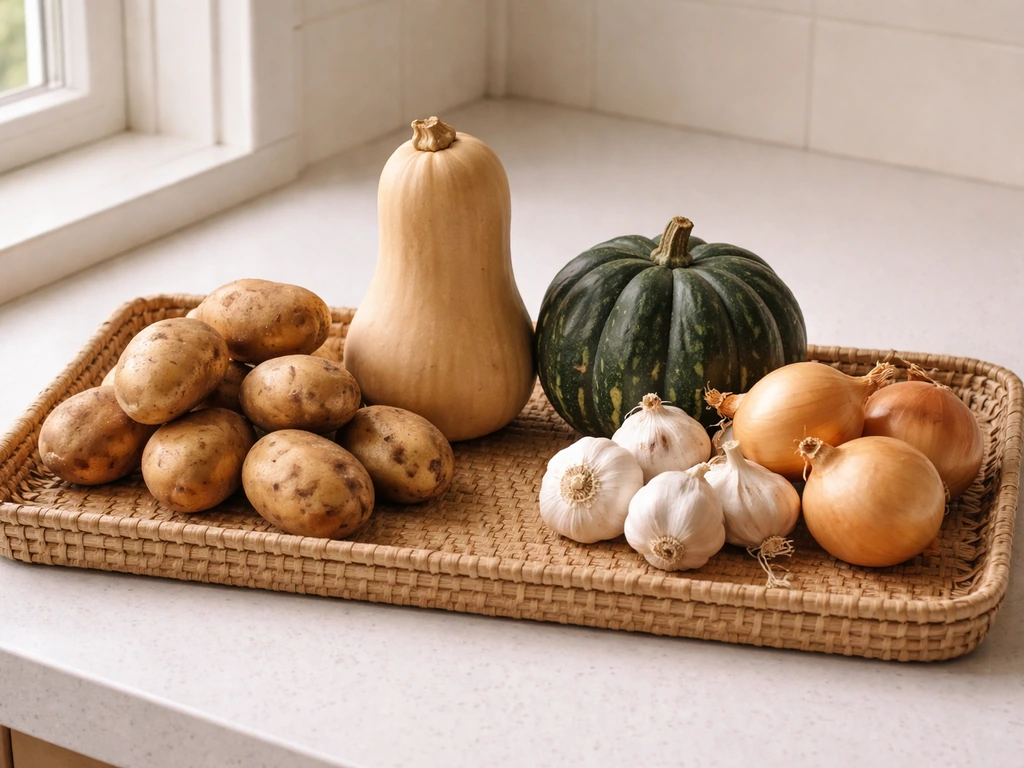
- Potatoes: high calorie yield per square foot, stores well, grows in most US climates
- Winter squash (butternut, acorn, hubbard): long shelf life, calorie-dense, low maintenance
- Dried beans (black, pinto, navy): excellent protein and calorie density, stores for years
- Sweet corn: calorie-dense, easy to freeze or dry, though it needs space
- Tomatoes: high yield per plant, versatile for canning and preservation
- Leafy greens (kale, chard, collards): fast-growing, nutrient-dense, extends season in cool climates
- Garlic and onions: calorie-modest but high-value, long storage, easy to grow
- Sunflowers: dual use for seeds (fat and protein) and garden structure
How to plan next steps: crop choices, yields, and resilience
The goal isn't to replicate the industrial food system in your backyard. The goal is to reduce your vulnerability to the weak points in the larger system: fresh produce shortages, price spikes, and supply chain gaps. Here's how I'd approach building that resilience in a practical, staged way.
- Audit your current food spending and consumption: figure out which fresh items you buy most often and which items are highest priority for home production. Tomatoes, lettuce, peppers, and herbs are the easiest wins.
- Map your growing space honestly: measure what you have available (sun, soil, water access) and match crops to real conditions, not ideal ones. A shaded yard does kale and lettuce well but won't do tomatoes or squash justice.
- Start with high-yield, low-skill crops: beans, zucchini, kale, and potatoes give beginners strong feedback loops without demanding intensive management.
- Add a preservation layer: canning, freezing, and root cellaring turn a summer harvest into year-round supply. A chest freezer or even just a cool basement shelf expands your effective growing season dramatically.
- Build a pantry buffer: even the best garden has off years. Keep 3 to 6 months of staple calories (rice, dried beans, oats, canned tomatoes) on hand so a bad harvest doesn't leave you exposed.
- Diversify your crops deliberately: don't plant only one or two things. A disease, pest, or bad weather event can wipe out a monoculture. Planting 8 to 12 different crops makes catastrophic failure much less likely.
- Track your yields: keep a simple garden journal with what you planted, what it produced, and what you'd do differently. After two or three seasons, your own data is more useful than any extension chart for your specific microclimate.
- Connect with local growers and seed libraries: local food networks, community-supported agriculture shares, and seed swaps extend what you can access beyond what you can personally grow.
The broader picture, whether the US can feed the world or whether global farmers can meet rising demand, is worth understanding too, since it shapes the policies and market pressures that affect your local food prices and availability. Global farmers and different growing conditions shape whether demand can be met, so it helps to look at how farmers grow food around the world. But at the household level, the most actionable truth is this: the US food system has structural vulnerabilities in fresh produce and supply chain resilience, and a home garden directly addresses both. You don't need to grow everything. You need to grow the right things, store them well, and build enough buffer that a disruption in the larger system doesn't leave your family scrambling.
Start small, track results honestly, and expand what works. That's the same approach that scales from a 100-square-foot raised bed to a full homestead operation, and it's more reliable than waiting for the national food system to become fully self-sufficient in every category, which it hasn't been and likely won't be anytime soon.
FAQ
If the US produces more than enough calories, why do some Americans still struggle to get enough food?
At the household level, “self-sufficient” is mostly about having reliable access, not about whether the country produces a surplus. If your income is tight, food can become unaffordable during price spikes, even when national supply is plentiful.
Can the US be calorie-sufficient but still not “feed itself” well nutritionally?
Yes, the US can run a calorie surplus while still falling short on “nutrition quality” because the supply surplus is concentrated in grains and oilseeds. Fresh fruits and vegetables are the categories with rising import shares, and they matter for dietary diversity, micronutrients, and health outcomes.
Why does looking only at crop production numbers give a misleading answer to self-sufficiency?
A common mistake is using “production” to estimate what is actually available for people. Exports, livestock feed, industrial uses, and nonfood uses reduce the portion that becomes direct human food, so you need a supply-balance view, not just harvest tonnage.
Does the answer change during a disaster or bad growing season?
The “enough food” question changes depending on time and disruption type. National averages can look fine, but a drought, a port disruption, or a freeze that hits a key producing region can temporarily reduce what reaches your local stores.
What category is most likely to break a household’s diet even if calories are available?
For many people, the bottleneck is not total calories, it is meal composition. Even if you can meet calorie needs with stored staples, you might still run short on vitamin- and fiber-rich foods like leafy greens, unless you grow or store enough produce.
Why are fruits and vegetables more vulnerable than pantry staples?
Fresh produce is more “perishable and time-sensitive,” so it is more exposed to shipping delays, cold-chain failures, and local demand swings. Staples like rice, oats, dried beans, and canned goods are easier to store and therefore act as a practical buffer.
If imports of fresh produce were cut off suddenly, could US farms replace them quickly?
Exports and imports move in parallel, so blocking imports would not instantly create domestic availability. Rebalancing would require rerouting supply chains, shifting processing, and reallocating crops that were already committed for export, which takes years rather than weeks.
What should a typical backyard prioritize if the goal is more than just “eating from the garden”?
If you try to grow “calories” like grains in a typical yard, the land requirement becomes unrealistic. Most households get the best resilience by growing calorie-dense and storeable items (potatoes, winter squash, dried beans) plus some high-yield vegetables, then relying on purchased staples for grain and protein.
How is “food security” different from “food availability”?
Food security is usually measured at the household level with survey-based indicators, not by whether a country has a national surplus. Your risk depends on job stability, local prices, and whether you can access affordable stores nearby during disruptions.
What’s the biggest practical mistake people make when they start a food self-reliance garden?
Even if you grow a lot, storage skills and crop planning determine how useful it is later. A simple improvement that helps most households is choosing varieties with good storage life and building basic preservation habits (drying, freezing, canning) before scaling up production.
Next Article
How Much Do Farmers Get Paid Not to Grow Crops Now?
Learn how much farmers get paid to leave land idle, which programs still pay today, and how rates are calculated per acr