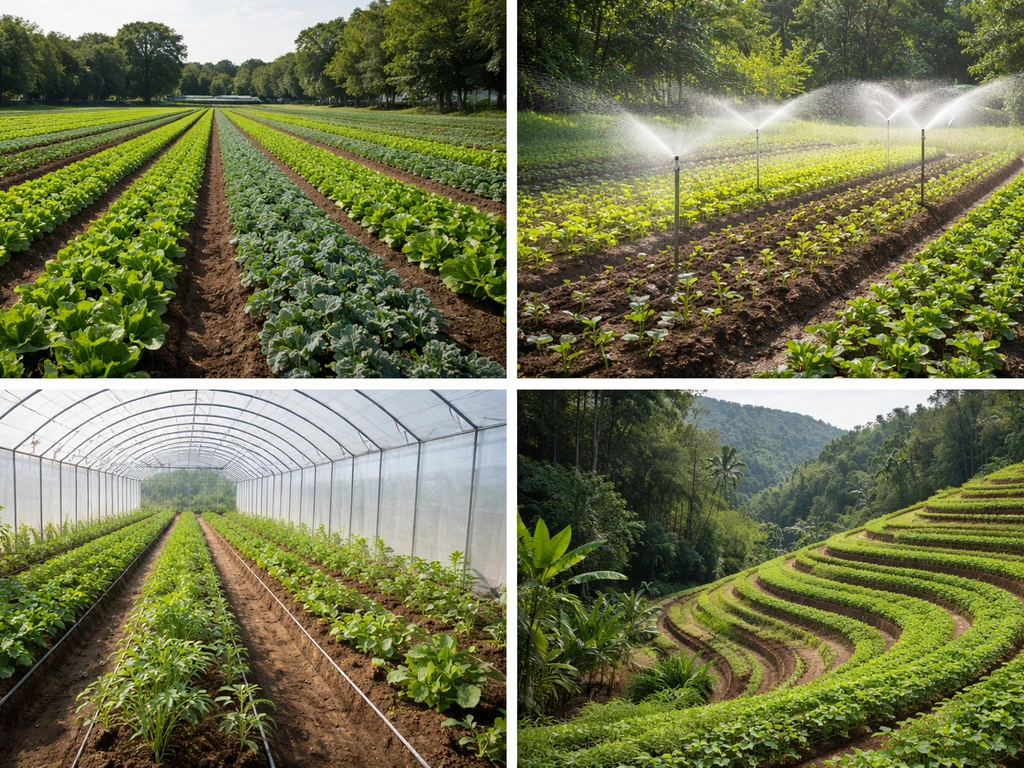
A farmer grows lettuce in a greenhouse primarily to control the growing environment: keeping temperatures in the sweet spot of roughly 15–22°C (59–72°F), preventing bolting in summer heat, extending the season into early spring and late fall (or year-round), and dramatically reducing pest and disease pressure. The result is more consistent harvests, better-looking heads, longer shelf life, and less crop loss than open-field growing typically delivers. Those same reasons apply just as directly to a home gardener or homesteader trying to get reliable, high-quality lettuce out of their backyard setup.
Why Would a Farmer Grow Lettuce in a Greenhouse?

Marcus Hendrick
24 Apr 2026
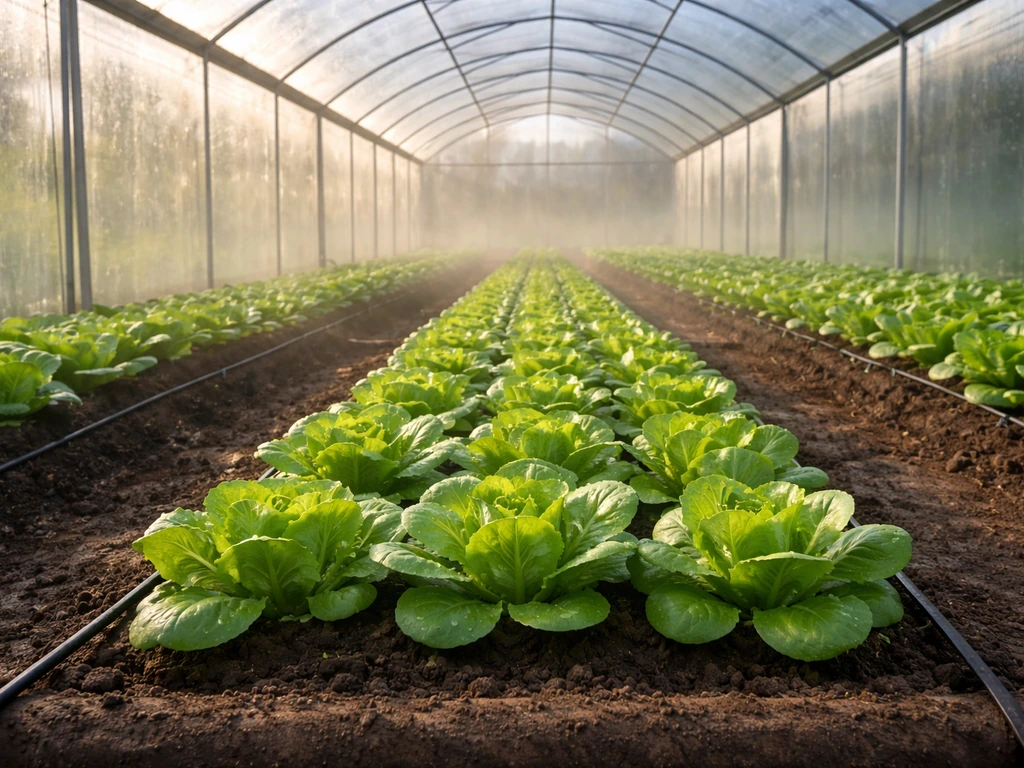
The main reasons to grow lettuce under glass (or poly)
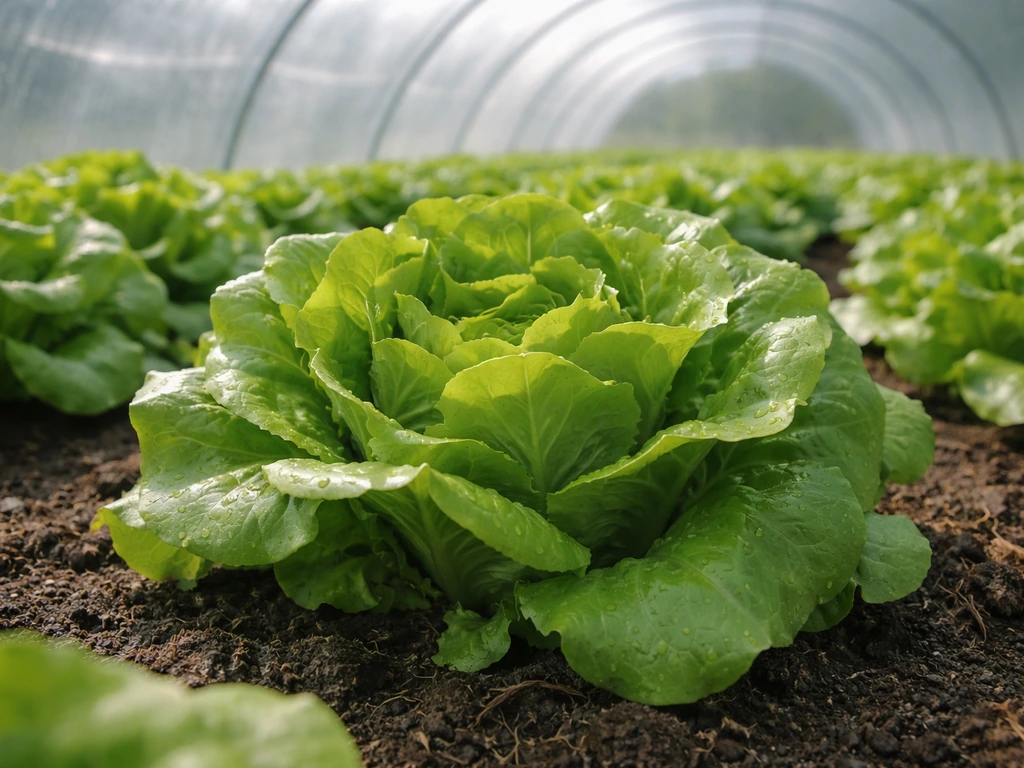
Lettuce is one of those crops that sounds easy until you actually try to produce it consistently. It is sensitive to heat, cold snaps, drought, and waterlogging. It bolts (sends up a flower stalk and turns bitter) the moment temperatures climb too high. It gets tipburn when calcium delivery inside the plant is disrupted by hot, dry, or still air. It's a magnet for aphids, slugs, and fungal problems when conditions are right for them. Open-field lettuce is manageable, but a greenhouse takes most of those variables off the table.
- Season extension: getting crops in the ground weeks or months before outdoor conditions allow, and harvesting well into fall or winter
- Heat stress and bolting prevention: maintaining temperatures below the bolting threshold even during summer
- Consistent crop cycles: greenhouse lettuce transplants can finish in roughly 30 days under good conditions, and with a nursery/finishing system, you can stagger harvests every 10–14 days
- Reduced pest and disease pressure through physical exclusion and environment management
- Higher and more predictable yields per square foot compared with field growing
- Better quality: firmer heads, cleaner leaves, longer shelf life after harvest
Climate control and season extension
This is the biggest reason, honestly. Lettuce has a narrow comfort zone. Too cold and growth stalls or frost damage sets in. Too hot and you get bolting, tipburn, and bitter, loose heads that nobody wants to eat. Open-field growers are at the mercy of whatever the season hands them. Greenhouse growers are not.
Even an unheated low-tunnel or cold frame pushes your planting window out by several weeks on each end of the season. A properly equipped heated greenhouse lets you grow lettuce year-round, regardless of climate zone. The practical season extension benefit is real even at the low-tech end: a simple unheated hoop house protects against weather extremes and lets you plant earlier and harvest later than you could otherwise. Full climate control, with supplemental heating and ventilation, is where the commercial operations live, but even modest protection changes the game for home growers.
Heat management in summer is just as important as frost protection in winter. High temperatures directly trigger bolting in lettuce, and once a head bolts, it is done. In a greenhouse, you manage this with shade cloth, ventilation, and evaporative cooling, keeping the interior at that 15–22°C target even when it is 35°C outside. That kind of control is impossible in an open field.
Pest, disease, and quality control
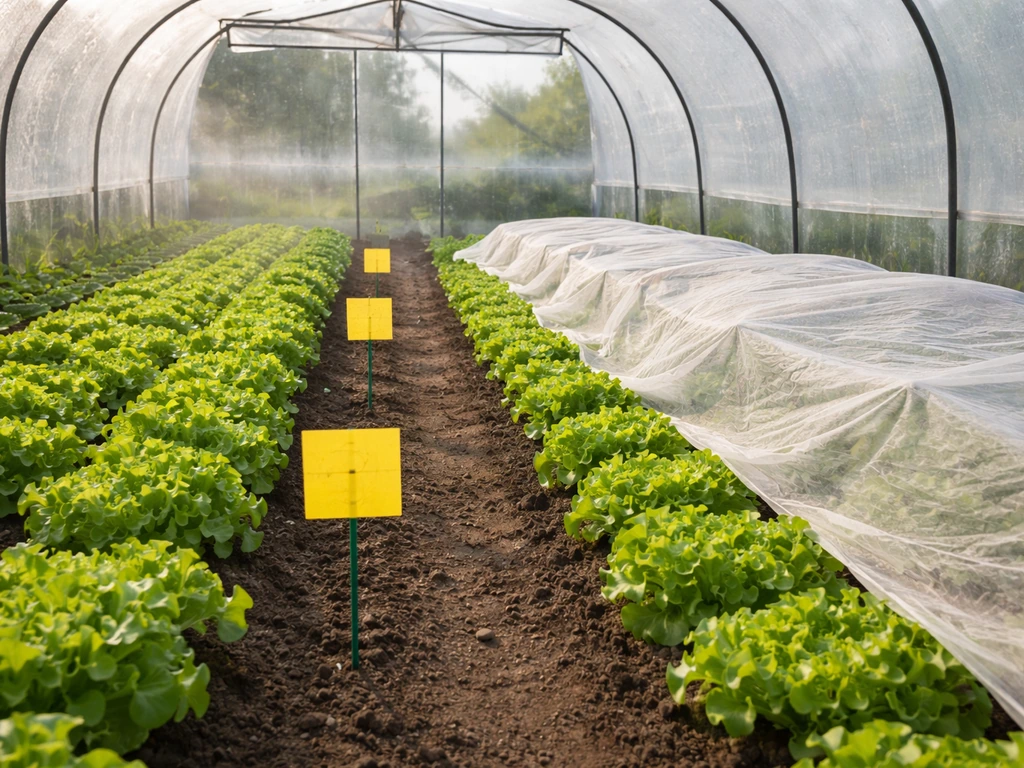
A greenhouse does not make pests and diseases disappear, but it gives you tools to manage them that field growing simply does not offer. Physical exclusion is the big one: fine insect screens on vents and entry points can block thrips, aphids, and other common lettuce pests before they ever get inside. That alone reduces the need for sprays and interventions significantly.
Disease management inside a greenhouse is mostly about environment control. Botrytis (gray mold) thrives in cool, damp, still air, which is exactly what you get in a greenhouse that is not managed well. The solution is airflow, proper plant spacing, and keeping humidity from sitting at extreme levels for long periods. Gray mold (Botrytis cinerea) development is favored by temperature, relative humidity, and wetness duration, so managing those greenhouse conditions can help reduce incidence [environment control](https://en.
wikipedia. org/wiki/Botrytis_cinerea). Tipburn is another common greenhouse issue: it is a physiological disorder caused when calcium cannot move fast enough into rapidly growing inner leaves, usually triggered by high temperatures, high humidity, or insufficient air movement. Keeping temperatures stable, running fans to maintain air circulation, and avoiding dramatic swings in heating and venting schedules all reduce tipburn risk.
The quality payoff from all this environment management is real. Greenhouse lettuce grown under controlled conditions consistently produces firmer, more uniform heads with better shelf life than field-grown lettuce exposed to weather variability. Research confirms that both growing conditions and postharvest temperature directly affect how long greenhouse lettuce holds its quality, so what you do in the greenhouse sets up the final product. If you are timing your home harvests, it helps to understand typical lettuce harvest stages and how long heads last after cutting. Nutritional quality, including vitamin content and nitrate levels, also varies with growing conditions, another reason controlled-environment production matters to serious growers.
The economics: does greenhouse lettuce make financial sense?
For commercial farmers, the math has to work. Greenhouse production costs more upfront and operationally than field growing, but it reduces crop loss, improves market timing, and often commands a price premium for consistent, high-quality product. If you are wondering whether lettuce growing in a greenhouse is worth the money, it mainly comes down to your expected season length and setup costs greenhouse lettuce crop. The ability to harvest on a predictable schedule, every 10–14 days in a well-run system, makes supply planning far more reliable than field production where a single heat wave or wet spell can wipe out a planting.
The trade-offs are real. Heating costs in colder climates can be significant, especially if you are trying to maintain production through deep winter. Supplemental lighting is another cost: in winter, natural light inside a greenhouse can drop to around 5 mol/m²/day, well below the roughly 12–17 mol/m²/day that lettuce needs for good growth and quality. Running grow lights to bridge that gap costs money, and the economics of supplemental lighting vary a lot depending on your local electricity rates and climate. In warm, sunny climates, year-round greenhouse lettuce is far cheaper to produce than in northern climates where you are heating and lighting through months of short, gray days.
For home growers and homesteaders, the economic case is less about profit margin and more about value per square foot, food security, and reducing grocery bills. Growing your own lettuce in a greenhouse means reliable greens for your household through seasons when outdoor growing is not possible. The cost-benefit calculation shifts: instead of comparing wholesale prices, you are comparing what you would spend at the store on fresh salad greens against the amortized cost of your greenhouse setup and ongoing inputs. You can weigh the lettuce grow pros and cons by comparing how climate control, pests, and input costs stack up for your own setup.
| Factor | Open-Field Lettuce | Greenhouse Lettuce |
|---|---|---|
| Season length | Limited by frost and heat | Extended or year-round with heating/cooling |
| Bolting risk | High in warm weather | Manageable with shade and ventilation |
| Pest pressure | Moderate to high, exposed to all vectors | Reduced via physical exclusion and screening |
| Disease risk | Weather-dependent, harder to control | Managed through humidity and airflow control |
| Yield consistency | Variable, weather-dependent | High, predictable crop cycles (~30 days transplant to harvest) |
| Upfront cost | Low | Moderate to high depending on setup |
| Ongoing costs | Lower (no heating/lighting needed) | Higher (heating, lighting, ventilation) |
| Quality/shelf life | Variable | More consistent under controlled conditions |
Heating, lighting, and ventilation: the basics you actually need
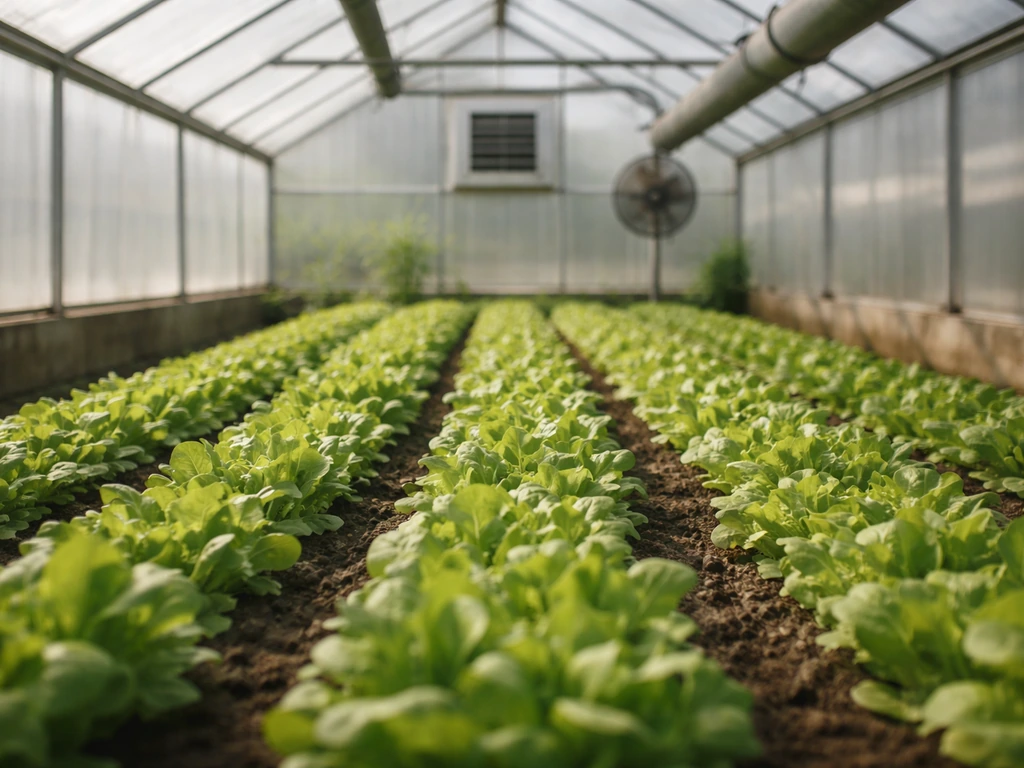
You do not need a Dutch glass greenhouse to get the benefits of protected lettuce growing. But you do need to understand the three operational systems that make or break a greenhouse lettuce crop: heat, light, and airflow.
Heating
For season extension without year-round production goals, passive solar design and basic low tunnels may be enough. If you want to produce through winter in a cold climate, you need supplemental heat to keep nighttime temperatures above freezing and daytime temps in that 15–22°C growth window. Propane, electric, or wood-fired heaters all work depending on your setup and energy costs. The key is not which heat source you choose but whether you can maintain stable temperatures without wild swings, which stress the plants and increase tipburn and disease risk.
Lighting
In summer, natural light inside a greenhouse is usually more than adequate, and you may actually need shade cloth to keep light and heat in check. In winter, light is often the limiting factor. If your greenhouse DLI (daily light integral) drops well below 12 mol/m²/day, lettuce growth slows significantly and quality suffers. LED grow lights are the current standard for supplemental lighting because they are energy-efficient and produce much less heat than older HPS fixtures.
Whether supplemental lighting makes economic sense for you depends on your climate, your electricity cost, and whether you are growing for household use or trying to sell product. Be aware that excessive light over long periods can actually increase tipburn risk, so more is not always better.
Ventilation
Good airflow is non-negotiable. Still air inside a greenhouse creates the humid, stagnant pockets where botrytis takes hold and tipburn develops. You need both passive venting (roof vents, side vents) and active circulation (fans) to keep air moving around the plants. In summer, ventilation is your primary cooling tool and often needs to be combined with shade cloth or evaporative cooling to stay in range. In winter, you balance ventilation against heat loss, which is where a well-insulated greenhouse structure earns its keep. Running a small circulation fan continuously is one of the cheapest and most effective things you can do to improve plant health in any enclosed growing space.
Is a greenhouse worth it for growing lettuce at home?
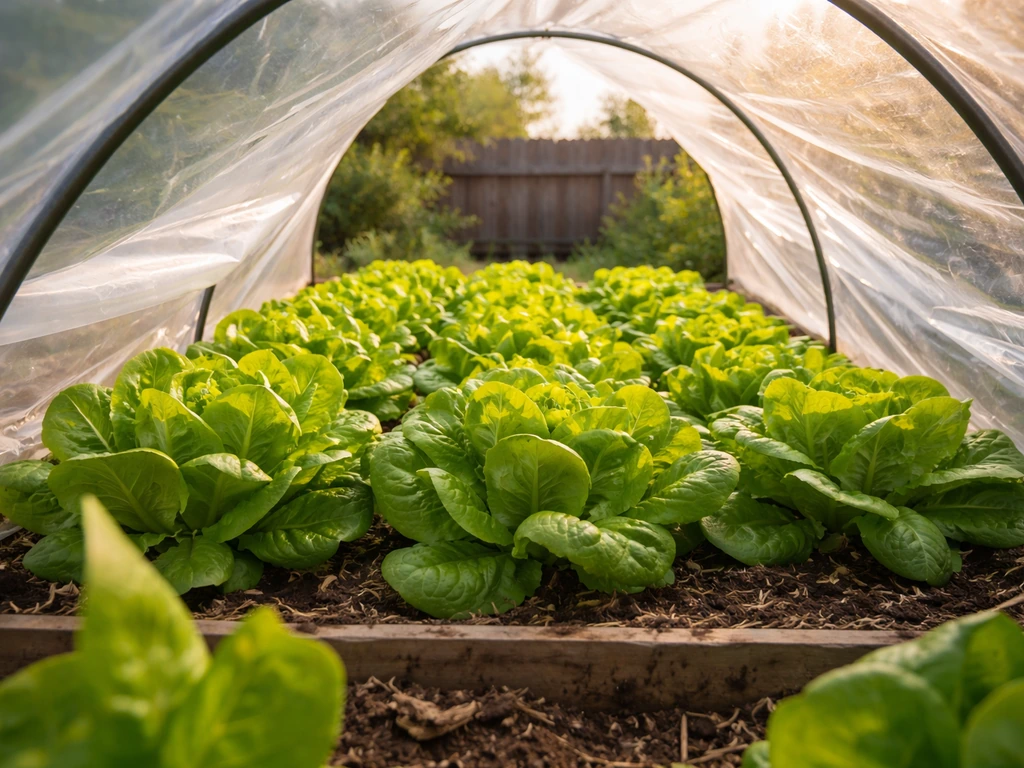
For most home gardeners and homesteaders, the answer is yes, with some caveats. If you are already thinking about a greenhouse for other crops, lettuce is one of the best crops to prioritize inside it. It grows fast, it is high-value per square foot, and it is one of the crops most affected by outdoor temperature extremes, so it benefits more from greenhouse protection than something like squash or beans.
You do not need to start with a full-featured heated greenhouse. A simple unheated hoop house or cold frame gets you meaningful season extension for very little cost. From there, you can add layers: a small propane heater for frost protection, a couple of clip fans for airflow, shade cloth for summer. A staggered planting schedule, starting new transplants every two to three weeks, gives you a rolling harvest so you are not drowning in lettuce one week and starving the next.
The comparison question that comes up a lot is whether a dedicated growing system, like a hydroponic unit designed for home use, is a better investment than a traditional greenhouse setup. That is a real trade-off worth thinking through based on your space, budget, and goals. A greenhouse gives you flexibility for multiple crops and scale; a dedicated system can give you very optimized lettuce production in a smaller footprint. Both approaches share the same core logic as large-scale greenhouse farming: controlled environment, reduced pest pressure, and season independence.
The practical next steps are simple. Start by deciding what your actual goal is: year-round production, extended season, or just earlier spring starts. That determines what level of infrastructure you actually need. Then plan your crop cycle around a 30-day transplant-to-harvest window, figure out how many heads per week your household needs, and back-calculate how many square feet and planting starts that requires. A modest 8x12 foot greenhouse can produce an impressive amount of lettuce for a family when managed with a staggered schedule. Start small, learn how your specific space behaves across seasons, and build from there. If your goal is to is lettuce grow organic, focus on soil health, compost, and disease-preventing environment controls.
FAQ
If I have a greenhouse, will lettuce automatically grow well year-round?
Because greenhouse temperatures don’t automatically stay in the lettuce comfort band, your first checks should be ventilation capacity in heat, and whether you can maintain above-freezing temperatures during cold snaps. A greenhouse without reliable venting or heat backup can still trigger bolting or frost damage, which defeats the main reason to grow lettuce inside.
What greenhouse mistakes most often cause tipburn or mold on lettuce?
Greenhouse lettuce can fail even when it “looks right” if you plant too densely or water in a way that creates humidity pockets. Tight spacing and intermittent airflow can raise gray mold risk, and uneven watering can worsen calcium delivery, leading to tipburn.
What should I plan first for greenhouse lettuce, heat, light, or airflow?
Start with a heat and light plan, not just a crop plan. For year-round production, you typically need both stable daytime and nighttime temperatures (to prevent bolting and reduce calcium disorders) and supplemental lighting when natural light drops enough that lettuce slows.
How do I keep greenhouse lettuce from bolting during hot summer days?
Look at how you cool and how you ventilate, not only the target temperature number. Shade cloth helps, but you also need enough air exchange to remove heat and prevent still, humid pockets, especially during foggy mornings or after irrigation.
Do I just need a thermometer in the greenhouse, or are fans/venting necessary?
Avoid relying on a thermostat alone. Use circulation fans and confirm you have fresh air movement near the plants, because humidity and temperature stratify inside enclosures and can create localized botrytis hotspots.
Can greenhouse irrigation schedules cause problems like tipburn, even if temperatures are controlled?
Yes, and the key is managing moisture and airflow at transplant level. Water in a way that doesn’t leave leaves wet for long periods, and use consistent irrigation so plants grow steadily, since rapid swings in moisture and temperature increase the chance of tipburn.
Will adding more grow lights increase my lettuce yield, or can it backfire?
More light is not always better. If you extend lighting too aggressively or run lights without adequate ventilation, you can increase tipburn risk and stress growth. Aim for the lettuce’s daily light needs and pair supplemental lighting with airflow.
How do I plan staggered plantings so I do not run out of lettuce at harvest time?
If you plan to sell or supply a predictable harvest, set a spacing buffer in your schedule because germination delays, heat events, or pest outbreaks can disrupt timing. Many growers stagger plantings more frequently than they think so one off week doesn’t create an empty market window.
Is a full heated greenhouse worth it for lettuce, or would an unheated setup work?
Not always. Some greenhouse systems can support lettuce with simpler protection like low tunnels or cold frames, but year-round lettuce usually requires additional energy for nighttime frost prevention, plus enough light to avoid slow, poor-quality growth.
How do lettuce variety choices affect bolting and success in a greenhouse?
Use variety matching to your season. If your greenhouse struggles with heat in summer, choose bolt-resistant types or harvest faster during warmer periods, because once bolting starts, the crop is effectively over even if the environment later improves.
What should I do differently if my greenhouse is unheated during winter?
If your greenhouse is unheated, you can still make lettuce succeed by treating cold periods as a scheduling constraint. Plan shorter production windows, use extra row cover or low tunnels inside the greenhouse during cold nights, and avoid planting when you expect extended freezing.
Is a hydroponic unit ever a better choice than a greenhouse for lettuce?
If you choose hydroponics, the main decision is whether you want optimized lettuce in a controlled, smaller footprint versus flexible multi-crop greenhouse space. You may still need the same temperature, airflow, and pest-exclusion thinking, because those factors affect growth rate and disease pressure in both approaches.
Next Article
How Do Farmers Grow Food Around the World: Methods and Tips
Learn how farmers grow food worldwide: soil, water, crops, pests, harvest, and how to scale it for home gardens.