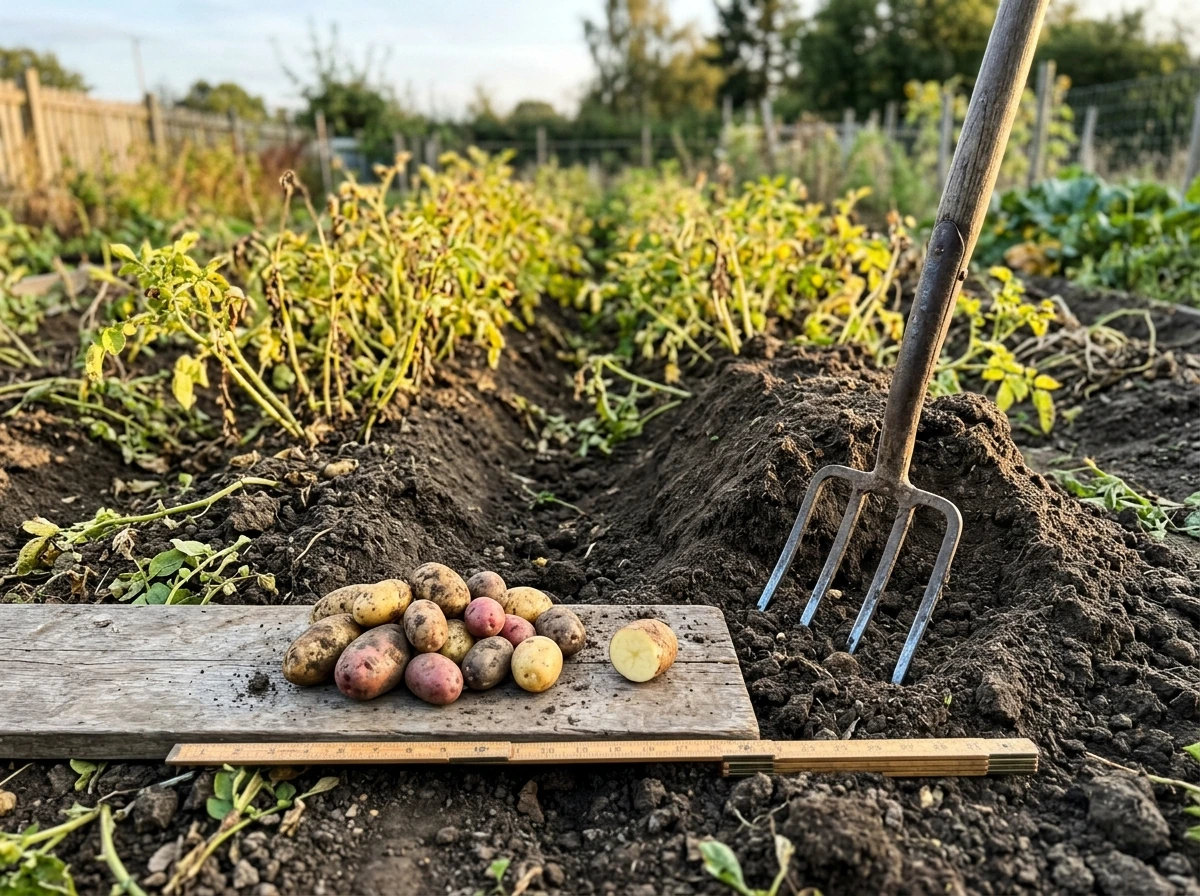
Yes, a potato that has started sprouting and growing roots can still be safe to eat, The decision comes down to firmness, the extent of greening, and whether there is any mold or rot present. If the potato is still firm and the sprouts are small, you can cut away the sprouts, eyes, and any green areas and cook the rest without worry. If it is soft, shriveled, smells off, or heavily green, it is time to either plant it or compost it.
Potato Grow Roots Can Eat: How to Check and Use Safely

Marcus Hendrick
24 Mar 2026
Why sprouted potatoes grow roots and what it means
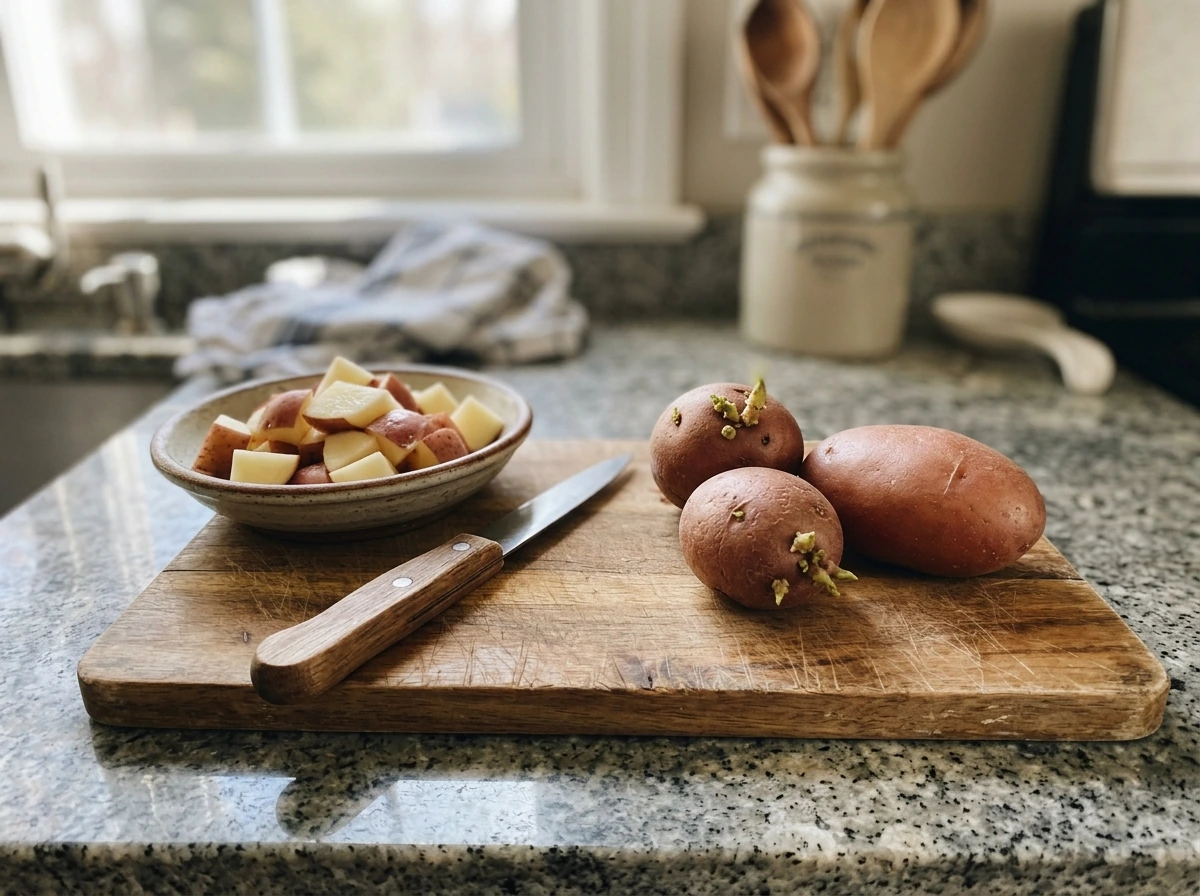
Potatoes are not seeds in the botanical sense. They are tubers, which means they are living storage organs packed with energy and moisture. When conditions shift, especially when temperatures warm slightly and light creeps in, the potato's biology kicks in and it starts doing what it is designed to do: grow a new plant. The eyes on the potato surface are actually dormant buds, and when those buds activate, they push out sprouts. As those sprouts develop, the potato begins extending hair-like roots from the base of the sprouts to reach for soil and nutrients.
This is not a sign of disease. It is a completely natural physiological process. Utah State University Extension actually uses this intentionally, pre-sprouting seed potatoes (a technique called chitting or green sprouting) by placing them one layer deep with eyes facing up about six weeks before planting. The point is that sprouting alone does not mean a potato is spoiled or unsafe. What matters is what else is going on with the tuber at the same time.
The roots growing from the sprouts are also not the problem. The concern is what happens to the potato flesh when sprouting advances: the tuber begins pulling moisture and starch reserves to feed the growing sprout, causing it to soften, shrivel, and wrinkle. At the same time, any light exposure during storage can trigger chlorophyll development in the skin, which shows up as green patches. That greening is the real red flag, because it signals elevated levels of glycoalkaloids, specifically solanine and chaconine, compounds that can cause illness if consumed in significant quantities.
Quick safety check: firm vs soft, green vs normal, mold or rot
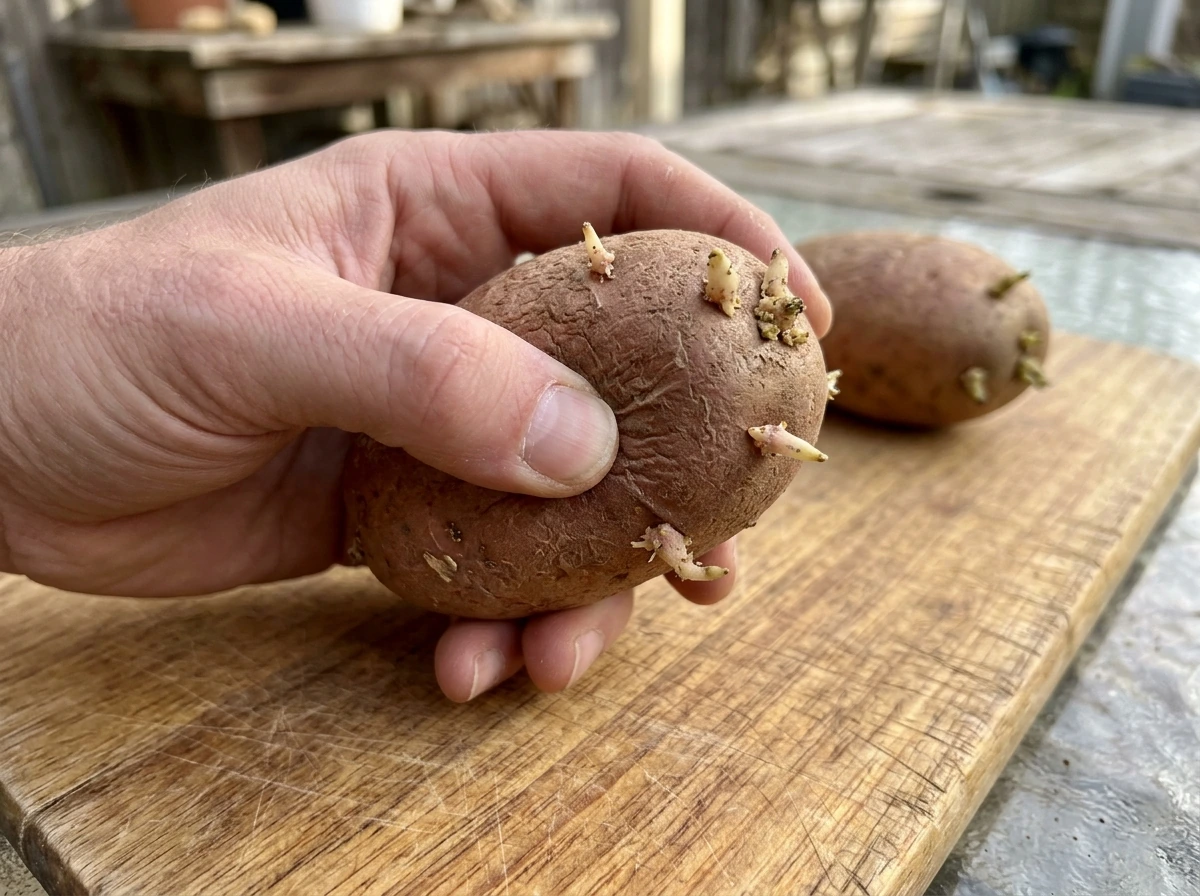
Before you do anything with a sprouted potato, run through this physical check. It takes about 30 seconds and gives you a clear answer.
- Squeeze the potato gently. If it is firm and feels solid throughout, that is a good sign. If it has soft spots, feels squishy, or the flesh gives way under light pressure, the potato is breaking down.
- Look at the skin. Small sprouts at the eyes are normal. If the sprouts are long (more than an inch or two), or numerous and tangled, the potato has been drawing on its own reserves for a while.
- Check for green areas. Light green patches on the skin indicate solanine buildup. A small amount of skin-deep greening can be cut away. If the flesh itself looks green under the skin, that is too far gone for eating.
- Smell it. A fresh potato smells earthy and starchy. A sour, musty, or fermented smell means microbial activity has started and the potato should not be eaten.
- Look for mold or soft rot. Black, grey, or fuzzy patches on the skin, or areas of wet, collapsing flesh, mean the potato is not safe. Cut into a questionable area and check: healthy flesh is white or pale yellow, not brown, black, or translucent.
If the potato passes all five checks, it is likely still usable. If it fails any one of the last three, compost it or plant it rather than eating it.
Can you eat sprouted or rooting potatoes? The clear do/don't rules
Iowa State Extension sums this up well: potatoes that are firm with only small sprouts at the eye and skin-deep greening can be eaten after trimming. That is the safe zone. Outside of that, the risk-benefit balance shifts quickly.
| Condition | Safe to Eat? | What to Do |
|---|---|---|
| Firm, small sprouts, no greening | Yes | Cut off sprouts and eyes, cook normally |
| Firm, small sprouts, small green patches on skin | Yes, with trimming | Cut off all green skin plus 1/4 inch of flesh below it, remove sprouts |
| Firm, but green flesh under skin | No | Plant it or compost it |
| Soft or wrinkled, but no mold/smell | Marginal — better to plant | Good candidate for seed potato if sprouts are healthy |
| Soft, shriveled, with long/tangled roots | No | Plant if sprouts look viable, otherwise compost |
| Any mold, wet rot, or bad smell | No | Compost only — do not plant either |
| Bitter taste when you sample the cooked flesh | No — stop eating it | Discard; bitterness signals high glycoalkaloid levels |
The key toxicity concern is solanine and chaconine, the glycoalkaloids concentrated in sprouts, eyes, and green skin. The University of Minnesota Extension is direct about this: do not eat the sprouts themselves, even from an otherwise edible potato. The USDA confirms that peeling and removing green tissue and sprouts reduces exposure to these compounds, but some residual toxin can remain in flesh that has been heavily affected, which is why a bitter taste is a discard signal, not a cook-through-it problem.
How to prep for eating: what to cut off and when to discard
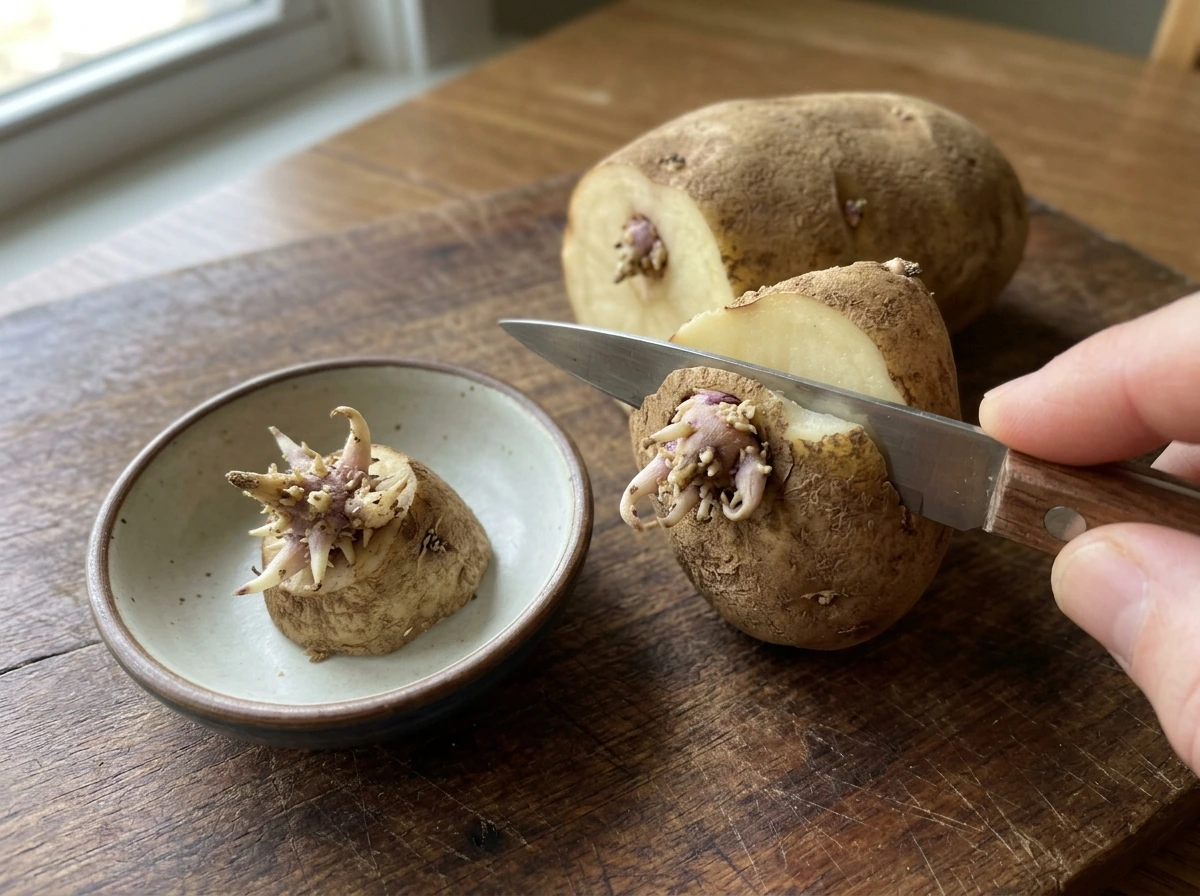
If your potato passed the safety check, here is how to prep it properly.
- Cut off every sprout and root at the base. Do not just snap them off at the tip. Cut into the flesh slightly to remove the eye (the bud tissue) entirely.
- For any green patches on the skin, peel away the skin and cut at least a quarter inch of flesh beneath the green area. Solanine is not just on the surface; it penetrates slightly into the flesh.
- Peel the entire potato if there is any widespread greening, even if the inner flesh looks normal. The risk is not worth it.
- Cut the potato open and check the flesh. It should be bright white or pale yellow with no grey or brown discoloration inside.
- Cook it fully. Boiling, baking, roasting, or frying all work. Note that cooking does not destroy solanine, which is why trimming matters, but thorough cooking is still part of good food safety practice.
- If the cooked potato tastes bitter or leaves a burning sensation in your throat, stop eating and discard the rest of the batch.
A potato that has been properly trimmed and still has firm, healthy flesh is perfectly usable in any recipe. Mashed potatoes, soups, roasted wedges, hash browns: all fine. The flesh quality will not be quite as starchy or flavorful as a freshly harvested potato, because the tuber has been pulling energy toward its sprouts, but it is still nutritious and worth using rather than wasting.
When it is better to plant instead (and how to do that)
If a potato is soft, shriveled, or has multiple long, vigorous sprouts but no mold or rot, planting is almost always the better call than eating. At that stage, the potato is actively trying to become a plant, and if the growing season lines up, you can work with that biology instead of fighting it.
A single seed potato can produce anywhere from 5 to 10 new potatoes depending on variety, soil quality, and growing conditions. That is a solid return on what would otherwise be a composted item. If you are in mid-spring (late March through April in most of the Northern Hemisphere), timing is actually ideal. Potatoes generally go in the ground 2 to 4 weeks before the last frost date.
Here is how to plant a sprouted potato that is past its eating prime:
- If the potato is small (golf ball-sized or smaller), plant it whole with the sprout side facing up.
- If it is larger, cut it into pieces so each piece has at least one or two healthy sprouts (eyes). Each piece should be roughly the size of a large egg.
- Let cut pieces sit at room temperature for 24 to 48 hours so the cut surfaces dry and form a callus. This reduces rot in the soil.
- Plant 3 to 4 inches deep, sprout side up, with 12 inches between plants and 2 to 3 feet between rows.
- Cover with loose, well-draining soil. Potatoes do not like waterlogged roots.
- Mound soil up around the stems as they grow (hilling) to protect developing tubers from light exposure and maximize yield.
If you are working with containers, sprouted potatoes do extremely well in deep buckets or trash cans, one way to grow potatoes in a trash can, which is a popular growing method for small spaces. This same container approach also works well if you want to grow potatoes in a trash can for extra yield from a small space. The principles are the same: good drainage, loose soil, and hilling as the plants grow. If you want to go deeper on container potato growing, that is a whole separate method worth exploring, just like in The Martian. garbage can potatoes grow
Prevent sprouting: storage conditions that actually work
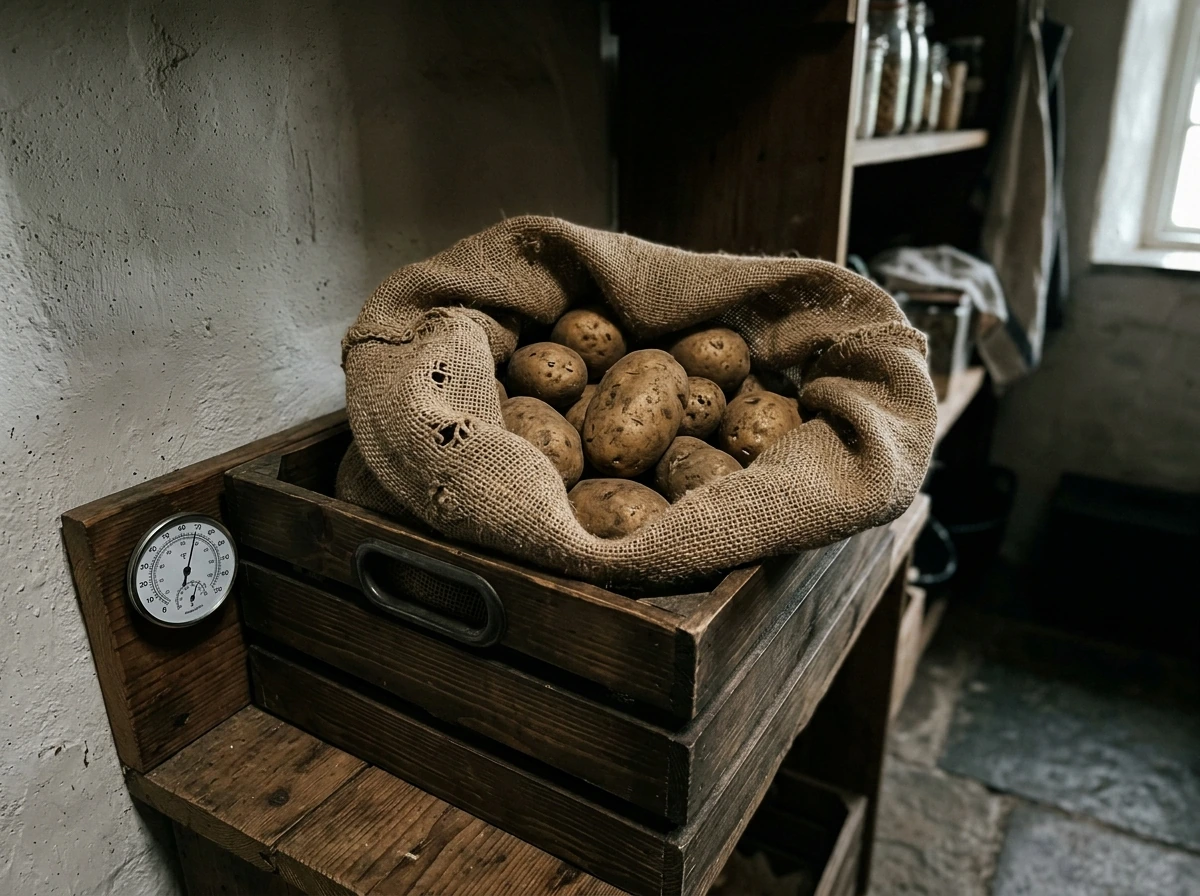
The single most effective thing you can do to slow sprouting is control temperature and block light completely. Potatoes stored in cool, dark, well-ventilated conditions will stay dormant for months. USU Extension advises storing potato tubers in the dark at about 40, 45°F, and notes that good air circulation helps reduce rotting and sprouting. Here is what the research consistently shows:
| Storage Factor | Ideal Condition | Why It Matters |
|---|---|---|
| Temperature | 45–50°F (7–10°C) | Slows metabolic activity and delays sprouting; refrigerator temps of 40–45°F can cause starch-to-sugar conversion affecting flavor |
| Humidity | 90–95% relative humidity (no condensation) | Prevents moisture loss and shriveling without promoting rot |
| Light | Complete darkness | Light exposure triggers greening (chlorophyll) and elevated solanine |
| Air circulation | Good ventilation without drafts | Reduces storage rots and prevents CO2 buildup |
| Ethylene exposure | Keep away from apples, bananas, onions | Ethylene gas from these produce items accelerates sprouting |
A root cellar, unheated basement, or cool pantry away from any windows hits most of these marks naturally. If you are storing potatoes in a kitchen pantry or a warmer area, expect them to sprout within a few weeks, especially in spring when ambient temperatures rise. Ohio State University Extension recommends 45 to 50°F as the sweet spot for several weeks of home storage, which is slightly warmer than a standard refrigerator.
Store potatoes in paper bags, cardboard boxes, or wooden crates rather than plastic bags. Plastic traps moisture and promotes rot. Do not wash potatoes before storing them: washing removes the natural protective coating on the skin.
Oregon State University Extension also recommends pre-sprouting seed potatoes by keeping them warm and dark with the eyes up, then storing them unwashed in a cool, dark place with good airflow for up to six months pre-sprouting seed potatoes warm and dark with eyes up, then storing unwashed in a cool, dark place with good airflow. Keep them away from onions, which release ethylene and speed up sprouting significantly.
If you notice one potato starting to rot or mold, remove it immediately so it does not spread to the rest of the batch.
Common mistakes and food safety tips for home kitchens
Most people either throw out potatoes that are still perfectly edible, like a potato that has started sprouting, or they eat ones they should not. Both are problems worth fixing.
- Do not just snap off sprouts and assume the potato is fine. Remove the entire eye/bud area by cutting into the flesh, not just breaking the sprout off at the surface.
- Do not ignore greening just because it looks minor. Even a small amount of green flesh under the skin means solanine has penetrated beyond the surface layer. Cut generously or discard.
- Do not store potatoes in the refrigerator long-term as your first choice. Cold temperatures below 40°F convert potato starch to sugar, which affects flavor and can cause problems when frying (excess sugar browns too fast). Aim for 45–50°F if you have a suitable space.
- Do not store potatoes in a bowl on the kitchen counter next to a sunny window. This is the fastest way to get green potatoes.
- Do not eat the sprouts or roots themselves. Even if the potato flesh is fine, the sprouts concentrate glycoalkaloids and should always be discarded.
- Do not assume cooking destroys solanine. It does not. Trimming is the essential step, not just cooking through.
- Do check potatoes regularly during storage rather than waiting until you need them. Catching early sprouting means you can still eat them. Catching late sprouting means you can still plant them.
- Do use the smell test as a final confirmation. If anything smells off after trimming and before cooking, trust your nose.
The broader mindset for home gardeners and anyone growing their own food is low-waste decision-making: a sprouted potato is not automatically garbage. It is a choice point. Firm with small sprouts means it is food. Soft with long vigorous sprouts and no rot means it is a seed. Only when rot, mold, or extensive greening is present does it become compost. That hierarchy keeps your kitchen safe, reduces food waste, and if you time it right, turns a forgotten pantry potato into a productive plant.
FAQ
Can I eat a sprouted potato if it is green on the skin but still firm?
Sometimes, yes. Trim generously beyond visible green patches (and remove all sprouts and eyes) until you reach pale flesh. If the green area is widespread, the potato tastes bitter, or you notice a strong “chemical” or unpleasant odor after trimming, stop and compost it instead of trying to cook it.
Is it safe to eat a sprouted potato that has a few shriveled spots but no mold?
Light shriveling can happen as the potato spends moisture feeding sprouts, especially in warm storage. If the potato is still firm overall, just cut away any noticeably dried or wrinkled sections plus eyes and sprouts, then cook promptly. If the flesh is mostly soft or the shriveled areas spread widely, it is safer to plant or compost.
Can I salvage a sprouted potato that has tiny surface spots, like small dark freckles?
Small blemishes can be superficial, but you need to inspect the interior. Cut out any spot down to clean tissue, and stop if you find discoloration that looks damp, spongy, or rotted. When in doubt, do not rely on cooking to fix internal rot.
What does a “bitter” taste mean, and should I always discard?
A bitter taste is a practical sign of higher glycoalkaloids. If anything you trim tastes bitter, discard that potato rather than assuming you can neutralize it with boiling, roasting, or frying.
Are the roots or sprout roots themselves unsafe to eat?
The concern is not the little root hairs. You should not eat sprouts, even from an otherwise edible potato. Cut away sprouts and eyes fully, and remove green skin, because toxins concentrate around those areas as sprouting and greening progress.
Can I cook a sprouted potato in oil or soup to make it safer?
Cooking helps with foodborne bacteria, but it does not reliably remove glycoalkaloids from heavily green or badly affected potatoes. Follow the firm and small-sprout, minimal-greening rule for eating. If the potato fails those checks, plant or compost it instead.
How much trimming is “generous enough”?
As a rule, remove at least several millimeters beyond the greenest or sprouted area you can see, because discoloration can extend slightly under the skin. If sprouts are deep or the flesh near the eyes looks discolored or soft, increase trimming or stop and discard.
Should I cut it up before storing again, or after trimming?
Trimmed potato should be used right away. Once you expose flesh by cutting away eyes or green areas, it starts drying and can spoil faster. If you must hold it briefly, refrigerate in a clean sealed container and use within a day or two.
What is the best option if the potato is sprouting but too old to be worth eating?
If the potato is soft, shriveled, has long vigorous sprouts, and there is no rot or mold, planting is often the better move. A single seed potato can produce several new tubers, and you get food from something that would otherwise be wasted.
How can I tell rot or mold apart from normal sprouting changes?
Normal sprouting usually looks like wrinkling or dryness around the eyes with pale-to-slightly yellow interior. Rot or mold often smells sour or musty, feels wet or collapsing, and may show fuzzy growth or dark, damp patches. Use smell and texture, and cut until you reach clean, firm tissue.
Does washing potatoes before storage make sprouting worse or increase spoilage?
Washing removes the skin’s protective coating and can speed up rot during storage. Store dry potatoes instead, and only wash right before cooking. If potatoes are already dirty, gently brush off loose soil rather than soaking.
Next Article
Why Couldn’t Mark Grow More Potatoes Fixes for Next Season
Diagnose why Mark couldn’t grow more potatoes, fix soil, watering, variety, spacing, pests, and plan realistic yields fo