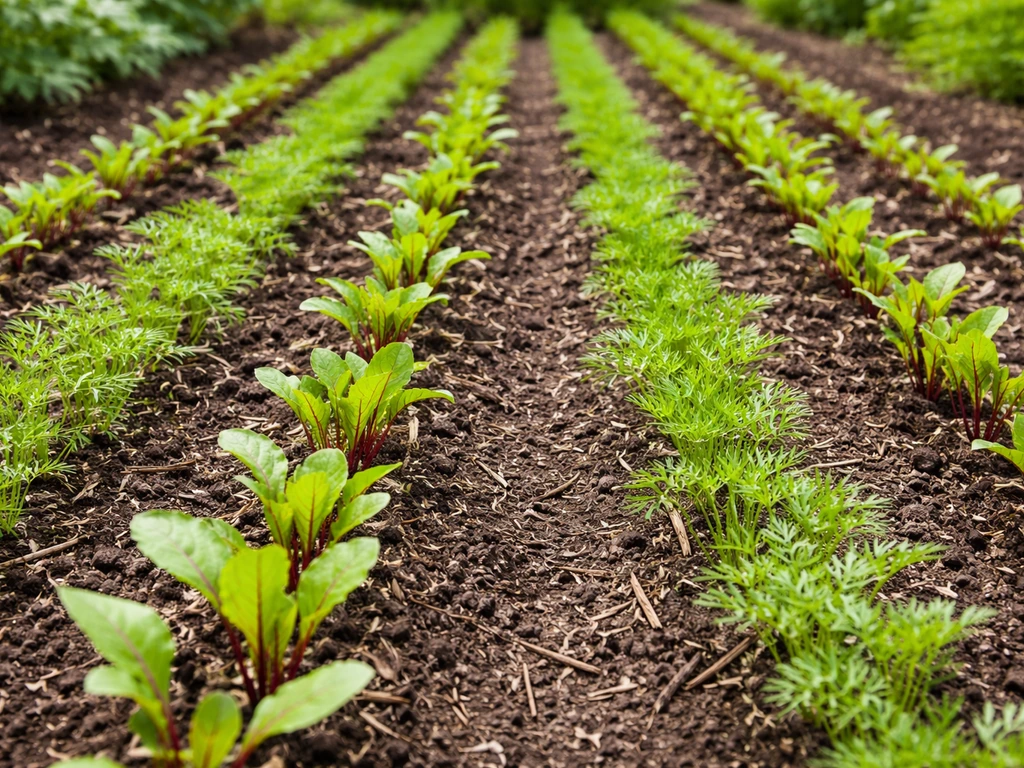
Yes, beets and tomatoes grow well together, and this is one of the more practical companion pairings in a home garden. Beets and beans also tend to do well together as long as you give both enough sun and keep the soil loose and fertile do beets and beans grow well together. They share similar soil preferences (slightly acidic, fertile, well-drained), and beets are compact enough to tuck into the spaces between tomato plants without crowding them.
Do Beets and Tomatoes Grow Well Together? How to Plant

Marcus Hendrick
25 Apr 2026
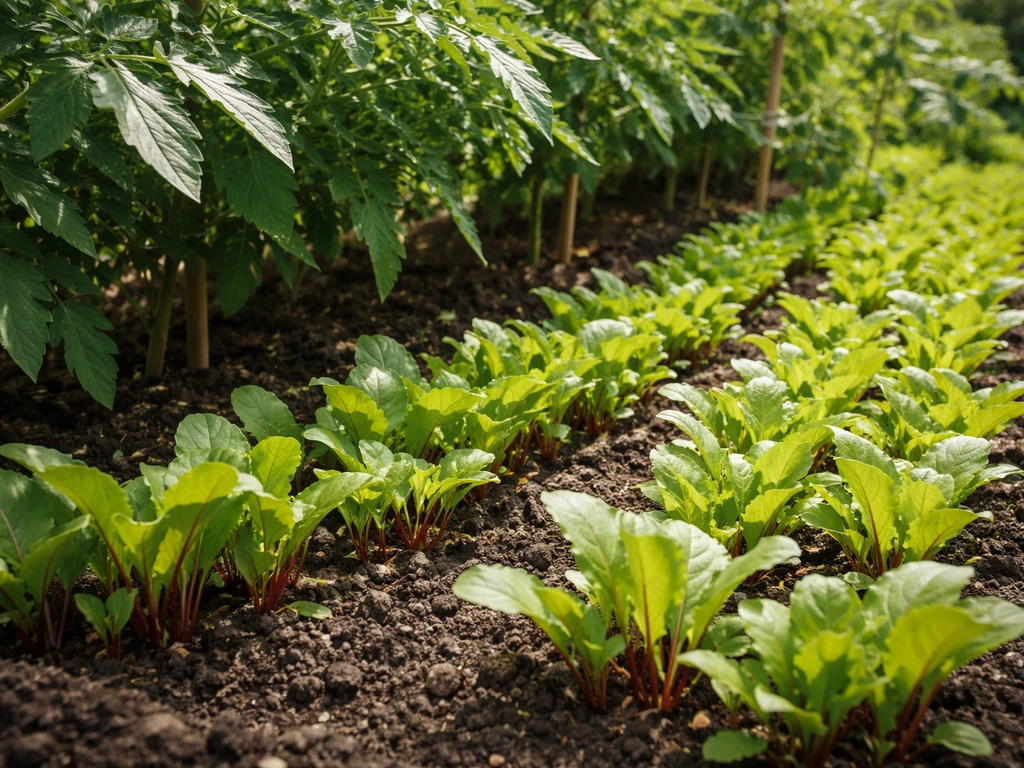
The catch is timing and placement: you need to get beets in the ground early, position them so they catch enough light before tomato canopies fill in, and harvest most of them before peak summer heat arrives. Get those details right and both crops produce well in the same bed.
Quick verdict on beet–tomato companion planting
Beets and tomatoes are genuinely compatible. They don't have the kind of chemical antagonism you see with some crop pairings, and they don't compete aggressively for the same nutrients in the same soil layer at the same time. Tomatoes feed heavily from their root zone concentrated in the top 24 to 30 inches of soil, and beet roots run deep (sometimes 36 inches or more) once they get established. There's overlap, but it's manageable with good soil prep.
The main risk in this pairing isn't antagonism, it's shade. By midsummer, indeterminate tomato plants can easily reach 4 to 5 feet tall with a 3-foot spread, and that canopy blocks light for anything growing underneath. Beets need full sun to produce good roots, so if they're still in the ground when the tomato plants fully close in, you'll end up with small, weak roots or plants that bolt. The solution isn't to avoid planting them together; it's to plan the timing so beets are mostly harvested by the time serious shading begins.
Match sunlight and soil requirements first
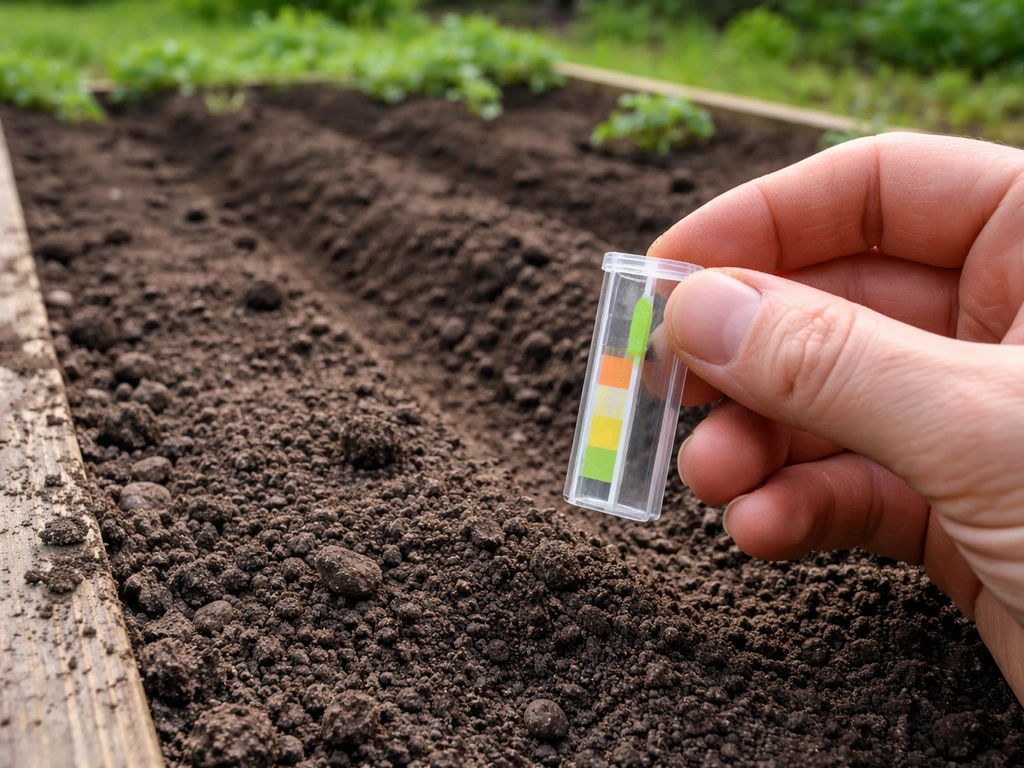
Before you worry about spacing or timing, confirm your bed actually suits both crops. Tomatoes need at least 8 hours of direct sun daily, and beets perform best with the same. Tomatoes need at least 8 hours of direct sun daily, and they grow best with soil pH around 6.0 to 6.8. If your bed gets less than 6 hours, neither crop will do well regardless of how you arrange them. Start here before anything else.
Soil pH is where these two crops line up almost perfectly. Tomatoes grow best between pH 6.2 and 6.8, and beets prefer a pH range of 6.0 to 7.0. That overlap in the 6.2 to 6.8 range means a single soil amendment pass gets you dialed in for both. If you haven't tested your soil recently, a basic test kit or cooperative extension test is worth the few dollars before you invest time in a shared bed.
Both crops want the same type of soil: loose, deep, fertile, and well-drained with plenty of organic matter. For beets specifically, you need to turn the soil to at least 8 to 10 inches deep. Compacted or crusty soil leads to forked, stunted, or woody beet roots, and that's the number one reason people think beets and tomatoes don't work together when actually the soil was just too tight. Work in a few inches of compost before planting. This benefits both crops and reduces how much supplemental fertilizer you'll need through the season.
Best planting layout and spacing for shared beds and containers
The key to a functional shared bed is placing beets on the north side of tomato plants (in the northern hemisphere) so they receive direct sun in the morning and early afternoon before the tomato canopy shades them later in the day. If your bed runs east to west, plant tomatoes on the north edge and beets toward the center or south side. If it runs north to south, plant tomatoes at the north end.
For tomato spacing, indeterminate varieties in cages work well at 2.5 to 3 feet between plants. Determinate varieties can go slightly closer. Give yourself at least 18 to 24 inches of clearance between the edge of your tomato spacing and where your beet rows begin. This gives beets room to get established and gives you access to harvest them without disturbing tomato roots.
For beets, a block-style layout works well in raised beds: plant them 4 to 6 inches apart in each direction in a grid pattern. In rows, thin to 2 to 3 inches between plants after germination. A single beet plant doesn't take up much space, so you can fit a productive patch of 20 to 30 plants in the edge zone of a standard 4-by-8 raised bed while still giving your tomatoes their full column of vertical space.
In containers, this pairing is harder to pull off well. Tomatoes need at minimum a 5-gallon container each and ideally 10 to 15 gallons for indeterminate types. Beets can grow in containers as shallow as 12 inches, but they need about 4 to 6 inches of lateral space per plant. You can grow beets in a separate shallow container placed adjacent to your tomato container, but trying to fit both in one pot will crowd the tomatoes and stress both crops. Keep them in separate containers and just place them near each other.
Timing plan: when to sow beets vs transplant tomatoes
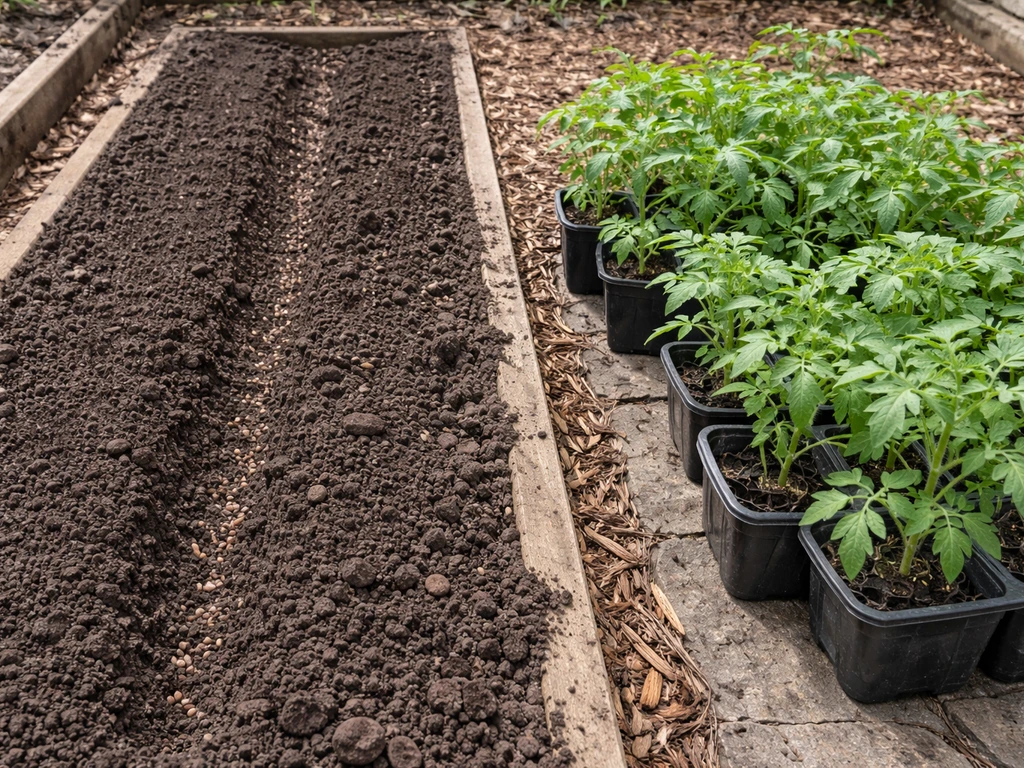
Timing is the single most important factor in making this pairing work. Beets are a cool-season crop. They germinate well in soil temperatures as low as 50°F and perform best when they're maturing before summer heat kicks in. Tomatoes are the opposite: they go in the ground after your last frost date and need warm soil to thrive.
The practical sequence is this: direct-sow beets in your bed 4 to 6 weeks before your last frost date. In most temperate zones, that means beets go in the ground in March or early April. Tomato transplants go in after last frost, typically late April through mid-May depending on your zone. By the time you're putting tomatoes in, your beets are already 4 to 6 weeks into growth. Chioggia beets mature in 50 to 60 days; Detroit Dark Red is around 65 days. Either way, your beets should be ready to harvest around the same time your tomato plants are starting to put on serious vertical growth and canopy coverage.
This staggered start is the whole reason the pairing works. You're not asking two crops to share peak growing conditions simultaneously; you're running beets through their full cycle while the tomatoes are still establishing, then handing the full sun over to the tomatoes for the rest of the season. Plan a second sowing of beets in late summer (6 to 8 weeks before your first fall frost) to take advantage of the space once your tomato plants start to die back.
Care routine: watering, feeding, thinning, and mulching together
Watering
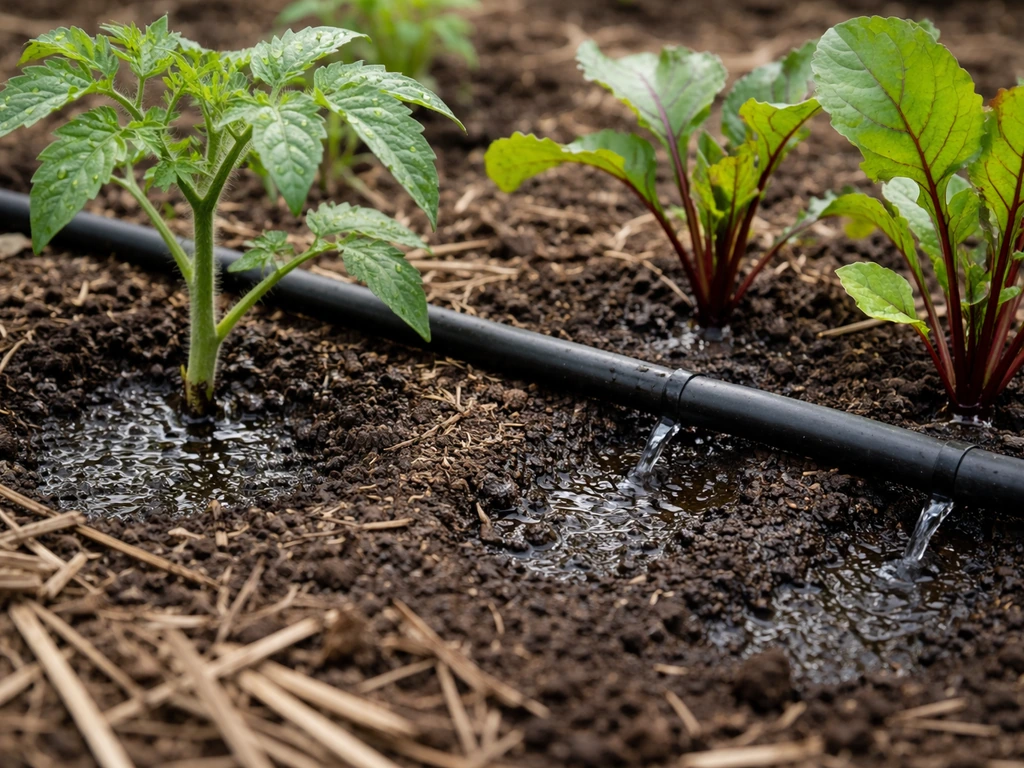
Both beets and tomatoes benefit from consistent moisture, roughly 1 to 1.5 inches of water per week total (rain plus irrigation). The biggest enemy here is inconsistent watering, alternating between dry and soggy cycles, which leads to cracked tomatoes and woody beet roots. Drip irrigation is your best tool for a shared bed: it delivers water directly to the root zone, keeps foliage dry (which reduces disease on both crops), and makes it easy to maintain consistent moisture without much guesswork. If you're hand-watering, water at the base, not overhead, and try to water on the same schedule every few days rather than deeply once a week.
Feeding
If you amended the bed with compost before planting, you likely won't need to add much fertilizer for beets. They're not heavy feeders. Tomatoes are a different story: they need consistent fertility through the season, but too much nitrogen early on causes leafy, bushy plants that are slow to fruit. A good approach is to apply about half your planned nitrogen dose plus all your phosphorus and potassium before transplanting, then side-dress with the remaining nitrogen once tomatoes start to set fruit. This also avoids over-feeding the beets with nitrogen, which pushes leafy growth at the expense of root development.
Thinning
Beet seeds are actually seed clusters, meaning each one can produce multiple seedlings. Thin beets to 2 to 3 inches apart after they reach about 2 inches tall, or to 3 to 4 inches apart for larger roots. Don't skip this step. Crowded beets produce small, misshapen roots, and that's often blamed on the companion planting when it's really just lack of thinning. The thinnings are edible; use them in salads.
Mulching
Apply 2 to 3 inches of straw or wood chip mulch around both crops once your tomato transplants are in and beets are established. Mulch keeps soil moisture consistent, suppresses weeds that would otherwise compete with the beet roots, and moderates soil temperature (which helps beets stay in their preferred cool range a bit longer into the season). Keep mulch a few inches back from tomato stems to prevent rot.
Troubleshooting: what to do if beets or tomatoes struggle
Small or woody beet roots
This is the most common beet problem in a shared bed. The usual causes are compacted soil (go back and loosen the top 8 to 10 inches), overcrowding (thin more aggressively to 3 to 4 inches), heat stress from arriving too late in the season (sow earlier next year), or inconsistent water. Woody roots often mean the beet was stressed and then stopped growing for a period before resuming. Water consistency fixes this almost every time.
Beets bolting (going to seed prematurely)
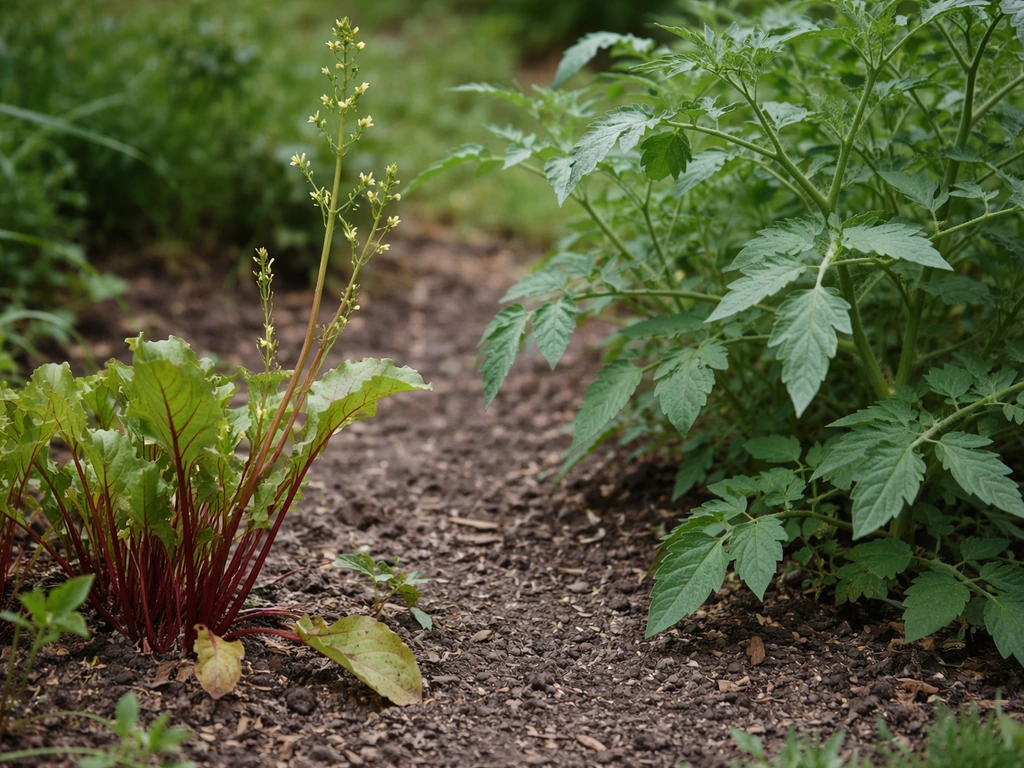
Beets bolt when they experience a cold snap followed by warm weather, or when they sit in the ground too long in hot conditions. If your beets are bolting before you've harvested, that's a timing issue: you sowed too late, or a heat wave arrived faster than expected. Harvest immediately when you see bolting start, the roots are still usable. Next season, sow 2 weeks earlier to give yourself more cool-weather growing time.
Tomatoes looking stressed or leafy but not fruiting
If tomatoes are putting on lots of leafy growth but not setting fruit, too much nitrogen is almost always the culprit. This can happen if you over-amended the bed for the beets or applied too much fertilizer early. Back off any nitrogen feeding and wait. The plants will redirect energy to fruit once the nitrogen flush passes. Also check that tomatoes aren't being shaded from a nearby structure or tree. In a mixed bed, shading comes from the tomatoes toward the beets, not the other way around.
Disease pressure in the shared bed
Tomato foliage diseases like early blight spread faster in dense plantings where air circulation is poor. If you see yellowing lower leaves with dark spots, remove affected leaves and make sure you're watering at the base only. Space your tomatoes at the wider end of the recommended range (3 feet apart for caged indeterminate types) and don't let them sprawl. Beets don't carry the same fungal diseases as tomatoes, so the two crops don't tend to cross-infect each other.
Harvest planning: when and how to harvest without disturbing tomatoes
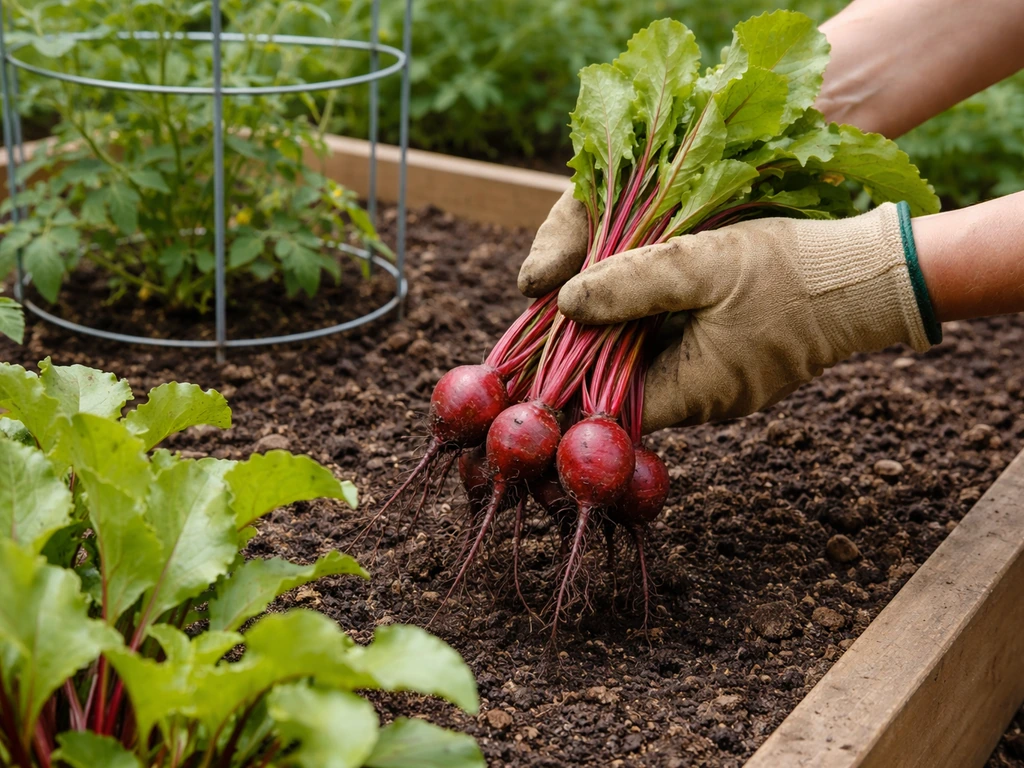
Beets are ready to harvest once their roots reach about 1 inch in diameter for baby beets, or 2 to 3 inches for full-size roots. At that size they're tender and sweet. Don't wait much longer than that if your tomatoes are starting to close in overhead, because shading and heat will quickly degrade root quality. For gardeners who want the best tasting broccoli to grow, the same idea applies: time your harvest to avoid heat stress and pick when the heads are firm and young. Most of your beet harvest should happen within the first 60 to 70 days of sowing, which aligns with the period before your tomato plants hit their full size.
To harvest beets without disturbing nearby tomato roots, use a hand fork or narrow trowel inserted several inches away from the beet crown, angled in and lifted gently rather than yanked straight up. Tomato roots are concentrated within a 24 to 30 inch zone around the plant base, so stay at least 12 inches from any tomato stem when you're working the soil. If a beet is sitting close to a tomato base, harvest it last and work carefully: a deep, slow lift with minimal soil disturbance is better than a quick pull that tears roots.
After you've cleared the beet section, resist the urge to cultivate or dig that area again. Tomato roots will have spread into the cleared zone by midsummer, and disturbing the soil with a hoe or fork can set back the plant noticeably. Leave the cleared ground as is, add a layer of compost on top, and let the tomatoes take over the space. Then come back in late summer and direct-sow a second round of beets into that same area for a fall harvest, after your tomato plants begin to wind down.
If you enjoy pairing root crops with other vegetables, the same timing-first logic applies when you're thinking about growing beets alongside carrots, beans, or other common garden staples. This same timing-first approach also helps you figure out whether do beans and potatoes grow well together in the same bed. If you want the best tasting broccoli to grow, focus on timing, variety, and keeping it in cool conditions long enough to develop tender heads. Each combination has its own spacing and timing nuances, but the core principle holds: match the crops' seasonal windows and manage canopy height, and most root vegetables coexist well with upright fruiting crops like tomatoes.
FAQ
What spacing should I use if I have indeterminate vs determinate tomatoes in the same bed with beets?
Use the wider tomato spacing for indeterminate types (around 2.5 to 3 feet) and keep a buffer of at least 18 to 24 inches from the tomato row to the beet area. If you are using determinate tomatoes, you can tighten slightly, but still avoid putting beet rows right against the tomato row so you do not damage beet seedlings when you prune or harvest.
Can I plant beets after my tomatoes are already established, or will they be too late?
It usually is too late for high-quality roots if you wait until the tomato canopy is close to closing in. If you must reseed, do it early enough that beets reach at least the “established” stage (strong foliage and active root swelling) before significant shade arrives, otherwise plan for baby beets or accept smaller harvests.
Do beets need to be watered differently once tomatoes start growing faster?
Keep the same overall consistency goal (about 1 to 1.5 inches per week total), but reduce the risk of “dry then wet” cycles as temperatures rise. Drip irrigation timing matters, if you are switching from cool-season to warm-season weather, adjust run time rather than frequency so the root zone stays evenly moist.
Will mulch harm beets or make them bolt more easily?
Mulch helps more than it hurts, it reduces temperature swings and helps keep moisture steady. Just keep mulch a few inches away from tomato stems and avoid burying beet crowns deeper than the soil line, if crowns stay too covered or too hot, beet growth can slow or become uneven.
How do I know if my beets are suffering from shade versus poor soil conditions?
Shade stress usually shows up as slow root thickening and weak, pale beet tops that stop pushing growth after tomato canopy coverage increases. Poor soil conditions more often cause forked or woody roots even when tops look reasonably green. If roots are misshapen but tops are vigorous, loosen and improve drainage depth first, if tops fade and growth stalls as shade increases, adjust placement or harvest timing next season.
Should I fertilize the beets at all when they are growing with tomatoes?
Often you should not, compost and balanced pre-plant fertility are usually enough because beets are not heavy feeders. If you see very pale leaves early, use a light touch with a low-nitrogen adjustment, but avoid boosting nitrogen once beets start sizing up, otherwise you can get leafy growth instead of root development.
Can I harvest beets gradually while leaving the rest growing under mature tomato plants?
Yes, gradual harvest works well, but keep the harvest zone protected. Use a narrow tool and lift from several inches away from tomato stems, then refill with soil lightly. If you harvest too aggressively and disturb nearby soil, you can set back both tomato roots and remaining beet roots.
What if my bed orientation does not let me place beets on the north side of tomatoes?
If you cannot use a north-side layout, focus on morning sun for beets. You can put beets on the side that gets the most direct morning light, or you can use shorter tomato pruning and wider spacing so the beet patch stays bright before midday. Avoid placing beets only on the shaded side where light arrives late.
My beets are bolting but the tomatoes look healthy, what is the most likely cause?
The most common driver is timing, sowing too late so beets mature into warming weather, or exposure to temperature swings (cold snap followed by warmth). Harvest immediately when you spot bolting, next season sow about 2 weeks earlier and consider a small second sowing only if you can keep beets in good light early.
How do I prevent tomato early blight in a beet-tomato companion bed?
Increase airflow and keep leaves dry, water at the base with drip if possible. Remove affected lower leaves promptly and avoid over-crowding tomatoes by using the wider spacing range for indeterminate types. Since beets do not share most tomato fungal issues, the main risk is tomatoes and canopy density rather than beets themselves.
Next Article
Do Beets and Carrots Grow Well Together? How to Plant Them
Yes, beets and carrots can grow together with right spacing, thinning, and soil prep for steady germination.