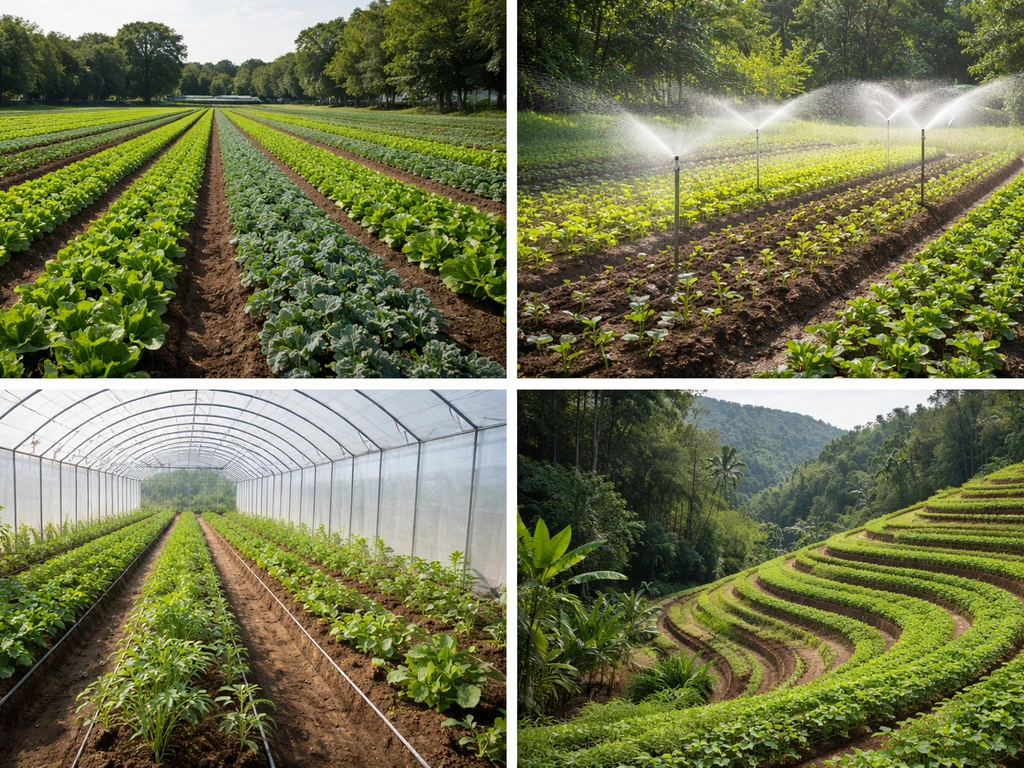
Yes, beets and carrots grow well together, but with a few important conditions. Both are cool-season root crops that want similar light and watering, and their soil pH requirements overlap closely enough to coexist in the same bed. The catch is that they both demand loose, well-amended soil, they each need careful thinning, and their germination timelines differ enough that you have to plan around that gap. Get those details right and you'll pull two productive crops from one bed. Skip them and you'll end up with stunted roots and a tangled mess to sort out.
Do Beets and Carrots Grow Well Together? How to Plant Them

Marcus Hendrick
19 Apr 2026
Why beets and carrots can share a bed
The compatibility here comes down to shared preferences rather than any dramatic mutual benefit. Both crops are cool-season growers, both thrive in full sun, both need consistent moisture, and both are harvested for their roots rather than their tops. Extension companion planting guides from Virginia Tech and West Virginia University both list beets and carrots as compatible, grouping them among cool-season crops that can share bed space without causing problems for each other. West Virginia University Extension also includes beets and carrots as compatible options in companion planting guidance Extension companion planting guides from Virginia Tech and West Virginia University both list beets and carrots as compatible.
The more important compatibility factor is root depth and structure. Carrots are deep taproots, often reaching 6 to 10 inches down depending on the variety. Beet roots are rounder and shallower, typically sitting in the top 4 to 6 inches of soil. That slight difference in root zone means they aren't directly competing for the same pocket of soil, which is a meaningful advantage compared to pairing two crops with identical root habits.
Where this pairing can struggle is germination timing. Oregon State University Extension’s germination-temperature table shows carrots start germinating at about 40°F, with a workable range roughly from 45 to 85°F germination timing. Carrot seeds are notoriously slow, often taking 7 to 21 days to germinate. Beets usually come up faster. If you don't account for that difference, you risk crowding out your carrot seedlings before they've even had a chance to establish. Managing that gap with smart row layout and careful thinning is the core skill this combination requires.
The growing conditions both crops actually need
Soil
Soil prep is the single most important thing you can do before planting either of these crops together. Carrots need deep, loose, rock-free soil to develop straight roots. Clay soil, compacted ground, or even a small pebble can cause forked, twisted, or stunted carrots regardless of anything else you do. Beets are a bit more forgiving, but they still want loose, well-drained soil for good root development. For a shared bed, plan on working the soil at least 12 inches deep, removing any stones or debris, and incorporating compost to improve both drainage and structure.
Soil pH is close for both crops but not identical. Beets prefer a pH around 6.5, while carrots do well at 6.0 to 6.5. A pH of 6.5 is a practical target for a mixed bed since it sits comfortably in the acceptable range for both. If your soil is significantly more acidic than that, lime it before planting and test again before sowing.
Sun and water
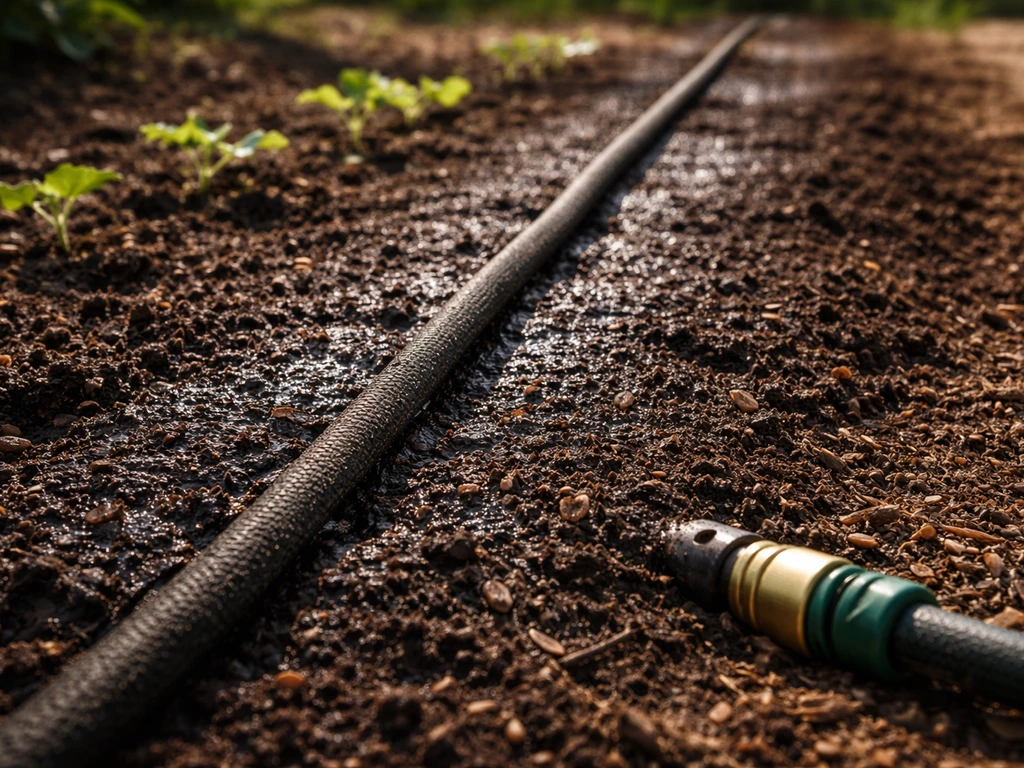
Both crops want full sun, meaning at least 6 hours of direct sunlight per day. They're both consistent moisture crops too, so keep the bed evenly watered throughout the growing season. For carrots specifically, back off on watering once they're about three-quarters of their mature size to reduce the risk of splitting. Beets are slightly more drought-tolerant once established, but consistent moisture during the root-bulking phase produces better quality.
Spacing
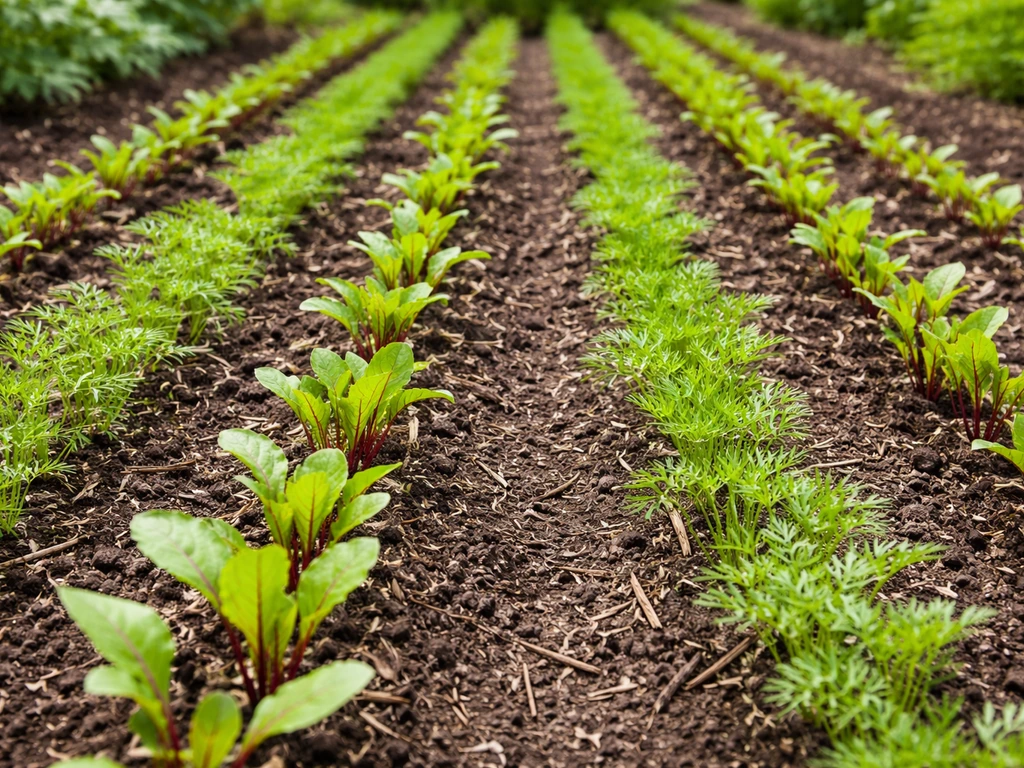
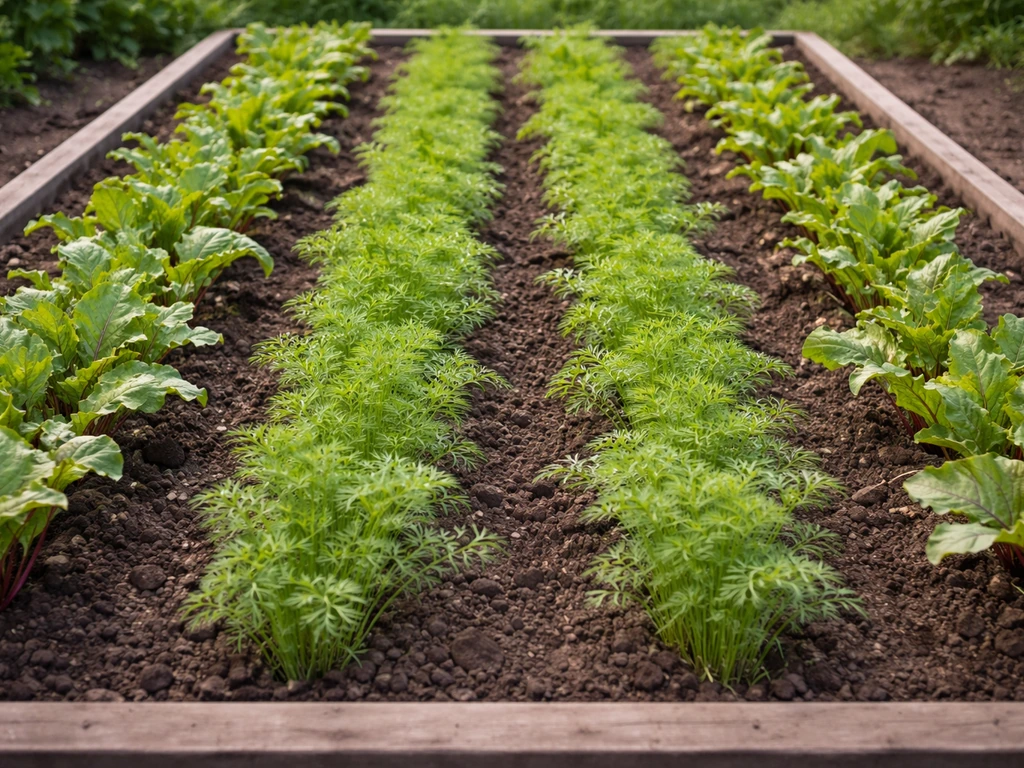
The spacing strategy that works best for this pairing is alternating rows rather than mixing seeds randomly in the same row. Give each type its own row and leave about 6 inches between rows. Within each row, you'll thin beets to about 2 inches apart and full-size carrots to about 1 to 2 inches apart after germination. Mixing seeds in the same row makes thinning a frustrating guessing game, especially since carrot and beet seedlings look different but both need precise spacing to produce usable roots.
How to plant them together: a step-by-step plan
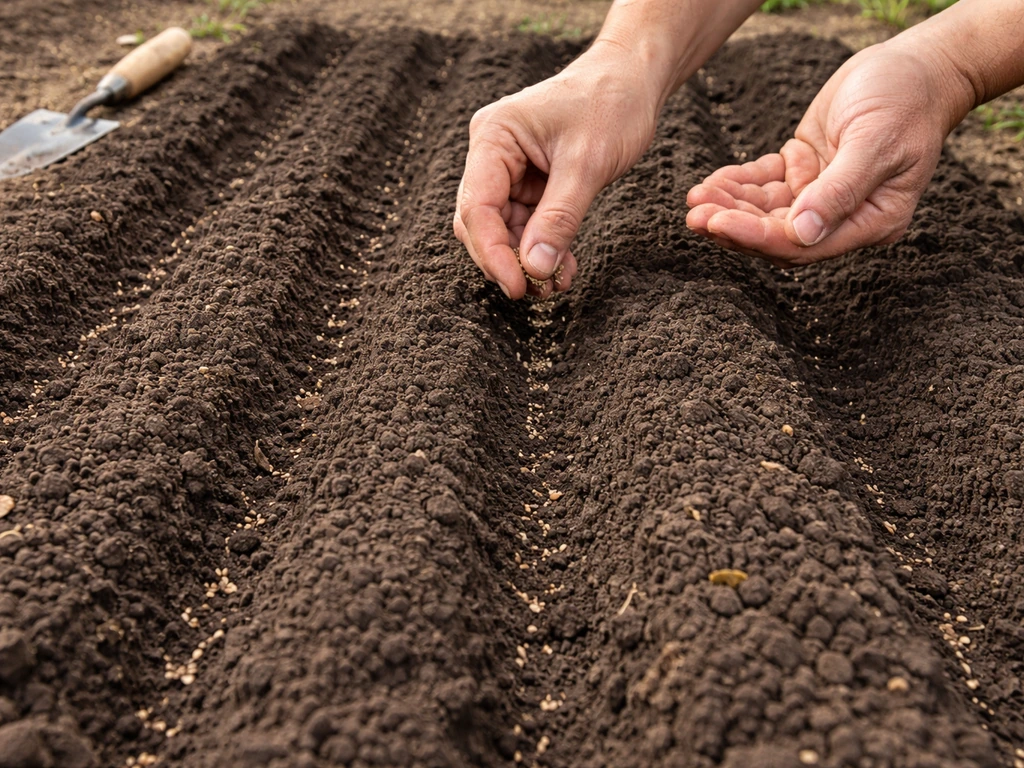
- Prepare your bed 2 to 3 weeks before your target sow date. Dig to at least 12 inches, remove stones, and work in 2 to 3 inches of compost. Test and adjust pH to target 6.5.
- Time your sowing for cool soil. Both crops germinate best when soil temperatures are in the 55°F to 70°F range, though they can start germinating as low as 40°F. In most climates, this means a spring sowing 4 to 6 weeks before your last frost date, or a fall sowing timed so roots mature before the first hard freeze. For fall, count back 80 to 100 days from your expected first frost.
- Lay out alternating rows 6 inches apart. Mark them clearly before you sow, because once both sets of seeds are in the ground, you need to know which row is which.
- Sow carrot seeds first along their rows, at roughly 1 seed per inch. Cover with no more than a quarter inch of fine soil. Carrot seeds are tiny and need light to reach the surface.
- Sow beet seeds in their alternating rows at about 1 inch apart, covered with about half an inch of soil. Beet seeds are technically a cluster of seeds in one corky shell, so each one may sprout multiple seedlings.
- Water gently and keep the surface moist. Carrot seeds are especially prone to drying out before germination, which is the most common reason they fail to emerge. A light layer of row cover or burlap can help retain moisture during the 7 to 21 day germination window.
- Once beet seedlings are about 2 inches tall, thin them to 2 inches apart. Be ruthless here. Crowded beets produce small, misshapen roots.
- Once carrot seedlings are about 2 inches tall, thin to 1 to 2 inches apart for full-size varieties. Snip at soil level rather than pulling, which can disturb neighboring roots.
- Continue watering evenly through the growing season. Side-dress with a balanced fertilizer or compost tea at 4 to 6 weeks if growth looks slow.
One practical trick borrowed from beet growing: mixing a few radish seeds into your beet rows can help mark the bed and break the soil crust before the slower crops emerge. Radishes germinate in 3 to 5 days, so you'll see the rows clearly before either your beets or carrots are fully up. Pull the radishes before they crowd anything out.
Common problems and how to handle them
Uneven germination
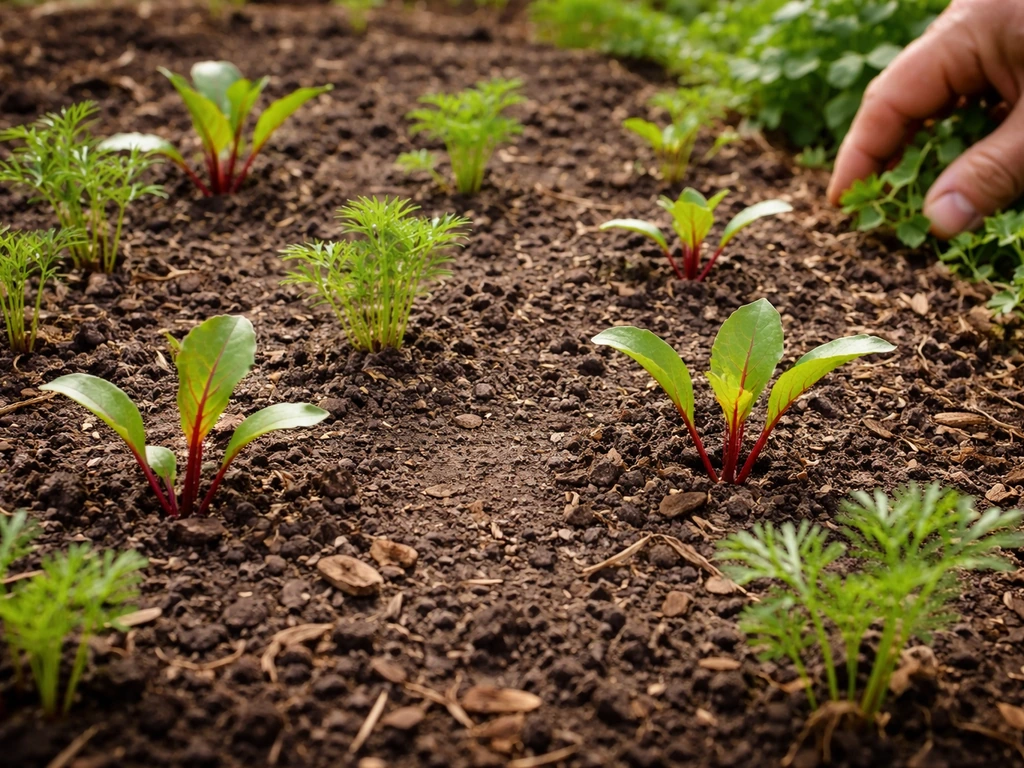
This is the most predictable challenge. Beets tend to germinate faster than carrots, so your beet rows may be pushing up seedlings while the carrot rows look bare. Don't assume the carrots have failed. Wait the full 21 days before replanting, and keep the soil moist throughout. blank" rel="noopener noreferrer">If you've had a heat spike above 80°F during that window, beet germination can also drop off, which is worth knowing if you're sowing in a warmer-than-expected spring.
Root competition from poor thinning
Skipping or delaying thinning is the single fastest way to ruin both crops. Crowded beets produce round, golf ball-sized roots at best. Crowded carrots grow into each other and end up twisted or stunted. Thin early and thin decisively. The seedlings you pull are edible microgreens, so nothing goes to waste.
Cercospora leaf spot on beets
If you grow beets, sooner or later you'll encounter Cercospora leaf spot. It shows up as small lesions with reddish-purple borders, usually in late spring or during wet, warm stretches. The fungus can persist in dead plant tissue for up to two years, which matters for your rotation planning. The best cultural fixes are wider spacing to improve airflow between plants, removing infected leaves promptly, and cleaning up the bed thoroughly at the end of the season. Carrots are not affected by Cercospora, so your carrot rows will be fine, but the beet foliage in a tight mixed bed can slow air circulation for everyone.
Beet leafminer
Beet leafminer is a fly larva that tunnels through beet leaves, leaving pale, blistered trails. It also attacks spinach and Swiss chard. Carrots are not a host plant, so your carrot rows won't spread this problem, but the beet foliage can still get hit. Row cover installed at sowing time and kept on until flowering-stage crops no longer need it is the most effective barrier. Remove and destroy affected leaves as soon as you spot the tunneling.
Carrot root quality issues
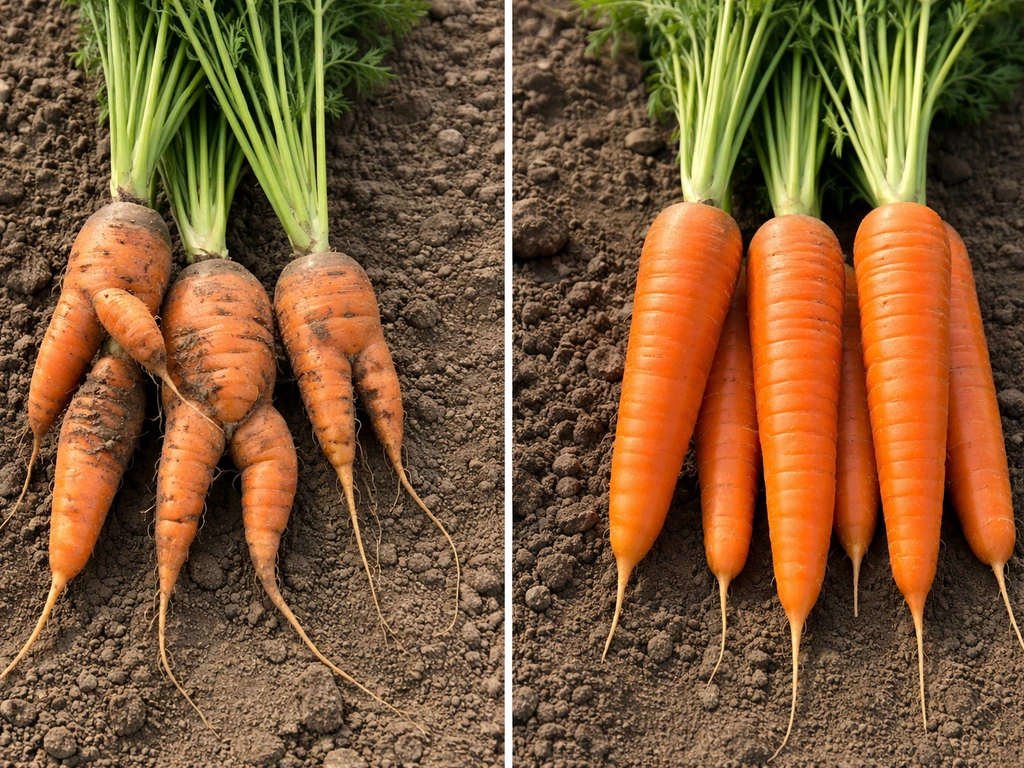
Forked, twisted, or cracked carrots almost always trace back to soil problems rather than anything the beets are doing. Stones, compaction, clay layers, or root knot nematodes cause misshapen roots. If you did your soil prep well before planting, this shouldn't be a major issue. For splitting, ease back on watering once carrots are near full size. Beets and carrots don't share any significant disease overlap that would make them a bad pairing from a pest management perspective.
Harvesting both crops from the same bed
The good news about growing these together is that their harvest windows are close but staggered in a useful way. Beets are typically ready 60 to 80 days from seeding depending on the variety. Carrots take 55 to 100 days, with faster varieties coming in around the same time as beets. Check beet roots when the shoulders start to push above the soil surface. They're best harvested when roots are 1.5 to 3 inches in diameter. For carrots, the tops of the root should be about 0.75 to 1 inch in diameter at soil level for full-size types.
If your carrots are lagging behind your beets, you can harvest the beets first, which actually opens up space and reduces competition for the remaining carrot roots. That's one of the practical advantages of this pairing: you get a first harvest that improves conditions for the crop still maturing. For fall plantings, carrots can be left in the ground under a thick mulch layer and harvested gradually before the ground freezes hard, giving you even more flexibility.
Planning your rotation for next season
This is where a lot of home gardeners leave yield on the table by not thinking ahead. Beets belong to the Chenopodiaceae family (same family as spinach and Swiss chard), while carrots belong to the Apiaceae family (along with parsnips, dill, and fennel). Since these are different plant families, they don't share the same disease and pest pressures, but each family still needs to move through your garden on a rotation schedule.
For beets specifically, if you've had any Cercospora leaf spot, plan a 2 to 3 year rotation before putting beets (or any Chenopodiaceae crop) back in that bed. The fungal inoculum can survive in the soil on dead plant tissue for up to two years, so returning too soon just resets the disease cycle. Carrots and parsnips should rotate through beds on a similar 2 to 3 year schedule to manage any soil-borne pathogens and avoid pest buildup.
A practical 4-year rotation for a home garden might look like this: year one, root crops (beets and carrots together as described here); year two, legumes like beans or peas; year three, brassicas like broccoli or kale; year four, nightshades or alliums. If you are planning your rotation alongside this pairing, you can also check whether do beans and potatoes grow well together in the beds where you will follow up. If you want to add a broccoli crop to that rotation, choose the varieties that give you the best tasting heads for your climate and schedule best tasting broccoli to grow. This isn't the only way to do it, but grouping by plant family and rotating by bed keeps disease pressure from building up and gives your soil different nutrient demands each season.
If you're experimenting with other companion planting combinations alongside this one, beets also pair reasonably well with beans, and understanding how different root crops interact with your legumes and nightshades can help you build a full rotation plan that works across your entire garden rather than just one bed. If you're also planning a bean crop, do beets and beans grow well together in the same type of bed? The same logic applies: different plant families, managed together thoughtfully, give you better long-term results than monoculture rows repeated in the same spot year after year.
Beets vs. carrots: how they compare as bed-mates
| Factor | Beets | Carrots |
|---|---|---|
| Days to maturity | 60–80 days | 55–100 days |
| Germination time | 5–10 days | 7–21 days |
| Optimal soil temp for germination | 50°F–80°F (best below 80°F) | 55°F–70°F (can start at 40°F) |
| Ideal soil pH | 6.5 (acceptable 6.0–8.0) | 6.5 (acceptable 5.5–7.8) |
| Thinning target | 2 inches apart | 1–2 inches apart |
| Root depth | Shallow to mid (4–6 inches) | Deep (6–10+ inches) |
| Key pest risk | Beet leafminer, Cercospora | Root knot nematode, carrot fly |
| Harvest indicator | Shoulders visible, 1.5–3 inch diameter | 0.75–1 inch diameter at soil level |
| Family (for rotation) | Chenopodiaceae | Apiaceae |
The bottom line on this pairing: beets and carrots are a solid match for a shared bed as long as you do the soil prep, keep the rows organized, and don't skip thinning. If you're also wondering about tomatoes, beets can generally work well with them too as long as you match sun, spacing, and soil needs beets and tomatoes. They want nearly identical growing conditions, their root zones don't directly compete, and their harvest windows complement each other well. The work is in the setup and the early maintenance, not in managing some complex compatibility issue. Get those fundamentals right and you'll have two productive crops from one well-prepared bed.
FAQ
Can I plant beets and carrots in the same week, or should I stagger them?
In most gardens, yes, you can start both at the same time because you are planting for cool-season conditions, but you should still plan for carrot’s slower germination by keeping soil consistently moist and not assuming failure before the full wait period (often up to about 21 days). Use alternating rows so faster beet seedlings do not force you to disturb or thin before carrots emerge.
What pH should I target if my soil test is a bit outside the beets and carrots ranges?
For a mixed bed, aim for a shared target around pH 6.5, which sits within the acceptable range for both. If a soil test reads much lower, lime first and retest before sowing, because dramatic pH swings can slow uptake and make both crops look underfed, even if you fertilize.
Is it okay to mulch early when growing beets and carrots together?
If you mulch after sowing, keep it light until carrots are up, because heavy mulch can cool the soil and slow emergence for both. Once seedlings are established, use an even mulch layer to maintain consistent moisture, but keep it away from the base of very young seedlings to avoid smothering.
How should I fertilize beets and carrots together without hurting root quality?
Heavy nitrogen can boost leaves at the expense of root quality, especially for beets. Use compost as your main fertility and avoid high-N fertilizers close to planting. If you do fertilize, choose a balanced or slightly lower-nitrogen approach and follow label rates, then reassess based on growth color and vigor.
Do beets and carrots grow well together in containers, or is that a bad idea?
Yes, but it requires extra attention to root straightness. In containers, ensure deep, wide soil volume (at least 10 to 12 inches deep for carrots) and remove all stones, because small rocks cause immediate forking. Thinning becomes even more important in pots, since crowded roots have nowhere to expand.
Can I thin beets and carrots by transplanting the extra seedlings instead of pulling them?
You usually should not. Carrot thinning is critical for straight, usable roots, and beet thinning prevents misshapen roots, so doing both together by “snipping” is harder to do precisely. If you must transplant, know that carrots generally do not transplant well, so direct sowing is the better plan for this pairing.
My beets are up, but my carrots are not. When should I replant?
If your carrot rows look bare while beet seedlings are active, do not replant until you have given carrots the full germination window and you have kept the soil evenly moist. Then check whether soil is crusted, temperature is too warm, or the seed depth was too deep, since those are common reasons for delayed emergence.
What if I only have partial sun, can I still grow them together?
Switching to a partial shade or watering schedule does not replace the main requirement, which is full sun (about 6 hours of direct light or more). In very hot climates, you can get away with morning sun plus afternoon relief, but you may still need to protect seedlings from heat spikes because warm conditions reduce carrot germination and slow both crops’ root development.
How do I manage Cercospora leaf spot risk when beets are in the same bed as carrots?
Cercospora is mainly a beets problem, and it can worsen when foliage stays wet or airflow is limited. Since this pairing can pack plants into the same bed, prioritize spacing, water at the soil line, and promptly remove beet leaves with early spotting, then clean plant debris at season end to reduce carryover.
What should I check first if my carrots come out forked or cracked?
Yes, if you have repeated problems with misshapen carrots, focus first on soil preparation and watering practices. Forked or twisted roots often come from rocks, compaction, or thick clay layers, and cracking often comes from inconsistent moisture, so correct those before changing crop combinations.
When I see leafminer damage on beet leaves, what is the best next step?
Remove only the clearly affected beet leaves, and consider turning the bed’s airflow into your “treatment plan” rather than trying to salvage everything. For beet leafminer, row cover kept on until flowering-stage crops no longer need the protection is the most reliable barrier strategy; once tunneling appears, immediately discard damaged leaves.
Should I harvest beets first every time, or can I wait for carrots to catch up?
Harvest by size and keep an eye on shoulders for beets, since leaving them too long can make roots woody. For carrots, do not let mature roots stay in the soil for long stretches if you want maximum sweetness, and if you harvest beets first you can free space and reduce competition for the remaining carrot roots.
Next Article
How Do Farmers Grow Food Around the World: Methods and Tips
Learn how farmers grow food worldwide: soil, water, crops, pests, harvest, and how to scale it for home gardens.