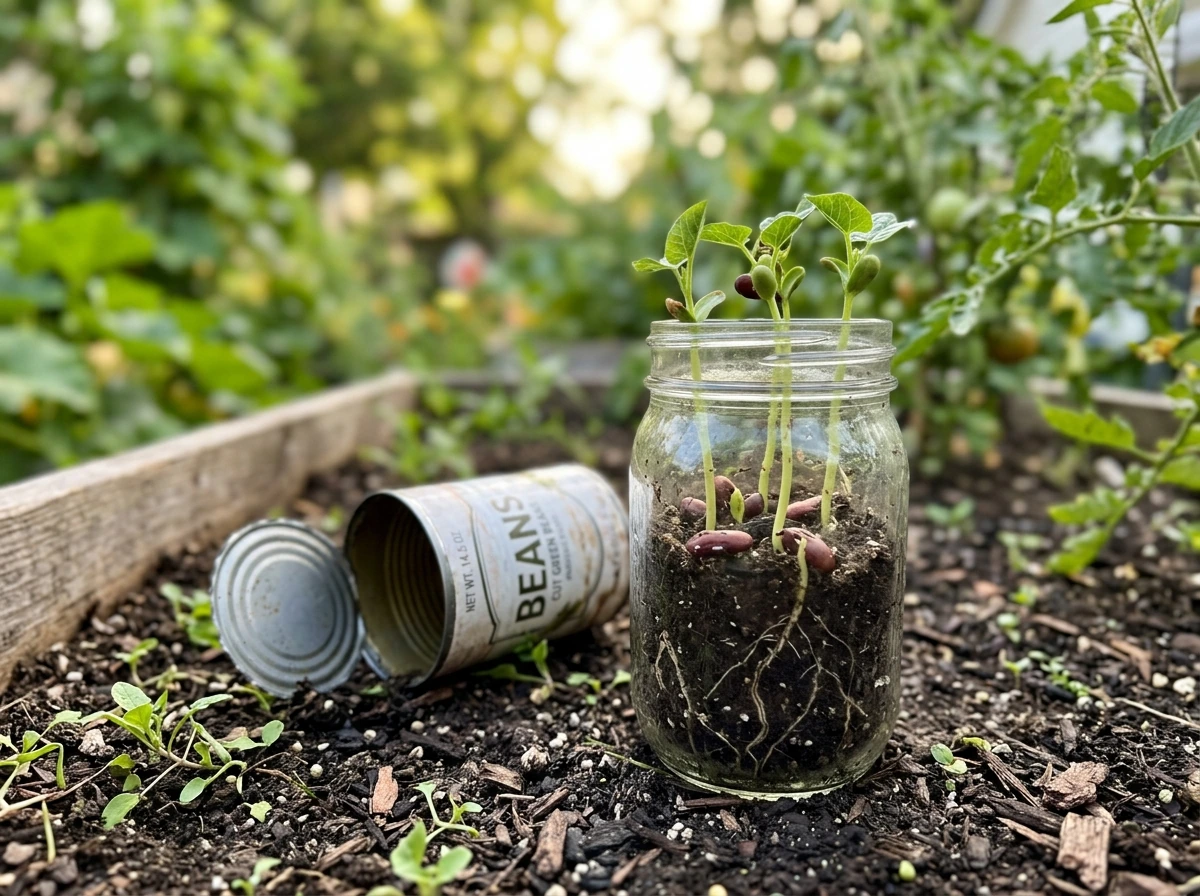
Whether beans need support to grow depends entirely on which type you planted. Bush beans are compact, upright plants that top out around 1 to 2 feet tall and need no support at all. Pole beans are vining climbers that can easily reach 6 to 10 feet (sometimes over 8 feet in a good season) and absolutely must have something to climb or they will sprawl on the ground, tangle, and underperform. That's the short answer. If you want to know which category your beans fall into, how to set up the right support, and what to do if things aren't going to plan, read on.
Do Beans Need Support to Grow? Bush vs Pole Guide

Marcus Hendrick
24 Mar 2026
Bush vs pole beans: how to tell what you're growing
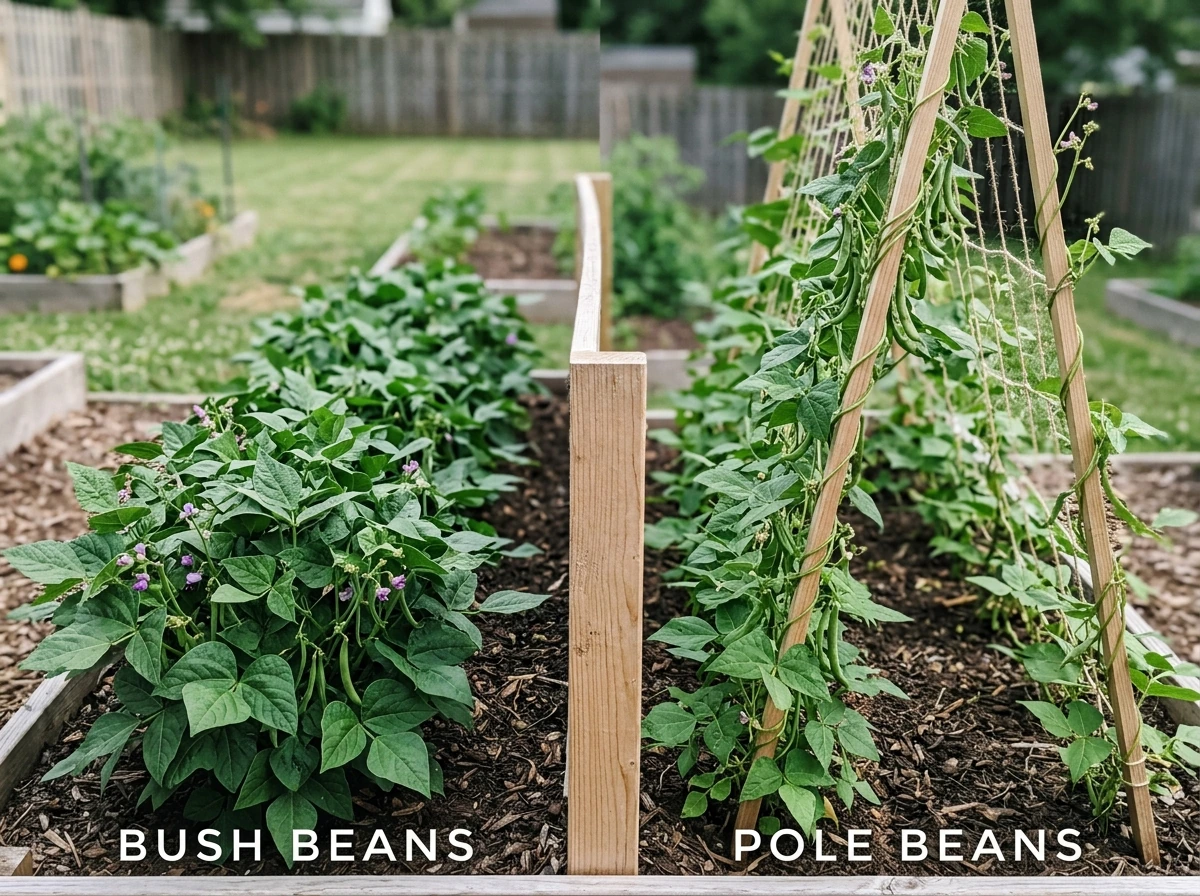
If you still have your seed packet, check it first. It will say either "bush" or "pole" somewhere on the label, often near the days-to-maturity figure. Bush beans typically mature in 50 to 60 days for snap types and 65 to 75 days for bush limas. Pole beans usually run 60 to 110 days depending on variety, and they keep producing pods throughout that window instead of setting everything at once.
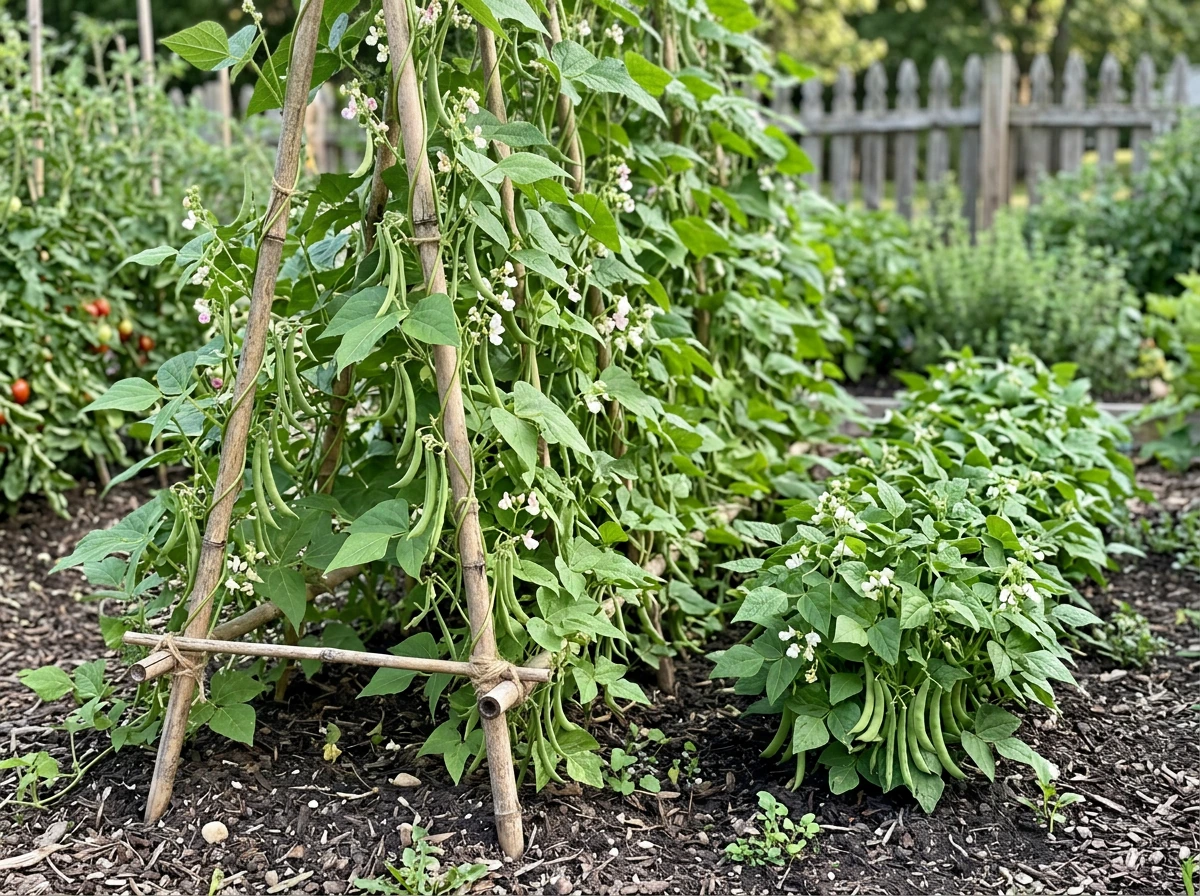
If the packet is long gone, watch the plants themselves. Bush beans grow upright and bushy, staying compact without reaching out for anything. Pole beans send out long, twisting vines that spiral and reach toward any vertical surface within range. If your seedlings are already starting to curl their stems or tendrils toward your fence or a nearby stake, you have pole beans. Bush beans just sit there and grow straight up.
Another clue is the harvest pattern. If you had a sudden flush of beans that all came ready at once and the plant looked nearly done afterward, that's the determinate (bush) habit. If you're still picking pods weeks after the first harvest and the plant keeps putting out new flowers, that's the indeterminate (pole) habit. That longer window is one of the main reasons growers choose pole varieties.
Do beans need support? direct rules by bean type
Here is the clearest way to think about it. There are no edge cases here, no "it depends on conditions" nuance. This is a hard rule based on how the plants are built.
| Bean Type | Typical Height | Support Required? | Days to Maturity (Snap) |
|---|---|---|---|
| Bush beans | 1 to 2 feet | No | 50 to 60 days |
| Half-runner beans | 3 to 4 feet | Optional but helpful | 55 to 65 days |
| Pole beans | 6 to 10+ feet | Yes, always | 60 to 110 days |
| Bush limas | 1 to 2 feet | No | 65 to 75 days |
| Pole limas | 6 to 8+ feet | Yes, always | 85 to 110 days |
What happens if you skip support for pole beans? The vines collapse onto the ground and pile up on each other. Air circulation drops sharply, which creates the warm, humid environment that fungal diseases love. Harvesting becomes a frustrating exercise in untangling stems and crawling around looking for pods hidden under the mess. You will also miss pods and let them go to seed, which signals the plant to slow down production. The yield takes a real hit.
When to install support and how to choose a system
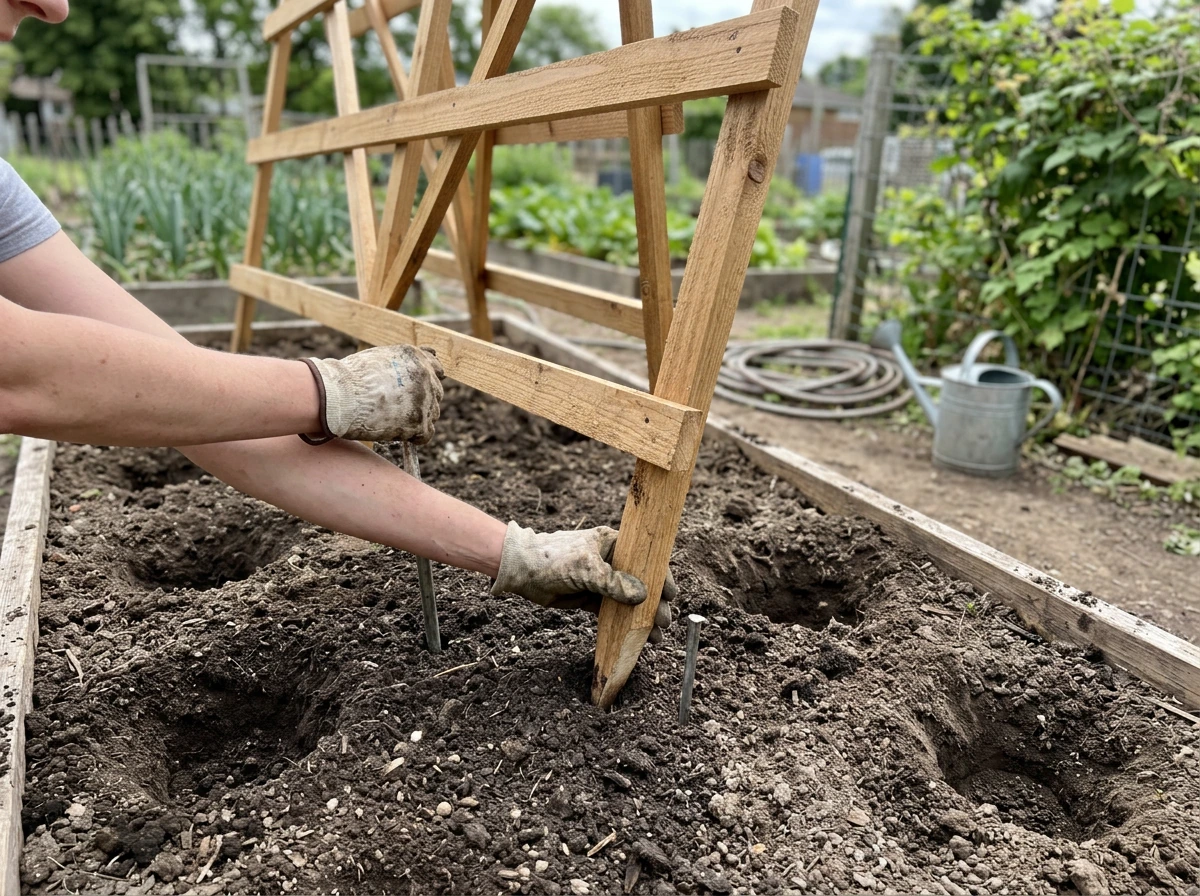
Install your support before you plant or immediately after sowing the seeds. This is not optional timing advice. Pole beans grow fast, and their root systems establish quickly in warm soil. If you wait until the seedlings are up and then start pounding in stakes or stringing up netting, you risk slicing through the roots you can't see underground. Plan the trellis first, then plant around it.
How tall does the support need to be?
Your trellis needs to be 6 to 8 feet above the soil line for most pole bean varieties, and some vigorous growers like Blue Lake or Kentucky Wonder can push past that. A 6 to 7 foot frame is a reasonable minimum. If your structure is only 4 feet tall, the vines will reach the top and flop over, and at that point you have basically built a very expensive mess. Go tall enough the first time.
Choosing your support system
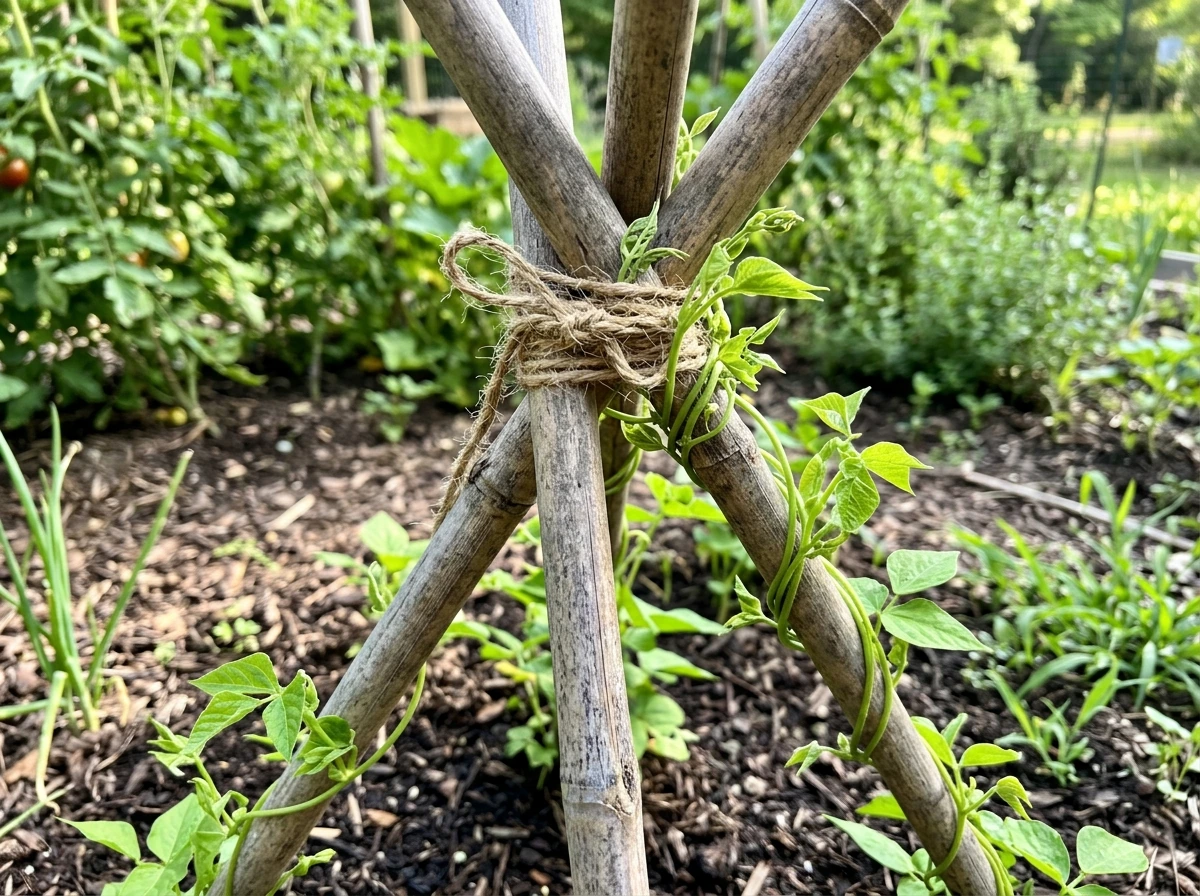
There are a few common options and each has a real use case. The right one depends on how many plants you're running and what your garden layout looks like.
- Teepee: Three to five 7- or 8-foot poles lashed together at the top and spread into a cone shape at the base. Works great for a small number of plants, takes up minimal horizontal space, and is very stable. Plant 4 to 6 seeds around each pole at the base.
- String or wire trellis between posts: Drive posts 6 to 8 feet tall at each end of your row (and every 8 to 10 feet if the row is long), then run horizontal stringers of three- or four-ply twine top and bottom, with vertical strings for the vines to grip. This is the most efficient setup for a full row and lets you pack in plants at the OSU-recommended spacing of about 4 inches apart along the trellis.
- Cattle panel or wire mesh arch: Bend a rigid wire panel into an arch between two rows. You can walk under it to harvest from both sides. Very durable and reusable for years.
- Bamboo or wood poles in a row: Simple and cheap. Lash the tops together for stability and add twine horizontally every foot or so as the plants climb.
How to train beans to climb (ties, spacing, airflow)
Pole beans are natural climbers, but young plants sometimes need a little direction to find their support, especially in the first week or two after they emerge. The vines spiral in a clockwise direction as they climb, so when you help them along, wrap them gently around the support in that same clockwise motion. Fighting their natural rotation stresses the stem and they'll just unwind anyway.
Once a vine finds its support and starts climbing, it will usually keep going on its own, and that’s how a can of beans grow a garden. Loose soft ties work for this if needed, but most of the time a gentle redirect with your hand is enough.
Spacing matters a lot for airflow. At 4 inches apart along the trellis, you get good plant density without the overcrowding that invites powdery mildew and bean rust. Don't be tempted to pack in extra seeds to get a bigger harvest. Crowded plants get less light, compete for nutrients, and have worse air circulation, all of which cuts into yield. If you want more beans, plant a second row on the other side of your trellis with the same spacing.
Do bush beans need any help? minimal support options
Most of the time, no. Bush beans are bred to stand on their own. At 1 to 2 feet tall with a sturdy, compact habit, they don't need a trellis or stake under normal conditions. That's actually one of the reasons they're popular, especially for gardeners who don't have vertical space or just want a low-maintenance crop. You can plant them in a block instead of a row, which maximizes space and creates a natural mutual support structure between plants.
That said, a few situations call for light support even with bush types. Very heavy pod set can weigh stems down and cause them to flop, especially after rain. In that case, a few short stakes around the perimeter of a block planting with some twine looped around the outside is all you need. Think of it like a loose corral rather than a trellis. Half-runner varieties sit between the two types and genuinely benefit from a low trellis or string at 3 to 4 feet, since they sprawl more than a true bush type but don't climb the way a true pole bean does.
Container vs ground-bed support differences
Growing beans in containers changes the support equation in a few practical ways. For bush beans in containers, a pot that holds at least 5 gallons per plant gives the roots enough room to support the plant weight without tipping. Bush beans in containers generally need no trellis, just a big enough pot to stay anchored.
For pole beans in containers, you need both a container large enough to anchor the trellis and a trellis tall enough to do the job. A flimsy bamboo stake shoved into a 2-gallon pot will fall over once the vines get going. Use a heavier container, at least 5 gallons and ideally more, and build or buy a trellis that is actually secured to the pot or to a wall or fence behind it. A teepee of three poles lashed together and set firmly into the soil works well for a single container planting.
One advantage of container trellising that doesn't get mentioned enough is airflow. Putting a vertical support inside a container pot lifts the vines up and off the soil surface, which improves circulation around the leaves and reduces the risk of soil splash onto the foliage during watering. That splash is a common way fungal spores get moved from soil onto leaves, so anything that keeps the plant up and off the ground is a win.
If you're limited on outdoor space and experimenting with whether beans can work in a container setup, that's worth exploring in more depth as a standalone topic. The short version is: bush beans in containers are forgiving, pole beans in containers require more planning but are very doable with the right pot size and a solid support.
Troubleshooting: not climbing, tangling, broken stems, and disease risk
Vines aren't climbing
If your pole beans aren't reaching for the trellis, check a few things. First, is the trellis close enough? The vines need to physically contact the support to grab on. If your trellis is more than a couple of inches away from where the seedling is growing, the vine may not find it. Move the trellis closer or tie a short length of twine from the base of the plant up to the trellis to give it a guide. Second, check your watering. Drought-stressed beans put survival ahead of growth, and a plant that's wilting isn't going to be putting energy into climbing. Consistent soil moisture is non-negotiable for vigorous growth.
Tangled vines and crowding
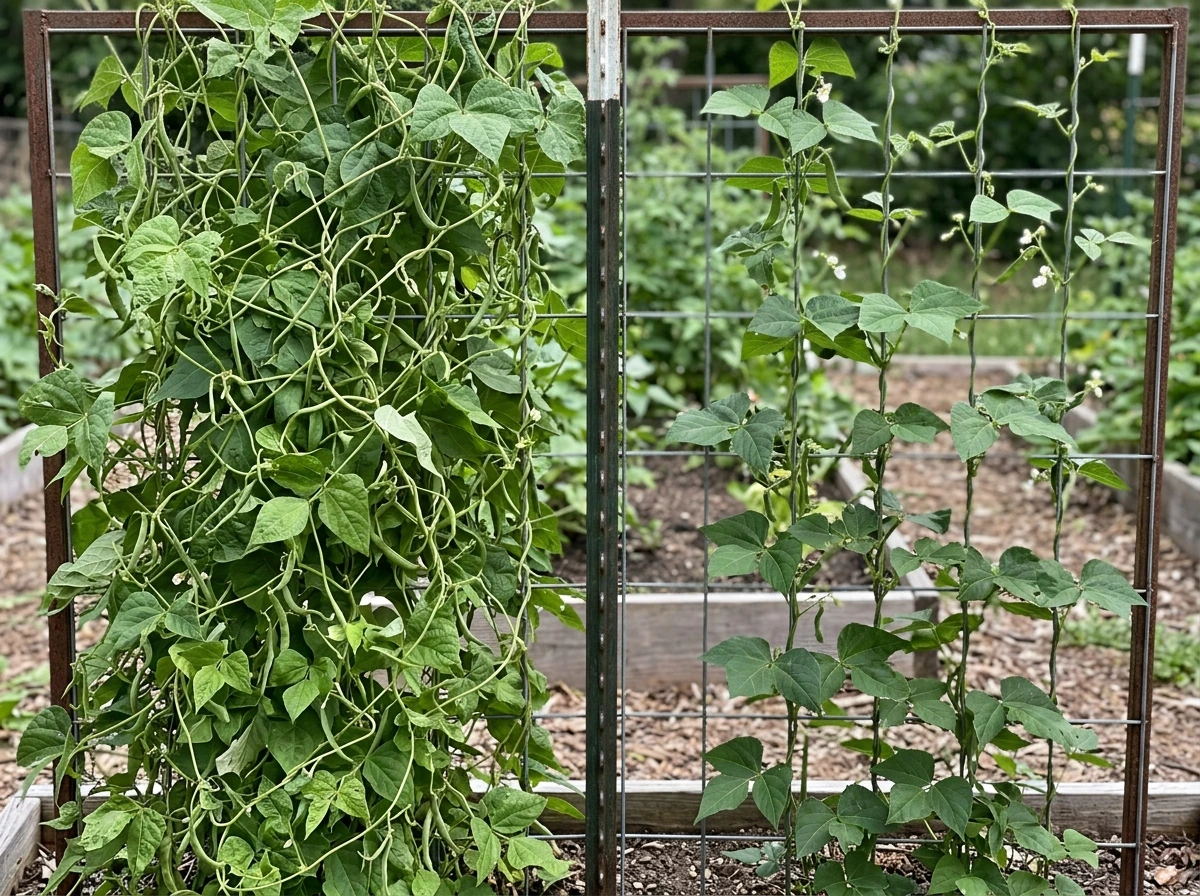
Tangling usually means the plants are too close together, the trellis doesn't have enough surface area for the number of plants you're growing, or you let things go without checking for a week during a growth surge. Untangle gently and redirect each vine to its own section of the trellis. If they're hopelessly knotted, don't try to force them apart. Just redirect the newer growth going forward and accept that the tangled lower section will have reduced airflow. Remove any damaged or dead leaves from the tangle to help.
Broken or snapping stems
Stems break when the support fails or when vines are forced against their natural climbing direction. If a trellis section collapses under weight or wind, the stems connected to it can snap at the attachment points. This is why building or buying a solid trellis matters, not just a tall one. Repair broken sections quickly. For a partially broken stem that's still attached, you can splint it with a short stick and some soft tape, and the plant may recover well enough to keep producing.
Foliage disease and poor airflow
If you're seeing white powder (powdery mildew), rust-colored spots (bean rust), or generally sad-looking leaves that are yellowing or curling, poor airflow is often part of the problem. This is almost always the result of plants that are too crowded, a trellis that isn't lifting the vines high enough, or watering in the evening when leaves stay wet overnight. Make sure your trellis spacing allows light and air to move through the planting, water at the base of plants rather than overhead, and water in the morning so any splashed water dries quickly. Understanding what your beans need from a nutrition and environment standpoint (including proper airflow) is closely related to disease prevention and overall plant health. what nutrients do beans need to grow
Poor harvest despite good climbing
If your plants are climbing well but pod set is thin, the issue is likely one of three things: inconsistent watering during flowering, heat stress during bloom (beans drop flowers when it gets too hot), or letting pods mature too far on the plant before picking. Leaving mature pods on the vine signals the plant to stop producing and shift energy to seed development. Pick regularly and pick young, and the plant will keep flowering.
FAQ
If I’m unsure whether my beans are bush or pole, what quick test can I do before I build the trellis?
Watch the first true leaves after seedlings establish. Bush types stay compact and upright, with minimal twisting toward nearby surfaces. Pole types send out obvious long, searching vines and tendrils that look for a vertical line, so you can commit to a trellis as soon as you see that crawling and spiral growth pattern.
Do pole beans need a specific direction for trellising, like clockwise only, or is any support fine?
Any stable support works, but helping early growth follow their natural spiral makes establishment faster and reduces stem stress. When redirecting, wrap gently in the same clockwise motion as the vines naturally spiral, then stop intervening once the vine is gripping.
How far apart should I space pole bean plants on the trellis so they don’t tangle?
Aim for spacing that leaves clear air gaps between vines, not a solid wall of greenery. If multiple vines repeatedly meet at the same attachment point, they will braid together. A practical rule is to assign each plant its own vertical lane, then thin or redirect early so one vine does not take over another’s space.
Can I use tomato cages for pole beans instead of building a full trellis?
Sometimes, but many cages are too short and too enclosed, which encourages top flopping and poor airflow. If you try it, use a tall, rigid cage and plan for tying or extending the support higher, since pole bean vines can exceed typical cage height in good conditions.
What’s the best way to tie pole bean vines to avoid damaging them?
Use soft, flexible ties and only tie when vines are young and easy to guide. Avoid tight wraps around the stem, and don’t cinch knots that can constrict as the vine thickens. Better approach is a loose loop or a gentle redirect so the vine can climb on its own grip.
My pole beans are reaching the trellis top, now what? Should I cut them back or extend support?
Extending support is usually better than cutting, because pole beans keep flowering and producing while the vine has room to grow. If you cannot extend, you can pinch the top to slow further climbing, but expect reduced late-season yield compared with plants that keep access to vertical height.
If pole beans aren’t climbing, is it ever a nutrition issue instead of support or watering?
It can look nutrition-related, but lack of climbing is more often due to insufficient contact with the trellis, drought stress, or cold soil. Before changing fertilizer, confirm the trellis is close enough for the vine to touch and that soil moisture is consistent during early establishment and flowering.
Do beans need support in wind, or is trellising only for preventing disease?
Both. Wind and heavy pod loads can snap stems at weak attachment points, even if the airflow is good. A sturdier structure reduces mechanical stress, which helps prevent broken vines and keeps harvest access easier.
Can I trellis bush beans to make them easier to harvest, even if they don’t need it?
You can add light support, but full trellising can cause unnecessary labor and sometimes reduces airflow if you crowd plants under a frame. If you do it, keep the setup low and only use it where stems start flopping or after heavy pod set, otherwise let bush plants keep their natural compact form.
What container size actually prevents pole beans from toppling, and how do I anchor the trellis safely?
Use a heavier container than you would for bush beans, at least 5 gallons and ideally more for pole beans, then secure the trellis to the pot or to a wall or fence behind it. A flimsy stake in a small pot will loosen and fall as the vine weight increases, which can lead to stem breakage and messy tangling.
How do I prevent soil splash and leaf wetness when watering pole beans on a trellis?
Water at the base and in the morning so any splashed water dries quickly. Keeping the vines lifted inside the container or on the trellis reduces splash and keeps foliage farther from soil, which lowers the chances of fungal problems developing after irrigation.
When should I start checking and untangling vines to avoid a major knot later?
Check early and often during the first couple of weeks after pole vines start climbing, when they are most pliable. If you wait until the growth surge is over, you can end up with tightly braided sections that break stems when forced apart. Redirect newer growth as you go, and only lightly separate if you catch tangles before they set hard.
Next Article
Can a Can of Beans Grow a Garden? How to Try
Find out if canned beans can sprout, then try step-by-step sprouting or use beans for compost and soil.