The best crops to grow on a farm depend on three things: your climate, your space, and your goal. If you want to eat well and cut your grocery bill, start with high-yield vegetables like potatoes, tomatoes, and beans. If you're building toward real self-sufficiency, add grains and legumes. If you want long-term abundance with less annual work, plant fruit trees and berry canes now. Most people do all three in overlapping phases, and that's exactly the right approach. Here's how to figure out what fits your situation and how to get your first season off the ground.
What to Grow on a Farm: Crop Guide for First Season
Marcus Hendrick
22 Apr 2026
Quick-start crop selection: matching space, climate, and time
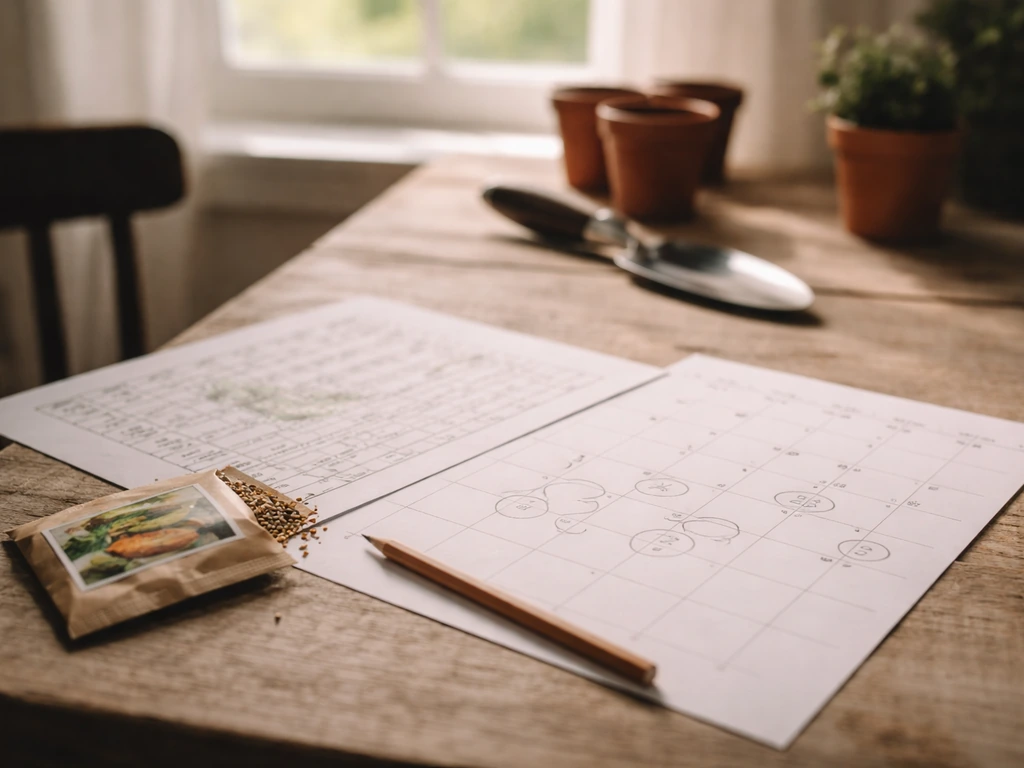
Before you pick a single seed, you need two numbers: your last spring frost date and your first fall frost date. Everything else flows from those. The window between them is your growing season, and every crop you choose has to mature within it. Extension services in every state publish these dates by zip code, so look yours up now if you don't already know them.
Once you have that window, match your crops to it using days-to-maturity, which is printed on every seed packet. A crop that takes 90 days needs to go in the ground at least 90 days before your first fall frost, plus a little buffer. Radishes mature in 28 to 40 days. Peppers need 72 to 90 days from transplant. Those two crops live in completely different planning universes, even if they're side by side in the seed catalog.
Space matters too. A quarter-acre lot can support a serious mixed vegetable garden plus a small berry patch. A half-acre opens up room for grains or a small orchard. If you're working a few acres, you can start running animal-feed crops alongside food crops. Don't overextend in year one. Experienced growers will tell you that a well-managed smaller plot beats a neglected larger one every time.
A quick framework for choosing what to plant first: pick two or three fast-maturing vegetables you'll actually eat, one staple crop that stores well (potatoes, dry beans, or winter squash), and at least one perennial if you have the space. That combination gives you early wins, a calorie buffer, and the start of a low-maintenance long-term system.
Vegetable staples that fit most farms
These are the workhorses. They grow reliably across most of the country, produce well in proportion to the space they use, and store or preserve easily. If you're just getting started, this is your foundation.
- Potatoes: One of the best calorie-per-square-foot crops available. Plant seed pieces 8 to 12 inches apart within rows spaced 24 to 36 inches. In most of the country, you're planting from mid-March through early May depending on your location and last frost. Days to maturity run 90 to 120 days. A 100-foot row can yield 50 to 100 pounds of potatoes with decent soil and water.
- Tomatoes: High value, high yield, and endlessly useful. Start transplants indoors 6 to 8 weeks before your last frost. Give determinate types about 2 feet of spacing and indeterminate varieties 3 feet or more. They need warm soil (above 55°F) before going outside.
- Summer squash and zucchini: Absurdly productive. One or two plants can outpace your household's ability to eat them. Direct-seed when soil temps are reliably warm, since their roots don't tolerate transplant disruption well. Space plants 3 to 4 feet apart.
- Green beans: Easy, fast (about 55 to 60 days), and they fix nitrogen in the soil. Bush types need minimal support. Direct seed after last frost at 4 to 6 inches apart in rows 18 to 24 inches apart.
- Leafy greens (spinach, lettuce, kale, arugula): These are your early-season and late-season crops. Spinach matures in 30 to 50 days and tolerates frost, making it one of the first things you can plant in spring and one of the last things standing in fall. They're especially useful for bridging the gap between seasons.
- Carrots: Best planted in early spring in most regions. Thin to about 2 inches apart. They store well in the ground in mild climates and in a root cellar almost everywhere else.
- Peppers: Great producers in warm climates, but they need a long season (72 to 90 days from transplant). Start them indoors early and don't rush them outside. In short-season climates, choose faster-maturing varieties.
Radishes deserve a special mention as a beginner confidence crop. They mature in 28 to 40 days, grow in spring and fall, and are genuinely easy. They're also useful as row markers for slower-germinating seeds. If you've never grown anything before, start a row of radishes while you're still figuring out the rest of your plan.
Fruits, nuts, and perennial crops for long-term yields
Perennial crops are the best long-term investment on any homestead because you plant them once and harvest for years or decades. The trade-off is time: most don't produce meaningfully in year one. That's why you should plant them as early as possible, ideally in your first season, and let them establish while your annual garden does the heavy lifting.
Berry canes: the fastest-returning perennials
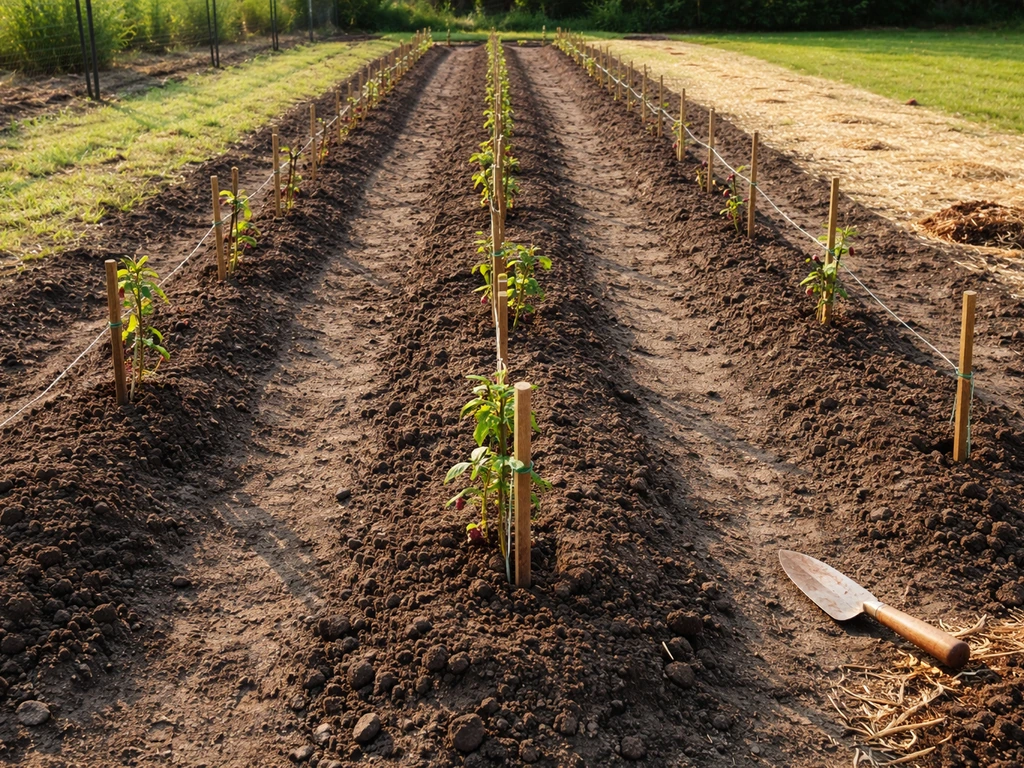
Raspberries and blackberries are the fastest path to perennial fruit. Red raspberries go in the ground about 2 to 2.5 feet apart within rows, with rows spaced 8 to 10 feet apart. Black and purple raspberries need about 3 feet within rows. Blackberries want 3 to 4 feet. A well-established raspberry planting is productive for 5 to 15 years depending on type and conditions. Primocane-fruiting (fall-bearing) raspberries can give you a small harvest even in their first year, which makes them a smart choice for impatient growers.
Fruit trees: plant now, eat later
Bare-root fruit trees are the most economical way to start an orchard and they're available in early spring when they're dormant. When planting, keep the roots moist at all times before they go in the ground, prune any damaged or dead roots, and prune the top at planting to begin establishing structure. Don't neglect this step: it gives the tree the right shape from day one. Apples, pears, and plums are the most cold-hardy choices for northern farms. Peaches and figs do better in warmer zones. Dwarf and semi-dwarf rootstocks are your best bet for a home farm because they start bearing earlier and are easier to manage.
Grapes and vine fruits
Grapes take patience but deliver high value per square foot once established. In the first year, if flower clusters appear on newly planted vines, remove them. This redirects energy to root development and pays off in faster, stronger establishment over the next few years. Set up your trellis before or at planting time, since roots don't like disturbance once the plant is growing.
Nut trees
Hazelnuts are the most practical nut crop for a homestead scale because they're multi-stemmed shrubs that start producing in 3 to 5 years, which is much faster than walnuts or chestnuts. If you have the space and a 7 to 10 year horizon, black walnuts and chestnuts offer tremendous long-term calorie and food-security value. Plant them in year one and basically forget them while your annual garden runs.
Grains, legumes, and animal-feed crops
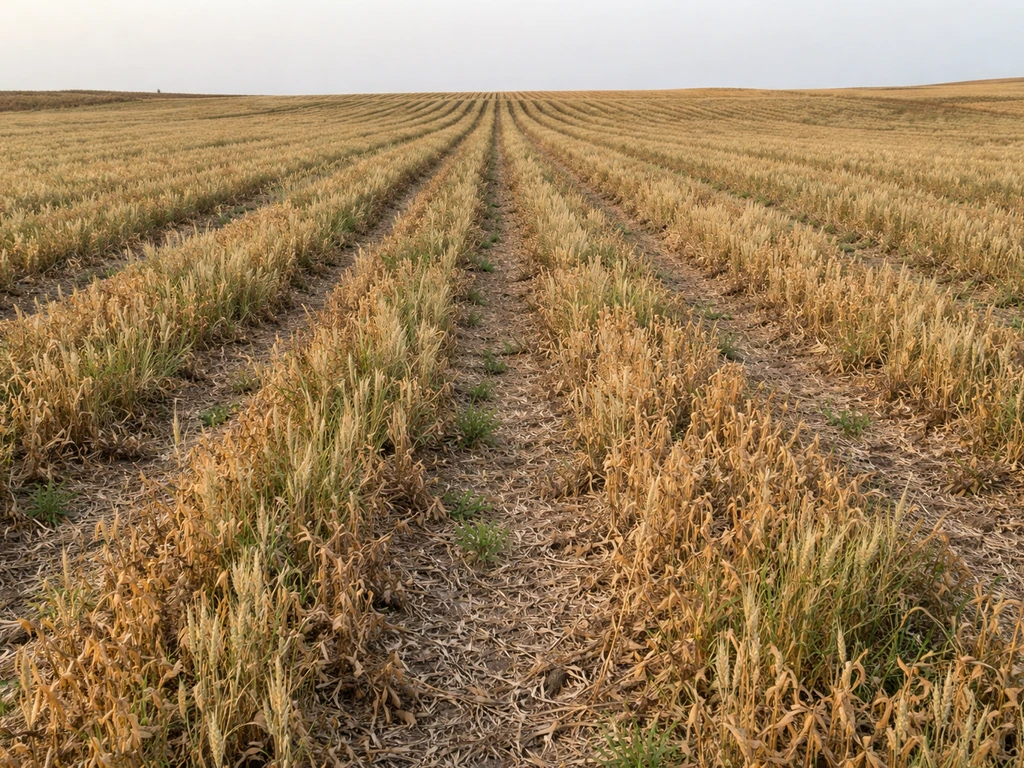
If your goal is genuine food self-sufficiency, you need calorie crops: grains and legumes. These take more land than vegetables, but they store for long periods and provide the carbohydrates, protein, and fats that keep people alive. They're also among the most useful animal-feed crops if you're raising chickens, pigs, or other livestock.
Dry beans and soybeans
Dry beans (navy, pinto, black, kidney) are the most accessible protein crop for a homestead. They grow on a similar timeline to green beans, store indefinitely when dry, and require no special equipment to harvest by hand. One serious note on soybeans specifically: planting date matters a lot. NDSU research across 21 trials found an average yield improvement of about 6.5% when soybeans were planted in the first 10 days of May compared to two weeks later. Late planting can cost anywhere from a quarter bushel to more than a bushel per acre per day. Get them in early. Also pay attention to seed depth and firm soil contact, which meaningfully affect germination and stand establishment.
Small grains: wheat, oats, rye, and barley
Small cereal grains are multipurpose crops for a homestead. Wheat provides flour. Oats are excellent for breakfast and animal feed. Rye and barley grow in cool, short seasons where other grains struggle. All of them double as forage: they can be grazed, cut for hay, or fermented as silage for animals. If you have even a quarter-acre to dedicate, a small grain plot dramatically expands your food-security options. They're also excellent cover crops in rotation.
Forage sorghum and corn
For farms with animals, forage sorghum is worth considering as an alternative to corn silage. Plant it when soil temperature is consistently above 60°F. It offers flexibility in difficult growing conditions and sidesteps some of the pest pressure (like corn rootworm) that can follow corn-on-corn rotations. Field corn, if you have the equipment or are willing to hand-harvest, provides calorie-dense grain for both people and animals.
Low-input, beginner-friendly crops with the best yield per effort
Not every crop deserves equal attention in your first year. Some are forgiving, fast, and return far more than the work they require. These are the ones to load up on when you're still learning your land.
| Crop | Days to Maturity | Difficulty | Why It's Worth It |
|---|---|---|---|
| Zucchini / summer squash | 50–60 days | Very easy | Absurdly productive, direct seed in warm soil, minimal care |
| Green beans (bush) | 55–60 days | Easy | Fast, nitrogen-fixing, no staking required |
| Radishes | 28–40 days | Very easy | Fastest harvest of any vegetable, spring and fall capable |
| Spinach | 30–50 days | Easy | Frost-tolerant, early spring and fall harvest, high nutrition |
| Potatoes | 90–120 days | Moderate | Highest calories per square foot of most vegetables, stores well |
| Winter squash / pumpkins | 85–110 days | Easy | Long storage life, large yields per plant |
| Kale | 55–65 days to first harvest | Very easy | Cut-and-come-again, frost-hardy, almost no pest pressure |
| Dry beans | 85–100 days | Easy | Protein, stores indefinitely, no preservation equipment needed |
One crop I'd steer beginners away from in year one: sweet corn. It takes up a lot of space, needs a large block for pollination, and the pest pressure (earworms, borers) can wipe out a first-time effort. Master the easier crops first. Similarly, MU Extension notes that dry beans for storage are often impractical in very small garden spaces because of the volume required to put up meaningful quantities. Be realistic about your scale.
Planning your first season: rotations, spacing, succession planting, and yield estimates
Crop rotation basics
The core rule is simple: don't plant the same crop family in the same spot for at least 2 to 3 years. Iowa State University Extension recommends avoiding planting vegetables in the same location within the same plant family for about 3 to 4 years (or longer if possible) blank" rel="noopener noreferrer">about 3 to 4 years (or longer). This isn't just theory. blank" rel="noopener noreferrer">Rotating by family (not just individual crop) breaks pest and disease cycles in the soil. The four main families to track are Solanaceae (tomatoes, peppers, potatoes, eggplant), Brassicaceae (cabbage, broccoli, kale, radishes), Fabaceae (beans, peas, soybeans), and Alliaceae (onions, garlic, leeks). Map out your beds or sections and assign families to them. Next year, shift each family to the next section. It's one of the highest-return habits you can build in year one.
Spacing: give crops room to perform
Crowded plants compete for water, nutrients, and light, and they become disease magnets. Here's a quick reference for the most common crops, based on extension service planting guides:
| Crop | Within-Row Spacing | Between-Row Spacing |
|---|---|---|
| Tomatoes | 24–36 inches | 36–48 inches |
| Peppers | 18–24 inches | 24–36 inches |
| Potatoes | 8–12 inches | 24–36 inches |
| Bush beans | 4–6 inches | 18–24 inches |
| Zucchini / squash | 36–48 inches | 48–60 inches |
| Carrots | 2–3 inches (after thinning) | 12–18 inches |
| Spinach / lettuce | 6–8 inches | 12–18 inches |
| Radishes | 1–2 inches | 6–12 inches |
| Red raspberries | 2–2.5 feet | 8–10 feet |
| Blackberries | 3–4 feet | 8–10 feet |
Succession planting: spread the harvest
Succession planting means sowing the same crop every 2 to 3 weeks instead of all at once. This keeps you from drowning in lettuce for two weeks and then having none for a month. It works best with fast-maturing crops: radishes, lettuce, spinach, bush beans, and summer squash all lend themselves to staggered plantings. For squash, extension research suggests a planting interval approach for continuous harvest, meaning you hold back a portion of your planned plantings and put them in 2 to 3 weeks after the first sowing. This also reduces risk: if one sowing hits a bad week of weather, the next one catches up.
Realistic yield estimates for planning
These numbers assume decent soil, adequate water, and reasonable pest management. They're rough but useful for setting expectations and sizing your plot:
| Crop | Expected Yield (per 100 sq ft) | Notes |
|---|---|---|
| Potatoes | 50–100 lbs | Higher with hilling and consistent water |
| Tomatoes (indeterminate) | 50–100 lbs | Varies greatly by variety and staking |
| Bush beans (fresh) | 15–20 lbs | Multiple pickings extend yield |
| Zucchini | 40–60 lbs | Two plants can produce this |
| Spinach | 10–15 lbs | Cut-and-come-again extends harvest |
| Carrots | 25–40 lbs | Depends heavily on soil depth and texture |
| Winter squash | 20–40 lbs | Stores 3–6 months in cool dry conditions |
| Dry beans | 5–8 lbs (dry weight) | Need ~200 sq ft for meaningful storage quantities |
Soil, water, and basic infrastructure to support your crops
Get a soil test before you plant anything
Most vegetables perform best in soil with a pH between 6.0 and 7.0. Outside that range, nutrients lock up in the soil and plants can't access them even if you've fertilized. Extension labs in every state will test your soil for $15 to $30 and give you specific lime or amendment recommendations. For new gardens in the Pacific Northwest, for example, OSU Extension sometimes recommends up to 10 pounds of agricultural-grade lime per 100 square feet to raise pH. Don't skip this step: it's the cheapest performance improvement you can make. Also check your soil's organic matter level. Higher organic matter means better water retention, better drainage, and more buffering capacity for pH and nutrients.
How much water your crops actually need
The general rule across multiple extension guides is about 1 to 1.5 inches of water per week for vegetables, adjusted for rainfall, temperature, soil type, and growth stage. Young seedlings need less volume but more frequent moisture. Fruiting plants in hot weather need more. The simplest tracking method is a rain gauge: if you get less than an inch of rain in a week, you need to make up the difference. For anyone setting up drip irrigation, Penn State Extension provides a practical formula: convert your target weekly inches to gallons based on the square footage of your beds, then divide by your emitter flow rate to get run time. It sounds complicated, but the math takes about five minutes and removes all the guesswork.
Infrastructure you actually need in year one
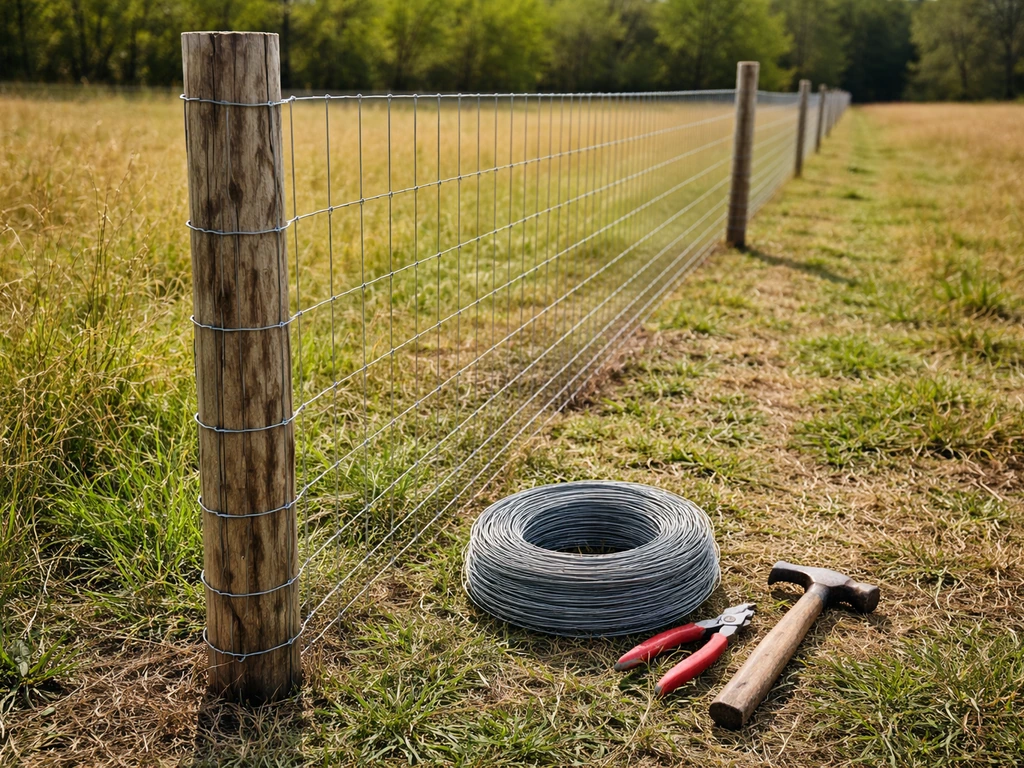
Keep it simple. A fence (even a basic 4-foot wire fence) is probably the highest-return infrastructure investment on most farms because deer and rabbits will happily undo months of work in a single night. After fencing, prioritize water access: a hose bib near the garden or a drip line saves enormous time and effort through dry stretches. Raised beds are useful but not essential. In-ground beds work fine if your soil drains reasonably well. A basic tool set (spade, hoe, rake, hand trowel) handles most of what year one demands. Resist the urge to buy a tractor or tiller before you've actually identified what work needs doing.
Budgeting, risk management, and where to start today
What does a first season actually cost?
A productive 1,000-square-foot vegetable garden can be set up for $200 to $400 in year one (seeds, soil amendments, basic tools, and fencing), and will typically produce $800 to $1,500 worth of food at retail prices if you grow the right crops and manage them decently. High-value crops like tomatoes, peppers, and berries return the most per dollar spent on inputs. Potatoes and beans give the best return per calorie. Grains have lower per-pound market value but are nearly irreplaceable from a self-sufficiency standpoint.
Managing risk in your first season
The biggest first-year risks are frost damage, pest pressure, drought, and overcrowding. You can mitigate all of them with a few habits. Use frost dates seriously and don't rush warm-season crops outside: one frost event can wipe out a month of seedling work. Stagger your plantings (succession sowing) so a single bad week doesn't kill your whole season. Don't plant a monoculture: a diverse planting means that if one crop fails, the rest of your season isn't lost. Start with proven, reliable varieties rather than novelty picks. Save the experimentation for a small portion of your plot once the basics are working.
Your next steps, starting today
- Look up your last and first frost dates for your specific location. Write them down.
- Order a soil test from your local extension service. This takes a week or two to come back, so do it now.
- Make a list of 4 to 6 crops you'll actually eat. Choose from the beginner-friendly list above, matching days-to-maturity to your frost window.
- Sketch a simple bed map with crop families assigned to sections. Plan to rotate those families next year.
- Order or buy seeds. For warm-season crops, start transplants indoors 6 to 8 weeks before your last frost date.
- Plant one cold-tolerant crop (spinach, radishes, or lettuce) as soon as the ground is workable. Early success builds momentum.
- If you have the space, put in at least one perennial crop this season: a berry cane, a fruit tree, or a grape vine. It will start paying off while you're still mastering your vegetables.
- Set up water access near your plot before things dry out in summer. Drip irrigation is worth every penny.
If you're curious about narrowing this further, the question of what to grow on a small farm specifically involves tighter tradeoffs between high-value crops and calorie crops given limited space. If you are looking for clues like in a what you grow on a farm crossword, start with the basics: match crops to your space, climate, and growing season. If you plan to grow vegetables on a farm, you can start by focusing on space, climate, and your goal for food self-sufficiency. And if money is a driver, thinking through which crops make financial sense goes deeper than just yield: market value, storage life, and input costs all factor in. If your goal is to make money from your farm, start by prioritizing crops with strong market demand and good storage or high-value yield. But for most people starting out, the answer is simpler than it seems: grow what you eat, grow what stores, and plant something perennial this year. That combination sets you up better than any single perfect crop choice ever will.
FAQ
How many different crops should I try on my first season if I want to learn fast without wasting space?
Aim for a small mix, 6 to 10 crops total (2 to 3 fast vegetables, 1 staple that stores, and 1 or 2 perennial starts). If you can’t list your main harvest targets and eating habits before you buy seeds, you’re likely planning too broad.
What if my farm has uneven microclimates, like a low spot that frost pockets and a warmer ridge?
Use your frost dates at the bed level, not just the ZIP code. Plant warm-season crops only in the warmest areas first (or use row covers) and treat low areas as “cool-season only” until you’ve proven temperatures.
Should I direct-sow everything or start some plants indoors?
For long-season crops like tomatoes and peppers, start indoors so you can transplant in time to mature before the first fall frost. For short crops like radish and many leafy greens, direct sow is often faster, cheaper, and less risky than transplant stress.
How do I choose between potatoes, dry beans, and winter squash as my “storage staple” crop?
Potatoes are great for quick beginner success but need proper curing and cold storage. Dry beans are the most “set it and forget it” for storage, with indefinite shelf life if kept dry. Winter squash is forgiving and storage-friendly, but takes more garden space and lengthens your season planning.
Can I plant perennials and annual vegetables together without messing up rotation or maintenance?
Yes, but map them separately. Keep annual beds in strict family rotation, while treating perennial rows as fixed zones where you don’t rotate families annually. That prevents accidental replanting of the same vegetable families in the same ground each year.
What is the most common spacing mistake that causes low yields in year one?
Overcrowding because seedlings look small. Use seed packet spacing and thin to the recommended plant count. Dense plantings increase disease pressure and make watering inconsistent across the bed.
If I’m worried about pests, what should I do first before buying anything?
Start with prevention: put in fencing early, remove diseased leaves, use row cover for vulnerable seedlings, and select varieties marketed for your region or pest tolerance. Fixing spacing, irrigation timing, and crop family placement usually solves more problems than sprays.
How should I water if I don’t have drip irrigation?
Water deeply but less often, so roots develop downward. A simple rule is to soak early enough in the day to dry leaves, and use a rain gauge or a consistent schedule to avoid shallow frequent watering that weakens plants.
What do I do if my first sowing fails because of bad weather?
Have a backup plan in two parts: keep a small seed reserve for quick re-sowing and use succession timing so the whole season doesn’t depend on one planting date. For fast crops, stagger rows every 2 to 3 weeks so a single cold or hot spell doesn’t wipe you out.
Is it really necessary to avoid rotating by crop family for 2 to 3 years?
Yes, especially if you’ve had repeat pest or disease issues. Rotating only individual crops (but keeping the same family in the same spot) often doesn’t break the underlying cycles because pests and pathogens track by family.
Can I grow grains or legumes on a small farm without dedicating a full field?
You can, but scale matters. Try a quarter-acre or less for a “starter” plot using a small acreage approach (threshing and storage are the limiting steps). Dry beans and some cover-crop grains often fit better into mixed systems than large continuous grain blocks.
What makes soybeans especially sensitive compared with other legumes?
Timing and stand establishment. Soybeans have a relatively narrow planting window and late planting can reduce yield meaningfully, so prioritize correct planting date and seed depth with firm soil contact to get an even stand.
Why do beginners struggle with sweet corn more than other vegetables?
Sweet corn needs larger contiguous plantings for pollination, which turns “one small patch” into “a bigger space requirement.” It also attracts multiple pests, and first-time plantings often become a high-investment, high-loss block.
How do I know whether to invest in fruit trees versus berry canes for year one progress?
Choose berry canes if you want earlier harvest momentum, since many start producing sooner after establishment. Choose fruit trees if you want the long-term payoff and can handle slower year-one output. Many successful plans plant both, with trees going in early while the annual garden covers most calories immediately.
Grapes flower in the first year and I’m tempted to let them set fruit, should I?
If you want strong establishment, remove flower clusters the first season. Keeping the vine focused on roots and structure generally leads to better vigor and higher yields later, and it’s easier than trying to “fix” a weak vine after the fact.
Do I need a trellis before planting grapes or can I set it later?
Set it at planting time or before. Roots and shoots do not tolerate disturbance well once established, so installing later can damage the vine and delay performance.
What’s the best “farm infrastructure” purchase if I only have a limited budget?
Fencing first, even a basic deer and rabbit barrier, because wildlife can destroy a whole season quickly. After that, improve water access with a nearby hose bib or drip line so you can respond to drought days without moving equipment constantly.
How much seed or planting area do I need to avoid the “too small to matter” problem?
Start by calculating your expected daily intake for your chosen staples, then translate that into acreage using realistic yields. For storage crops, underestimate less than you think, because curing, losses, and pests reduce usable output.
Next Article
How Do Farmers Grow Food Around the World: Methods and Tips
Learn how farmers grow food worldwide: soil, water, crops, pests, harvest, and how to scale it for home gardens.