GMO crops do not automatically grow faster. The genetic traits most commonly engineered into commercial crops, herbicide tolerance, insect resistance, disease resistance, have almost nothing to do with how quickly a plant reaches harvest. A few specific GMO traits can indirectly speed things up in the right conditions, but in a home garden, your soil temperature, sunlight hours, planting date, and fertility management will do far more for your harvest timeline than whether the seed was genetically engineered or not.
Do GMO Crops Grow Faster? What It Means for Home Gardens

Marcus Hendrick
12 May 2026
What 'GMO' actually means vs what makes crops grow fast
GMO stands for genetically modified organism. In the US, the FDA and USDA use the more precise term 'genetically engineered' to describe plants whose DNA has been altered through recombinant DNA technology, essentially, copying a gene with a desired trait from one organism and inserting it into another. This is different from traditional plant breeding, where breeders cross two related plants and select for favorable traits over many generations. It's also distinct from newer genome-editing techniques, which the FDA describes as a precise tool for making targeted changes at specific locations in a plant's DNA.
The key thing to understand is that 'GMO' describes a method of modification, not a type of trait. A plant can be genetically engineered to tolerate drought, resist a herbicide, repel insects, or produce a specific nutrient. None of those traits are inherently about speed. Growth speed, or how fast a plant moves from seed to harvest, is primarily a function of genetics tied to days-to-maturity, plus environmental inputs like heat accumulation, light exposure, and available nutrients. Confusing 'GMO' with 'fast-growing' is like confusing 'stainless steel' with 'sharp', the material doesn't determine the performance without more context.
When GMO traits can translate to an earlier harvest
There are specific scenarios where engineered traits can indirectly lead to a faster or more reliable harvest, even if they don't shorten the plant's built-in days-to-maturity.
- Disease resistance: If a GMO trait protects a plant from a pathogen that normally slows growth or kills plants before they mature — late blight in potatoes, for example — the plant can reach full maturity without setbacks. The variety isn't faster, but it doesn't lose weeks to disease recovery.
- Insect resistance: Bt crops (engineered to produce a protein toxic to certain insects) can avoid the defoliation and stress that pest pressure causes. A corn plant that isn't being destroyed by corn borers will put more energy into ear development and may fill out more quickly than a damaged conventional plant.
- Stress tolerance: Some engineered traits improve tolerance to drought or heat. A plant under less water stress maintains better physiological function and can hit its harvest window closer to the seed's stated days-to-maturity.
- Early vigor traits: Some commercial breeding programs have selected for faster early establishment, sometimes alongside GMO traits, though the vigor itself often comes from conventional breeding layered onto the GMO event.
- Reduced competition from weeds: Herbicide-tolerant GMO crops (like Roundup Ready varieties) allow more aggressive weed control, and since weeds compete directly for water, light, and nutrients, removing them faster can improve growth rate — not because of the trait itself, but because of what the trait enables.
The most commercially relevant GMO crops, corn, soybeans, cotton, canola, sugar beets, are large-scale field crops. You won't find GMO seed packets at a garden center labeled as such, and most GMO varieties aren't sold to home gardeners at all. So while these examples are useful for understanding how traits work, the direct application to your backyard garden is limited. Understanding the trait types matters more than chasing a specific GMO variety.
Why your growing conditions matter more than GMO status
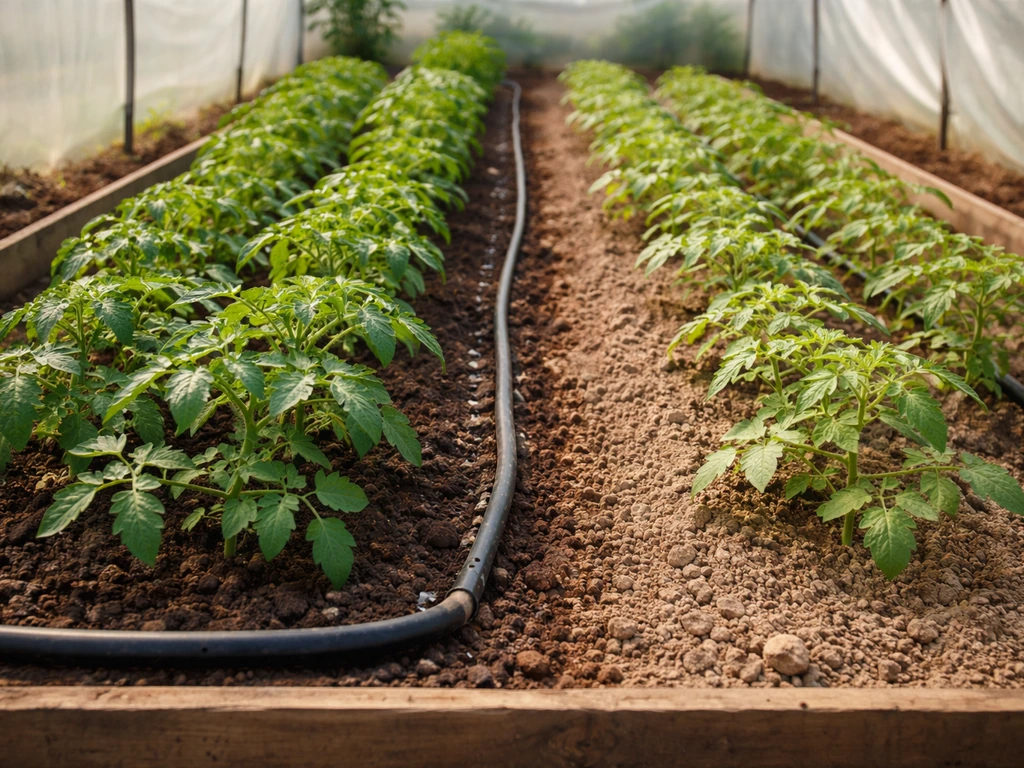
I've grown the same tomato variety in two different years, same seed lot, same spacing, and seen a 3-week difference in first harvest just from soil temperature and irrigation timing. That kind of variability dwarfs anything a specific trait modification could realistically offer. Here's why conditions dominate the outcome:
- Soil temperature controls germination speed and root development. Most vegetable crops germinate poorly below 50°F and thrive between 65°F and 85°F. Cold soil means slow starts, period.
- Sunlight drives photosynthesis, which drives growth. A plant getting 6 hours of direct sun will lag significantly behind one getting 10 hours, regardless of genetics.
- Soil fertility determines how fast the plant can build biomass. Nitrogen-deficient soil produces slow, stunted plants. Adequate phosphorus and potassium support root and fruit development.
- Water availability affects cell expansion and transpiration. Inconsistent watering leads to uneven growth and extended time to harvest.
- Pest and disease pressure can add weeks to a harvest timeline if not managed, because the plant diverts energy from growth into defense or repair.
- Planting date is the single most controllable variable. Starting too early in cold soil or too late in the season will push your harvest window regardless of what variety you're growing.
The point is that optimizing your conditions will reliably deliver faster harvests. Hoping a particular seed technology will shortcut poor soil, low light, or bad timing won't get you there.
How to actually pick a faster-maturing variety
This is where you can make a real difference: variety selection based on days-to-maturity (DTM). DTM is the number of days from transplant (for transplanted crops) or from emergence (for direct-seeded crops) to first harvest under typical conditions. When you're comparing seed catalog options, DTM is the most honest number you have. A 60-day tomato will beat a 90-day tomato to your table by a full month if you're managing conditions equally.
Growing degree days (GDD) are a more precise version of the same idea. GDD calculates heat accumulation above a base temperature threshold (50°F for most vegetables, 32°F for some cool-season crops). The formula is: GDD = ((daily high temp + daily low temp) / 2) - base temperature. Crops need a specific number of accumulated GDD to reach maturity. For example, most sweet corn varieties need 1,800 to 2,700 GDD to reach harvest, depending on the variety. Early-season varieties targeting 1,800 GDD will finish weeks ahead of a 2,700 GDD variety in the same location. GDD calculators are available online and many university extension services publish GDD maps and crop-specific tables.
| Crop | Fast-maturing DTM | Standard DTM | GDD to maturity (approx) |
|---|---|---|---|
| Tomato (transplant) | 55-65 days | 75-90 days | 1,000-1,400 |
| Sweet corn | 65-70 days | 80-90 days | 1,800-2,200 |
| Summer squash | 45-50 days | 55-65 days | 800-1,000 |
| Bush bean | 50-55 days | 60-70 days | 1,000-1,200 |
| Cucumber | 48-55 days | 60-70 days | 1,000-1,200 |
| Lettuce (leaf) | 28-35 days | 45-60 days | 600-800 |
When browsing seed catalogs, look for terms like 'early,' 'short-season,' or 'northern' in variety names. These signal selections bred for shorter seasons and faster maturity. Varieties like 'Early Girl' tomato, 'Earlibird' corn, or 'Provider' bush beans were developed through conventional breeding specifically for faster cycles, and they're widely available as non-GMO open-pollinated or hybrid seed.
Practical ways to speed up growth at home
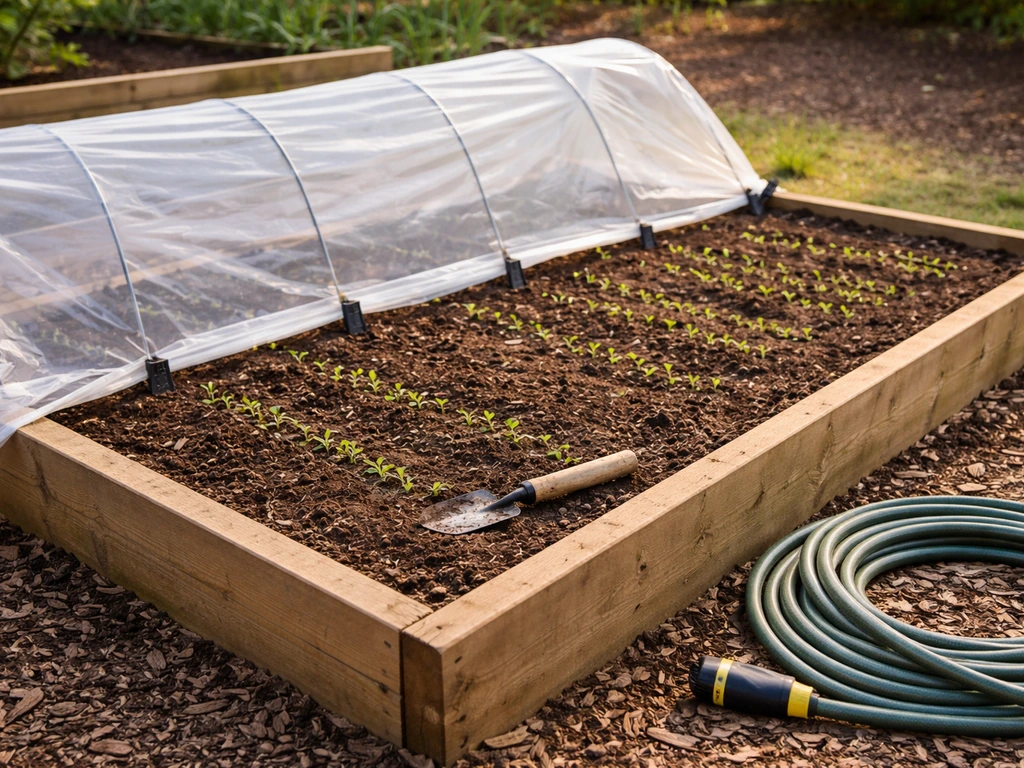
Once you've chosen a fast-maturing variety, these are the levers you can actually pull to hit that DTM number on schedule or ahead of it.
Soil prep
Loose, well-draining soil lets roots expand quickly and reach nutrients efficiently. Compacted soil forces roots to work harder and slows establishment. Before planting, till or loosen the top 12 inches of soil, work in 2 to 4 inches of finished compost, and make sure drainage is adequate. A soil pH between 6.0 and 7.0 keeps most nutrients available. Testing your soil and amending it based on results is a one-time investment that pays off every season.
Nutrients
Nitrogen drives early leafy growth, phosphorus supports root development and flowering, and potassium helps with fruit fill and stress tolerance. For fast-growing crops, a balanced slow-release fertilizer at planting combined with a liquid feed every 2 to 3 weeks during peak growth gives consistent availability without burning roots. Organic options like fish emulsion (typically 5-1-1) and balanced granular fertilizers work well and are easy to manage at home-garden scale.
Watering
Consistent soil moisture keeps plants growing steadily. The goal is evenly moist, not waterlogged, not dry. Deep watering 2 to 3 times per week encourages roots to grow downward, which makes plants more resilient. Drip irrigation or soaker hoses are more efficient than overhead watering and reduce fungal disease risk. Mulching with 2 to 3 inches of straw or shredded leaves reduces moisture loss significantly, cutting irrigation frequency and keeping soil temperature stable.
Pest and weed management
Weeds compete directly for water, light, and nutrients, all the inputs your crop needs to hit its DTM on schedule. Staying ahead of weeds in the first 4 to 6 weeks after planting is critical, since that's when crops are most vulnerable. Mulching handles a lot of this automatically. For pests, scout every few days and address problems early.
A plant that loses 30% of its leaf area to aphids or caterpillars is going to lag in development. Row cover (discussed below) pulls double duty here, excluding insects while also trapping warmth. Row covers can also extend the growing season by providing [about 2 to 8 °F of frost protection](https://www. extension.
umd. edu/resource/row-covers), according to University of Maryland Extension. [Row cover](https://pmc. ncbi.
nlm. nih. gov/articles/PMC4413729/)s can exclude insects that would otherwise feed on the crop, helping prevent insect-driven losses that can reduce growth progress.
Season extension for getting to harvest earlier
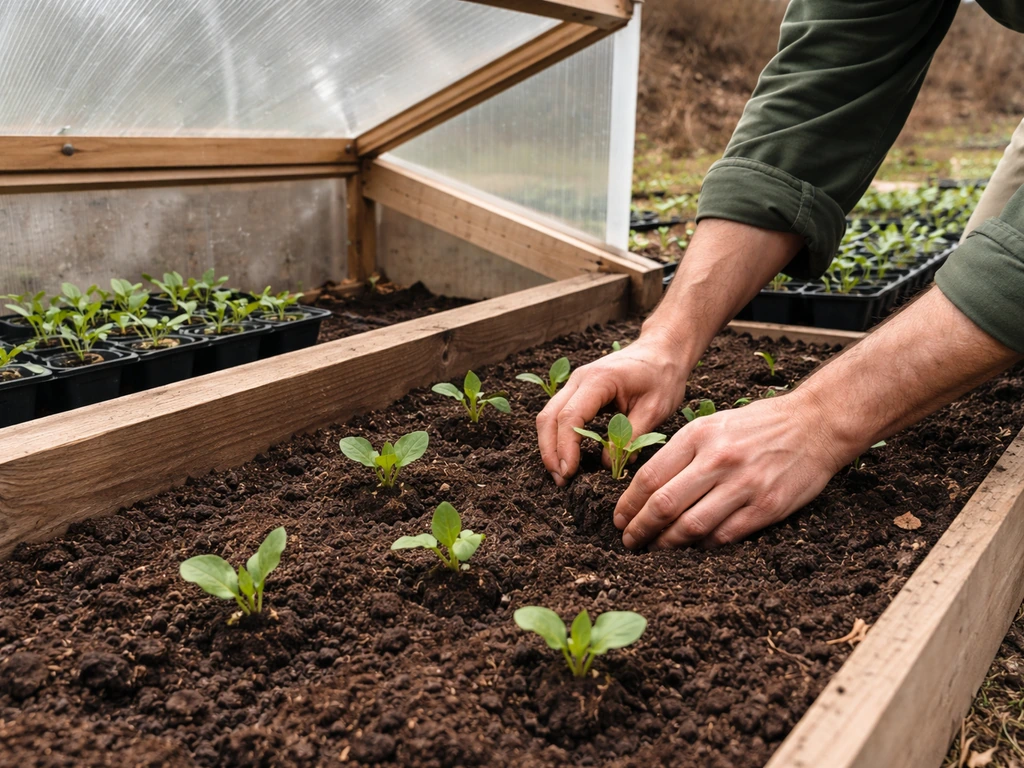
If you want to harvest faster, the most powerful single move is starting seeds earlier indoors and extending the season on both ends. This isn't about changing the plant's genetics, it's about giving it more time and better conditions to work with.
- Start seeds indoors 4 to 8 weeks before your last frost date. Most vegetables tolerate transplanting well and you can have robust, root-developed plants in the ground the moment conditions allow — weeks ahead of direct-seeding outdoors.
- Use transplants instead of direct seeding wherever the crop allows. Tomatoes, peppers, eggplant, cucumbers, squash, and melons all respond well to transplanting and benefit from the head start.
- Warm the soil before transplanting using black plastic mulch or floating row cover laid flat on the bed. Black plastic can raise soil temperature by 5 to 10°F, which is significant for heat-loving crops.
- Cover transplants with row cover (spunbonded fabric, typically 1.5 oz weight) immediately after transplanting. Row cover traps heat, raises temperatures by 4 to 8°F inside, and protects plants from late frosts.
- Use low tunnels or hoops to support row cover and keep it from crushing plants as they grow. PVC pipe, wire hoops, or even bent rebar work as supports. Low tunnels can extend your season by 4 to 6 weeks on either end.
- For cold climates, consider a cold frame or unheated hoop house for the earliest spring plantings. These structures let you start cool-season crops like lettuce, spinach, and radishes 6 to 8 weeks earlier than open-ground planting.
- Remove row cover and tunnels once temperatures are consistently warm (daytime highs above 65°F for most crops) to avoid overheating and to allow pollinator access for fruiting crops.
Combined, indoor starting plus transplanting plus row cover can realistically move your harvest 4 to 6 weeks earlier compared to direct seeding outdoors without protection. That's a bigger gain than any single seed trait modification is likely to provide.
Real-world expectations: what GMO status won't do for your garden
Here's the honest summary: for home gardeners, GMO status is largely irrelevant to harvest speed. If you also wonder which countries grow GMO crops, the answer depends on where biotech crops are widely approved and cultivated. The vast majority of GMO crop varieties aren't available for retail purchase as garden seeds. USDA-APHIS regulates biotech plants, and most commercially approved GMO varieties are sold through agricultural channels to large-scale farmers, not packaged for home garden centers.
You can search seed catalogs for faster-maturing varieties all day and you'll find that the best early-season performers are conventional open-pollinated or hybrid varieties selected over decades of traditional breeding for exactly the traits you want: fast maturity, adaptability to short seasons, and strong early vigor.
The traits that GMO engineering has most commonly addressed, herbicide tolerance and insect resistance, are useful at scale but don't change the plant's fundamental days-to-maturity clock. If you're growing corn from a commercial GMO seed source, it will still take the same number of GDD to mature as a similar conventional variety. The difference shows up in reduced losses, not a shorter calendar.
That said, if you're interested in the broader question of whether GMO crops are cheaper to grow or whether growing GM crops makes sense at all, those are worthwhile questions that connect to this one. If you're wondering whether are GM crops cheaper to grow, the answer depends on input costs, expected yields, and what local regulations and markets charge you for seeds and services.
That broader question, should we grow GM crops, depends on tradeoffs like yield reliability, environmental impact, and whether suitable varieties are available for your situation.
Availability and labeling also matter. In the US, bioengineered food disclosure is now required under the National Bioengineered Food Disclosure Standard, but seed packets don't always make GMO status obvious. If you're trying to avoid GMO seed specifically, look for packets labeled 'non-GMO,' 'open-pollinated,' or 'certified organic', organic certification prohibits GMO seed by definition. If you're open to any variety that produces faster, simply focus on DTM numbers and GDD requirements rather than how the seed was developed.
Your fastest path to earlier harvests starts here
If you came here wanting to know whether you should seek out GMO seeds to speed up your garden, the practical answer is: don't bother chasing that. The levers that will actually move your harvest date earlier are all within your control right now. Pick the fastest-maturing variety available for your crop and climate, start seeds indoors 4 to 8 weeks early, warm your soil with black plastic or row cover, transplant at the right time, and keep your fertility and moisture consistent. That combination will get you to harvest faster and more reliably than any seed technology decision.
Check your seed catalog's DTM numbers, look up GDD requirements for your zone using your local extension service, and experiment with one or two season-extension techniques this season. Even adding a single low tunnel over your tomato transplants can meaningfully shift your first harvest into a better window. Start there, track your results, and build from what you learn. That's what actually works.
FAQ
If GMO crops do not grow faster, can they still give an earlier harvest in practice?
They can, but usually indirectly. Engineered traits like insect resistance or herbicide tolerance mainly reduce losses, so you may harvest more reliably, not earlier. Calendar speed still depends on days-to-maturity and heat accumulation (GDD), so compare varieties by those measures rather than by GMO status.
Does a “fast” GMO variety exist that beats conventional fast varieties on timing?
Not in a simple, universal way. Even when some GMO lines are selected for agronomic performance, they still need a similar maturity schedule driven by genetics tied to DTM and GDD. In a home garden, conventional “early” varieties often match or beat the practical harvest timing because you can choose based on DTM and manage conditions.
How can I tell from a seed catalog whether a variety will harvest earlier?
Use days-to-maturity and, ideally, a GDD requirement if provided. DTM is from transplant or emergence, while GDD focuses on heat accumulation above a base temperature. Also check whether the catalog assumes a particular planting method, climate, or season length, since those assumptions affect real-world timing.
Why did my harvest take longer than the DTM number said?
DTM assumes typical conditions. If nights were cool, if you planted late, if soil stayed cold for transplants, or if seedlings were stressed from drought, transplant shock, or low fertility, you can easily run beyond DTM. Using GDD for your exact location helps explain delays caused by temperature, not seed type.
Does warm soil really speed up harvest more than anything else?
Yes, soil temperature strongly affects establishment and early root growth. Techniques like row cover, low tunnels, or warming with black plastic can raise effective soil temperature and reduce cold stress, which helps you reach the next growth stages sooner. This is often a larger benefit than chasing seed technology.
If I start seeds indoors earlier, will that always make my harvest earlier?
It usually helps, but timing matters. Starting too early can produce large, root-bound, or stressed transplants that slow recovery after planting out. Match indoor start date to your transplant date and your typical first frost, and harden off gradually to prevent shock.
Do I need to adjust fertilizer or watering to hit the “faster” maturity schedule?
Often yes. Early growth must be consistent, especially nitrogen for leafy development and evenly moist soil for steady progress. If you push growth with aggressive feeding but the plant is dry or nutrient-imbalanced later, you can increase stress and delay maturity. Use small, regular adjustments rather than big swings.
What is the fastest practical way to move harvest earlier for a short season?
Combine at least two season-extension moves. Common high-impact options are early indoor starting plus transplanting, then using row cover or a low tunnel for warmth and pest exclusion. A single technique can help, but stacking them typically produces the biggest shift into a better harvest window.
Are GMO seeds common in retail home-garden packets?
In many places, they are uncommon. Large commercially approved biotech varieties are often routed to agricultural channels rather than garden centers, so you may not see “GMO” on packets even when biotech crops are grown elsewhere. If your goal is speed, focus on early maturity labels (short-season, early) and DTM/GDD instead.
If I want to avoid GMO specifically, will “organic” guarantee it?
In practice, yes. Organic certification prohibits use of GMO seed, so organic packets give you a strong assurance on the seed-development side. However, you still need to evaluate DTM and cultivation conditions, because organic does not automatically mean faster harvest.
Can row cover or low tunnels change the days-to-maturity of my crop?
They do not change the crop’s genetic DTM directly, but they can effectively reduce delays by improving temperature and protecting from wind, pests, and some cold snaps. That means you can reach the same maturity stage sooner in calendar time by helping the plant accumulate usable heat earlier.
Next Article
How Do Farmers Grow Food Around the World: Methods and Tips
Learn how farmers grow food worldwide: soil, water, crops, pests, harvest, and how to scale it for home gardens.