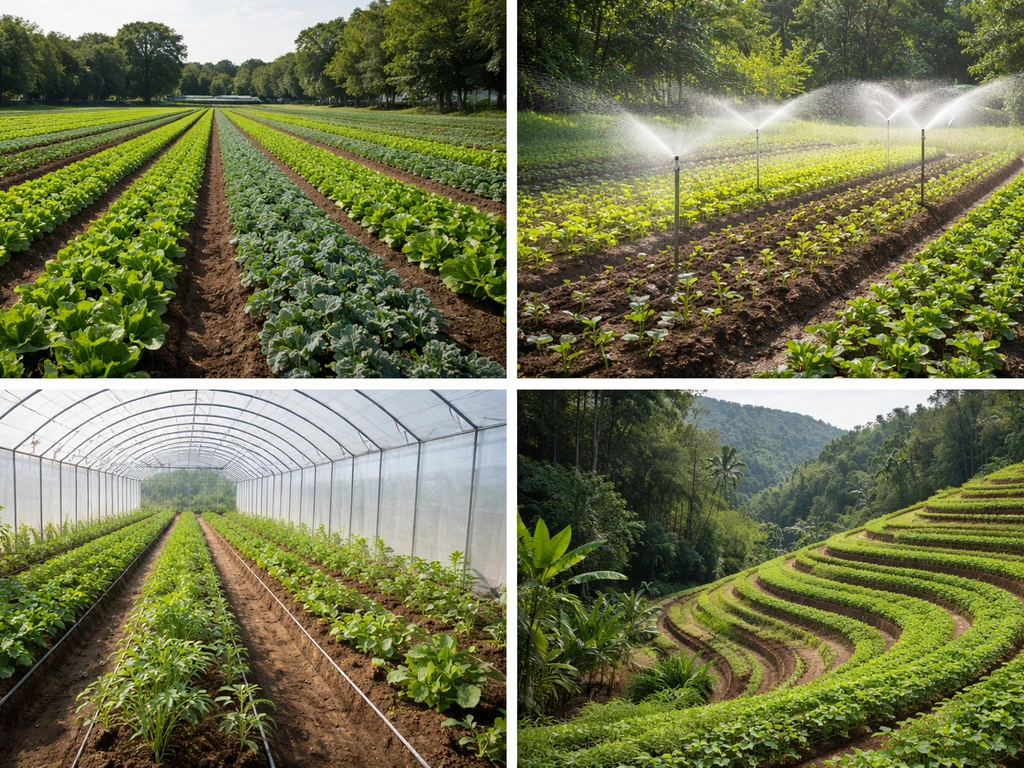
A farmer grows crops that fall into six broad categories: vegetables and fruits, grains and cereals, legumes and pulses, oilseeds, roots and tubers, and forage crops like hay and silage. That's the short answer. The longer answer is that what any specific farmer actually grows depends almost entirely on climate, soil, and what the market will pay for. The same categories apply whether you're farming 500 acres or a raised bed in your backyard, which is exactly why understanding them matters for home growers trying to figure out where to start.
What Does a Farmer Grow? Crop Types and Home Options
Marcus Hendrick
18 Apr 2026
The big categories of crops farmers grow
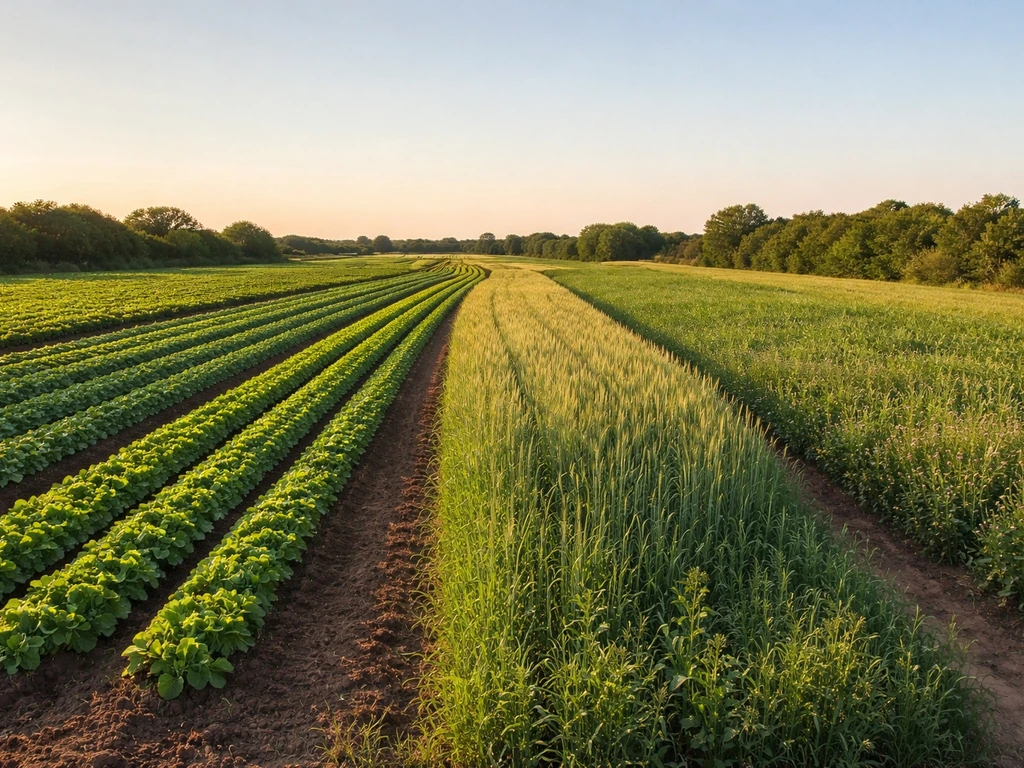
The FAO (Food and Agriculture Organization) breaks food crops into official categories: cereals, roots and tubers, pulses and vegetables, fruits and nuts, fodder crops, and beverages and stimulants. The USDA uses similar groupings in its agricultural census, with categories like 'grains, oilseeds, dry beans, and dry peas' tracked separately from hay and forage. Both systems exist because different crops require different land, inputs, equipment, and markets. For practical purposes, here's how to think about them as a grower:
- Vegetables: leafy greens, brassicas, alliums, nightshades, cucurbits
- Fruits: tree fruits, small fruits (berries), vine fruits (melons, grapes)
- Grains and cereals: corn, wheat, oats, barley, rice
- Legumes and pulses: soybeans, dry beans, dry peas, lentils
- Oilseeds: sunflower, canola, flax (crops harvested for dry seed, not grazed green)
- Roots and tubers: potatoes, carrots, beets, sweet potatoes, parsnips
- Forage and feed crops: hay grasses, silage corn, alfalfa, clover
Understanding why we need to grow crops in the first place helps put these categories in context. Farmers grow what feeds people, what feeds animals, and what generates income. Home growers add a fourth reason: what feeds your own household reliably and cheaply.
How location and climate determine what farmers grow
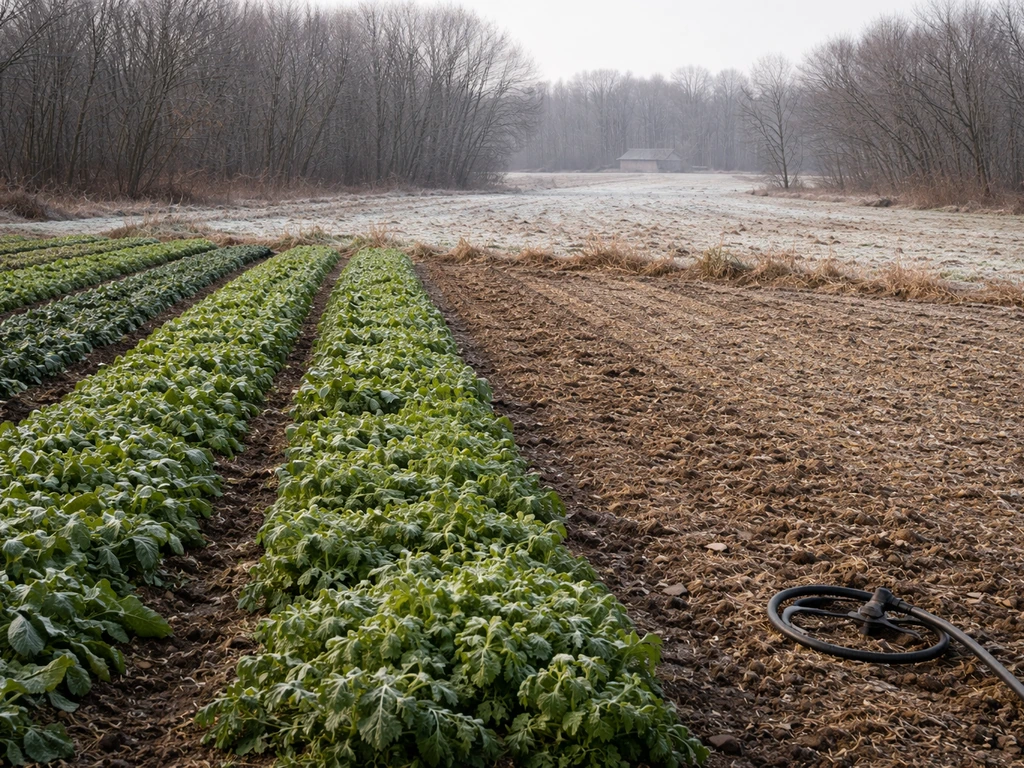
Climate is the biggest filter. The USDA Plant Hardiness Zone Map is based on the average annual extreme minimum temperature over a 30-year period, and it's the standard starting point for knowing what survives winter in your area. But the USDA also cautions that local microclimates (frost pockets in low areas, heat islands near pavement, windbreaks from buildings) can push your actual conditions outside of what the map shows. A zone 6 map designation doesn't mean every corner of your property behaves like zone 6.
Season length matters just as much as zone. A farmer in Montana with 90 frost-free days will grow short-season small grains and cool-season vegetables. A farmer in Georgia with 220 frost-free days can run two full vegetable rotations plus sweet corn plus sweet potatoes in the same year. Penn State Extension points out that for frost-sensitive crops, transplant timing has to be coordinated with the last frost date and the crop's days-to-maturity. That logic applies equally to a large farm and a small backyard plot.
Soil pH quietly controls whether any crop category works in a given location. Most vegetables and grains perform best between pH 6.0 and 6.8. UConn Extension sets the target at 6.5 for most vegetables; UNH Extension puts the general range for grain, fruit, vegetables, and pasture grasses at 6.0 to 6.8. Why does this matter? Because Purdue Extension is direct about it: soil pH directly affects nutrient availability for plants. A pH that's too low or too high locks up nutrients that are physically present in the soil but chemically unavailable to plant roots. This is the most common reason crops underperform even when fertilized correctly.
Sun is the third constraint. UConn Extension states that without at least blank" rel="noopener noreferrer">6 to 8 hours of direct sun per day, few vegetables can thrive. Grains need similar exposure. Shade-tolerant crops like some herbs and leafy greens can get by with less, but if you're planning to grow corn, tomatoes, squash, or wheat, you need an open, sunny site. Cornell’s tomato-growing guide also recommends at least 8 hours of direct sun daily for blank" rel="noopener noreferrer">tomatoes and notes they perform best around soil pH 6.0 to 6.8. No shortcut around this.
Vegetables and fruits: what farms grow and what you can grow at home
Vegetables are the most transferable crop category from commercial farms to home gardens. Nearly everything a commercial vegetable farm grows can be scaled down to raised beds or containers. The main constraints are space (vine crops like squash and melons need room), season length (peppers and eggplant need a long warm season), and pollination. UMN Extension notes that strawberries, for example, are self-fertile but still require bees for effective pollination, which means your site needs to support pollinators.
Day length affects more crops than most beginners realize. Penn State Extension notes that bolting (going to seed prematurely) can be triggered by changes in temperature and day length. Spinach, cilantro, and lettuce bolt in the long days of summer. If you're in a warm climate and want to grow these crops, you plant them in fall or winter, not spring. Commercial farmers know this and time plantings accordingly. Home growers who don't account for day length end up with bitter, bolted greens.
Fruits split neatly into tree fruits (apples, pears, peaches, plums), small fruits (strawberries, blueberries, raspberries), and vine fruits (grapes, kiwi, melons). Tree fruits require years of establishment and pruning knowledge. Small fruits are practical for most home gardens and start producing in the second or third year. Melons and cucumbers fit any garden with a trellis or enough ground space. For someone starting out, small fruits give the best return on effort.
Grains, legumes, and oilseeds: what they are and why farmers grow them
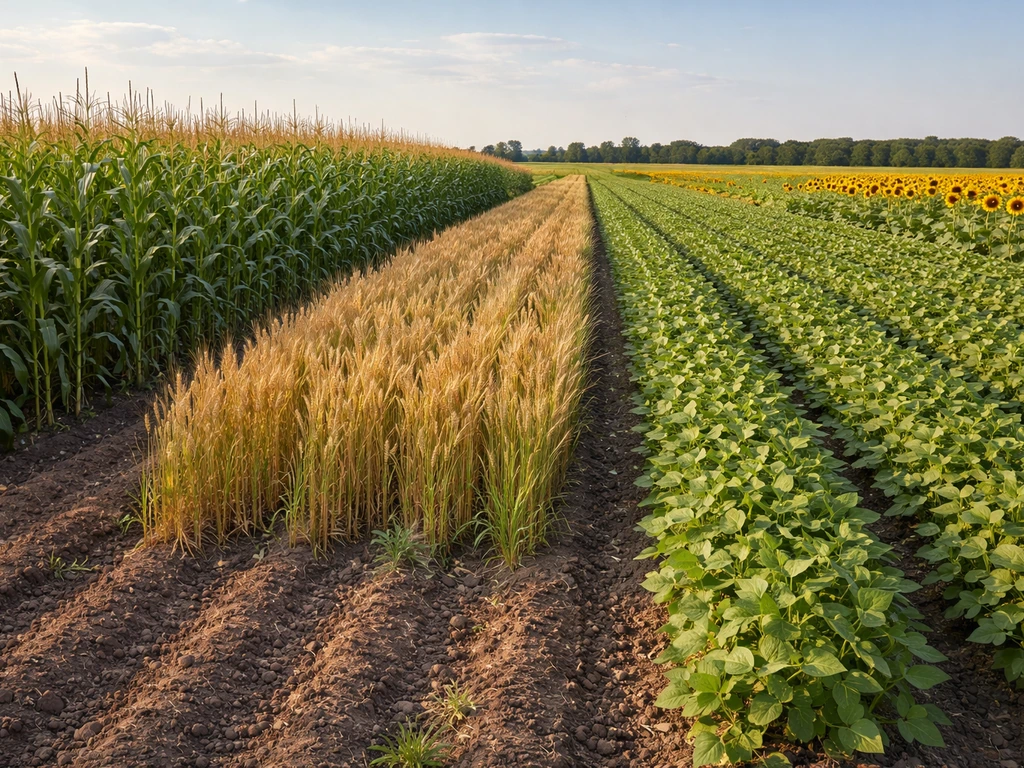
Grains (corn for grain, wheat, oats, barley, rice) and oilseeds (soybeans, sunflower, canola) make up the largest share of farmland in the US. The USDA groups them together as 'grains, oilseeds, dry beans, and dry peas' in its census reporting, and that reflects how commercially interchangeable they are from a market standpoint. Farmers choose between them based on what the local grain elevator pays, what equipment they already own, and what their rotation needs.
For FAO classification purposes, an oilseed crop is specifically one harvested for dry seed, not one grazed green or used as a cover crop. That distinction matters when you're thinking about what category a crop falls into. Soybeans harvested mature and dry are an oilseed/legume cash crop. The same soybeans grazed as forage become a fodder crop in the statistics.
At home-garden or small homestead scale, grains are underused and underappreciated. Dry beans, lentils, and peas are the easiest legumes to start with: they fix nitrogen, they store well without refrigeration, and they produce real food calories per square foot. If you're exploring whether farmers kill animals to grow tofu (soybeans), the answer connects directly to how legumes fit into the crop system and why they matter for plant-based protein production. For most home growers, bush beans and dry peas are the practical entry point into this crop category.
Nebraska Extension links crop rotation planning with nitrogen management, noting that legumes reduce fertilizer needs for the following crop. If you grow dry beans or peas one year, the nitrogen they fixed benefits whatever follows them in that bed the next year. This is one of the most practical benefits of including legumes in any rotation, even a small one.
Roots, tubers, and specialty crops
Root crops (carrots, beets, parsnips, turnips) and tubers (potatoes, sweet potatoes, yams) occupy their own FAO category for good reason: they're grown for the starchy underground storage organ, they store well, and they provide serious food calories from small areas. Illinois Extension (UIUC) describes carrots as a cool-season biennial grown for the thickened root in the first year, which is the practical description every home grower needs.
They go in the ground in early spring or late summer, and they can take 55 to 75 days to mature depending on variety. Finger carrot types are typically ready in 50 to 60 days. WVU Extension adds that fall-planted carrots can be left in the ground after a light frost if you mulch them before a hard freeze, which extends your harvest window considerably.
Potatoes are one of the highest-calorie crops per square foot available to a home grower. A 10-by-10-foot bed can produce 50 to 100 pounds of potatoes under decent conditions. Sweet potatoes need warm soil and a longer season (90 to 120 days) but are very productive in zones 5 through 10 when started from slips. Beets and turnips are underrated: they give you two crops in one plant (root and greens), mature quickly (50 to 70 days), and tolerate frost well.
Specialty crops is a broad commercial term that covers things like herbs, cut flowers, garlic, hops, and medicinal plants. For home growers interested in self-sufficiency, garlic and herbs fit naturally into any vegetable rotation and add value well beyond their space requirements.
Forage and feed crops versus food crops: when it matters for home growers
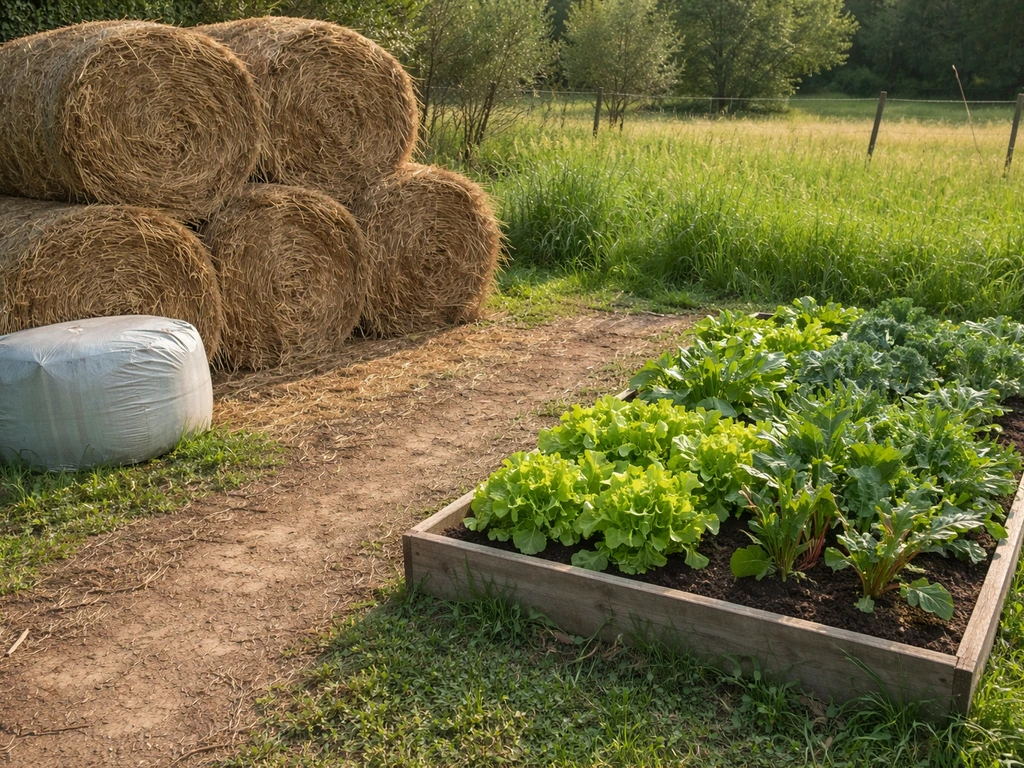
Forage crops (hay, silage, haylage, pasture grasses) exist to feed livestock, not people directly. NC State Extension explains that the key difference between hay and silage is the conservation method and the moisture target: silage is fermented at high moisture (typically 70 to 85% for direct-cut silage, 60 to 70% for wilted silage), while hay is dried down to low moisture for long-term dry storage. Virginia Tech specifies low-moisture silage (haylage) at roughly 40 to 60% moisture. These distinctions matter a lot for a livestock farmer but very little for someone growing vegetables in a backyard.
Where forage crops do matter for home growers is in the form of cover crops and green manures. Cover crops (clover, rye, vetch, buckwheat, oats) are grown not to harvest but to improve soil. The USDA explains that when cover crops are incorporated into the soil, they become green manure, functioning as a fertility-enhancing mulch.
The USDA also lists the practical benefits: controlling erosion, suppressing weeds, reducing soil compaction, increasing moisture and nutrient content, improving yield potential, and providing pollinator habitat. Clemson Extension is clear that cover crops are not harvested; they go back into the ground where they grew. ATTRA (NCAT) notes that the organic matter contribution from green manure can be comparable to what you'd get from adding animal manure.
FAO's classification system divides fodder crops into fodder grasses and fodder legumes, and this distinction is useful even for home growers. Legume cover crops (clover, vetch, field peas) fix nitrogen; grass cover crops (rye, oats) build organic matter and suppress weeds. Using both types in rotation gives you different soil benefits depending on what the next food crop needs. If you've ever wondered about how many animals die to grow vegetables, cover crops and green manures are one of the ways vegetable growers reduce dependence on animal-derived fertility inputs like bone meal and blood meal.
Farm crop categories compared: home-garden feasibility at a glance
| Crop Category | Common Examples | Space Needed | Season Length | Home Garden Feasibility |
|---|---|---|---|---|
| Vegetables | Tomatoes, beans, lettuce, squash | Containers to large beds | 45–90 days depending on crop | Very high — most adaptable to small spaces |
| Small Fruits | Strawberries, raspberries, blueberries | Raised beds, borders | 1–3 years to first harvest | High — manageable in most yards |
| Tree Fruits | Apples, peaches, pears | Full yard or orchard rows | 3–7 years to bearing | Moderate — requires long-term commitment |
| Grains and Cereals | Corn, wheat, oats, barley | Larger plots (100+ sq ft minimum) | 60–120 days | Low–moderate — possible but space-intensive |
| Legumes/Pulses | Dry beans, peas, lentils | Raised beds to field rows | 60–90 days | High — easy, nitrogen-fixing, great storage |
| Oilseeds | Sunflowers, flax | Medium plot | 70–100 days | Moderate — sunflowers easy, canola less practical |
| Roots and Tubers | Potatoes, carrots, beets, sweet potatoes | Raised beds, in-ground rows | 50–120 days | Very high — high calorie yield per sq ft |
| Forage/Cover Crops | Clover, rye, vetch, oats | Any bed or plot | 30–60 days before incorporation | High — essential for soil health rotation |
How to choose what to grow this season
Start with a site check before you decide on a single seed. There are four things you need to know: your hardiness zone and average last frost date, how many hours of sun your growing area gets, your soil pH, and how much space you're actually working with. The USDA Plant Hardiness Zone Map gives you the zone, and your local cooperative extension office publishes average frost dates by county.
For sun hours, observe your garden bed at the worst time of year (early spring when the sun is lower) and count actual hours of unobstructed light. For soil, get a basic test. Utah State University Extension notes that a standard soil test measures pH, salinity, phosphorus, and potassium. UMN Extension recommends taking samples that represent uniform areas and including your cropping history so the lab's recommendations are accurate.
Without knowing your pH, you're guessing, and most guesses come out wrong.
Once you have those numbers, match crops to conditions. If your pH is 5.8, add lime before planting vegetables. If you have 4 hours of sun, stick to leafy greens and herbs. If your season is 90 days, skip peppers and stick to short-season tomatoes, root crops, and beans. South Dakota State University Extension uses the formula of average first fall frost date minus crop days-to-maturity to set the latest safe planting date for fall crops. Apply the same logic in reverse for spring: last frost date plus crop days-to-maturity tells you when you'll be harvesting.
Understanding how a farmer grows a good and healthy crop comes down to these same fundamentals applied consistently: soil health, right crop for the right season, and attention to what's working and what isn't. The scale is different but the logic is identical.
A practical first-steps checklist
- Look up your USDA hardiness zone and your area's average last spring frost date and first fall frost date.
- Count sun hours in your primary growing area on a clear day. Confirm you have at least 6 hours for most food crops.
- Take a soil sample and submit it to your state extension lab. Request a recommendation for vegetable production.
- If pH is below 6.0, apply lime according to the lab's rate. If it's above 7.0, add sulfur or choose pH-tolerant crops first.
- Choose 3 to 5 crops that match your season length. Use the days-to-maturity on seed packets to confirm they fit between your frost dates.
- Plan at least one legume (dry beans, peas) in your rotation to reduce nitrogen inputs for the following season.
- Add one cover crop to any bed that will be empty for 4 or more weeks. Terminate it 2 to 3 weeks before planting food crops.
- Track what you planted, when you planted it, and what you harvested. That record is worth more than any advice in year two.
Simple yield and cost thinking
Not every crop is worth growing at home from a pure cost-per-pound perspective. Wheat takes significant space to produce a meaningful amount of flour. Dry beans and potatoes, on the other hand, produce a lot of calories from a small area at very low input cost. If your goal is food security, prioritize calorie-dense root crops and legumes. If your goal is reducing grocery spending, focus on the vegetables that cost the most at the store and that store well (onions, garlic, potatoes, dried beans). If you just want to grow something, start with what you actually eat and go from there.
Knowing what farmers need to grow a crop (land, seed, water, inputs, equipment, time) translates directly to what you need at home: a prepared bed, good seed, reliable irrigation, basic amendments, hand tools, and consistent attention. The inputs scale down, but the logic doesn't change. Start small, do it right, and add more once you know your site.
FAQ
Does a farmer usually grow only one type of crop, or multiple kinds?
Most farmers do not grow just one crop, they farm a mix that fits weather, soil, and income. For home growers, that usually means choosing 2 to 4 crop types that can share the same beds across rotations, instead of trying to match every category (grains, roots, fruit, forage) in one season.
How can the same plant be counted in different categories, like oilseed versus forage?
If a “crop” is harvested as a dry seed, it generally falls in oilseeds or legumes, but if it is grazed or cut while green for feed, it is treated more like forage/fodder. The same species can be reported differently depending on harvest method, so category depends on how you plan to use the plants.
Do I need bees or pollinators even if a crop is self-fertile?
At home scale, the limiting factor is often not soil fertility but practicality, especially pollination and season length. Even self-fertile crops like many strawberries still depend on pollinator activity for strong yields, so planting near flowering plants or maintaining habitat can matter as much as planting the fruit itself.
Why do some greens bolt or turn bitter even when I water and fertilize correctly?
Yes, many crops switch from “successful” to “frustrating” because of day length and temperature triggers. A common mistake is planting cool-season greens in late spring or summer expecting a long harvest, then getting bitter, seedy, or bolting plants. For those crops, schedule planting around seasonal timing, not just frost dates.
What should I do if my soil test shows pH is out of range?
Soil pH problems are not fixed instantly with fertilizer. When pH is off, nutrients can be present yet unavailable, so the fix is usually amendments like lime (for low pH) or sulfur (for high pH) applied ahead of planting and rechecked after some time. Fertilizing without correcting pH is one of the most common ways to “waste” inputs.
If I know my USDA hardiness zone, do I still need to worry about microclimates?
Not automatically. A garden can be in a climate zone but still fail if your spot is shady, wind-exposed, or has cold-air drainage. Before choosing crops, observe sun for several clear days, and check for frost-pocket behavior by comparing low versus raised locations.
How do I decide which vine crops are realistic in a small yard or raised bed?
Space and trellising determine whether you should treat a crop as a vegetable, a vine fruit, or not worth it. If you lack room, choose compact bush types, upright varieties, or trellised plants, because melons, squash, and cucumbers often spread and can crowd out other crops.
How do I calculate the latest planting date for fall crops?
For a fall planting, use the latest safe date logic based on your first fall frost and the crop’s days to maturity, then add extra days for slower germination or cold stress. Planting “on the calendar” without counting days-to-maturity often leads to partial harvests.
What are the most common mistakes when using cover crops or green manure?
Cover crops and green manures are primarily grown for soil benefits, you generally do not harvest them like food crops. A common mistake is letting cover crops mature and get woody before incorporation, which makes them harder to break down and can reduce their value for soil improvement.
Which crop types should I prioritize if my main goal is saving money or improving food security?
Start with a target outcome and prioritize crops that match it. If you want dependable calories, legumes and root crops tend to be efficient, if you want lower effort per bed, choose crops that store well and cost more at the store (like potatoes, onions, garlic, and dried beans).
How do I know when I should expand beyond my first few crops?
Because a small-scale system has fewer tools and less labor flexibility, it helps to plan around what you can repeatedly maintain: watering consistency, pest scouting, and timely sowing/transplanting. Before expanding, confirm that you can reliably grow one category through an entire cycle (seed to harvest) in your specific conditions.
Next Article
How Do Farmers Grow Food Around the World: Methods and Tips
Learn how farmers grow food worldwide: soil, water, crops, pests, harvest, and how to scale it for home gardens.