Growing meat at home means raising animals for food on your own property. That's the short answer. Whether you're thinking about a backyard flock of meat chickens, a small rabbit operation, a few pigs on a homestead, or a fish tank in the garage, all of those are genuinely achievable this year. What's not achievable at home right now is cultured (lab-grown) meat, so let's clear that up first and then get into the practical stuff.
How to Grow Meat at Home: Livestock and Aquaculture Guide

Marcus Hendrick
22 Apr 2026
What 'grow meat' actually means (and what it doesn't)
You'll occasionally see 'growing meat' used to describe cell-cultured products, where animal muscle cells are grown in a bioreactor without raising or slaughtering an animal. In the U.S., those products are regulated jointly by the FDA and USDA-FSIS depending on the species and production method. In the UK, the Food Standards Agency notes that cell-cultivated products aren't even defined as 'meat' under the standard meat definition framework. The point is: cell-cultured meat is a commercial and heavily regulated food technology. There is no home version of it, and there won't be anytime soon. It requires sterile bioreactor equipment, growth media, and cell culture expertise that simply isn't accessible to home producers.
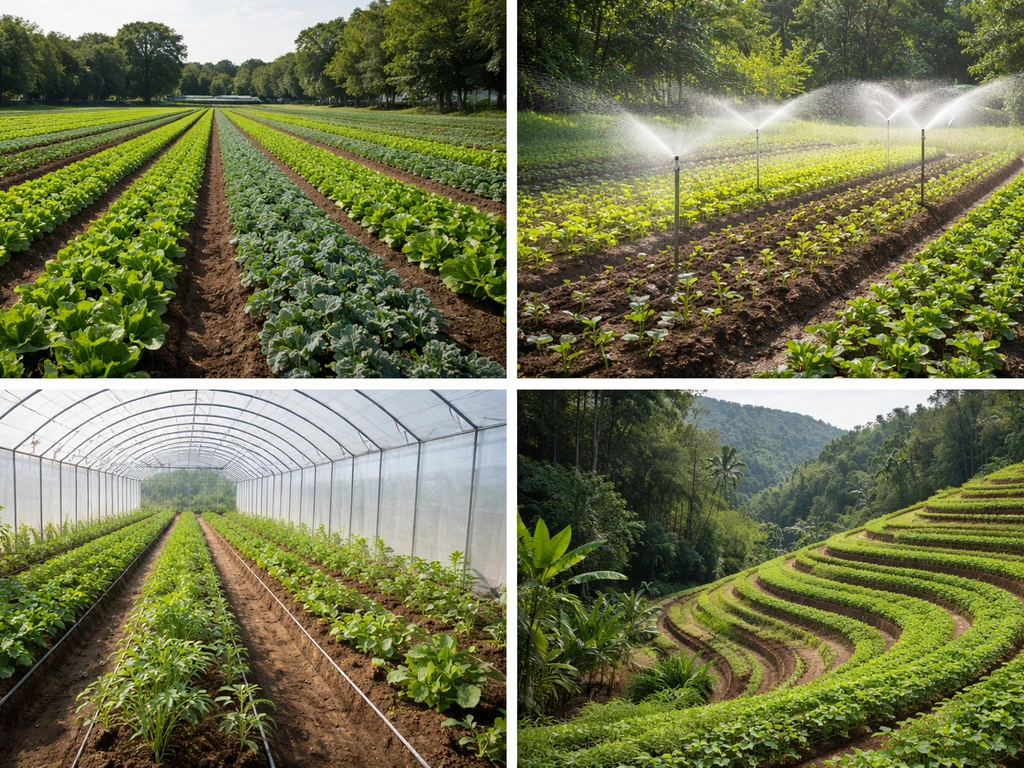
For the purposes of this guide, 'growing meat' means producing animal protein for eating at home by raising livestock, poultry, or fish. This is something you can genuinely start planning today, and it lines up perfectly with a self-sufficient food system, especially if you're already growing vegetables, grains, or forage crops that can feed your animals.
Pick a system that fits your space, budget, and climate
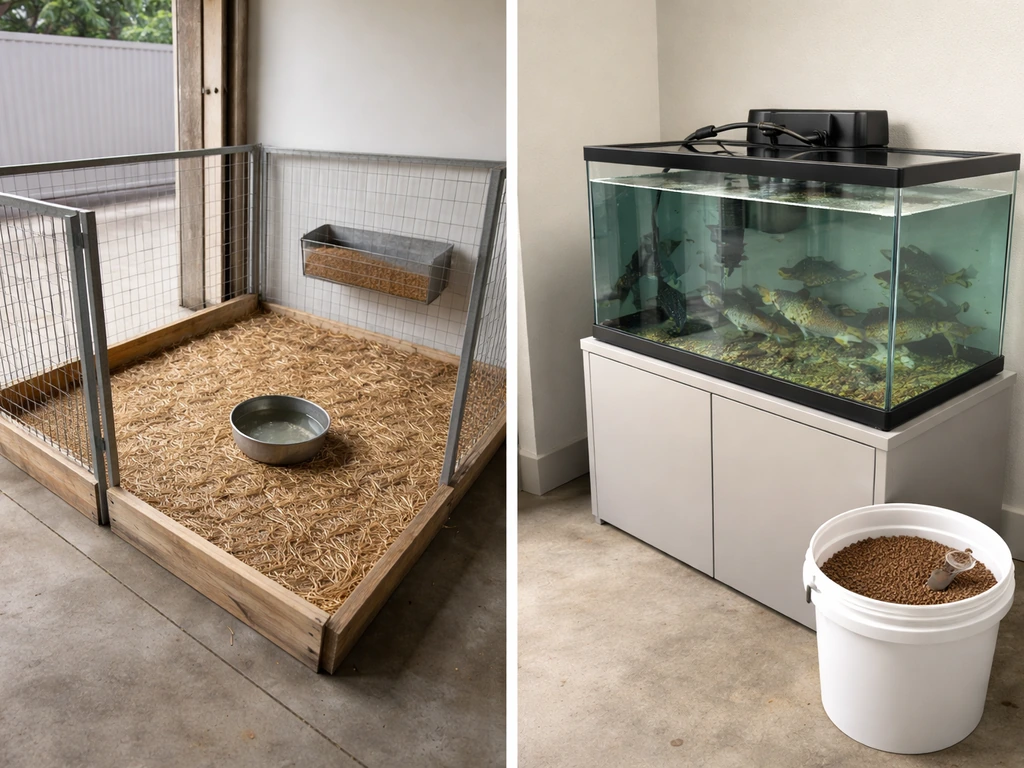
The biggest mistake beginners make is choosing an animal before they think about their land, local rules, and how much time they can actually commit. Here's a realistic breakdown of the most beginner-friendly home meat systems.
| Animal | Minimum Space | Time to Harvest | Startup Cost (Rough) | Best Climate Fit | Beginner Friendliness |
|---|---|---|---|---|---|
| Meat chickens (broilers) | 4–6 sq ft per bird in a tractor or coop | 8 weeks | $150–$400 for 25 birds | Most climates; needs shelter from cold/rain | Very high |
| Rabbits | 4 sq ft per hutch minimum | 10–12 weeks | $200–$600 for a starter colony | Temperate; struggles in extreme heat | High |
| Pigs (2–3 per cycle) | Minimum 50 sq ft per pig in a pen | 5–6 months | $500–$1,200+ | Wide range; pigs need shade and mud wallows | Moderate |
| Ducks (meat breeds) | 6–8 sq ft per bird | 7–8 weeks (Pekin) | $150–$350 for 10–15 birds | Most; especially good in wet climates | High |
| Aquaculture (tilapia or catfish) | 1 lb fish per 1–3 gallons of water (tank system) | 6–8 months | $300–$800 for a basic tank setup | Tilapia: warm climates or heated tanks | Moderate |
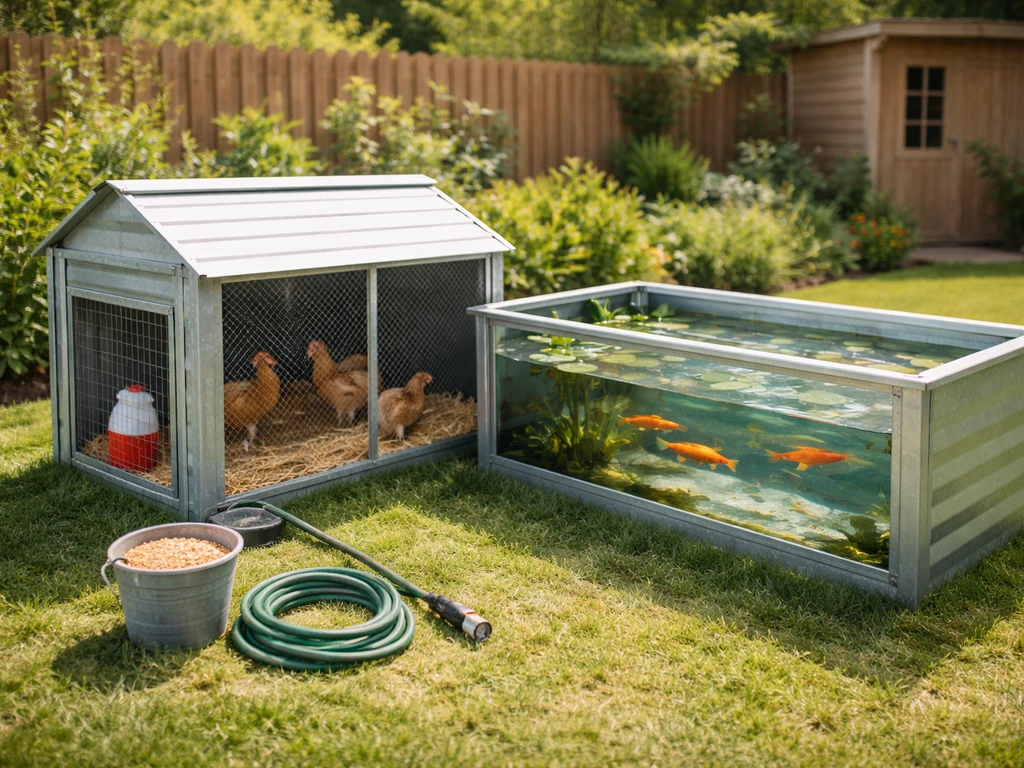
If you have a small suburban backyard, start with meat chickens or rabbits. Both are compact, fast to harvest, and inexpensive to set up. If you have a quarter-acre or more, pigs or ducks open up. If you're in a warm climate or have a heated space, a small aquaculture tank with tilapia is a surprisingly efficient protein source and integrates well with a garden through aquaponic or fertigation setups. Check your local zoning laws before committing to anything, particularly for pigs and certain poultry numbers.
Getting started: your setup checklist
Before you order chicks or pick up piglets, you need the infrastructure in place. Running through this checklist ahead of time saves you from scrambling on arrival day.
Housing and shelter
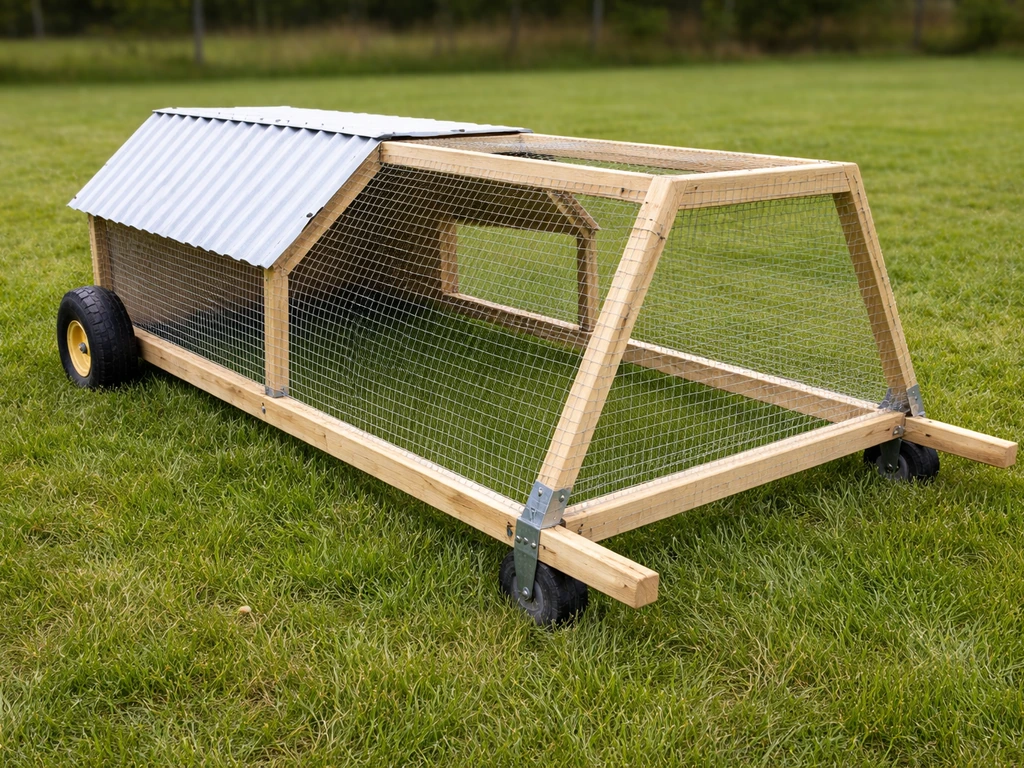
- Meat chickens: a simple chicken tractor (moveable pen) works well, around 10x12 feet for 25 birds; it also fertilizes your garden beds as you move it
- Rabbits: stackable wire hutches in a barn or shed, or a colony pen setup on ground if predator-proofed
- Pigs: a hog panel pen with a three-sided shelter or basic hoop structure; pigs root aggressively so a concrete pad or solid fence line is essential
- Ducks: a simple three-sided duck house with a secure latch; ducks are hardier than chickens and don't need elaborate shelter
- Fish tanks: an IBC tote (275-gallon intermediate bulk container) or purpose-built aquaculture tank with aeration and a basic filtration system
Fencing and containment
- Poultry: hardware cloth (not chicken wire, which predators can rip through) stapled to a wooden frame; bury it 6–12 inches at the base to stop digging predators
- Pigs: 16-gauge hog panels or electric fence; a single strand of electric wire at nose height works surprisingly well to keep pigs in
- Rabbits: predator-proof wire on all sides including the floor; raccoons can reach through standard cage wire
- Fish: standard stock tank or IBC tote containment; cover with netting to prevent herons and raccoons from fishing your stock
Supplies to have before animals arrive
- Feeders and waterers sized for the species and flock/herd size
- Bedding: straw, wood shavings, or hay for poultry and pigs
- A heat lamp and chick guard for brooding young birds (Penn State Extension recommends chick guards to prevent drafts and piling during the brooding phase)
- A thermometer for brooding (target 95°F the first week, reducing by 5°F per week)
- Starter feed appropriate to the species: meat bird starter runs 22–24% protein in the first few weeks
- Basic medications or supplements: electrolytes for chicks, injectable iron for piglets if not on pasture
- A processing kit if you plan to harvest at home: a sharp knife, a kill cone or gambrel, scalding pot for poultry, and a chest freezer for storage
Feed plan: grow what you can, buy the rest
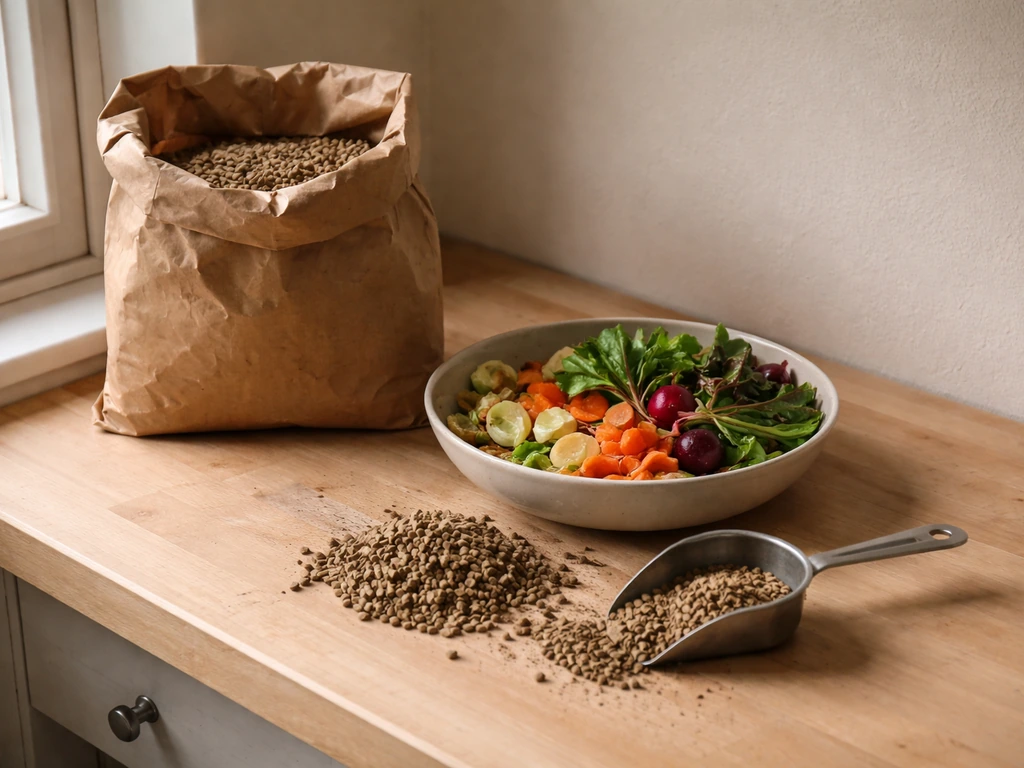
Feed is almost always the biggest ongoing cost in home meat production. The good news is that a food-growing homestead already has a head start: kitchen scraps, garden surplus, compost-side vegetables, and even cover crops can offset purchased feed meaningfully. The key is knowing what nutritional gaps you're filling and what you're providing.
What you can grow to feed your animals
- Sunflowers: high-fat seeds that chickens and pigs love; easy to grow in bulk on marginal garden space
- Comfrey: a perennial 'cut and come again' plant that's high in protein and minerals; excellent rabbit and pig fodder
- Fodder grains (barley, wheat, oats): sprouted fodder boosts digestibility and grows in trays in about 6–7 days; a 50 lb bag of barley seed can produce 200–250 lbs of green fodder
- Pumpkins and squash: excellent pig and chicken food; grow a patch specifically for feed
- Black soldier fly larvae: if you're willing to set up a small BSFL bin, the larvae are 40% protein and thrive on food scraps; chickens, ducks, and fish eat them readily
- Duckweed: a fast-growing aquatic plant that doubles as fish food in aquaculture systems and is roughly 35–45% protein on a dry weight basis
Balancing nutrition with purchased inputs
You generally can't feed home-grown forages alone and expect fast, healthy weight gain, especially with poultry. Meat chickens are bred for rapid growth and need 18–24% protein in their diet, according to Penn State Extension brooding guidelines. If you drop significantly below that, growth stalls and feed-to-meat conversion worsens. The practical approach: use a quality commercial starter/grower as your nutritional baseline, then supplement with forage, sprouts, and scraps to reduce the quantity of purchased feed needed. For a 25-bird batch of meat chickens, expect to go through around 175–200 lbs of feed total over 8 weeks, even with supplementation.
For rabbits and pigs, high-quality grass hay (rabbits) and garden surplus (pigs) can make up a larger percentage of the diet. Pigs are true omnivores and will eat almost any kitchen or garden waste. Check your local regulations though: in many U.S. states and the UK, feeding catering waste or meat-containing scraps to pigs is restricted or prohibited.
Daily animal care: the real routine
People underestimate the daily time commitment. With most small home operations, you're looking at 15–30 minutes per day for a batch of broilers or rabbits, and 30–60 minutes for pigs or a combined system. Here's what that actually looks like.
- Morning: check water (never let animals go without water even for a few hours), refill feeders, do a quick visual health check on every animal
- Midday (optional but helpful in the first two weeks of brooding): check brooder temperature, adjust heat lamp height if needed, watch for piling or huddling which signals it's too cold
- Afternoon/evening: move chicken tractors to fresh ground every 1–2 days, collect any scraps or forage to add to feeders, spot-clean heavy manure areas
- Weekly: full bedding change or deep stir for chickens and rabbits, clean and refill waterers with a quick bleach rinse, weigh a sample of animals to track growth
- As needed: treat wounds or signs of illness immediately; isolate any sick animal from the group
Health and welfare basics
The most common health problems in home meat production are respiratory infections (poultry), GI issues (rabbits), and skin/hoof problems (pigs). Most of these come down to wet bedding, overcrowding, or poor ventilation. Keep bedding dry, don't overstock your space, and make sure there's airflow without drafts. For meat chickens specifically, watch for leg problems in the last two weeks as the birds get heavy: Cornish Cross broilers grow fast and can develop joint issues if they can't move freely. Give them at least 1 square foot of floor space per bird, and more is better.
Know your local agricultural extension office. They offer free advice, local disease alerts, and sometimes even subsidized lab testing for sick animals. It's one of the most underused resources in home production.
Harvesting, processing, and storing your meat
This is the part most guides skip over, and it's often what stops people from starting. Let's be direct: home processing is legal in most U. After slaughter, blank" rel="noopener noreferrer">cool poultry carcasses to 40°F or below within 4 to 8 hours to help retard pathogen and spoilage growth. S. states for personal consumption. You don't need a USDA-inspected facility to butcher chickens or rabbits for your own household. USDA FSIS explains that its oversight role for humane handling under the Humane Methods of Slaughter Act applies to federally inspected establishments blank" rel="noopener noreferrer">USDA-inspected facility. Pigs are a bigger job but still manageable with the right equipment and ideally a second person.
Home processing by species
- Chickens and ducks: harvested at 8 weeks (broilers) or 7–8 weeks (Pekin ducks) per UNH Extension guidance; the basic process is: kill cone, bleed out (about 30–60 seconds), scald in 145–150°F water for 45–60 seconds, pluck, eviscerate, chill in ice water immediately to bring internal temp below 40°F within 4 hours
- Rabbits: no scalding needed; skinning takes about 5 minutes per rabbit once you've practiced; chill same as poultry
- Pigs: at 250–300 lbs live weight, pigs yield roughly 140–180 lbs of usable meat; home processing is a half-day job; you'll need a gambrel, a sharp set of knives, a bone saw, and ideally a dedicated cooler space to hang the carcass at 34–38°F for 1–3 days before butchering
- Fish: harvest when fish reach target weight (1–2 lbs for tilapia), dispatch immediately, clean and fillet or freeze whole
Storage
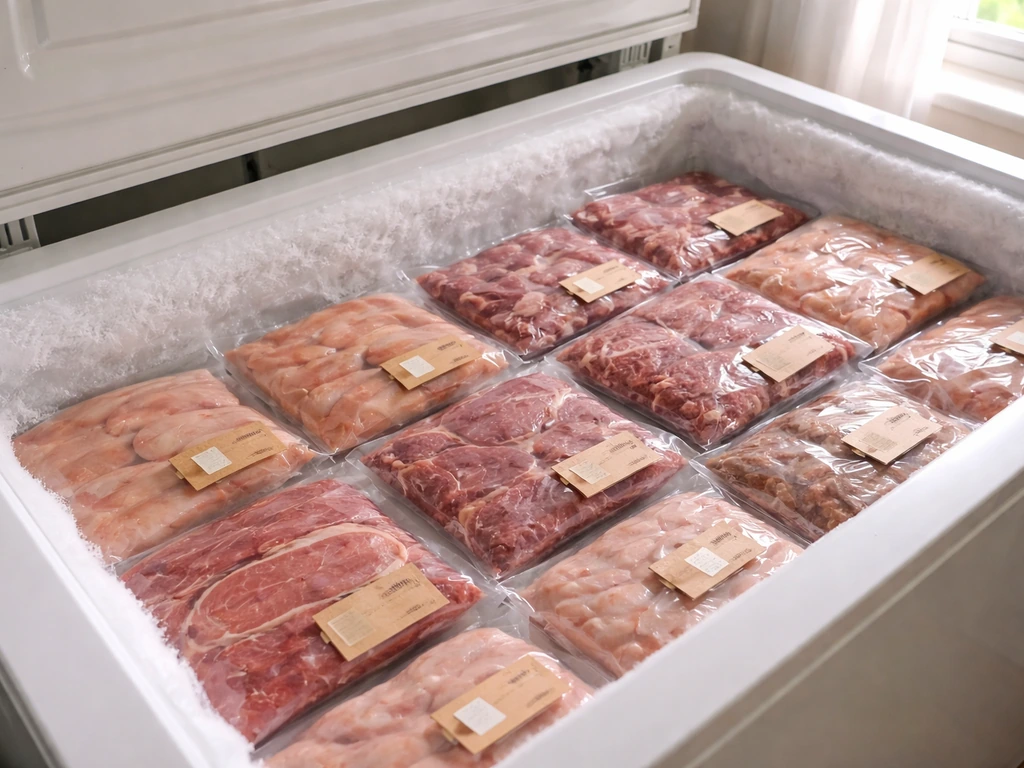
A chest freezer is non-negotiable if you're doing batch production. A 7 cubic foot chest freezer holds roughly 200–250 lbs of packaged meat, which is about the yield from a 25-bird batch of broilers. Vacuum sealing significantly extends freezer life: chicken stays good for 9–12 months vacuum-sealed versus 3–4 months in zip bags. If you process pigs, look into curing and smoking as additional preservation methods that reduce freezer dependency and produce cured hams, bacon, and sausage.
Real costs, realistic yields, and your first-month action plan
Cost and yield estimates by system
| System | Startup Cost | Feed Cost Per Cycle | Yield Per Cycle | Cost Per Pound (Rough) | Cycle Length |
|---|---|---|---|---|---|
| 25 meat chickens | $150–$400 (coop/tractor + equipment) | $80–$120 (175–200 lbs feed) | 50–65 lbs processed meat | $4–$8/lb | 8 weeks |
| 10 meat rabbits (from 2 does) | $200–$400 (hutches + equipment) | $40–$80 | 25–35 lbs processed meat | $5–$9/lb | 10–12 weeks |
| 2 pigs | $500–$1,000 (pen + feeders) | $350–$600 | 280–360 lbs processed meat | $3–$5/lb | 5–6 months |
| 15 Pekin ducks | $150–$350 (pen + equipment) | $90–$130 | 45–60 lbs processed meat | $4–$7/lb | 7–8 weeks |
| Tilapia (100-gallon tank system) | $300–$800 (tank + aeration + filtration) | $60–$120 over 6–8 months | 30–50 lbs of fish | $5–$10/lb | 6–8 months |
These numbers assume you're buying all feed. If you're supplementing with home-grown forage, sprouts, or garden surplus, you can realistically cut feed costs by 20–40%. The startup costs drop sharply after the first cycle since you're reusing infrastructure. By your third batch of broilers, your all-in cost per pound starts competing with quality store-bought chicken.
Your first-month action plan
- Week 1: Check local zoning and HOA rules for the species you're interested in; call or email your county extension office to ask about any local regulations, disease advisories, or free resources
- Week 1: Choose your system based on your space (use the table above as a guide) and order or build your housing before ordering animals
- Week 2: Source your starter feed locally if possible, or order online; set up your brooder or housing and test your water and feed systems before animals arrive
- Week 2–3: Order chicks, ducklings, rabbit kits, or piglets from a reputable hatchery or local breeder; for fish, source fingerlings from an aquaculture supplier in your region
- Week 3–4: Plant a forage patch alongside your setup: sunflowers, comfrey, or a grain bed for sprouting; this doesn't feed animals immediately but builds your feed independence over the next season
- Week 4: Animals arrive; follow brooding temperature guidelines (start at 95°F for chicks, drop 5°F per week) and do your first daily care routine; document weights weekly so you can track growth against expected timelines
One honest note: the first batch is always the hardest and the most educational. Expect some losses, expect to make mistakes with feed timing or housing, and don't let that stop you from running a second batch. Most experienced home meat producers will tell you the same thing: the learning curve is steep for about six weeks, and then it becomes just another part of the farm routine. If you want to go deeper on specific systems, broiler chicken management has a particularly rich body of practical guidance worth digging into, as does home aquaculture for those in warmer climates or with heated outbuilding space. If you want a more step-by-step resource, look for a “how to grow broiler chickens” PDF that covers setup, feeding, and daily care broiler chicken management. You can also search for a how to make indigenous chickens grow fast PDF to get practical guidance on feeding, housing, and daily care for faster weight gain.
FAQ
How do I decide what animal to start with if I have limited time but want the easiest path to edible meat?
In most cases you start with a small batch and match the animals to your available feed and time, not the other way around. For example, plan around a 6 to 8 week broiler window if you want quick feedback, while rabbits and pigs usually require a longer planning horizon for housing, breeding or procurement, and processing logistics.
What zoning or property constraints should I think about besides the number of animals?
If you can only secure a little land or a strict HOA, meat chickens and rabbits typically have the most flexible footprint, but you still need to confirm waste handling rules (manure storage, odors, fly control) and whether setbacks or coop height limits apply. A practical approach is to draft a one-page site plan showing coop location, run area, and a dry storage spot for bedding before you buy animals.
What equipment or routines matter most for preventing losses during heat, cold, or power disruptions?
Plan for a “worst day” scenario, heat waves and power outages, because ventilation, water systems, and bedding dry time all depend on electricity or reliable airflow. Use a backup plan like battery-powered aeration for aquaculture, gravity-fed water where possible, and a daily bedding change routine if humidity spikes.
How do I know whether my supplementing with scraps or forage is actually working?
Don’t assume kitchen scraps automatically make up for commercial feed, because protein levels and amino acid balance can fall for fast-growing animals. A safer decision rule is to treat scraps and garden surplus as supplements, then measure performance by weight gain and body condition. If growth stalls or birds look unthrifty, scale supplements back and increase a proper protein feed portion.
What are the quickest ways to reduce sickness risk in small flocks or enclosures?
Wet bedding is one of the fastest routes to respiratory and GI problems, so prioritize dryness over “deep bedding” assumptions. Improve ventilation without drafts, spread bedding more often in high-humidity seasons, and keep animals at appropriate stocking density to reduce ammonia buildup.
Can I rely heavily on home-grown forage for rabbits or pigs without harming growth?
For rabbits and pigs, a common failure is overestimating how much low-quality forage will carry nutrition, especially for growth stages. Use hay quality as a baseline (for rabbits) and balance garden waste with a safer proportion of higher-quality feed (for pigs) to avoid digestive upset and uneven growth.
Is home butchering always fully legal where I live, or are there hidden restrictions?
Home processing for personal consumption is often allowed, but the details vary by state or country, including rules about how waste is disposed, where animals can be slaughtered, and what constitutes “personal use.” Before buying a chest freezer, confirm local guidance with your agricultural extension office or local health department, and document your process for hygiene and waste management.
What freezer and packaging habits matter most for safety and long-term meat quality?
Vacuum sealing helps, but freezing still depends on proper packaging and thawing practices. Label packages with date and cut, and thaw in a refrigerator, not at room temperature, to reduce spoilage risk. If you notice freezer burn, it usually means air exposure, so check seal quality and avoid overstuffing the freezer to maintain consistent temperature.
How should I plan for manure, compost, and waste so it does not ruin the operation?
Start by building a “waste and byproduct plan,” because manure and unused feed can become your biggest operational headache. For chickens, plan for bedding disposal and composting strategy that prevents turning problems into pest problems. For pigs, plan manure storage and cleanup schedules, since odor control and runoff prevention can be as important as the feeding system.
What metrics should I track after each batch to improve costs and reduce losses?
A realistic approach is to track three numbers per batch: feed cost, processing yield (usable packaged weight), and losses. If losses rise or yield drops, it often points to housing or feed balance issues rather than “bad luck,” so review density, ventilation, and supplement proportions before trying again.
Next Article
How Do Farmers Grow Food Around the World: Methods and Tips
Learn how farmers grow food worldwide: soil, water, crops, pests, harvest, and how to scale it for home gardens.